




 Our Family


 Italiano
 Deutsch


 Back to list

Mugello Castle: live a medieval residence immersed in the countryside

Published 18-09-2026
On the hills of Mugello, in a panoramic and secluded position, Mugello Castle tells the charm of a medieval residence capable of crossing the centuries and taking on new functions. It is not just a historic castle, but a large estate immersed in the Tuscan countryside, where architecture, landscape, and hospitality potential coexist in a grand project.
The property extends over approximately 62 hectares and offers over 5,300 m² of interior spaces, with buildings dedicated to residence, hospitality, and agricultural activities. The heart of the complex is the stone castle, perched on the hill and overlooking the surrounding landscape: a building that bears a nearly thousand-year history and can today be interpreted as a private residence, a charming hospitality structure, or a territory-related hospitality project.
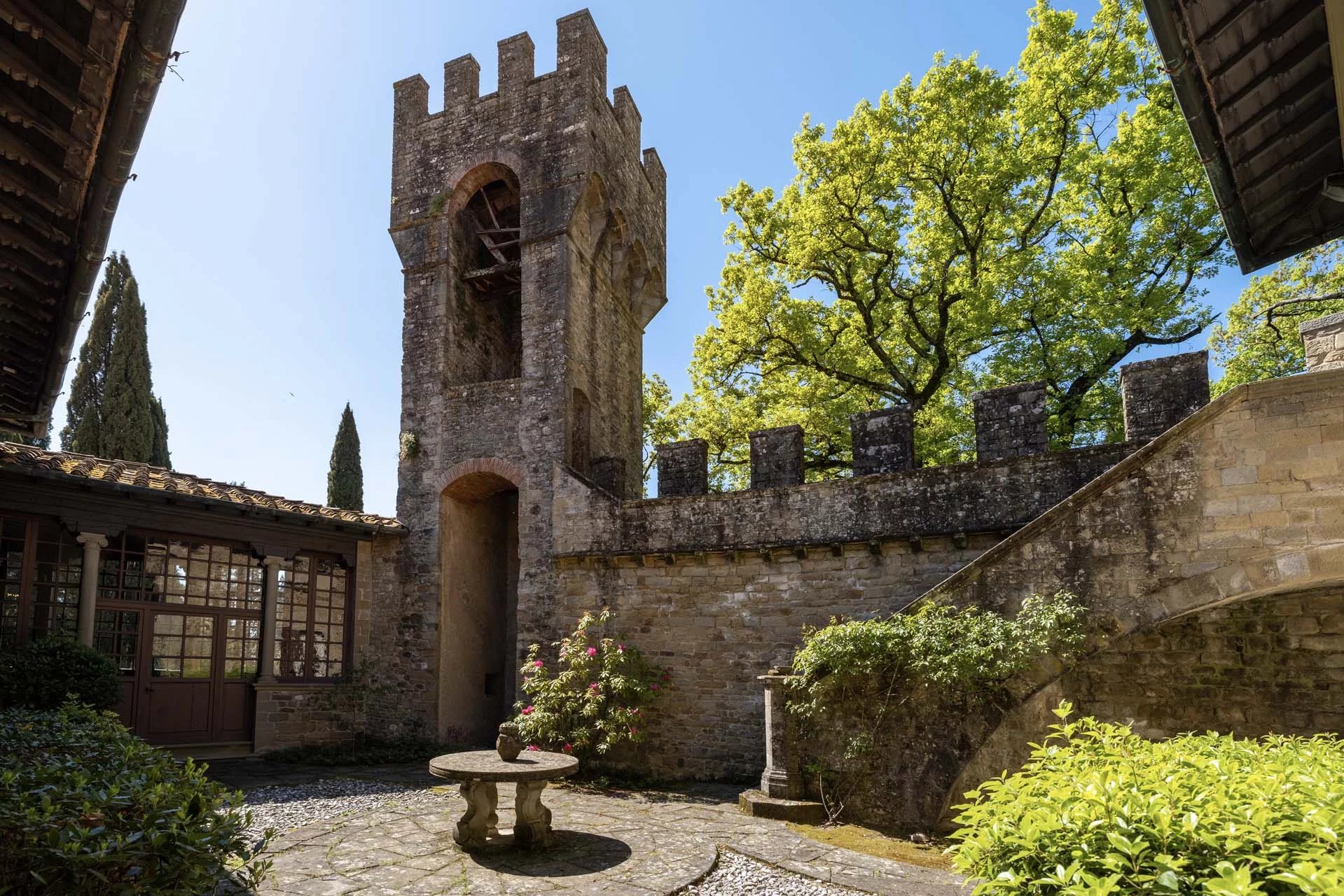
A medieval residence in the Mugello landscape
Mugello is a different Tuscany, greener, more secluded, and mountainous compared to the more classic images of Sienese hills or Chianti. Here, the landscape alternates forests, cultivated fields, villages, scenic roads, and Apennine ridges, creating an ideal setting for those seeking privacy, nature, and authenticity.
In this scenario, Mugello Castle stands out as a property with a strong identity. Its dominant position reinforces the historical character of the building, originally designed for defense and then gradually transformed into a country residence. It is this evolution that makes it interesting: the castle retains its medieval charm but also speaks the language of Tuscan rural life, representation, and hospitality.
The castle: history, stone, and representation
The main castle, approximately 2,587 m², is an imposing stone building dating from the 11th century. Probably born as a fortified tower, it was enlarged over the centuries to become an important control point of the territory. Over time, military function gave way to a more residential dimension, transforming the fortress into a countryside villa without losing its original appearance.
This historical stratification is one of the most fascinating elements of the property. Masonries, volumes, outlooks, and proportions tell a story of long continuity, while restorations over time have preserved the castle’s character. In a market where buyers seek properties with authentic history, such a residence offers a value that is difficult to replicate.
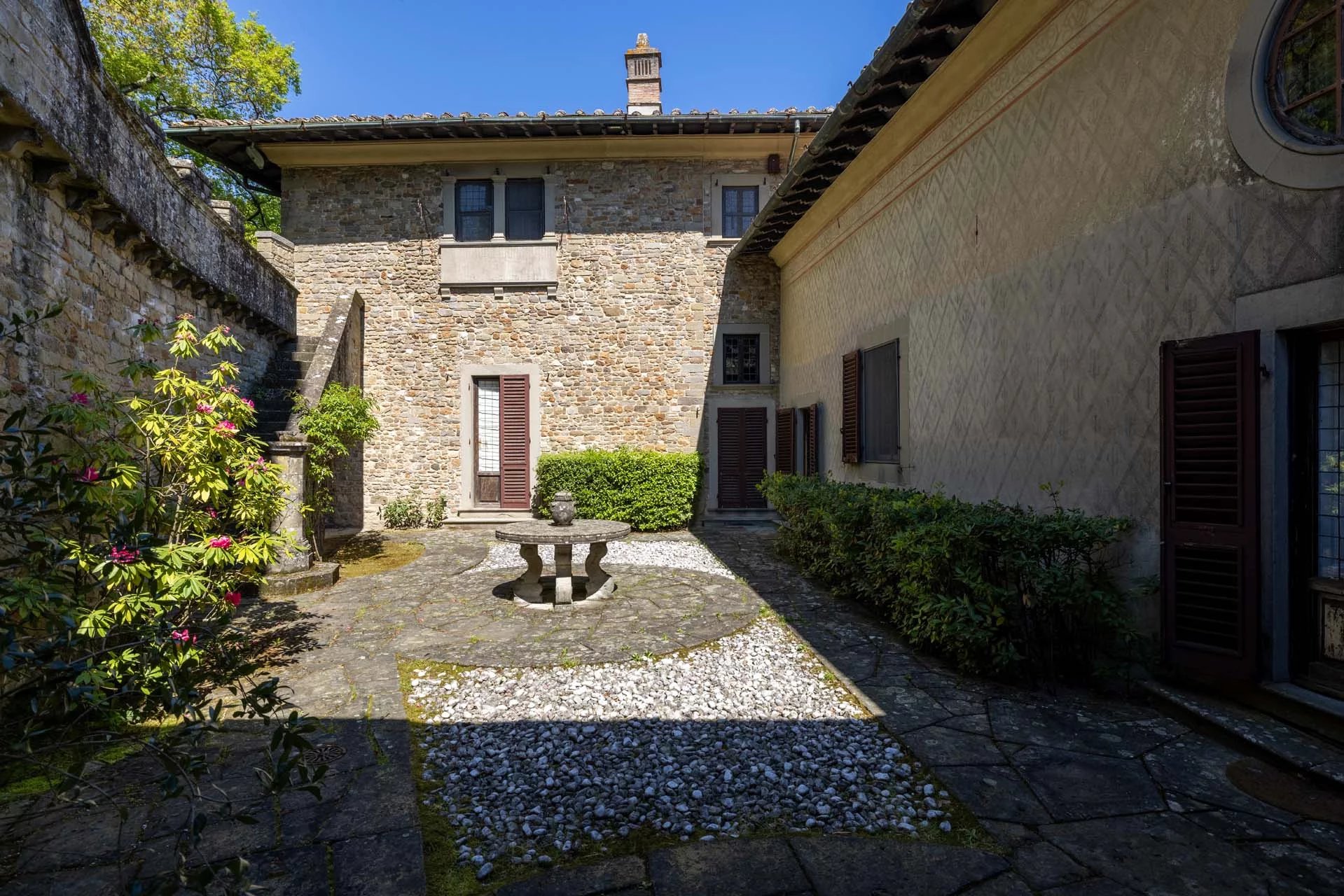
Italian-style garden and external spaces for representation
Among the most refined elements of the property stands out the approximately 6,600 m² Italian garden, created by architect Agenore Socini during renovation work carried out between 1915 and 1917. The garden is developed on the south slope of the castle and adds a scenic and formal dimension to the property.
In a castle transformed into a country residence, the garden plays a fundamental role. It is not a simple green space but an architectural element capable of organizing the view, welcoming arrivals, creating perspectives, and strengthening the sense of representation. The relationship between medieval stone, green geometry, and hilly landscape gives the property a rare balance between history and nature.
Hospitality and potential for hosting
Mugello Castle is not just a historic residence but also a property already oriented towards reception. Next to the castle, there are several rural buildings, apartments, rooms, and structures currently used for hospitality activities. This configuration makes the estate particularly interesting for those wishing to develop a high-end hospitality project.
In the segment of castles for sale, the strongest value often comes from the possibility of reviving historic spaces with contemporary functions. A castle can become a boutique hotel, relais, private event venue, retreat, representative residence, or experiential destination. The presence of multiple buildings, pools, restaurants, and outdoor spaces further expands the possibilities for enhancement.
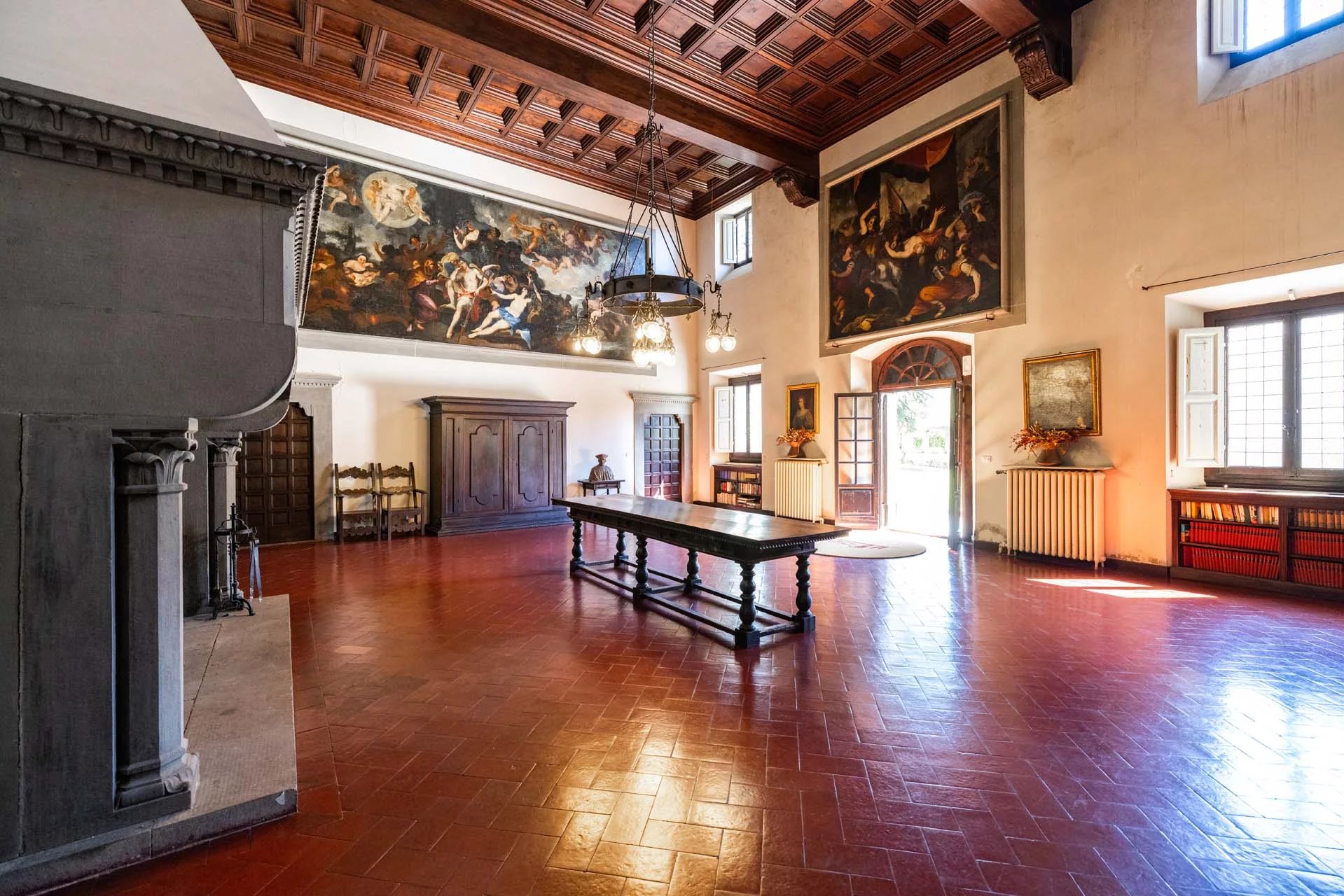
Rural buildings, apartments, and estate life
Besides the castle, the property includes a rural hamlet with six separate buildings, as well as other complexes spread throughout the estate. Some structures are already divided into apartments and rooms, while others are intended for agricultural functions, storage, or service. This division allows for a very flexible use of the property.
A large historic estate works best when each building finds its own vocation. The monumental part can remain the representative center, while the rural buildings can host guests, staff, dining spaces, agricultural activities, or spaces dedicated to events and experiential stays. It is this complexity that transforms Mugello Castle into a true real estate system rather than just a single residence.
Countryside, woods, and private lake
The estate extends over more than 62 hectares, with cultivable land, woods, and a private lake useful for irrigation. The arable lands, thanks to their favorable exposure, offer potential for typical local crops or possible new agricultural plantations, while the woods open possibilities for walks, outdoor routes, and naturalistic enjoyment.
In high-end real estate, land value goes beyond mere surface area. It guarantees privacy, protects the environment, offers productive opportunities, and strengthens the property's identity. In the case of Mugello Castle, the agricultural and wooded landscape contributes to making the castle a complete destination where history and nature support each other.
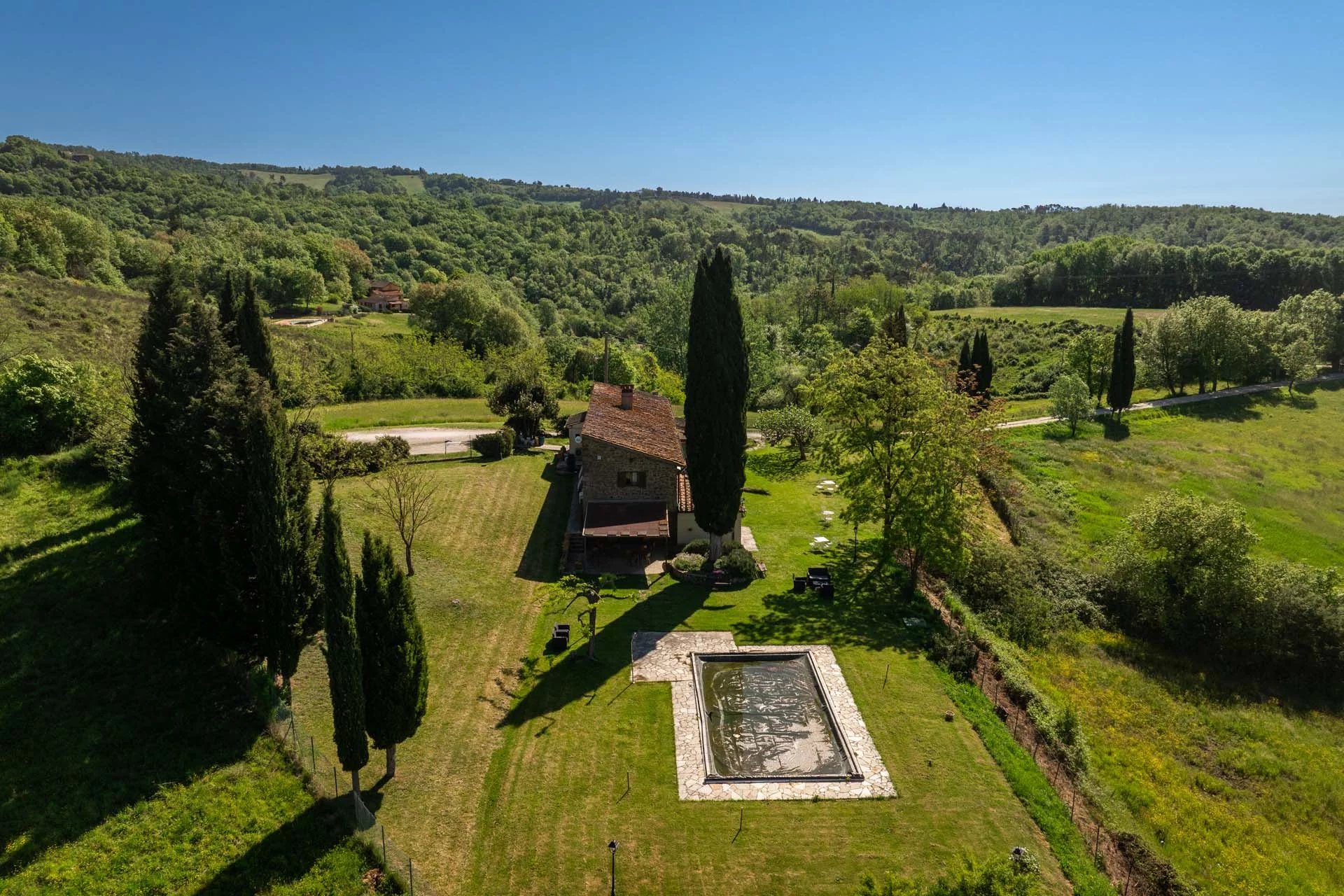
A secluded yet connected location
One of the strengths of the property is its accessibility. While located in a hilly and secluded context, Mugello Castle is situated near Barberino di Mugello and a short drive from the A1 highway exit. Florence and Bologna are reachable in less than an hour, making the estate interesting for both private use and a hospitality project aimed at an international clientele.
This combination of privacy and connectivity is particularly important. A historic residence immersed in the countryside maintains its charm only if it remains authentic and protected; at the same time, to be lived and enhanced, it must be easily reachable. Mugello Castle manages to offer both dimensions.
Living history with a contemporary outlook
Living or managing a medieval castle today means engaging with an important history but also with new comfort, hospitality, and management needs. Spaces must be maintained, interpreted, and enhanced without losing authenticity. The challenge is not to transform the castle into an anonymous structure but to bring out its identity through current functions.
In this sense, Mugello Castle represents a property with great potential. It can appeal to those seeking an exceptional private residence but also to those imagining a hospitality structure capable of combining history, nature, events, Tuscan cuisine, and experiential stays.
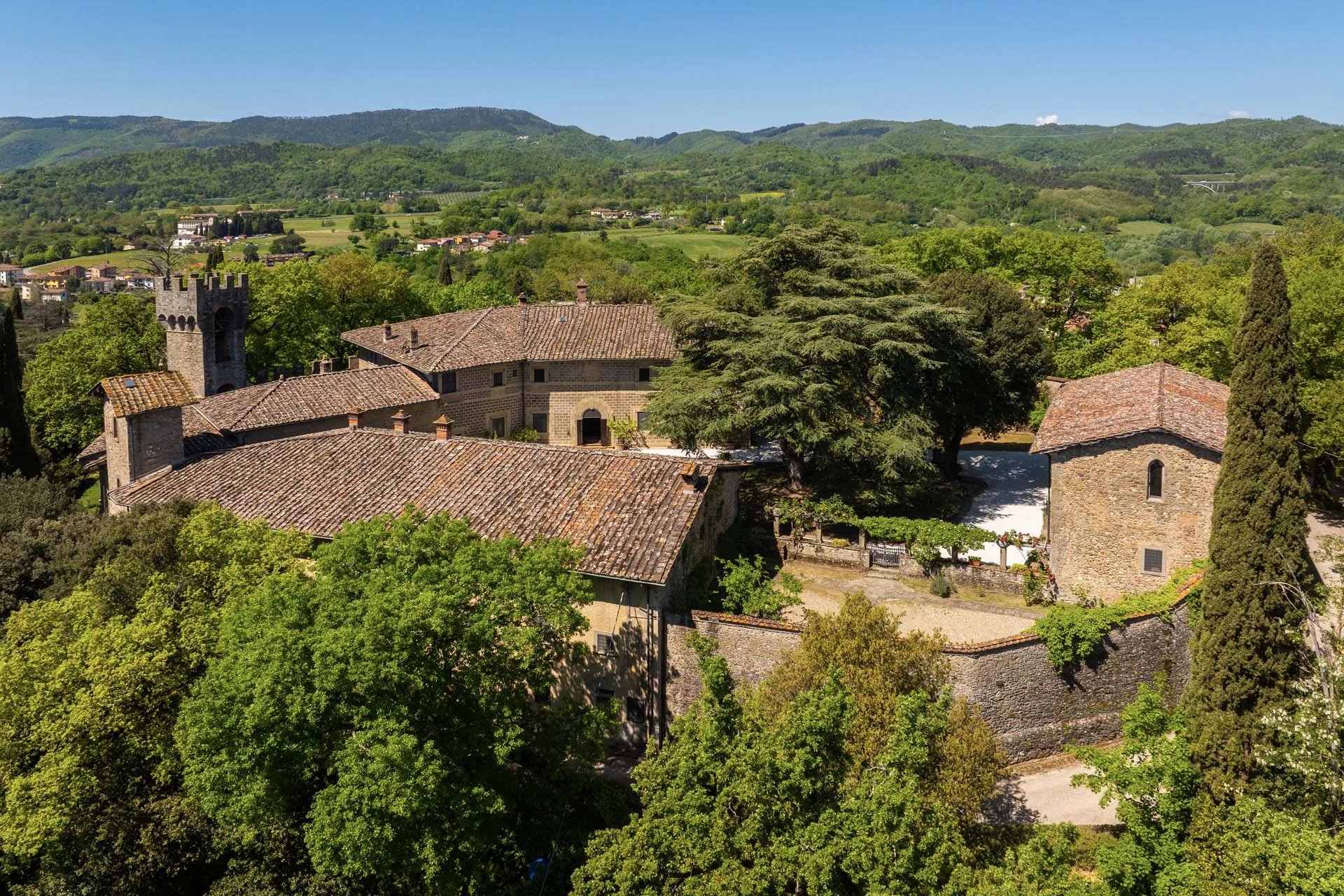
The charm of a medieval and rural Tuscany
Mugello Castle expresses a form of luxury deeply connected to the place. Not the luxury of excess but that of rarity: an authentic medieval residence, a large private landscape, historic and rural buildings, gardens, pools, woods, and development opportunities.
The property demonstrates how a castle can live beyond its original function, becoming residence, destination, and project. The Mugello countryside amplifies its value, offering a secluded and powerful scenario where history does not remain static but continues to generate new ways of inhabiting and welcoming.


Copyright © Romolini

