




 Our Family


 Italiano
 Deutsch



 Back to list
© Romolini Immobiliare

Former convent for sale in Umbria: better as private residence or hotel?

Published 10-11-2026
Those searching for a former convent for sale rarely desire a conventional property. Cloisters, refectories, ancient cells, chapels, and intimate gardens tell a story no new construction could reproduce. At the same time, the size and particular layout of the spaces pose a decisive question: to transform the complex into a private residence or to enhance its potential as a boutique hotel?
The answer depends on the scale of the property, its location, state of preservation, and especially the buyer's life or business project. Some convents have the intimacy necessary to become family homes; others seem naturally suited to hosting guests.
© Romolini Immobiliare
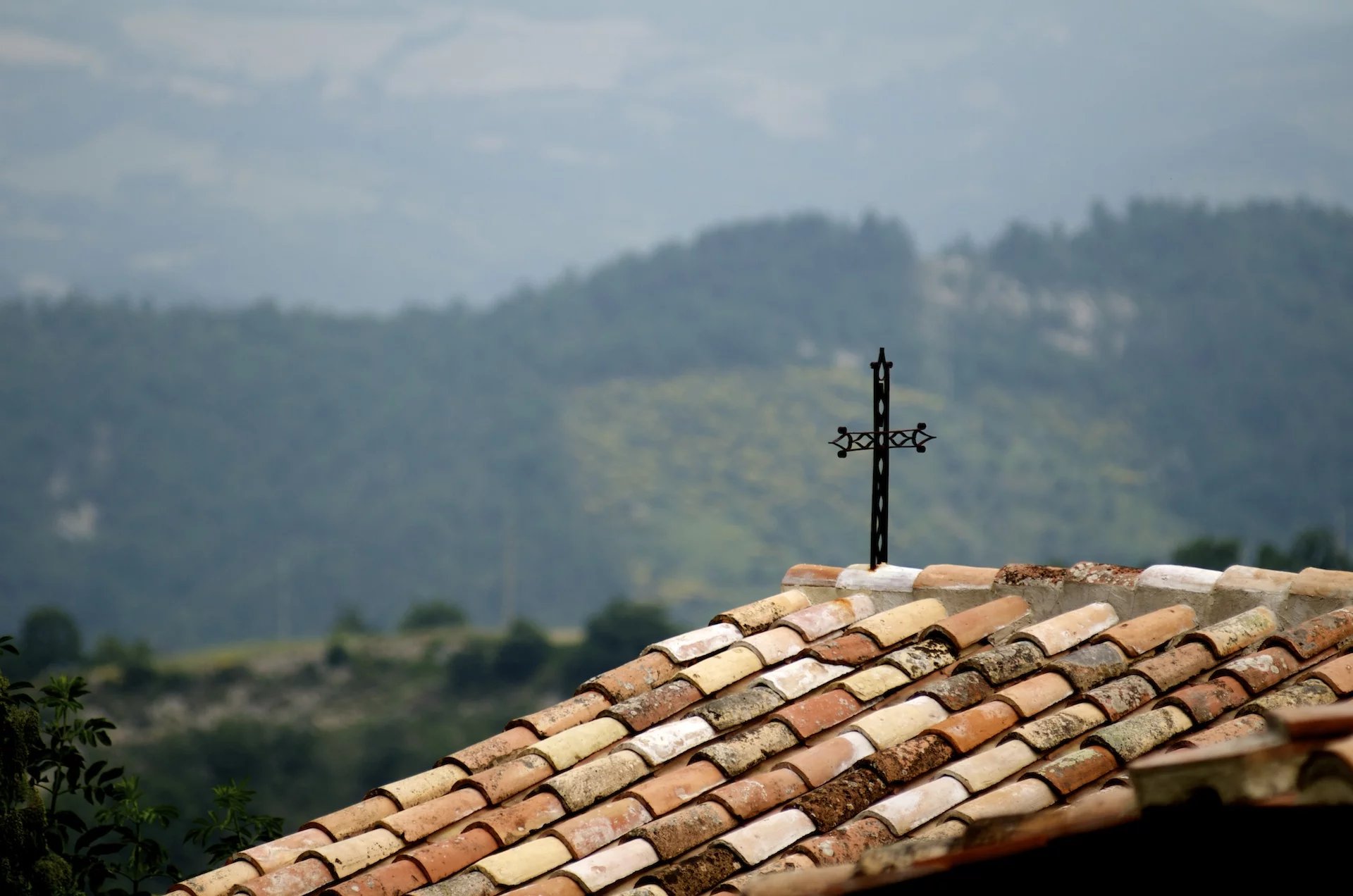
Living in a former convent: an extraordinary residence
Transforming an ancient convent into a private home means living in a place built around silence, contemplation, and relationship with the landscape. Thick stone walls, internal courtyards, and spaces arranged around the cloister create a sense of protection scarcely found in other real estate types.
The residential use is particularly suitable when the building has manageable surfaces, a clear separation between living area and sleeping area, and independent spaces for family members, guests, or staff. Also, having a private garden rather than a very large agricultural extension can make the property easier to live in throughout the year.
An example is the Casa del Convento, a historic home for sale in Chianti, obtained in a section of a 14th-century monastery on the hills of San Casciano in Val di Pesa. The property measures 331 square meters, includes five bedrooms, and is divided into two independent units connected by a paved courtyard. The private garden of about 3,700 square meters completes a solution that preserves the atmosphere of the religious complex without assuming the challenging scale of a large hotel.
In cases like this, the ancient architecture becomes part of daily life: the refectory can transform into a large lounge, the monks’ rooms into reserved bedrooms, and the courtyard into a space for outdoor lunches and receptions.
© Romolini Immobiliare
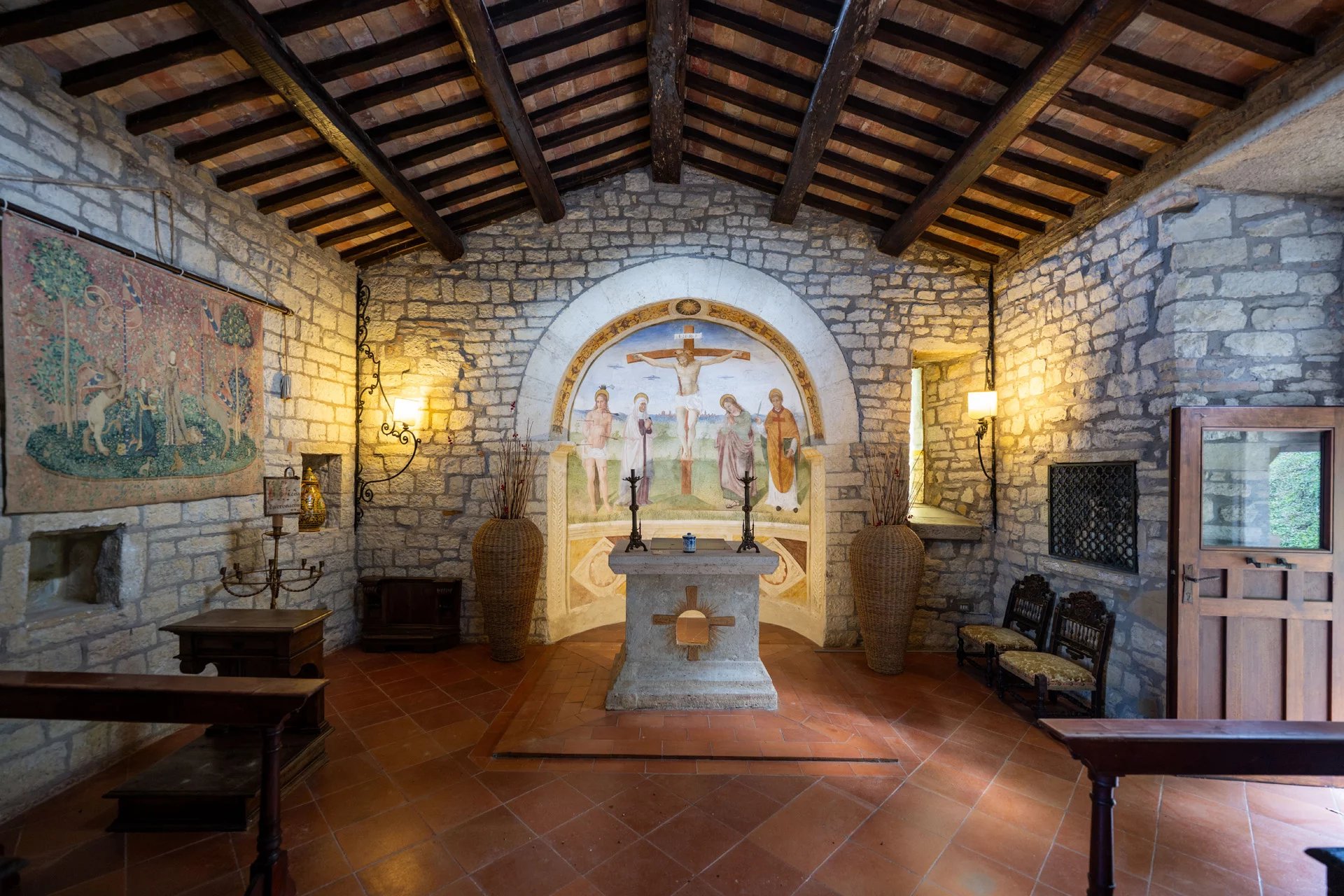
When the former convent has a natural hotel vocation
Choosing to create a hotel becomes more coherent when the complex already has numerous en-suite rooms, large common spaces, professional kitchens, parking, a pool, and grounds that can be dedicated to guest activities.
The original organization of convents can favor hospitality conversion. The ancient cells offer a modular layout, while refectories, libraries, and chapter rooms can host restaurants, lounges, event rooms, or wellness areas. Cloisters and gardens also help create a precise identity, essential for a boutique hotel capable of standing out.
On the Umbrian hills, Borgo San Benedetto, a former abbey transformed into a boutique hotel, represents a well-structured example of hospitality. The complex offers 1,250 square meters, 18 rooms with private bathrooms, a restaurant, a pool, and 3.4 hectares of land. The renovation preserved the abbey’s historic elements, adapting them to a contemporary hospitality experience.
In a property with these characteristics, the hotel use allows more continuous use of spaces and the creation of offers based on silence, landscape, and the history of the place.
Relais, wellness, and local experiences
A former convent can become more complex than a traditional hotel. The presence of agricultural land, vineyards, olive groves, or woods allows pairing the stay with gastronomic experiences, tastings, nature activities, and wellness programs.
Convento Cortona, a relais with vineyard near Lake Trasimeno, clearly shows this potential. The 16th-century complex includes 1,160 square meters, twelve rooms, five apartments, a pool, a restaurant with a professional kitchen, and a wellness center with hot tub, gym, and Turkish bath. The 5.6 hectares of land also include a vineyard and an olive grove.
In this case, the building is not just the container of the activity: its history becomes the starting point to build the guests’ experience. The stay can be enriched by tastings, landscape walks, small events, and wellness retreats.
© Romolini Immobiliare
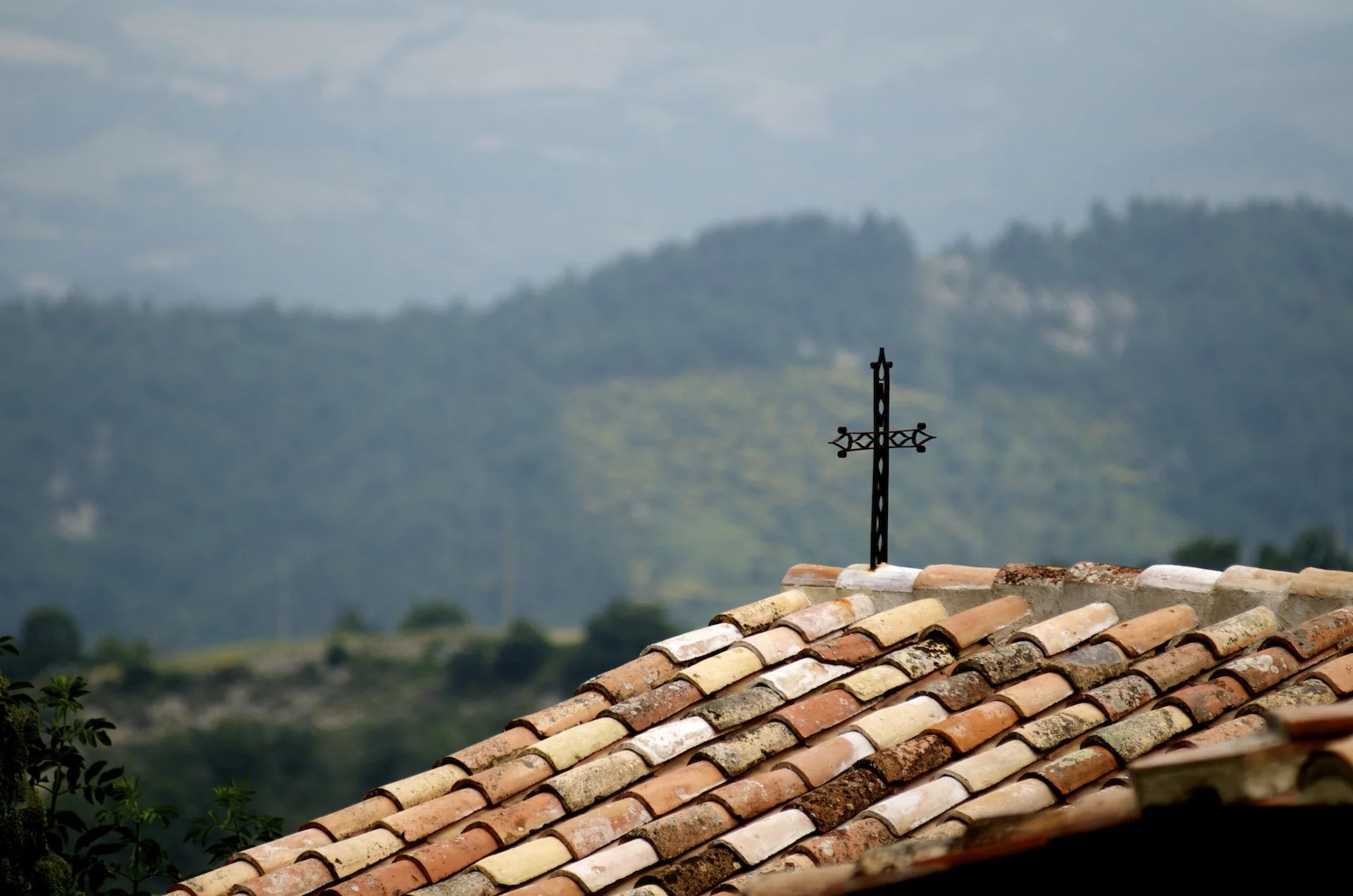
The hybrid solution: private residence and hospitality
The choice does not have to be necessarily exclusive. Larger complexes, especially when articulated in several buildings or independent wings, can accommodate both a main residence and a part dedicated to guests.
This formula allows the owner to live permanently in the property while maintaining privacy, while rooms, independent apartments, and common spaces are used for selected hospitality. It is a solution suitable for those who want to directly manage a relais, organize events, or host small groups without giving up the homely character of the property.
On the hills of Garfagnana, the Monastero Lucca, a 13th-century former convent with pool, offers 966 square meters, ten rooms, and almost ten hectares of mainly wooded land. The property has been restored as a retreat place and features a hall suitable for ceremonies and corporate events. These elements allow imagining both private use and a reserved hospitality project aimed at retreats, meetings, and stays in nature.
Also, the Convento Todi, a medieval abbey with two pools, shows remarkable flexibility. The estate includes over 1,100 square meters, eight rooms, a private park, olive grove, and two pools. The layout of spaces and the panoramic position allow thinking both of an exclusive residence and a boutique hospitality facility.
© Romolini Immobiliare
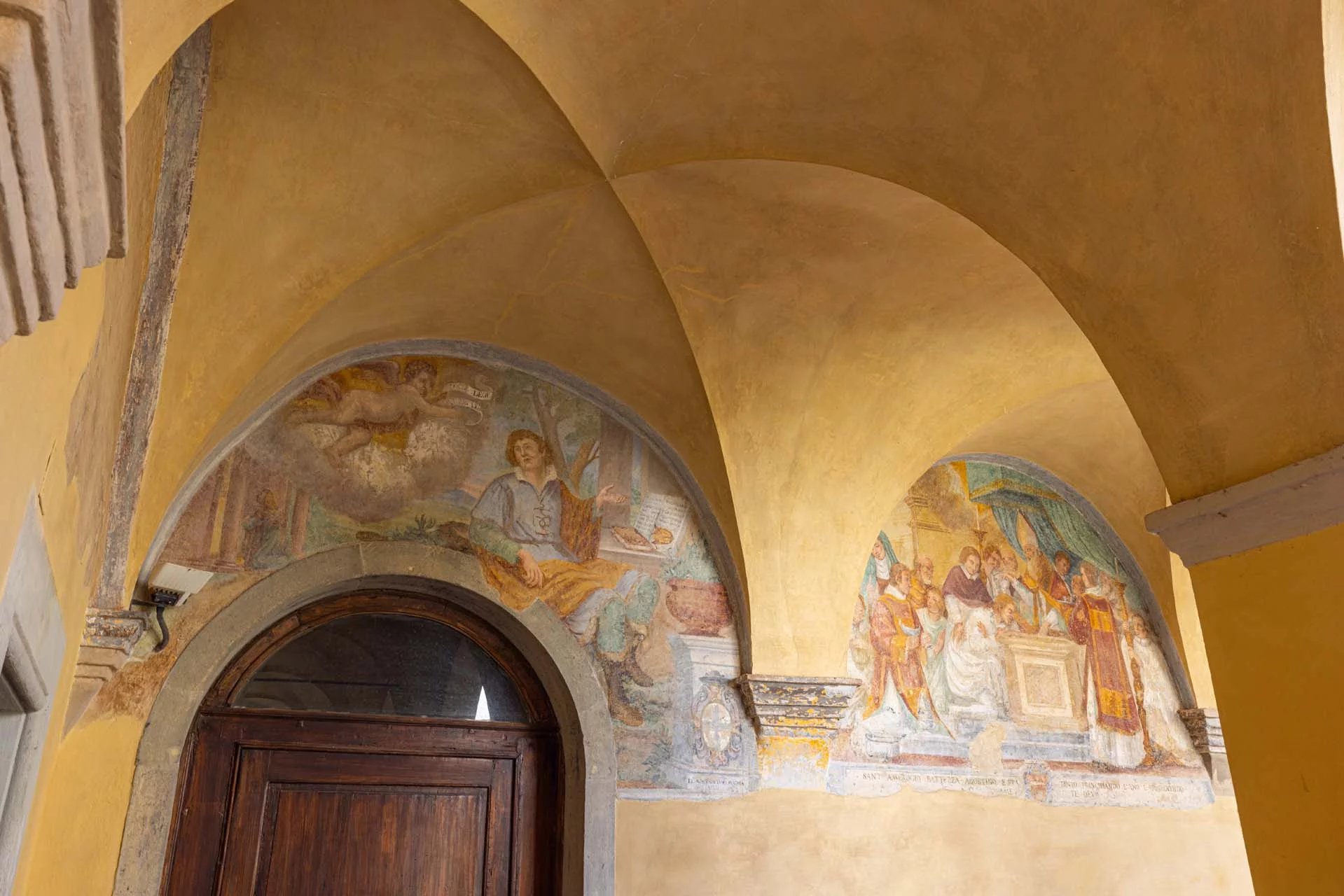
What to evaluate before choosing
Before deciding the future use of a former convent, it is useful to analyze some fundamental elements:
- Size and layout: a high number of en-suite rooms favors hospitality; smaller, well-connected spaces are generally more suitable for private living.
- Condition of systems: heating, air conditioning, water supply, and internet connection impact the possibility of using the property year-round.
- Accessibility: an isolated location increases privacy and charm, but a hotel must be easily reachable by guests, suppliers, and staff.
- Service spaces: professional kitchens, laundry rooms, storage, parking, and technical rooms are essential for hospitality.
- Land and outdoor spaces: pool, woods, vineyard, and olive grove can become integral parts of the experience offered.
- Protected historical elements: chapels, frescoes, and original structures require specific technical checks before any transformation.
- Management commitment: a large residence requires constant maintenance; a hotel adds staff, organization, and a precise commercial strategy.
Before purchase, it is therefore advisable to complement the real estate evaluation with a technical, urban planning, and management analysis coherent with the desired project.
Residence or hotel: which choice best enhances the property?
The private residence is preferable when the main goal is to live in a historic, protected, and deeply personal place. It works particularly well with balanced surfaces, easily manageable gardens, and spaces that can maintain a domestic dimension.
The hotel is instead the most natural choice for complexes with many rooms, large common areas, already operational facilities, and a location capable of attracting visitors for much of the year.
Between these two extremes exists the hybrid solution: a main residence accompanied by a few suites, guest apartments, or spaces dedicated to events and private retreats. Often it is precisely this flexibility that makes a former convent an exceptional property.
The best decision arises from the meeting of architecture and project. Even before transforming the building, it is necessary to understand its scale, history, and vocation.
Discover Romolini Real Estate's selection of convents and former monasteries for sale, from historic private residences to boutique hotels immersed in the Italian countryside.


Copyright © Romolini

