




 Our Family


 Italiano
 Deutsch


 Back to list

Villa with private chapel: features and uniqueness

Published 18-05-2026
Among the most fascinating expressions of Italian real estate heritage, villas with private chapels represent a rare type, capable of combining architecture, history, and identity into a single harmonious entity. It is not simply luxury residences but places where every element tells a specific past and helps define a unique living experience.
The presence of a manorial chapel adds a distinctive value, transforming the property into something beyond the traditional concept of luxury: a space that preserves memory and character, reinterpreted in a contemporary key.
The private chapel as a distinctive element
Within a historic villa, the chapel is never a secondary element. It is an integral part of the original project and often represents the symbolic heart of the property.
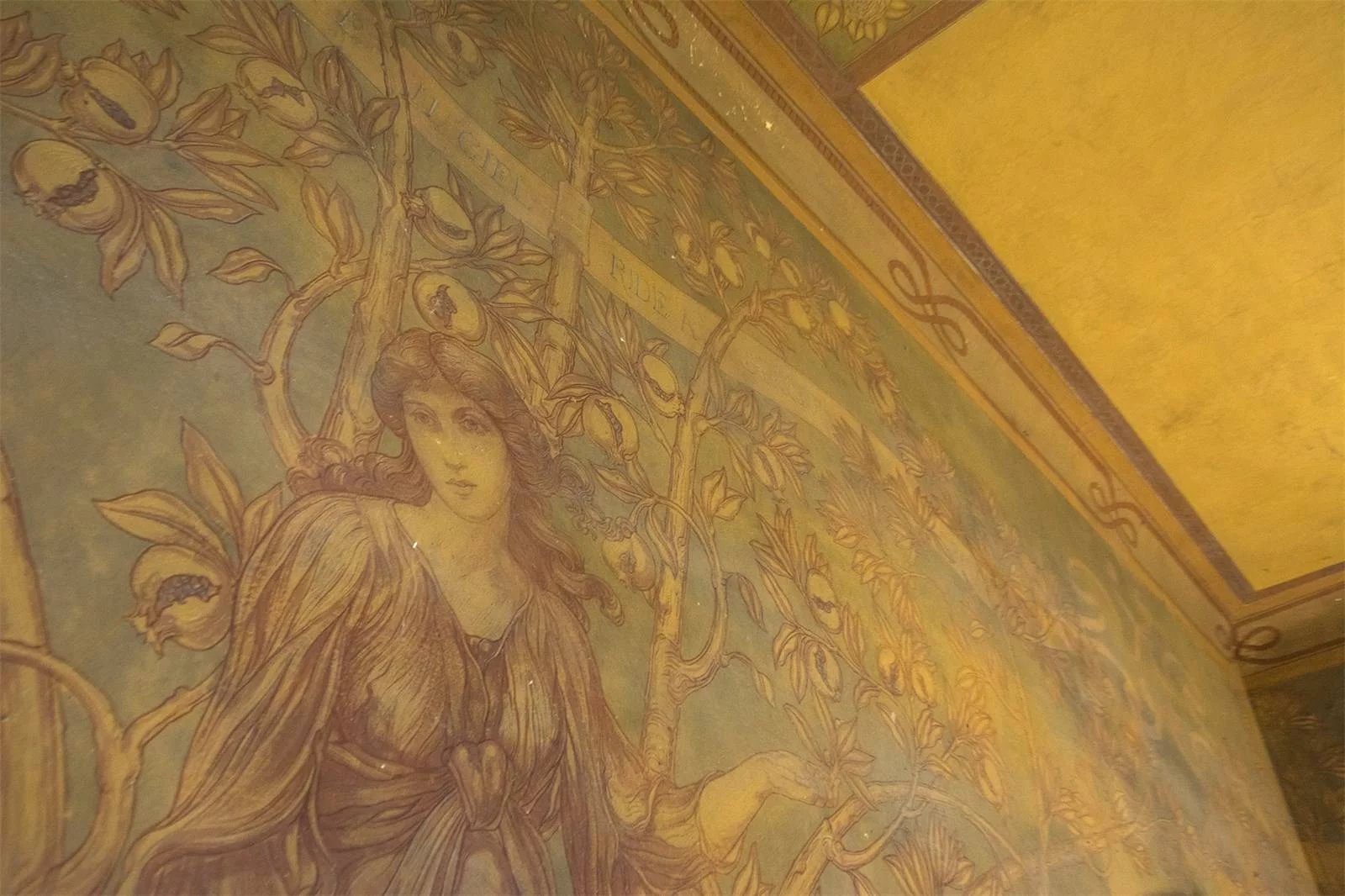
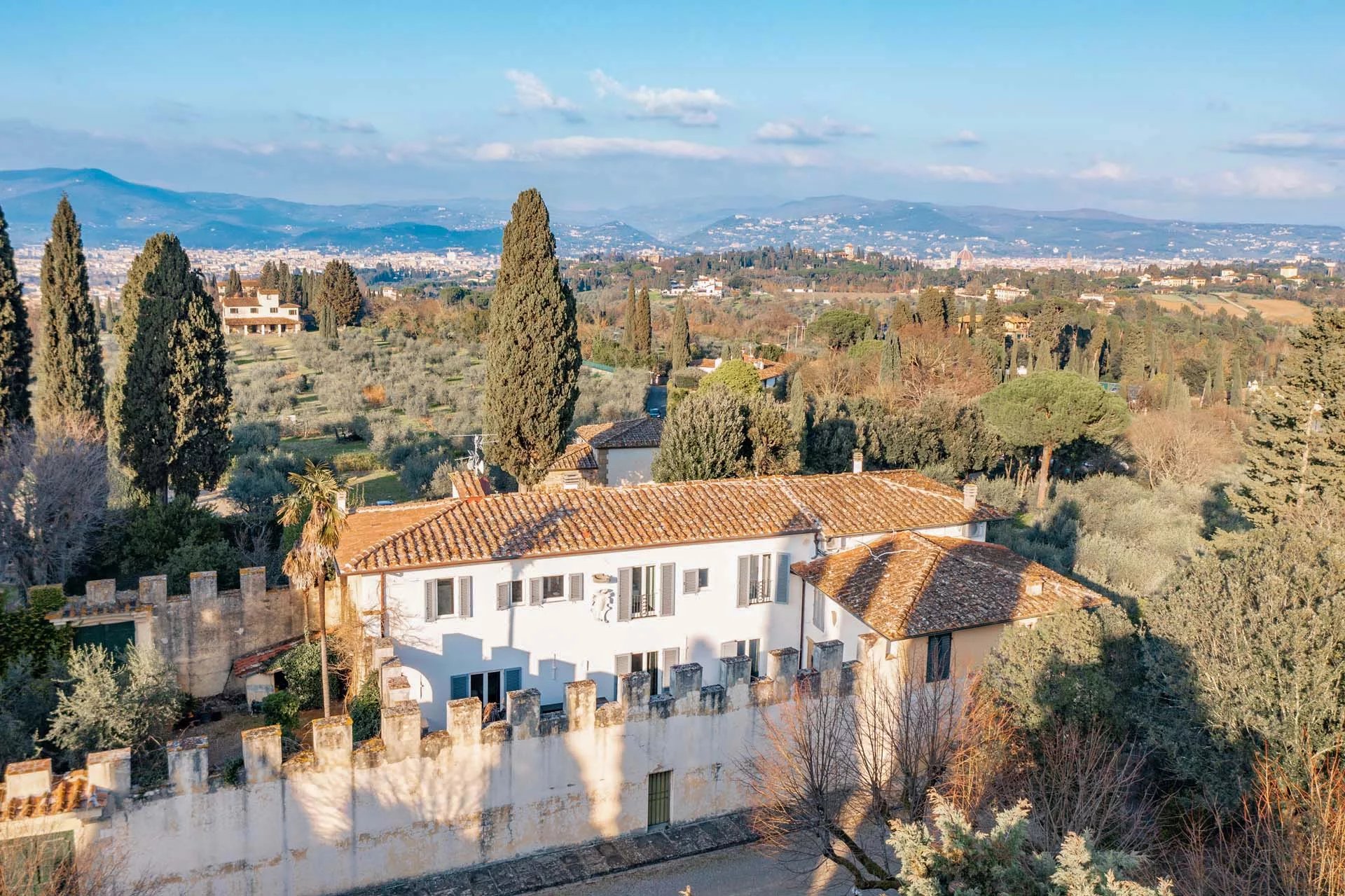
On the hills of Florence, for example, a 13th-century villa with a chapel perfectly illustrates this relationship between past and present: the sacred space, now deconsecrated, has been transformed into a refined dependance, maintaining the original altar as the focus of the environment. An intervention that demonstrates how history can be enhanced without sacrificing functionality.
Different interpretations of the same concept
Villas with private chapels lend themselves to very different interpretations, depending on the condition of the property and the project vision.
In the case of a historic residence near Lucca, the chapel is part of a larger complex with park and swimming pool, helping to create an ideal context also for events and hospitality. Here, it becomes a scenographic space, capable of enriching the overall experience of the property.
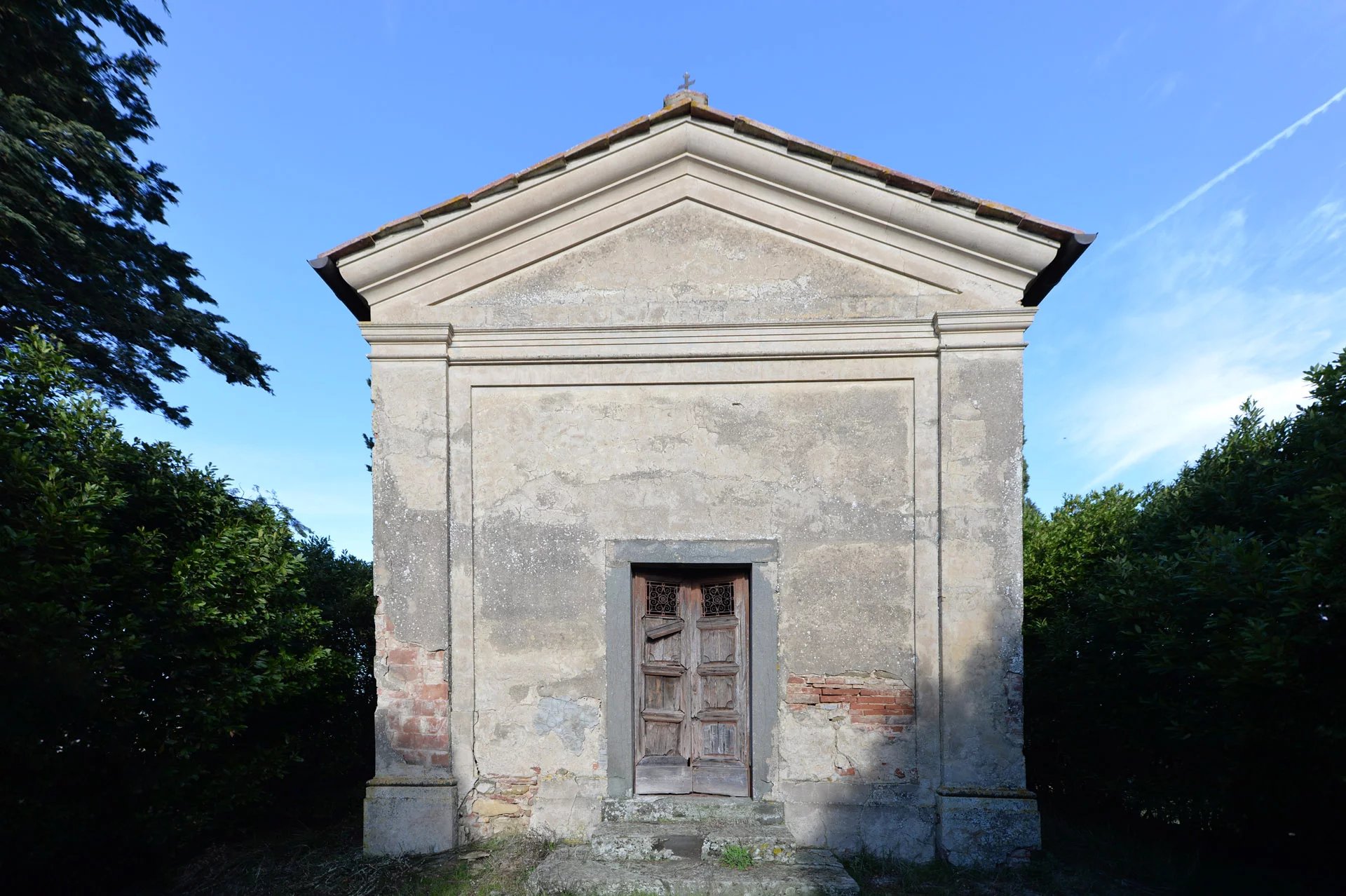
Moving to Chianti, instead, this old villa to be renovated with a manorial chapel offers a completely different perspective. Placed along a tree-lined avenue and surrounded by large grounds, the chapel represents a starting point for planning: a historic element around which to build an intervention aimed at restoring value to the entire complex.
A heritage to preserve
Private chapels often feature valuable artistic elements: frescoes, decorations, architectural details that require attention and specific skills.
The presence of restrictions protects these elements, ensuring their conservation over time. Working on such a property means working with balance, respecting the original structure, and enhancing every detail.
Versatility and new functions
One of the most interesting aspects of villas with private chapels is their ability to adapt to new uses. A deconsecrated chapel can become a dependance for guests, a reception space, or a relaxing environment.
This flexibility makes these properties particularly interesting also from a hospitality perspective, where authenticity and atmosphere play a central role.
The relationship with the landscape
These homes are almost always set in contexts of great landscape quality: hills, countryside, or panoramic areas close to art cities.
The relationship between architecture and nature is fundamental. Well-maintained gardens, internal courtyards, and historic parks contribute to defining a complete living experience, where every space is designed to dialogue with the surrounding environment.
A rare and distinctive asset
Villas with private chapels represent a very specific niche of the real estate market. Their rarity makes them especially sought after by those who desire an authentic property capable of standing out for character and historical value.
Each residence is unique, connected to a precise history and an unrepeatable context.
A villa with a private chapel is much more than a luxury residence: it is a place that preserves memory, architecture, and identity.
From already renovated properties to homes to be recovered, these residences offer the possibility of experiencing history directly, reinterpreting it with contemporary sensitivity and turning it into a timeless living experience.


Copyright © Romolini

