 Our Family


 Italiano
 Deutsch






























































































































 GALLERY
  FLOOR PLAN


 Contact
Danilo Romolini
 +39 0575 788948

STATE-OF-THE-ART 125-HA ORGANIC WINERY AND VINEYARDS FOR SALE IN VOLTERRA, TUSCANY






 Back to list


Ref. 2553 Volterra Winery
Price upon request
Currency:

 Share
Share
 PROPERTY ALERT
 INTERIORS: 6,465 sqm (69,589 sqft)
 Bedrooms: 11
 Bathrooms: 20
 Condition : New
 Furnished: Yes
 Elevator: Yes
 Internet: Yes
 Heating:
Underfloor + Air-conditioning
Heating:
Underfloor + Air-conditioning
 Well: Yes
 EXTERIORS: 124.40 ha (307.27 ac)
 Pool: Yes
 Vineyards: 23,51 ha
 Annual Production: 525 hl
 No. of annual bottles: 70000
 Olive grove: 5,91 ha
Number of plants: 3500
 Annual Production: 1000 kg
Bedrooms: 11
Bathrooms: 20
Condition : New
Furnished: Yes
Elevator: Yes
Internet: Yes
Heating:
Underfloor + Air-conditioning
Well: Yes
Pool: Yes
Vineyards: 23,51 ha
Annual Production: 525 hl
No. of annual bottles: 70000
Olive grove: 5,91 ha
Number of plants: 3500
Annual Production: 1000 kg
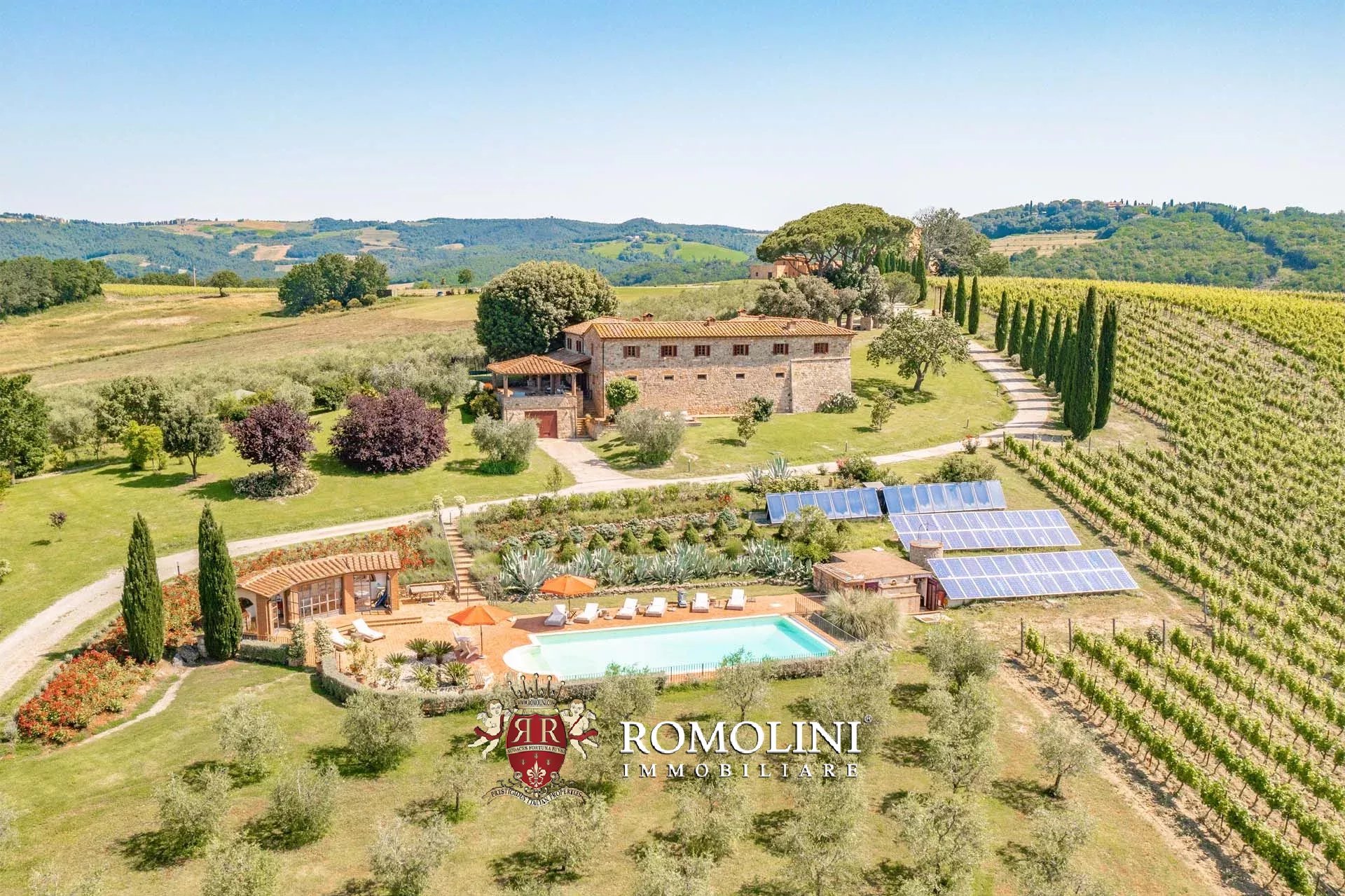
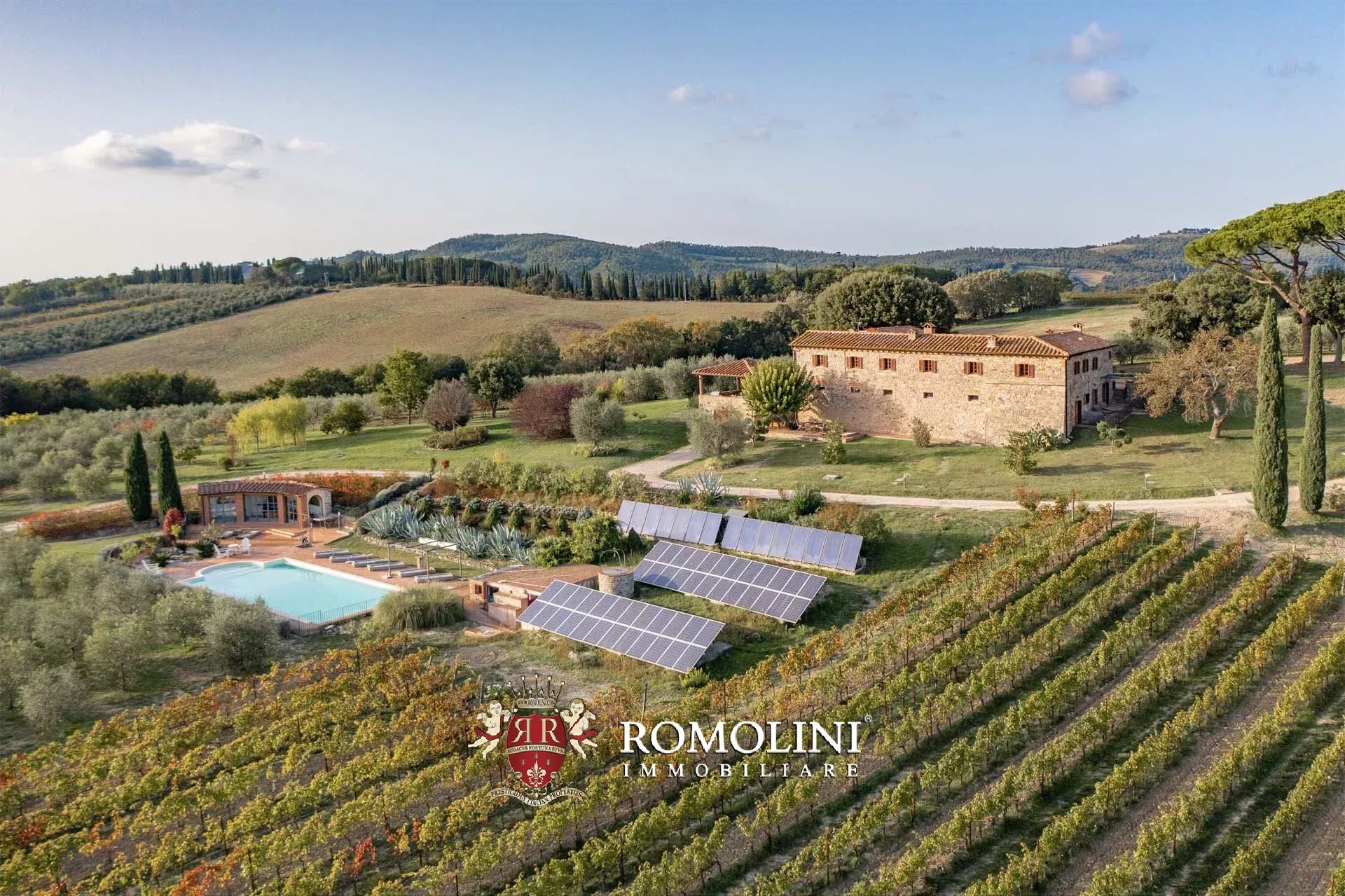
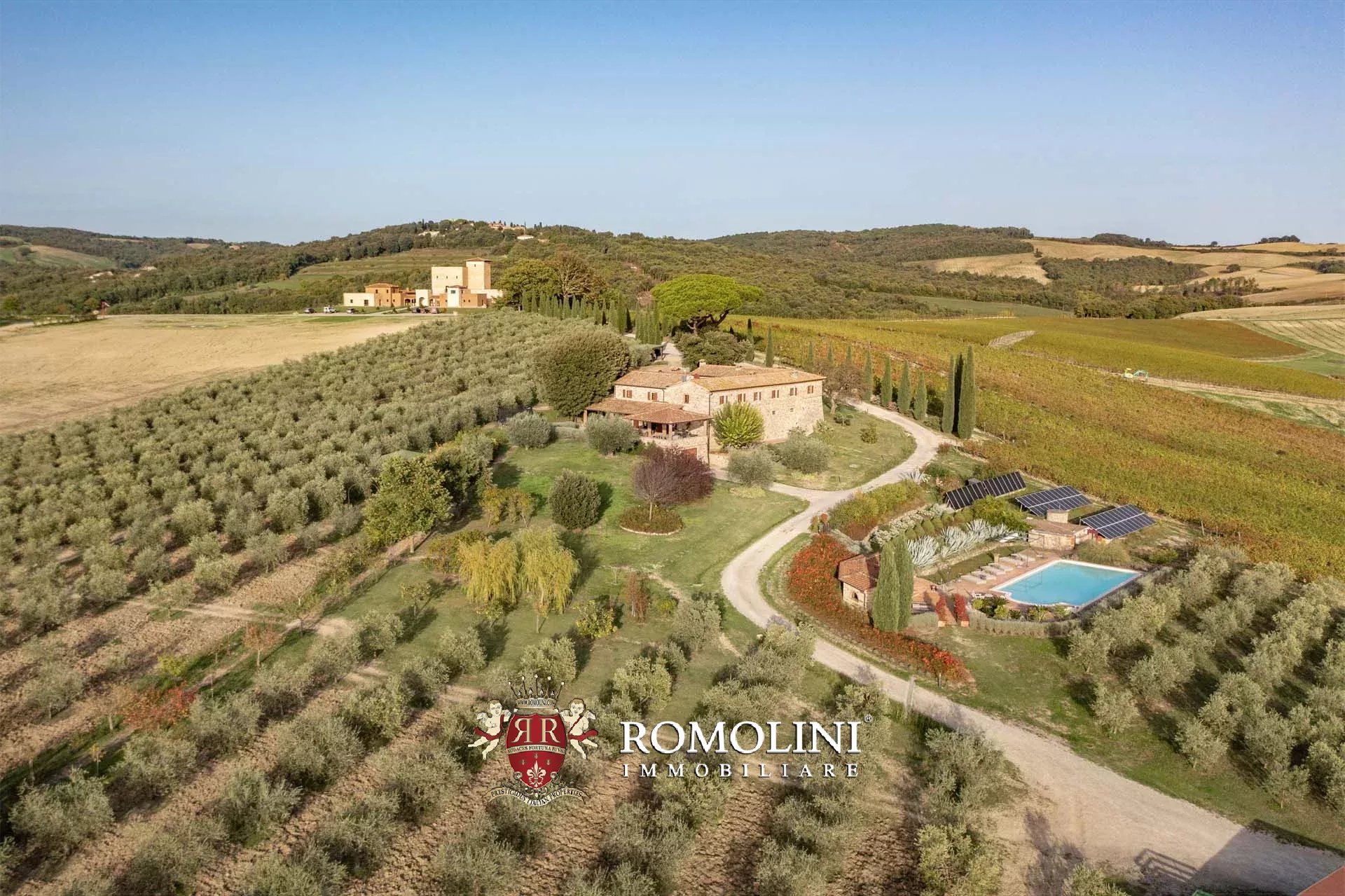
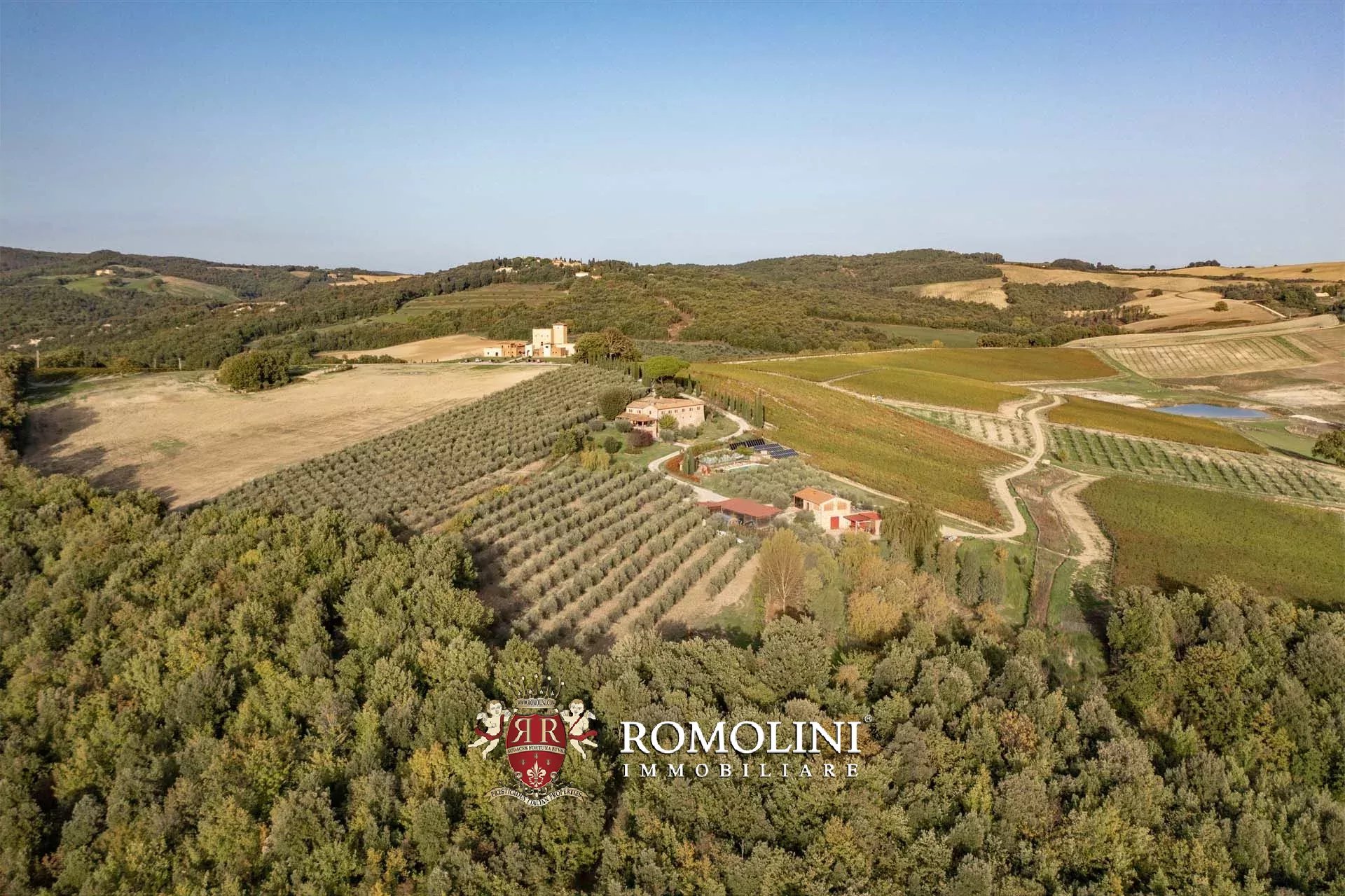
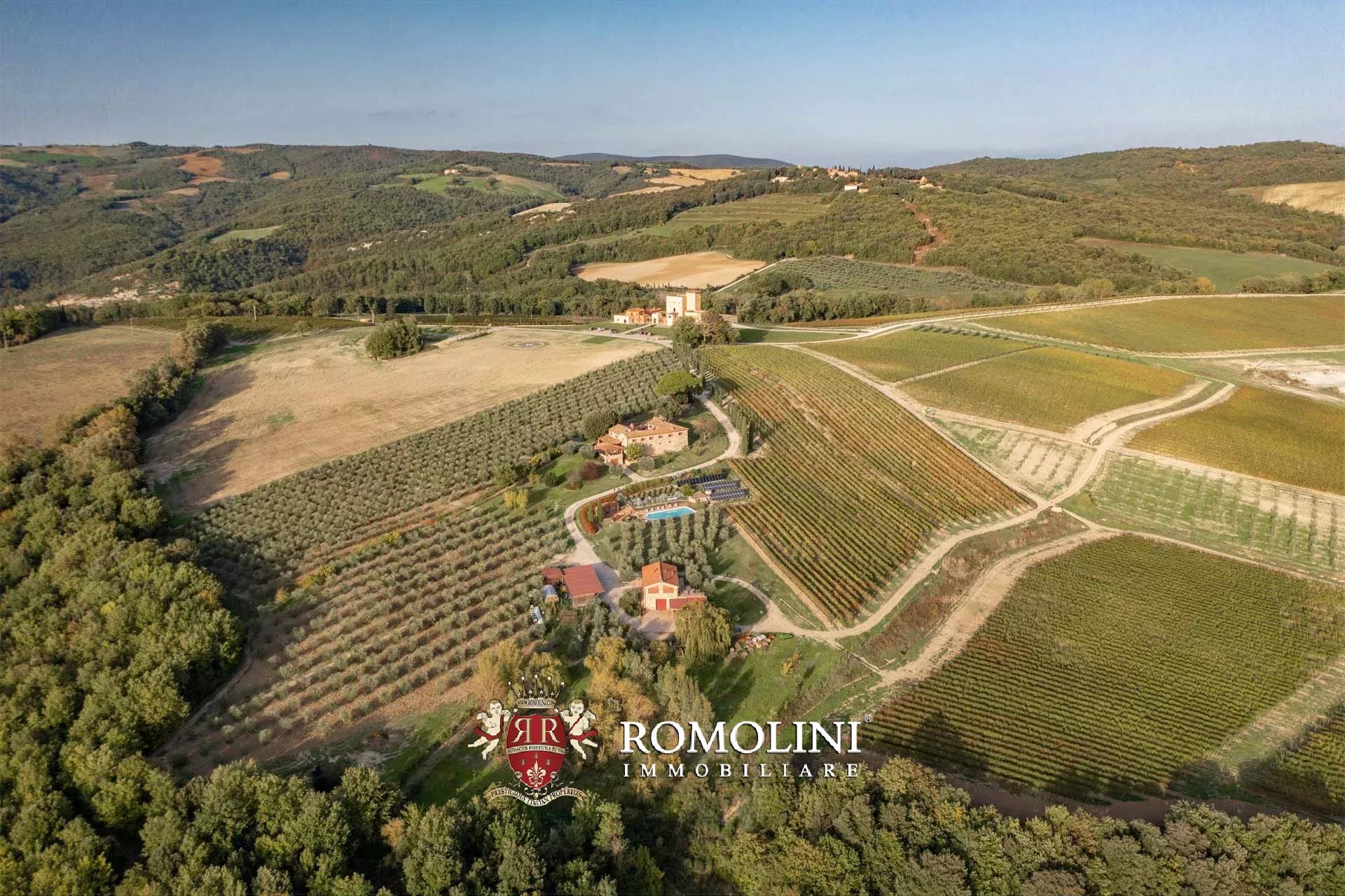
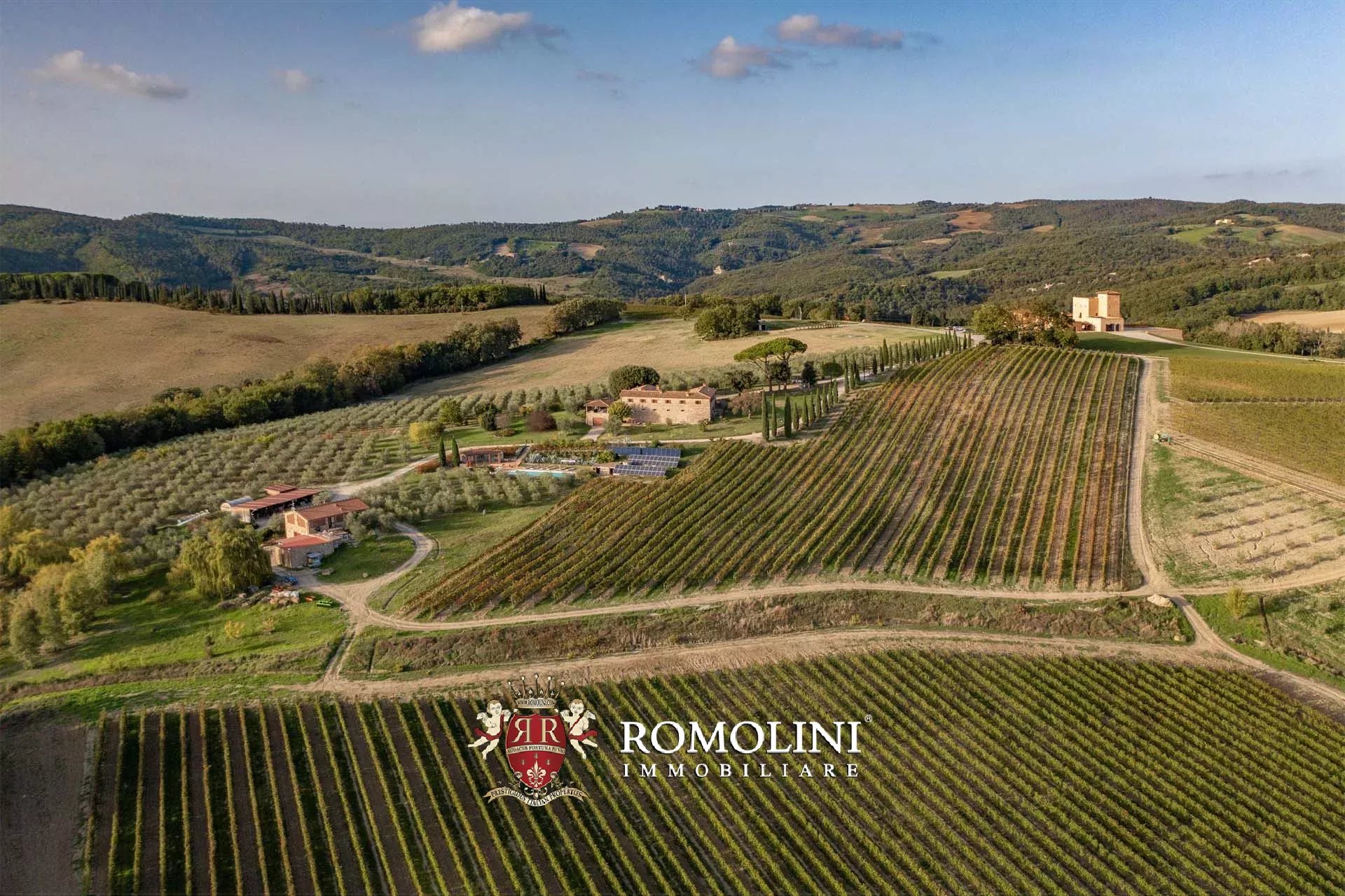
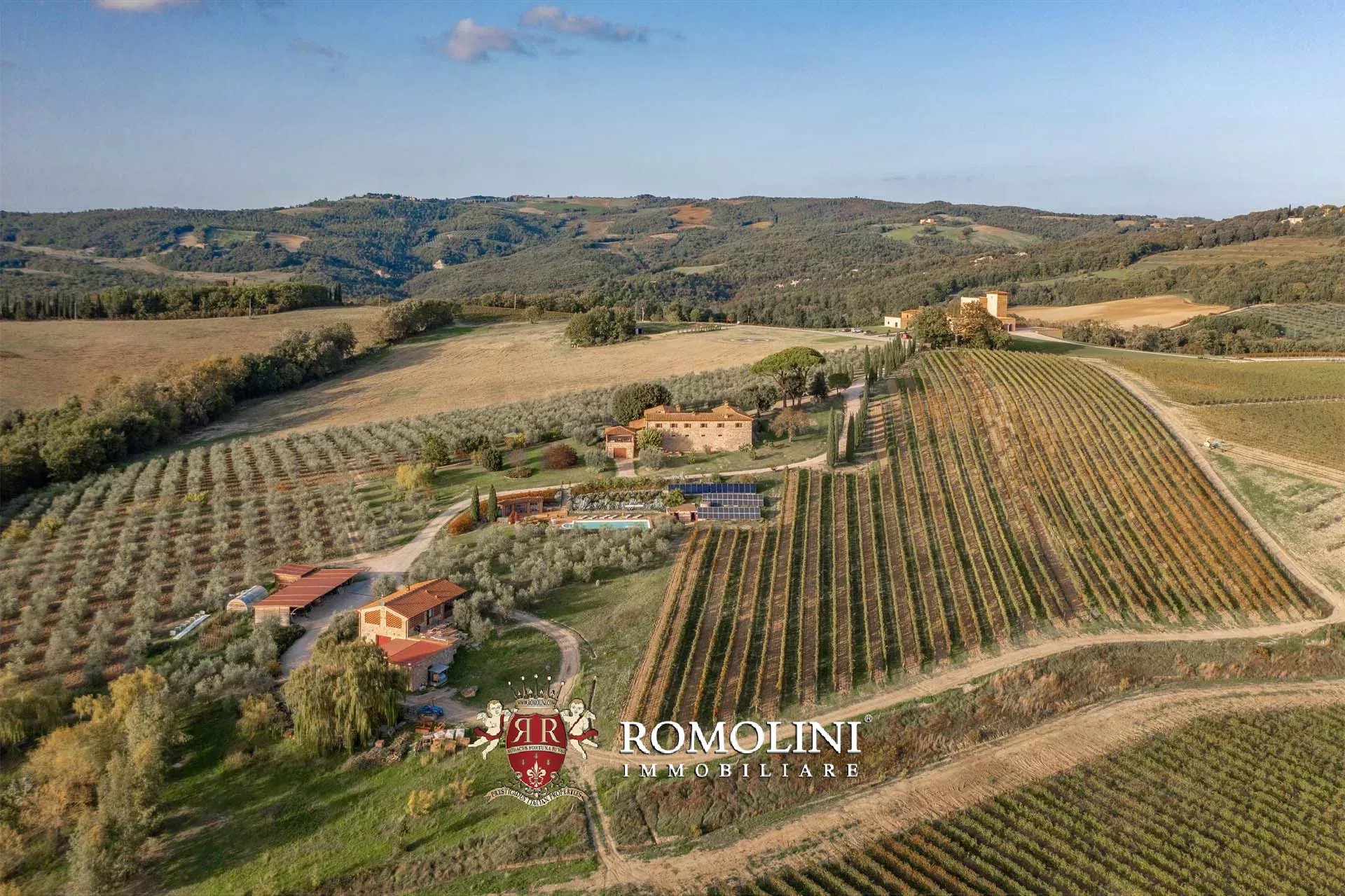
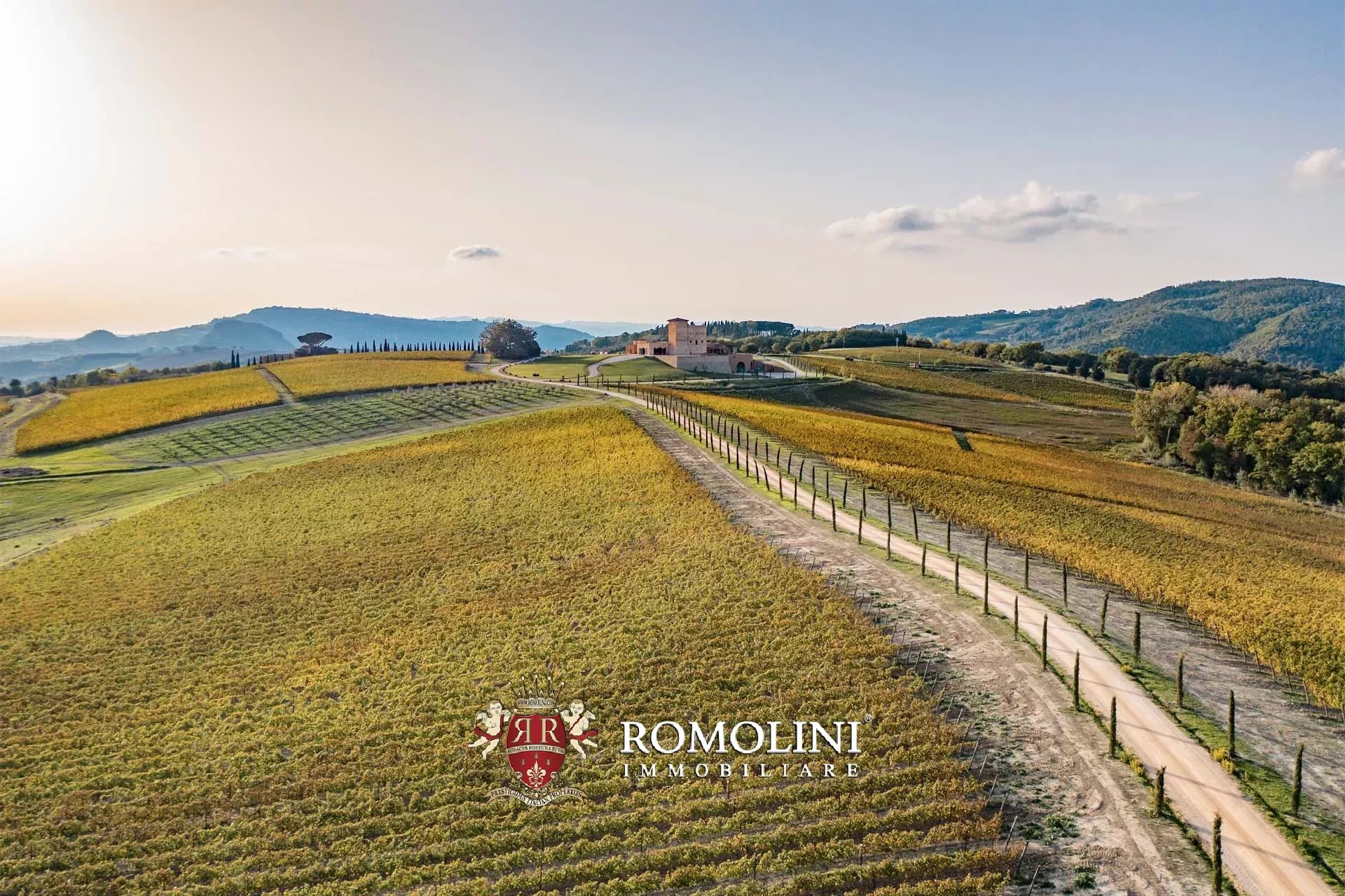
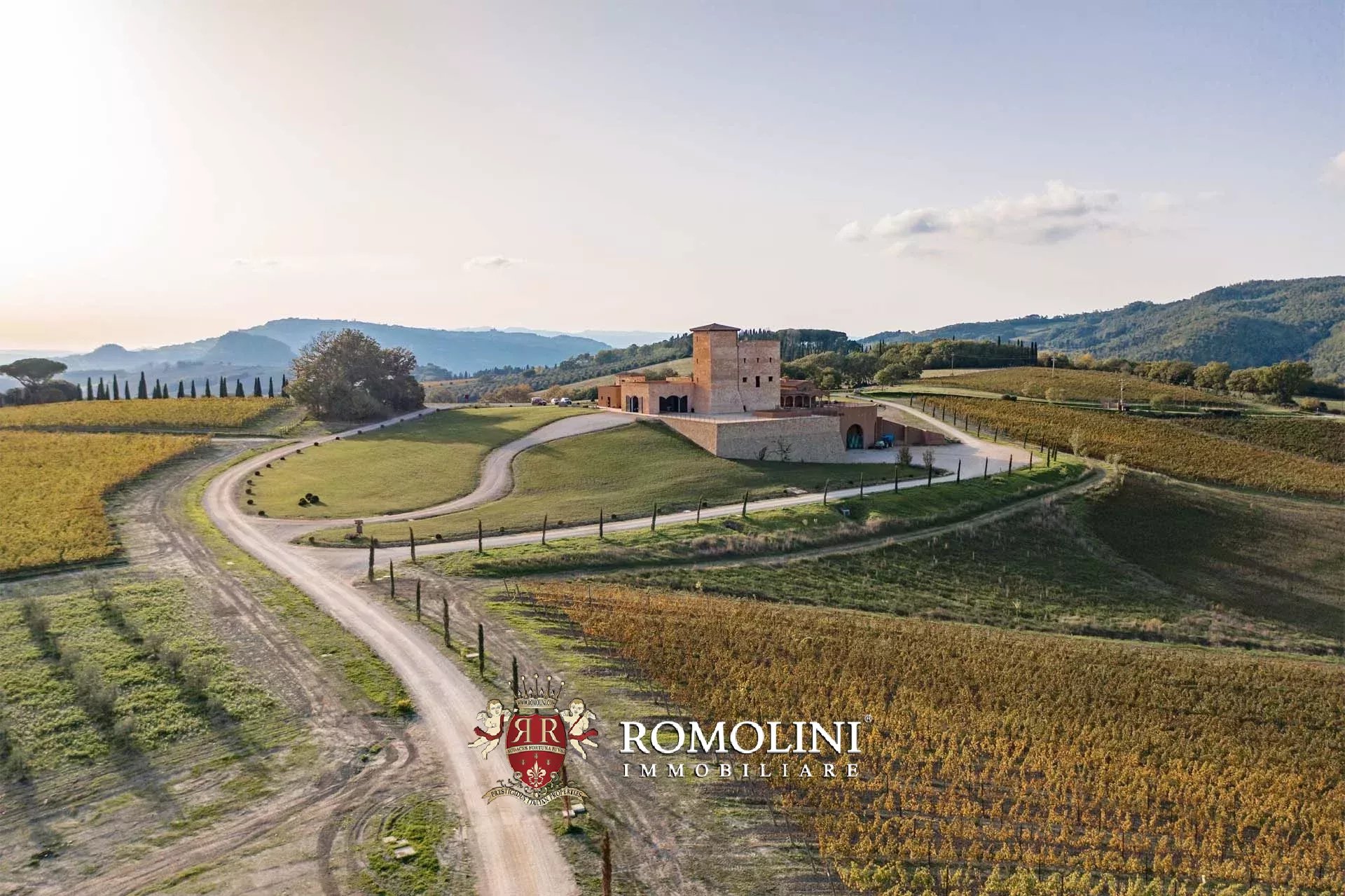
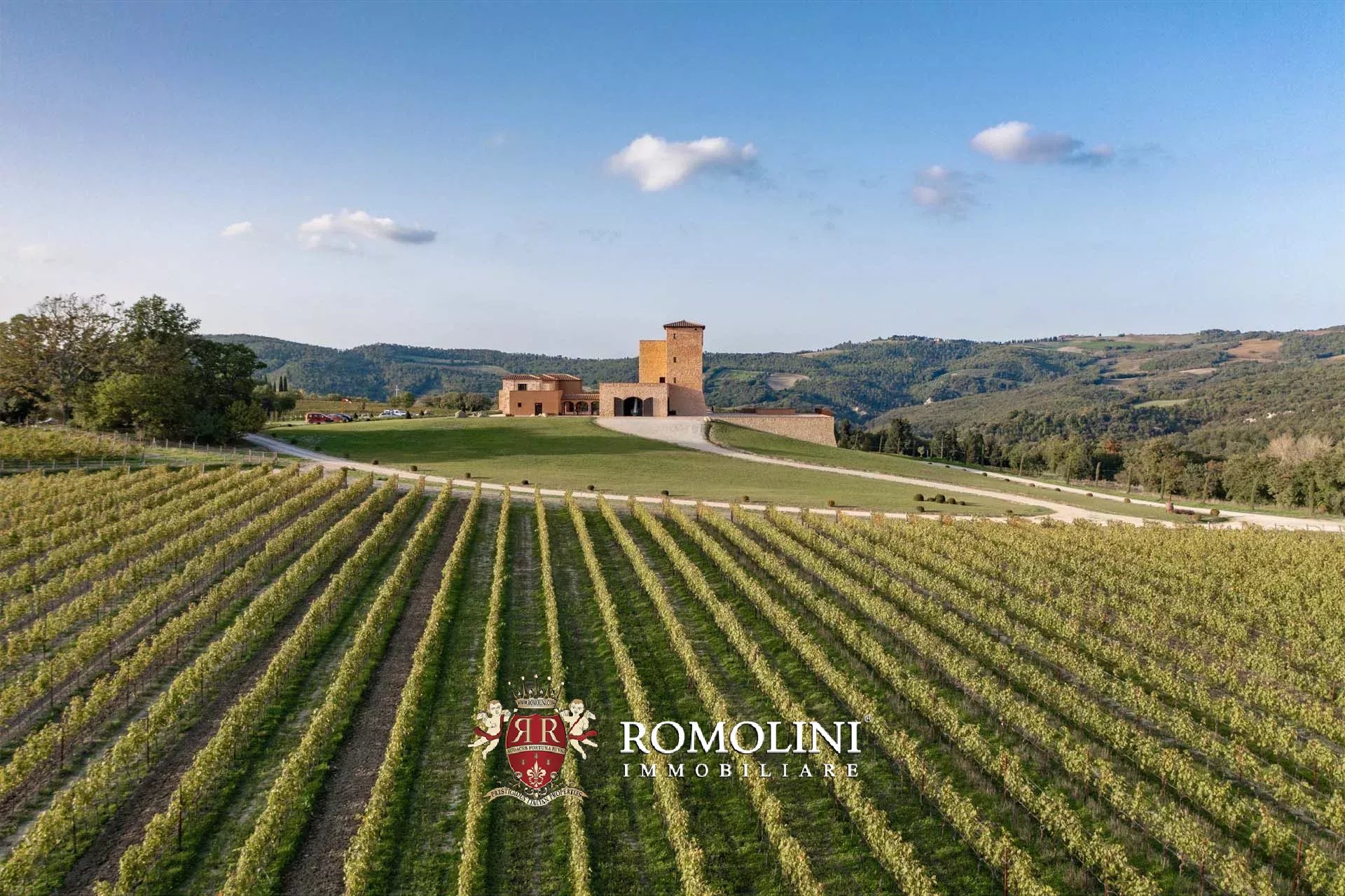
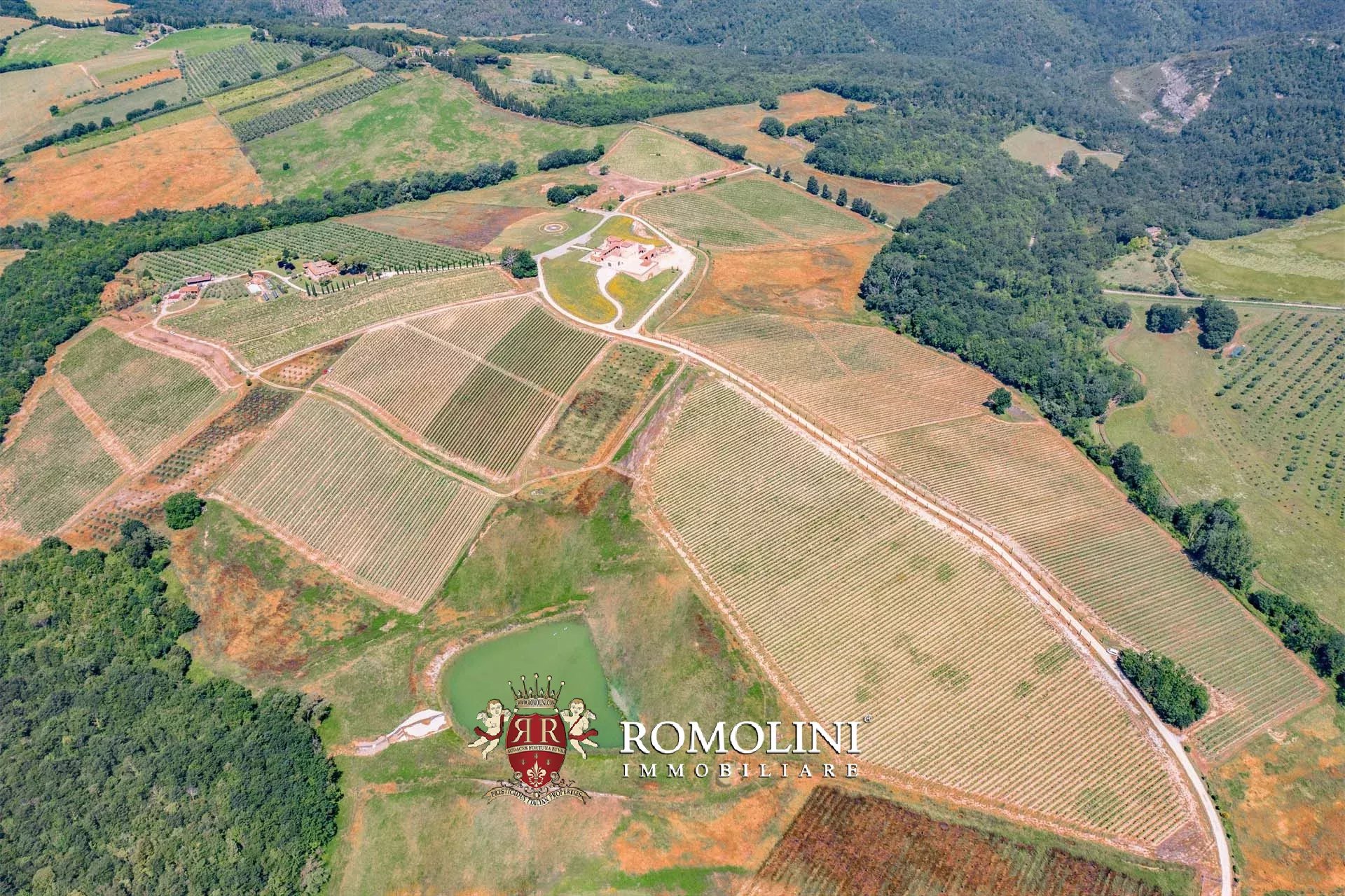
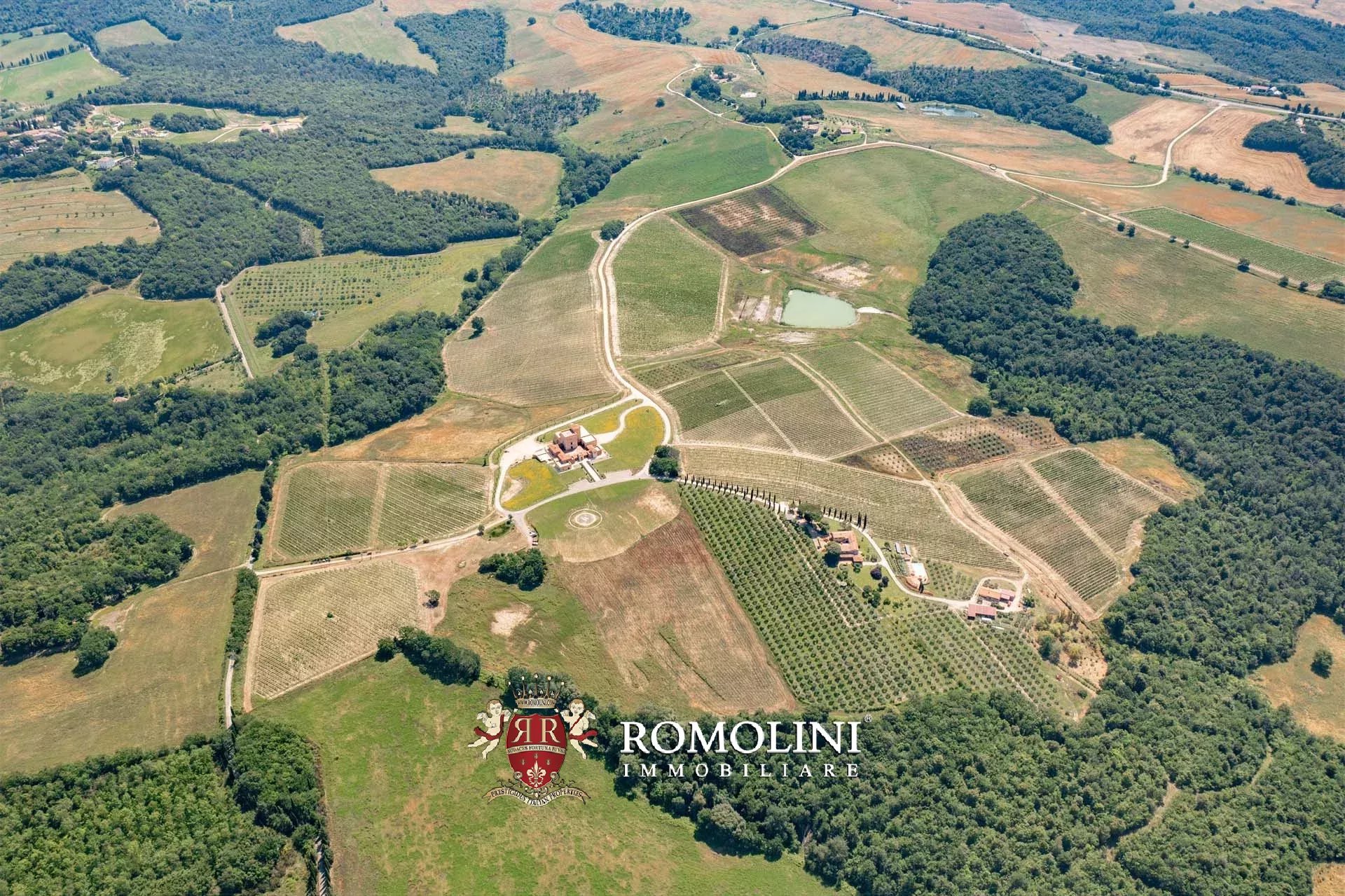
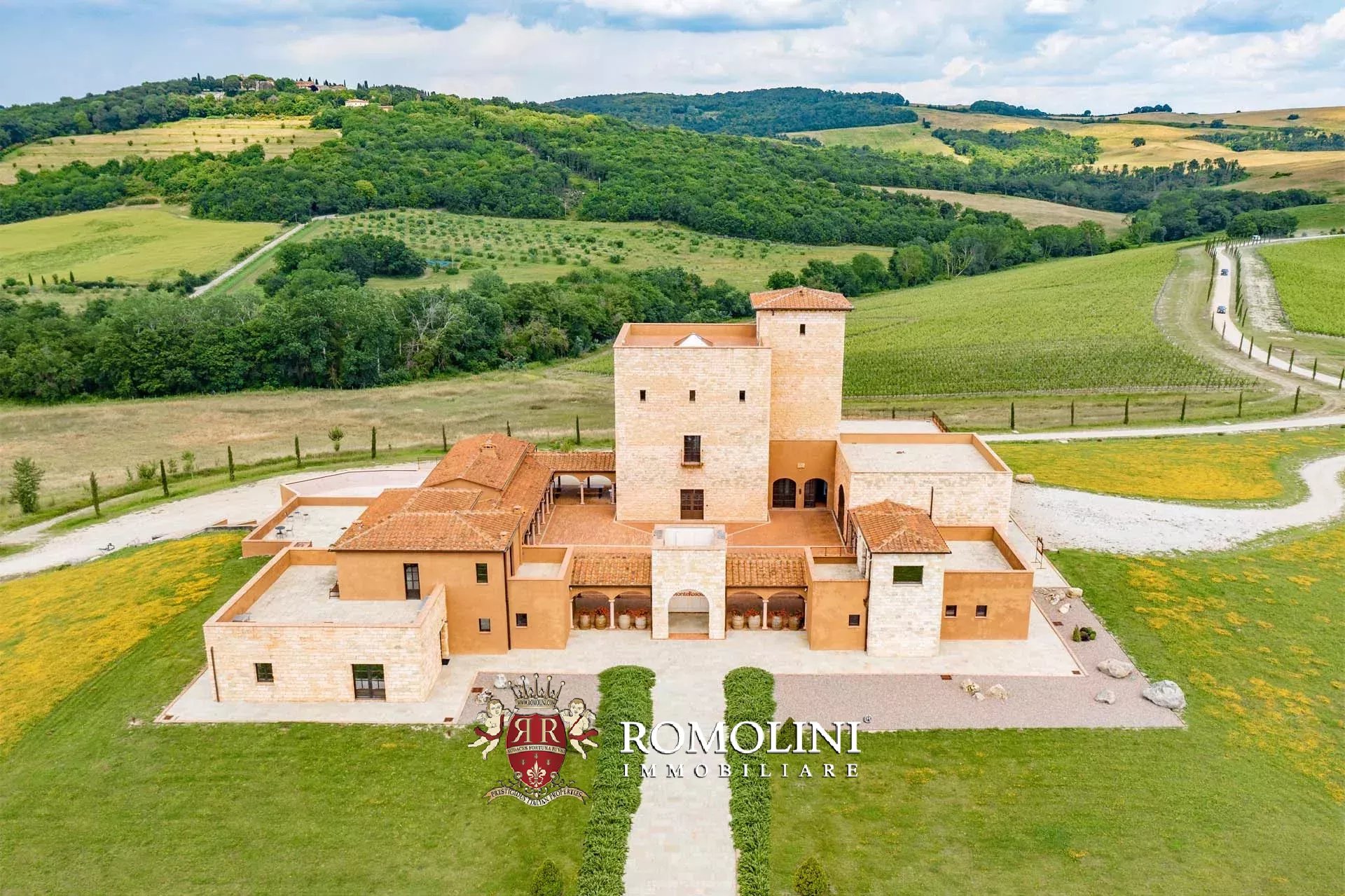
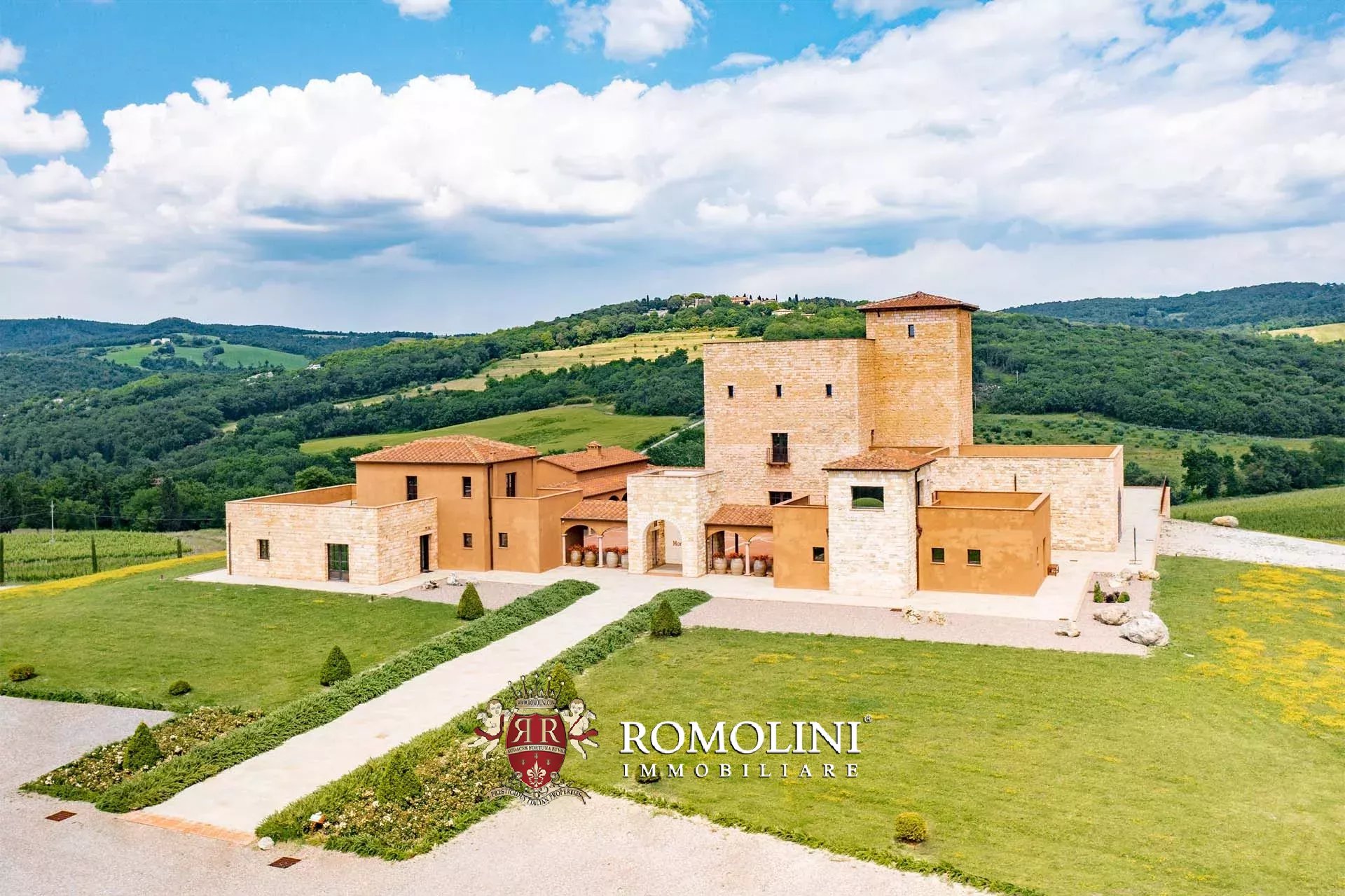
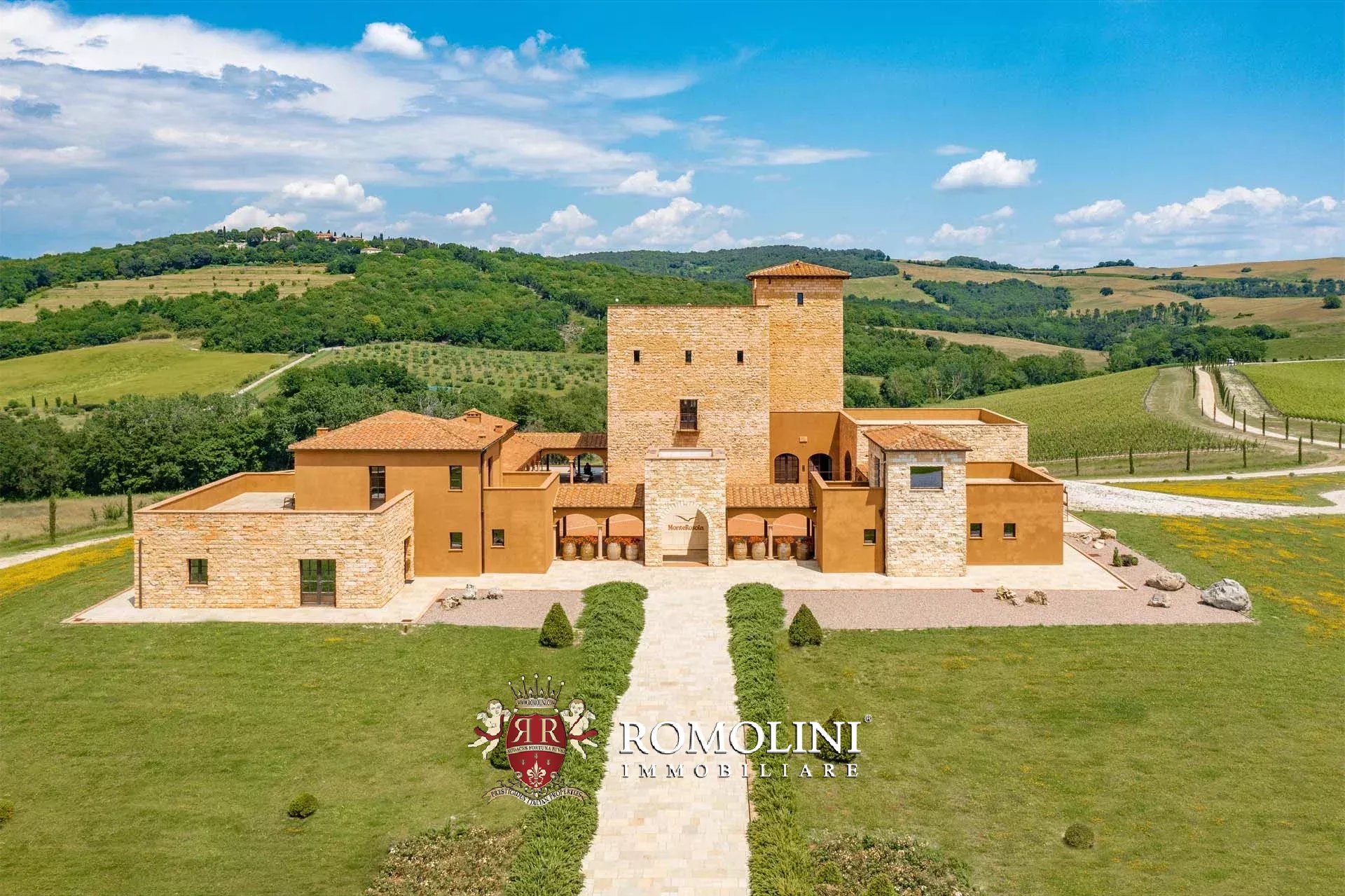
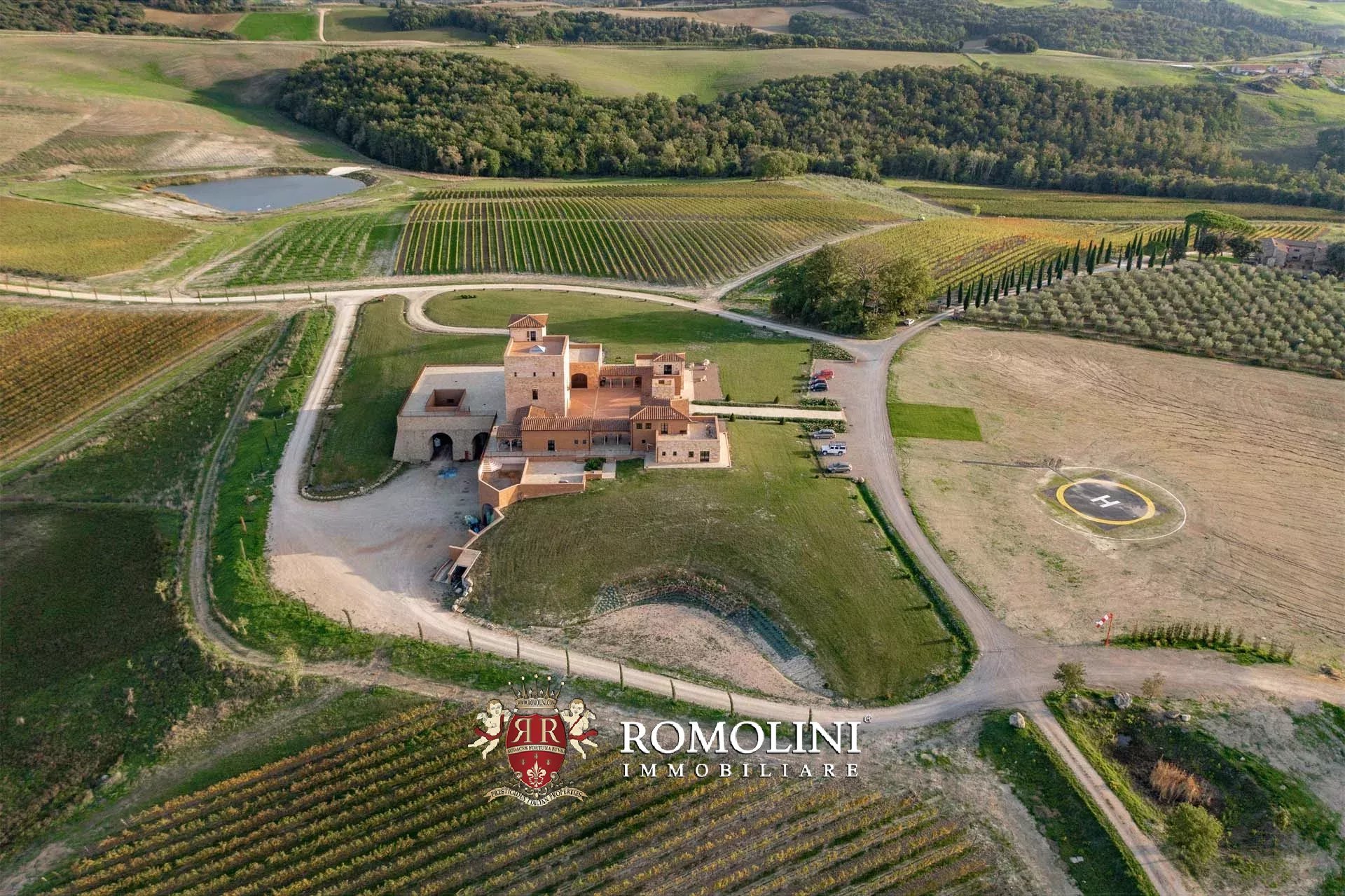
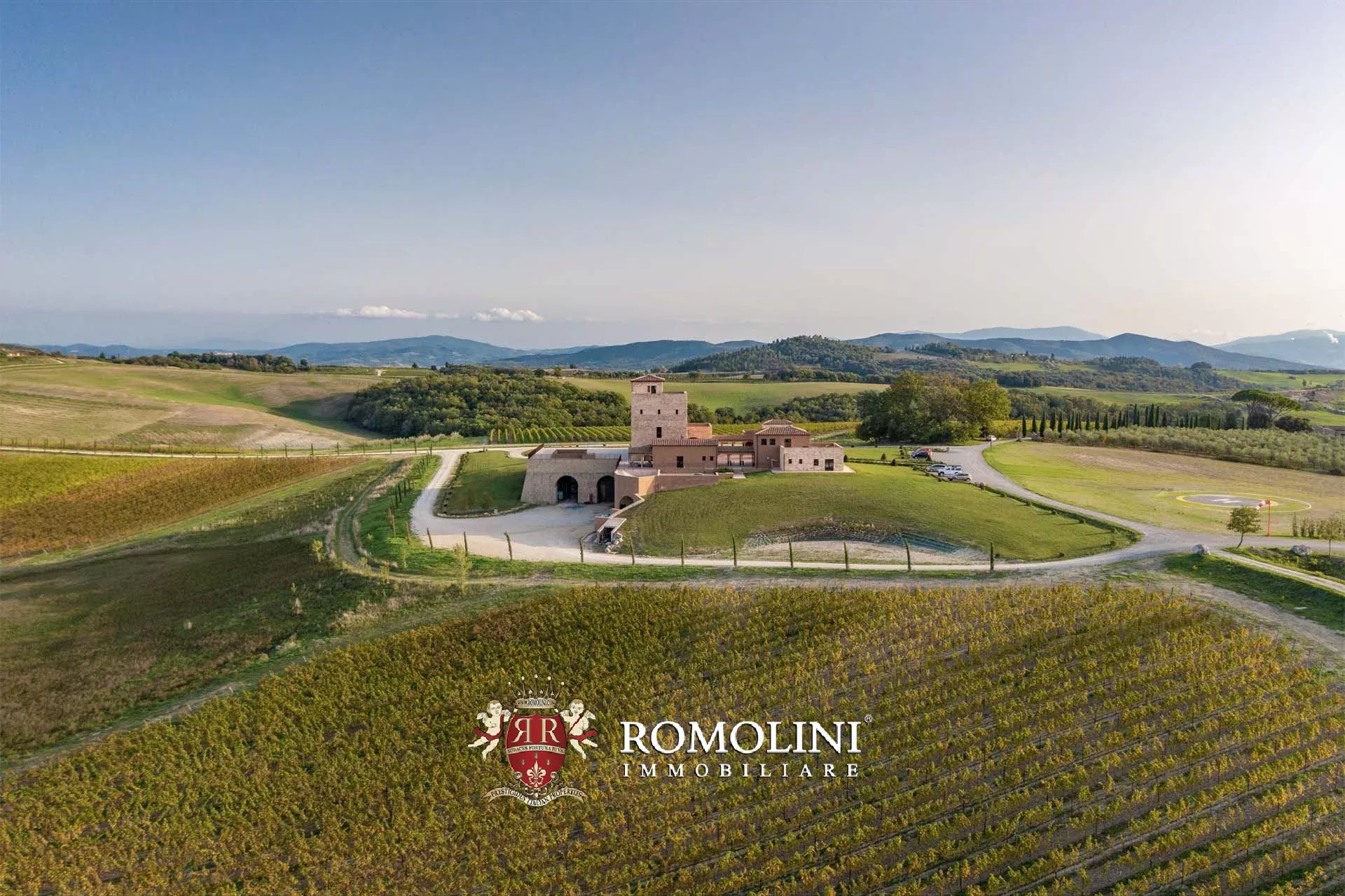
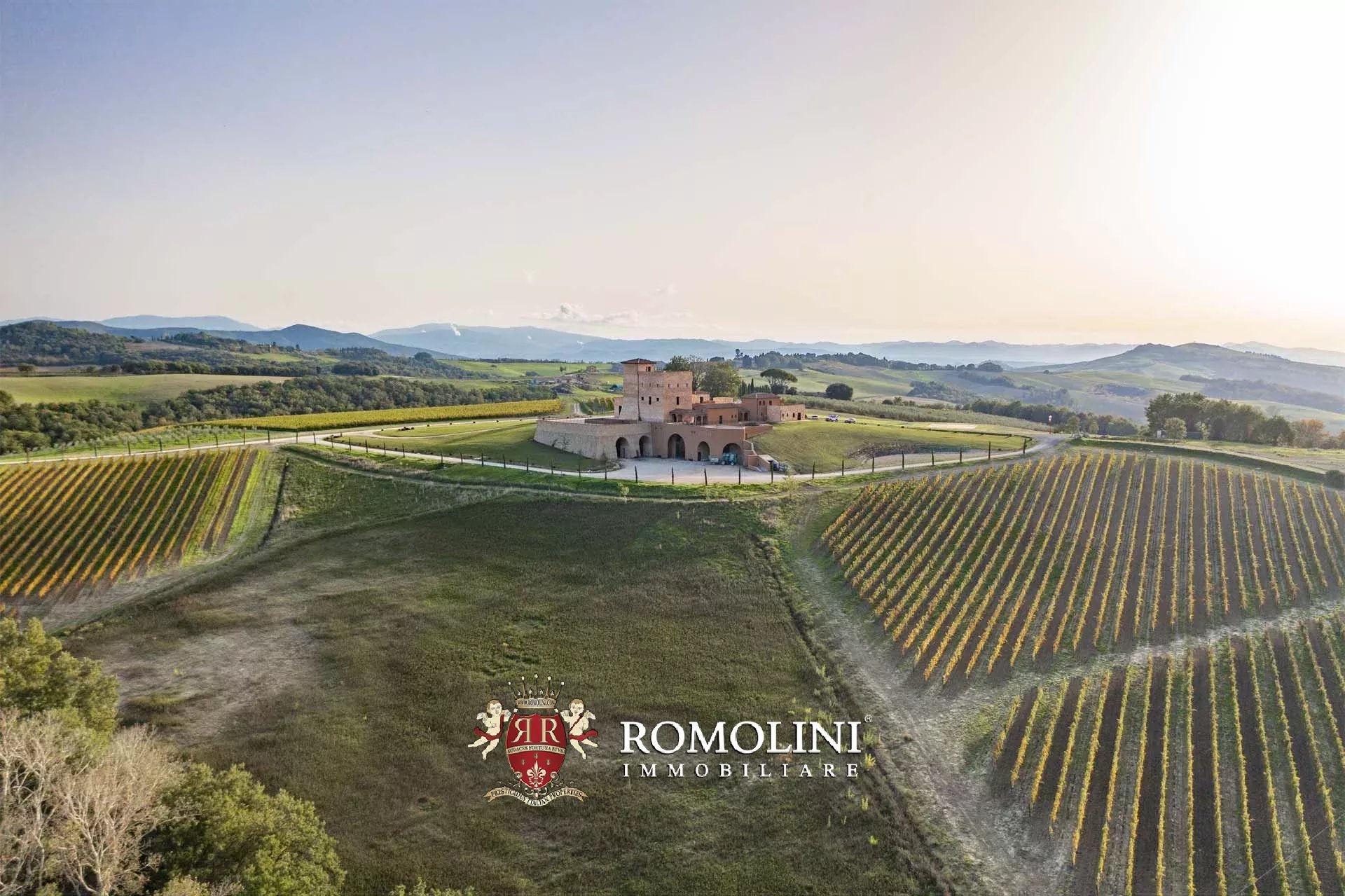
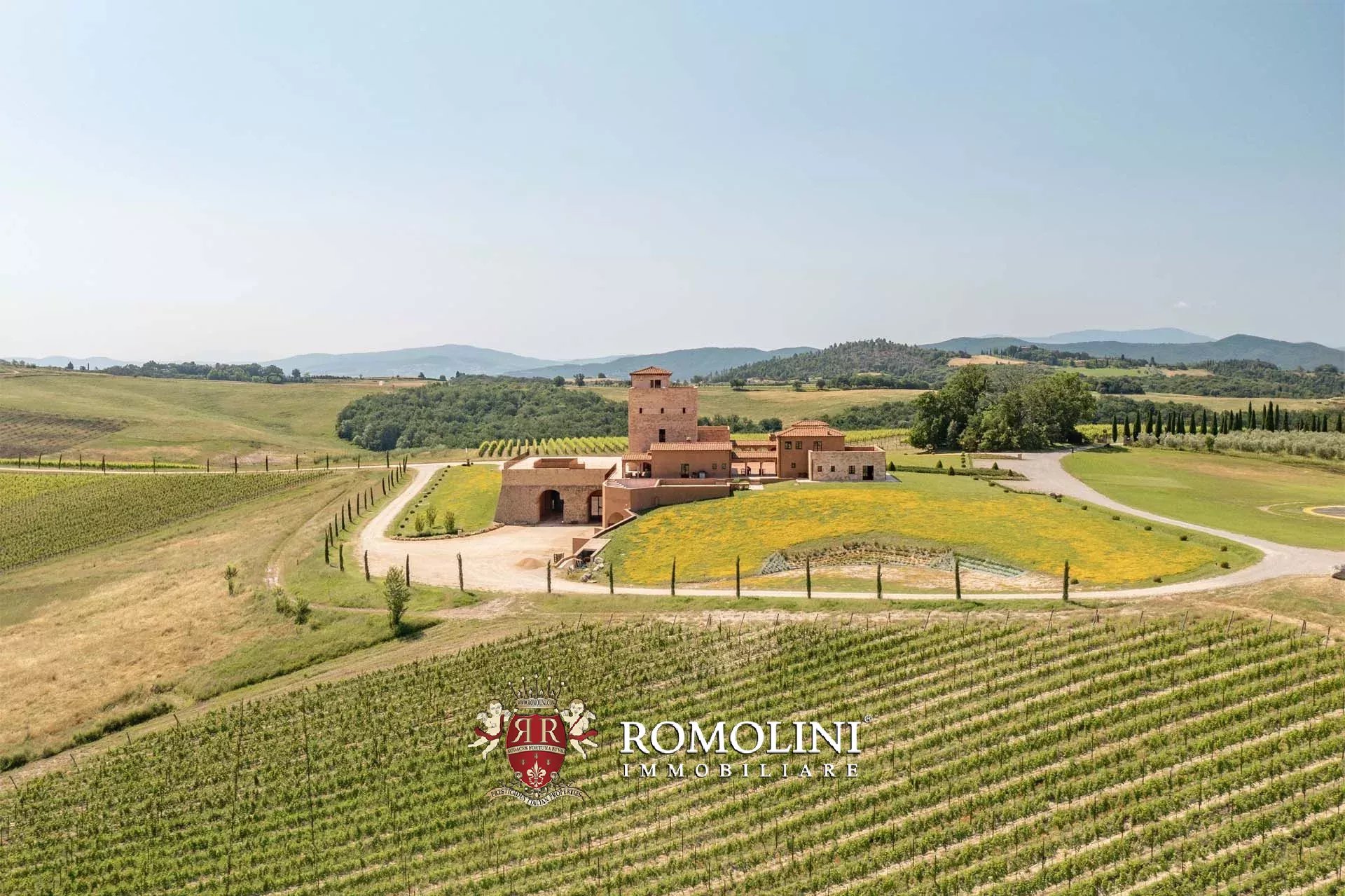
This 124.4-hectare winery is nestled in the hills of Volterra, in a location of rare beauty and enjoying unparalleled privacy and tranquility. Built between 2013 and 2019, this cutting-edge, state-of-the-art wine cellar is a true architectural masterpiece, organized according to eco-sustainable principles that are also reflected in the sublime quality of the wines. With more than 23.5 hectares of vineyards, the winery currently produces about 70,000 bottles of wine (both red and white) with plans to reach 130,000 bottles per years. Right next the business is a beautiful, fully renovated 1490s historical house, located not far from the winery and surrounded by the vineyards that also frame the swimming pool.
The property is the crowning of a dream and the result of years of work and commitment to create an activity in complete harmony with nature, harnessing geothermal and solar energy to minimize the impact on the environment and create what is, to all intents and purposes, the winery of the future.
The entrance to the property, closed by a recognizable gate, is located right along the road that connects San Gimignano and Volterra. The road to the property winds through the estate's fields and vineyards and passes right under Mauro Staccioli's monumental work, symbolically titled First Steps and placed right at the entrance to the estate. From the gate, it almost seems as if the farm's internal road passes inside the sculpture's circle.
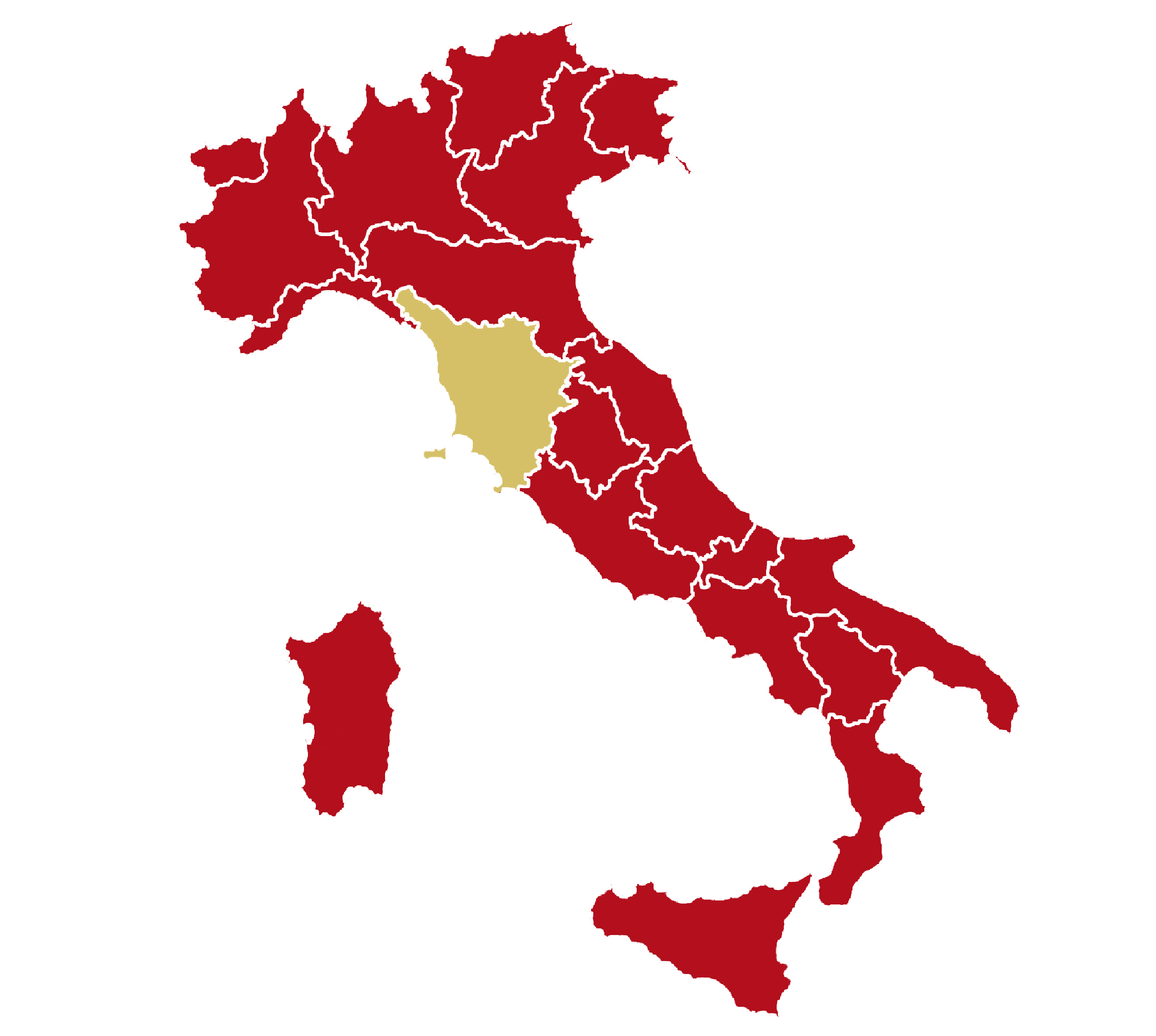
Tuscany - Pisa - Volterra
Tuscany, one of Italy's most iconic and breathtaking regions, embodies the essence of Italian beauty, culture, and tradition. Nestled between the ApennineMountains and the Tyrrhenian Sea, its landscape is a mesmerizing blend of rolling hills, cypress-lined roads, sprawling vineyards, olive groves, and medieval villages perched on hilltops. The region’s natural beauty is matched by its rich history, artistic heritage, and world-renowned culinary and wine traditions.
Wine enthusiasts from around the globe flock to Tuscany for its legendary wine production. The region is the birthplace of some of the most revered wines in the world, such as Chianti, Brunello di Montalcino, and Vino Nobile di Montepulciano. Chianti, produced in the heart of Tuscany, is arguably the most famous, with its distinctive ruby-red color and bold flavors, while Brunello, made exclusively from Sangiovese grapes, is one of Italy’s most prestigious wines, aging gracefully for decades. Wine routes, like the Strada del Vino in the Chianti region, allow visitors to tour centuries-old wineries, sample wines, and explore charming villages along the way.
Tuscany is also a haven for lovers of art and history. Florence, the region’s capital, is a cultural mecca, often referred to as the cradle of the Renaissance. Its galleries and museums, such as the Uffizi and Accademia, house masterpieces from artists like Michelangelo, Botticelli, and Leonardo da Vinci. The iconic Florence Cathedral, with its massive dome designed by Brunelleschi, dominates the skyline, while the Ponte Vecchio, a medieval bridge lined with jewelry shops, is one of the city’s most beloved landmarks.
Siena, another jewel of Tuscany, offers a different charm with its medieval architecture and rich traditions. The Piazza del Campo, known for the Palio, a centuries-old horse race held twice a year, is considered one of the most beautiful squares in Italy. Siena’s Gothic cathedral, with its intricate black and white striped marble, is a stunning testament to medieval craftsmanship.
Further west, Pisa is home to the iconic Leaning Tower, but it also offers much more with its rich maritime history and the grandeur of the Piazza dei Miracoli. Lucca, known for its preserved Renaissance-era city walls, invites visitors to explore its quiet streets, where churches and piazzas surprise at every turn. San Gimignano, a medieval town famous for its many towers, gives visitors a glimpse of Tuscany’s feudal past and offers sweeping views over the surrounding countryside.
Tuscany’s landscapes are also dotted with thermal springs, such as the natural hot springs of Saturnia, providing a relaxing retreat after days of exploring. The coastline, too, with the Maremma region and the island of Elba, offers picturesque beaches and pristine waters, a contrast to the inland hills and vineyards.
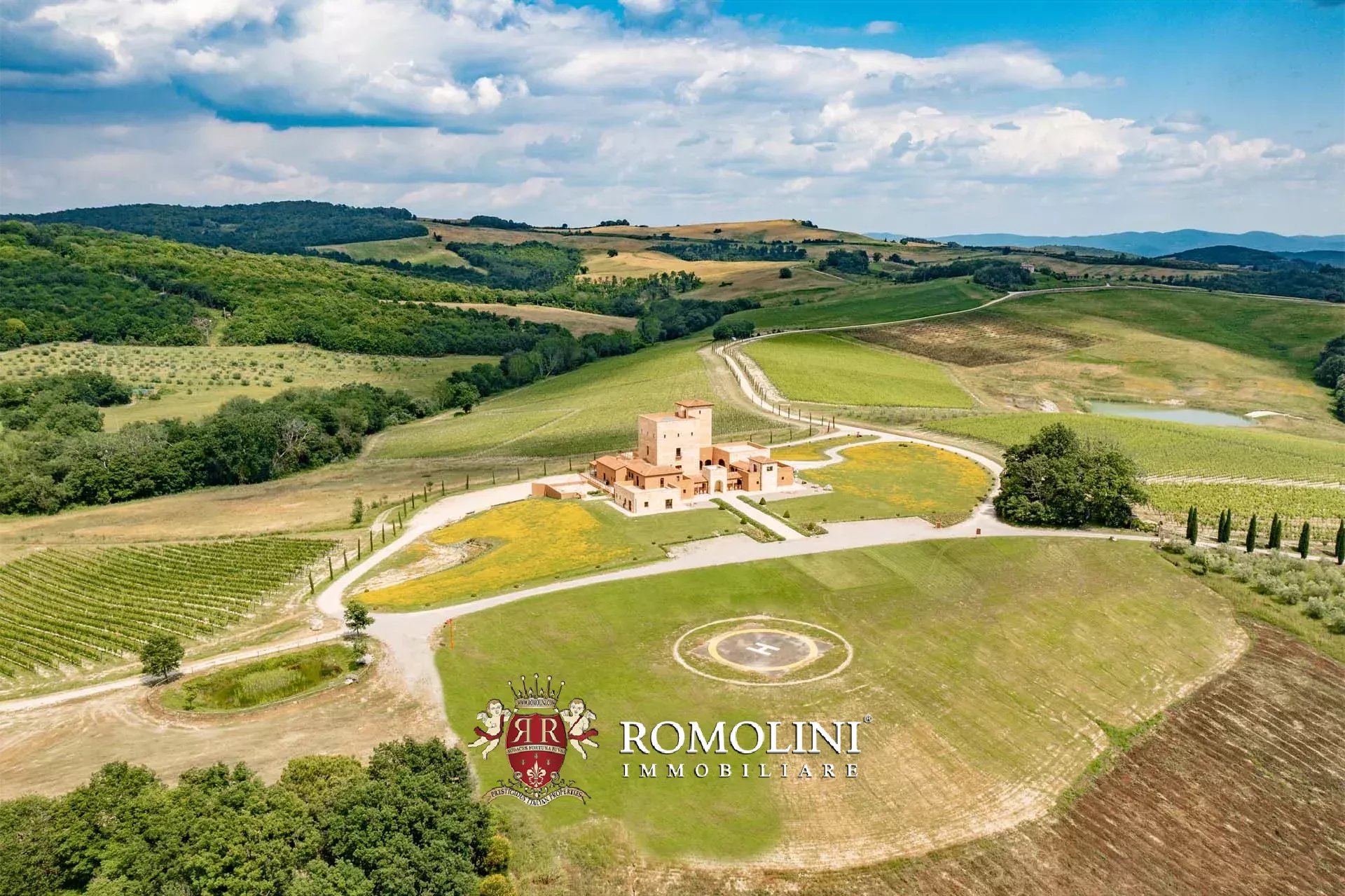
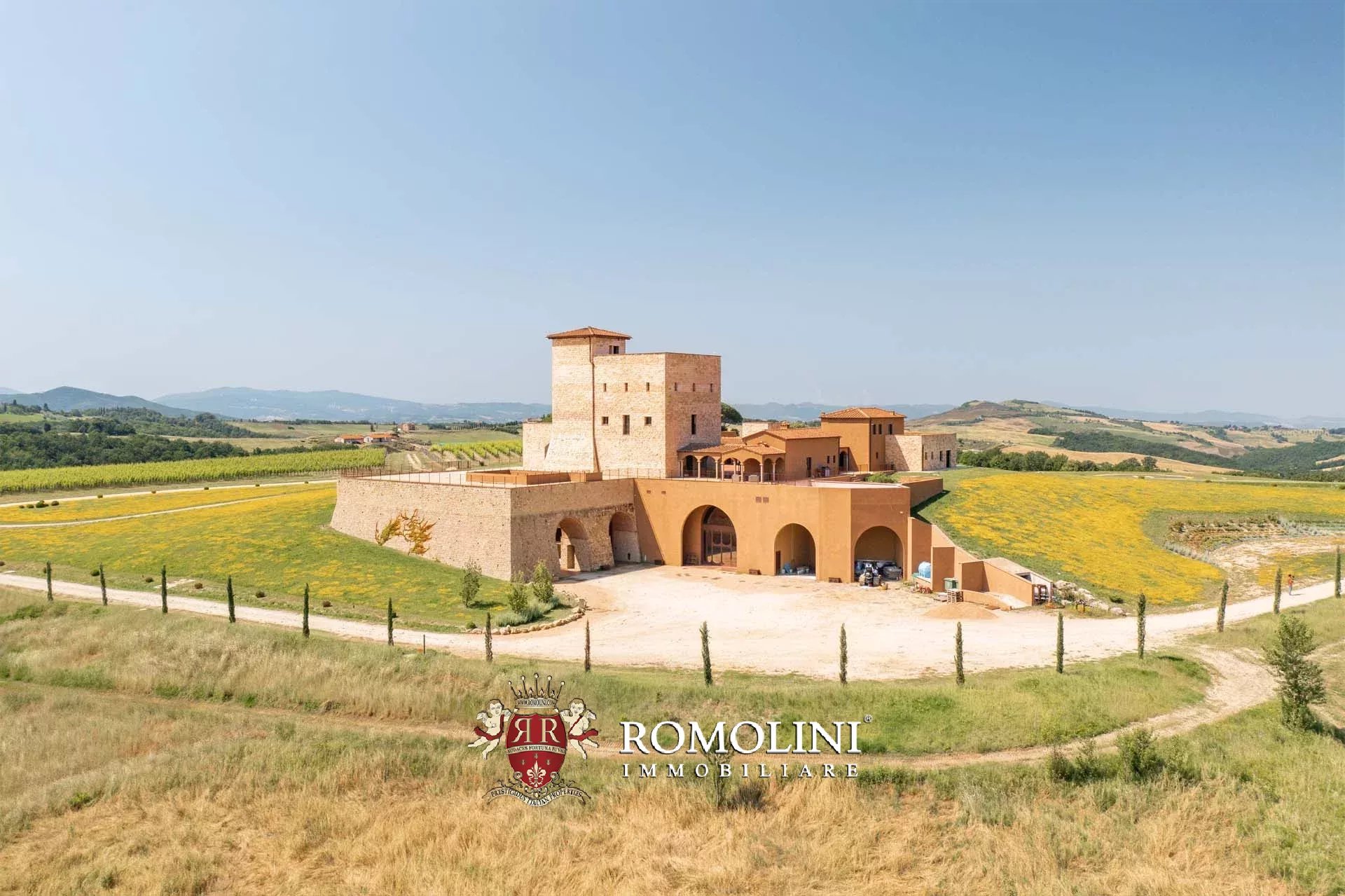
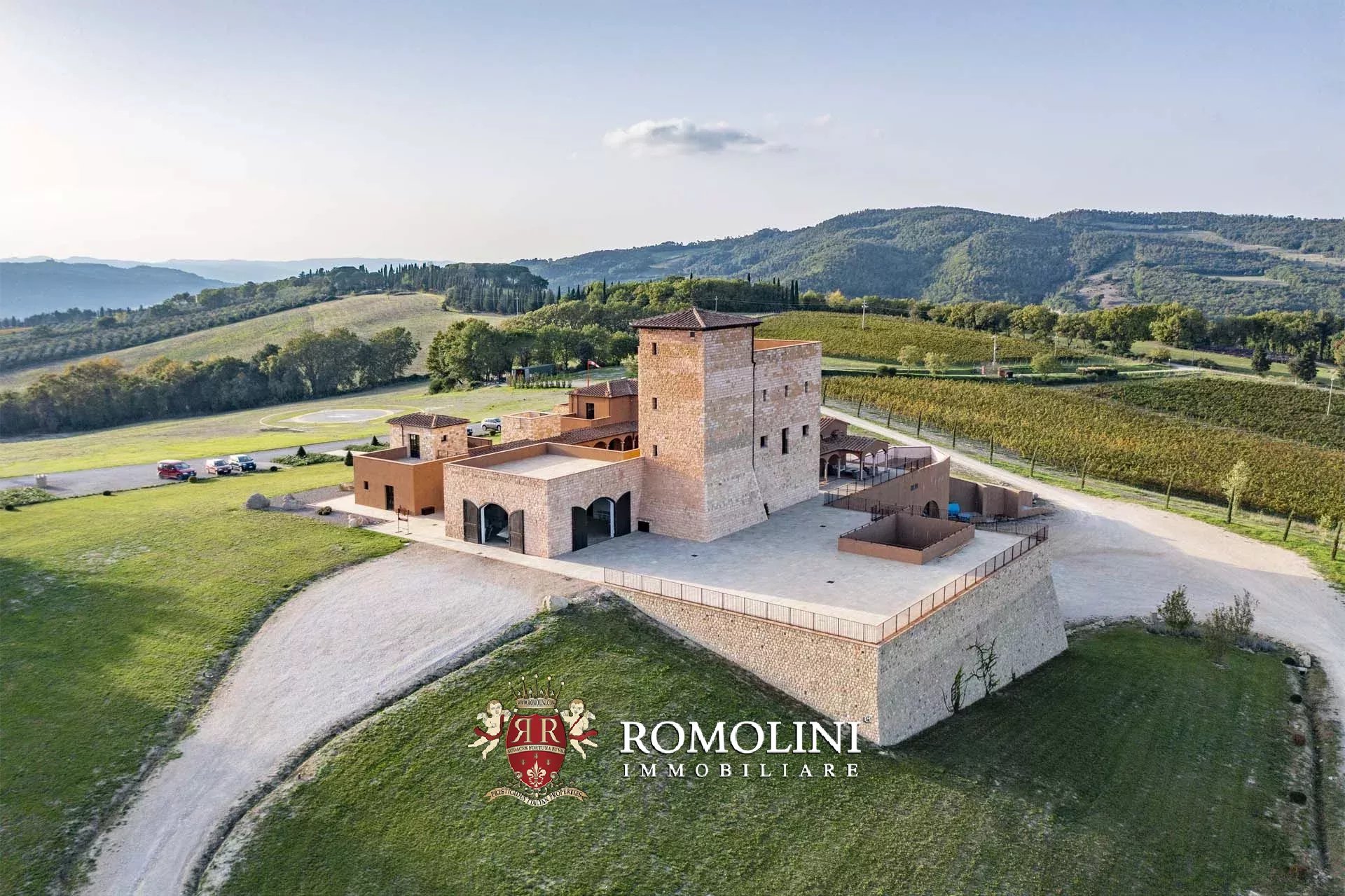
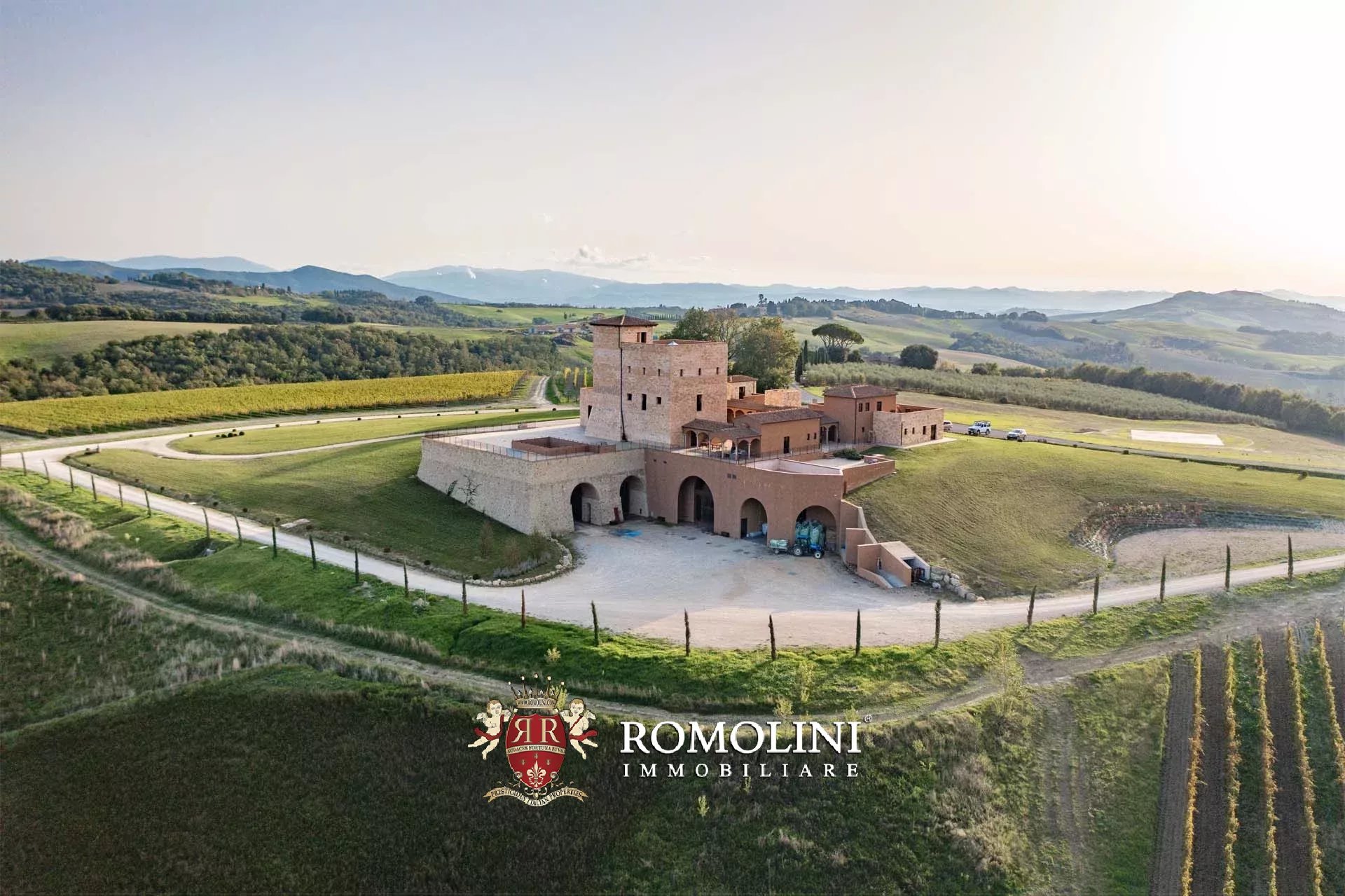
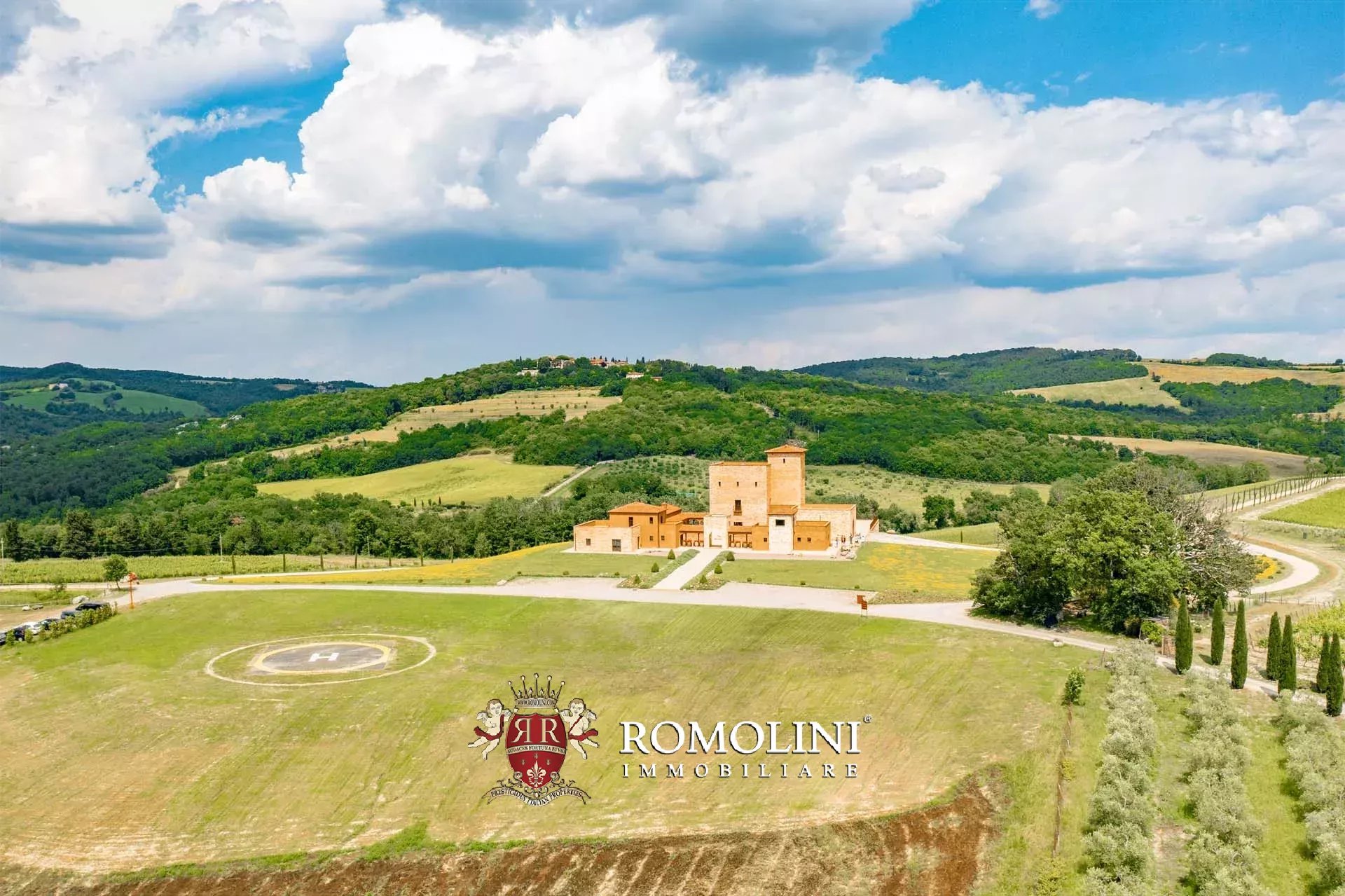
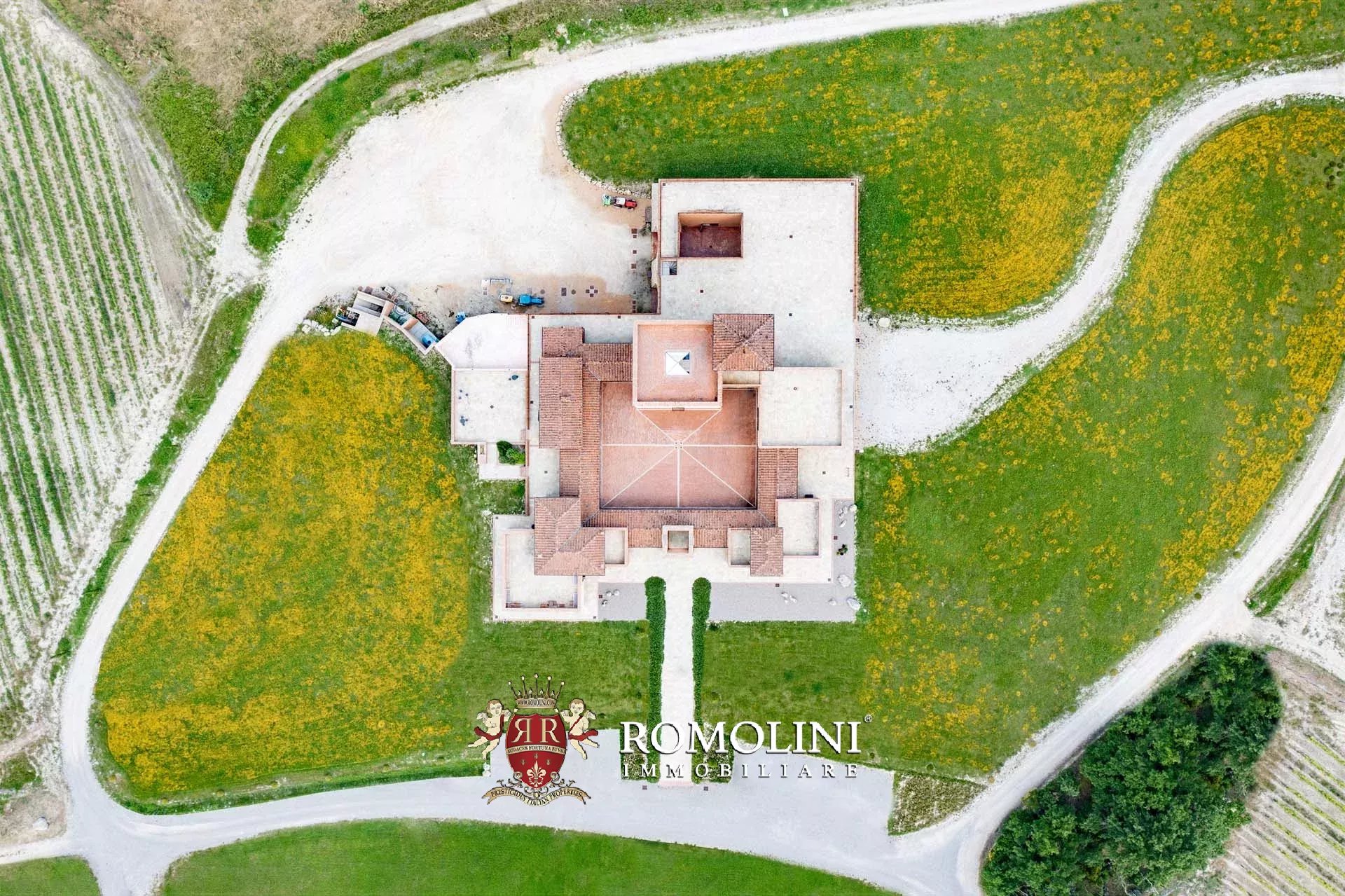
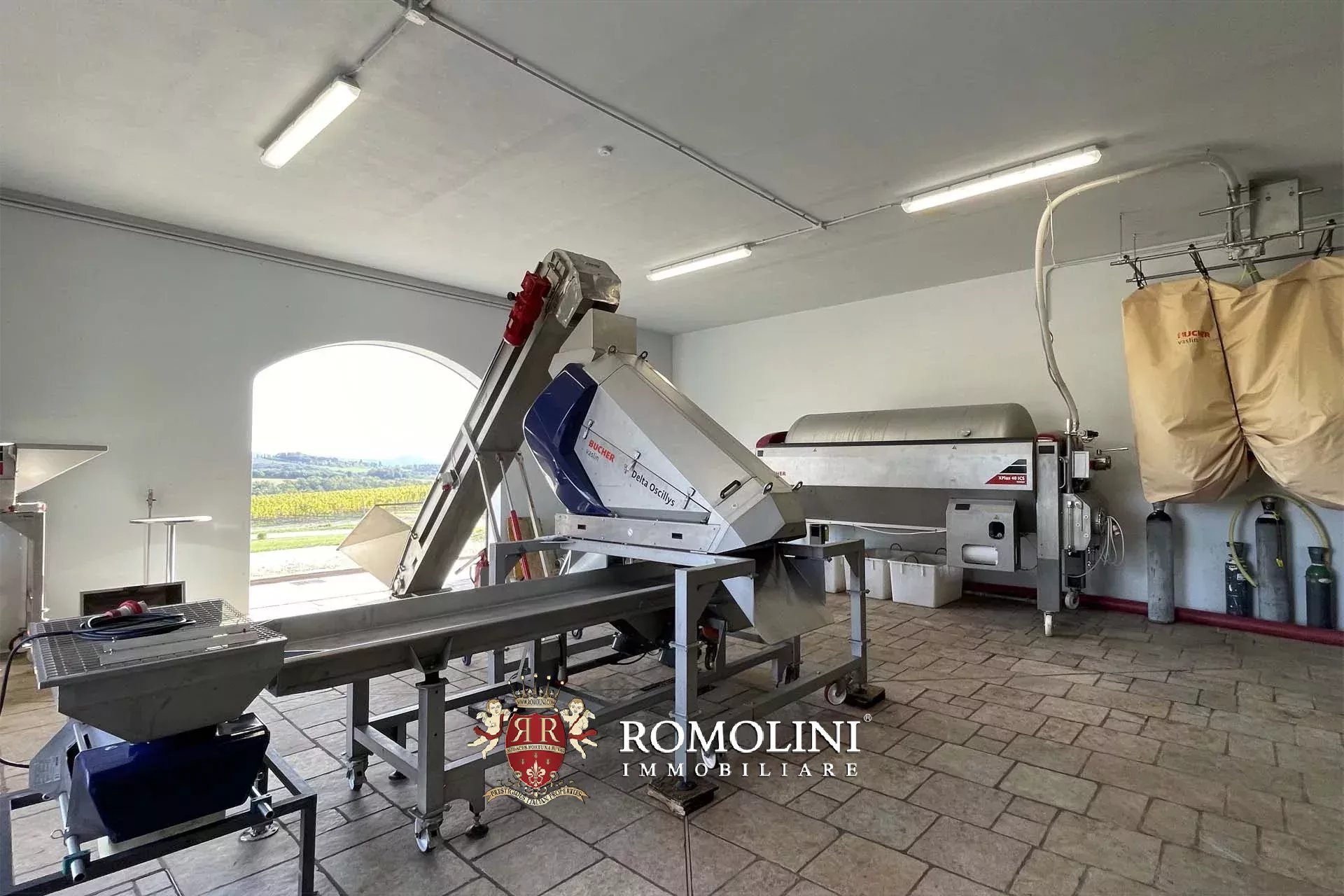
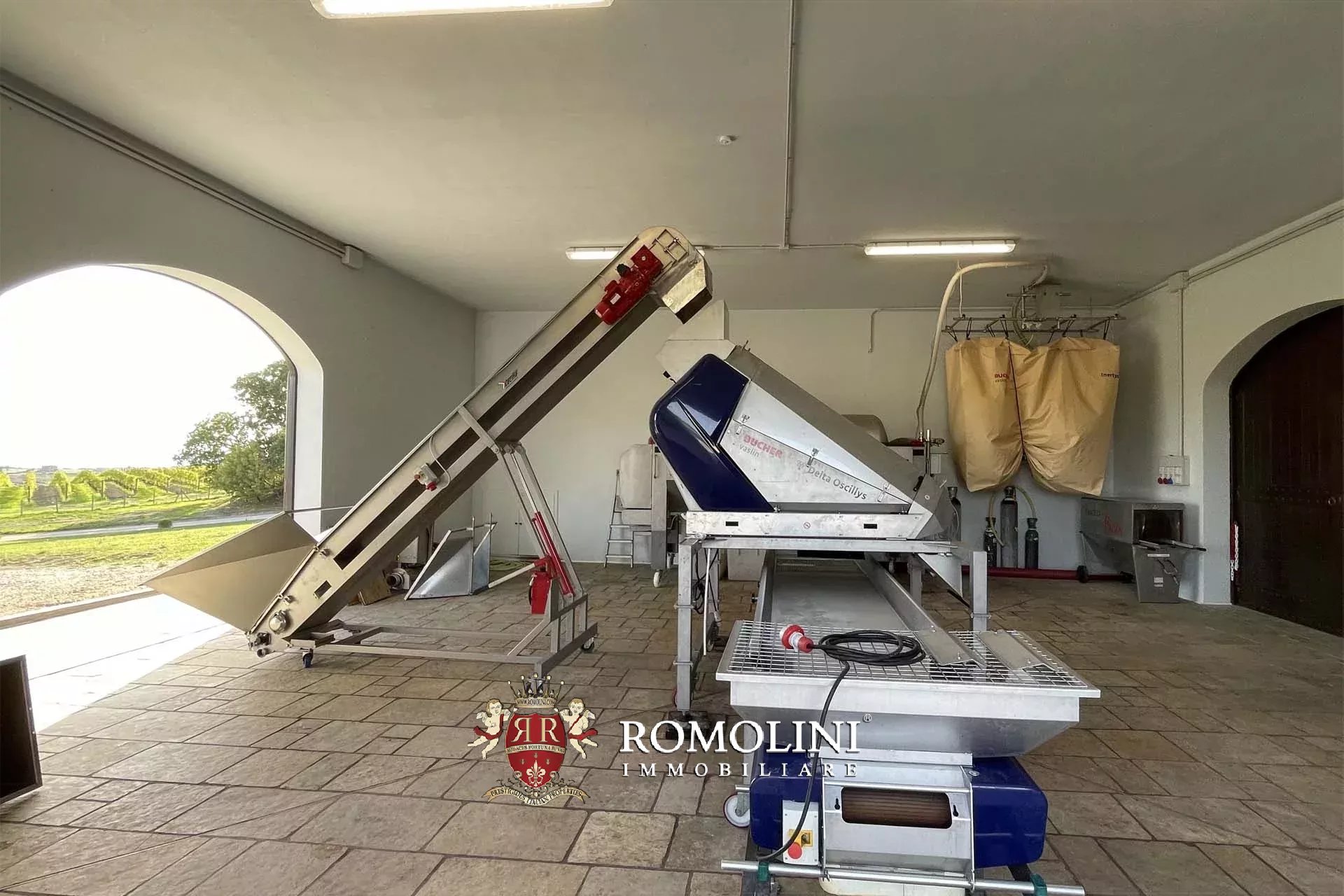
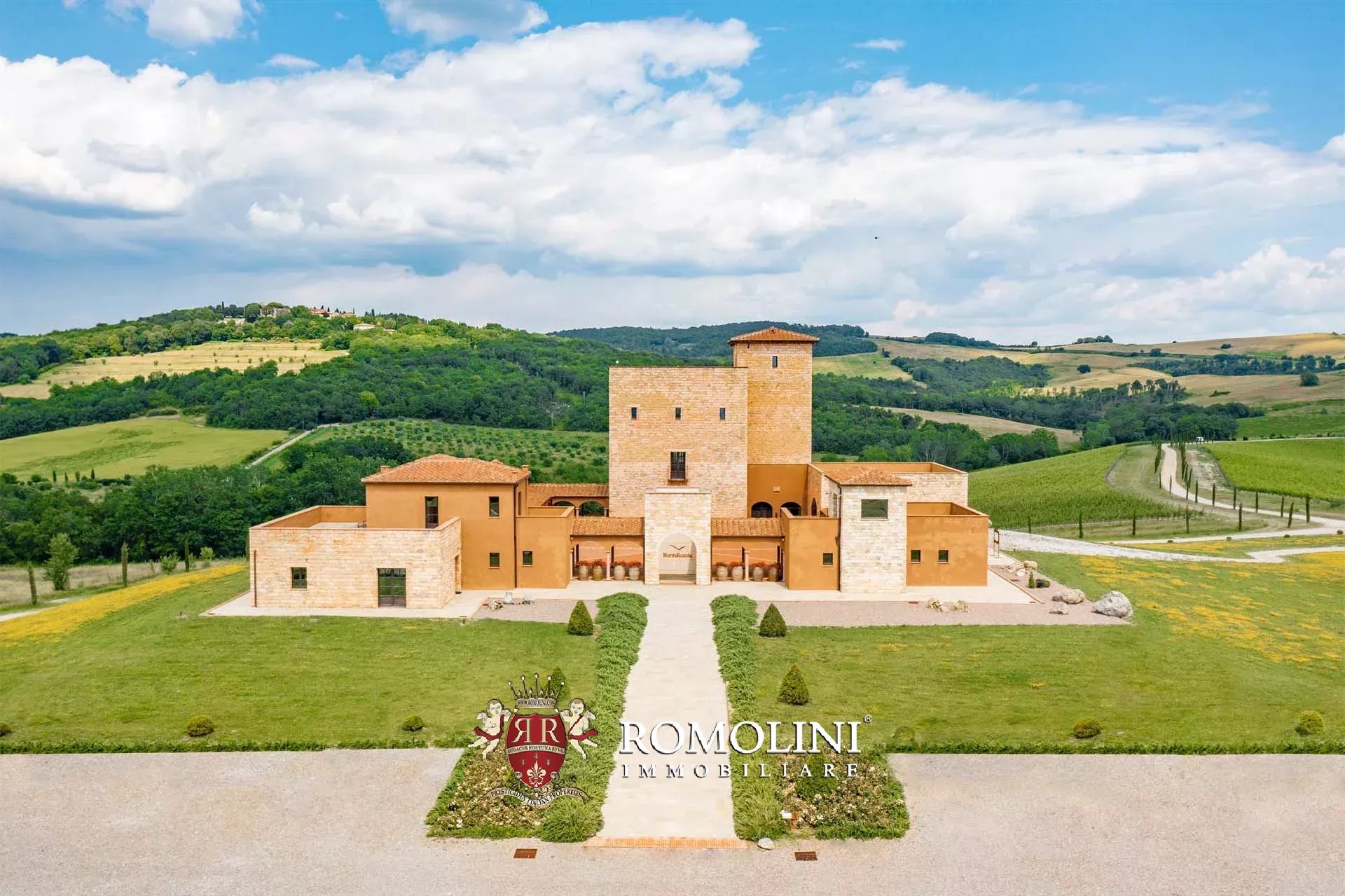
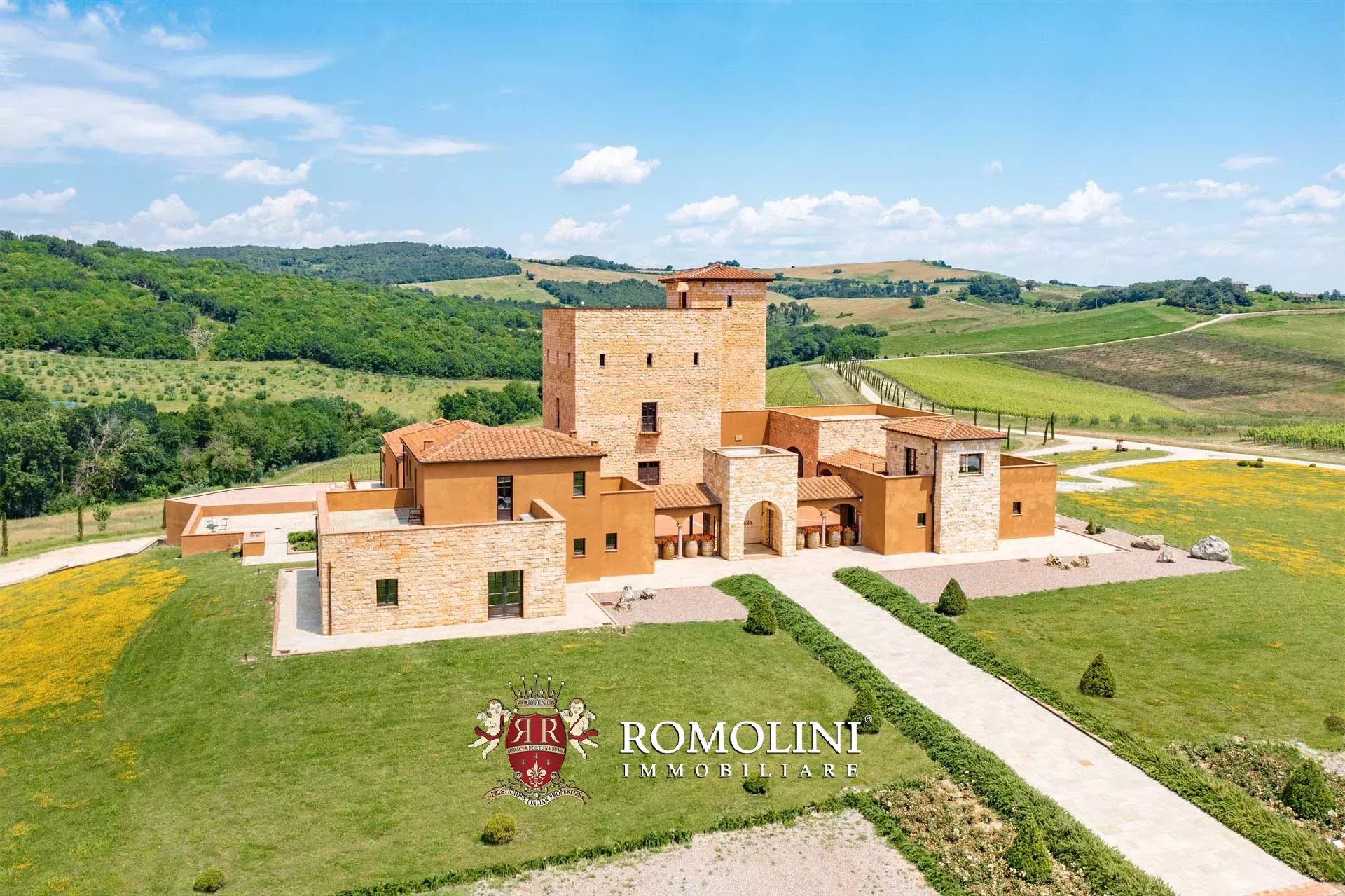
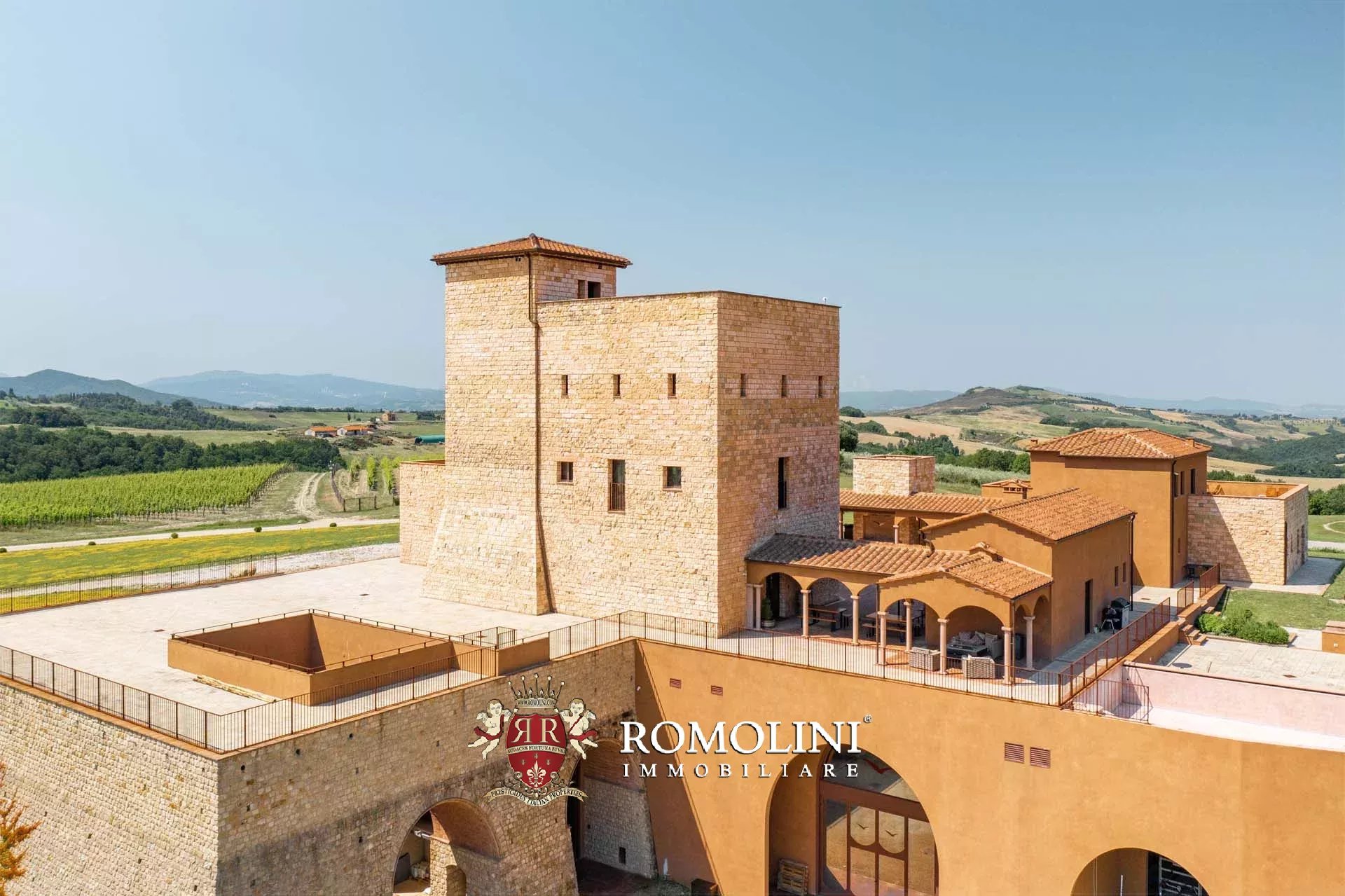
The winery (5,600 m² – 60,256 ft²) was built between 2013 and 2019 on top of a hill set between two valleys. The reinforced concrete structure (covered in local stone so it blends perfectly with the environment) can be compared to a Russian Matryoshka doll, as you practically have two buildings inside each other. Everything in the winery is doubled: two ceilings, two floors and two walls that create a wide corridor around the actual rooms so as to naturally regulate the temperature of the interior, which is further and scrupulously perfected with state-of-the-art heat pumps. Everything in the winery is aimed at eco-sustainability: gas is replaced with low-enthalpy geothermal energy and rainwater is collected, purified and reused. The spectacular winery also makes use of cutting-edge technology to control its systems: all the devices present, from lights to grape processing machinery, are computerized and remotely controllable through a wide array of sensors, cameras and home automation systems. The equipment used in the winery is all of the highest quality and state-of-the-art to ensure maximum production efficiency with the least expenditure of energy.
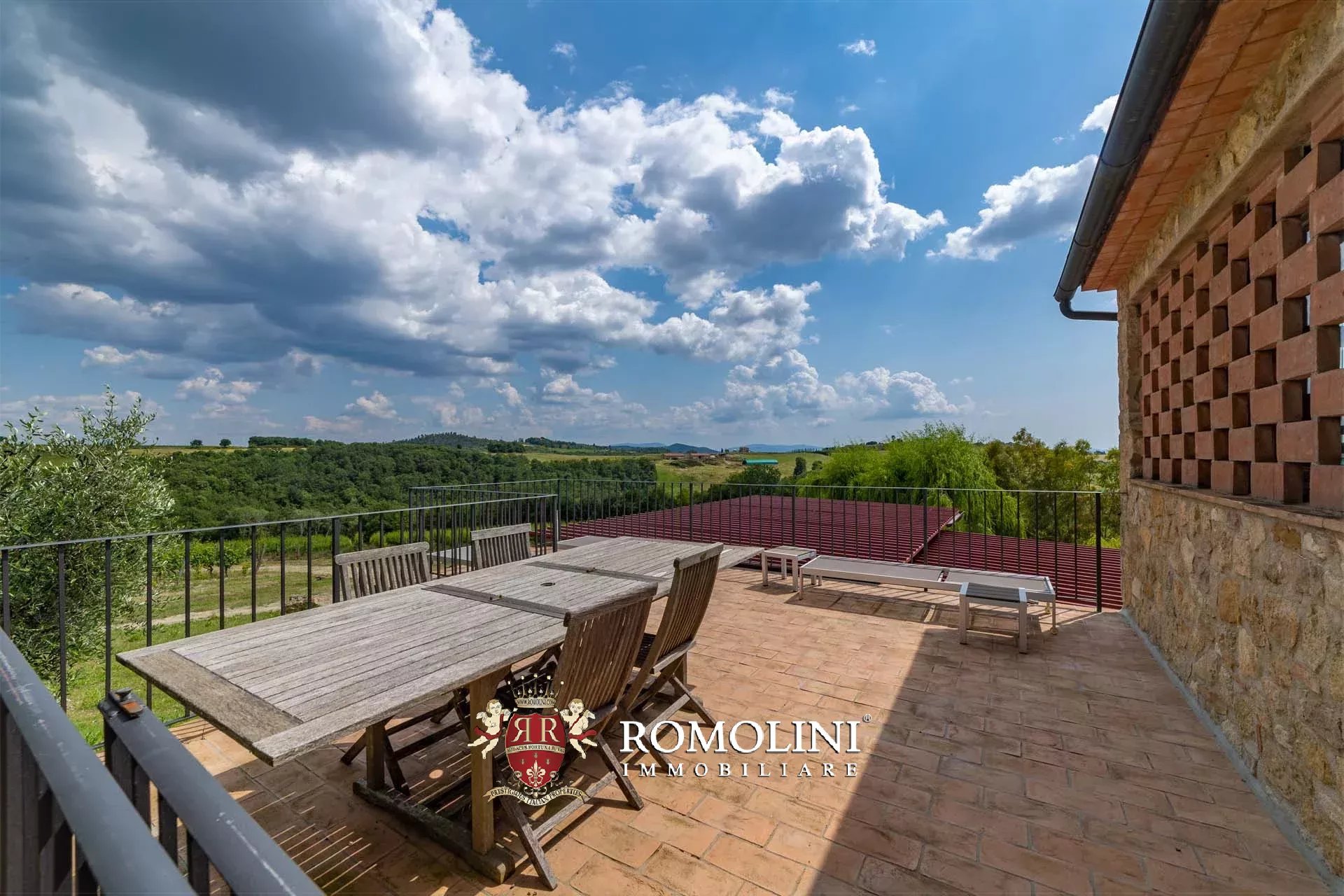
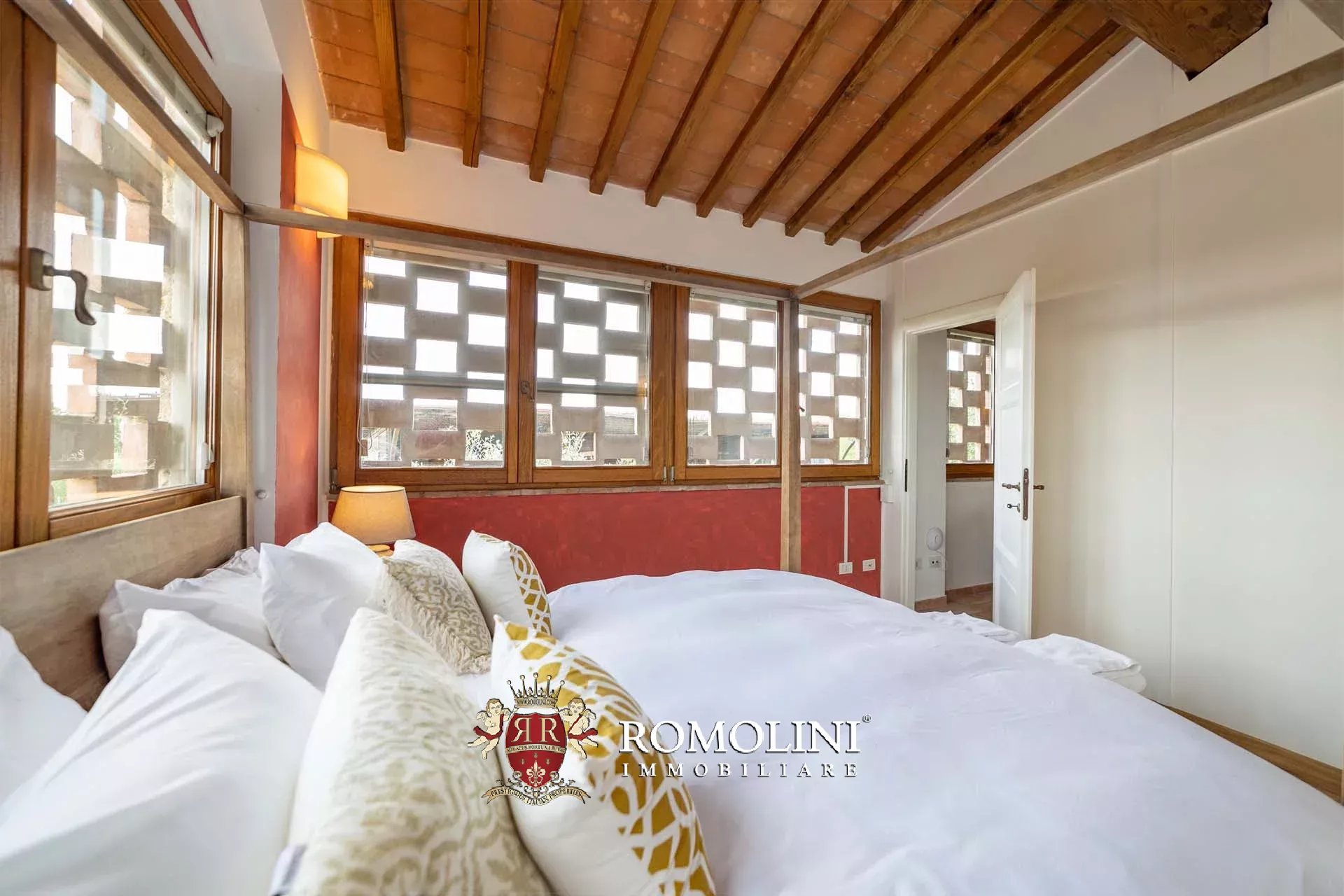
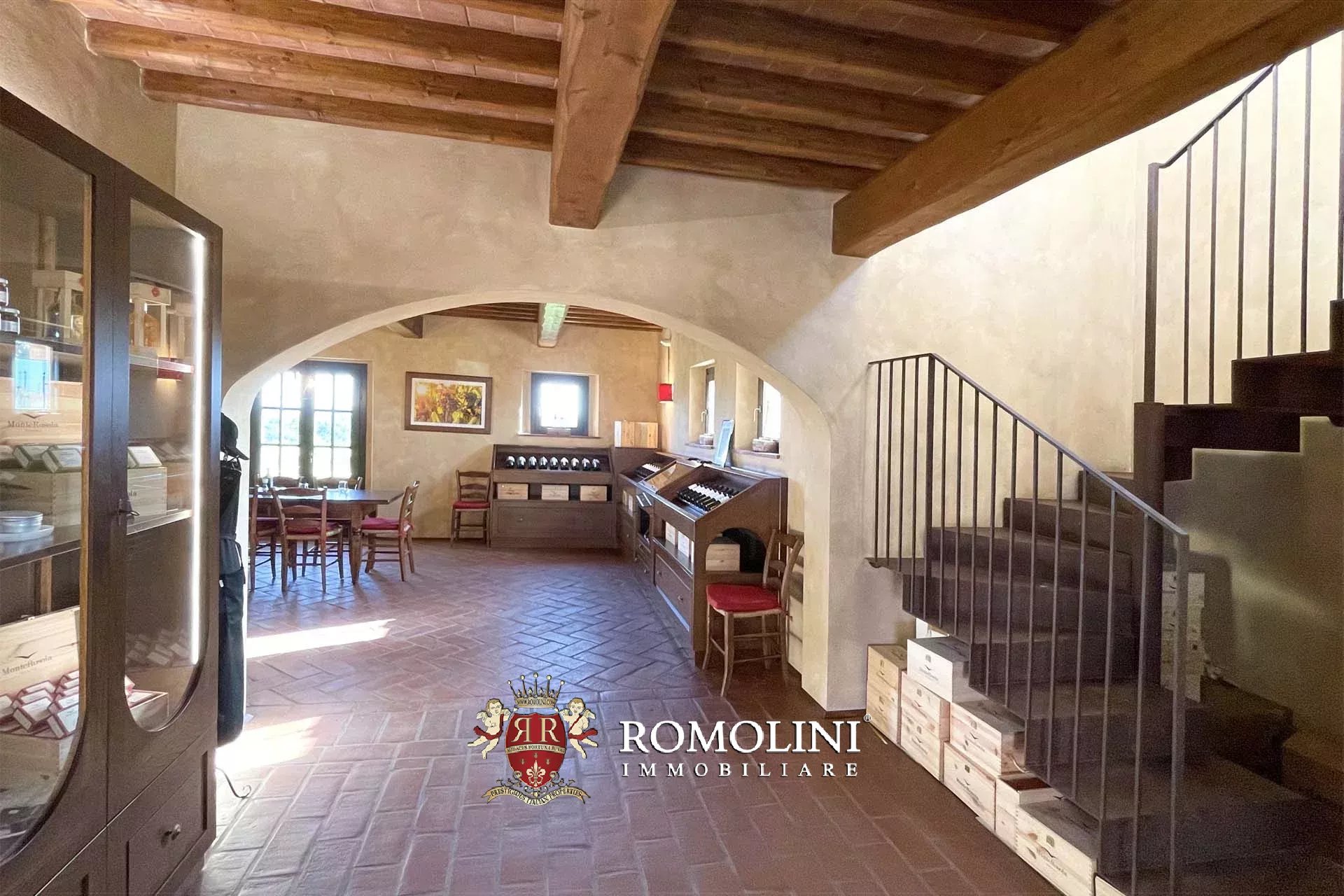
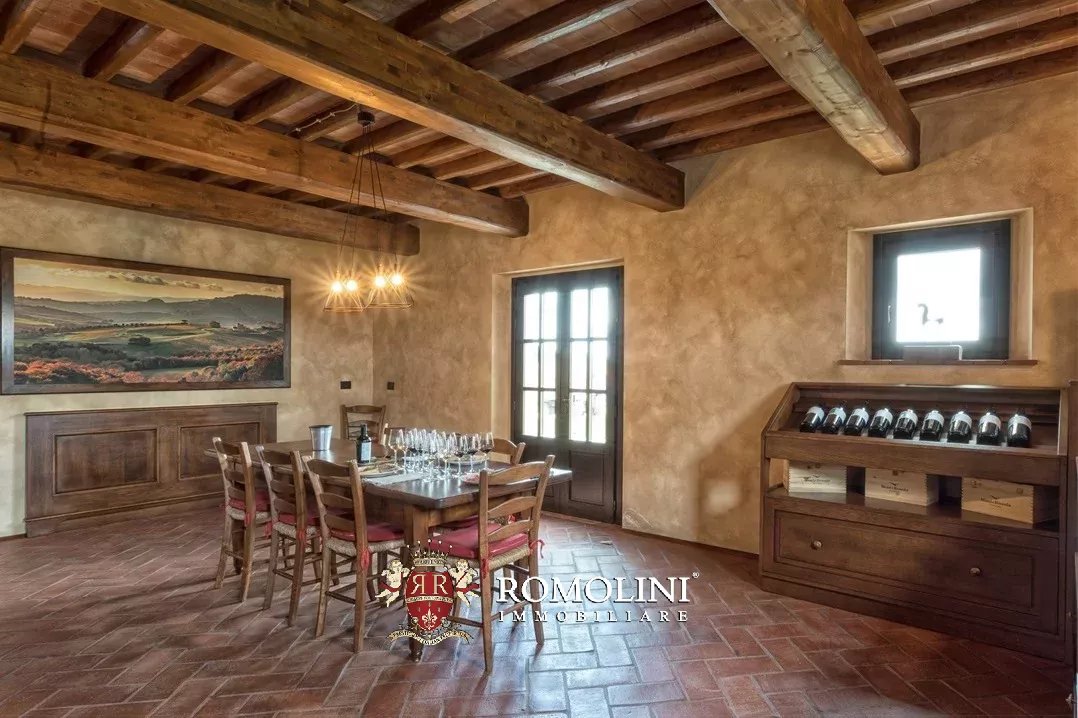
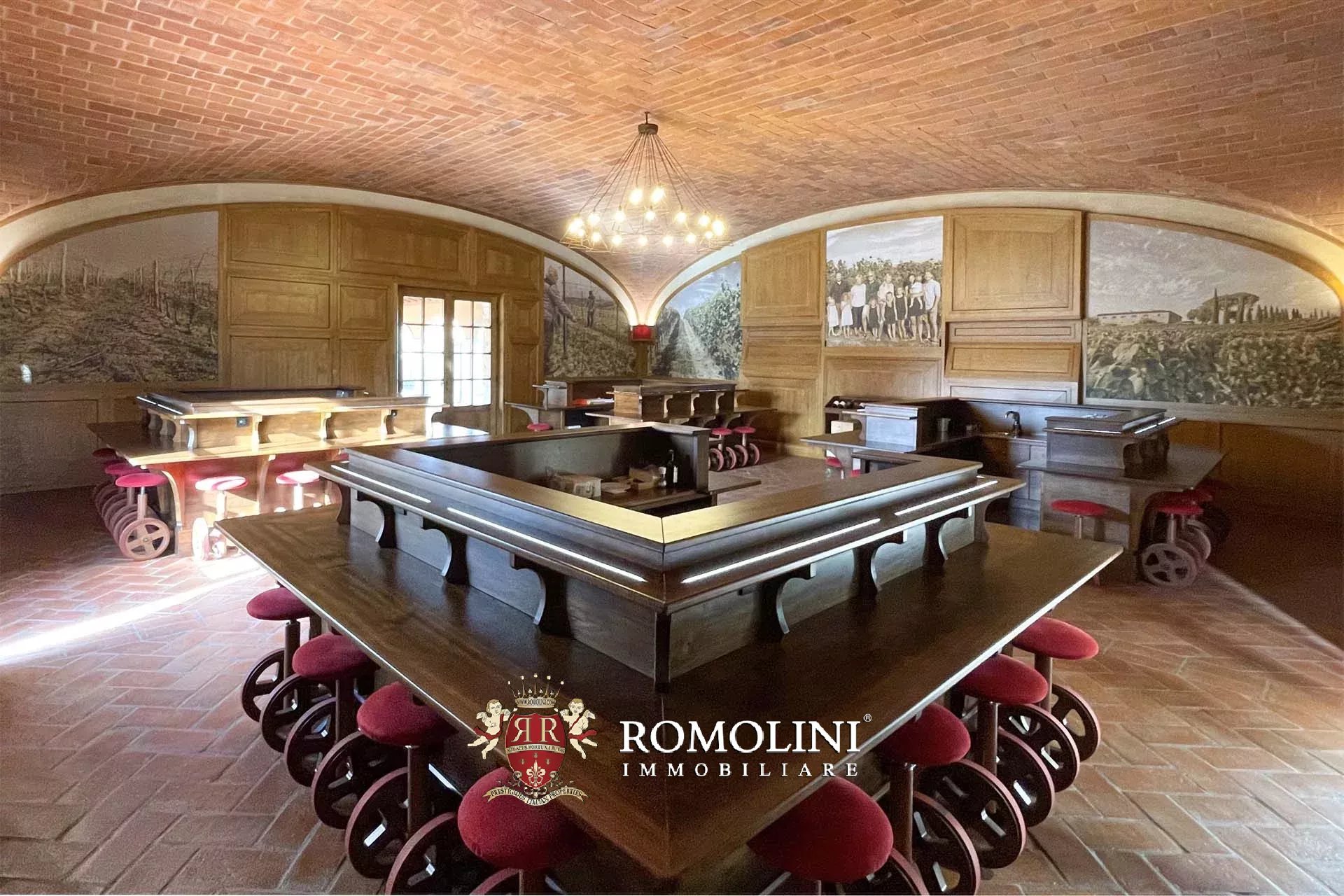
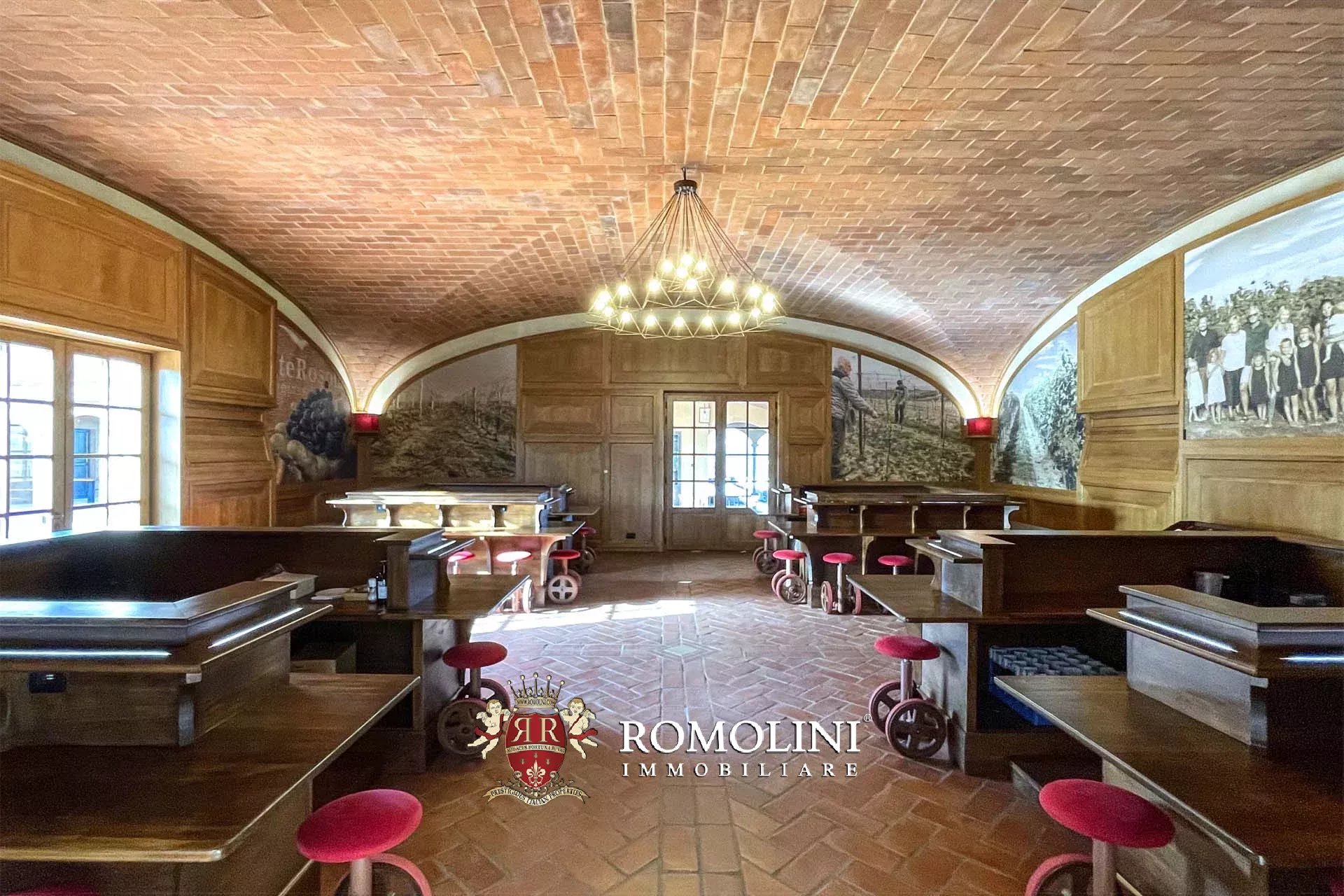
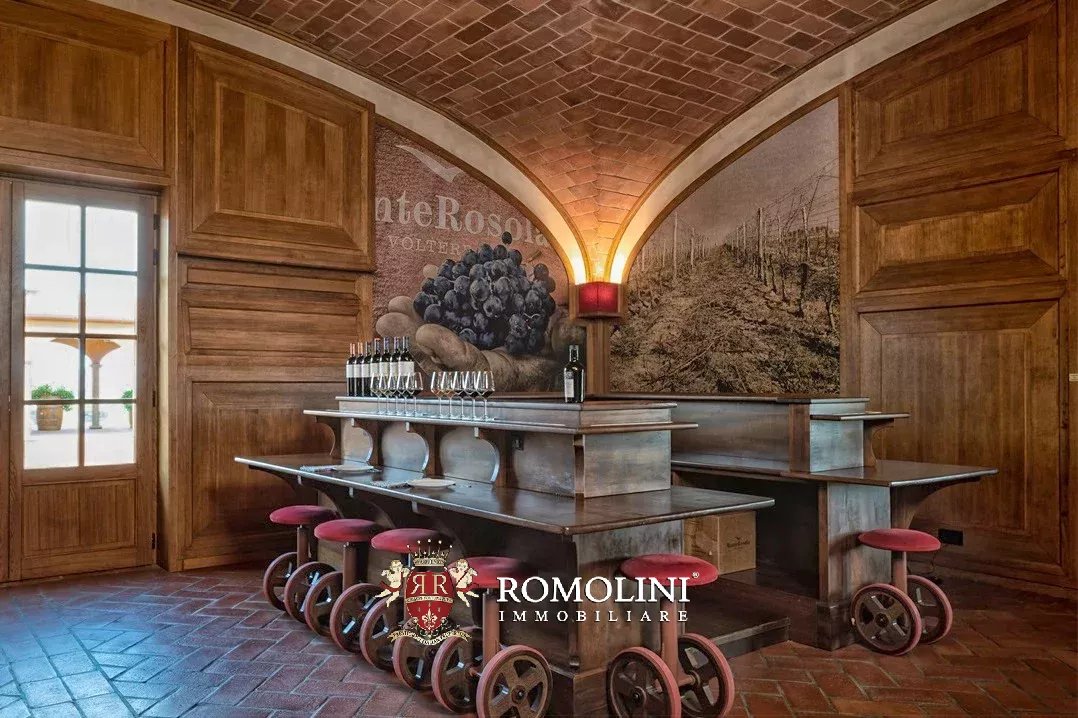
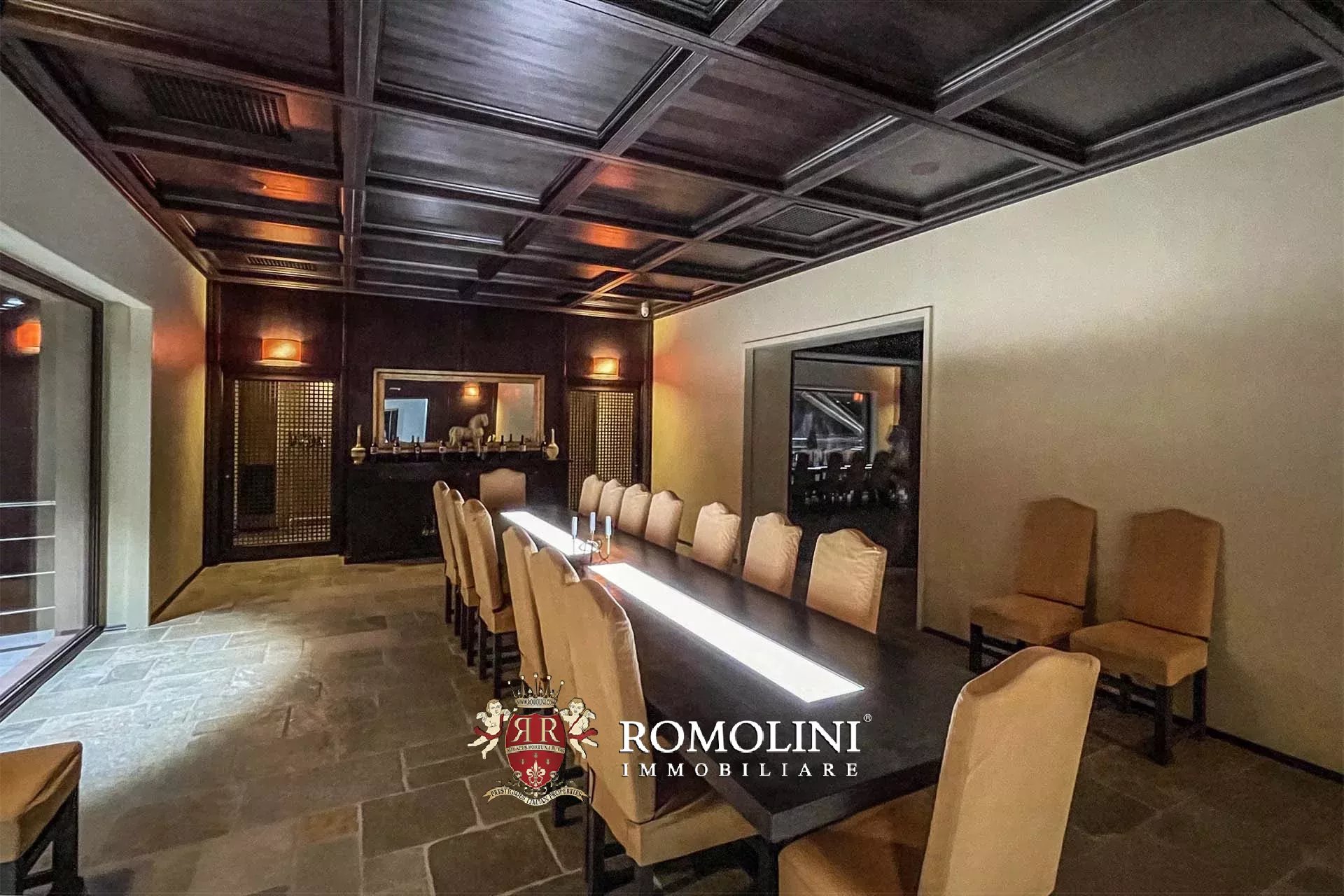
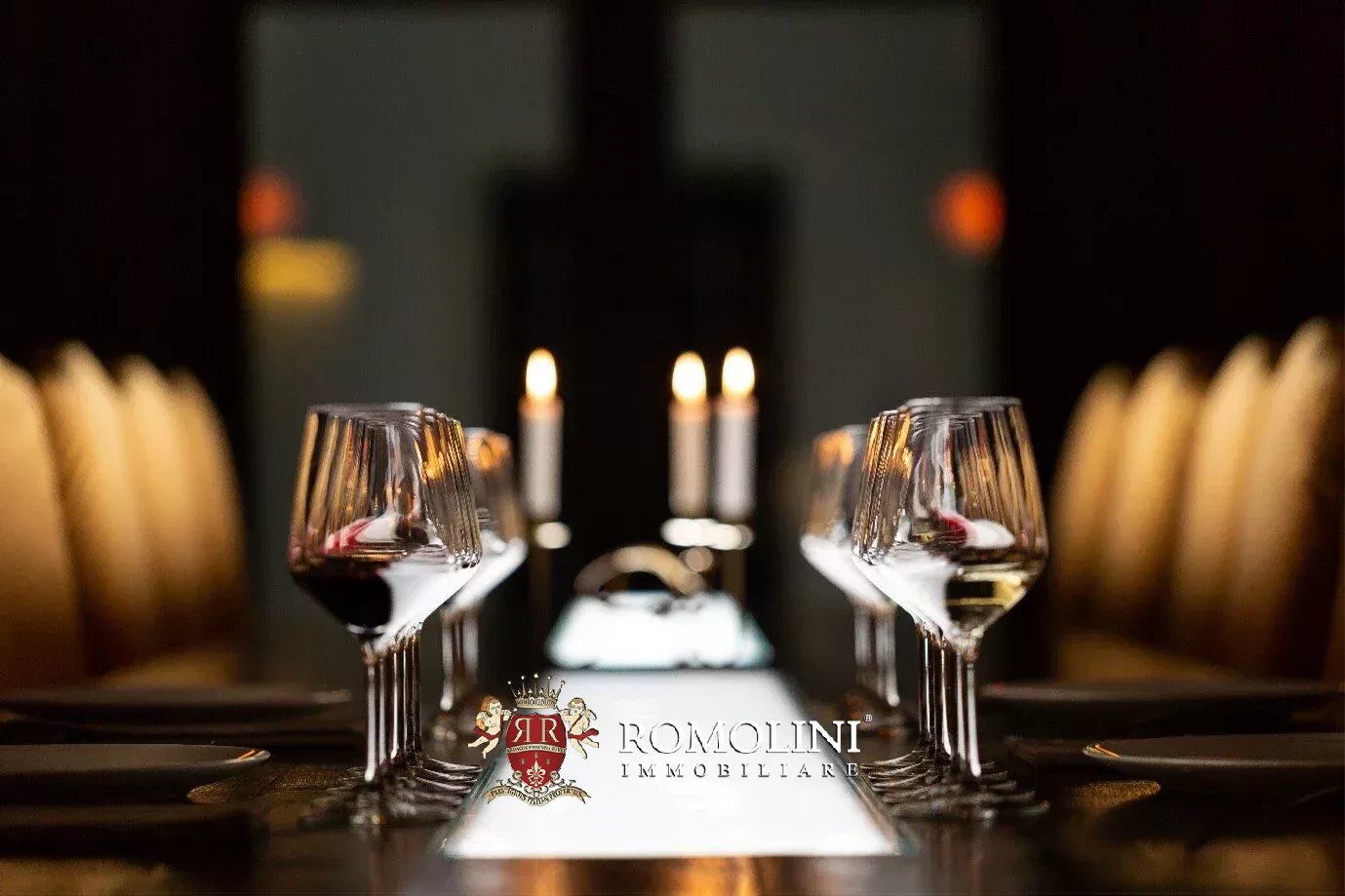
Arriving at the winery, one is greeted by an elegant paved plaza that is reminiscent, thanks in part to the arches on the sides, of a convent cloister. This area is an ideal setting for private events and ceremonies. Entering the building itself, which is barrier-free and therefore totally inclusive, one is greeted on the right by a wine shop with a tasting corner. On the left, on the other hand, one has access to a private apartment (which continues on the upper floor) that can be used as an accommodation unit for guests who request it: the apartment opens downstairs to a spacious living area with a kitchen that then leads to the first bedroom with bathroom. Going upstairs, there are two more bedrooms with en-suite bathrooms and a beautiful terrace overlooking the whole estate. Returning to the ground floor, the building continues with a large tasting room with vaulted ceiling and all the equipment needed to serve wine at the right temperature. Completing the floor is a spacious professional kitchen (the winery does not have a restaurant license, but puts the kitchen at the full disposal of caterers for events).
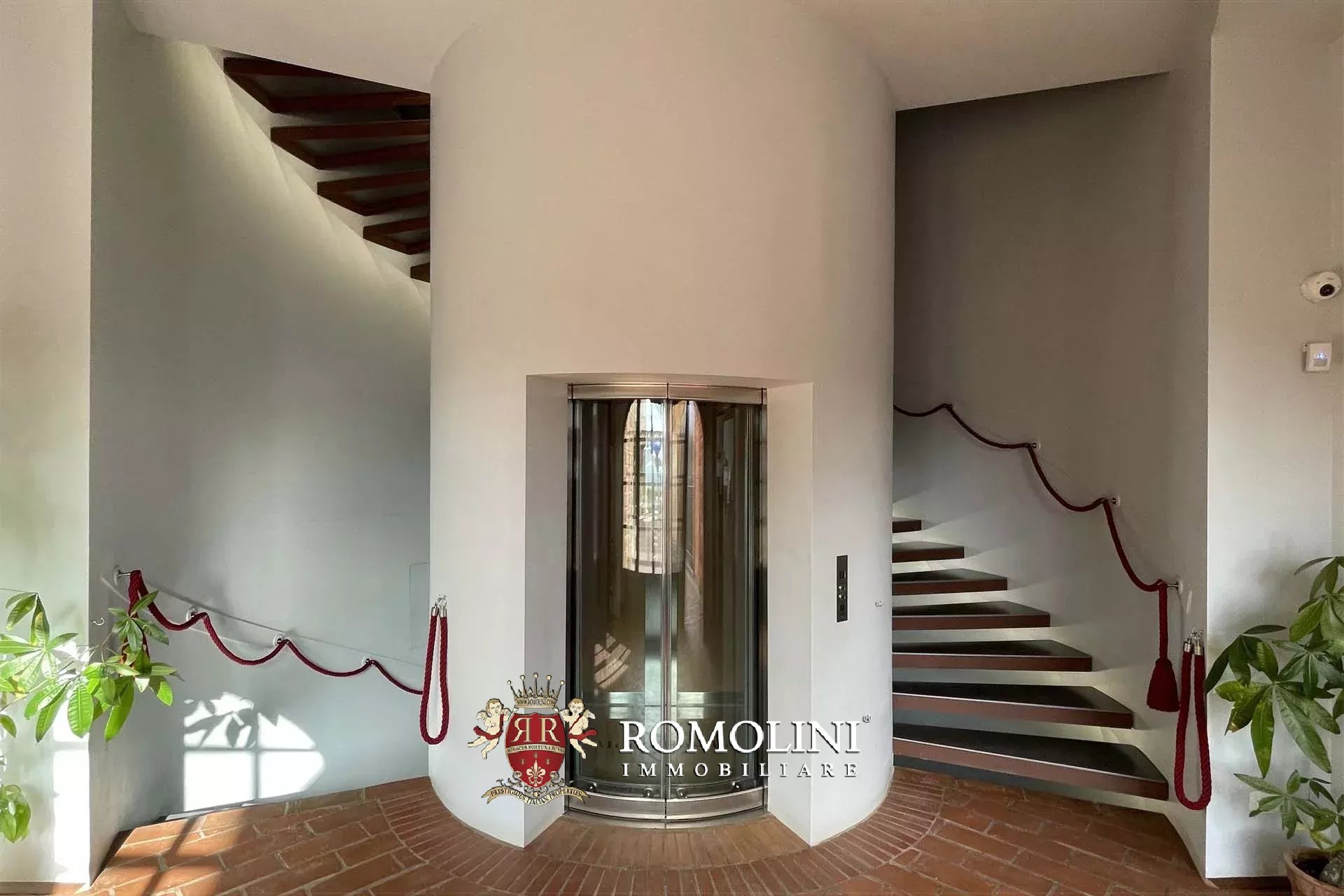
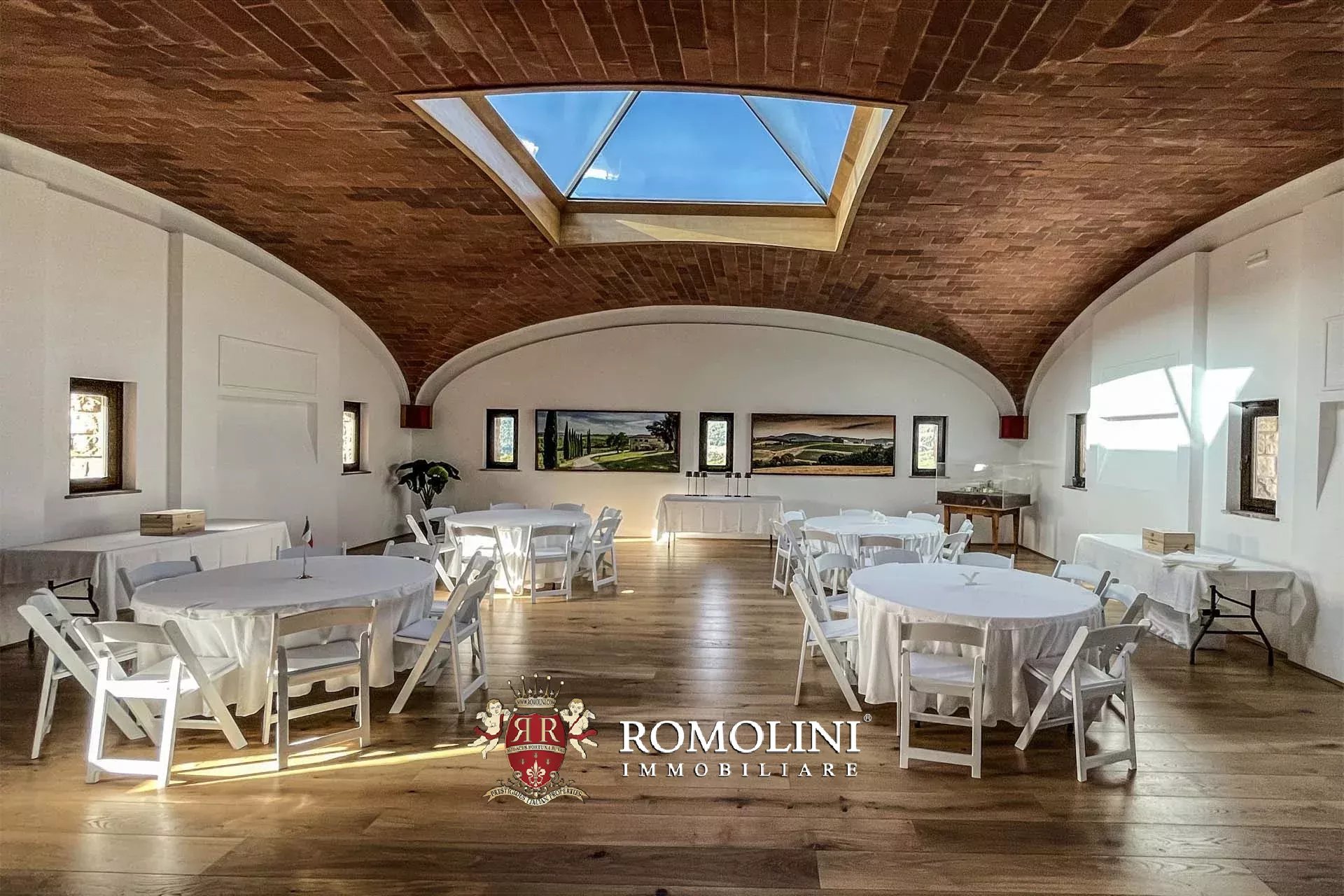
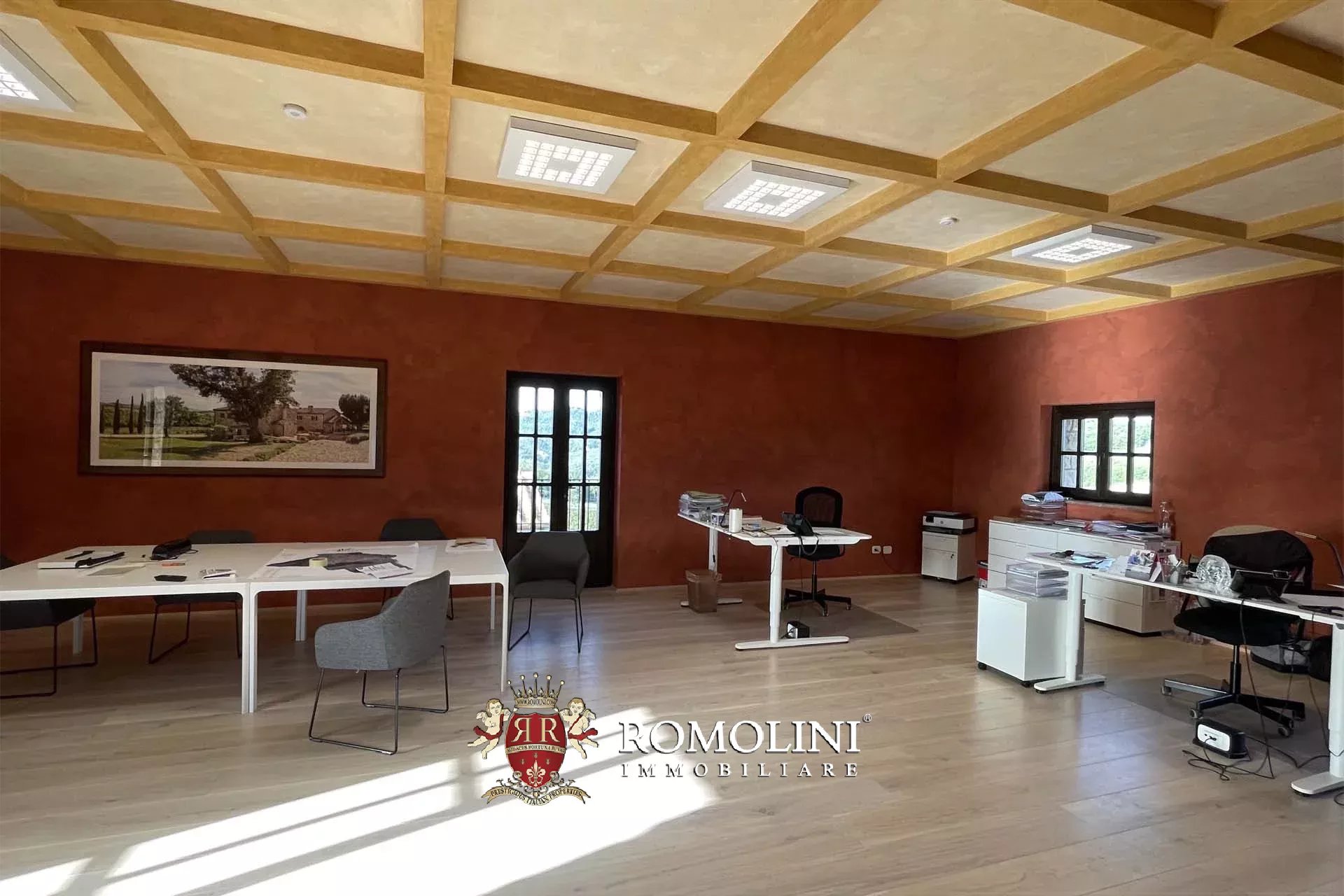
To move between floors, the building has both classic stairs and a futuristic elevator designed to resemble in shape a tire-bouchon corkscrew. Going upstairs, in addition to the apartment sleeping area, there is a huge room with tables that is normally used for events (up to 50 people can sit comfortably in the room) or for tasting sessions. On the opposite side of the building are the administrative offices of the business.
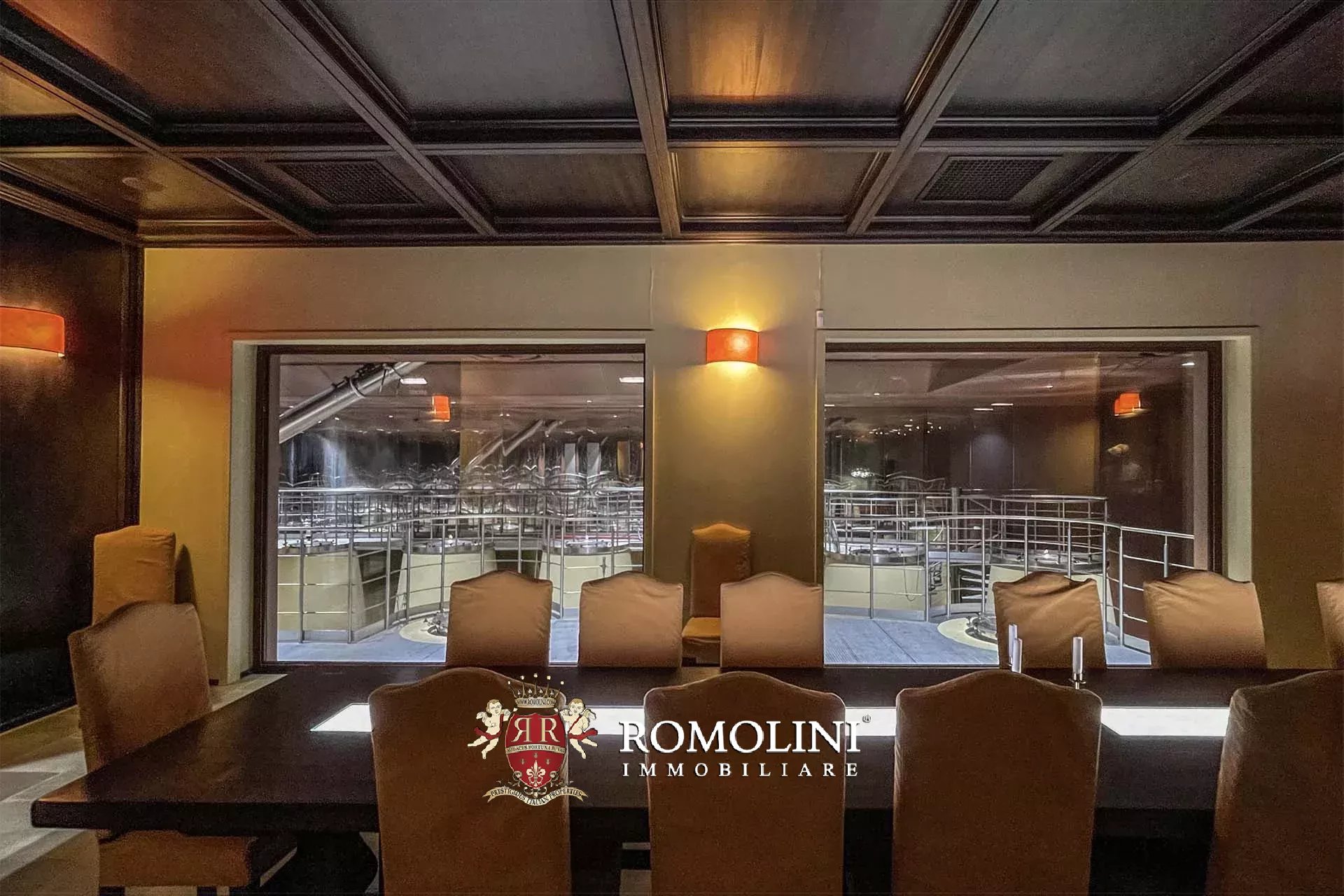
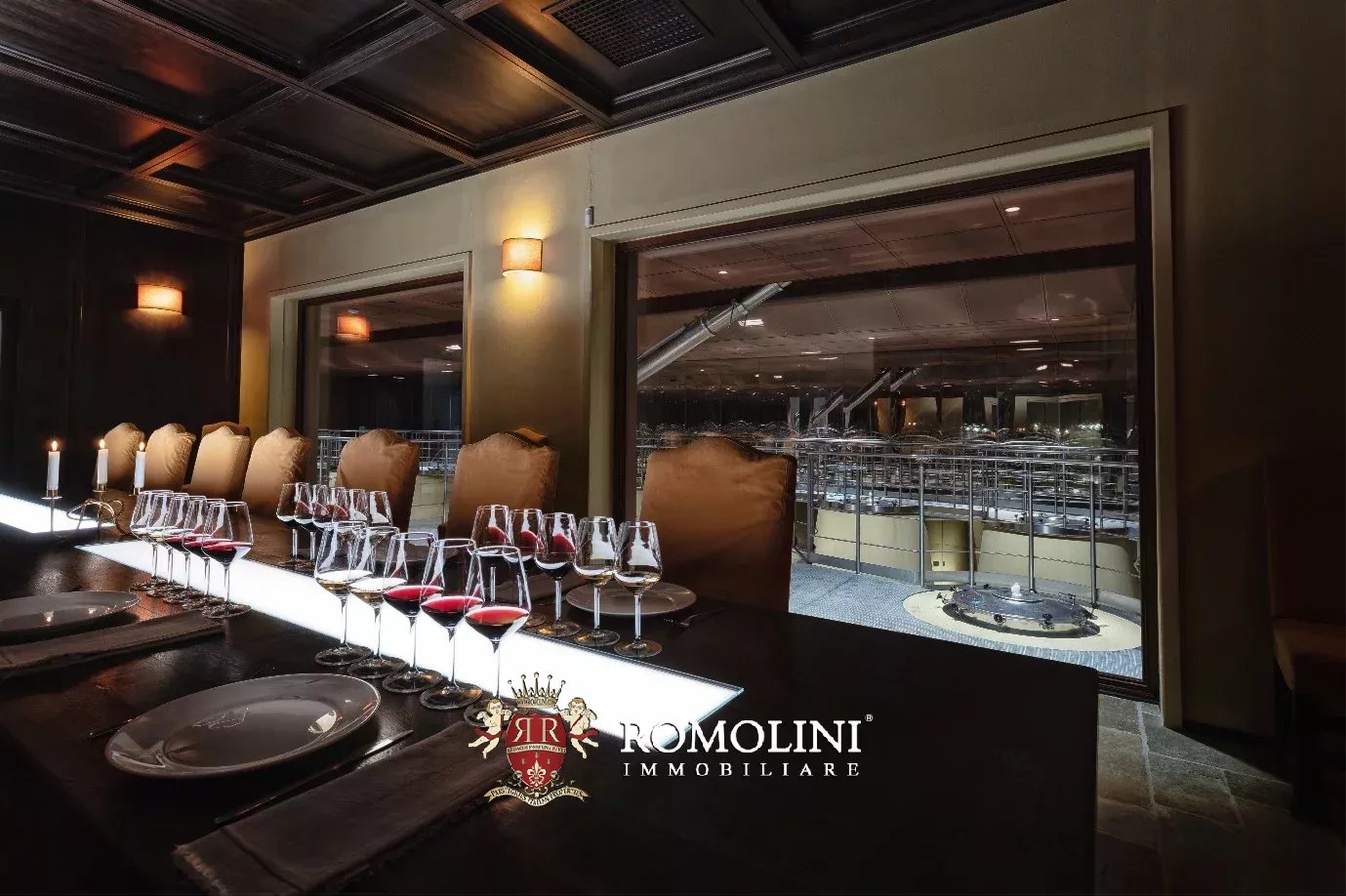
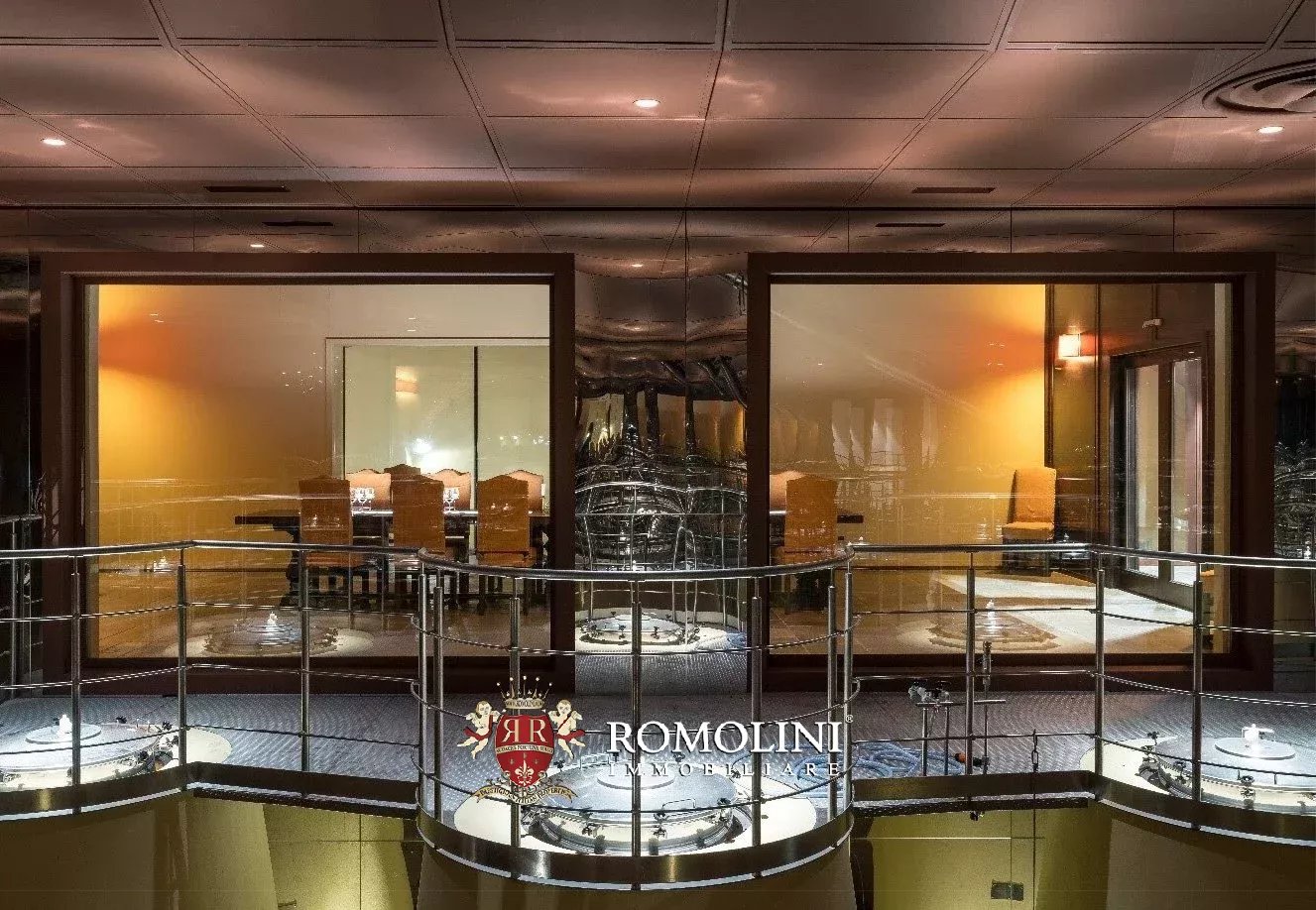
The actual winemaking cellar, on the other hand, is located underground so that it always has the right temperature, but since the structure is built along the slope, the basement is still accessible through two large doors located under the terrace. Descending from the ground floor, one first comes to a mezzanine “suspended” above the processing rooms. This room is used both as a meeting room and as a reception room for guests who can then savor the winery's excellent wines while witnessing their birth.
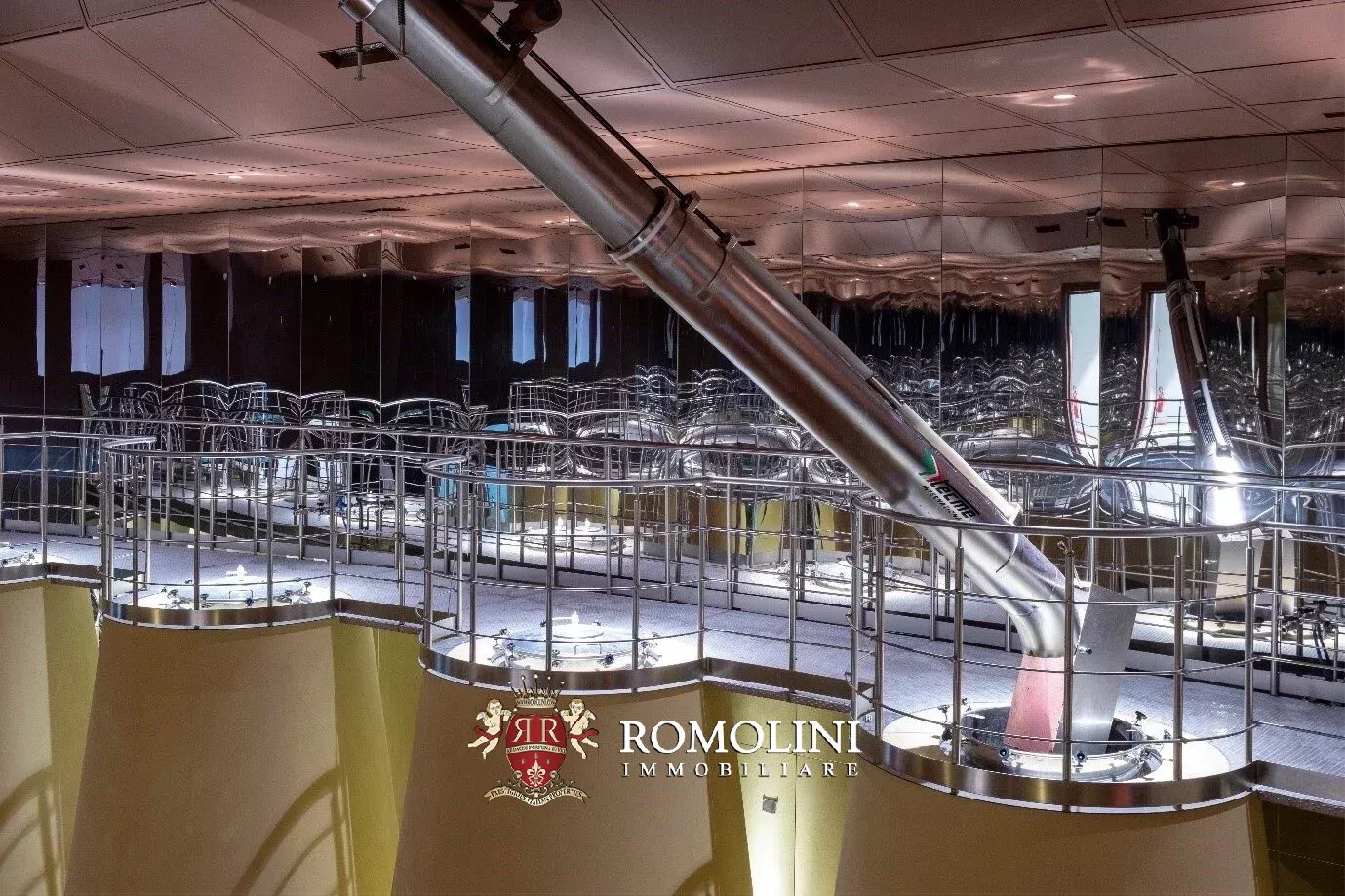
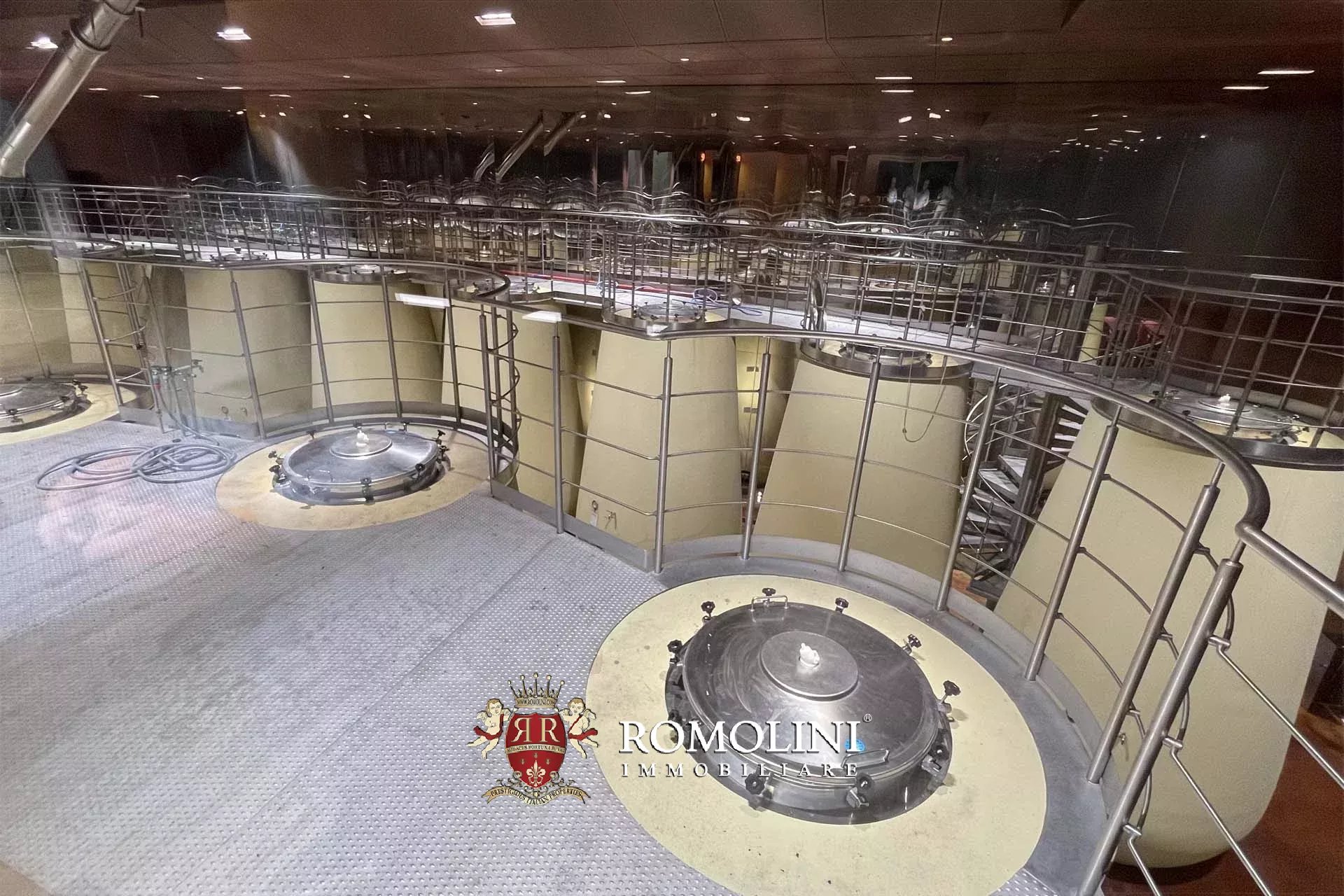
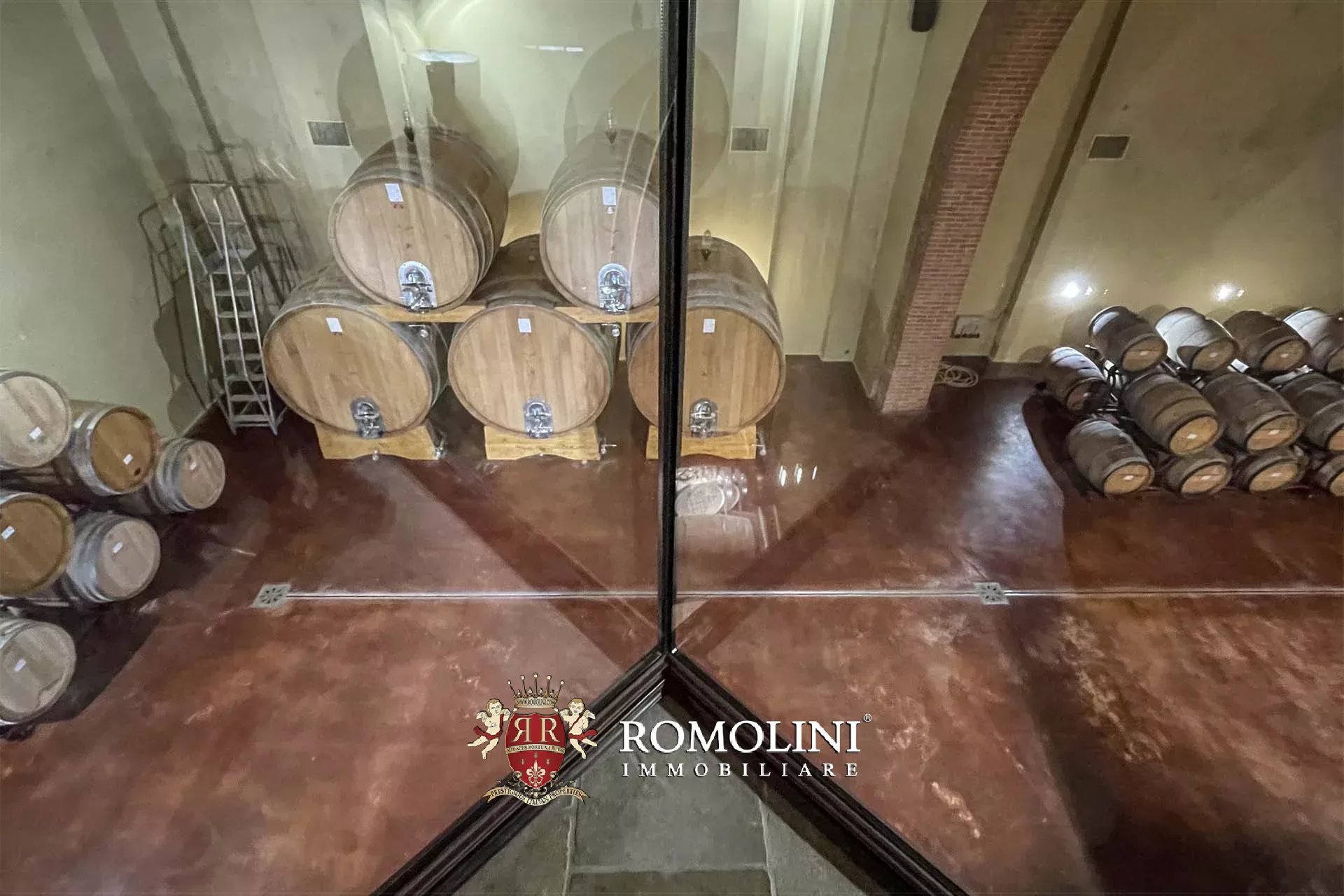
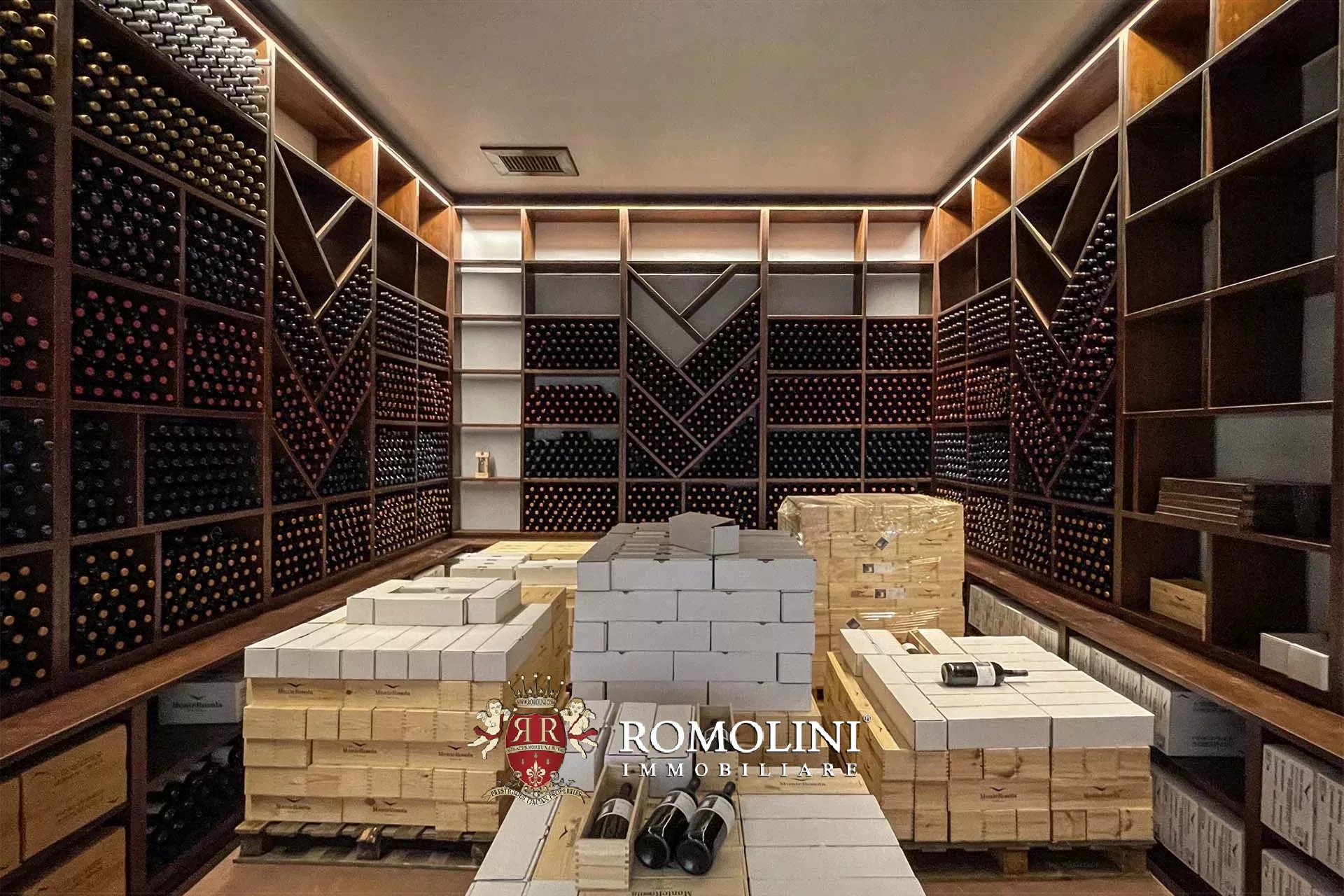
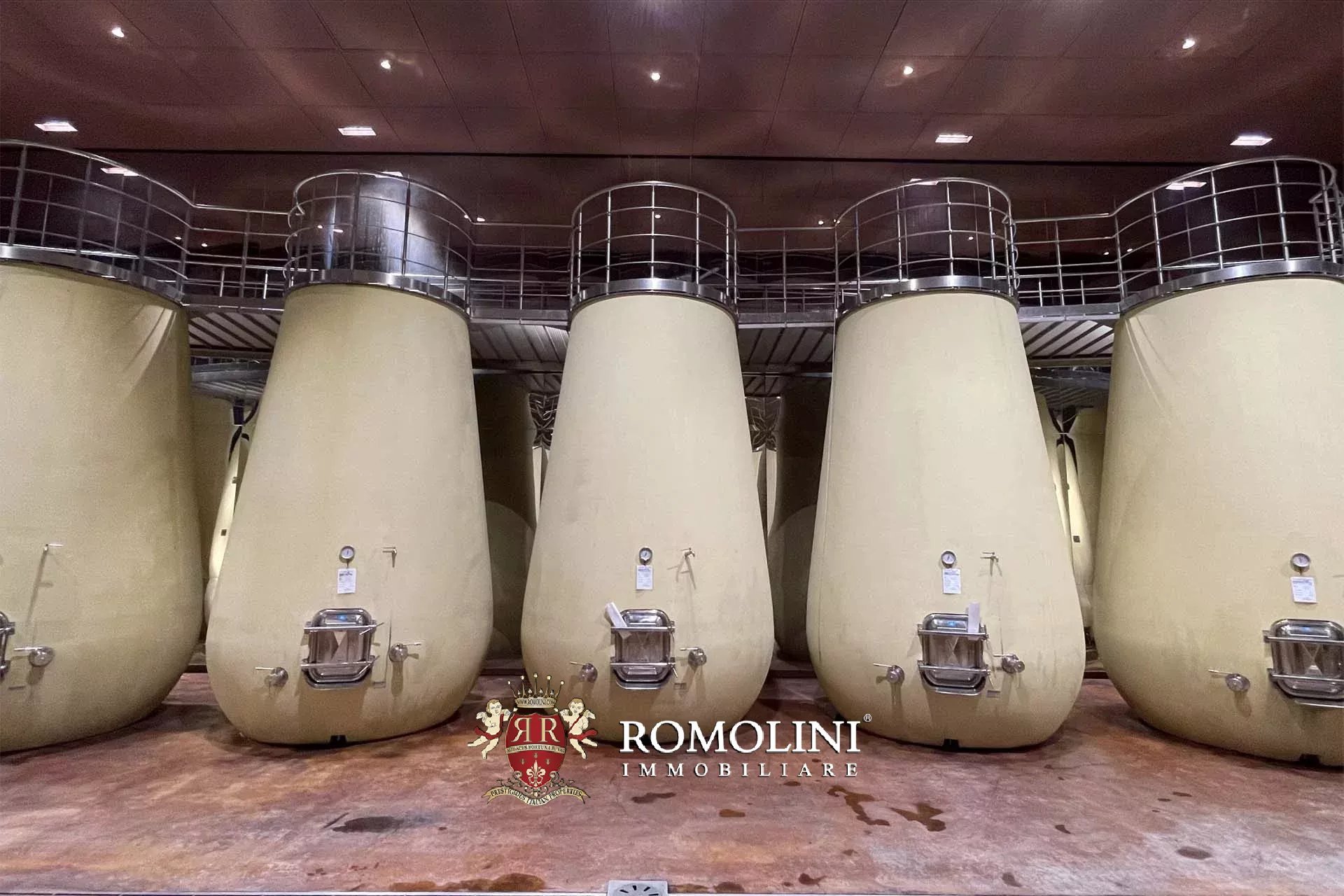
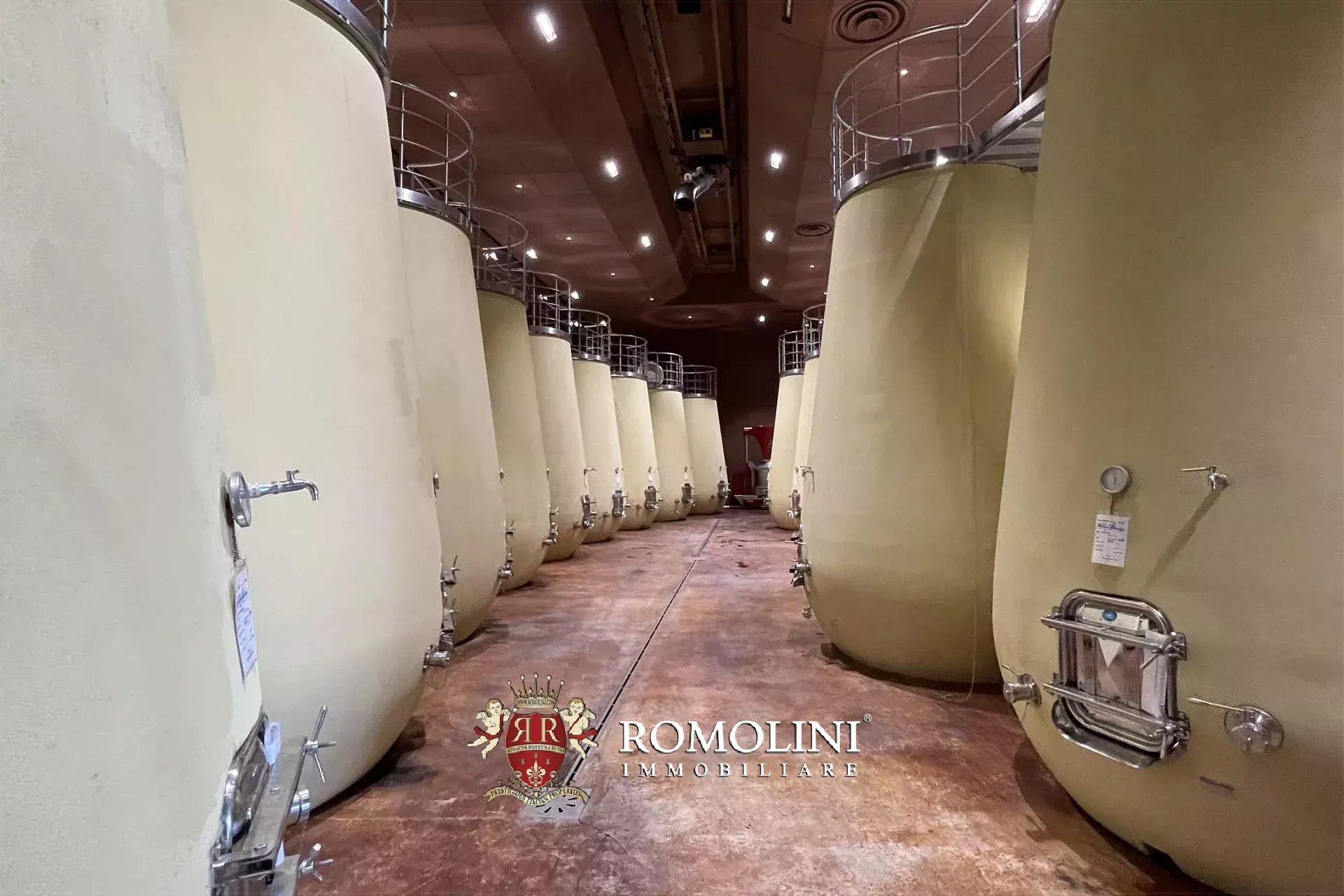
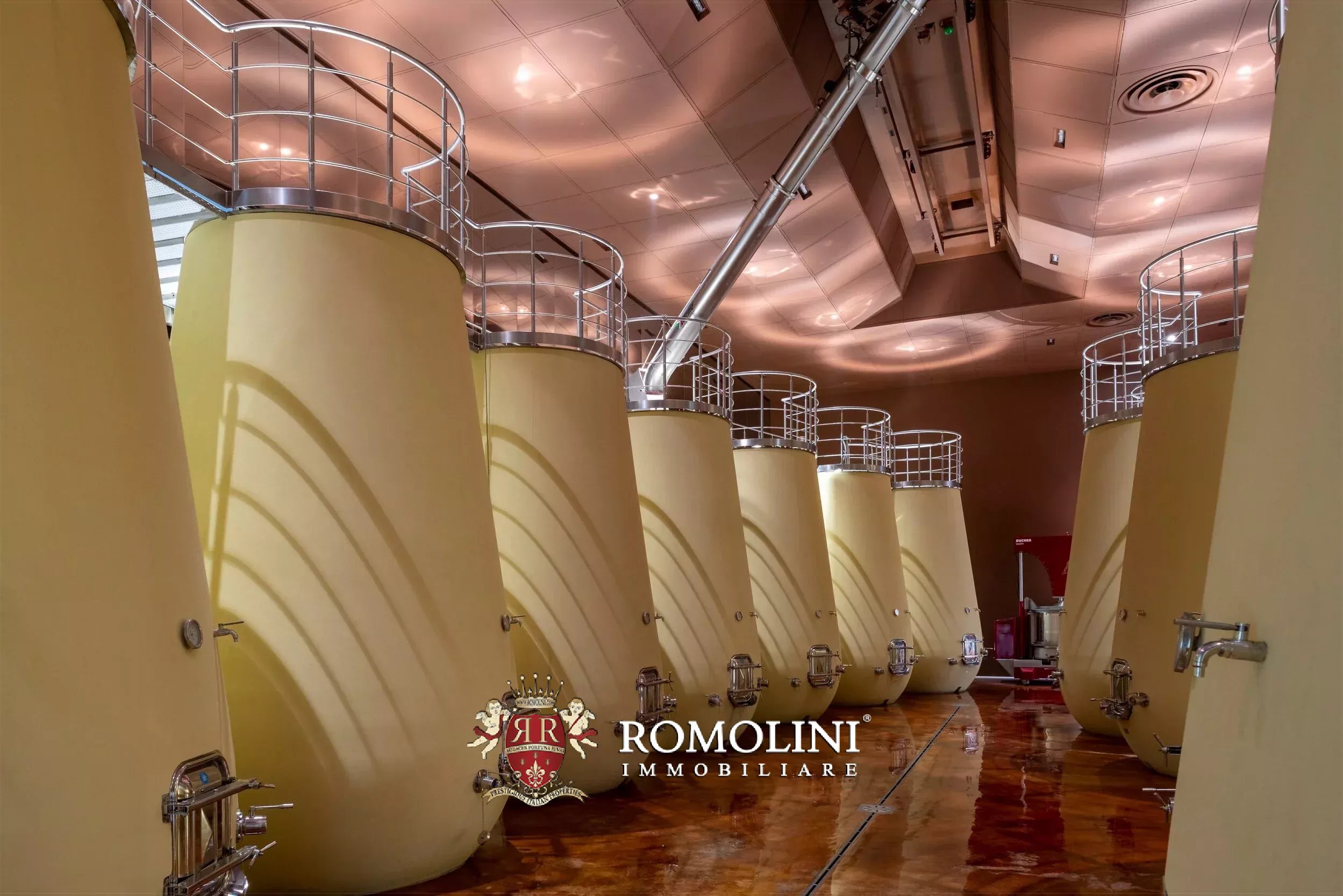
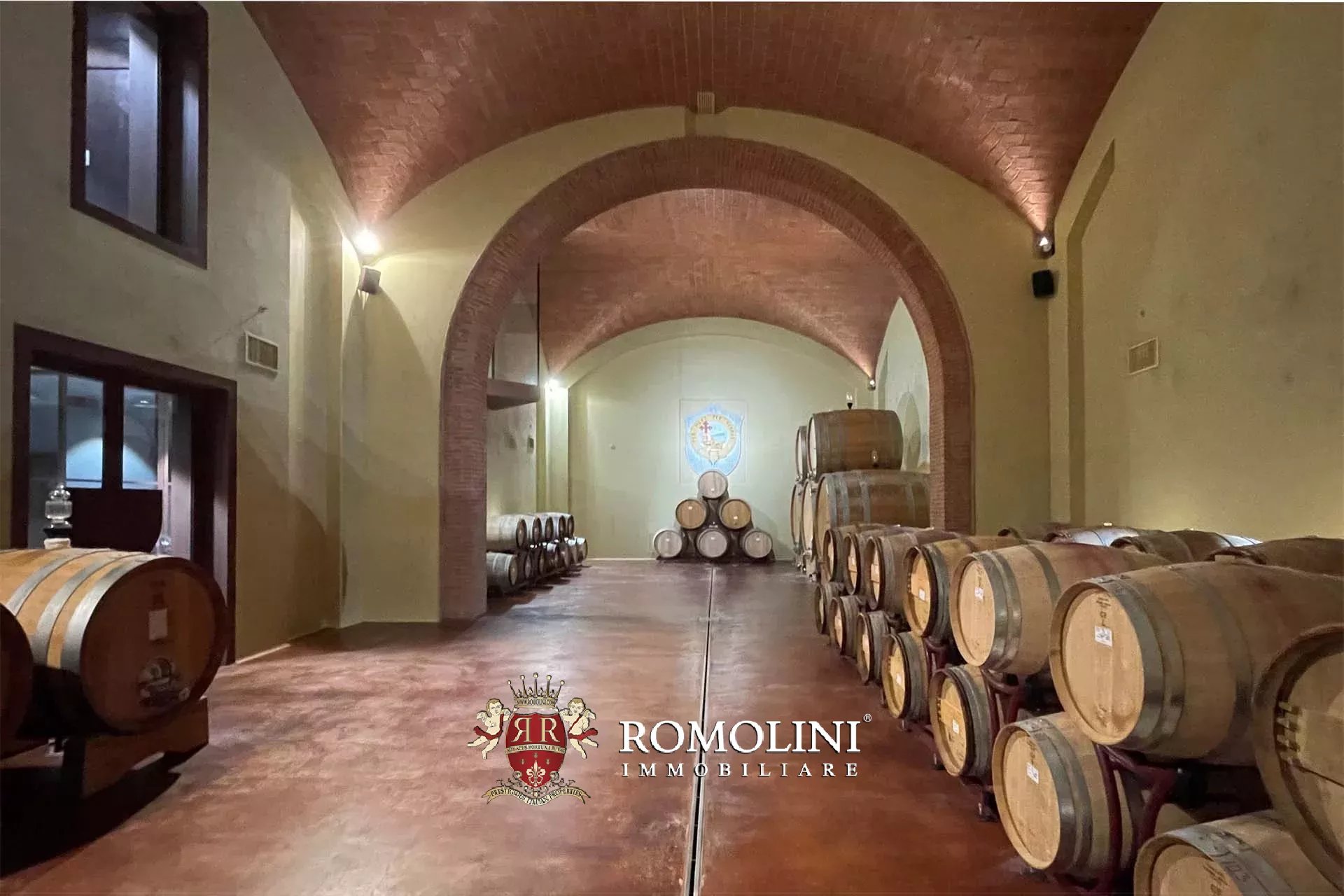
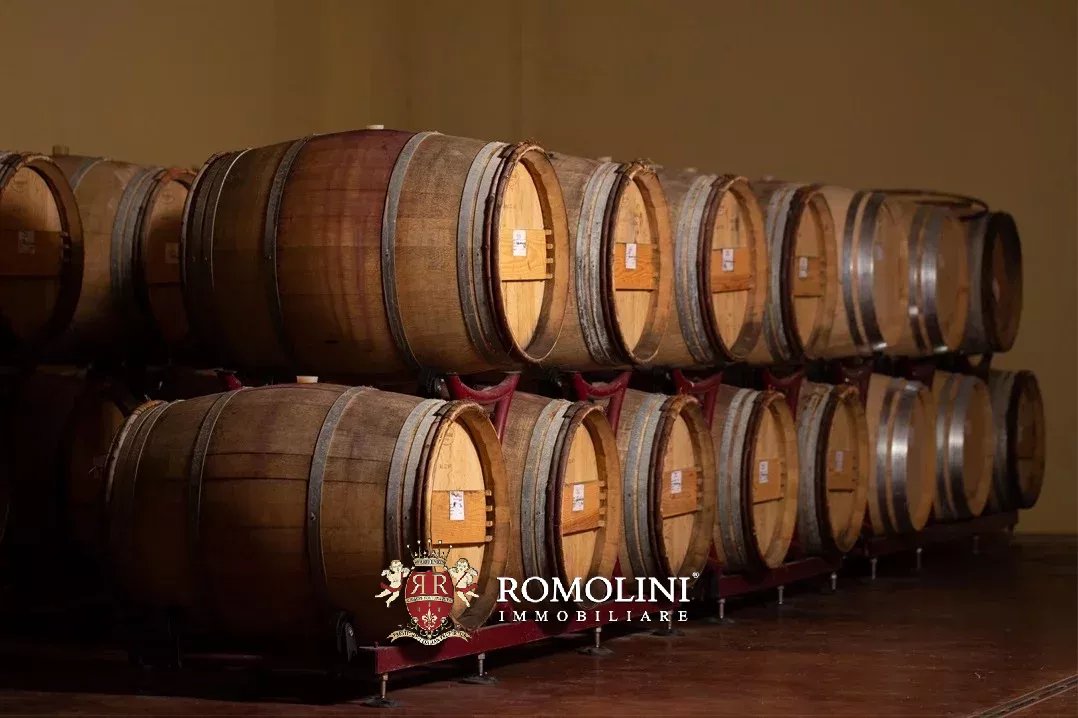
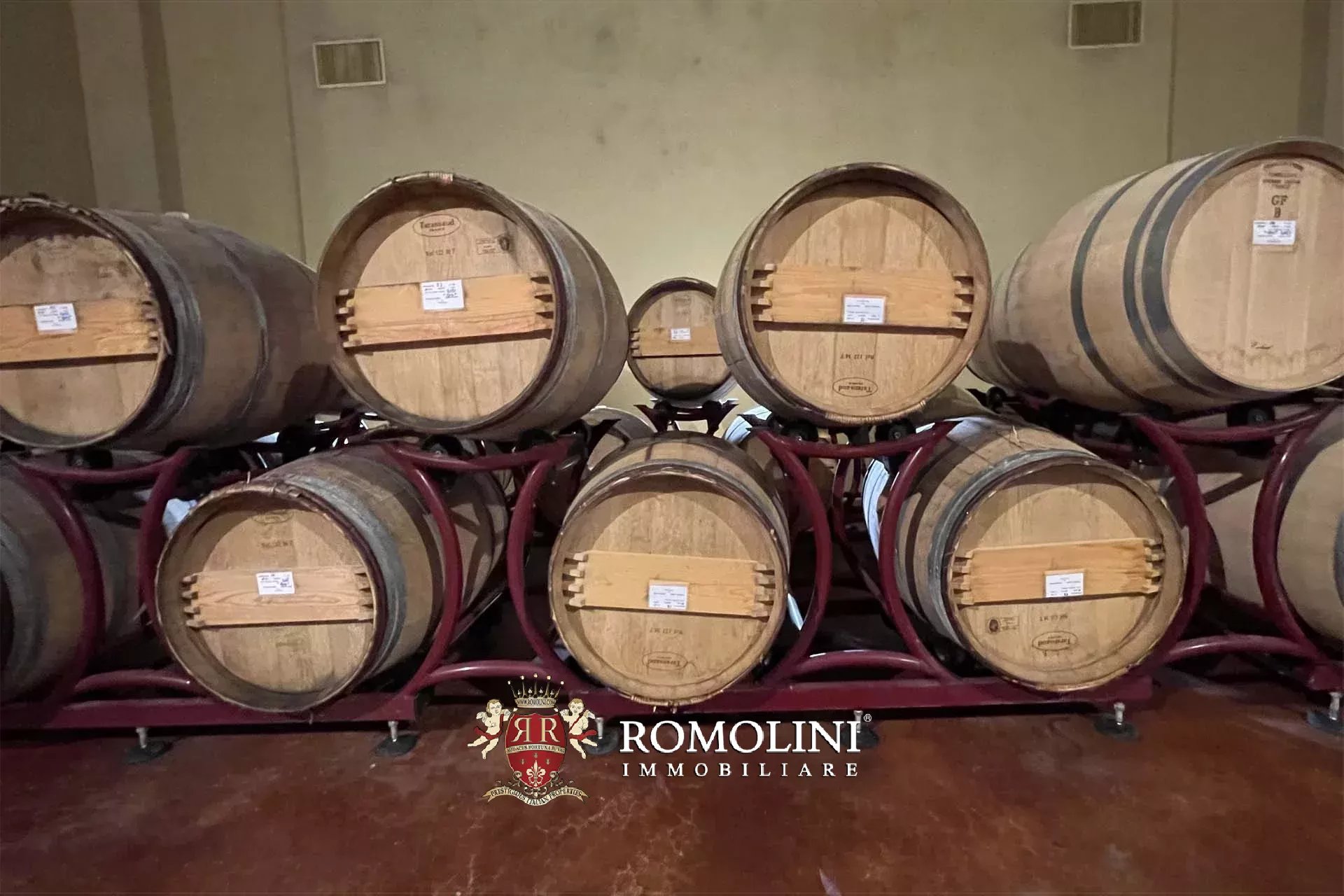
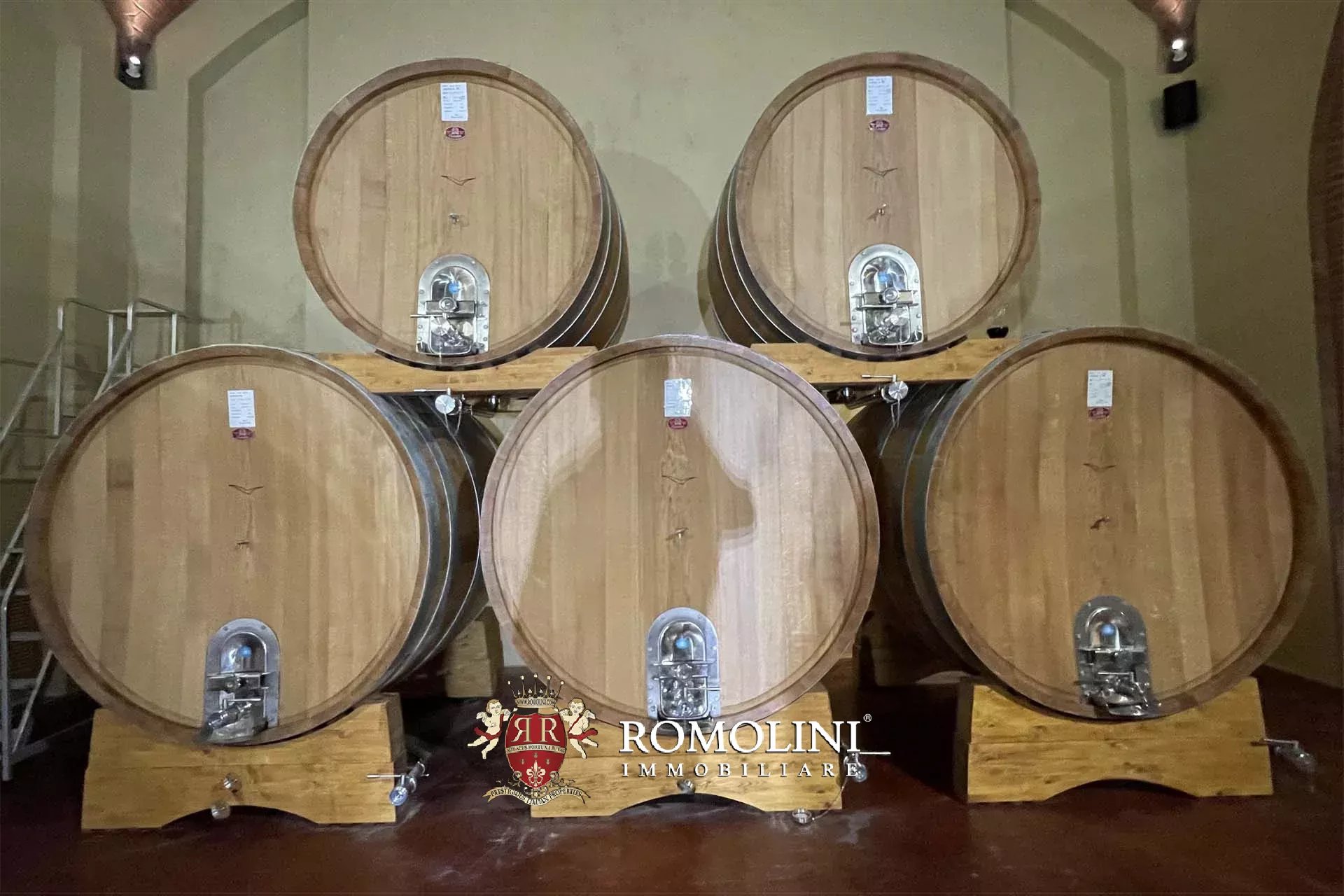
The processing rooms are then set on the lowest floor of the winery: on one side is the actual winemaking room where twenty tulip-shaped natural concrete tanks are located. Following the principle of the gravitational cellar, an automated pipe runs along the ceiling and fills the fermenters with pressed grapes from the sorting area above, a large unloading area located on the back side of the cellar. Continuing on is then a room that was originally intended as a bottling line (a process that currently takes place via mobile trucks in the winery). On the opposite side of the basement, on the other hand, is the aging room (also known as bottaia) with botti, barriques and tonneaux. Completing the floor is an exhibition room where all the wines produced by the winery over the years are stored.
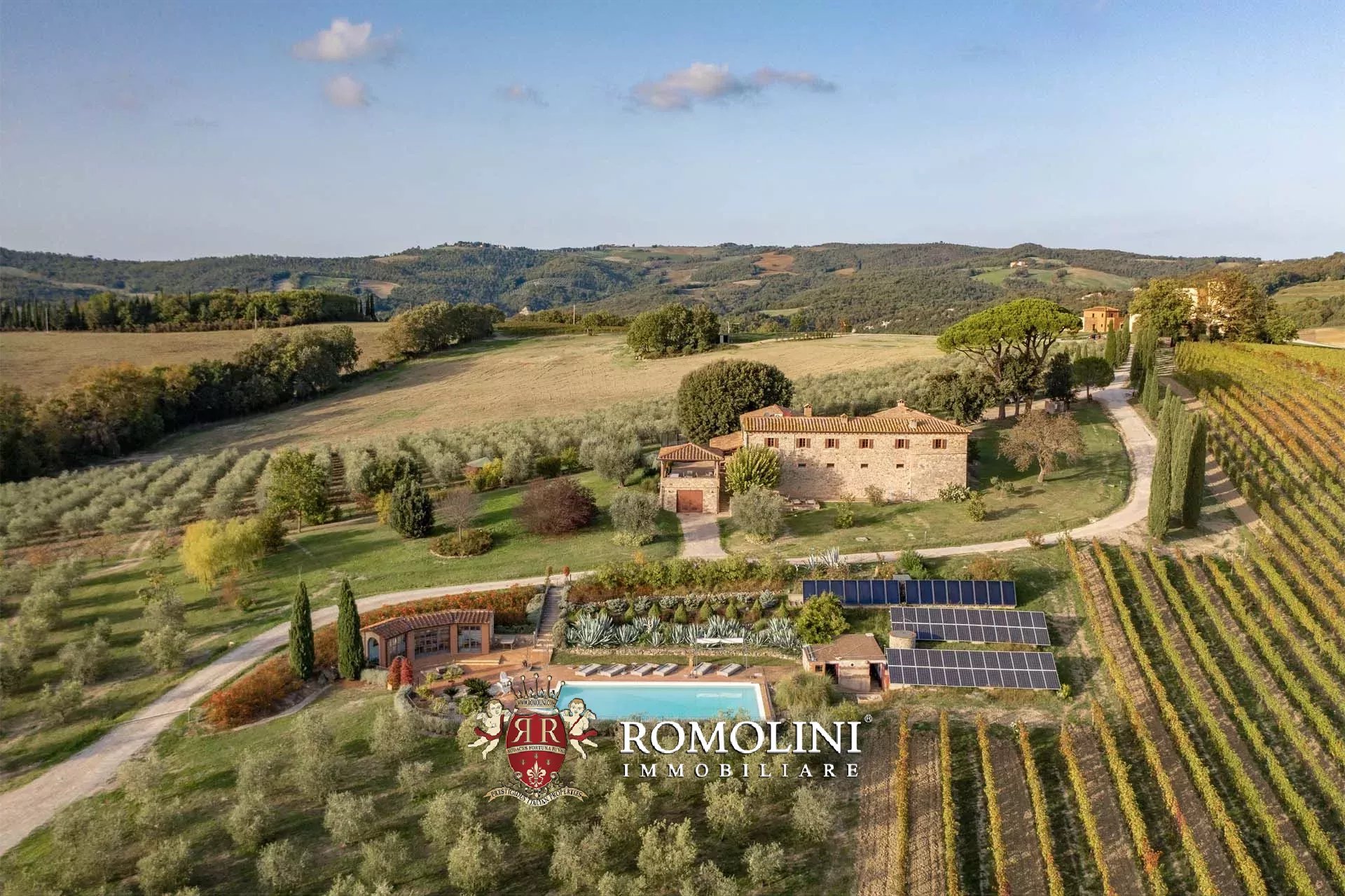
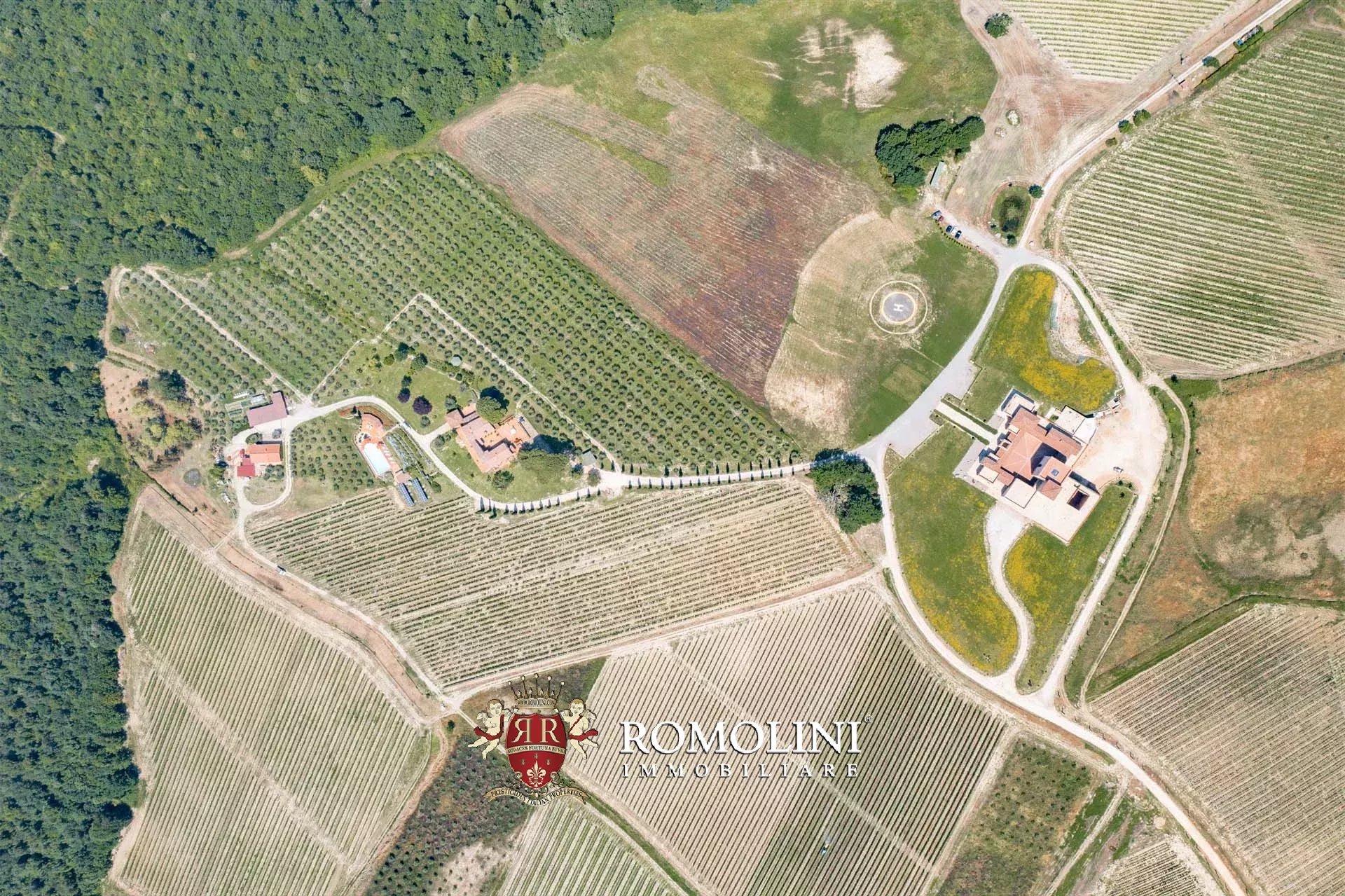
Also right next to the winery is a swimming pool that can be used for events and ceremonies. The pool actually fulfills a dual function: while it provides a place to relax, it is also used as an "outlet" for excess hot water produced by the panels, which is then fed into the pool instead of being lost through drains.
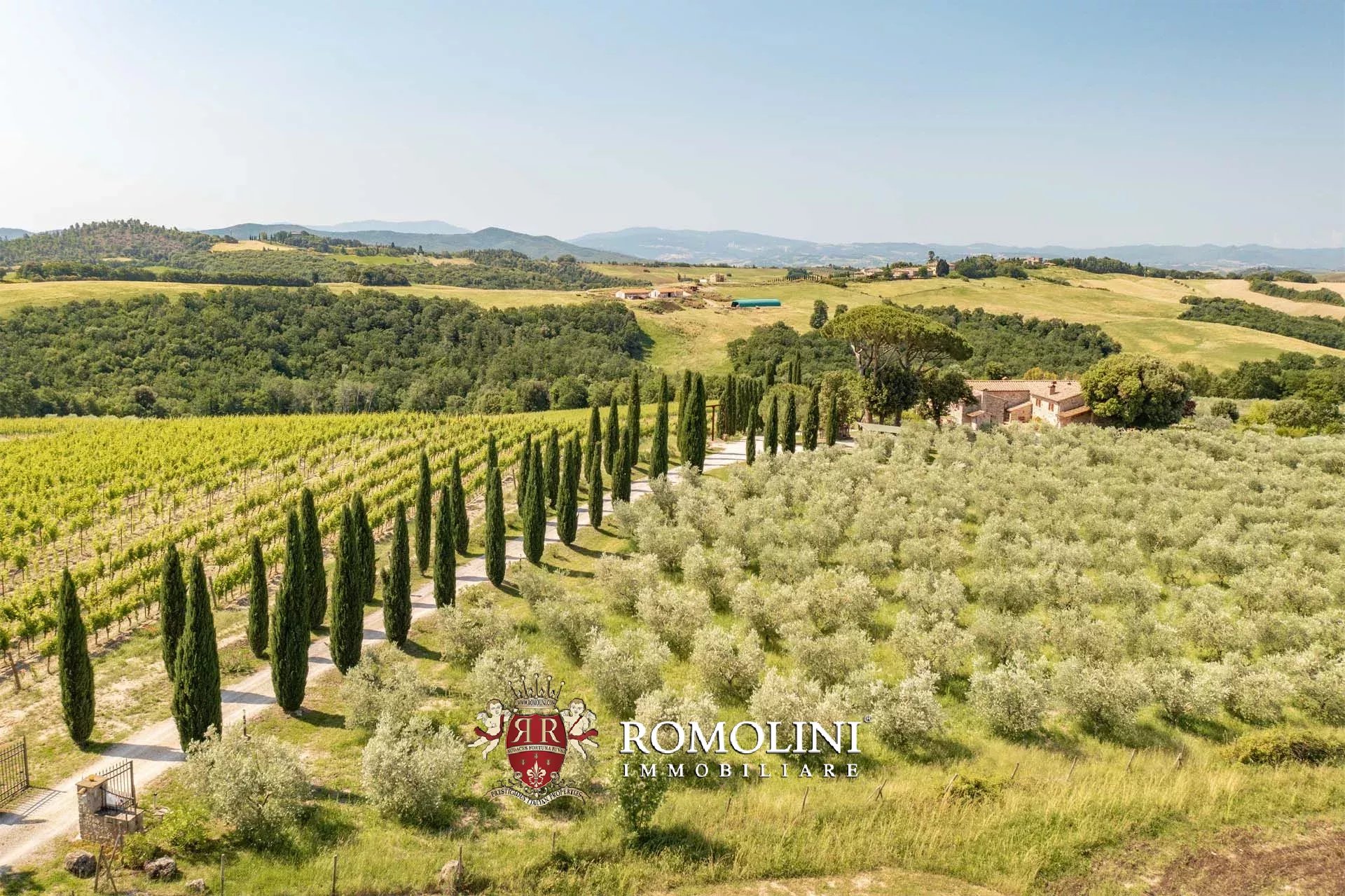
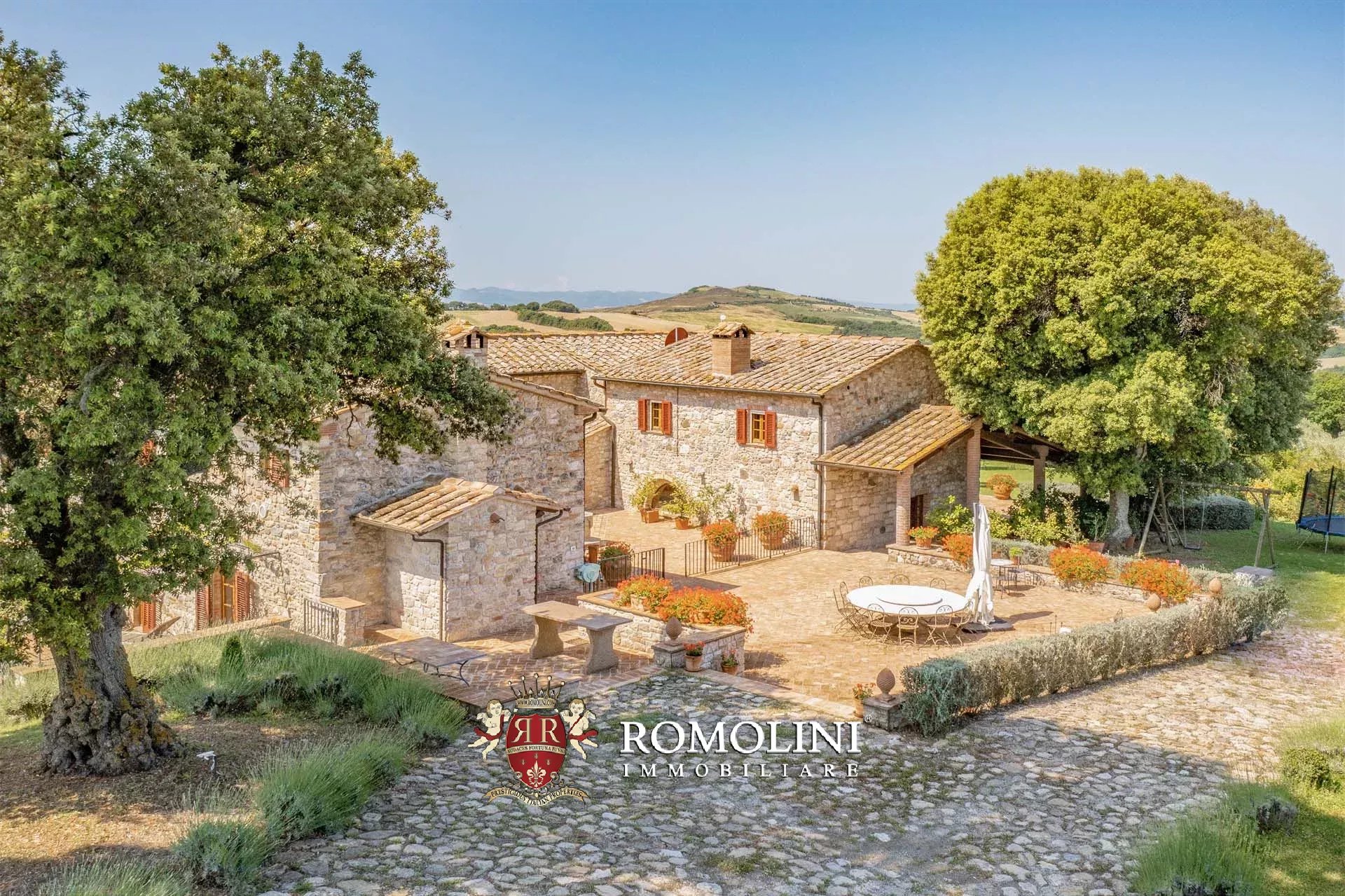
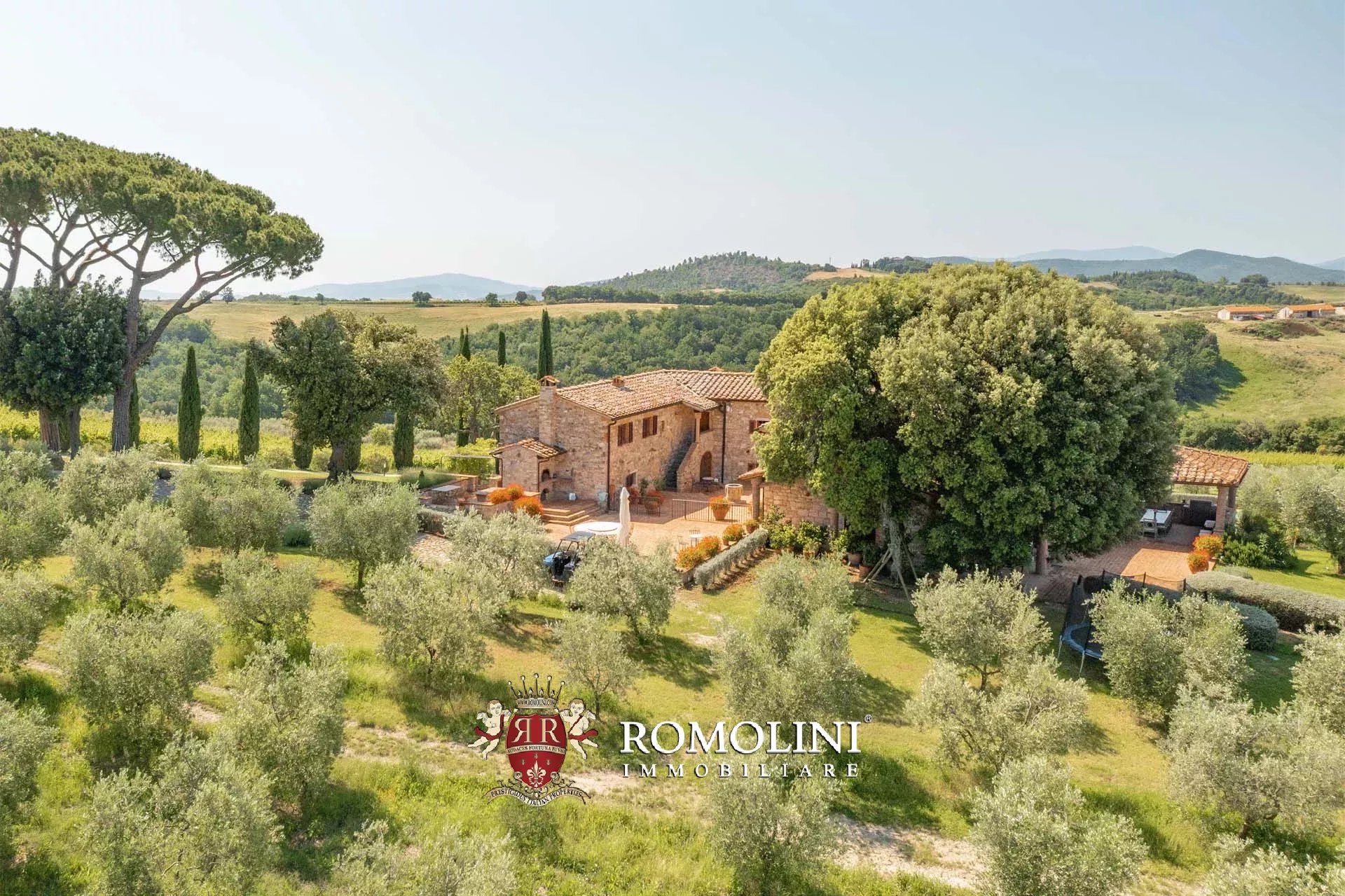
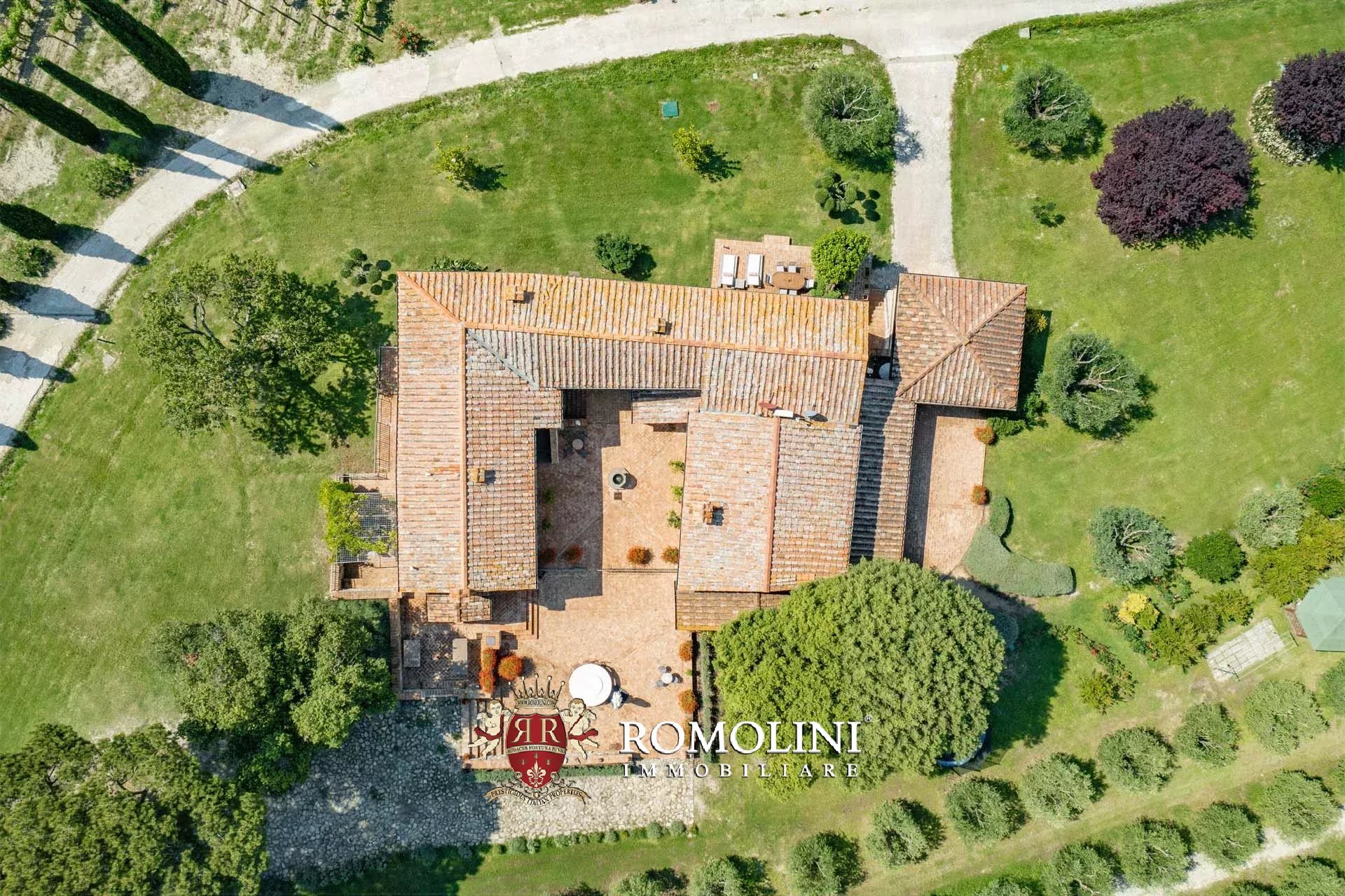
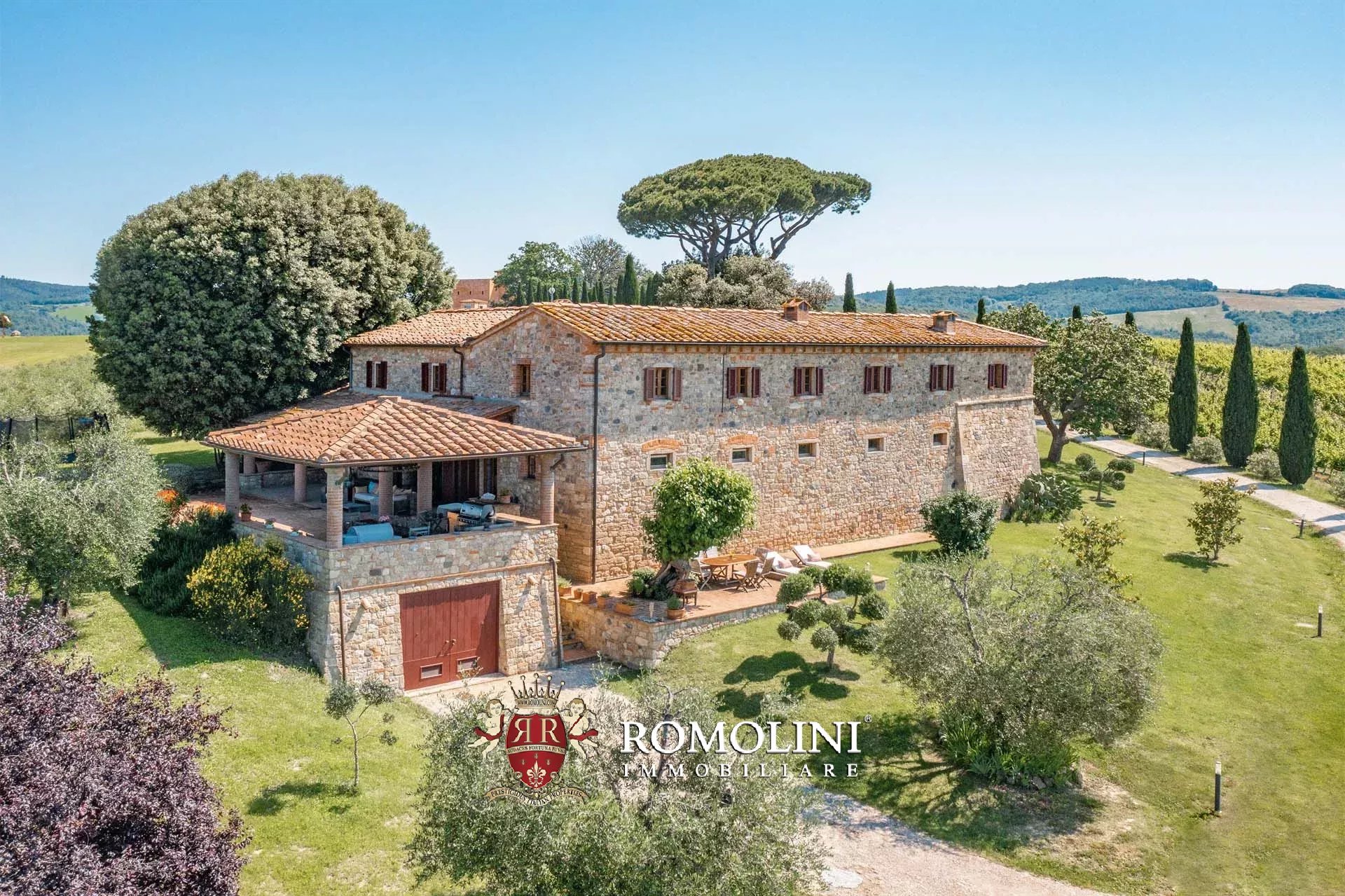
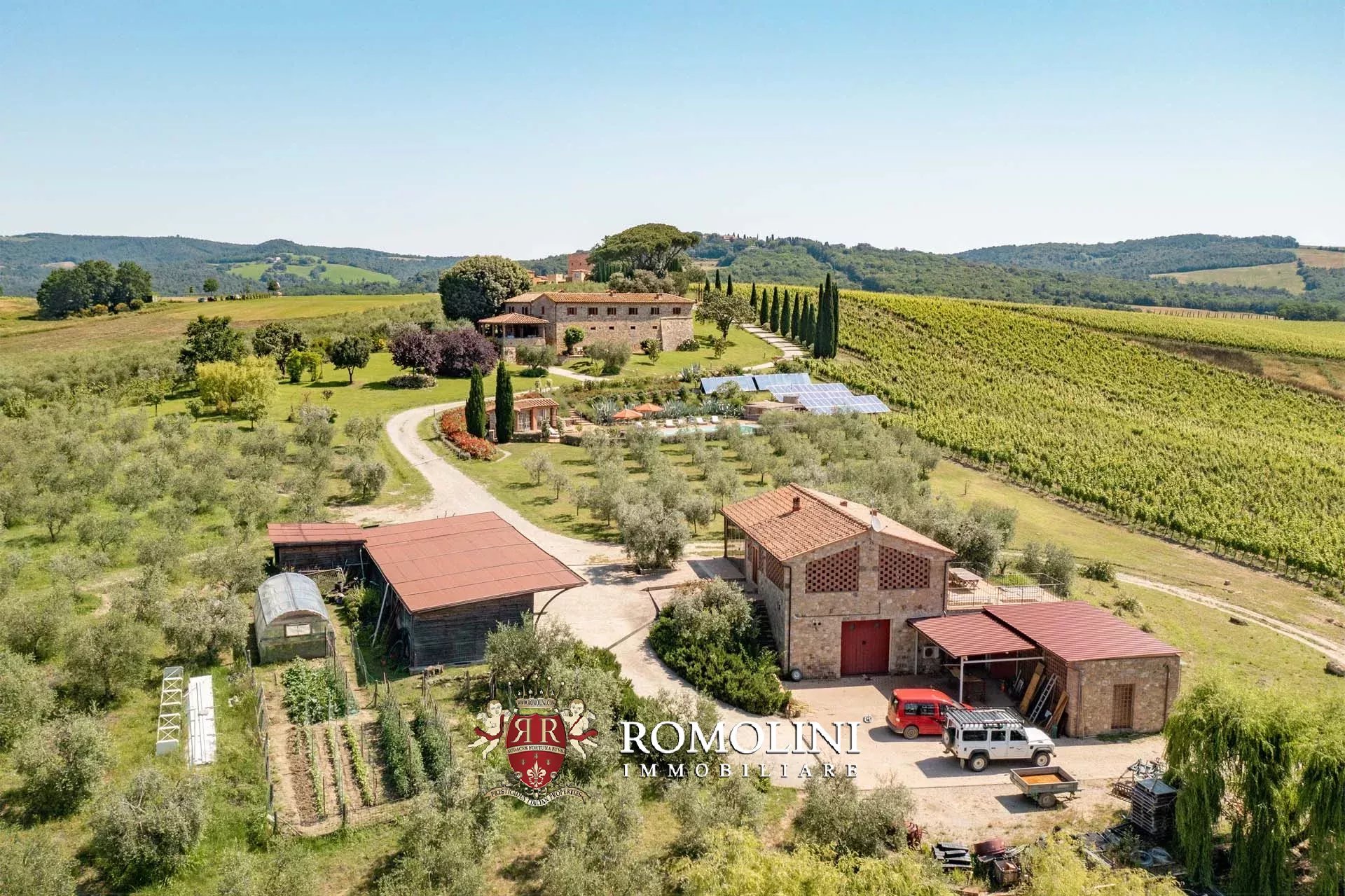
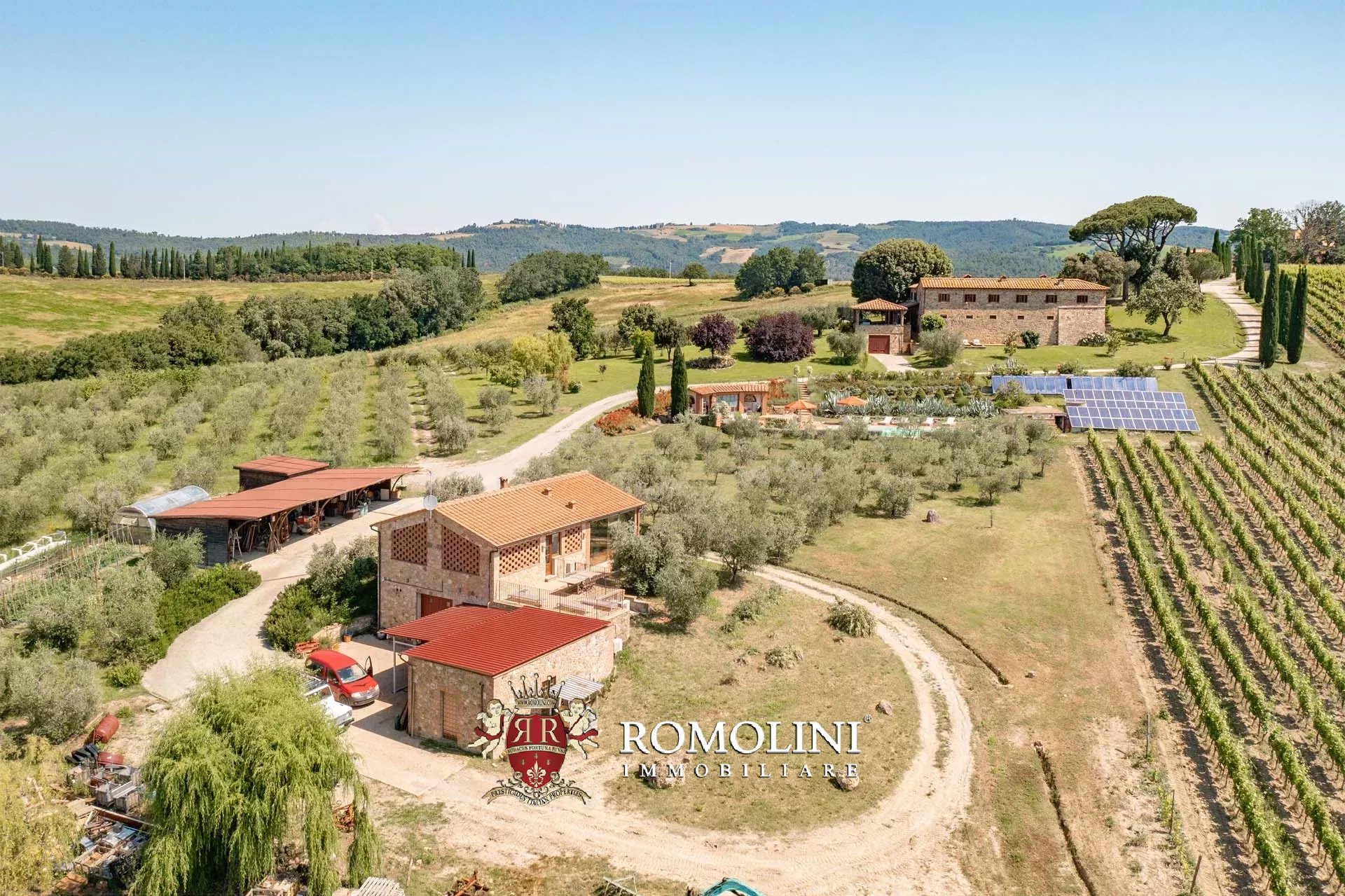
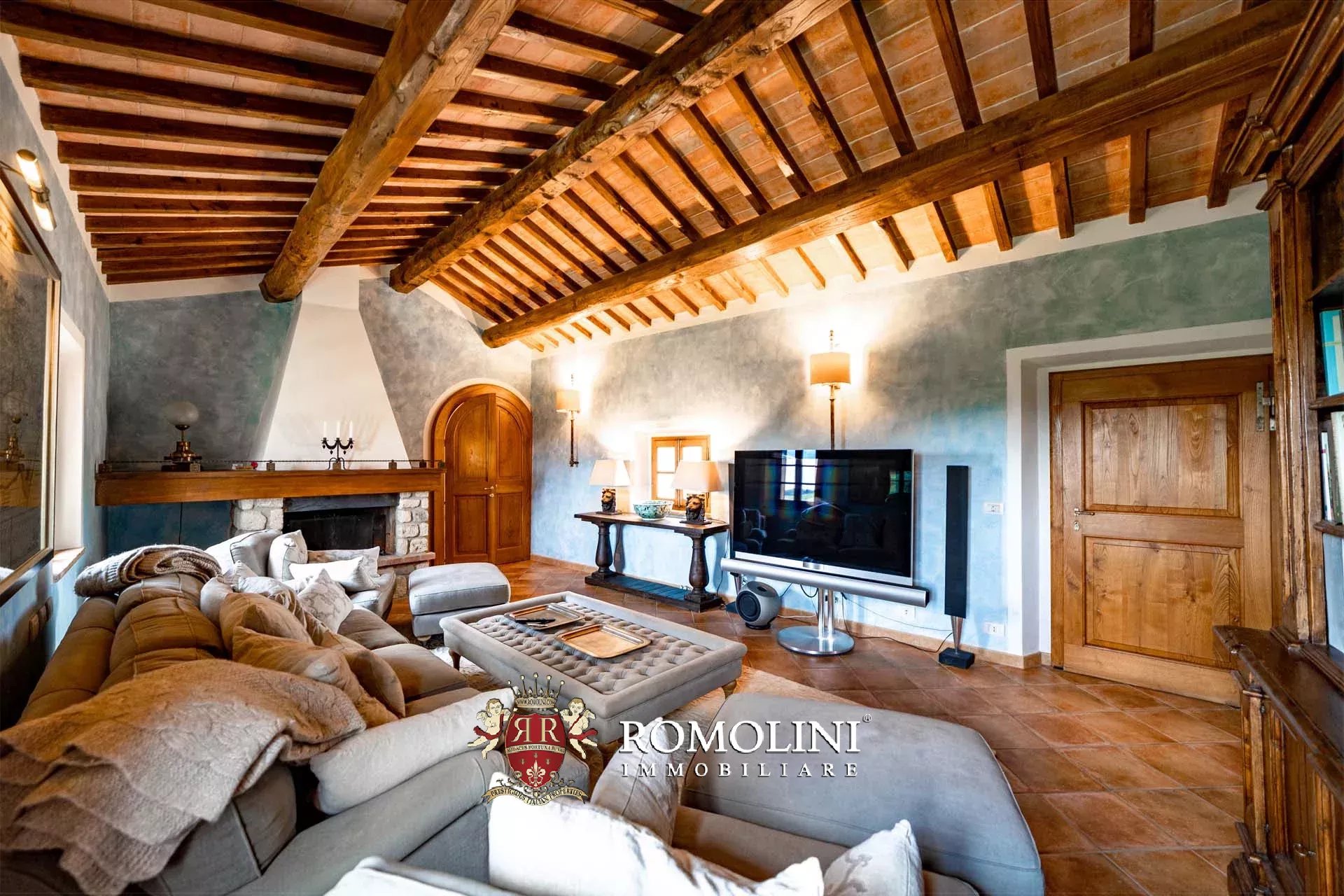
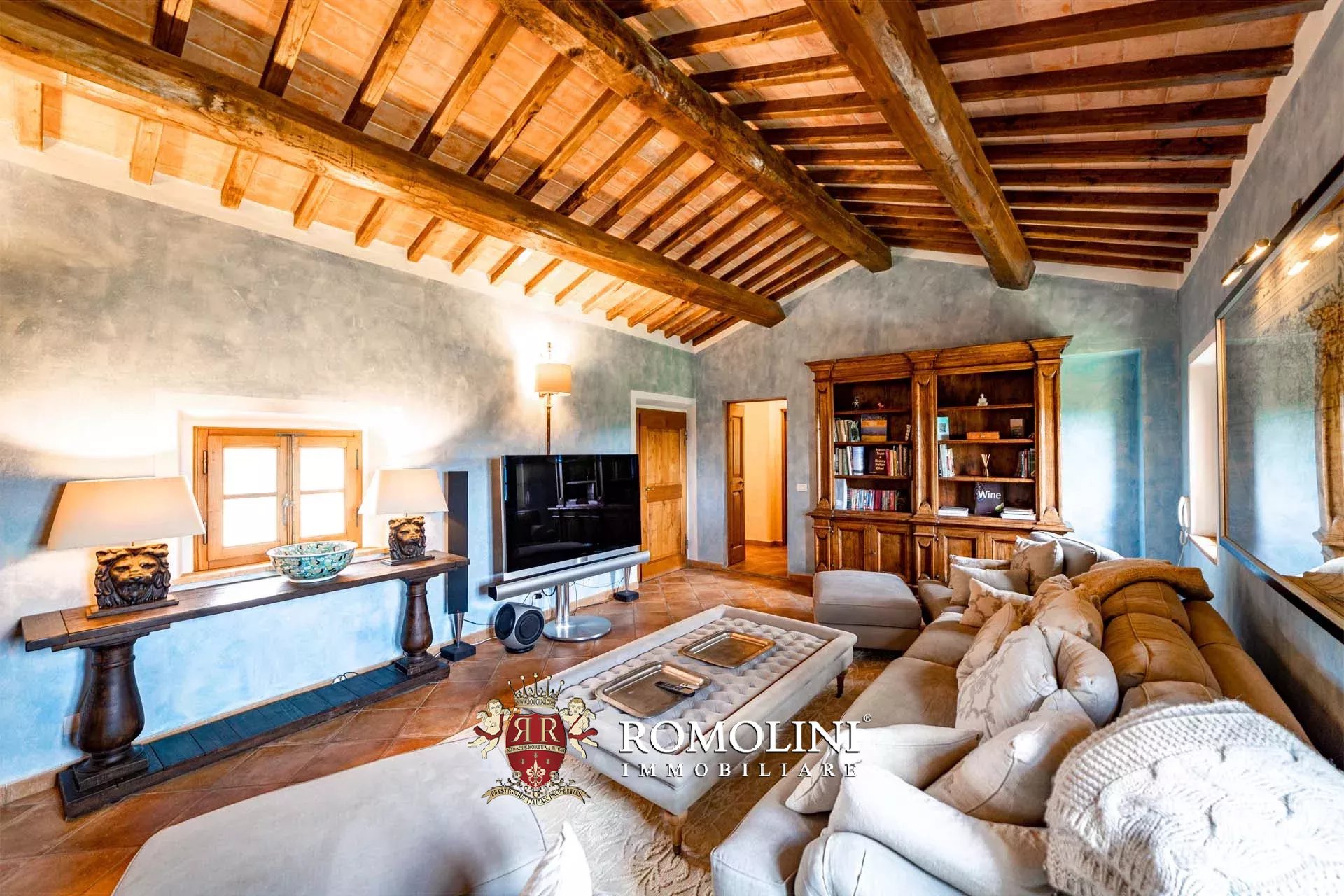
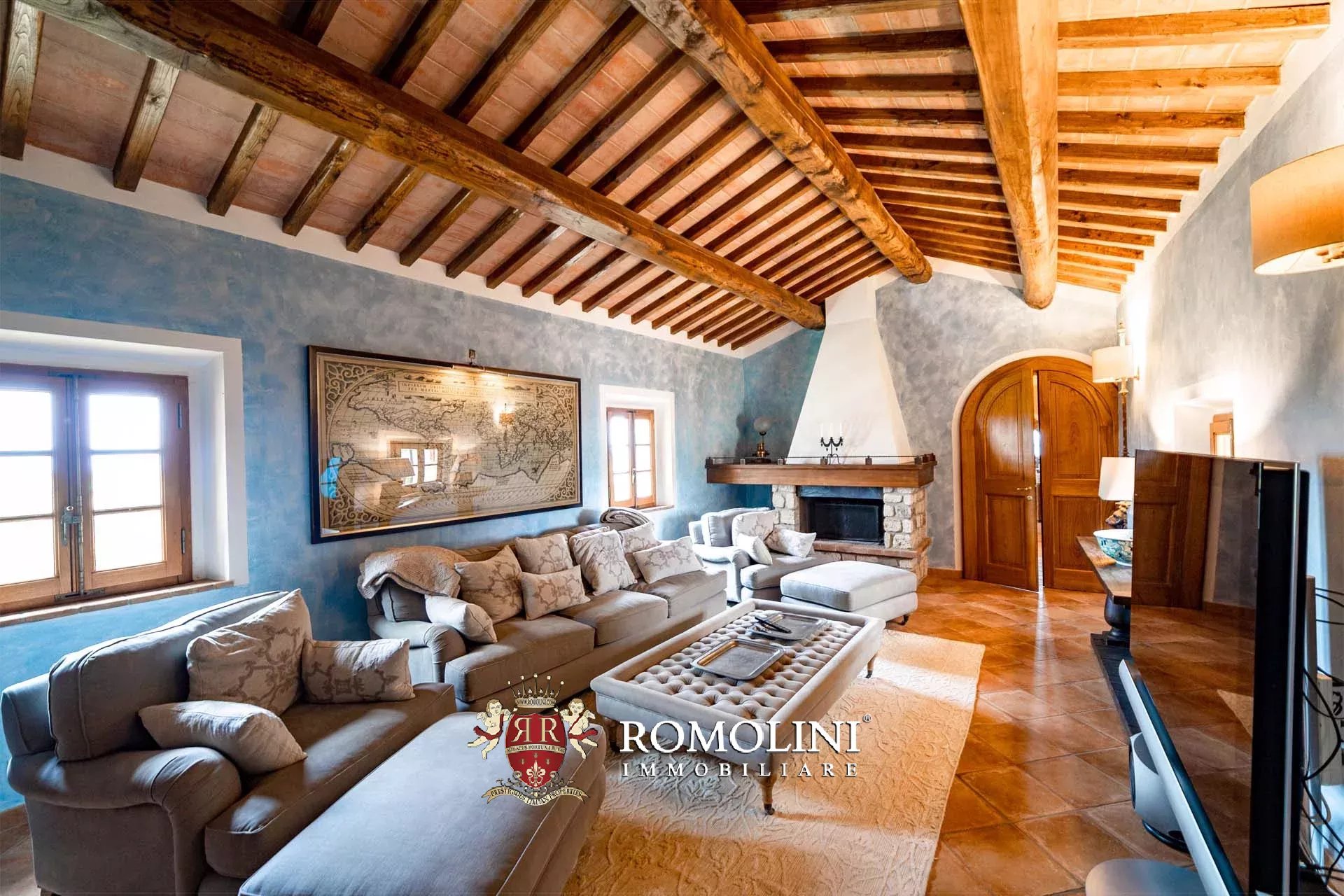
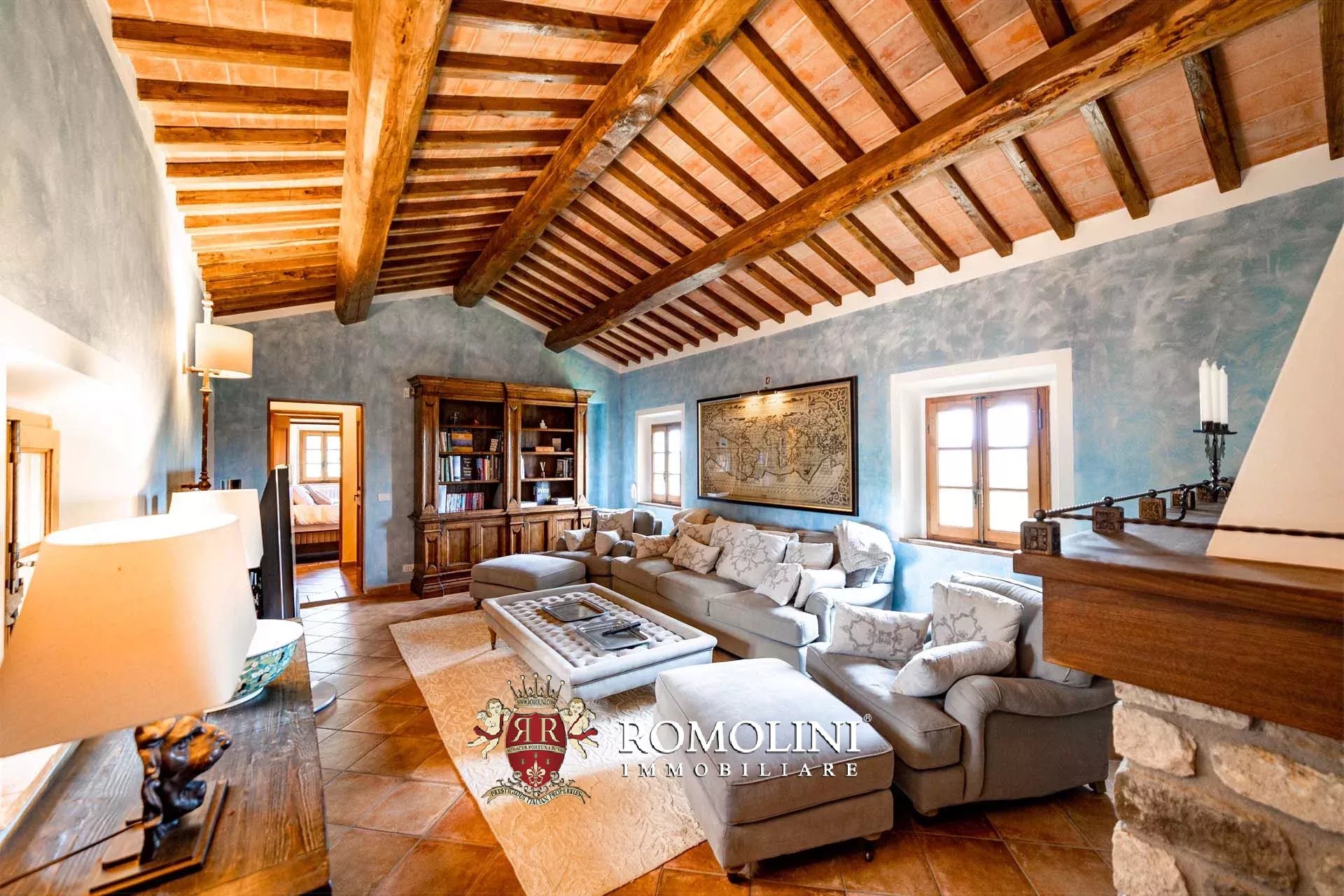
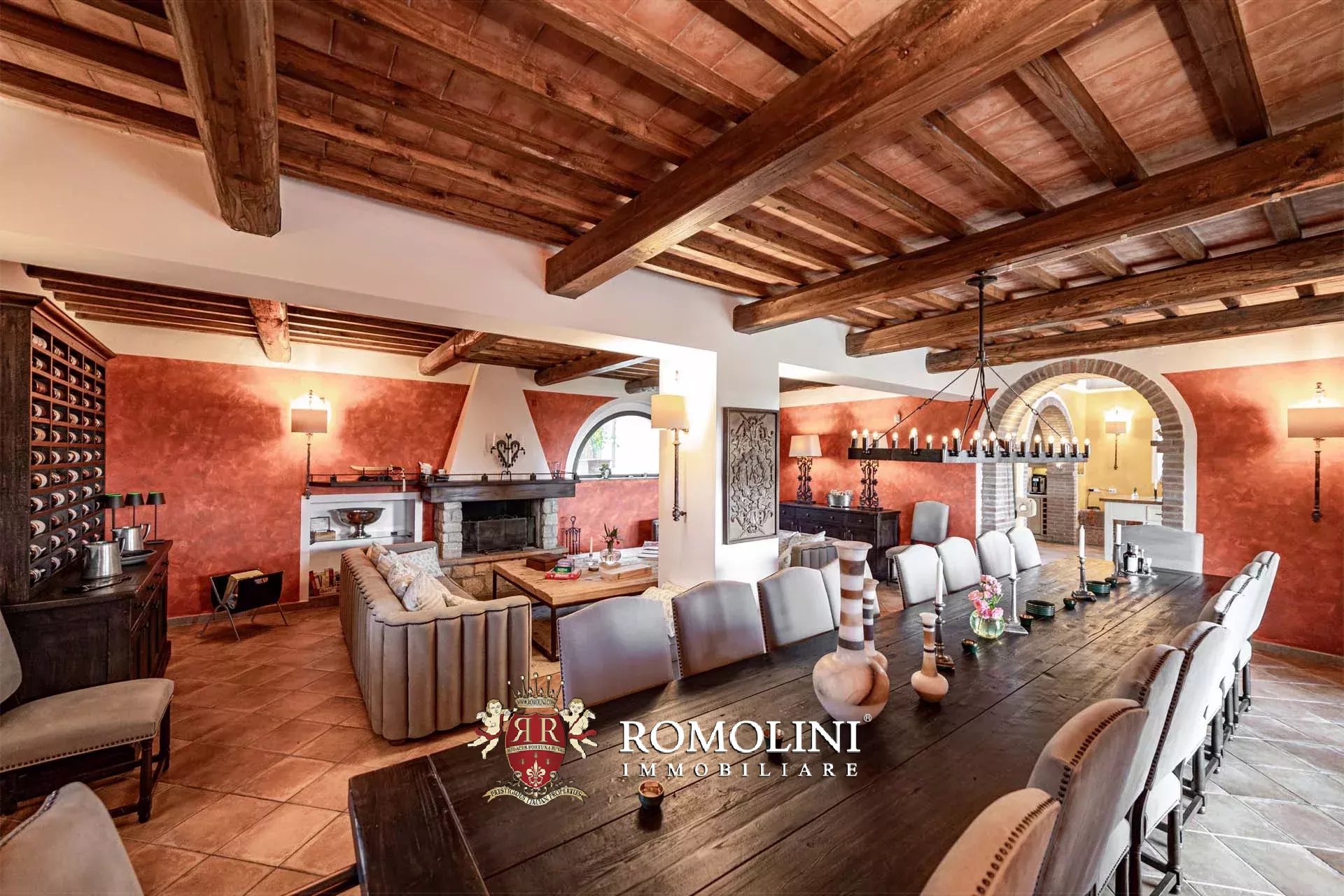
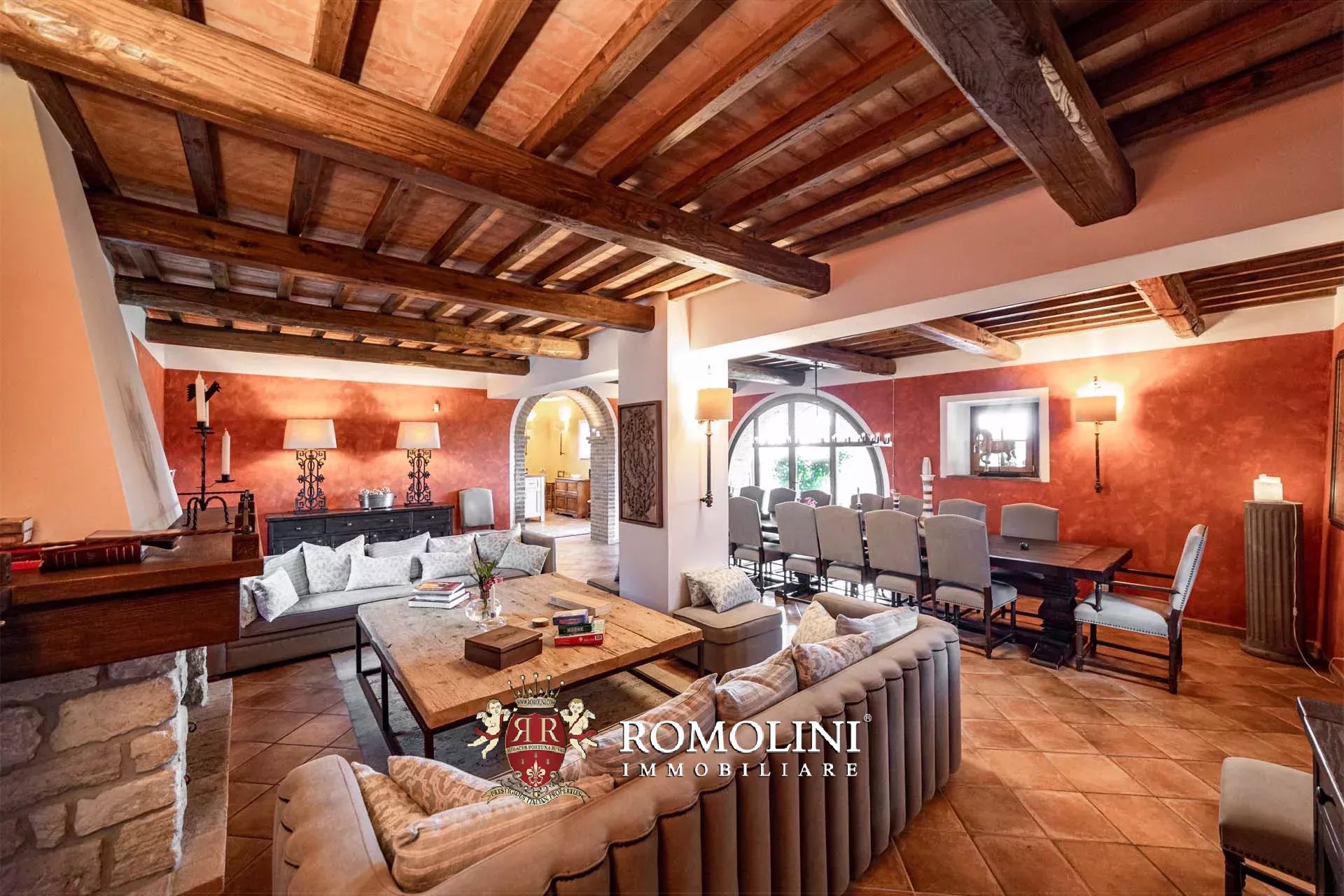
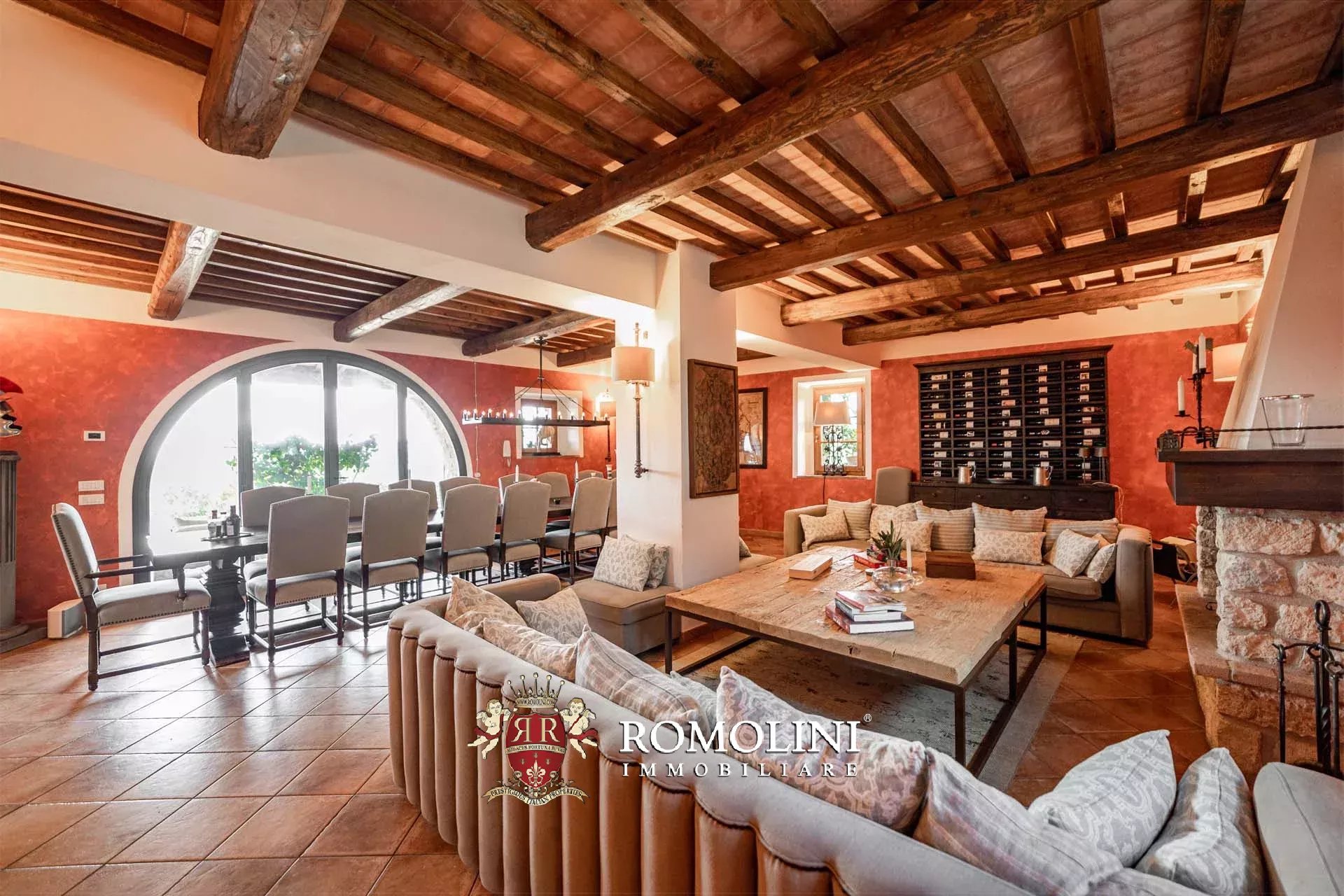
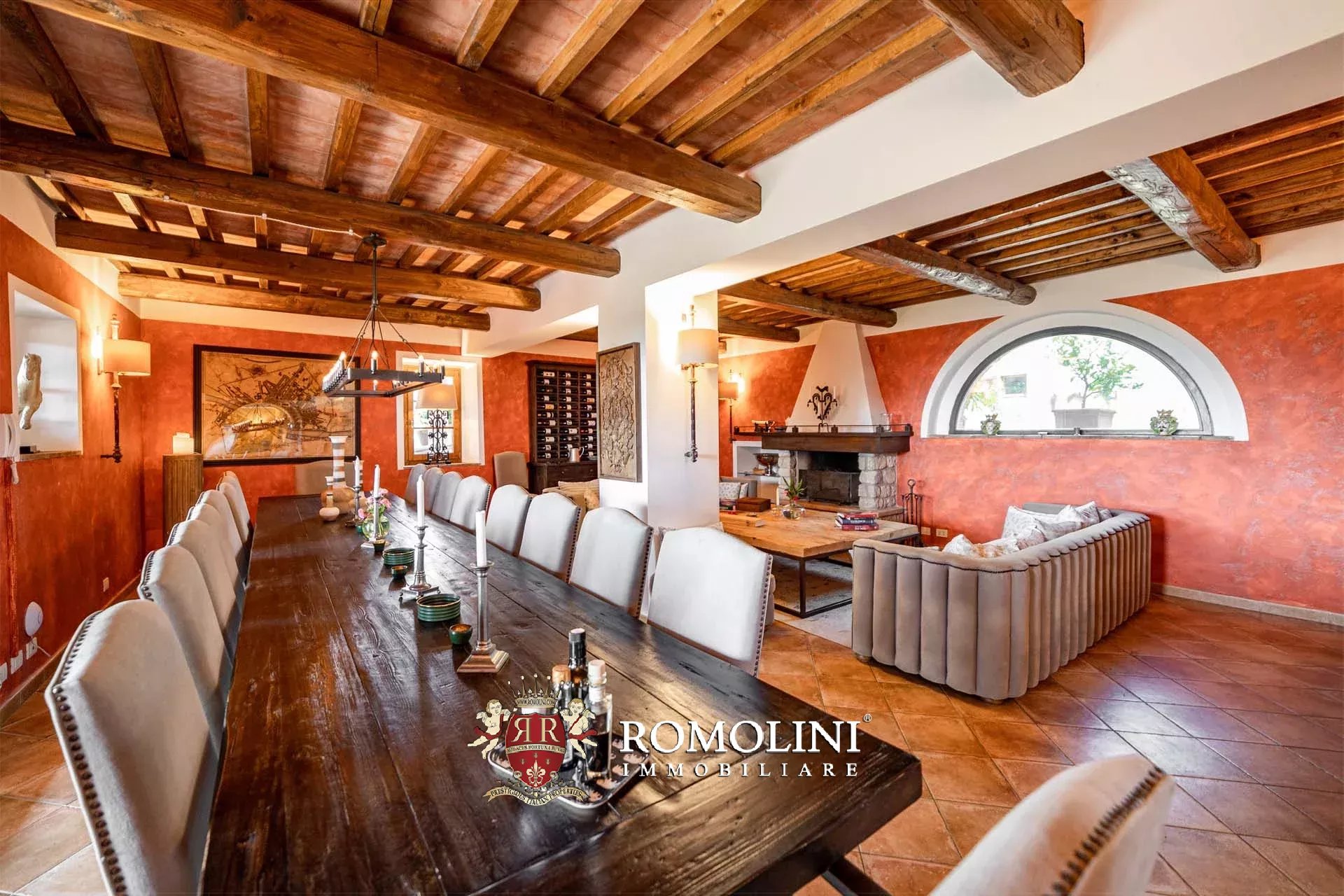
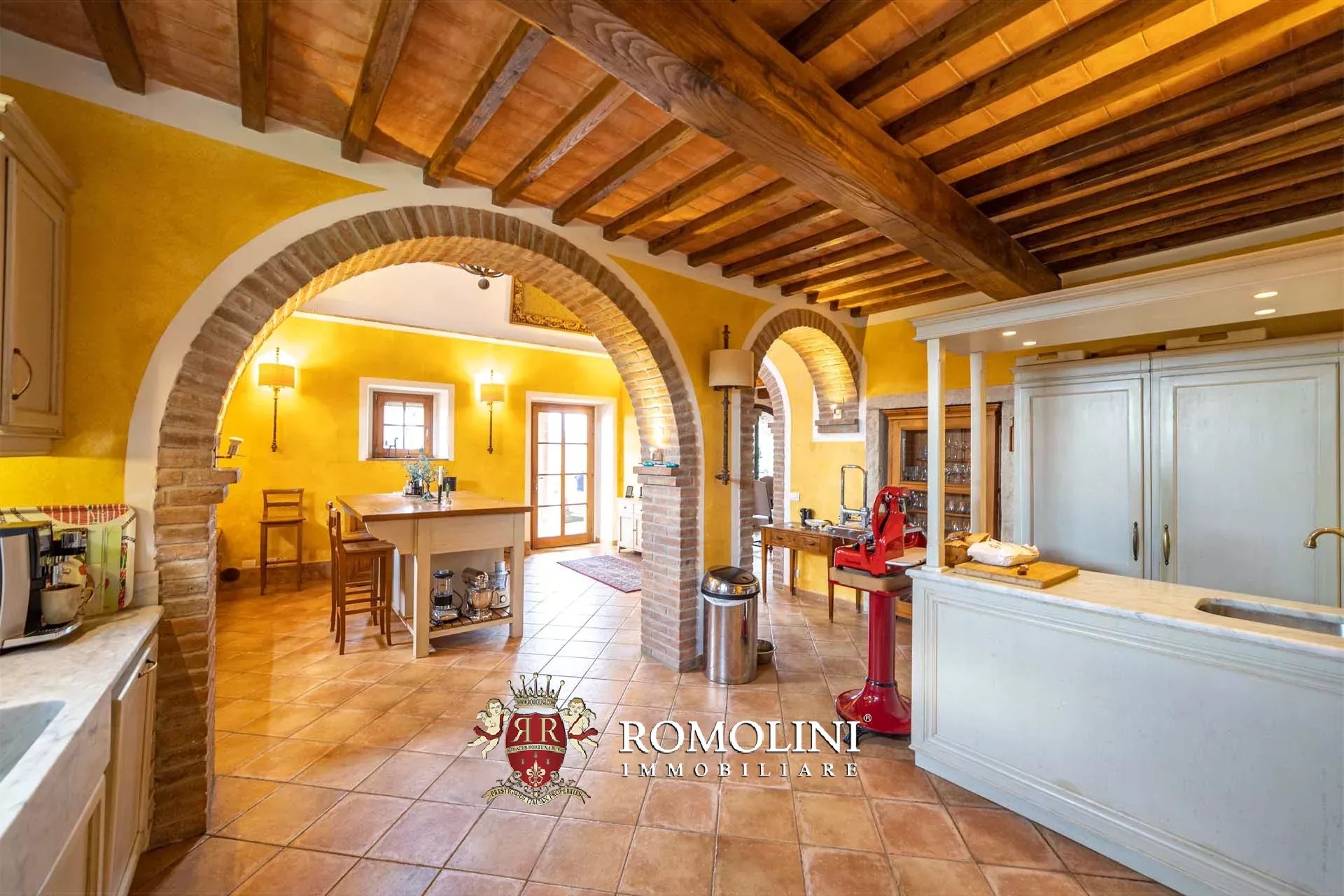
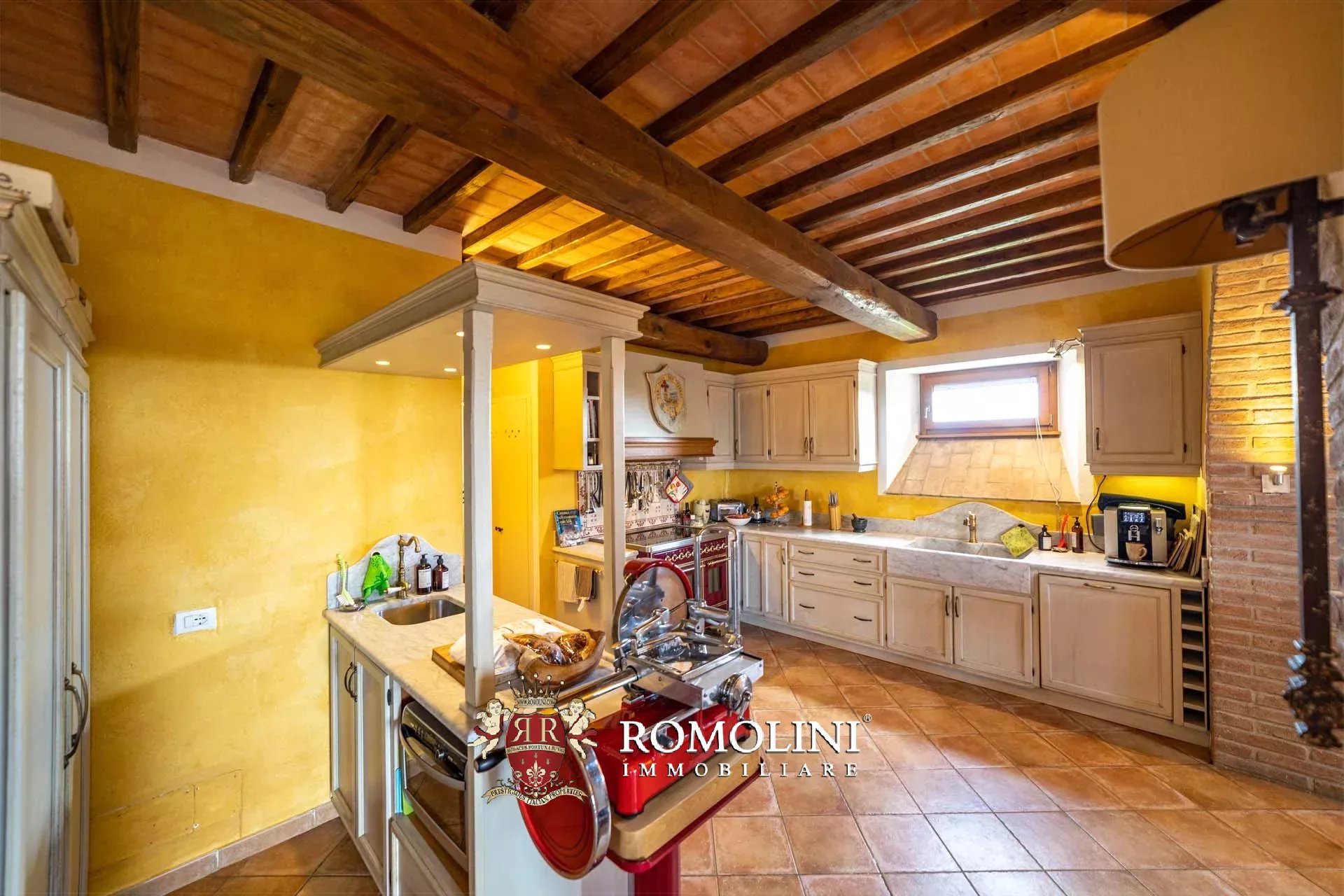
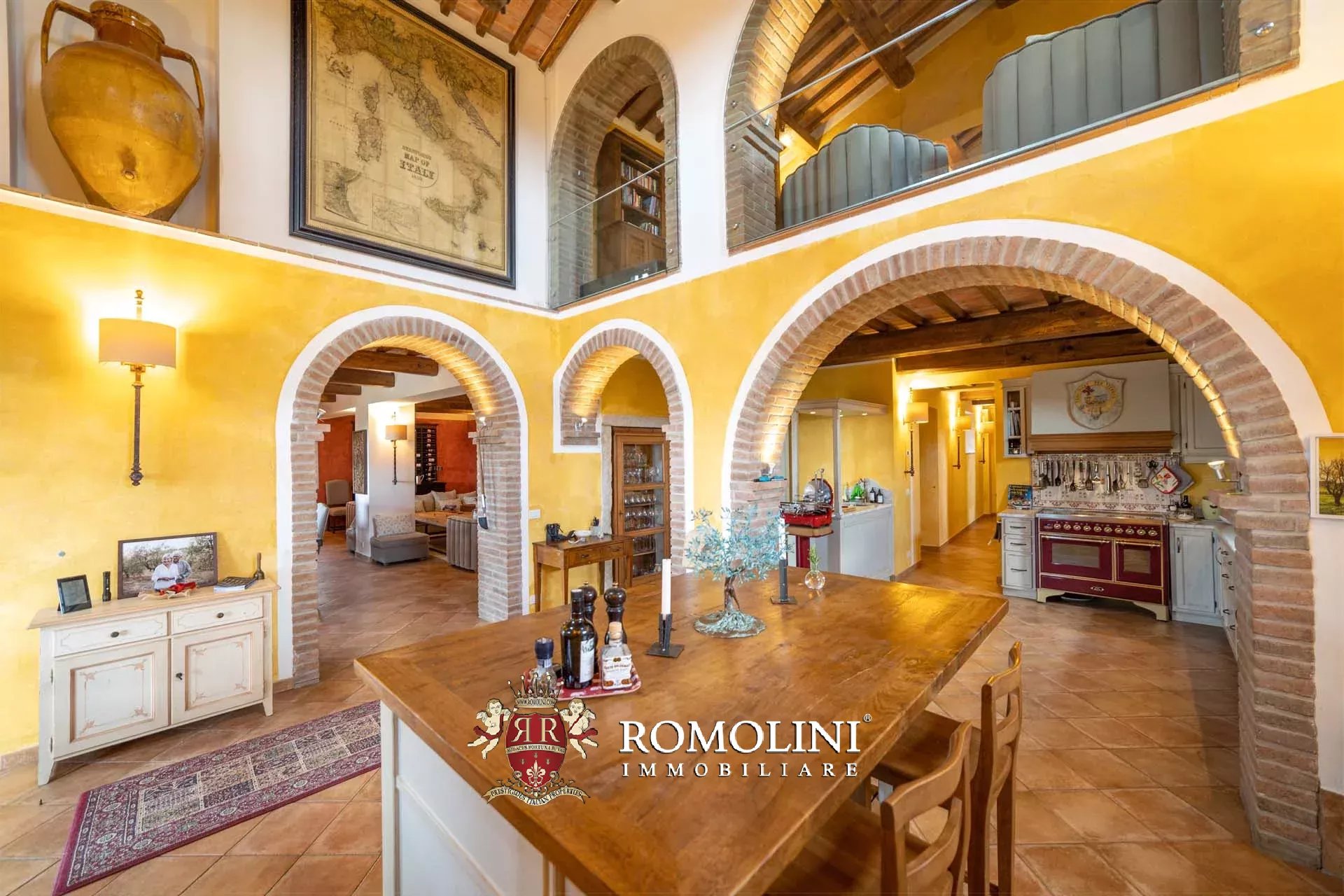
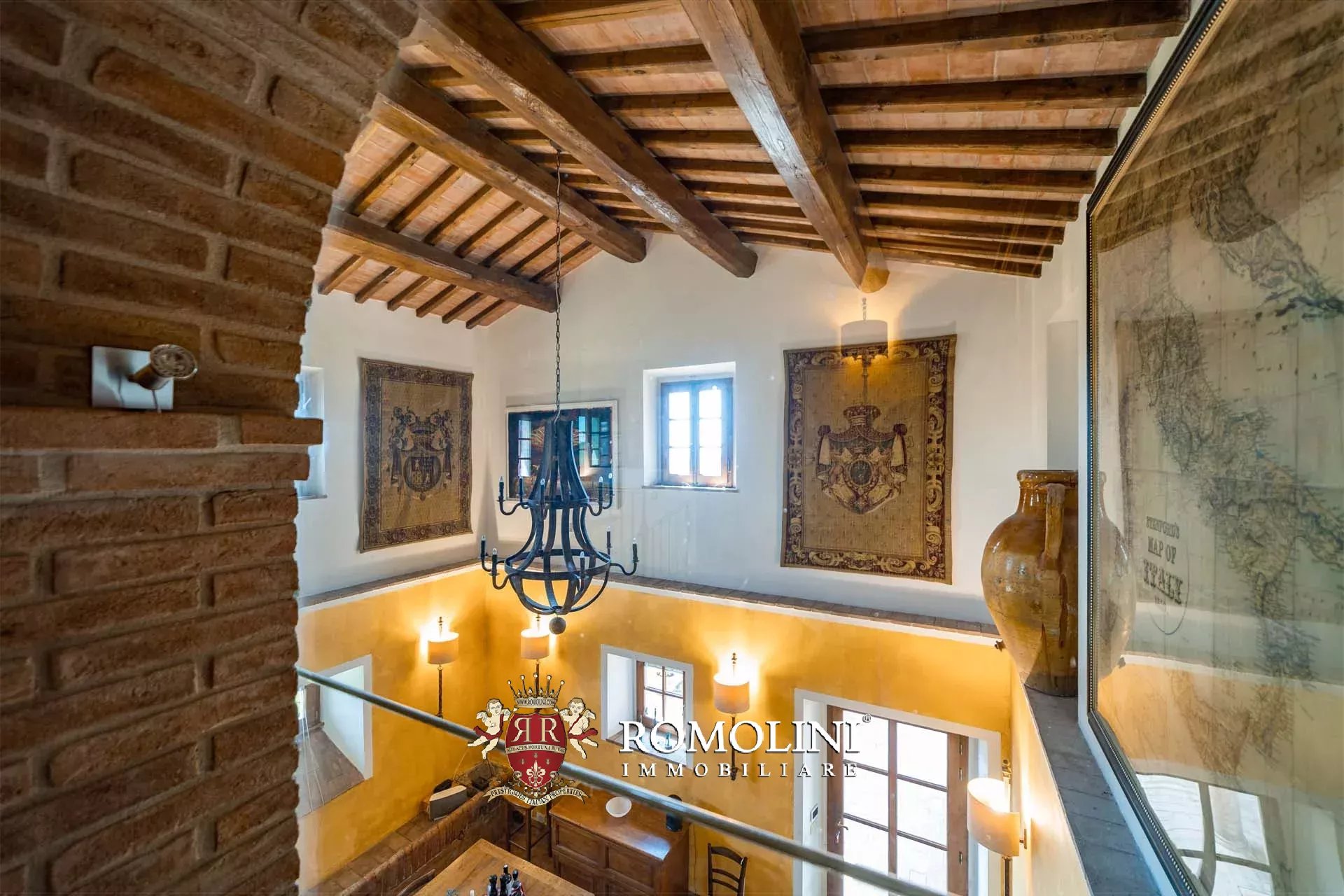
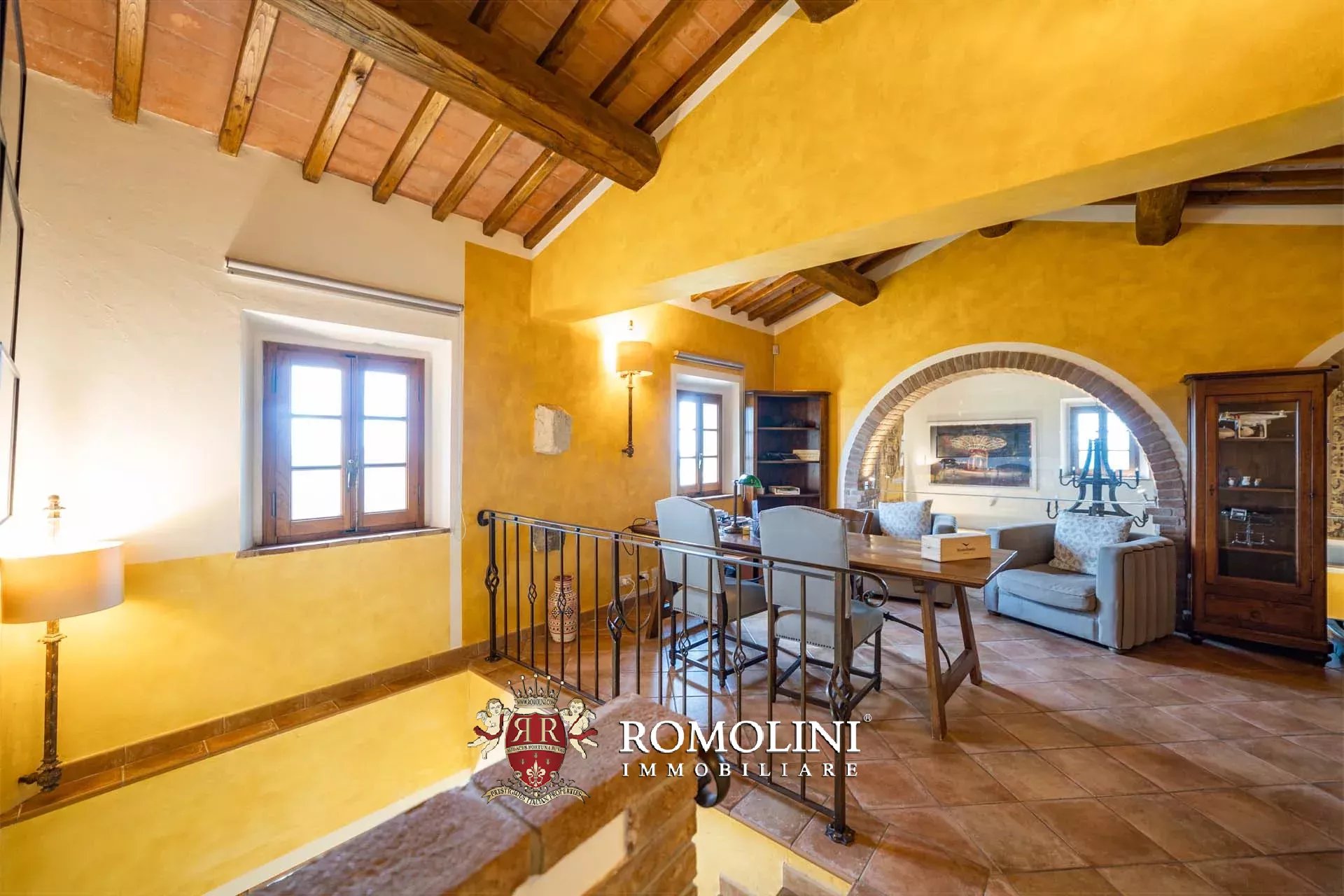
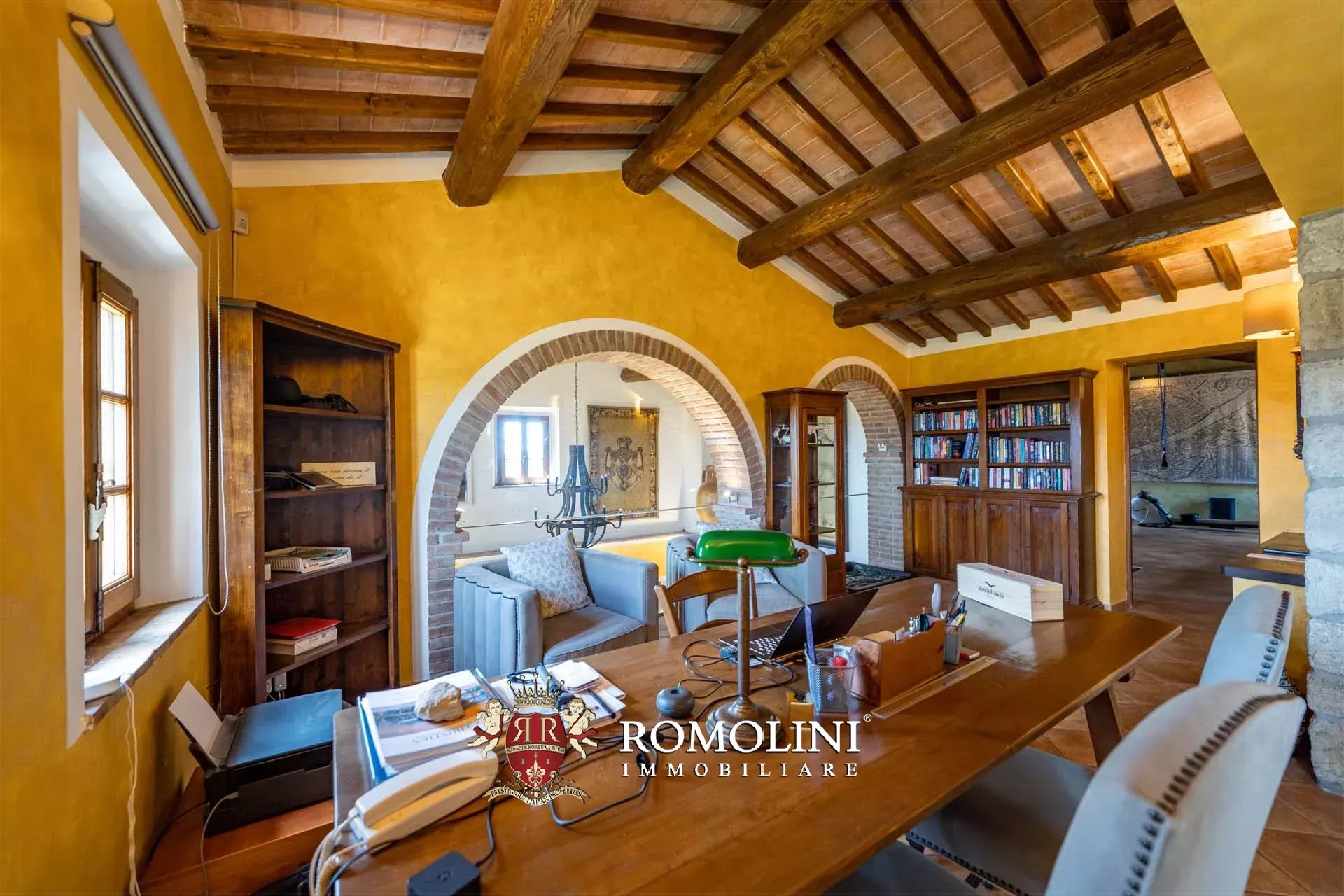
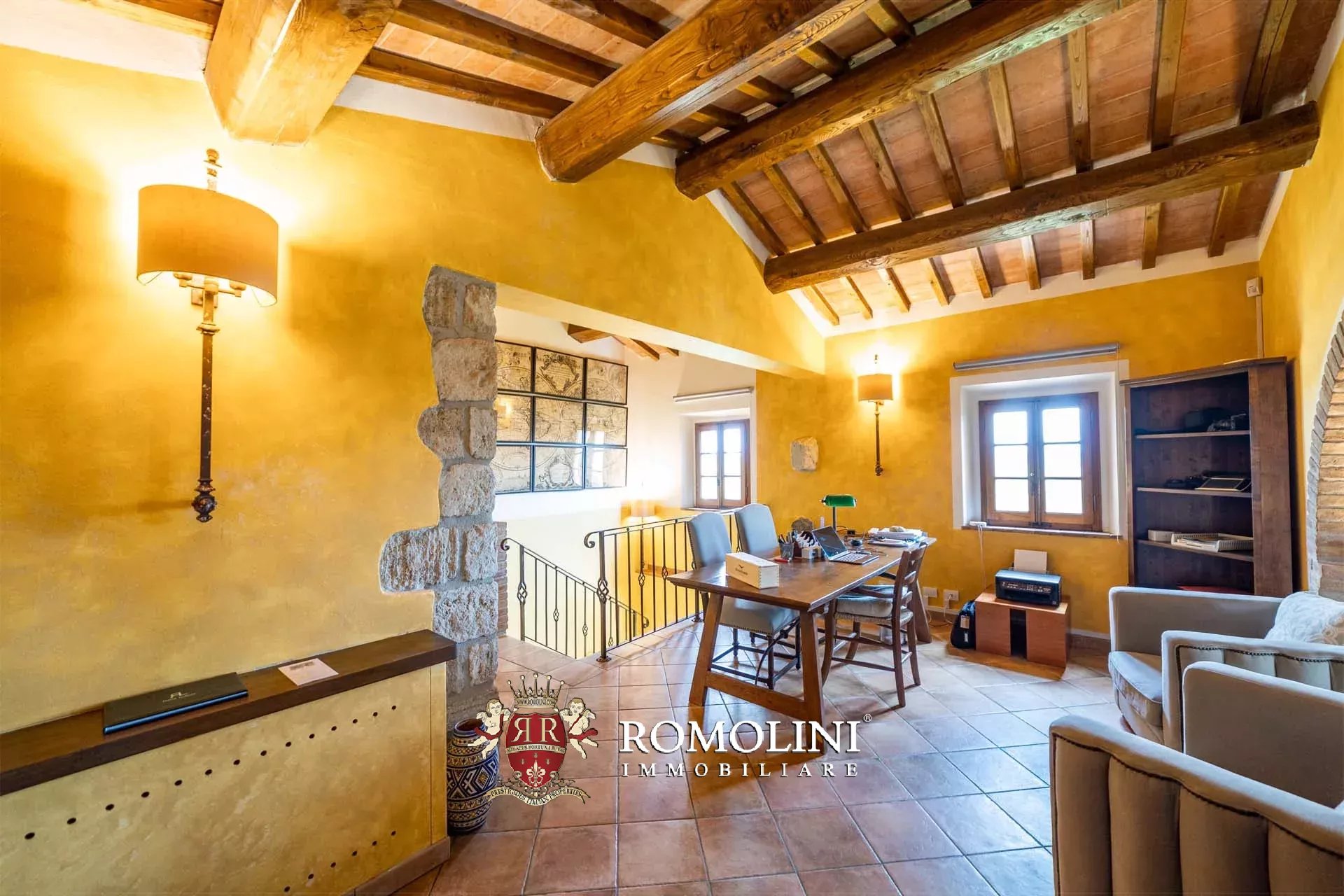
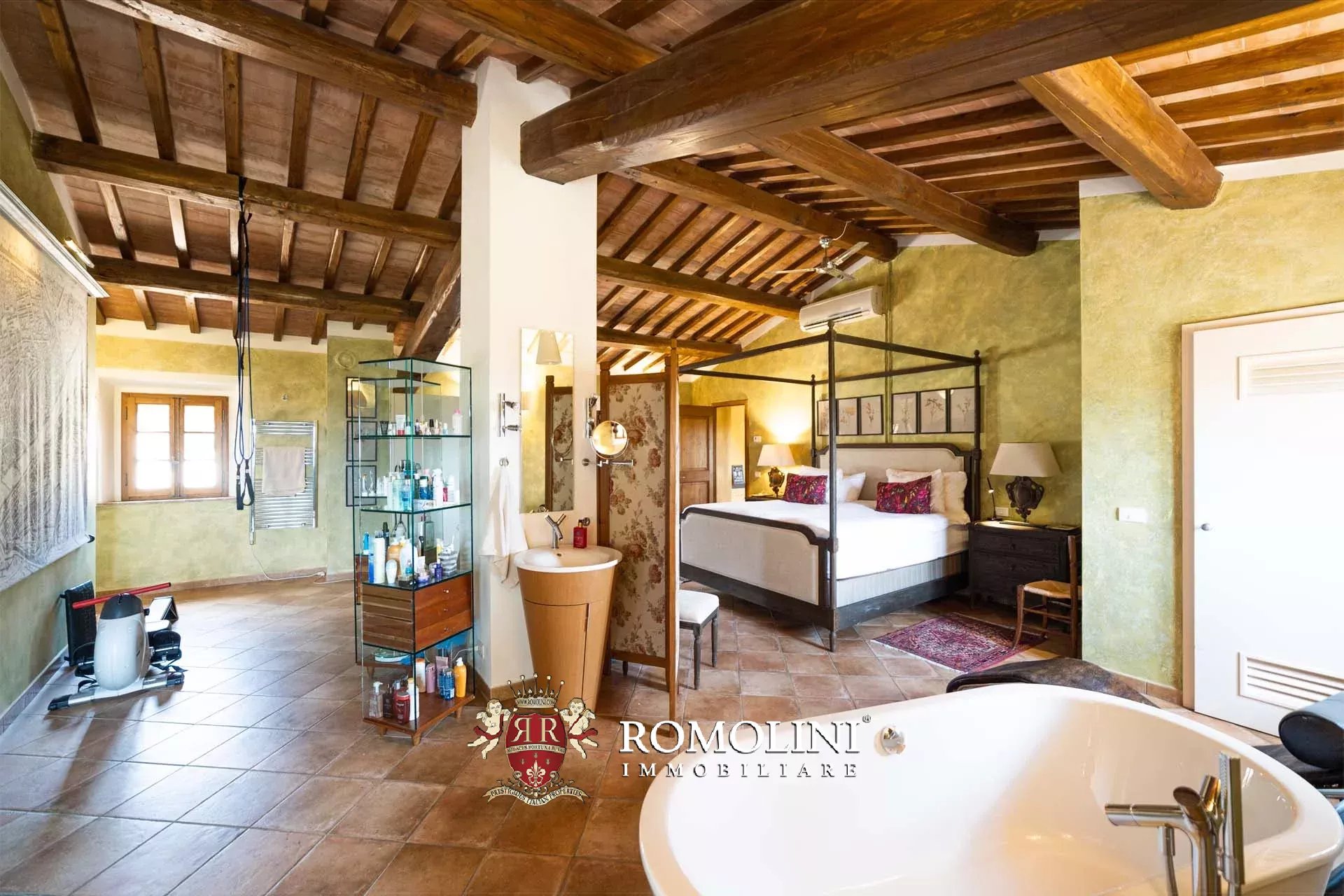
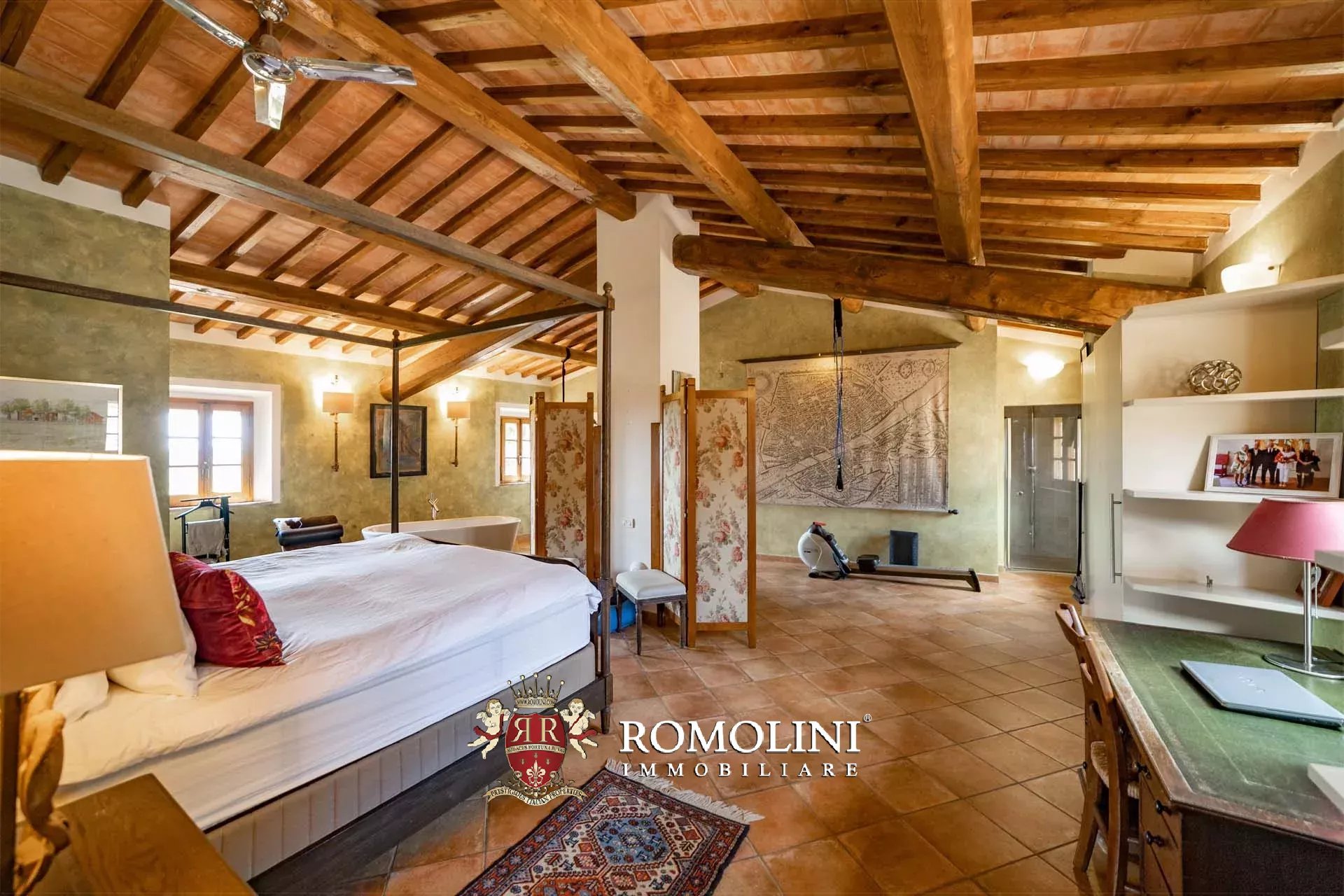
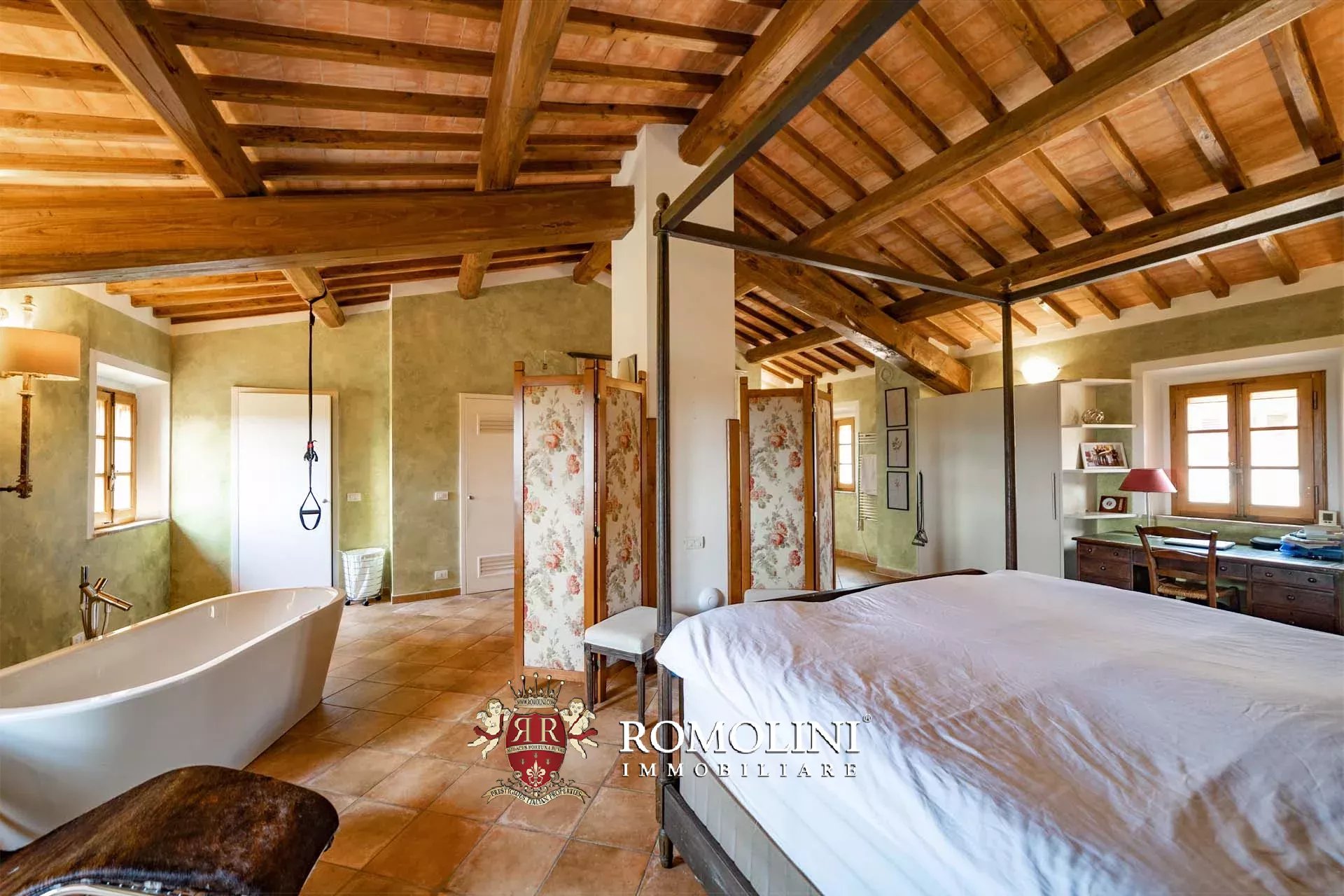
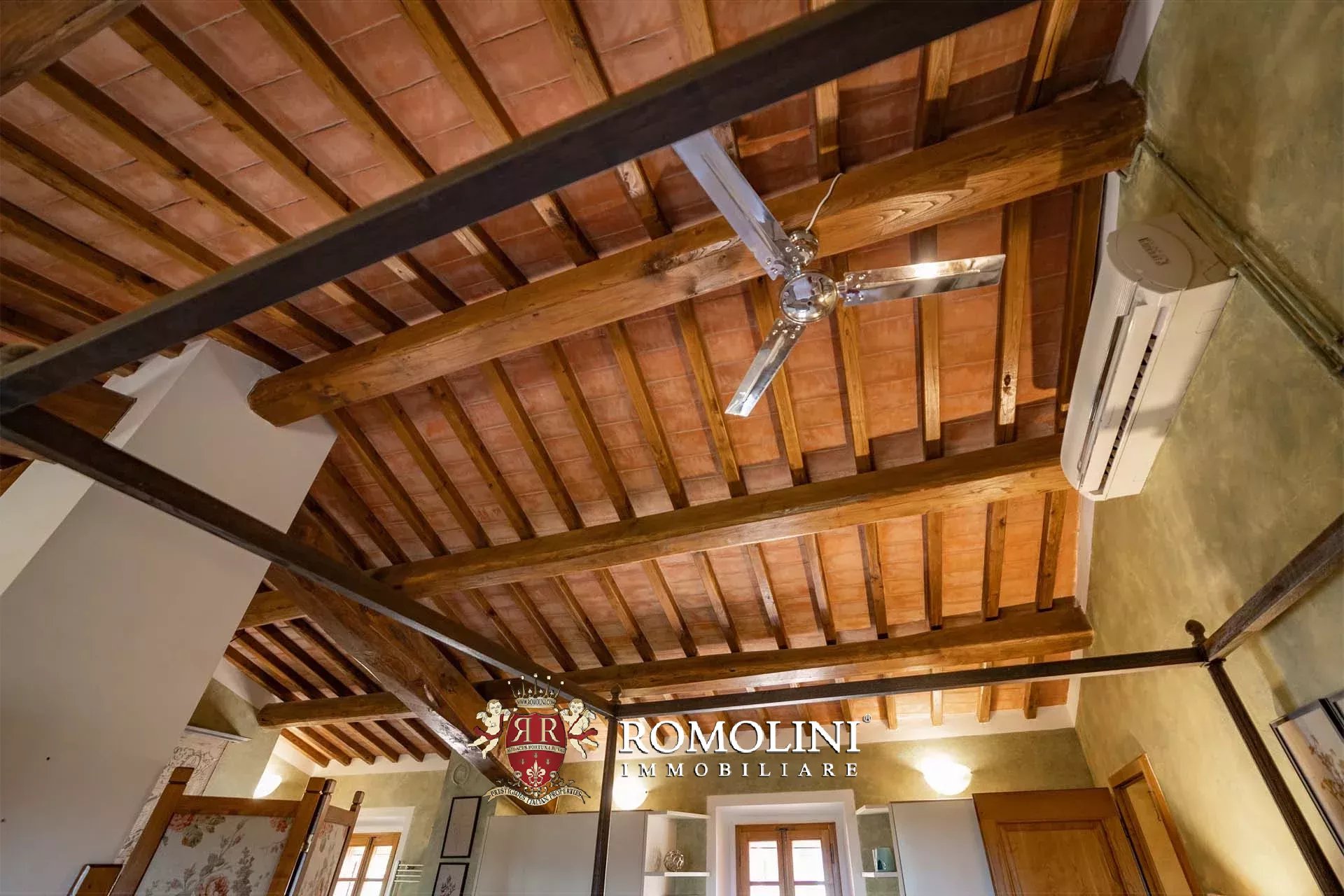
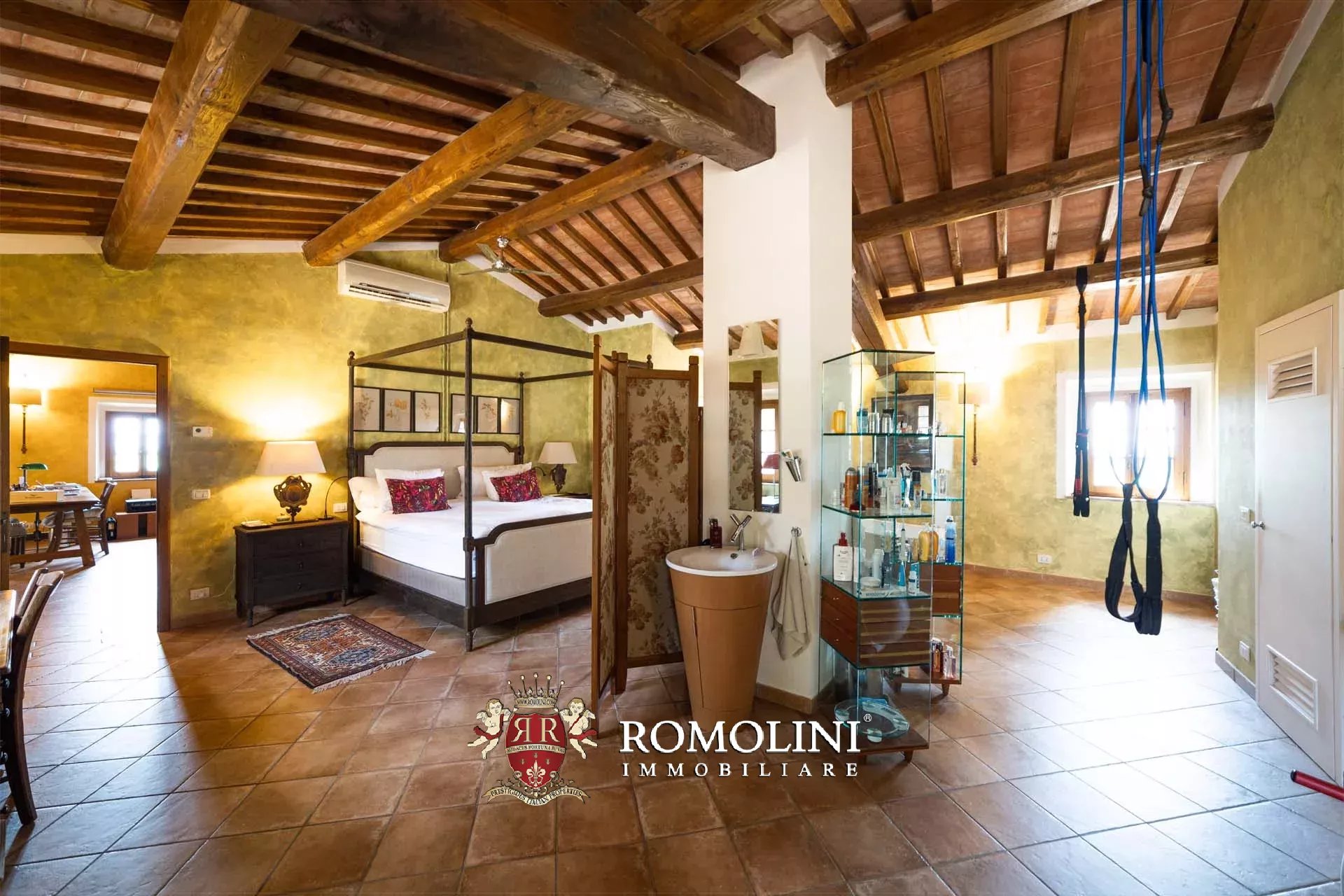
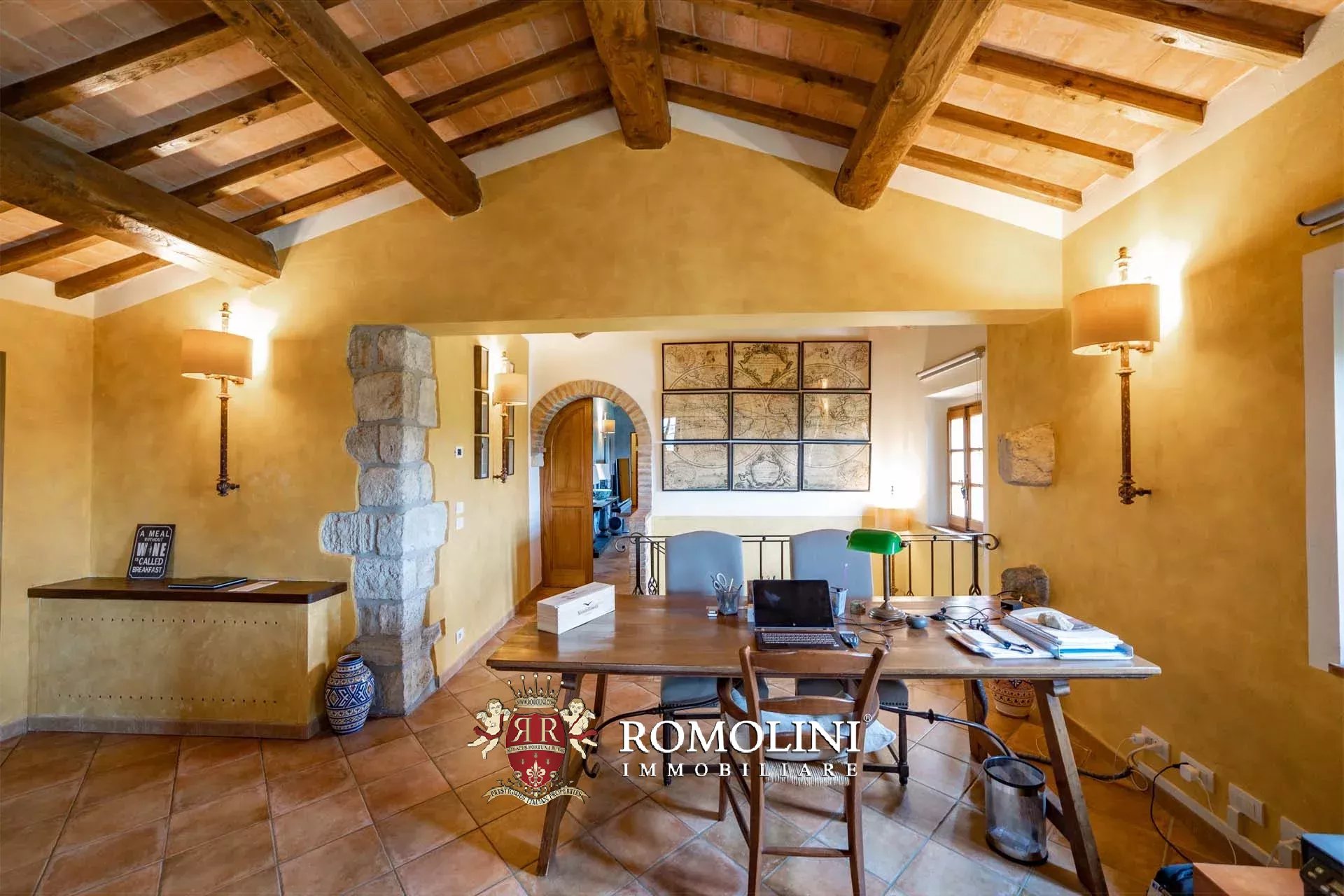
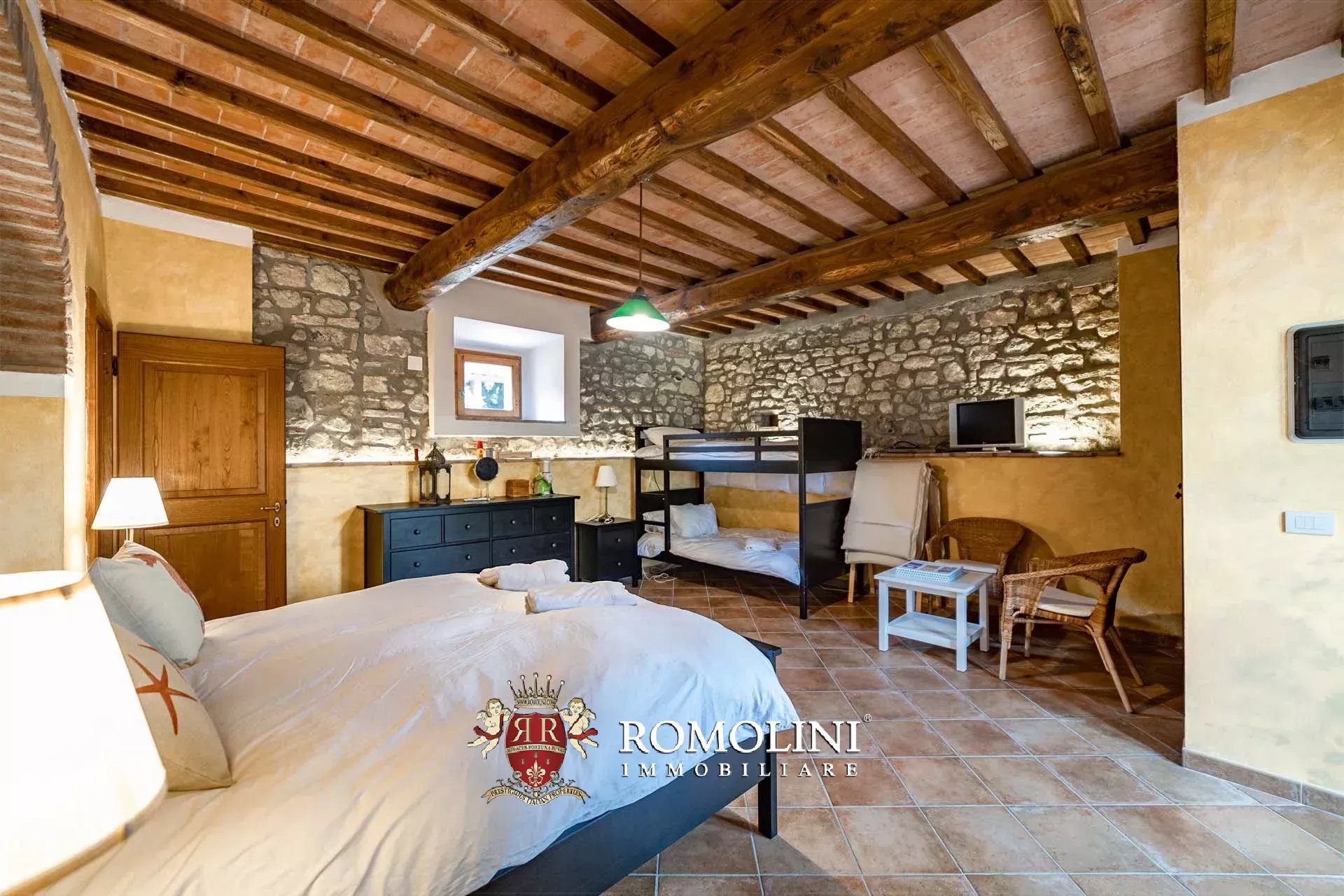
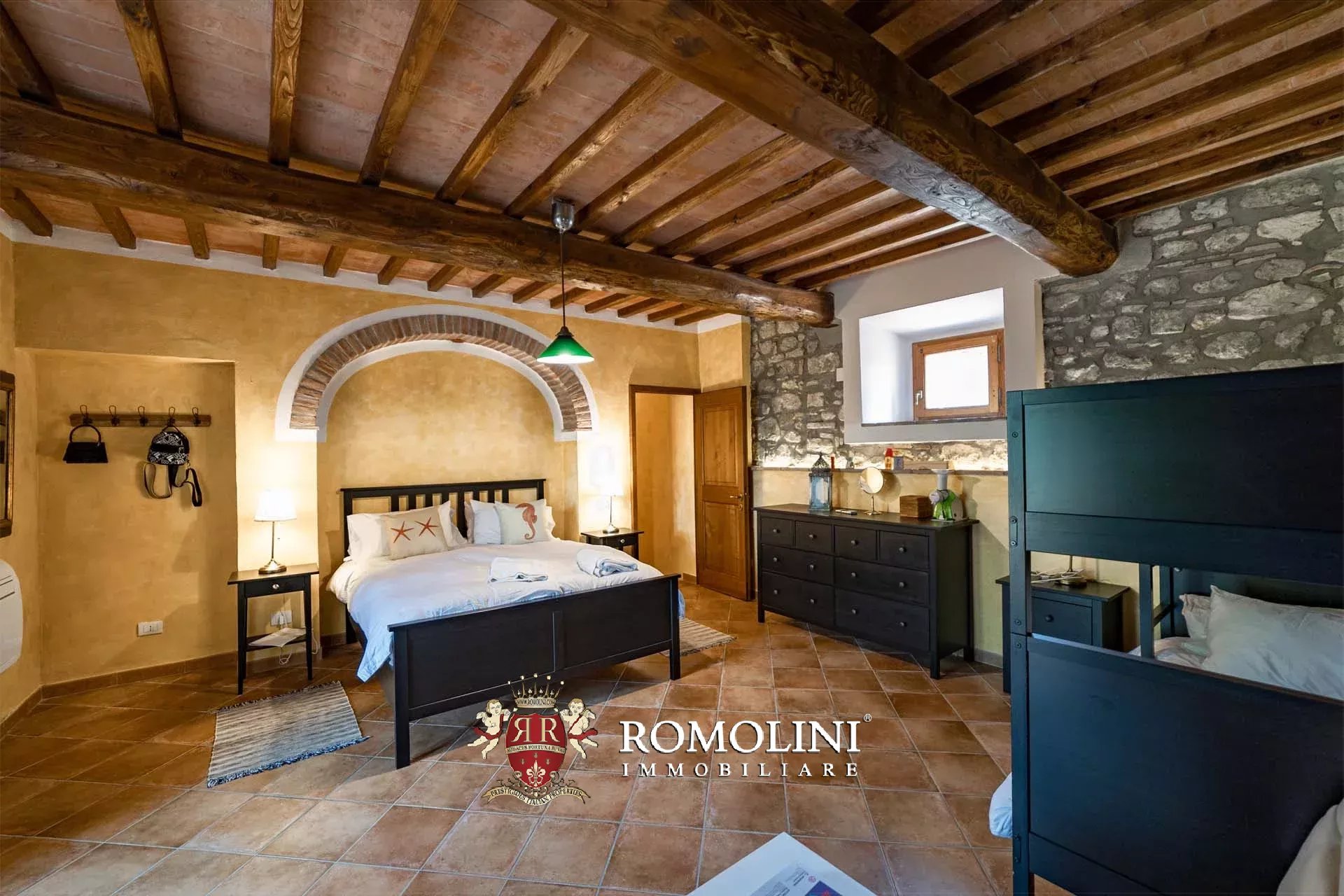
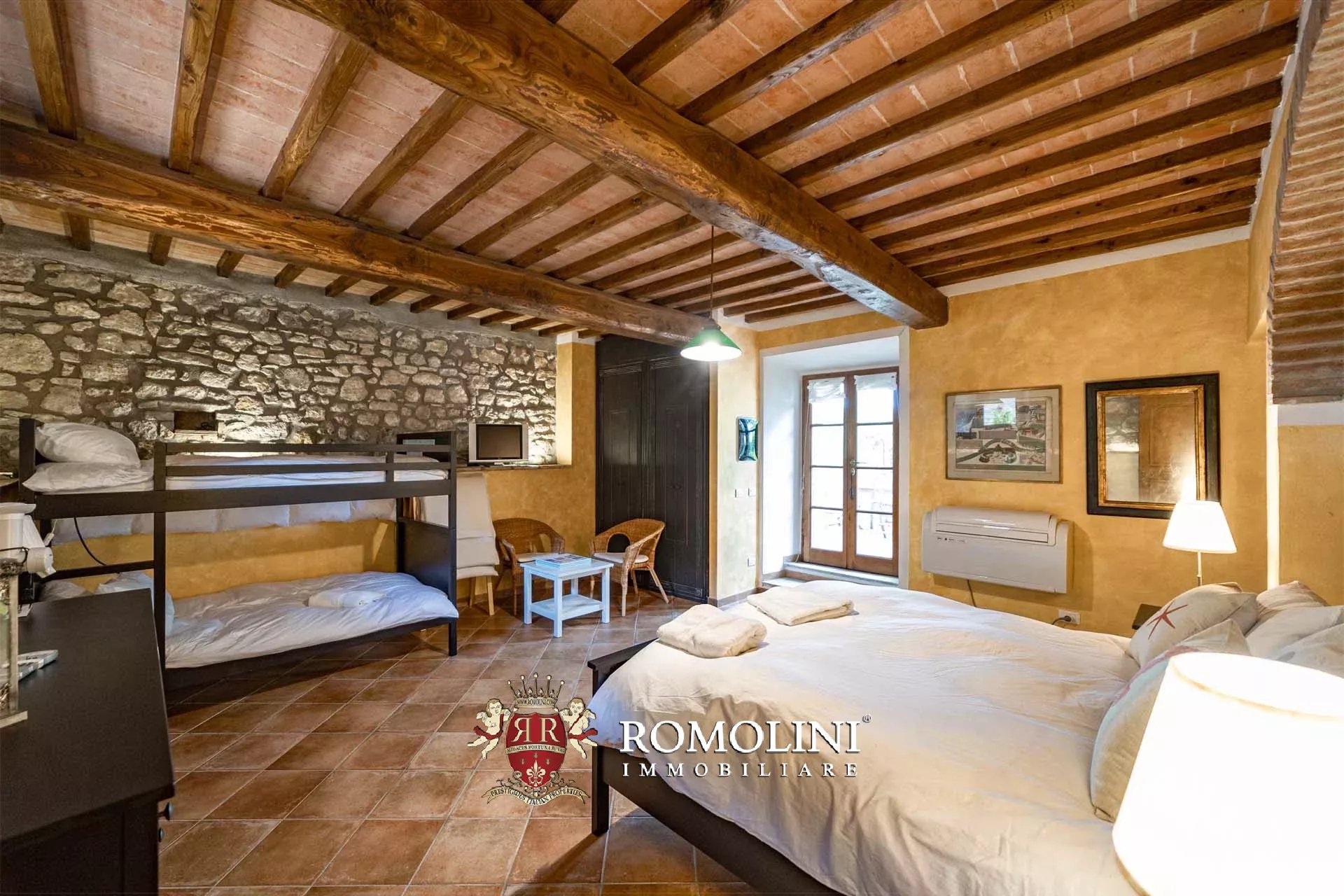
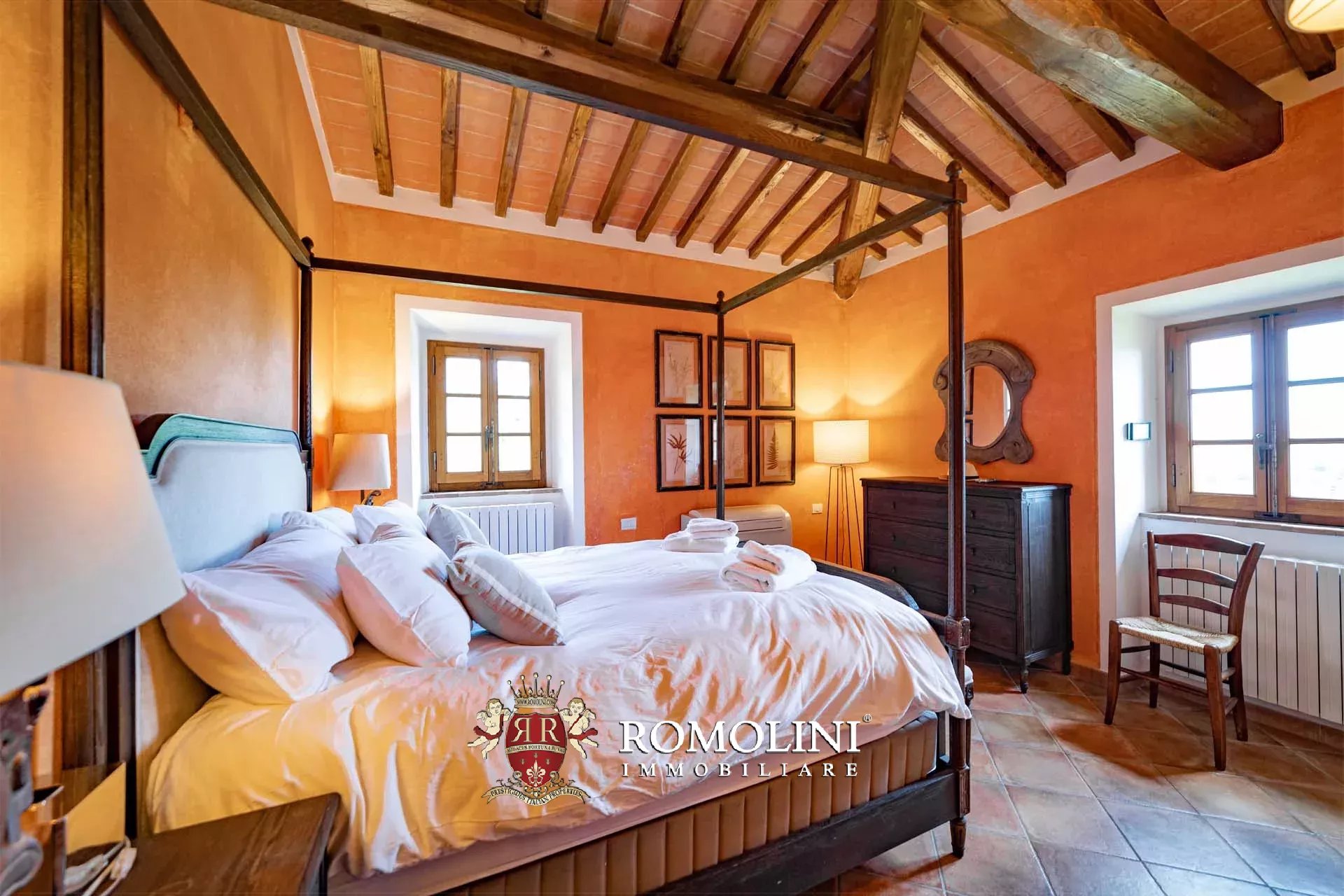
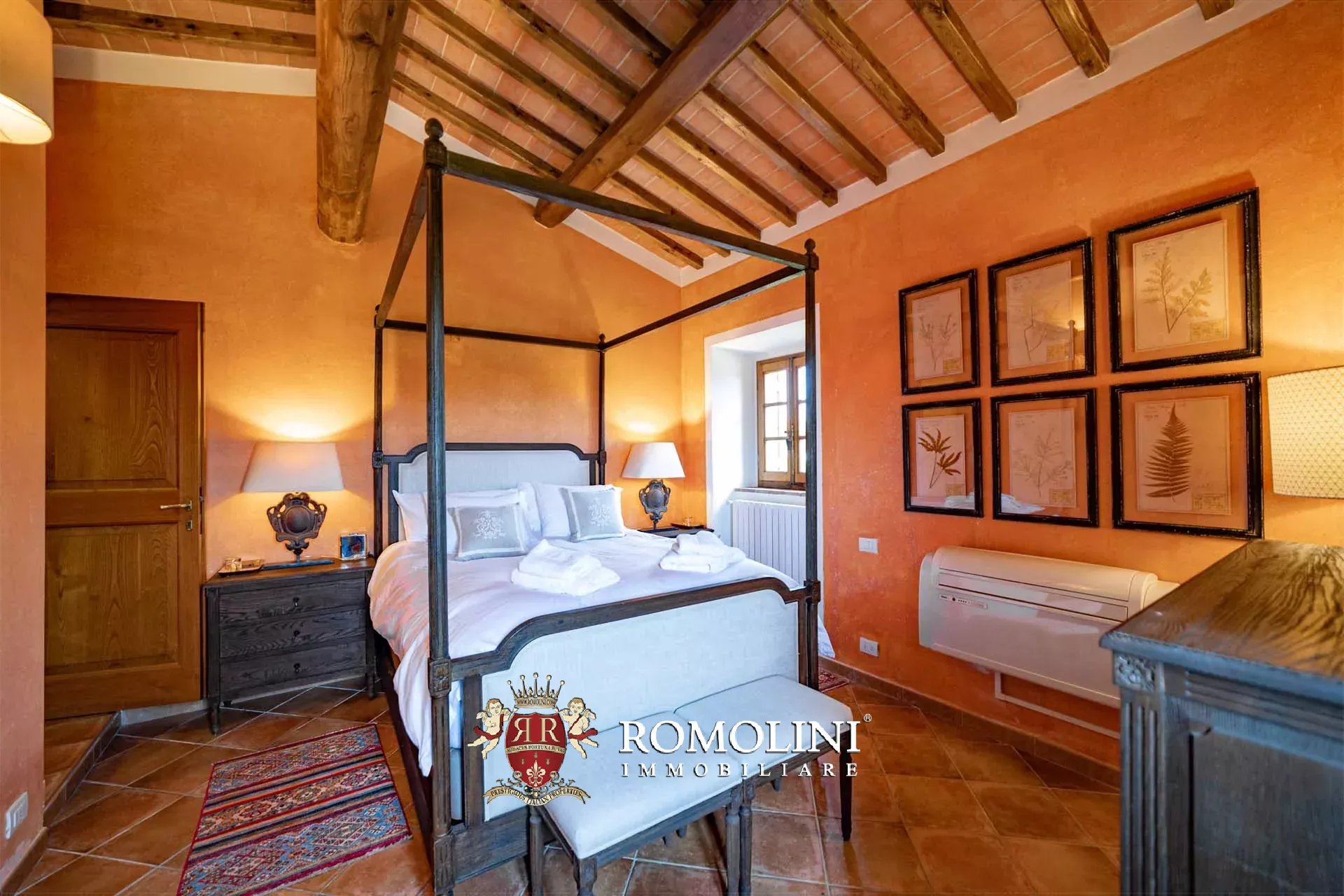
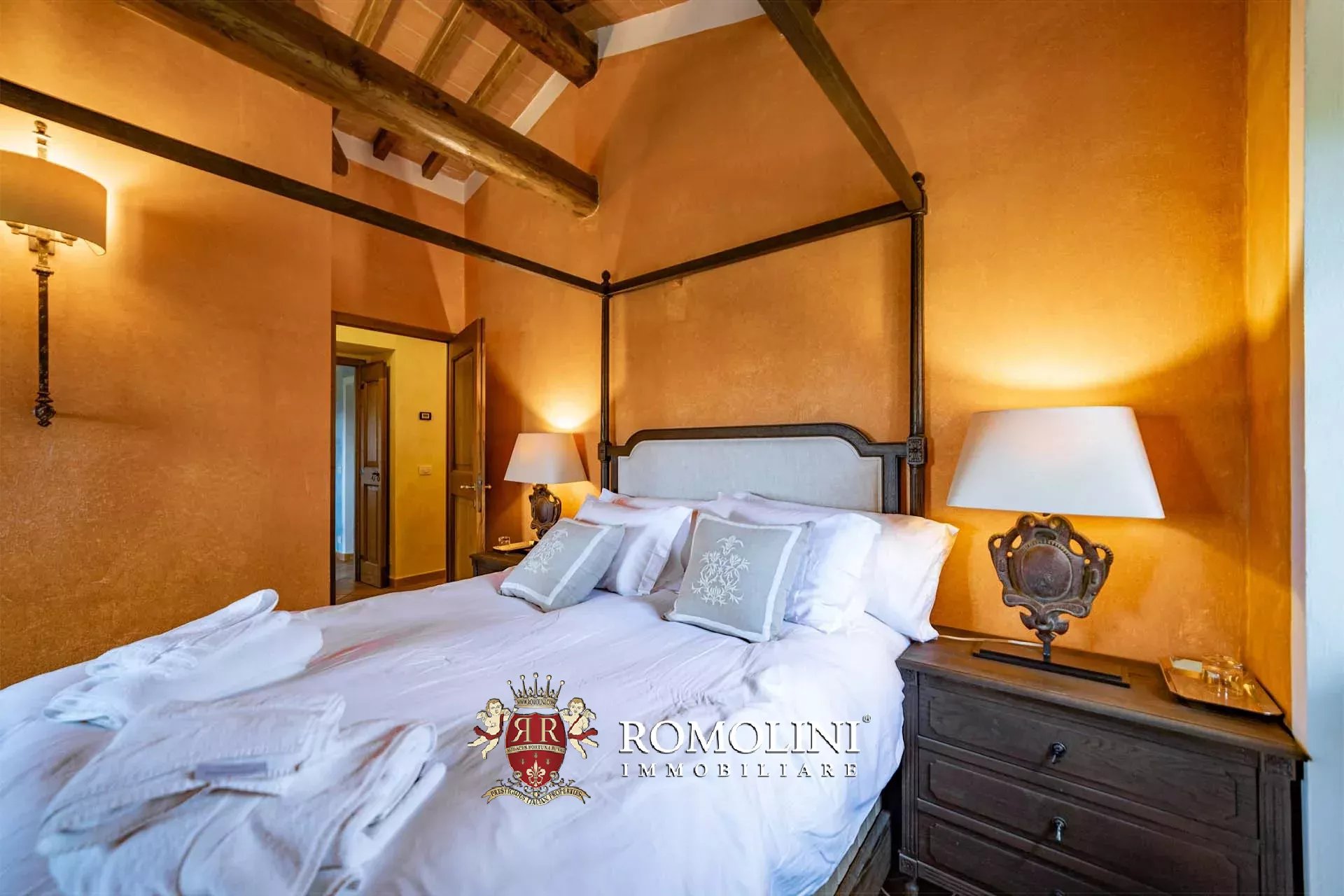
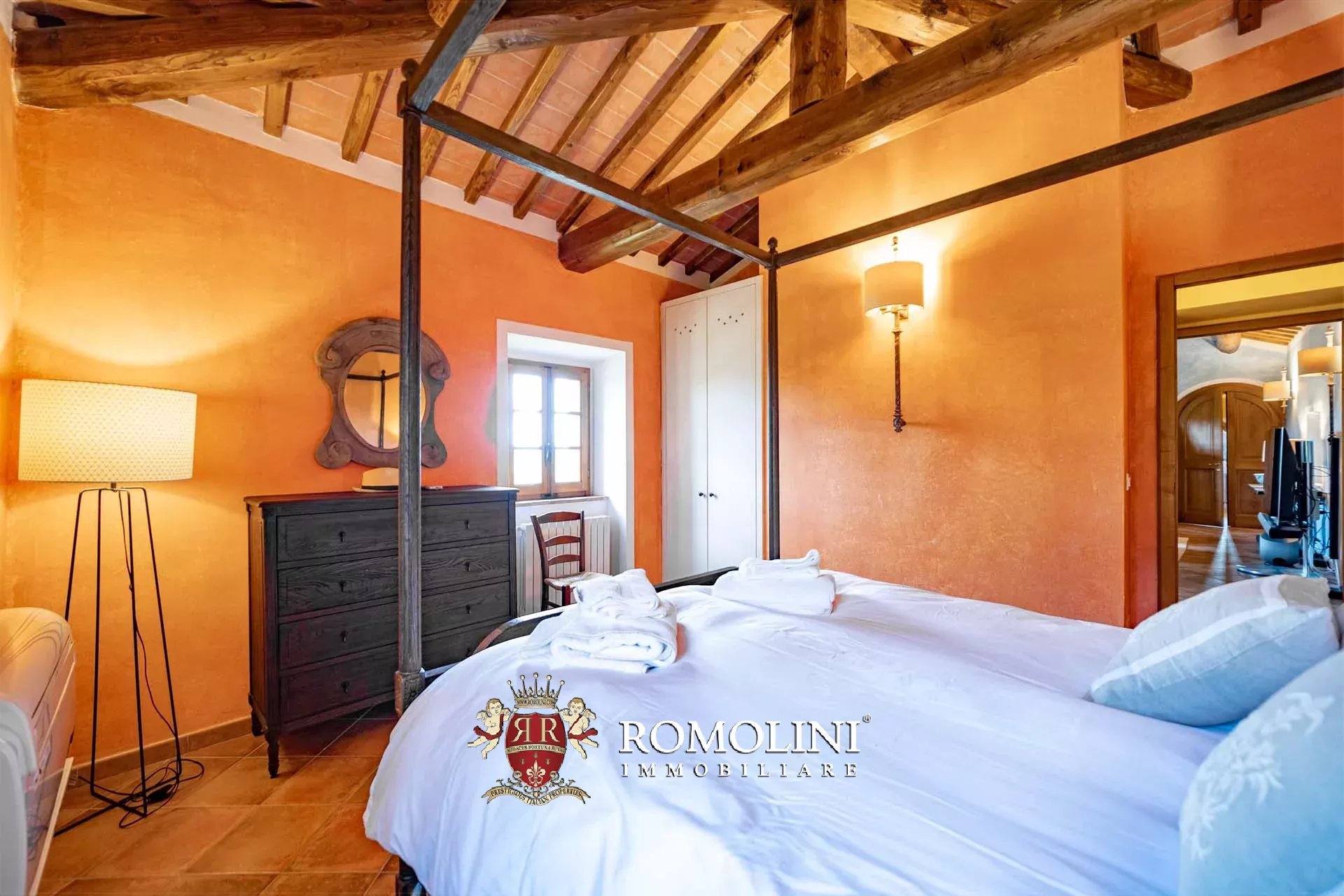
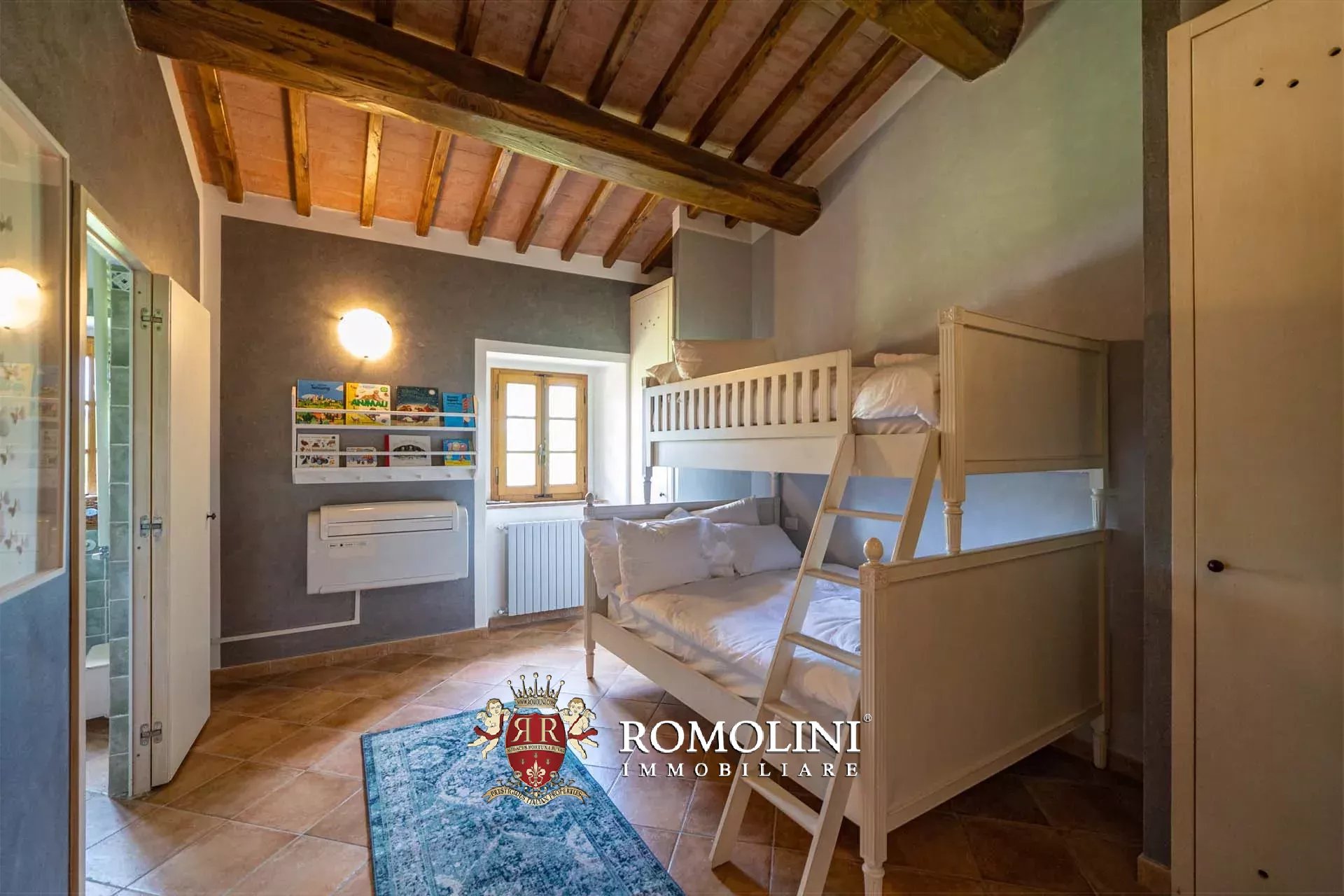
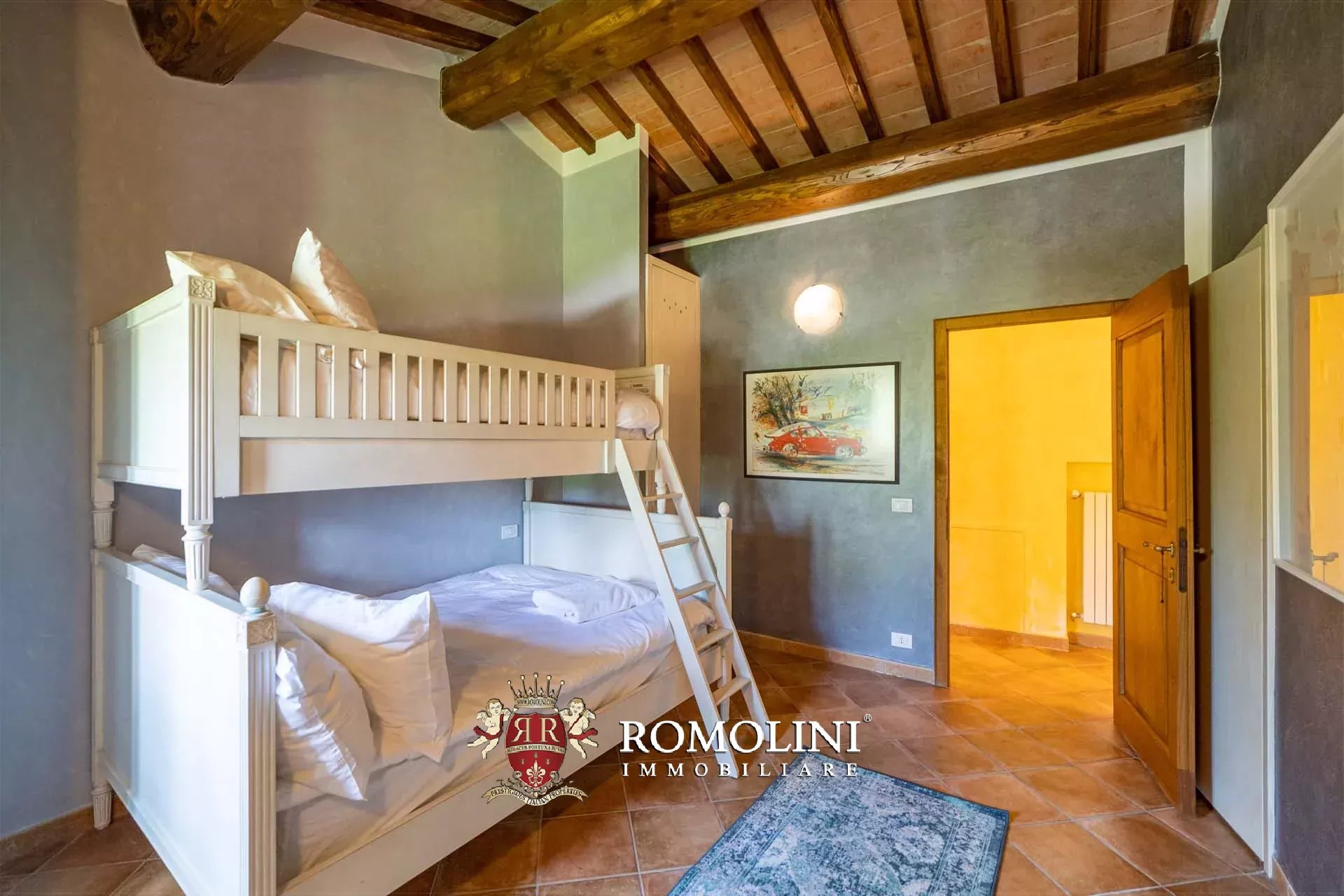
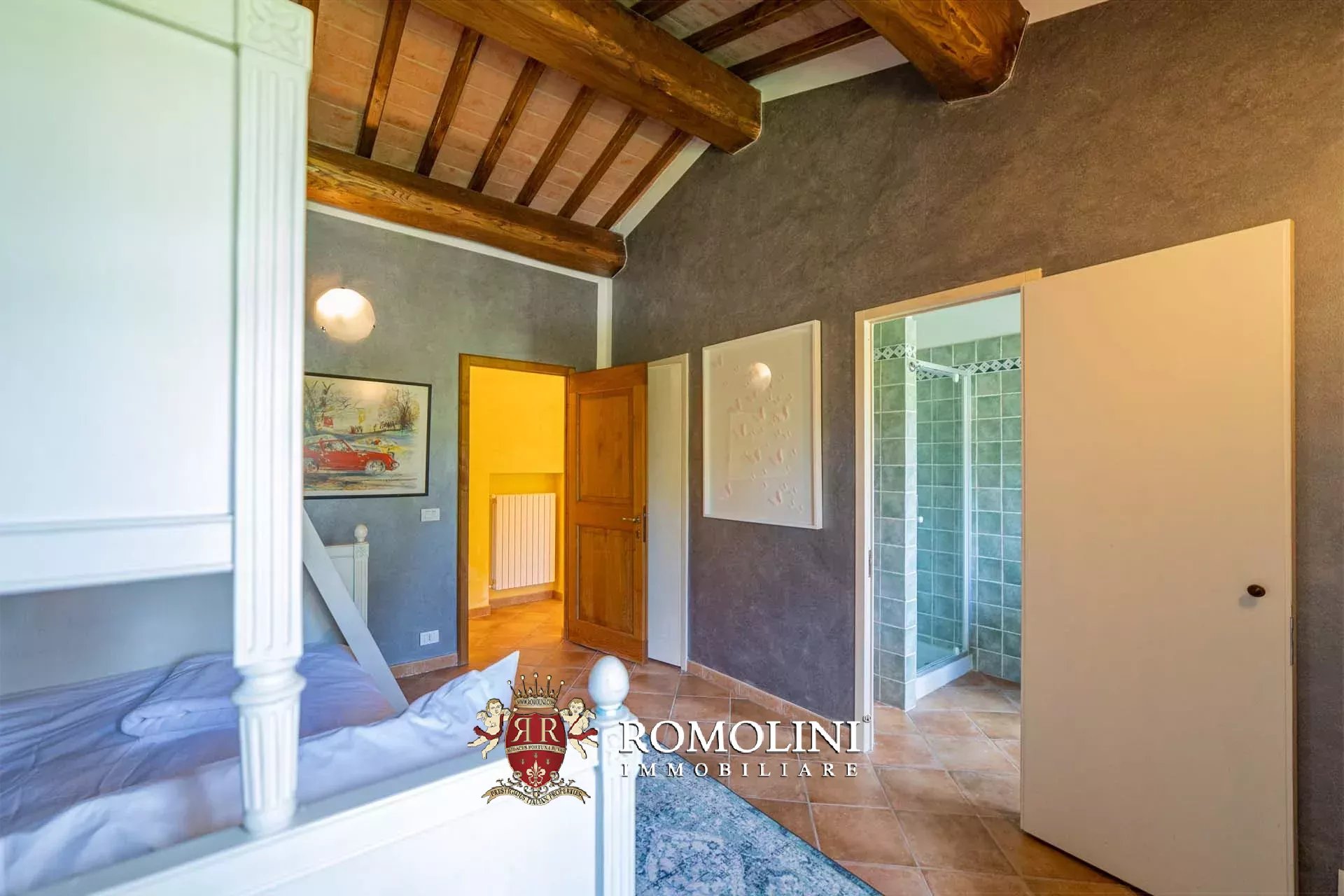
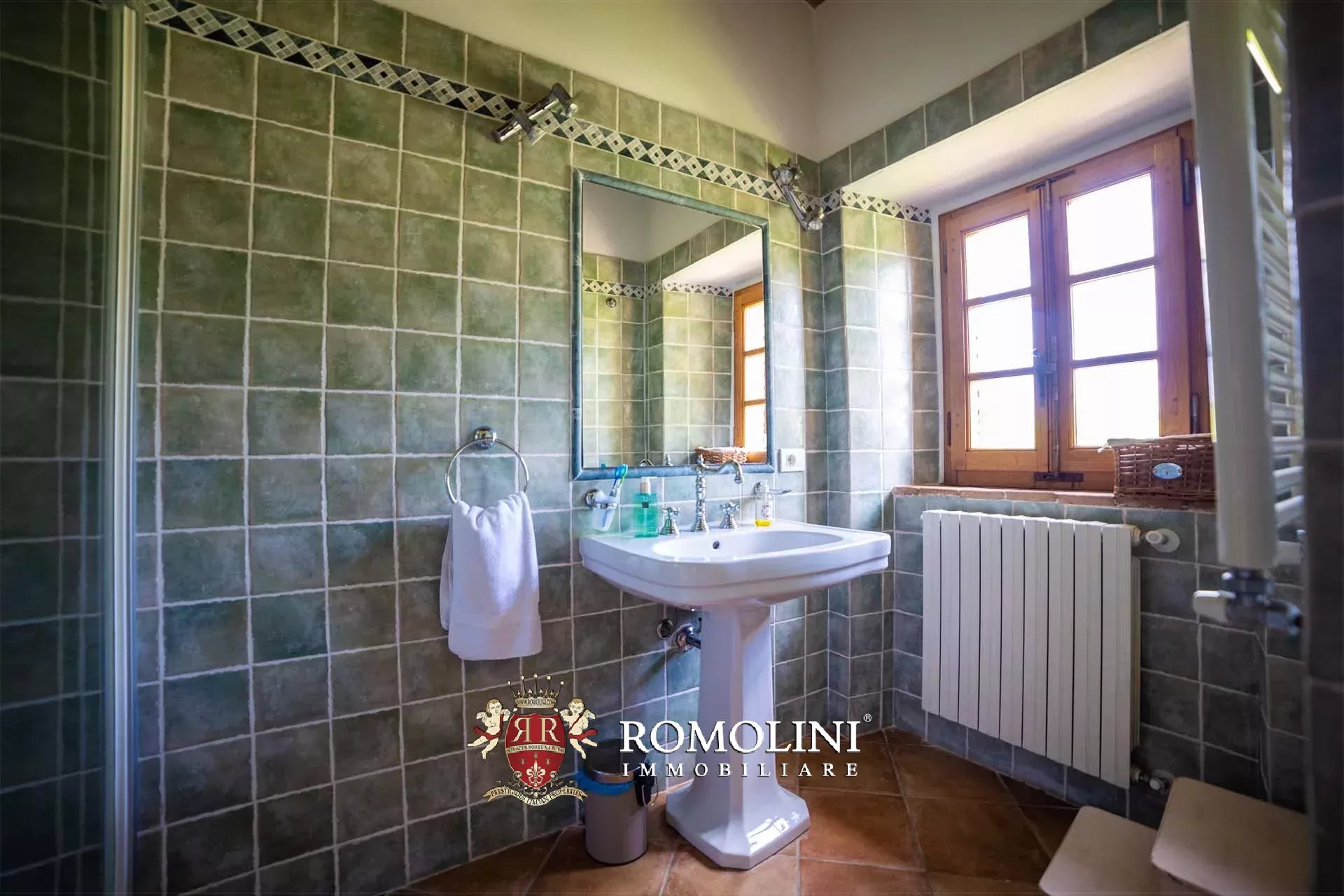
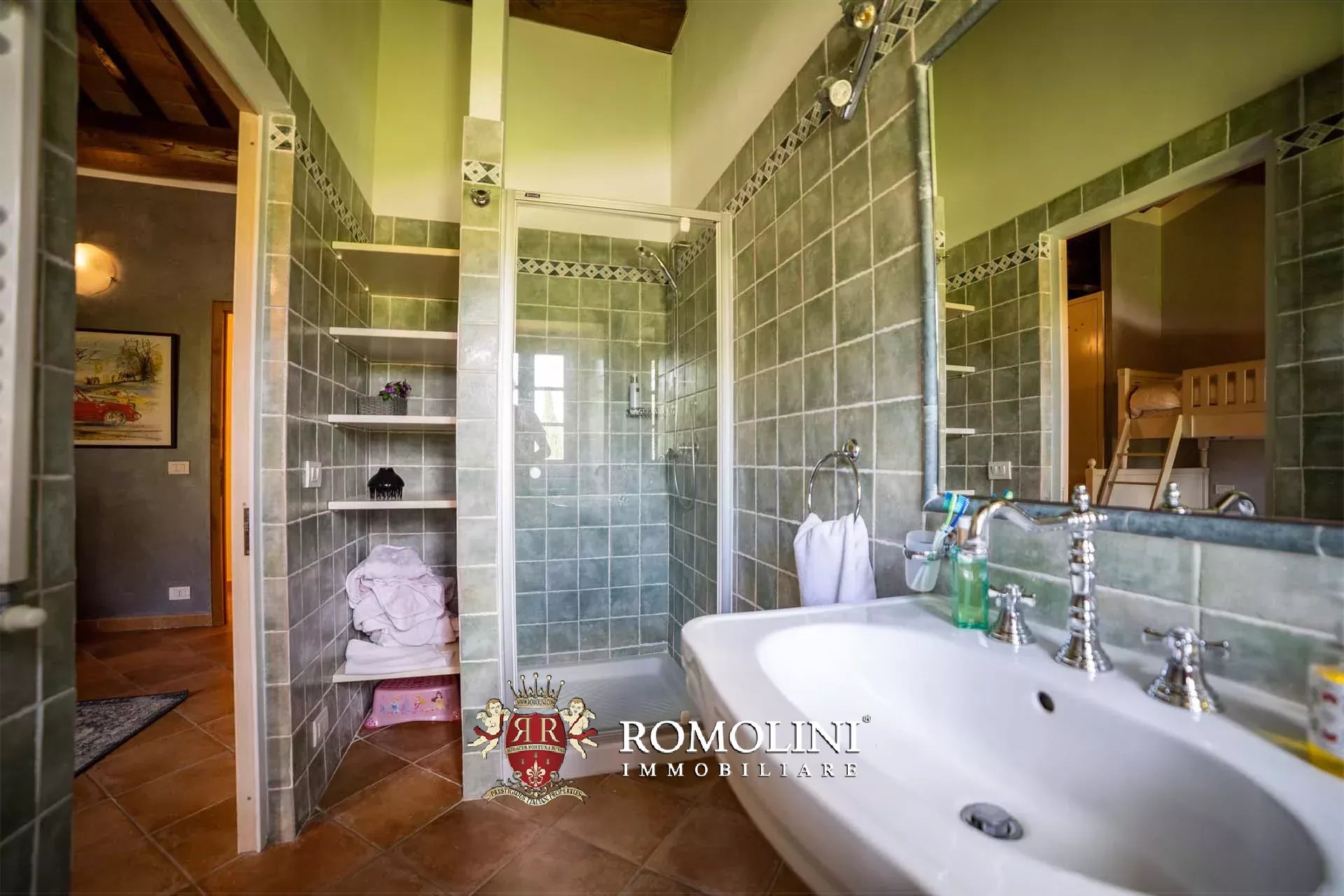
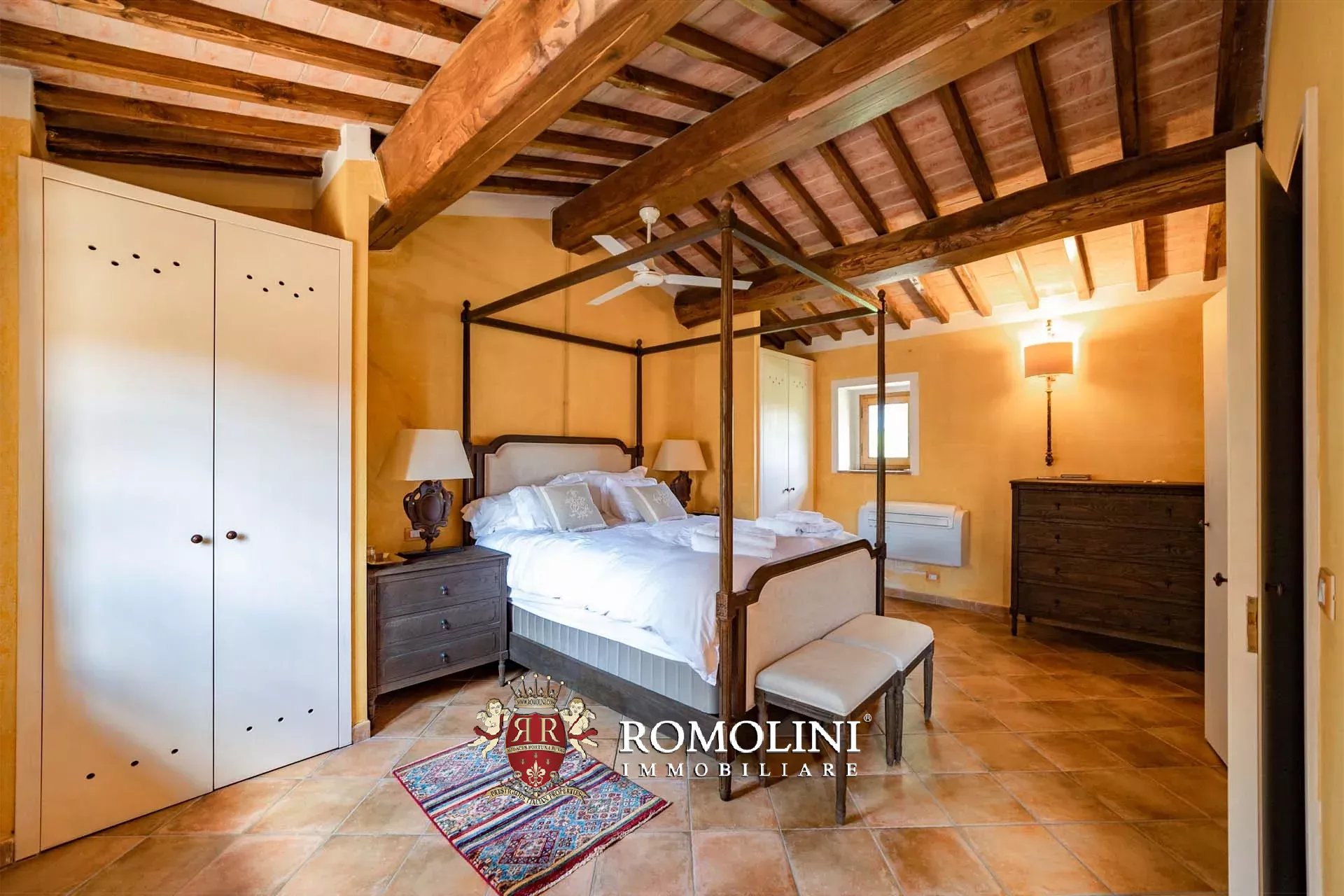
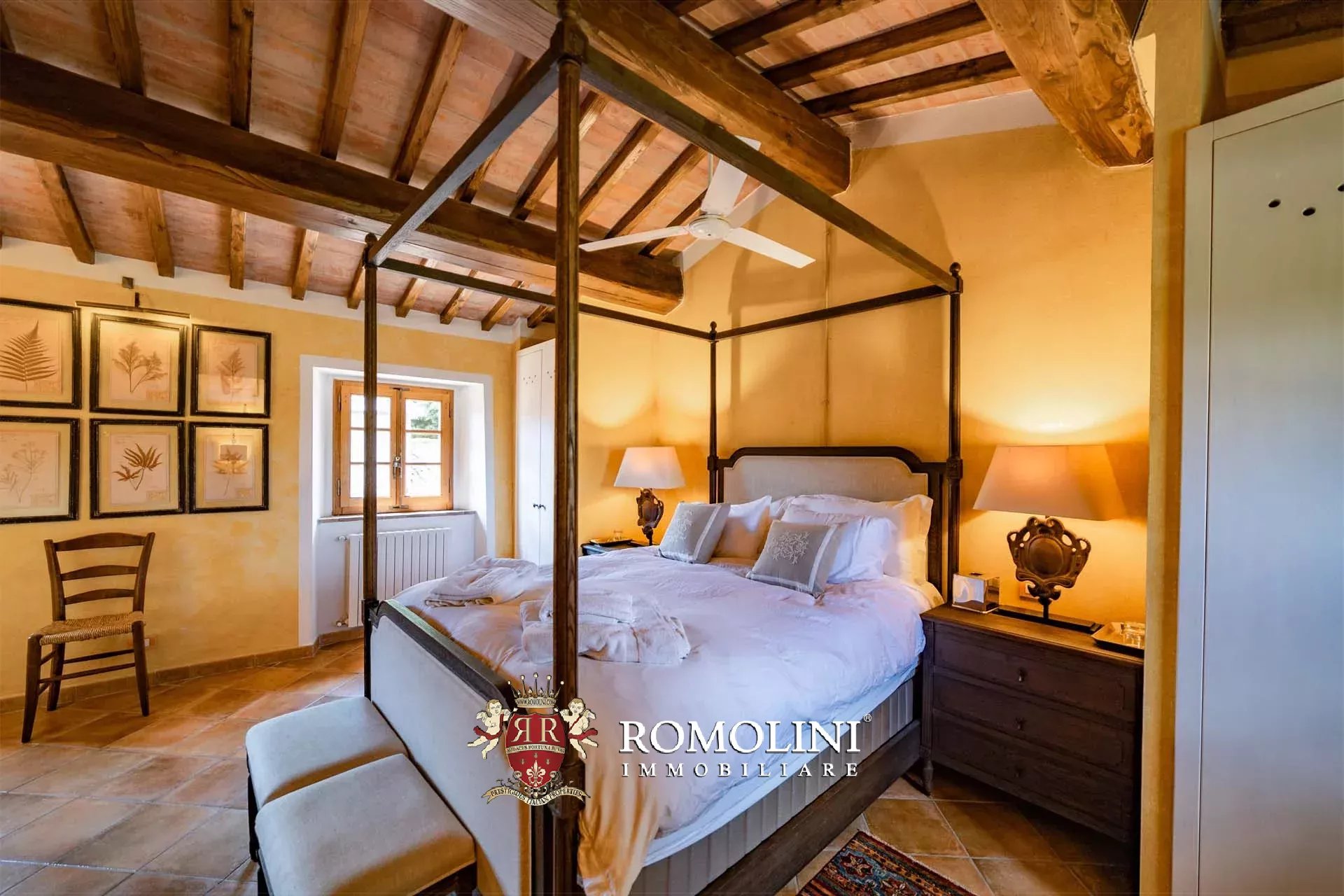
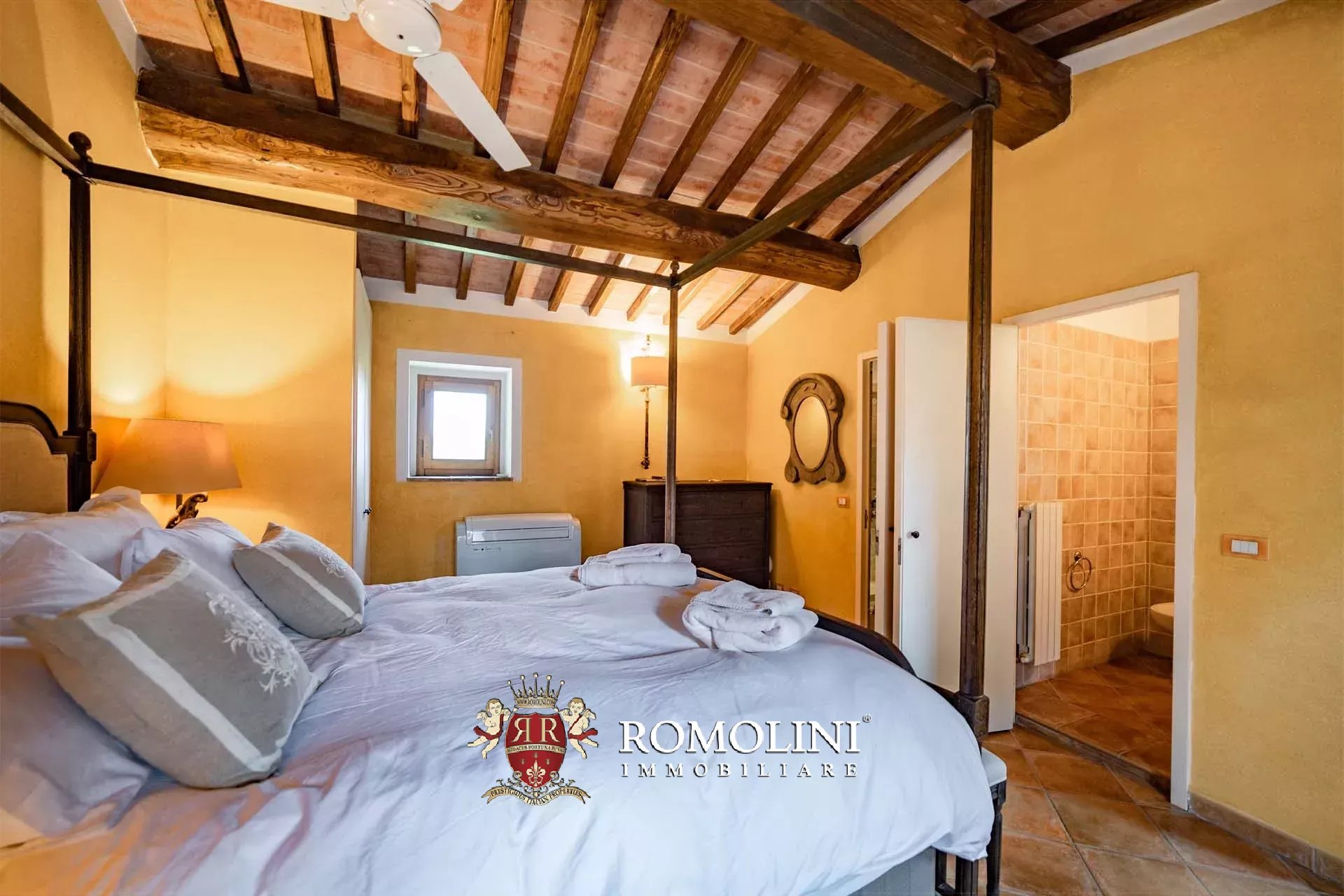
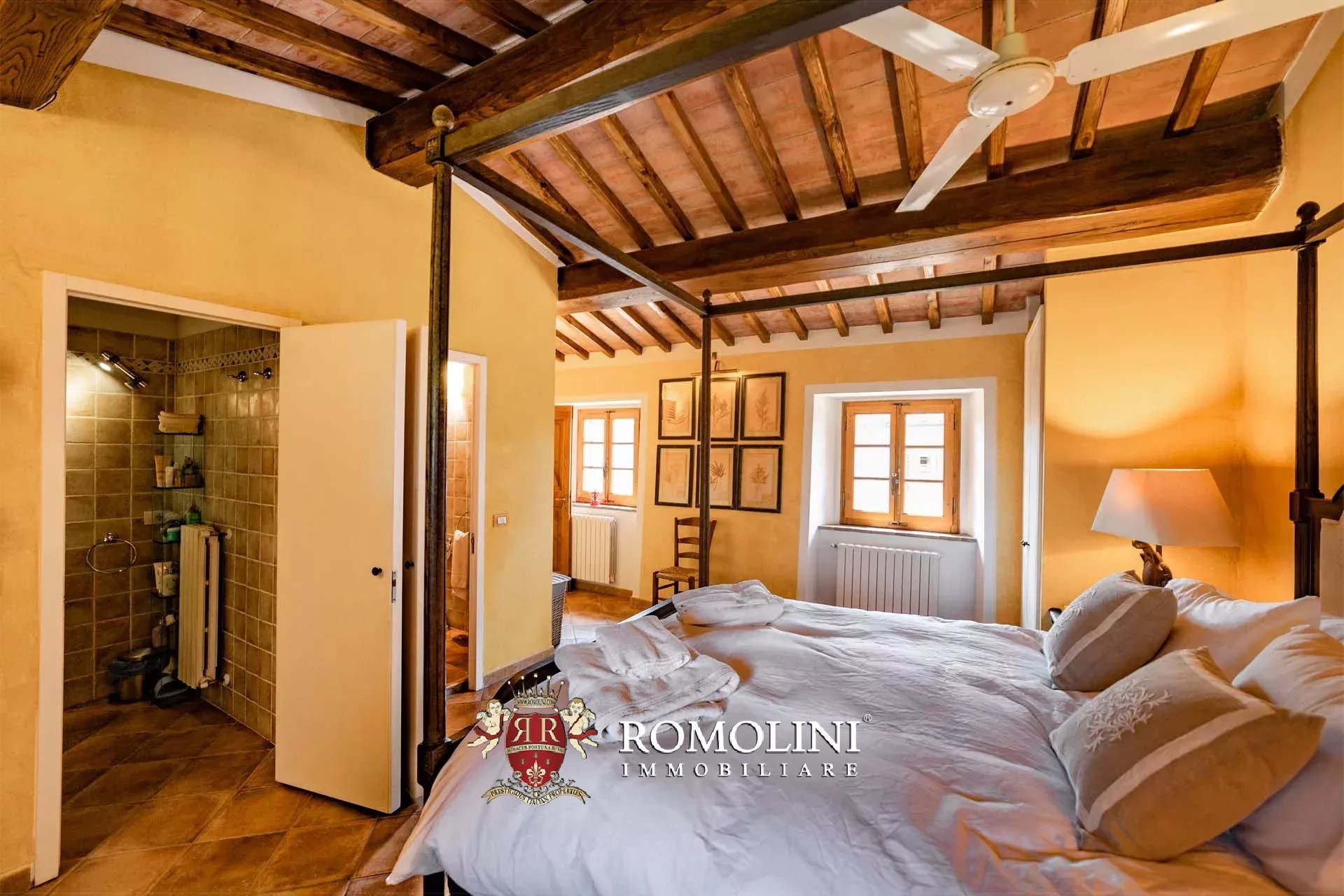
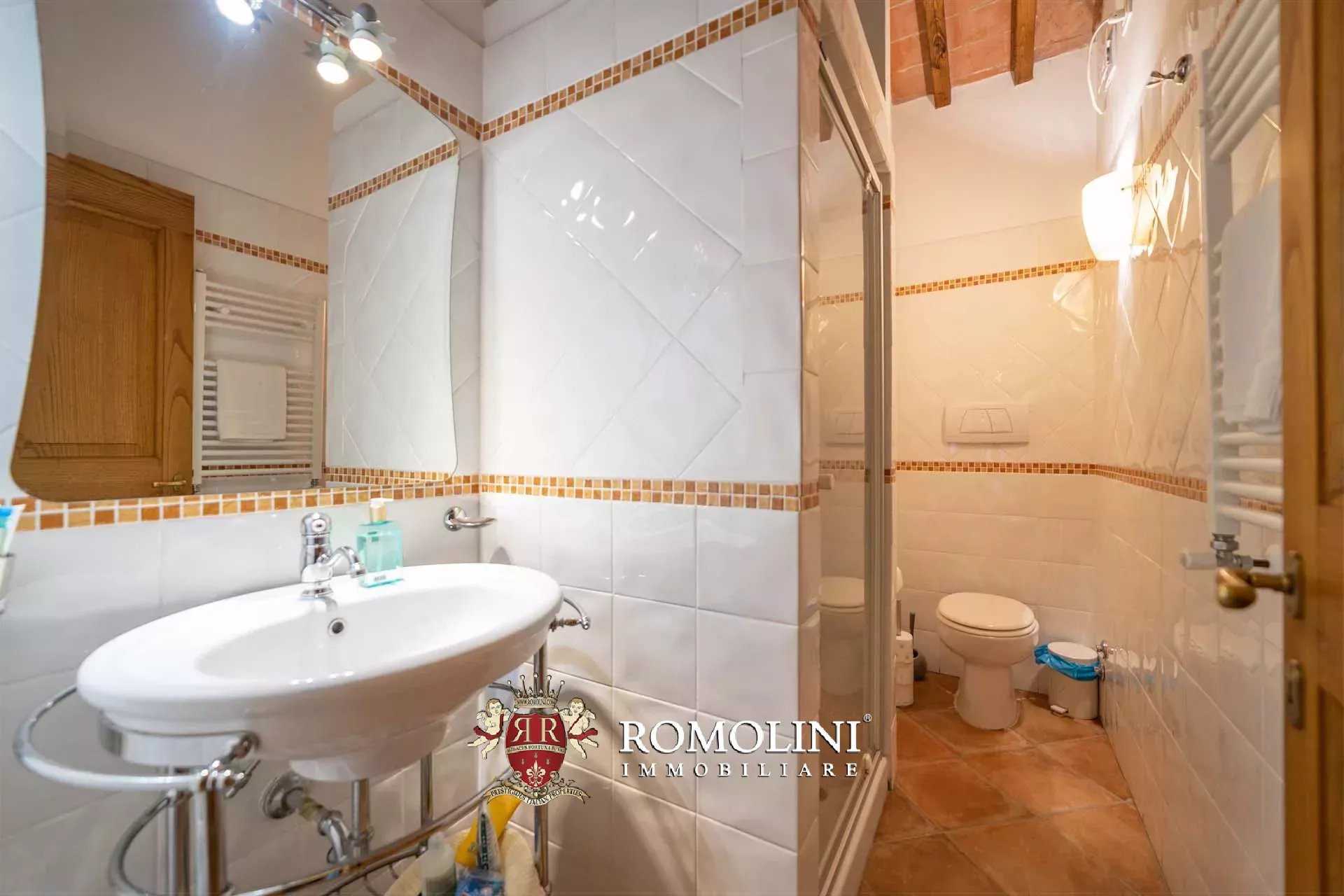
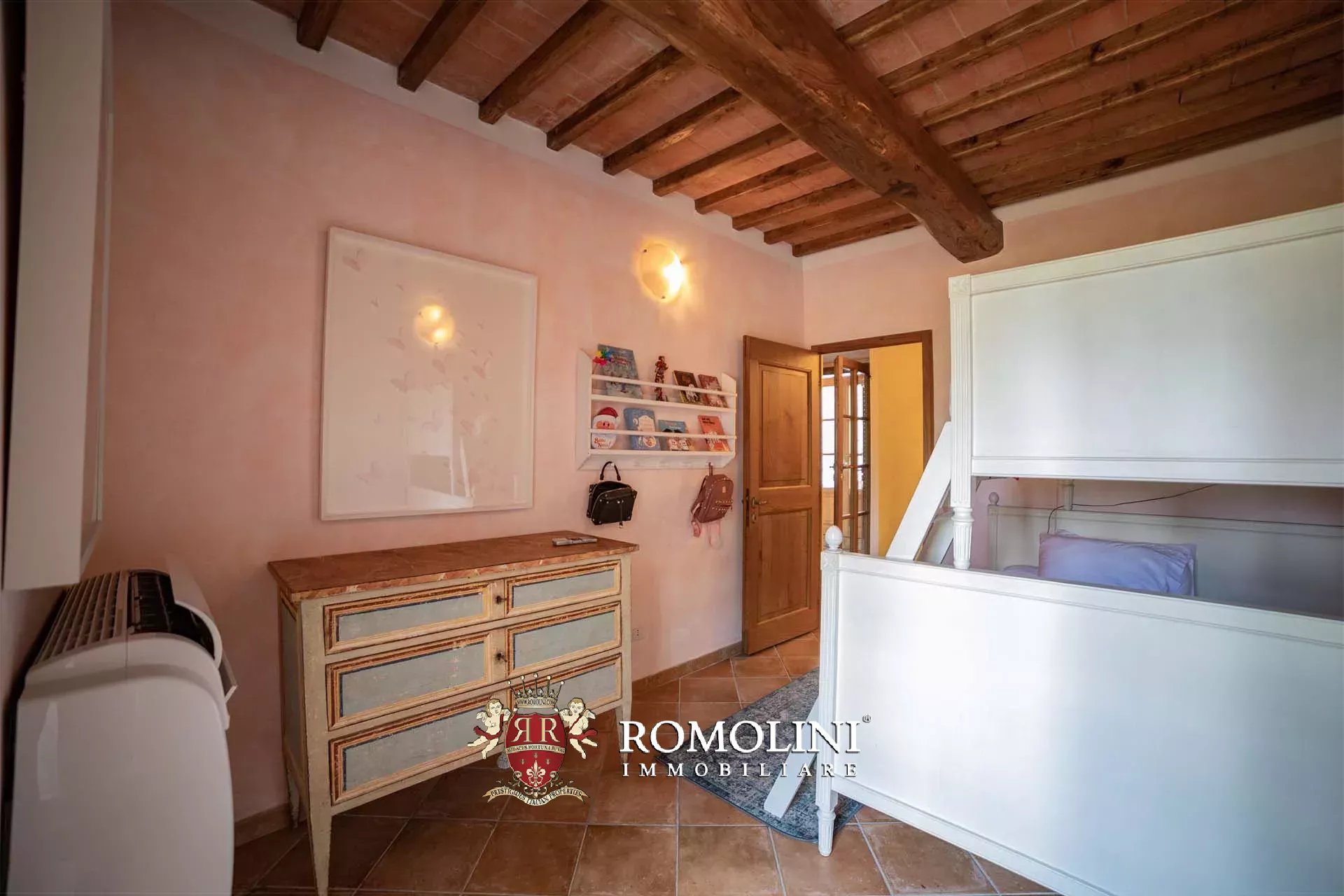
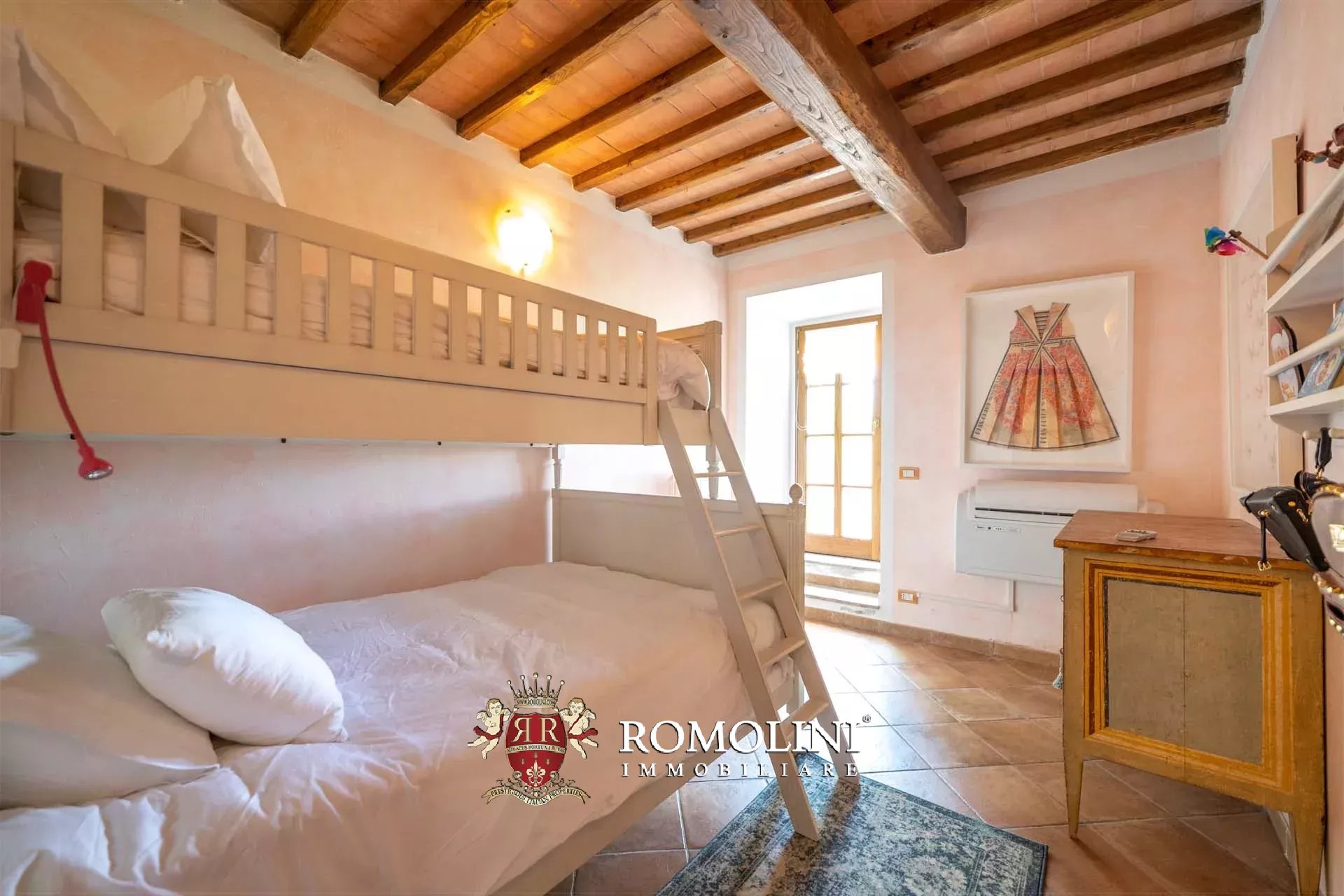
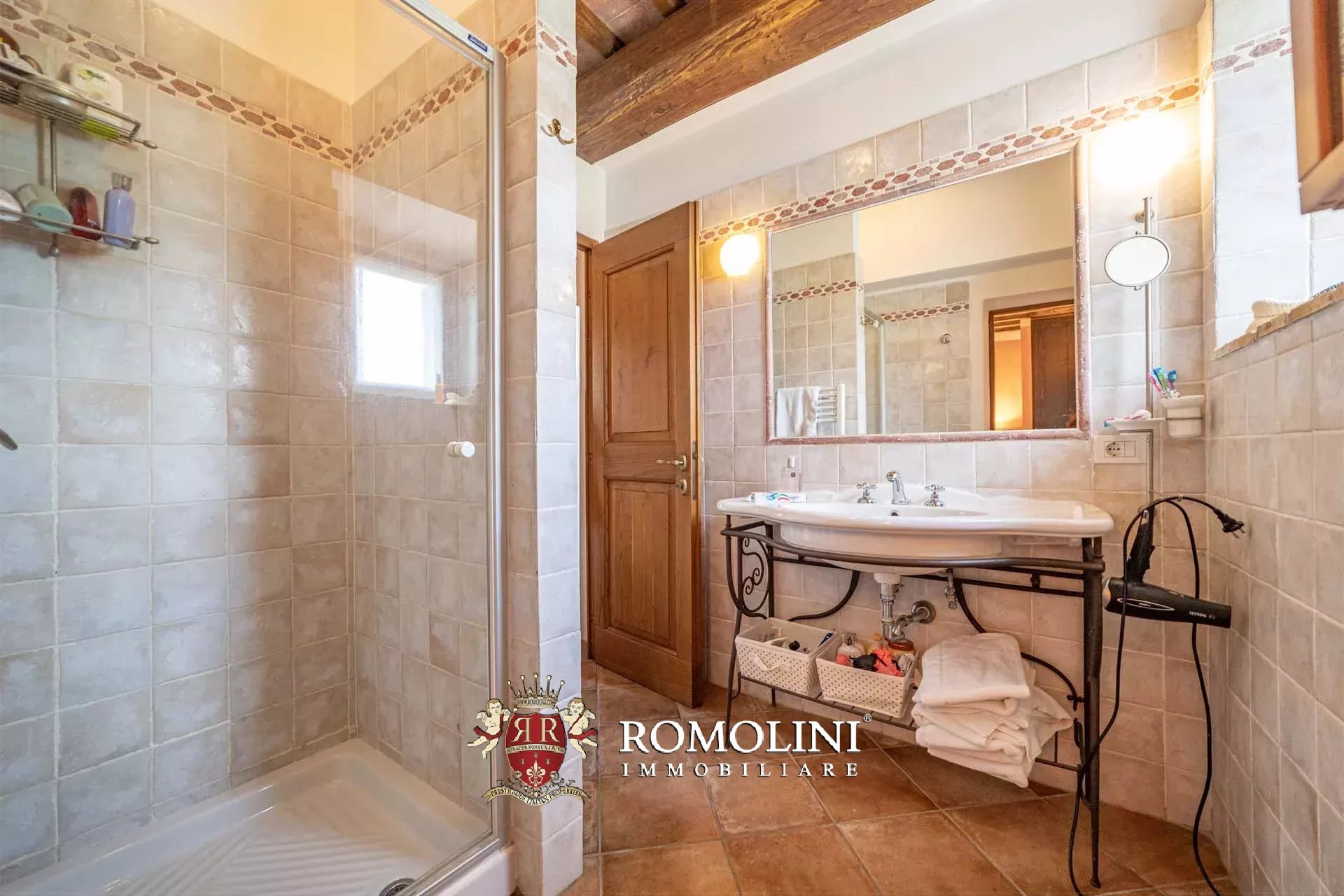
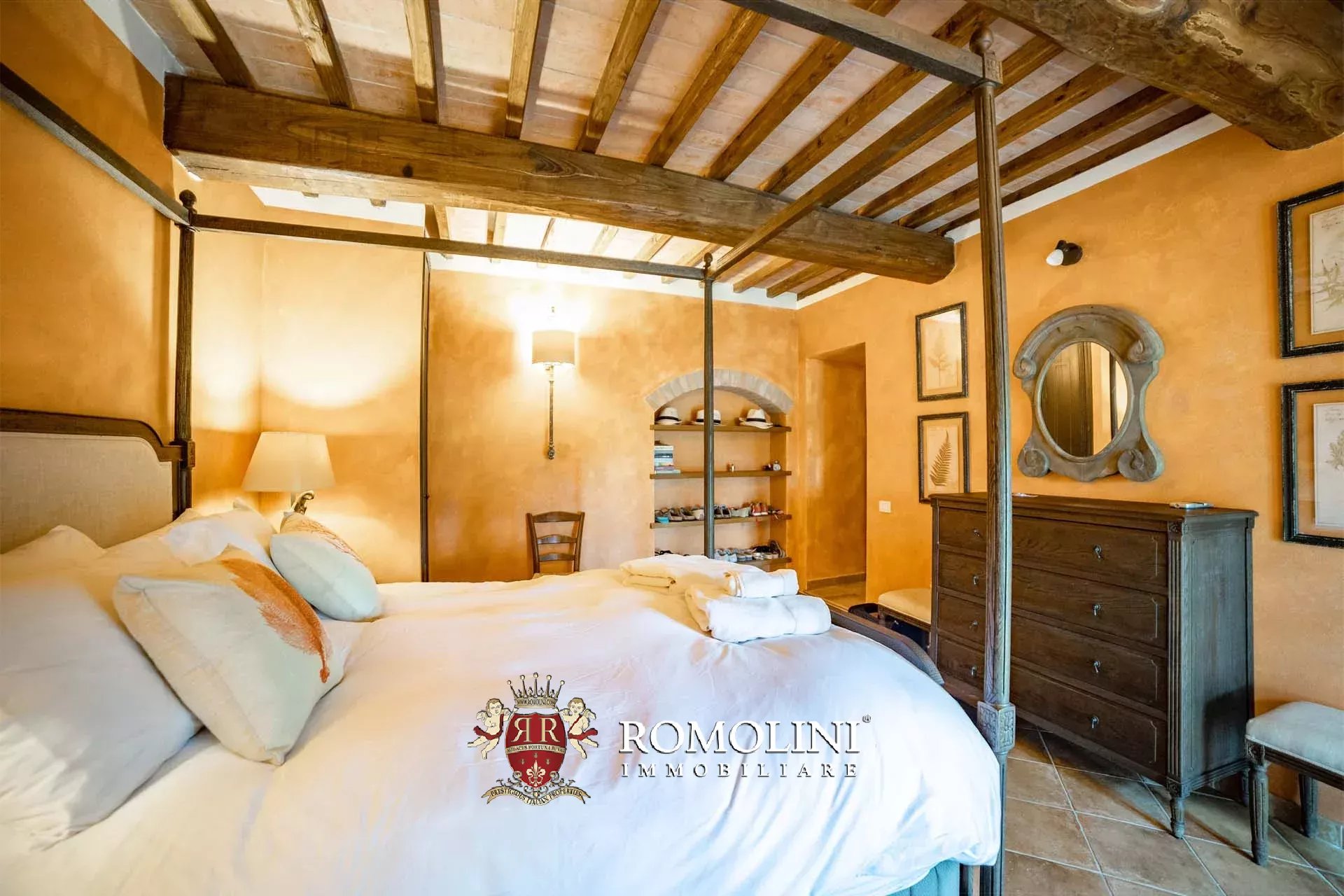
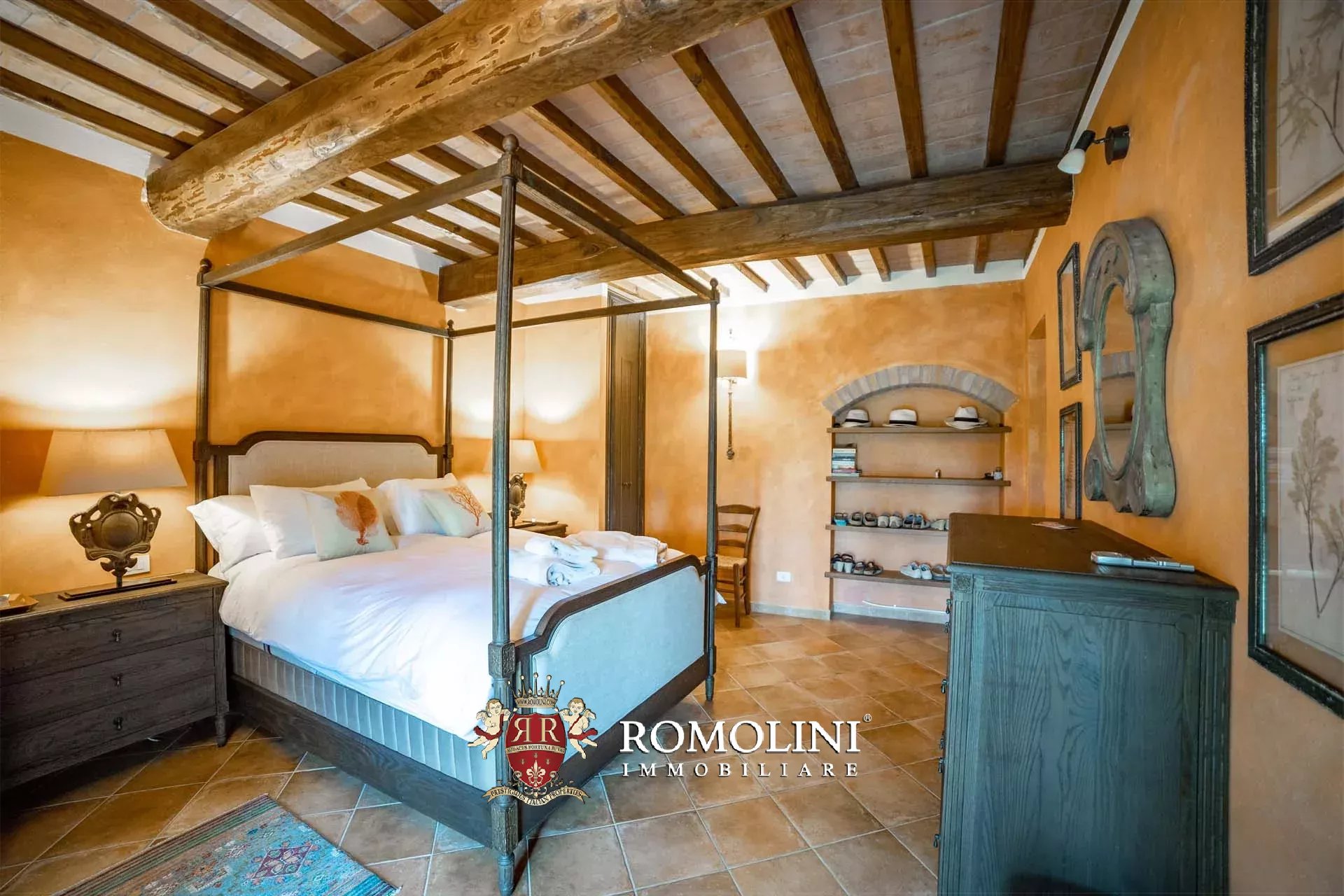
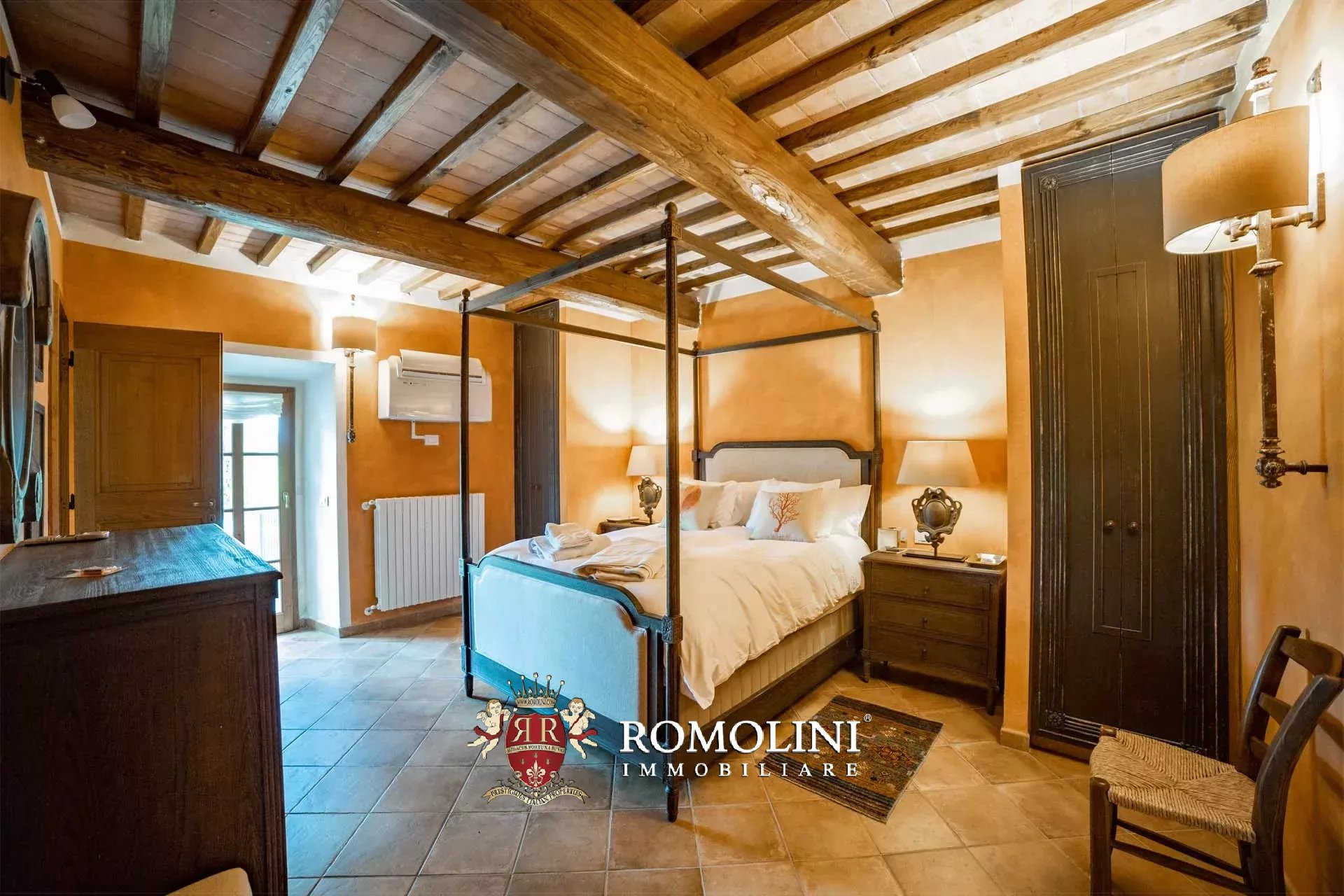
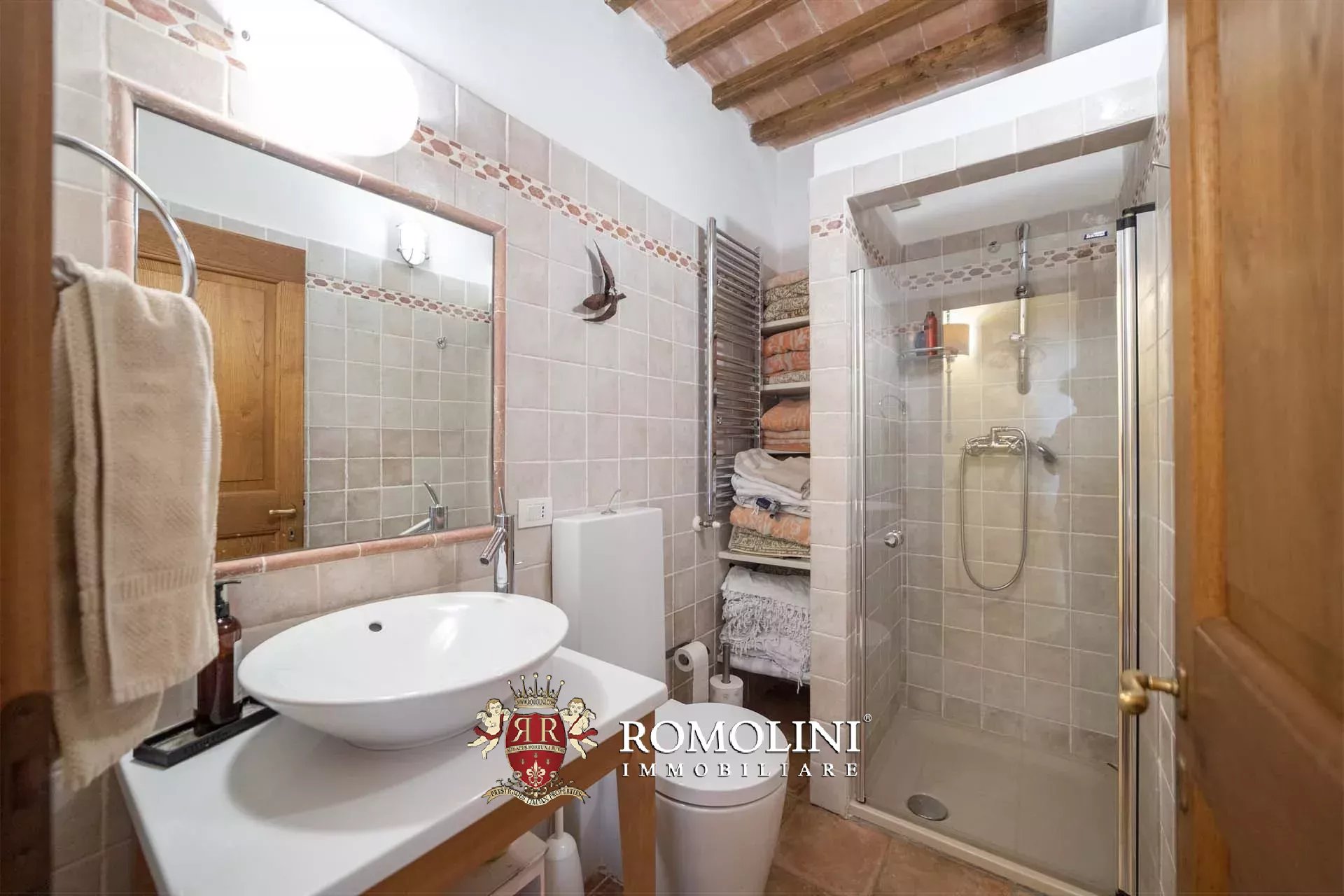
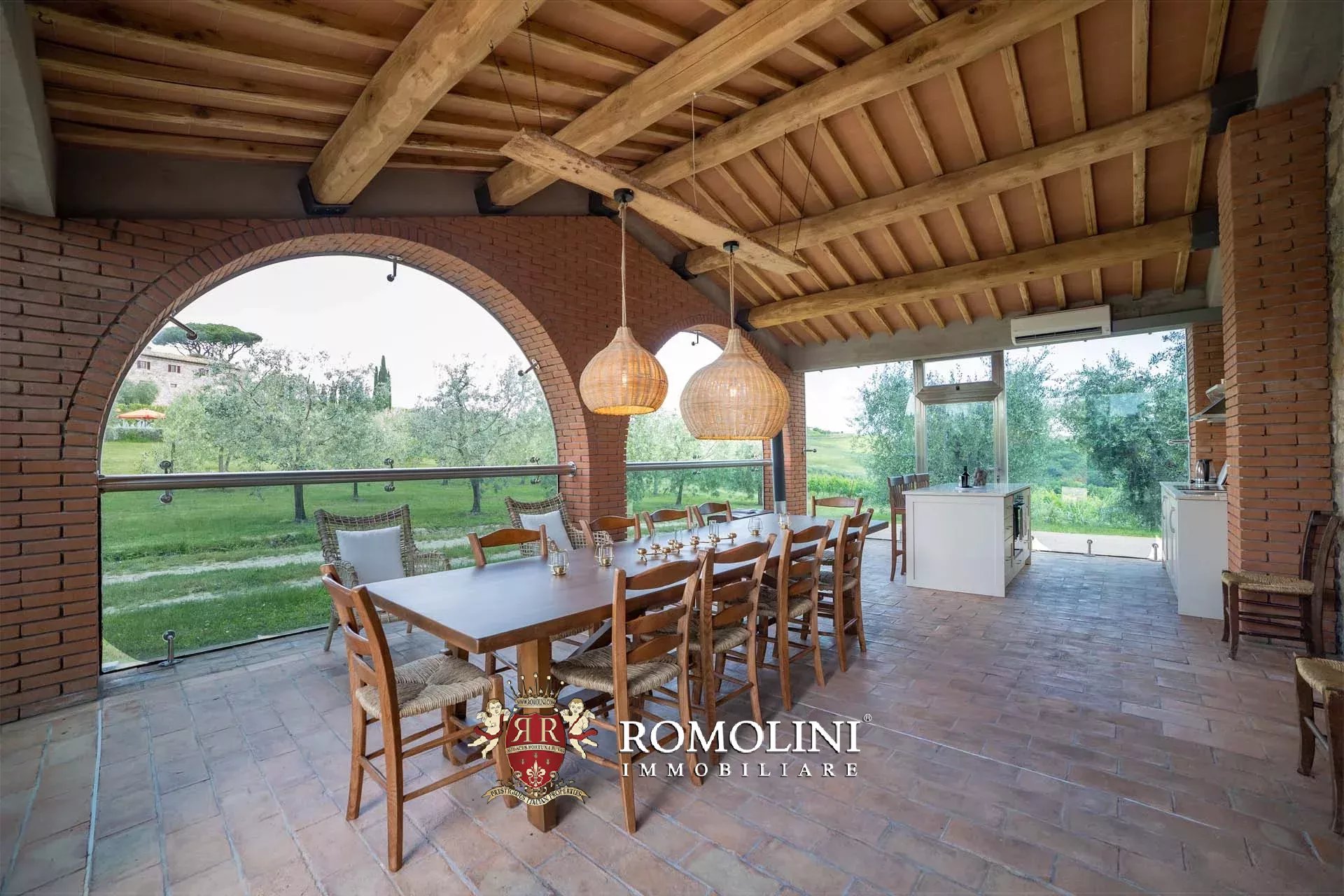
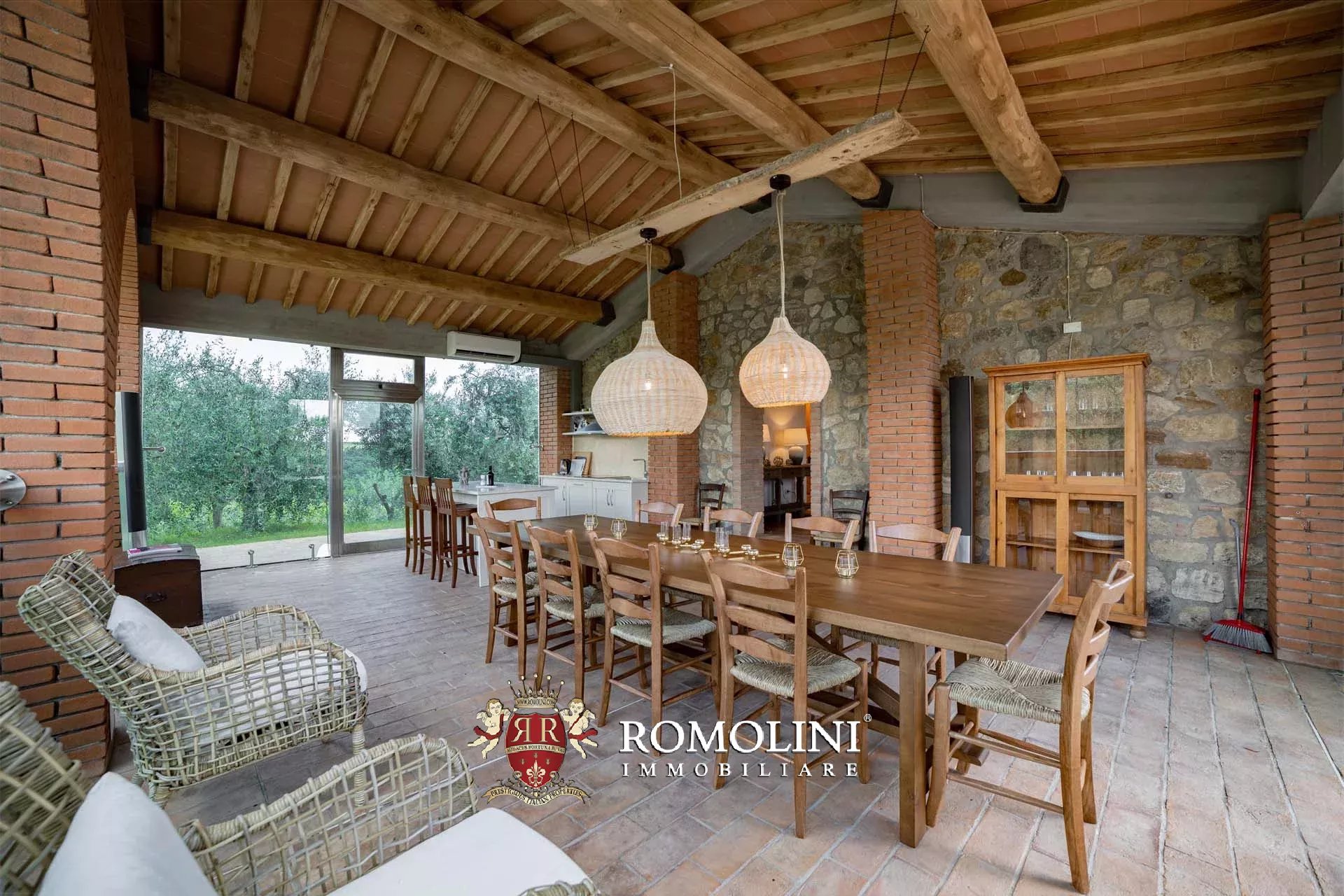
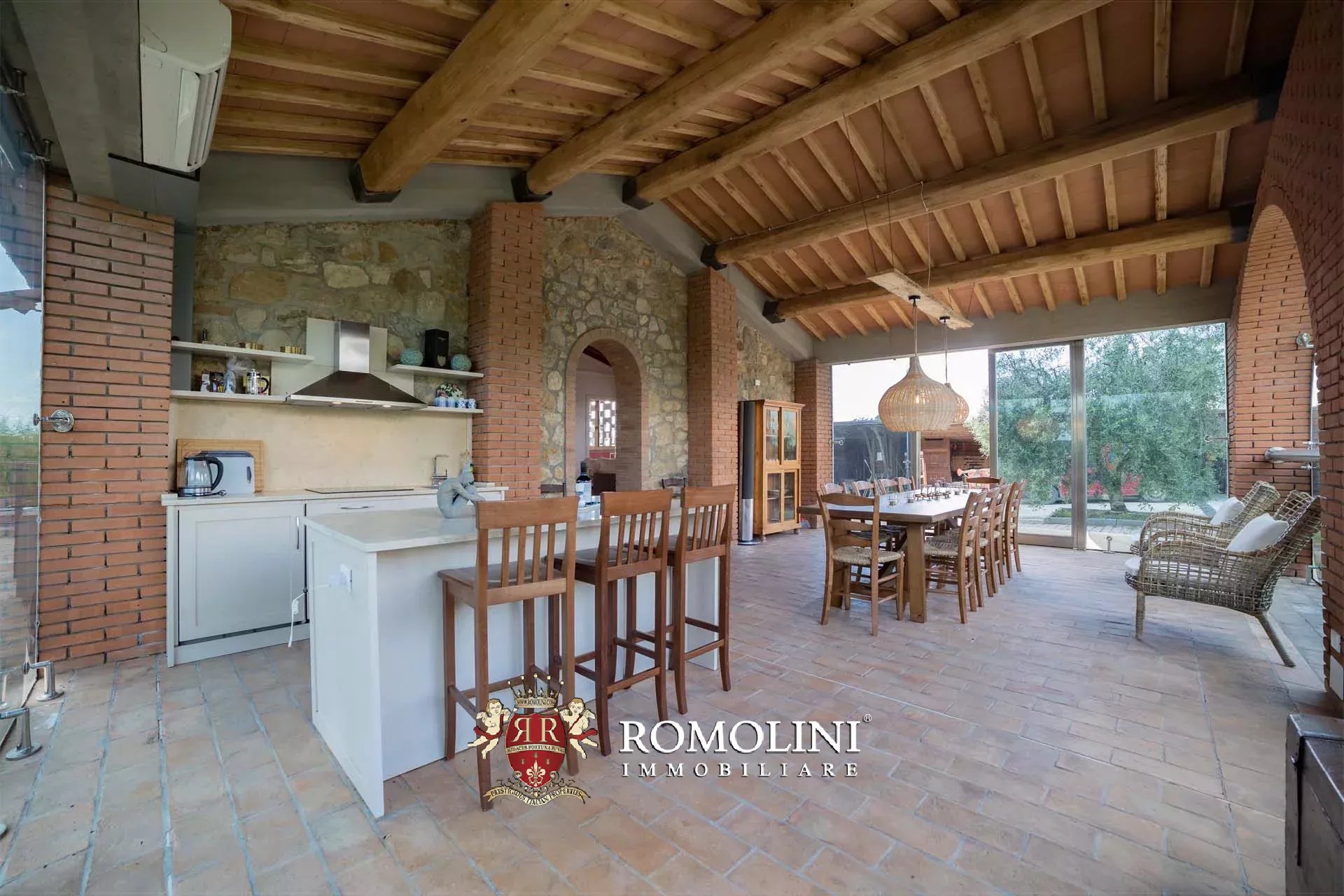
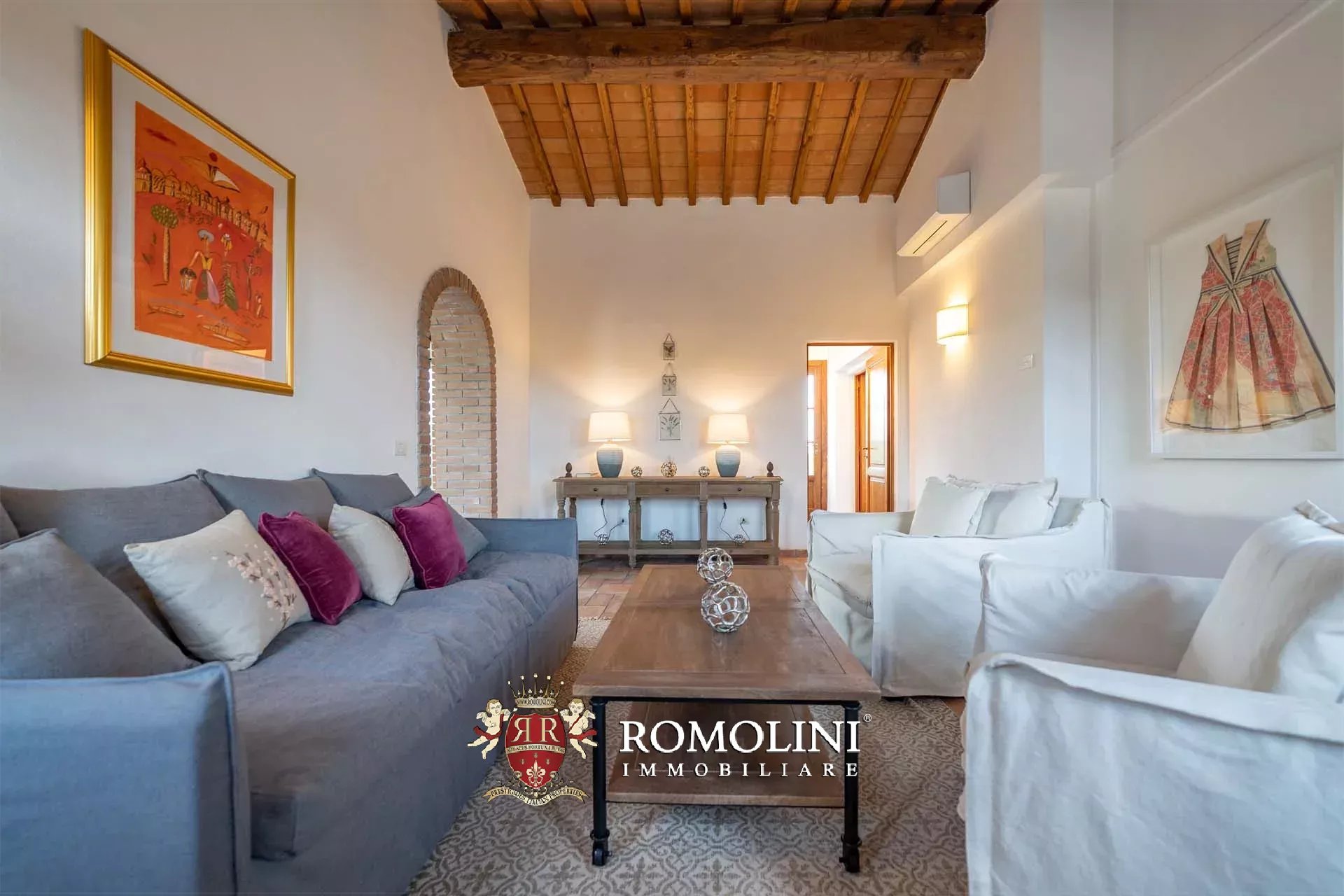
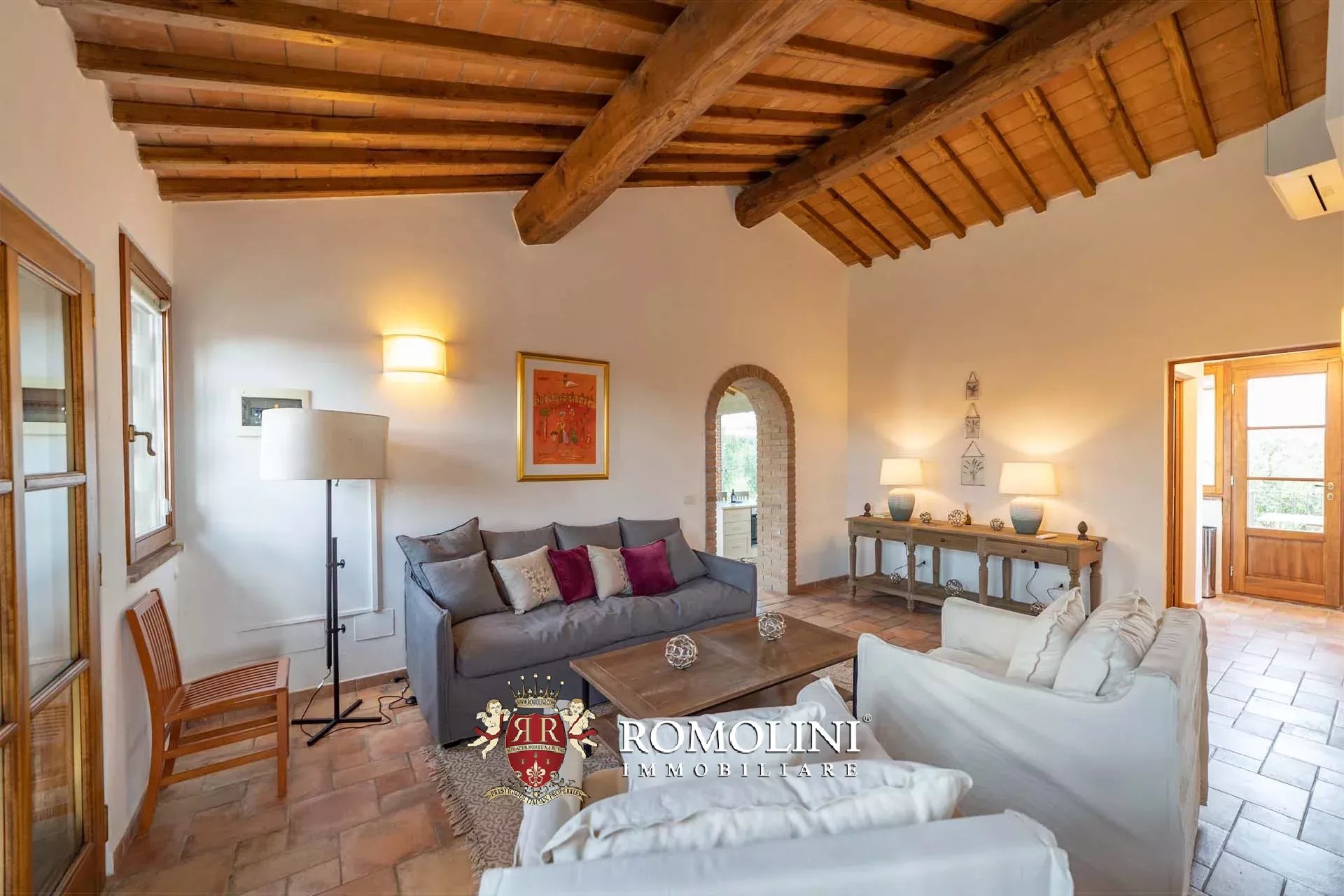
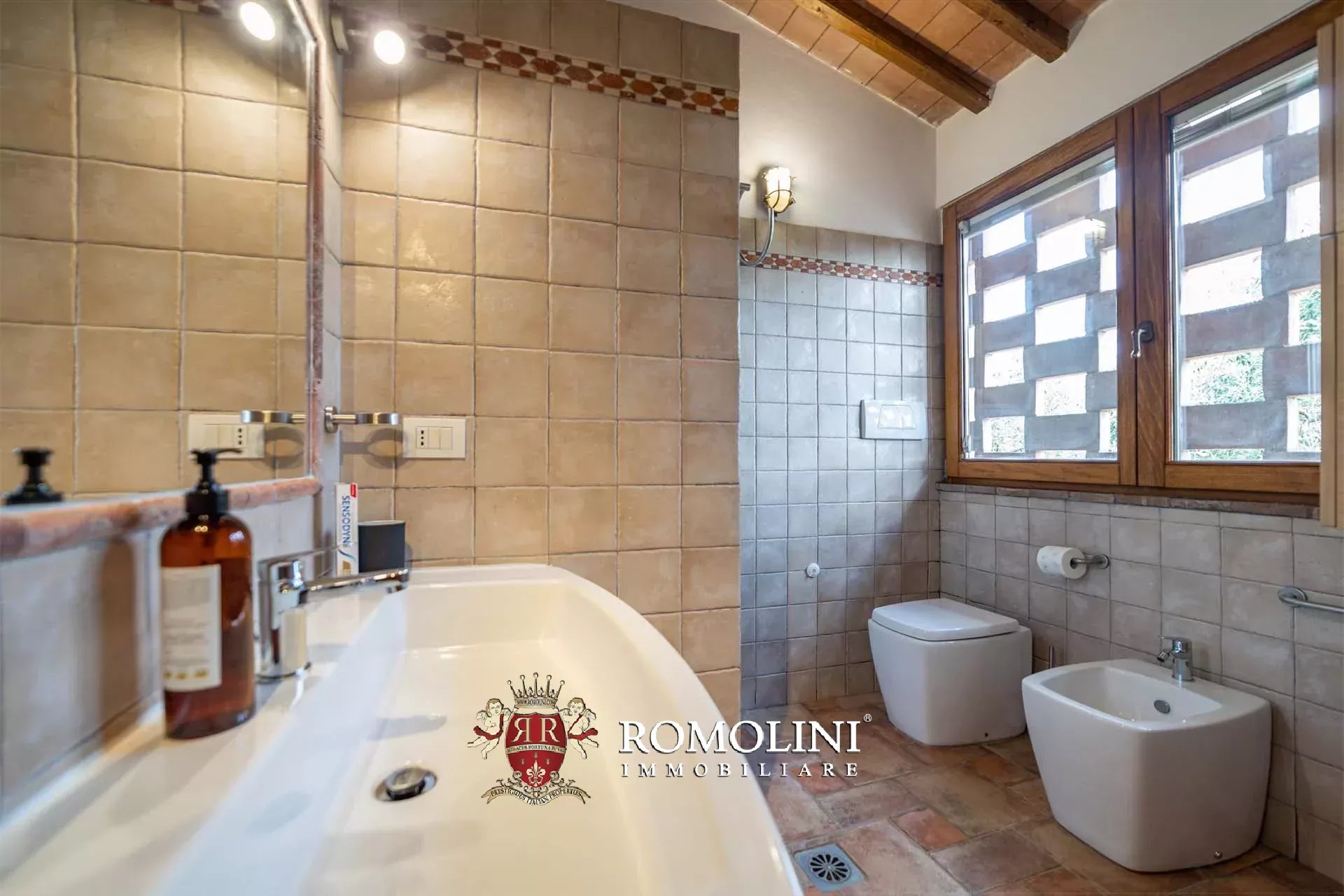
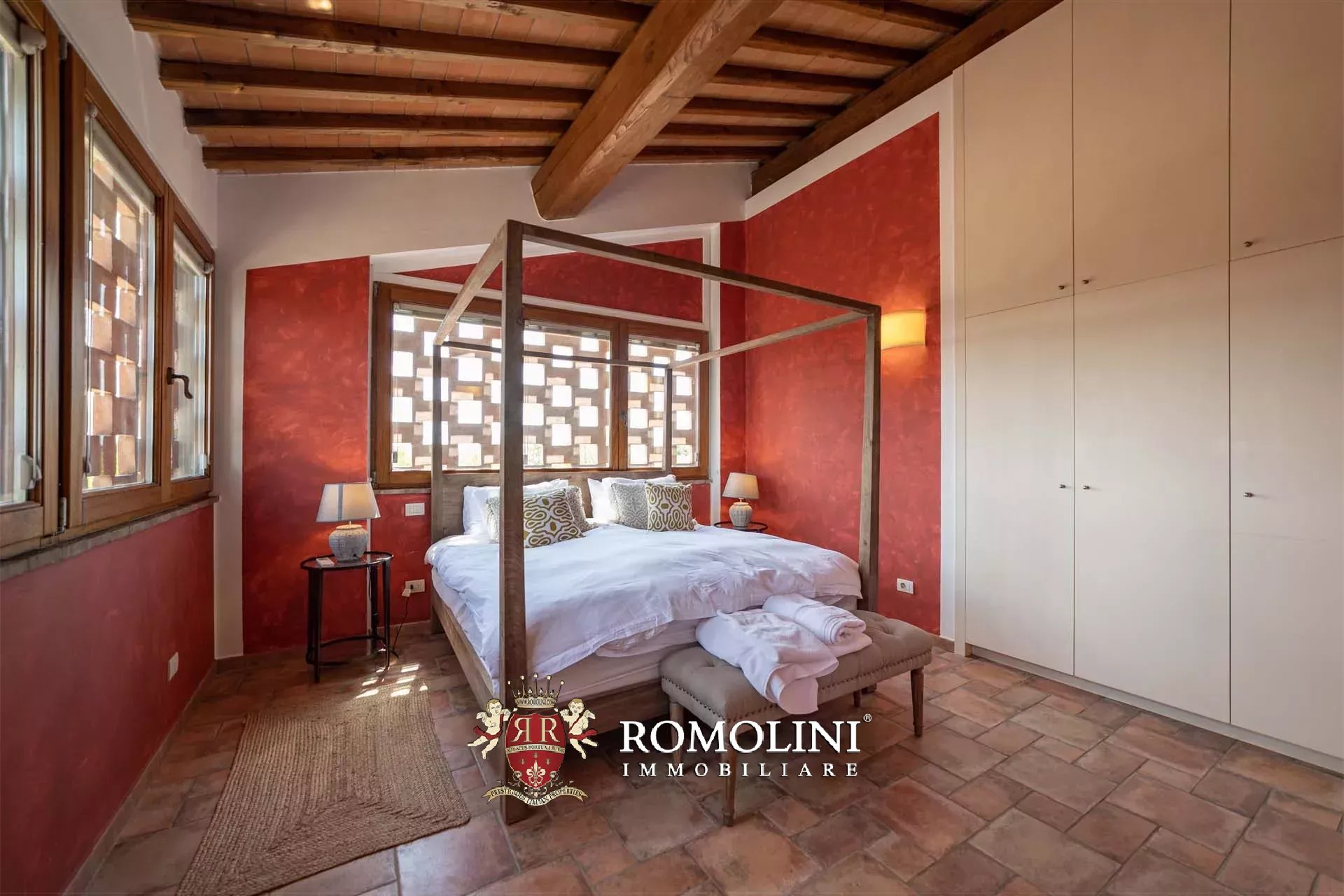
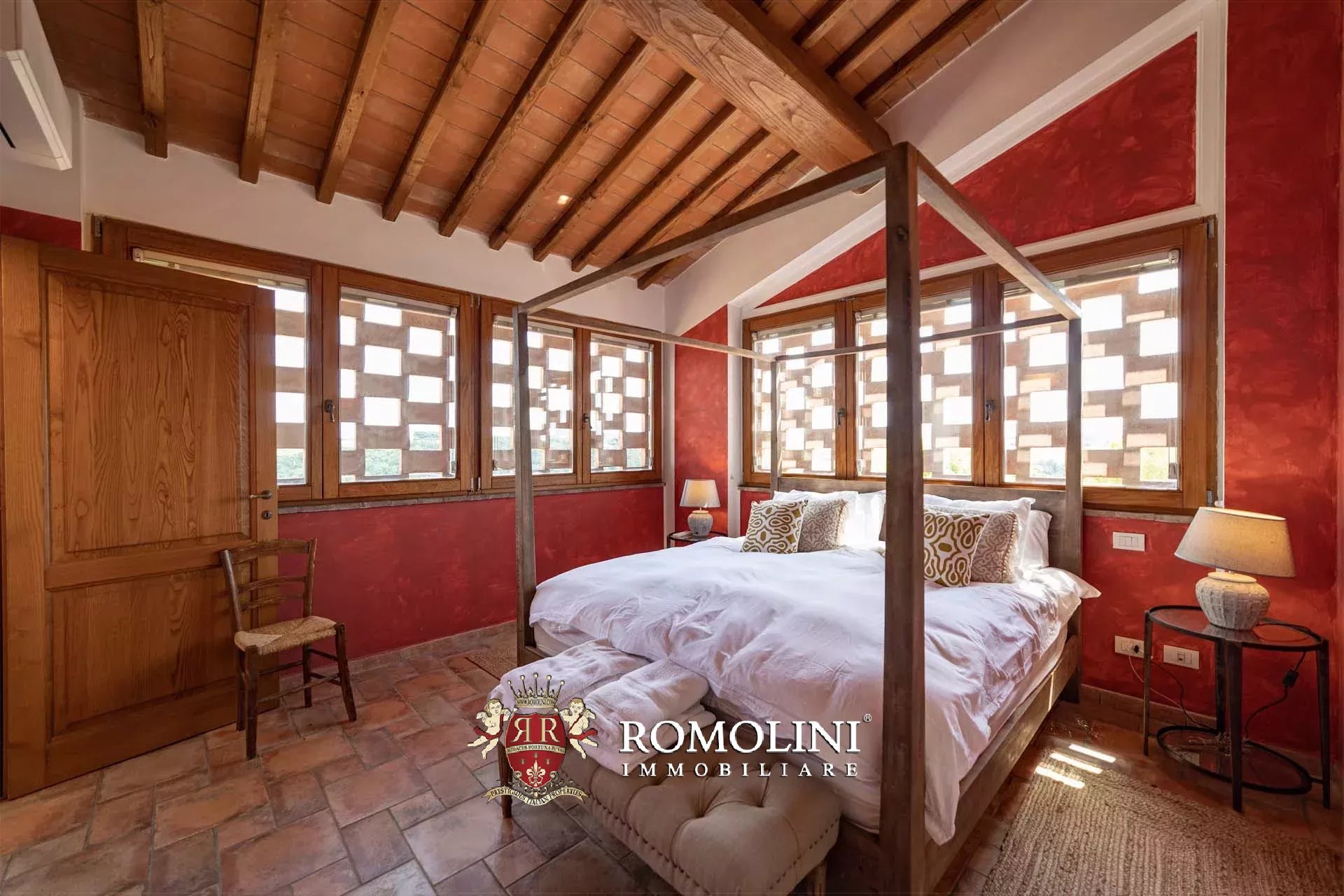
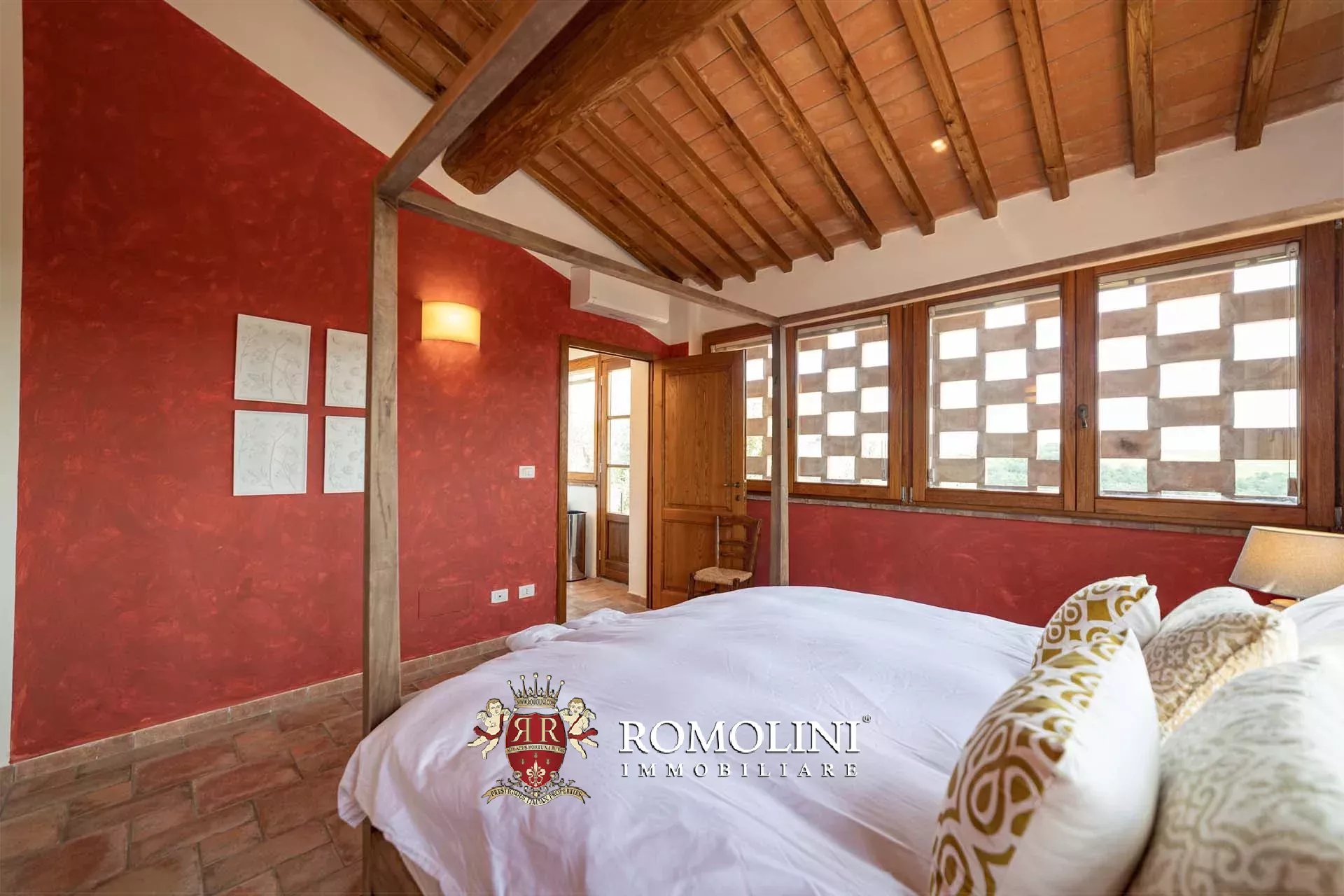
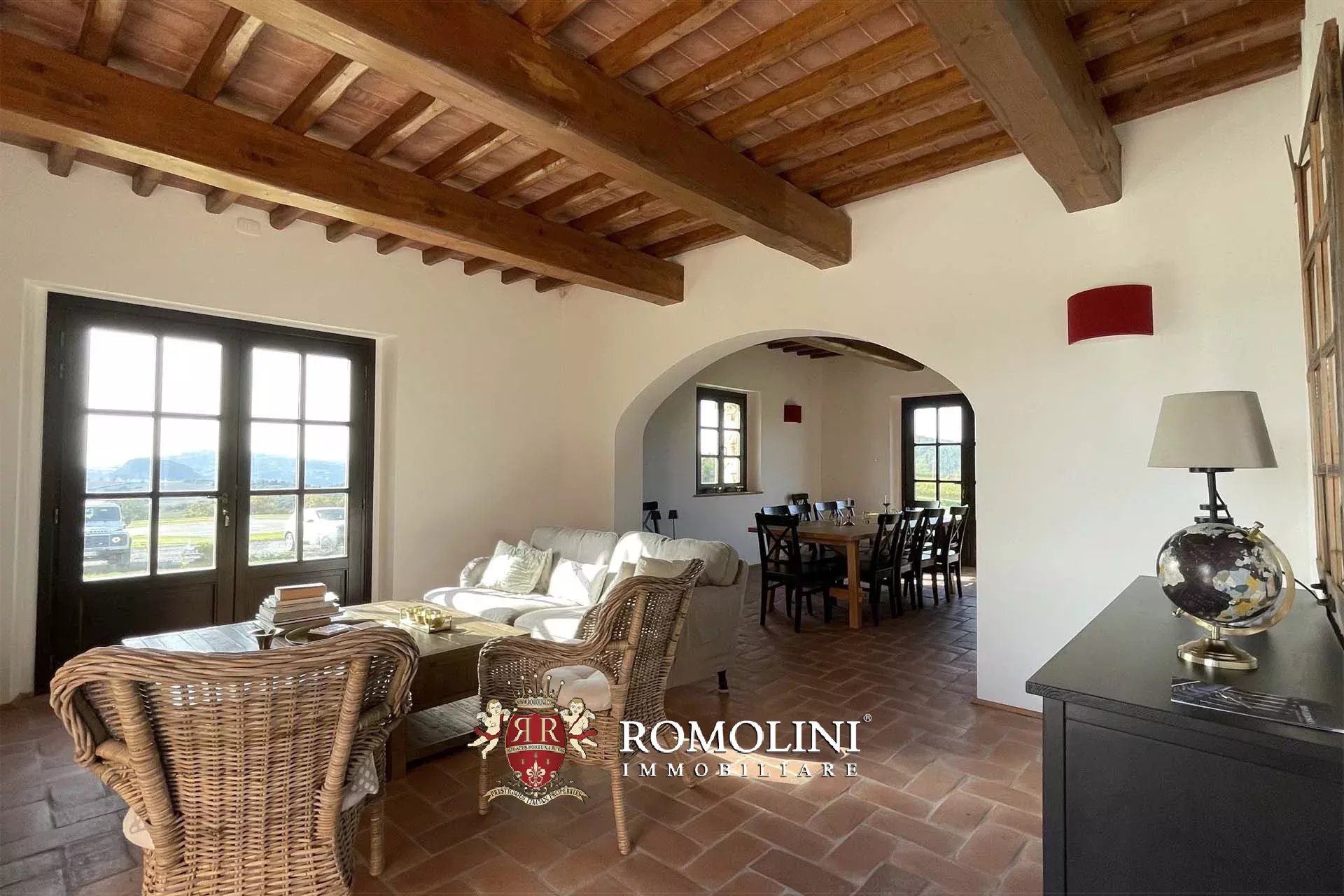
In a more private and reserved, but no less panoramic, location than the winery is then the historical villa (approximately 600 m² – 6,456 ft²), dating back to 1490, with its annexes. The main building (made out of local stone and with a peculiar horseshoe shape) has been entirely renovated, yet maintaining its salient features, and now houses beautiful living areas and seven bedrooms with private bathrooms. Outside, the villa has paved loggias and terraces ideal for dinners or pleasant moments of relaxation. A garage is located under the villa’s main terrace.
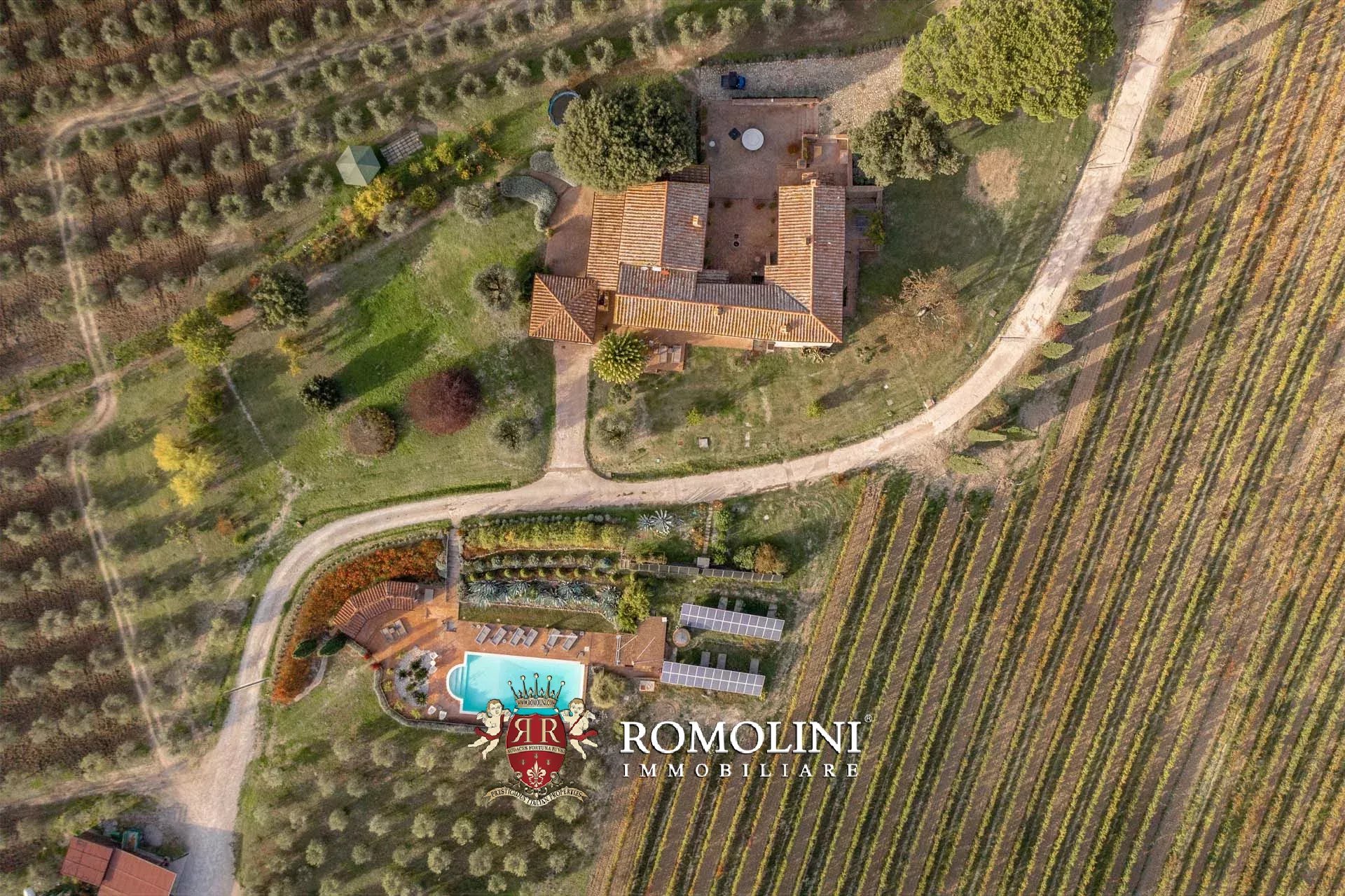
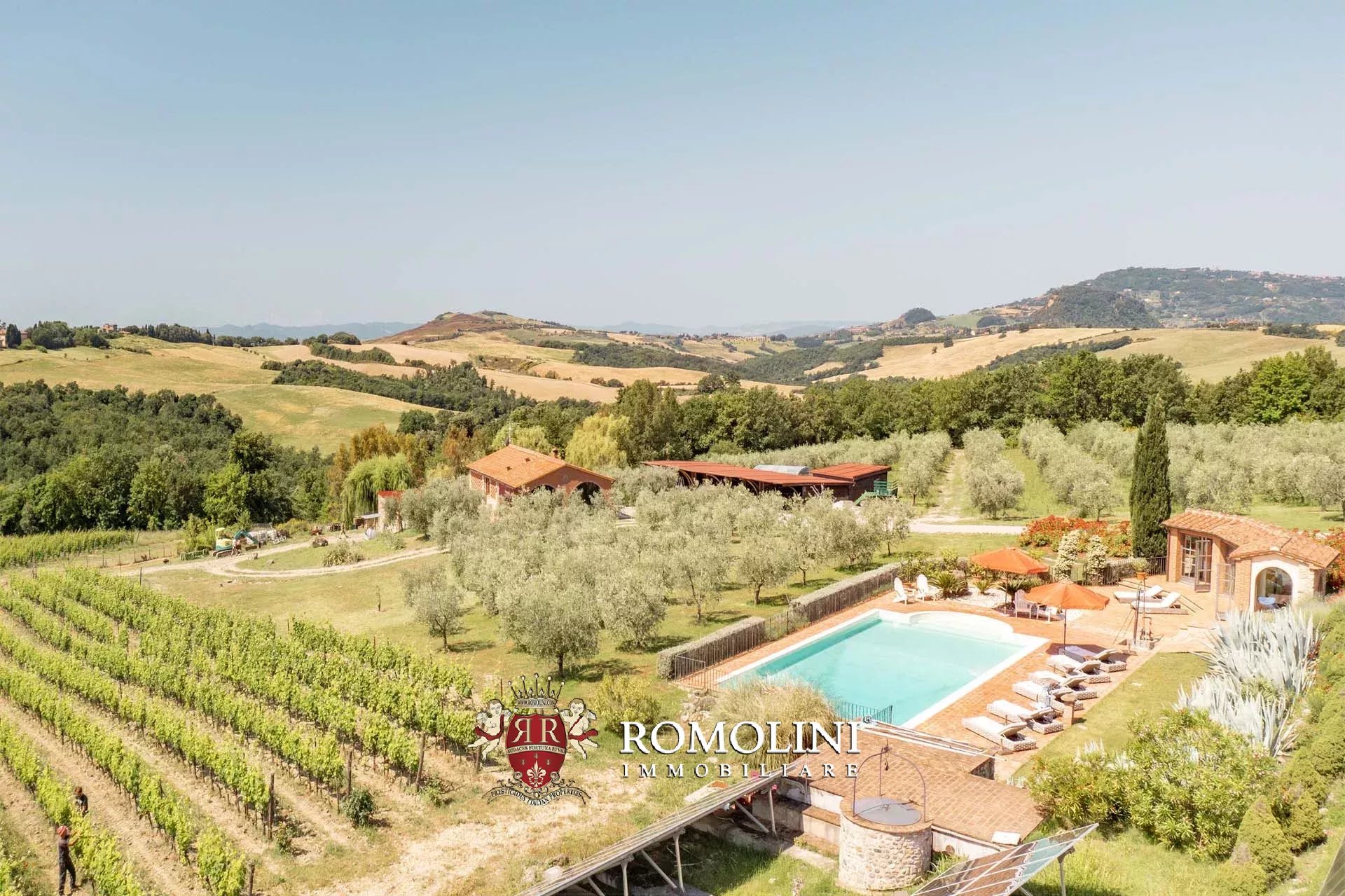
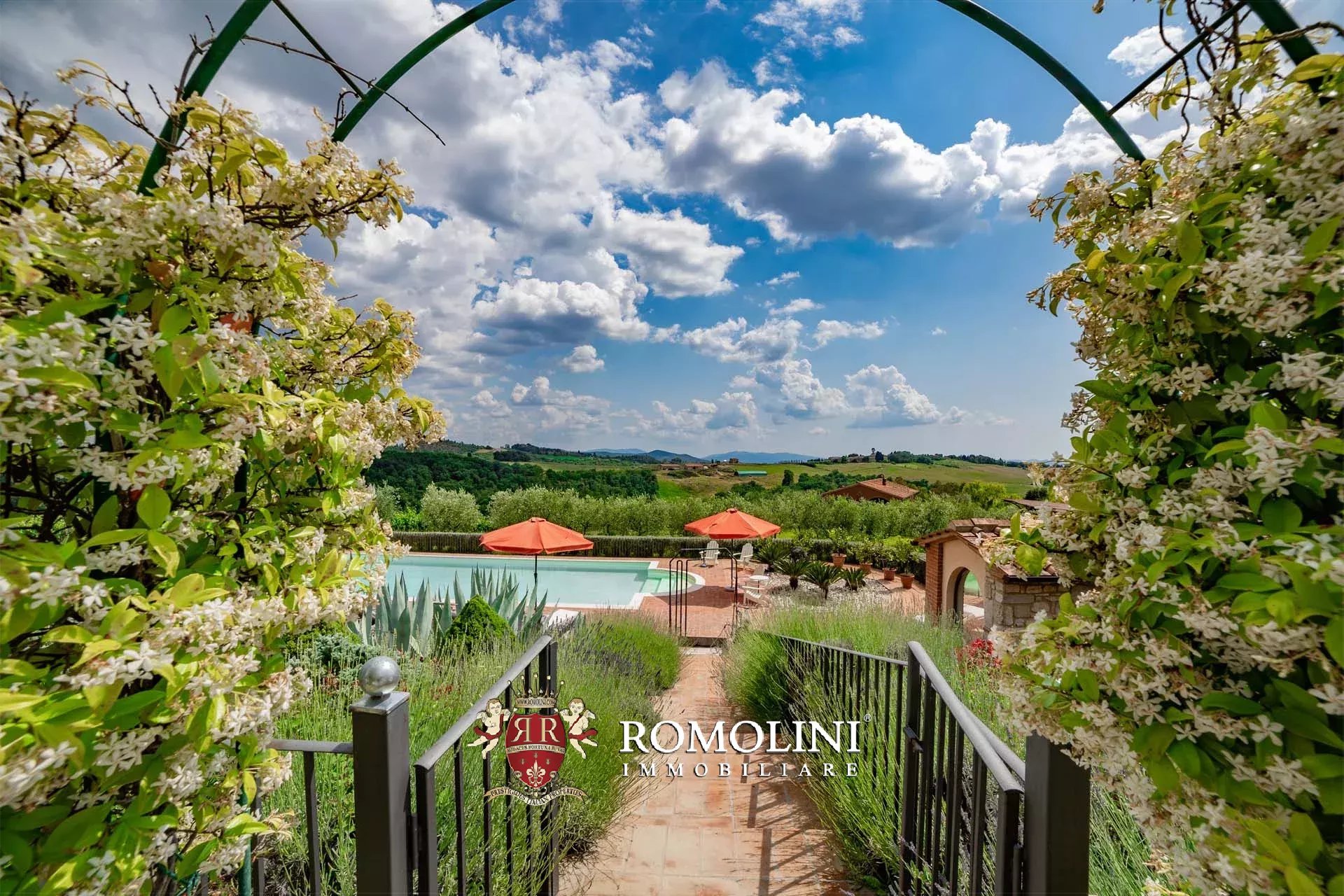
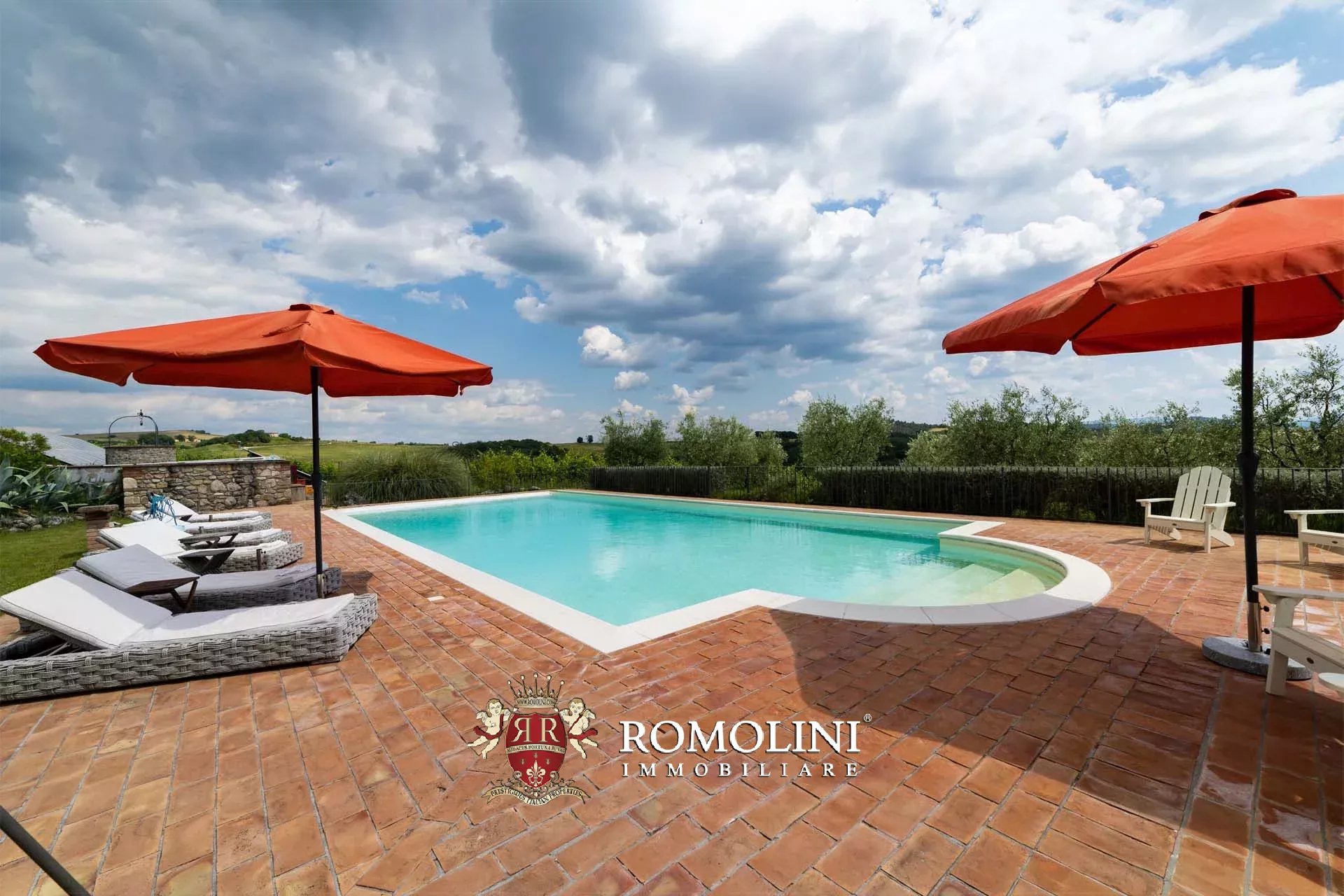
Just below the villa, nestled in the park among the vineyards, is the 14 × 7 m swimming pool with Roman staircase. A pool house was recently built next to the pool and houses changing rooms and showers. The pool’s large terracotta sunbathing area allows guests to enjoy the Tuscan sun with incredible views of the estate's vineyards.
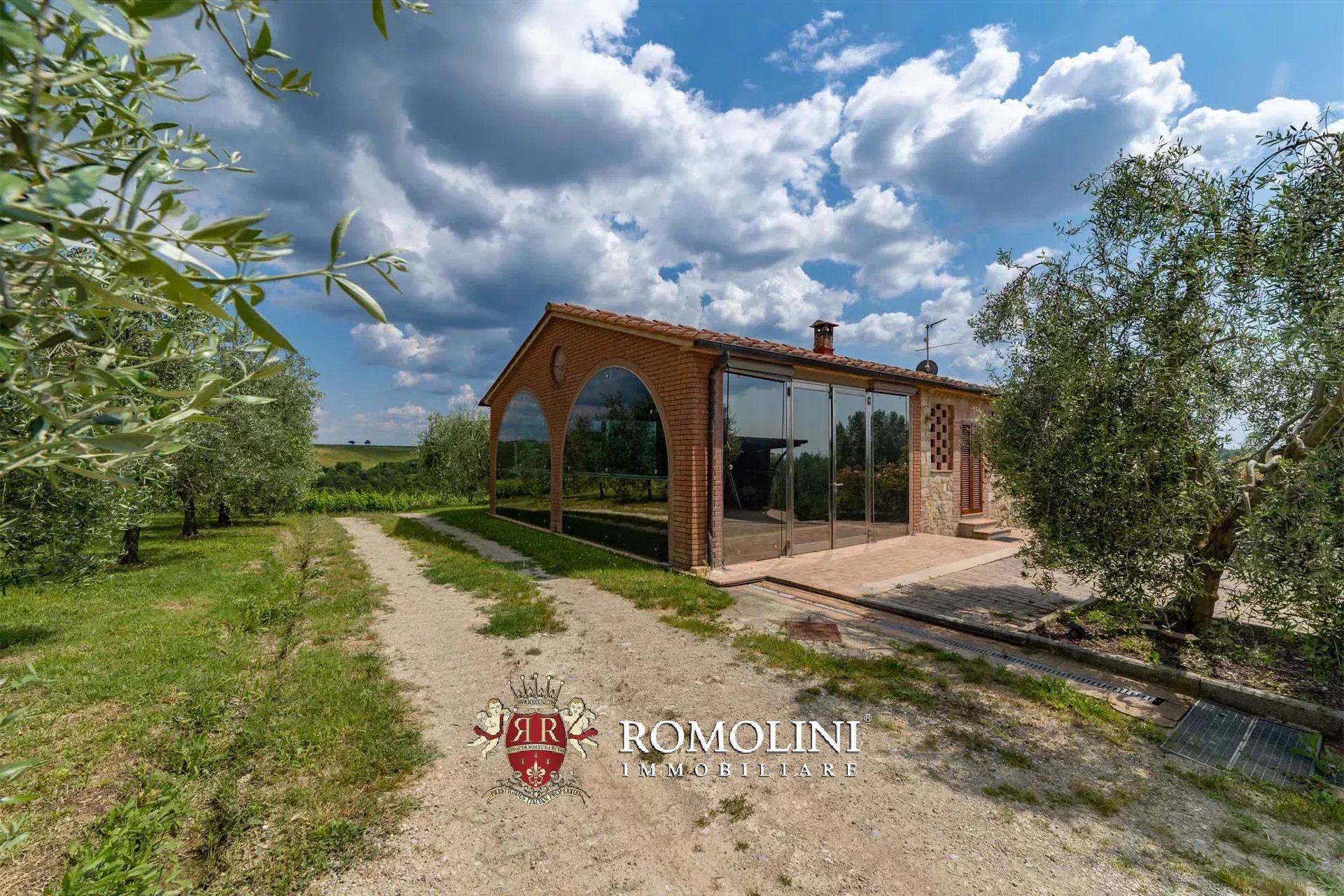
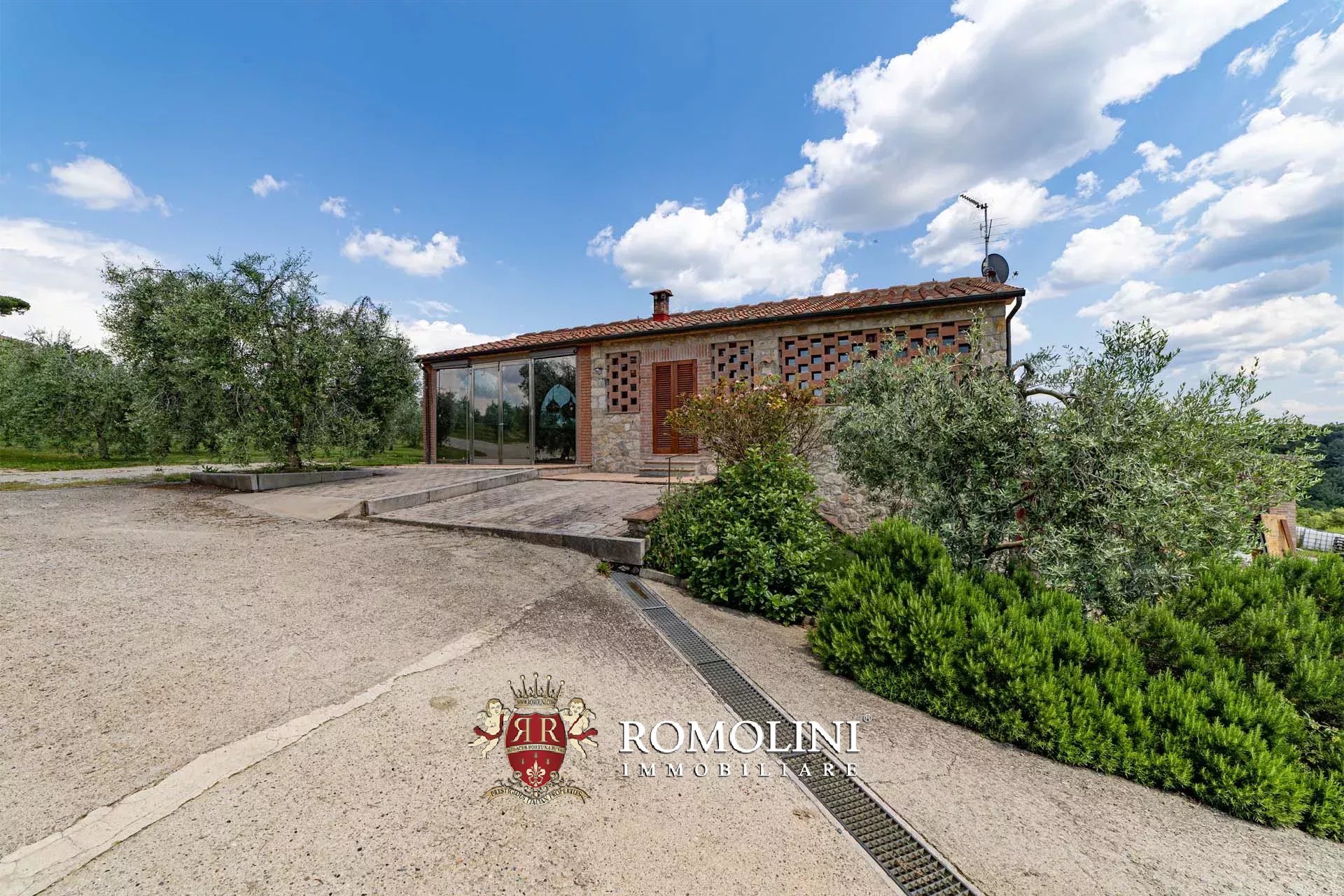
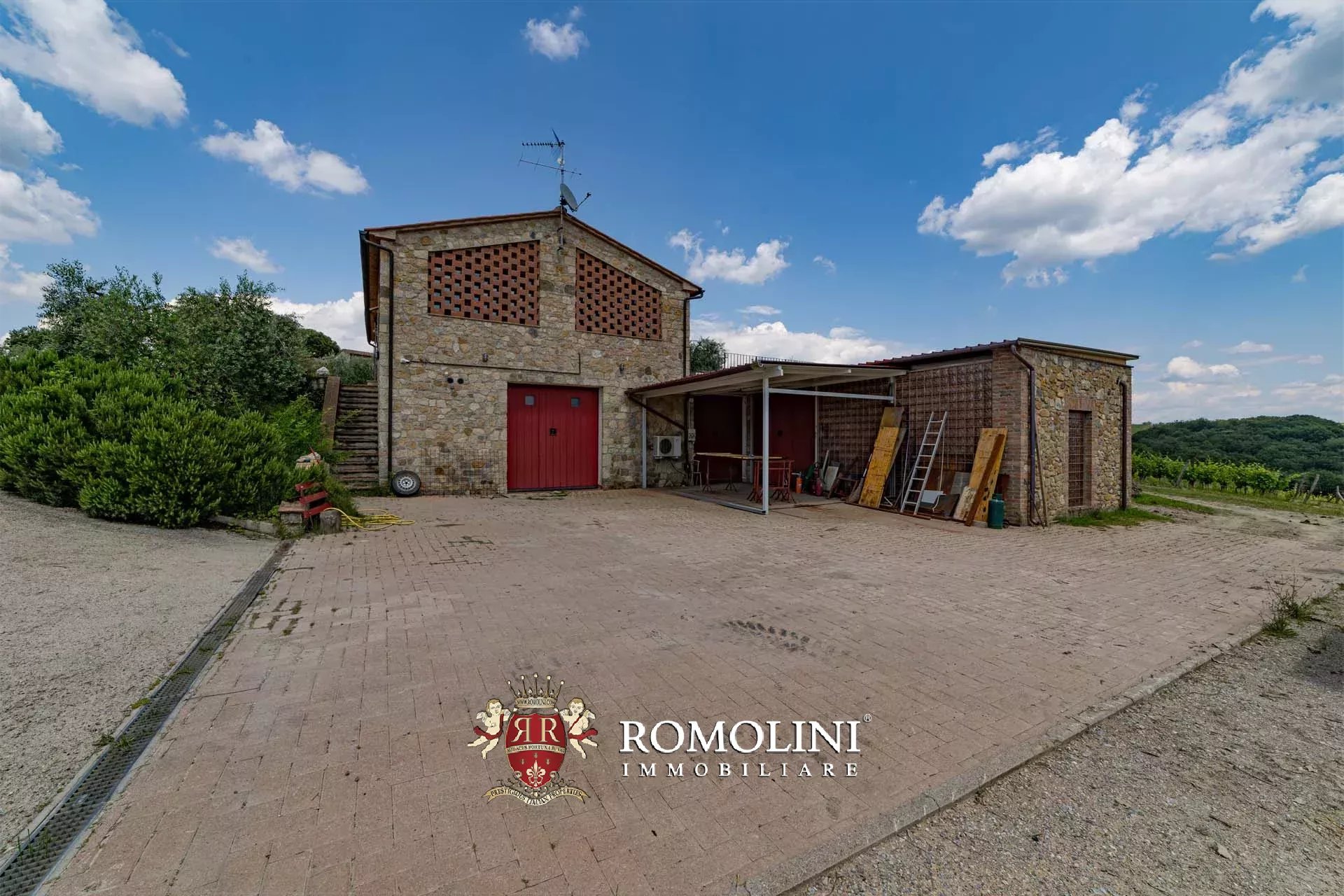
Not far from the villa, towards the valley, there is then the former wine cellar (125 m² – 1,345 ft²) now partially converted into a dwelling. The apartment is located on the upper floor and consists of living area with kitchen and two bedrooms with private bathrooms. On the ground floor there is a garage for vehicles and a workshop for business repairs. An enclosed shed (140 m² – 1,506 ft²) is used as a shelter for tools and tractors, but these volumes could be used to expand the residential area.
Permits have also been obtained to build a huge agricultural shed near the wine cellar. This would allow to move storages, workshops and tool rooms closer to the cellar itself, while at the same time freeing up space to create more bedrooms and/or independent apartments in the area around the villa. This would also “clean up” the presence of agricultural vehicles near the residence, ensuring better privacy and less noises during the working season.
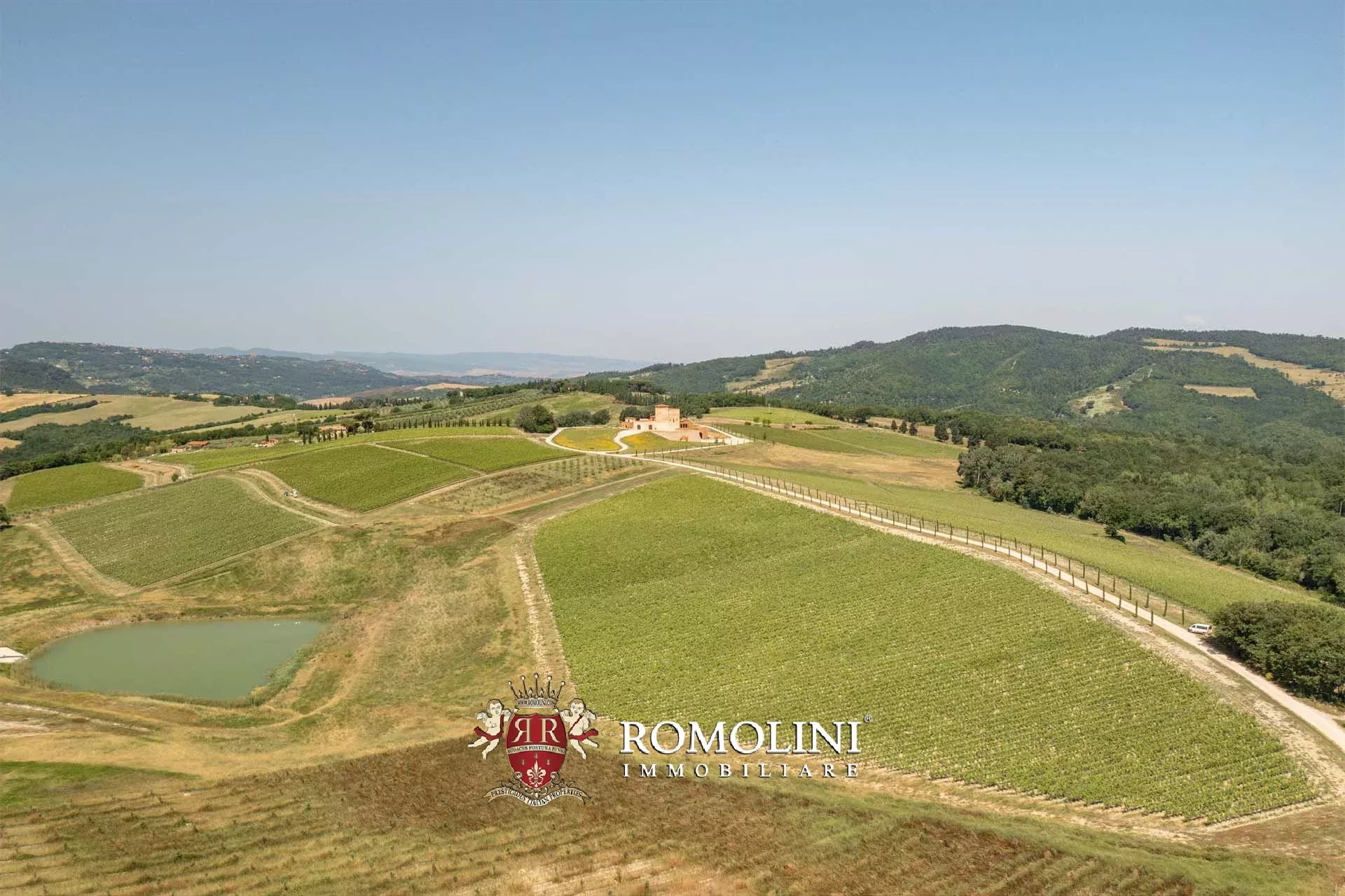
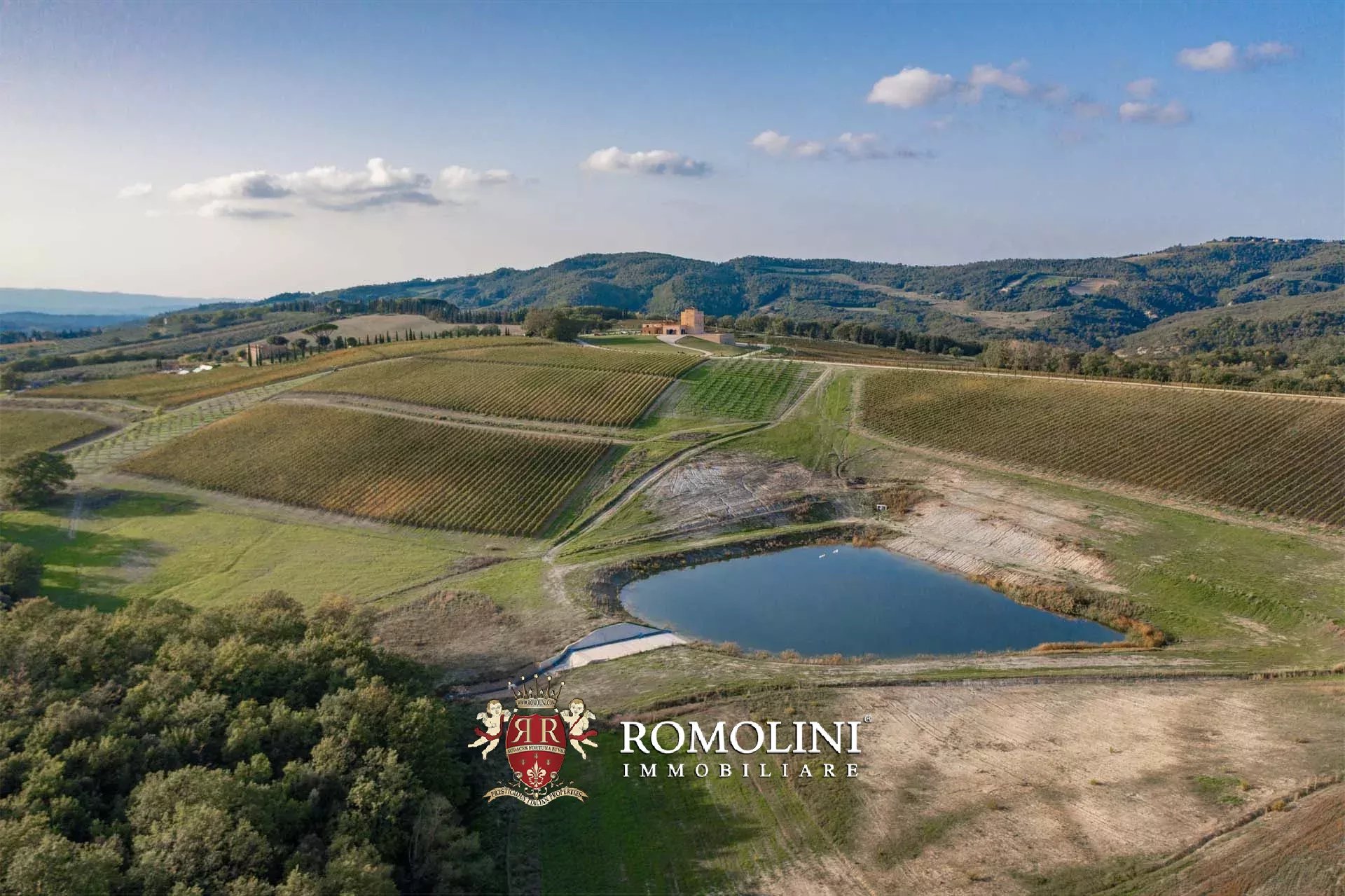
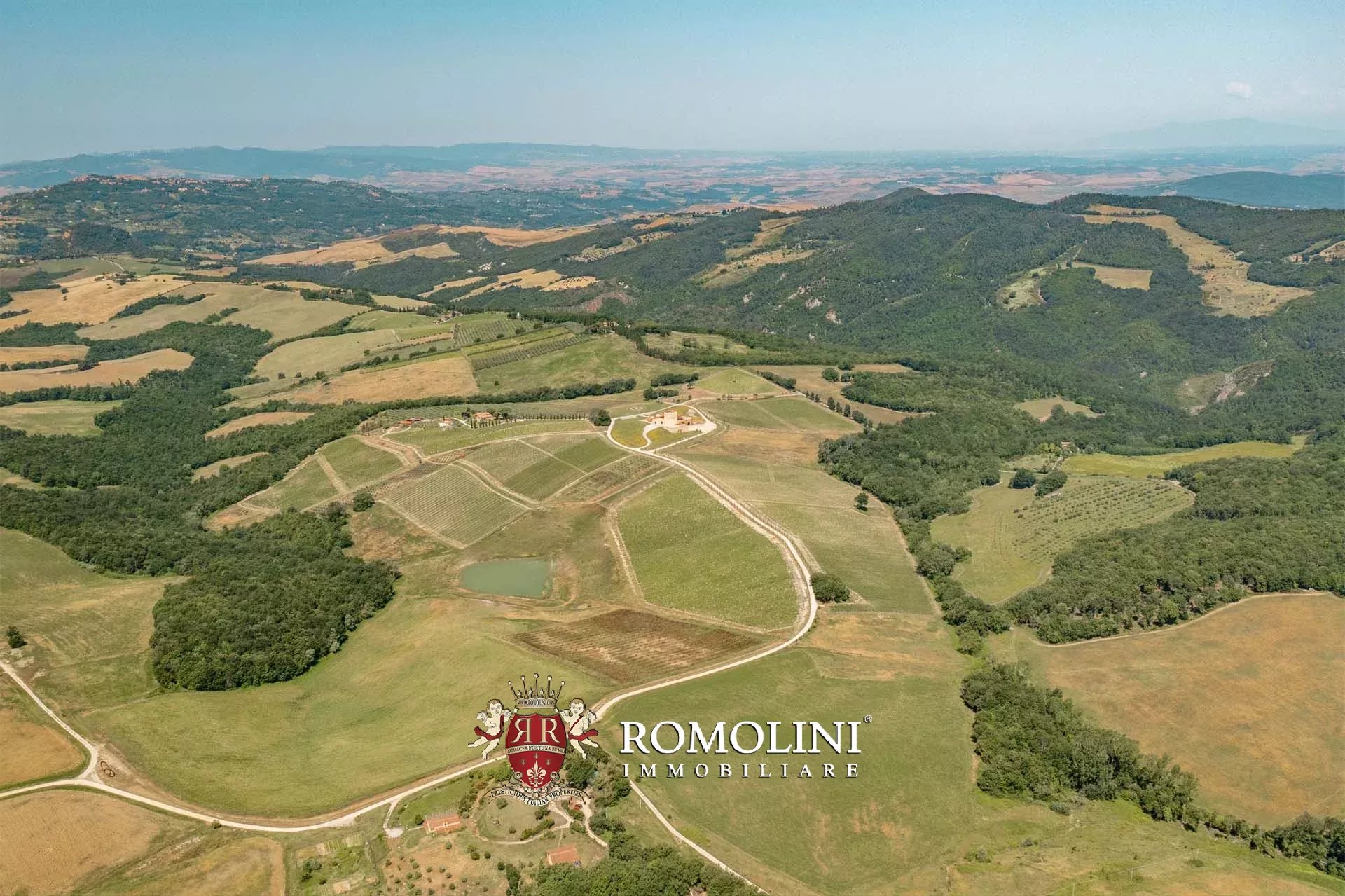
The estate spreads over an area of about 124.4 hectares (307.4 acres), fenced and protected by a video-surveillance system. The estate focuses mainly on vineyards (23.5 ha), an olive grove (6.0 ha) and large portions of arable land that could be for the most part (about 50 ha) used for planting new vines. The remaining area is occupied by woods (28.0 ha) that include a ground for white truffles (Tuber magnatum). A very important detail, the estate's vineyards are entirely fenced and protected from wild animals.
A 27,000-cu.m private lake located on the grounds allows the gardens and fields to be irrigated without having to rely on private wells or the municipal water supply.
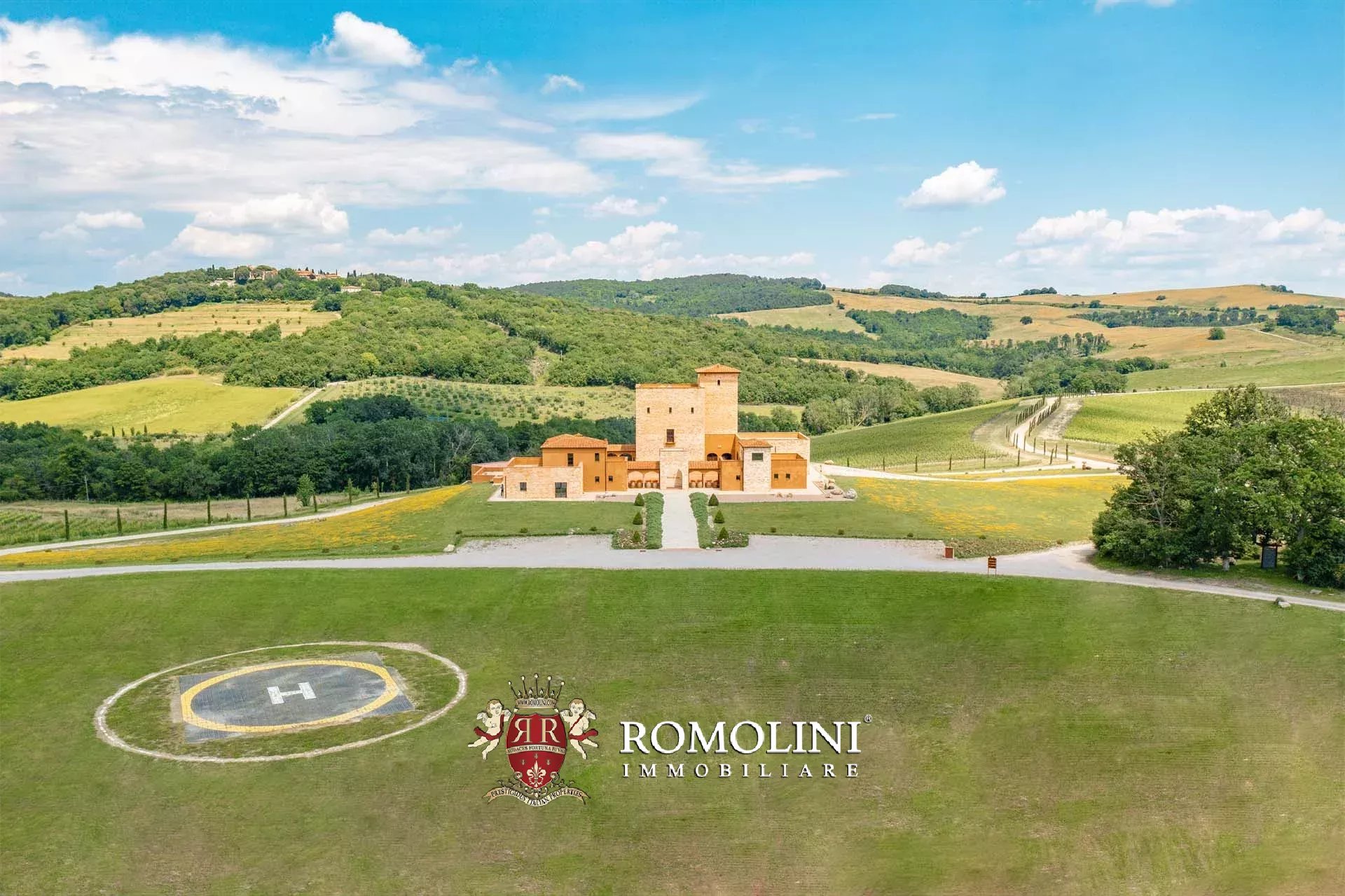
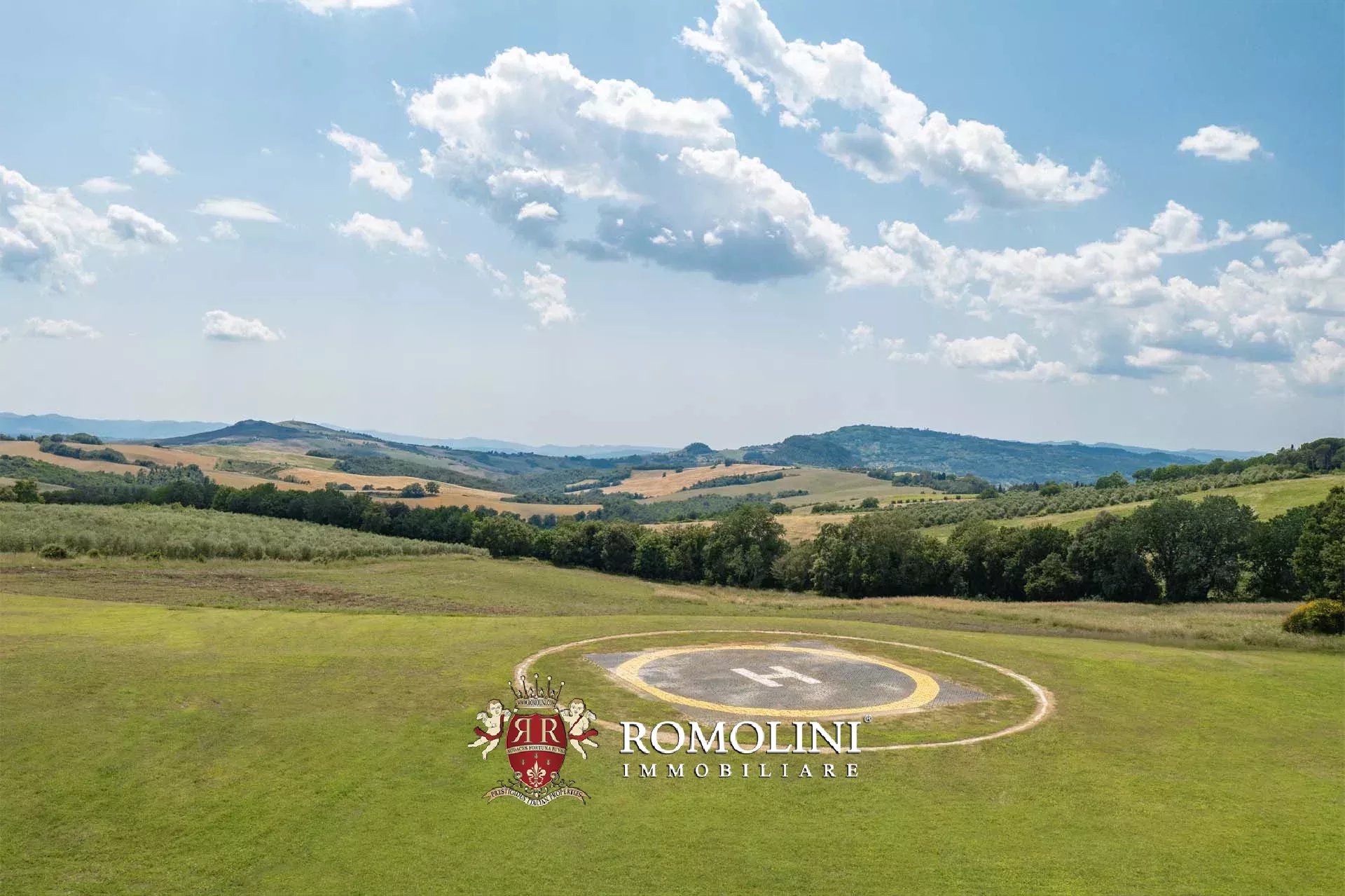
In front of the winery, just across the road, an ENAC-authorized helipad has also been built, allowing guests to reach the property conveniently from the air.
The farm is situated on a hillside at an altitude of approximately 430 m asl, with the coast of Tuscany visible in the distance. The vines are continuously refreshed by the sea breeze, which maintains their strength and vitality, enabling the production of high-quality wines. Moreover, the location of the winery is of interest, situated midway between the Bolgheri and Chianti areas. This ensures an average summer temperature of approximately 5°C lower than that of Chianti. Prior to planting the vines, careful zoning was conducted, including chemical and physical analysis of the soils. This enabled the planting of each variety in the optimal spot, allowing the grapes to express their characteristics to the fullest. The estate's soil is clayish and rich in skeleton and marine fossils, with intrusions of alabaster. This white limestone material is also used by local sculptors to create beautiful sculptures.
As for the olive grove (roughly 6.0 ha for a total 3,500 trees) it is important to remember that the estate is the only one that planted an almost forgotten cultivar of olive, named Lazzaro di Volterra. The 670 trees of this variety have been planted following a series of study on the subject and the oil they produce have a unique flavor.
Castel San Gimignano (8km; 10’), Volterra (12km; 15’), Casole d’Elsa (15km; 20’), Colle di Val d’Elsa (19km; 25’), San Gimignano (22km; 35’), Monteriggioni (30km; 40’), Siena (46km; 50’), Gaiole in Chianti (68km; 1h 15’), Firenze (71km; 1h 20’), Pisa (75km; 1h 15’), Lucca (83km; 1h 40’), Montalcino (84km; 1h 30’), Pienza (97km; 1h 40’), Grosseto (104km; 1h 30’), Montepulciano (106km; 1h 35’), Cortona (116km; 1h 35’),
Pisa G. Galilei (72km; 1h 10’), Firenze A. Vespucci (81km; 1h 10’), Grosseto C. Baccarini (104km; 1h 35’), Bologna G. Marconi (162km; 2h), Roma Ciampino (288km; 3h 10’), Roma Fiumicino (302km; 3h 15’)








Contact us to receive more information and/or schedule a visit
Ref. 2553 Volterra Winery
Price upon request

Danilo Romolini
Sales Manager
6 years with Romolini
Leave us your request and you will be contacted within the next 24 hours.


Copyright © Romolini

 Contact us
 Contact


