




 Our Family


 Italiano
 Deutsch



 Back to list

Dwellings with private library: the charm of cultural spaces at home

Published 20-10-2026
A dwelling with a private library tells of a refined, silent, and deeply personal form of luxury. It is a space that is not designed to impress with ostentation but to add depth to the house: walls lined with books, fireplaces, paneling, decorated ceilings, large halls, natural light, and that suspended atmosphere typical of noble residences.
In historic properties for sale, the private library is not just a simple utility room. It is often one of the most identifying spaces of the property, the place where the house shows its most intimate and cultural side. Alongside frescoed salons, loggias, formal dining rooms, and historic gardens, the library becomes a sign of continuity: it tells of taste, memory, study, and belonging.
The library as a noble space of the residence
In large historic villas, the private library belongs to the most refined reception rooms. It does not have the immediate solemnity of a ballroom but possesses a more subtle strength: it creates atmosphere, suggests a cultivated domestic life, and makes the property more personal.
A perfect example is the Renaissance villa with frescoes for sale in Lucca, where on the ground floor, next to the reception hall and the frescoed loggia with arches, there is a large library. The property retains wall paintings, original marble and terracotta floors, vaulted ceilings, and environments of great historic value, making the library part of a broader aristocratic narrative.
In a villa of this level, the library is not just a room dedicated to reading. It is a prestigious room, a space capable of completing the cultural identity of the residence and dialoguing with frescoes, loggias, and formal rooms.
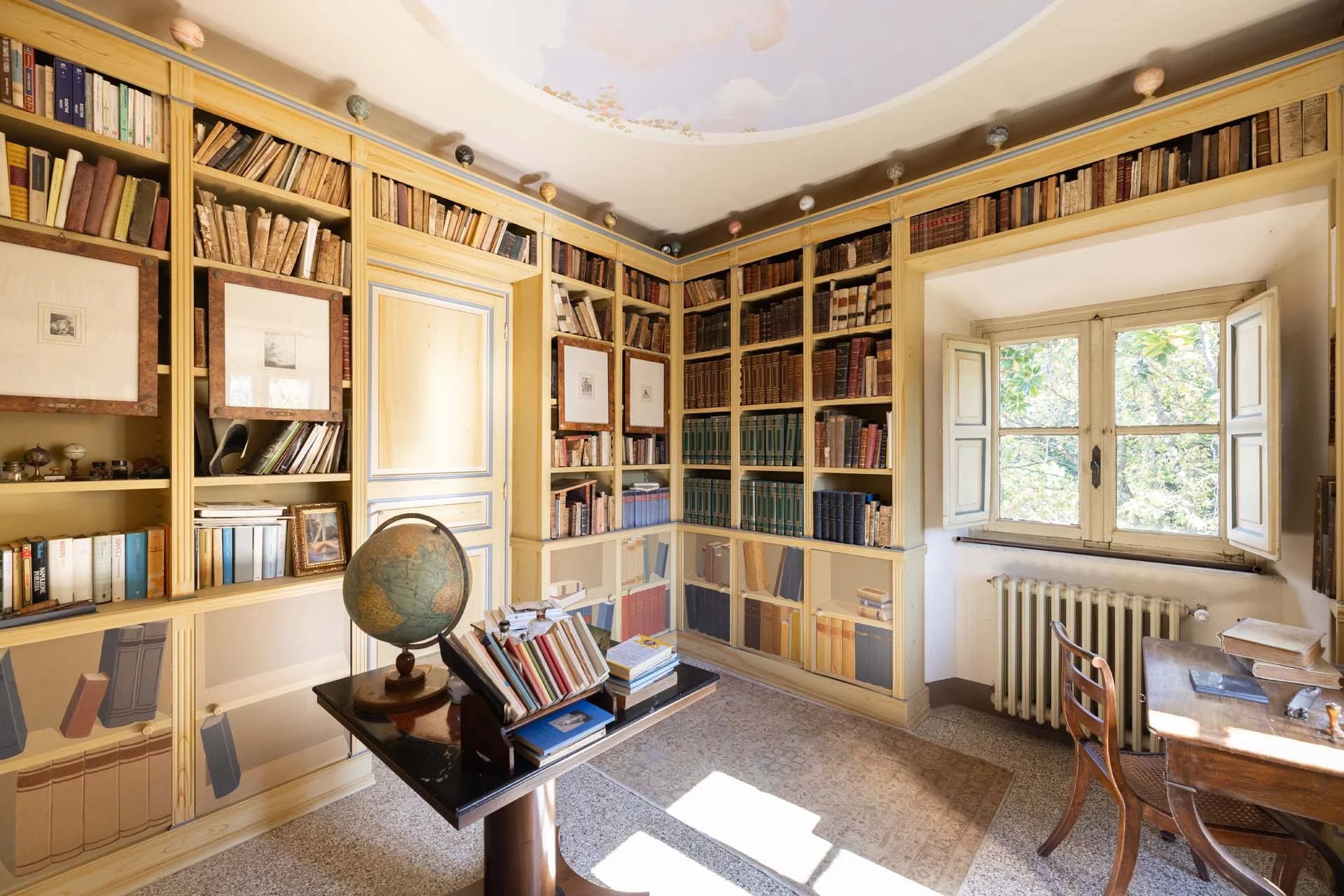
Frescoed libraries and collector’s environments
The charm of a private library is further increased when the space is enriched with historical decorations. Frescoes, painted ceilings, decorated walls, and period details transform the reading room into a rare environment, almost part of a collection.
The historic villa with a park for sale in Camaiore, Versilia, offers a particularly elegant example: the environments develop around a central hall and also include a fully frescoed library. The property also preserves an important cycle of 18th-century frescoes, linking the theme of reading to that of art and historical memory.
In cases like this, the private library becomes a scenographic room, not just a study. The book coexists with painting, decoration, and architecture, creating a space that adds cultural value to the property.
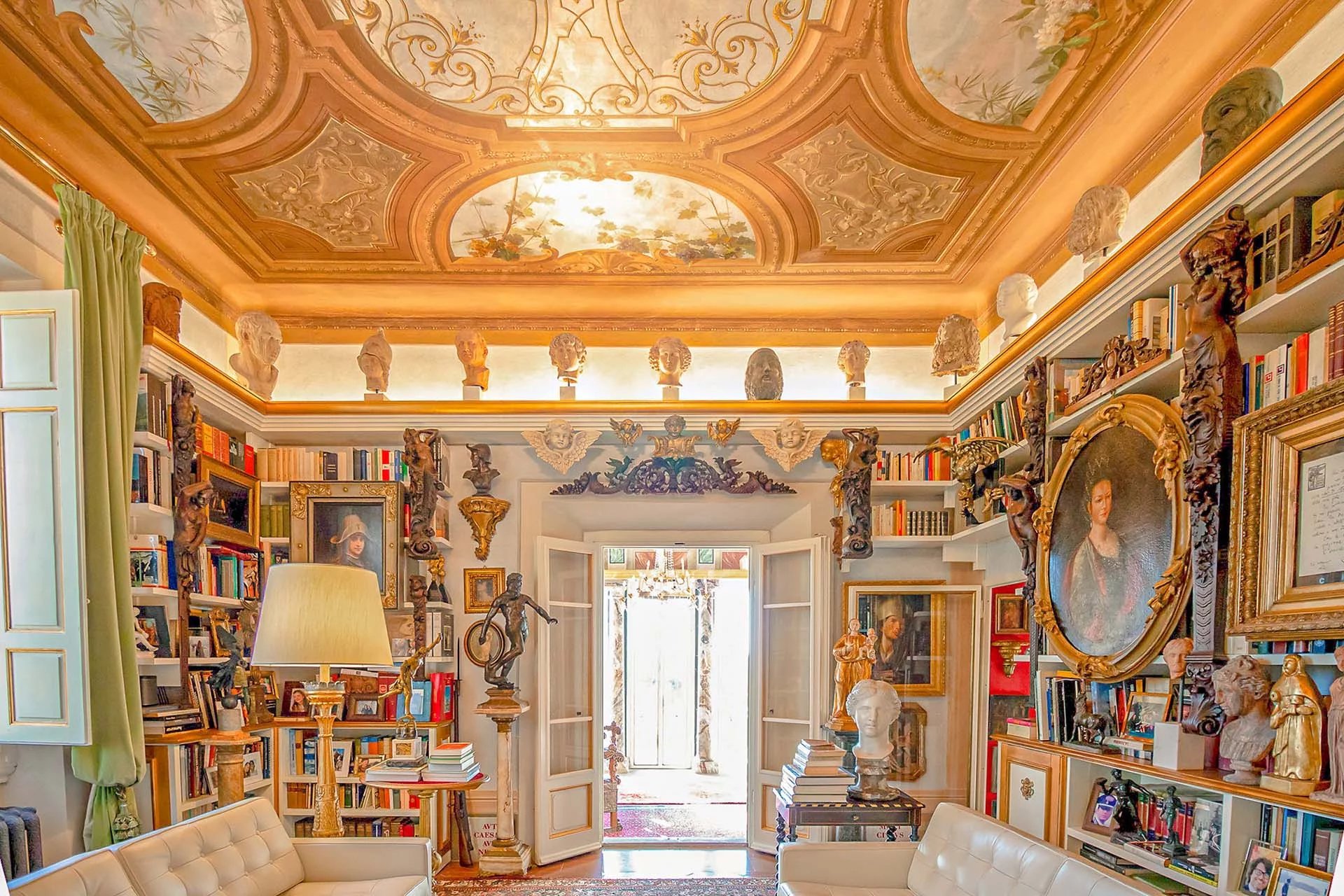
Villa Colonne: the library inside a representative house
In the most scenographic luxury villas, the library also gains value through the context in which it is inserted. The room itself is not the only important element but the path leading to it: monumental entrances, galleries, frescoed halls, dining rooms, terraces, and gardens.
Villa Colonne, a renovated luxury villa in the province of Pisa, is an example of a residence where the spaces of representation play a central role. The Romolini sheet highlights a large frescoed and decorated reception hall, along with interiors of great value and a layout designed to host and live in the house with nobility.
In a property of this kind, the library fits into a wider system of noble environments. It is not an isolated element but part of a residence built around the idea of representation, domestic culture, and contemporary comfort.
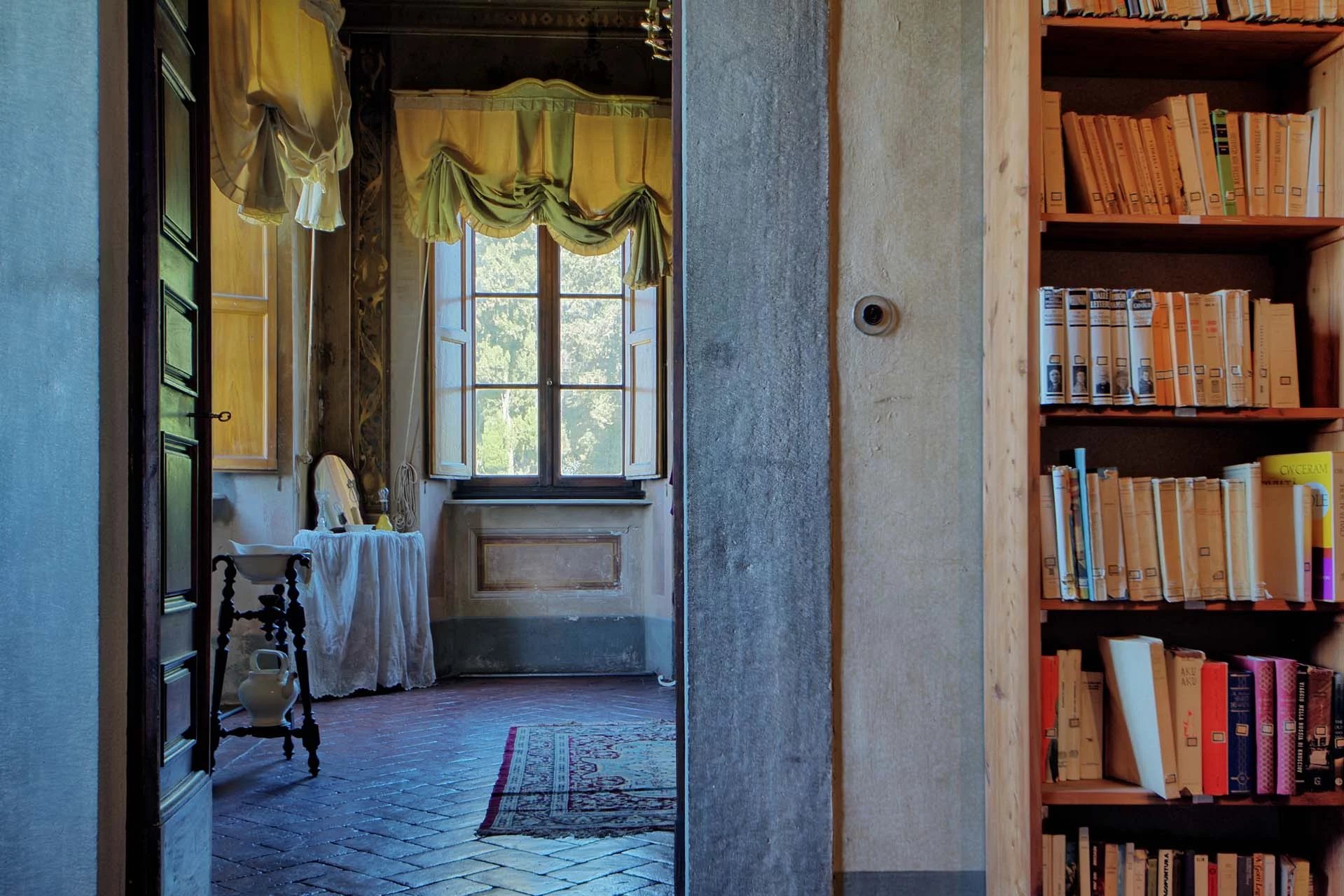
Library, music, and noble life
In manor villas, the library is often accompanied by other cultural environments: music rooms, salons, private studies, formal dining rooms, and reception spaces. This ensemble constructs a more complete idea of noble life, where the house is not just a place to stay but also a place for conversation, reading, art, and memory.
Villa Valdinievole, a manor villa with panoramic position between Montecatini Terme and Lucca, perfectly exemplifies this atmosphere. The property is presented as a noble villa with a vineyard and a private lake, set in a charming Tuscan context.
In dwellings of this kind, the library helps define the tone of the house. It is not only a functional space but an environment that participates in building an elegant lifestyle linked to culture, hospitality, and private representation.
Why a private library increases the charm of the property
In luxury real estate, some environments have the ability to make a property immediately memorable. A private chapel, a ballroom, a frescoed loggia, a historic cellar, or a majestic library tell much more than just a feature. They are spaces that give identity.
The private library belongs precisely to this category. It adds a cultivated dimension to the residence and suggests a slower, more aware, more personal way of living. In a historic villa or a noble palace, its presence enhances the perception of prestige because it communicates cultural continuity and quality of life.
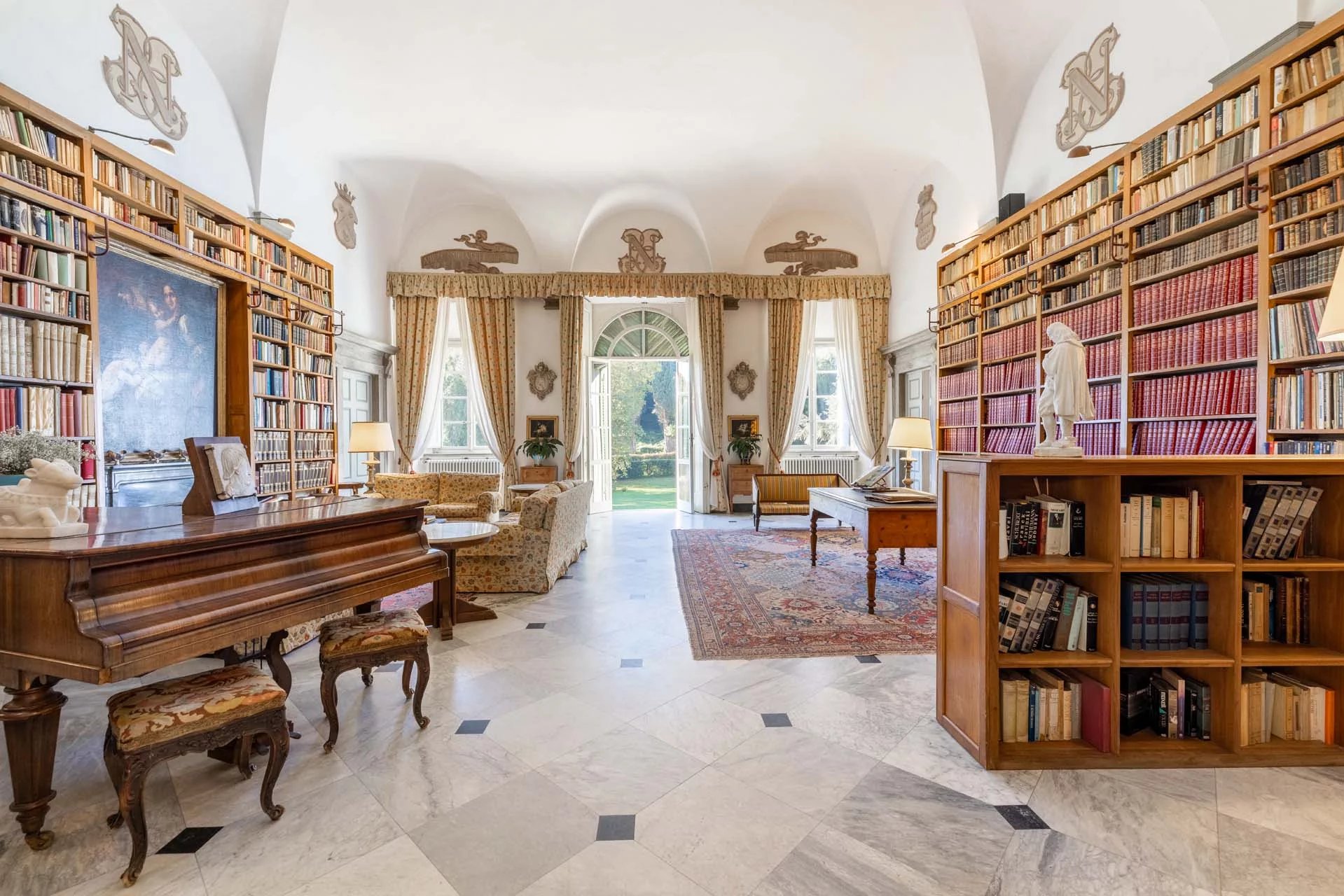
The luxury of silence
The charm of a private library also stems from silence. In a fast, noisy, and digital world, having a dedicated space for reading, studying, and concentration means reserving a part of the house for quality time.
A large private library is not just a room full of books. It is an environment that gives soul to the property. It can be frescoed, paneled in wood, housed within an urban palace, or inserted into a Renaissance villa; in any case, it tells of a cultivated, intimate, and timeless form of luxury.
For this reason, in noble residences, the library remains one of the most fascinating spaces: discreet yet prestigious, private yet representative, capable of transforming a prestigious house into a residence with a true cultural identity.


Copyright © Romolini

