




 Our Family


 Italiano
 Deutsch


 Back to list

Abbazia Chiantigiana: inhabiting silence, interpreting time

Published 04-02-2026
The Abbazia Chiantigiana rises in the Chianti hills, between Figline Valdarno and Greve, like a silent and monumental presence that spans the centuries. Founded in medieval times and immersed in a still intact landscape, this ancient abbey today represents one of the most fascinating architectural testimonies of historic Tuscany.
The complex, articulated and imposing, preserves intact the symbolic power of great monastic architecture: stone walls, cloisters, spaces of recollection and large rooms that tell a long history of spirituality, hospitality and community life. A place that is not just to be observed, but invites to be inhabited and reinterpreted.
Today the Abbazia Chiantigiana presents itself as a property of extraordinary potential, capable of transforming itself into a timeless luxury residence or an exclusive boutique hotel, while always maintaining a profound dialogue with the territory and its historical identity.
An architecture that recounts centuries of monastic life
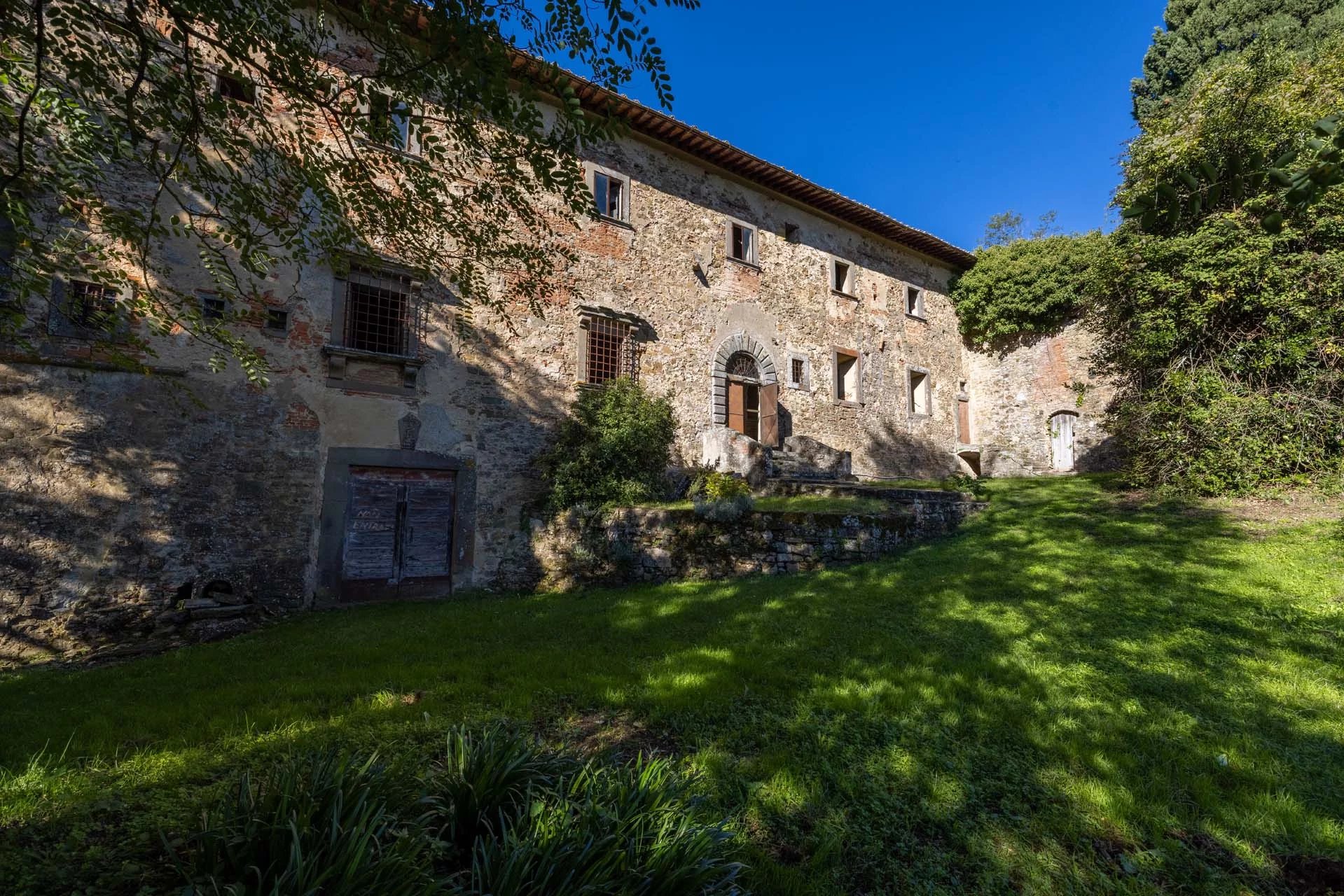
The complex is spread over three levels with a total area of about 5,000 square meters. The ancient stone walls, numerous entrances and the presence of two large cloisters immediately give back the perception of a place designed to welcome, protect and last over time.
One of the cloisters still preserves the original well, the symbolic centerpiece of monastic life, while a large covered terrace, supported by columns, overlooks both the inner cloister and the surrounding valley. It is a highly evocative space that seems designed for contemplation and could now become the heart of a private residence or a top-level receptive project.
Inside the church, the atmosphere is solemn and authentic. The stone floors, imposing vaults and exposed beams tell of an architectural spirituality that is still perfectly legible. Part of the ancient altar is visible in front of the apse, a tangible sign of a function that for centuries marked the daily rhythm of this place.
Living quarters among frescoes, fireplaces and monumental volumes
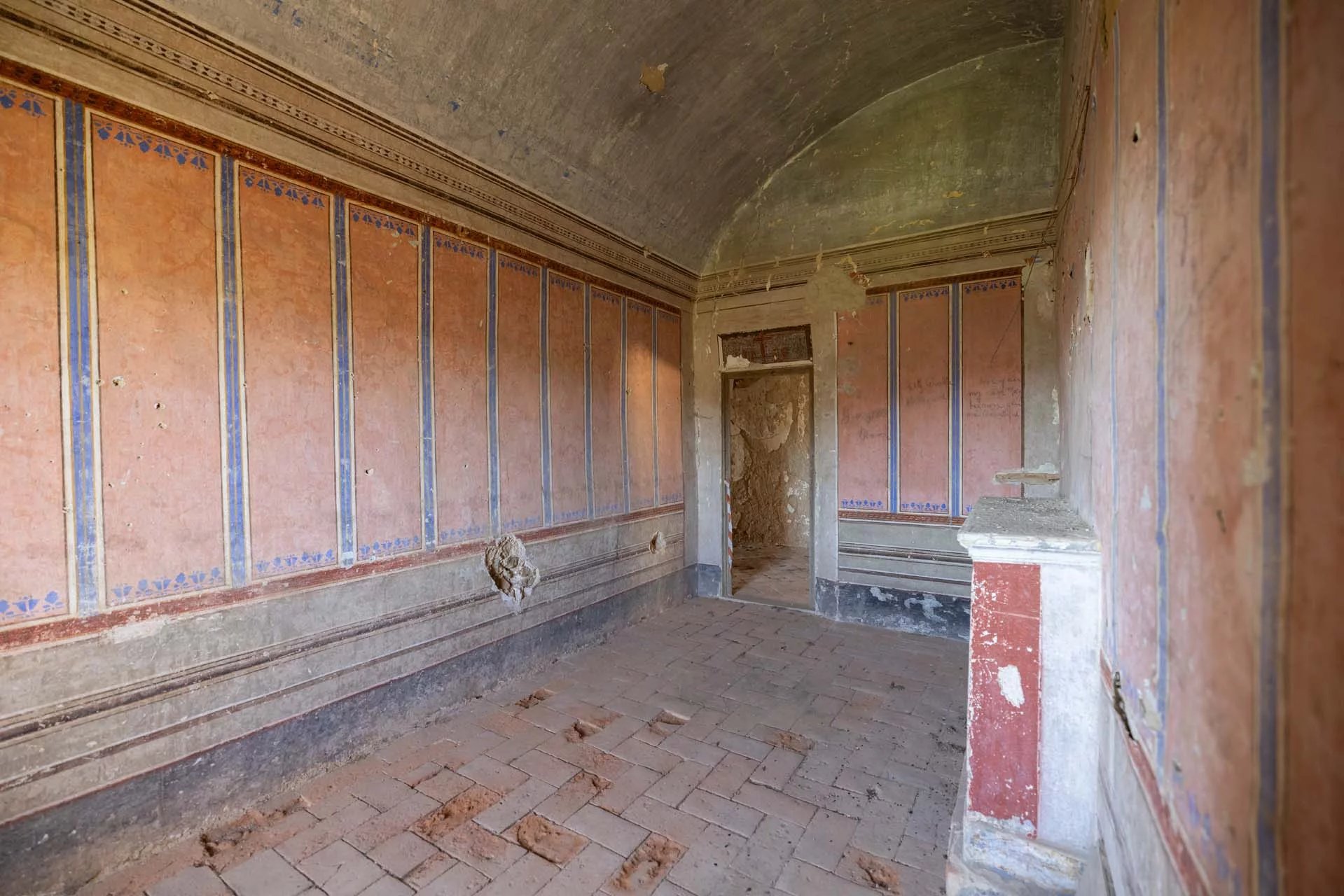
The residential wing of the abbey preserves rooms of extraordinary architectural quality. Two large living rooms, different in character but equally evocative, are embellished with historic fireplaces and ceilings alternating exposed beams and vaults. Next door is a study, designed as a space for reflection and work, in perfect harmony with the spirit of the complex.
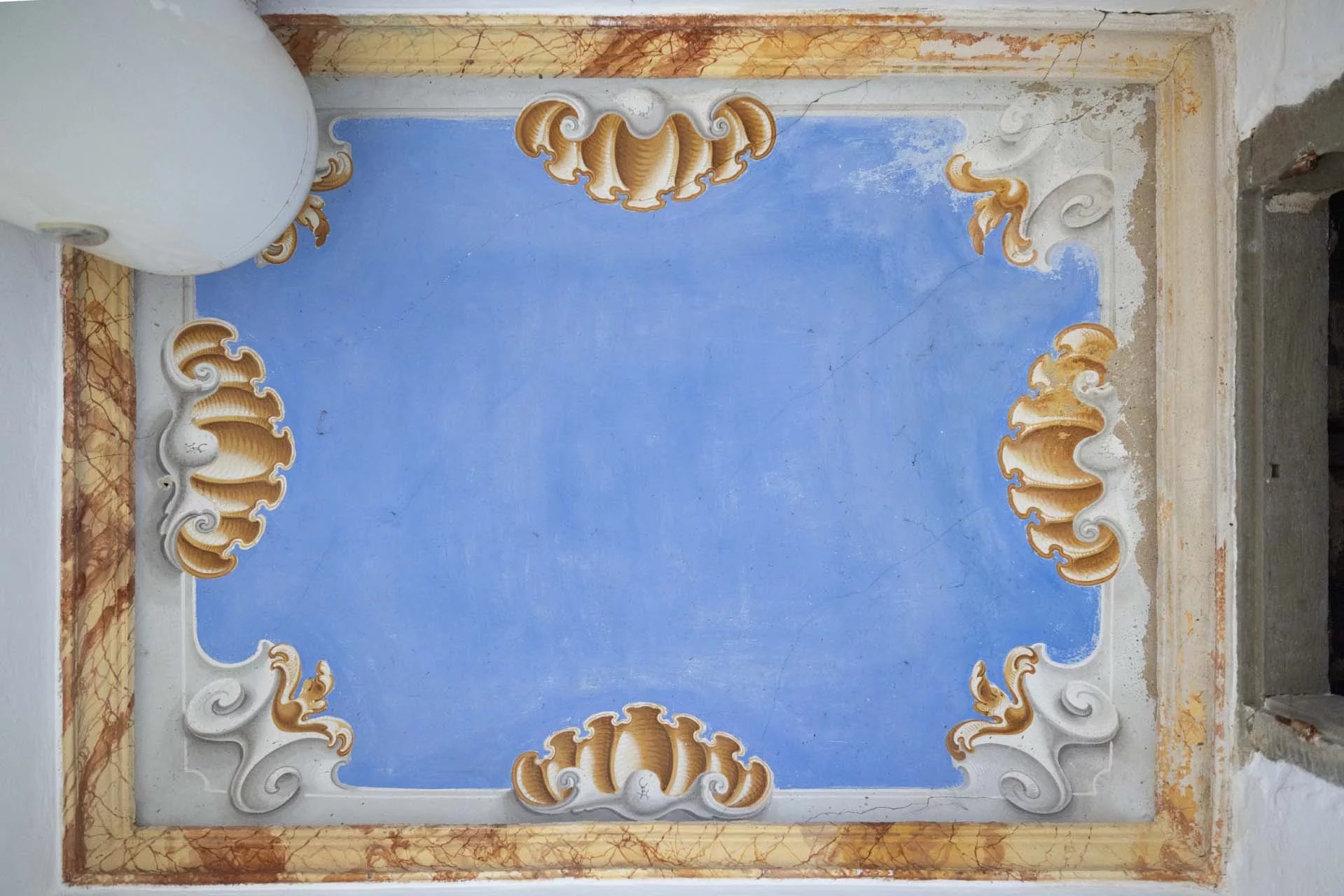
One of the rooms still retains original decorations, visible on the walls and ceilings, while the large kitchen stands out for its size and potential. This room could become a charming eat-in kitchen or be transformed into a professional kitchen for a high-profile hospitality project, always maintaining a dialogue with the historic architecture.
Among the most evocative spaces in the entire complex, the wine cellar stands out: a monumental room, marked by columns, stone vaults and large slab floors. A place that retains an almost sacred atmosphere, ideal to be enhanced as a tasting space, an event area or the symbolic heart of a future accommodation facility.
Historic wings and spaces to be reinterpreted
The abbey has additional wings that testify to the functional stratification of the complex over the centuries. The ancient stables, with vaulted ceilings, tell the story of the direct relationship between monastic life and agricultural management, while another wing houses more recent but equally fascinating rooms: a large study or living room with a fireplace, a kitchen with an ancient fireplace, a large room, and a library enriched by vaults and frescoes.
Each room suggests a possible contemporary reinterpretation, without ever losing the link with its original function. It is precisely this flexibility, combined with the monumentality of the spaces, that makes the abbey a unique project in the panorama of fine real estate.
Farmhouses, land and an estate to imagine
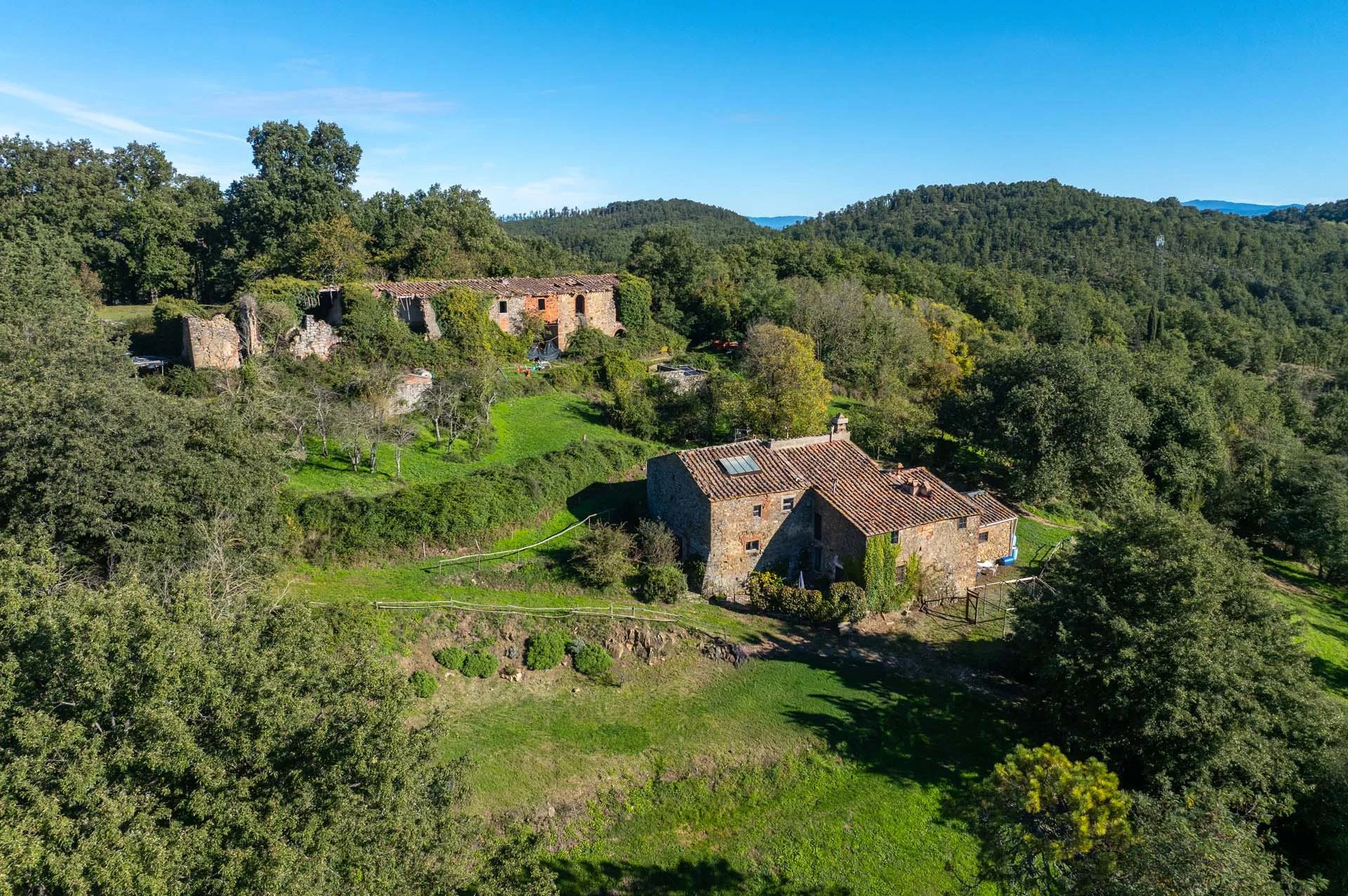
Near the abbey are two large farmhouses, totaling about 1,600 square meters, completely in need of renovation but with enormous potential. These structures could expand their housing or accommodation offerings, becoming independent suites, guest residences or spaces dedicated to complementary functions.
The entire complex is surrounded by about 14,000 square meters of immediately usable land, ideal for the creation of a large garden, an event area and a panoramic swimming pool. Added to this is a vast expanse of property, amounting to about 100 hectares, consisting mainly of woods interrupted by natural clearings: a landscape heritage that guarantees absolute privacy and deep contact with nature.
A history rooted in the Middle Ages
Founded before 1040 as a hospice for pilgrims along the Via Cassia Adrianea, the abbey was born in a strategic place known as Monte Scalajo. Thanks to donations from the lords of the nearby Castle of Cintoia, the complex developed rapidly, becoming a true Vallombrosian abbey.
In 1212 the church was consecrated by Bishop Ranieri of Fiesole, and in the following centuries the complex was expanded with new monastic rooms and cellars. The decline in the number of monks led to the suppression of the abbey in 1776, followed by its transformation into a parish in 1785. During World War II the bell tower was destroyed, leaving only the foundations visible today.
Above the main entrance there is still a terracotta coat of arms attributed to the Della Robbia school, datable to 1505 – a detail of great artistic value that testifies to the historical importance of the complex.
Abbazia Chiantigiana is a property that goes beyond the traditional concept of real estate. It is a place that requires vision, sensitivity and respect, but offers extraordinary potential in return. Whether interpreted as a private residence of exceptional prestige or as a boutique hotel intended for an international clientele in search of authentic experiences, this abbey represents a project capable of combining architecture, history and landscape in a rare balance.
To inhabit silence here means to choose a different time. To interpret it, means transforming a great historical legacy into a contemporary value, destined to last.


Copyright © Romolini

