




 Our Family


 Italiano
 Deutsch


 Back to list

Why invest in historic real estate in Italy: risks and opportunities

Published 25-02-2026
Investing in historic real estate in Italy means dealing with a unique heritage in the world, but also with a set of variables that require expertise, vision and planning skills. It is not a standardized or immediate investment: it is a choice that combines cultural value, architectural quality and a long-term perspective.
Historic properties do not follow the logic of the masses. Precisely for this reason, they present significant opportunities, but also risks that must be understood before any decision is made.

Unrepeatable heritage as the basis for investment
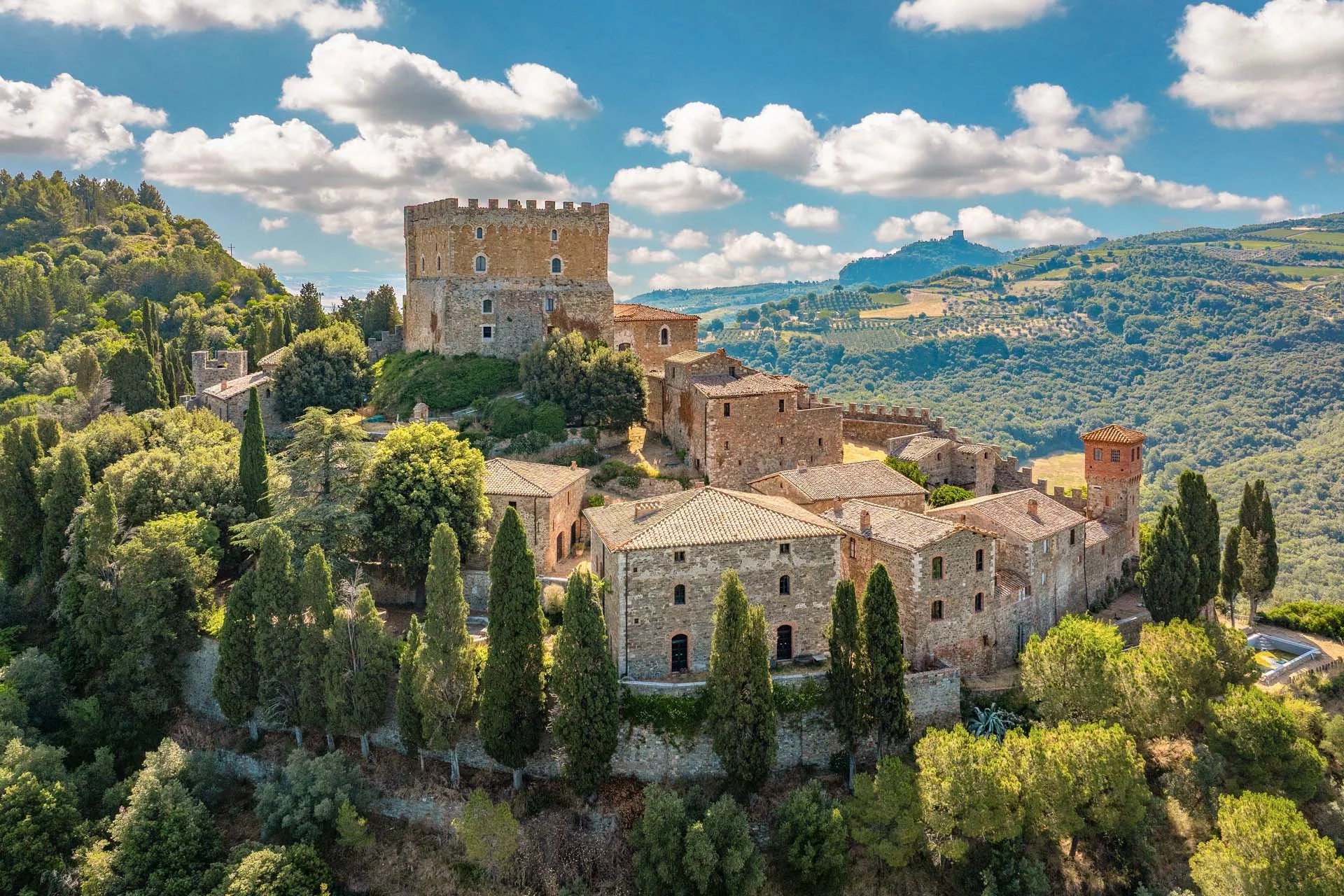
The first great opportunity offered by Italy’s historic properties is their unrepeatability. Castles, abbeys, period palaces and historic villas cannot be artificially recreated. Their existence is tied to a specific place, function and history.
This uniqueness generates a structural scarcity that, over time, tends to sustain the value of the property. Unlike many contemporary buildings, a historic building does not easily compete with new offerings because it cannot be replicated or standardized.
Enhancement opportunities through design
One of the most interesting aspects of a historic property is its potential for transformation. Many properties require restoration work, but it is at this stage that value is created.
A well-designed restoration project can restore functionality to monumental spaces, making them suitable for residential, hospitality or mixed use. Boutique hotels, private representative residences, event facilities or multifunctional properties are just some of the possibilities.
The key lies in the quality of the intervention: respect for the original identity, discreet integration of technologies, and a vision consistent with the context.

Risks to be carefully evaluated
Alongside the opportunities, there are concrete risks that cannot be ignored. The first concerns regulatory complexity. Historic properties are often subject to constraints that limit the possibilities for intervention and require specific authorizations.
Another risk is related to the underestimation of restoration and maintenance costs. Old structures may hide structural or plant engineering criticalities that emerge only at an advanced stage of the project. Without an accurate technical assessment, the initial budget may be insufficient.
Finally, the liquidity of the investment must be considered: a historic property is not an asset to be resold quickly. Its strength lies in the stability of value, not in the speed of disposal.
Value stability and time horizon
Historic properties respond to a different investment rationale than speculative real estate. Their value tends to be more stable over time, precisely because it is linked to structural factors such as uniqueness, context, and cultural relevance.
This stability makes them particularly attractive to those who adopt a medium to long time horizon. They are not assets designed for rapid revaluations, but for gradual growth and capital protection.

The role of context and location
Not all historic properties offer the same opportunities. Location remains a decisive factor. Properties set in settings of scenic, cultural or tourist quality have greater potential for enhancement and flexible use.
Accessibility, presence of amenities and relationship to the area also directly affect the sustainability of the investment. A large, isolated historic building with no connections presents very different critical issues than a property that is well embedded in the local fabric.
Investing in history requires expertise
One of the most underestimated elements is the need for specialized advice. Historic properties require specific technical, regulatory and design expertise. Taking on such an investment without the proper support exposes one to avoidable risks.
When properly managed, investing in a historic property becomes a structured operation capable of combining economic value, quality of life and cultural responsibility.
Investing in historic real estate in Italy means choosing a different path: more complex, but also richer in meaning and potential. Risks exist and must be faced with awareness, but the opportunities offered by a unique, non-replicable and deeply identifiable heritage are difficult to match.
For those willing to look beyond the short term, historic properties represent a solid, selective form of investment capable of combining value, beauty and durability.


Copyright © Romolini

