




 Our Family


 Italiano
 Deutsch


 Back to list

Investing in real estate with land: what to evaluate beyond square footage

Published 12-03-2026
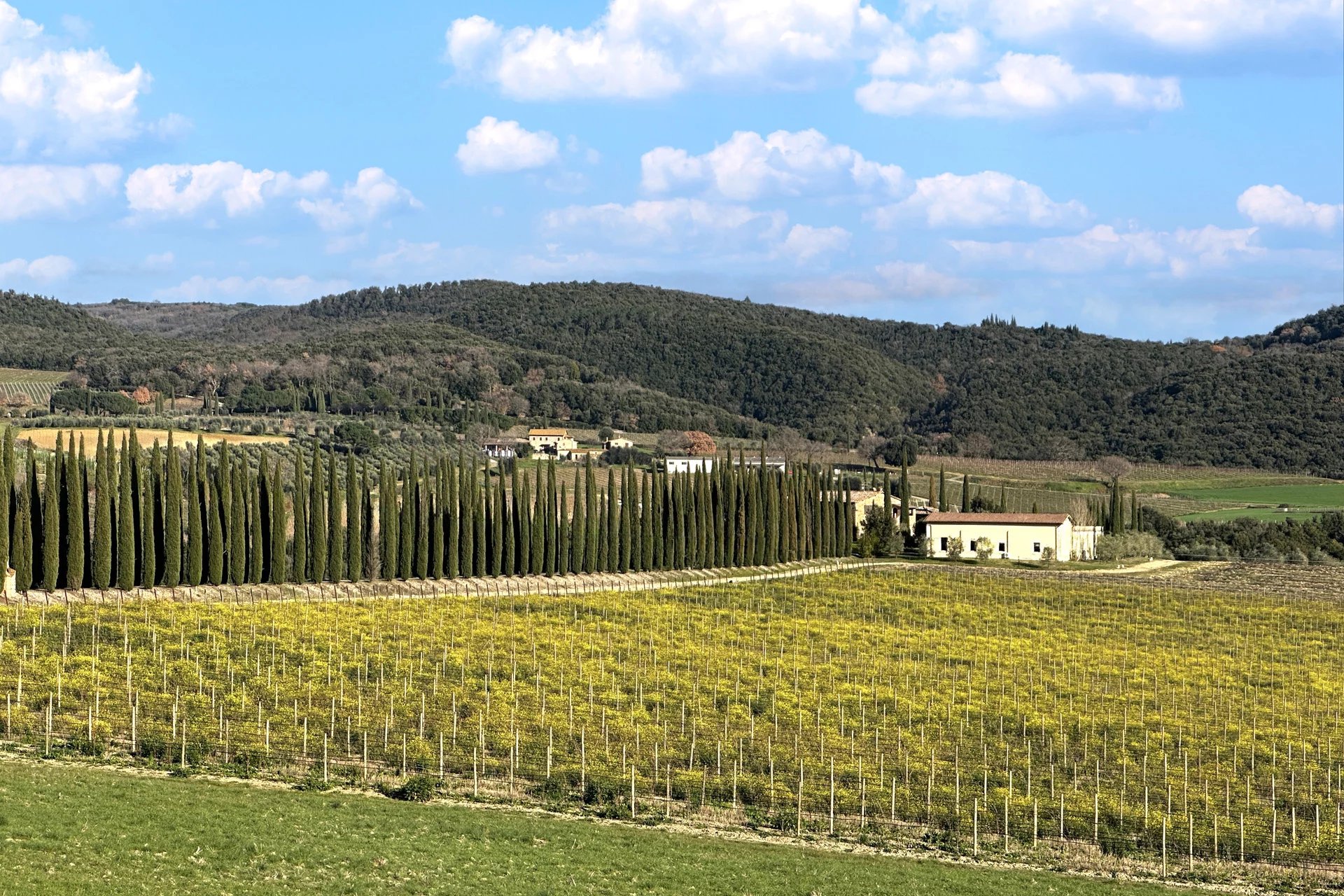
Land quality and intended use
Not all land has the same value. The first basic distinction concerns land use: agricultural, building, forest, or mixed land. Each category involves different rules, different development possibilities, and specific economic prospects.
In the case of agricultural land, it is important to assess:
- soil composition
- exposure and altitude
- presence of existing crops (vineyard, olive grove, arable land)
- any landscape or environmental constraints
An already planted vineyard or a mature olive grove can represent significant added value, both in terms of production and aesthetic appeal. In contrast, wooded land provides privacy and landscape protection, but has a different impact on profitability.
Access and infrastructure
One aspect that is often underestimated concerns accessibility. Private roads that are too long or difficult to navigate can affect the daily usability of the property and maintenance costs.
Similarly, the presence of infrastructure such as artesian wells, irrigation systems, artificial lakes, or photovoltaic systems substantially affects future management. A property with an independent water supply, for example, offers greater independence and control over costs.
Maintenance and management over time
Extensive land carries definite responsibilities. Forests, meadows, and crops require regular maintenance, qualified staff, or the support of local farms.
Before investing, it is wise to estimate:
- annual maintenance costs
- possible need for permanent staff
- expenses associated with pruning, harvesting, irrigation, and security
In some cases, farmland can generate income that partially offsets these costs. In others, management represents an investment primarily geared toward quality of life and landscape protection.
Privacy and landscape value
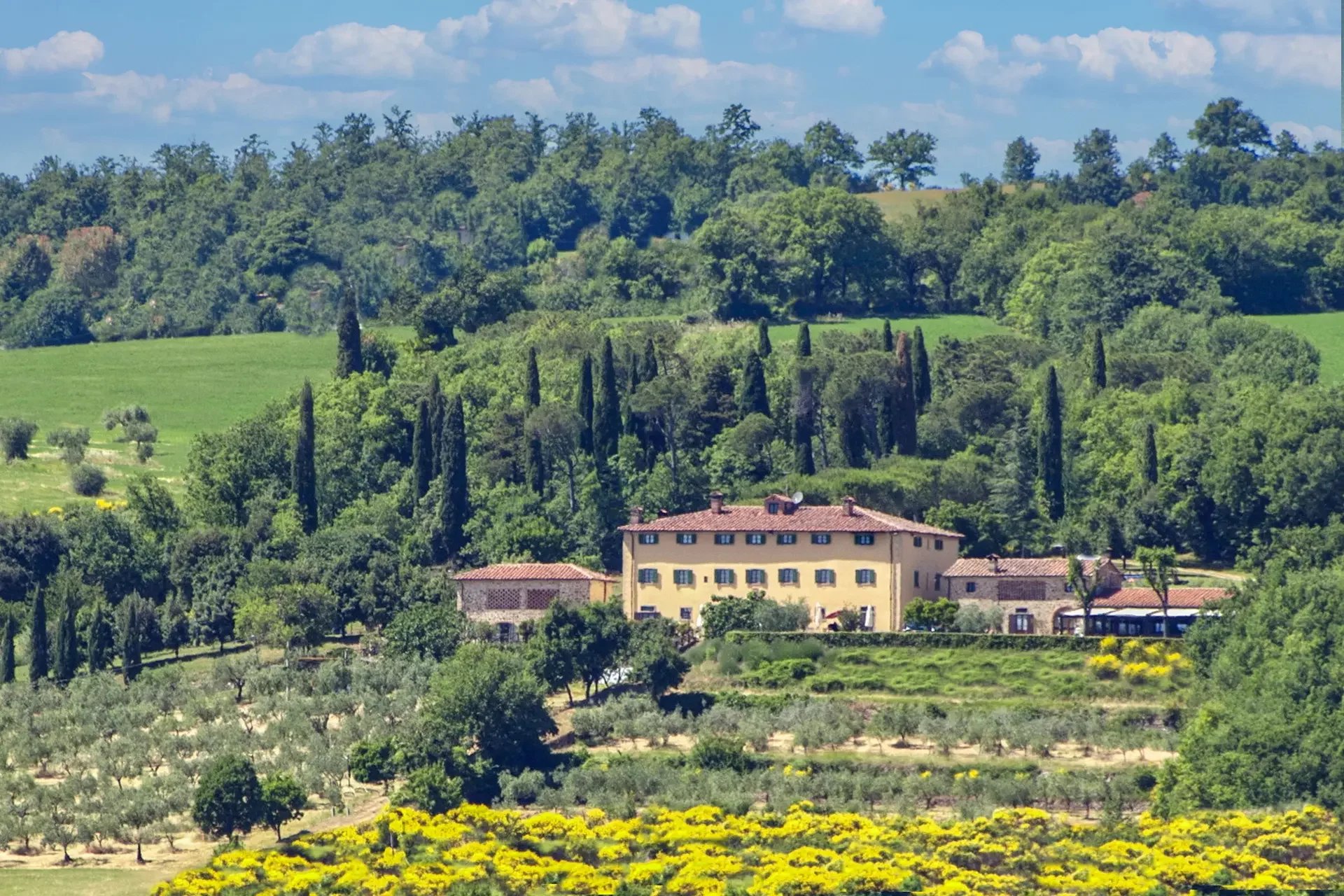
One of the main reasons for purchasing properties with land is the search for privacy. Large areas ensure distance from other properties and protection from future development in the immediate vicinity.
The quality of the view crucially affects the overall value: an open view of hills, vineyards or the sea can be a distinctive element, especially in the luxury segment.
The land thus becomes a natural setting that amplifies the prestige of the home, contributing to the perception of exclusivity.
Development potential
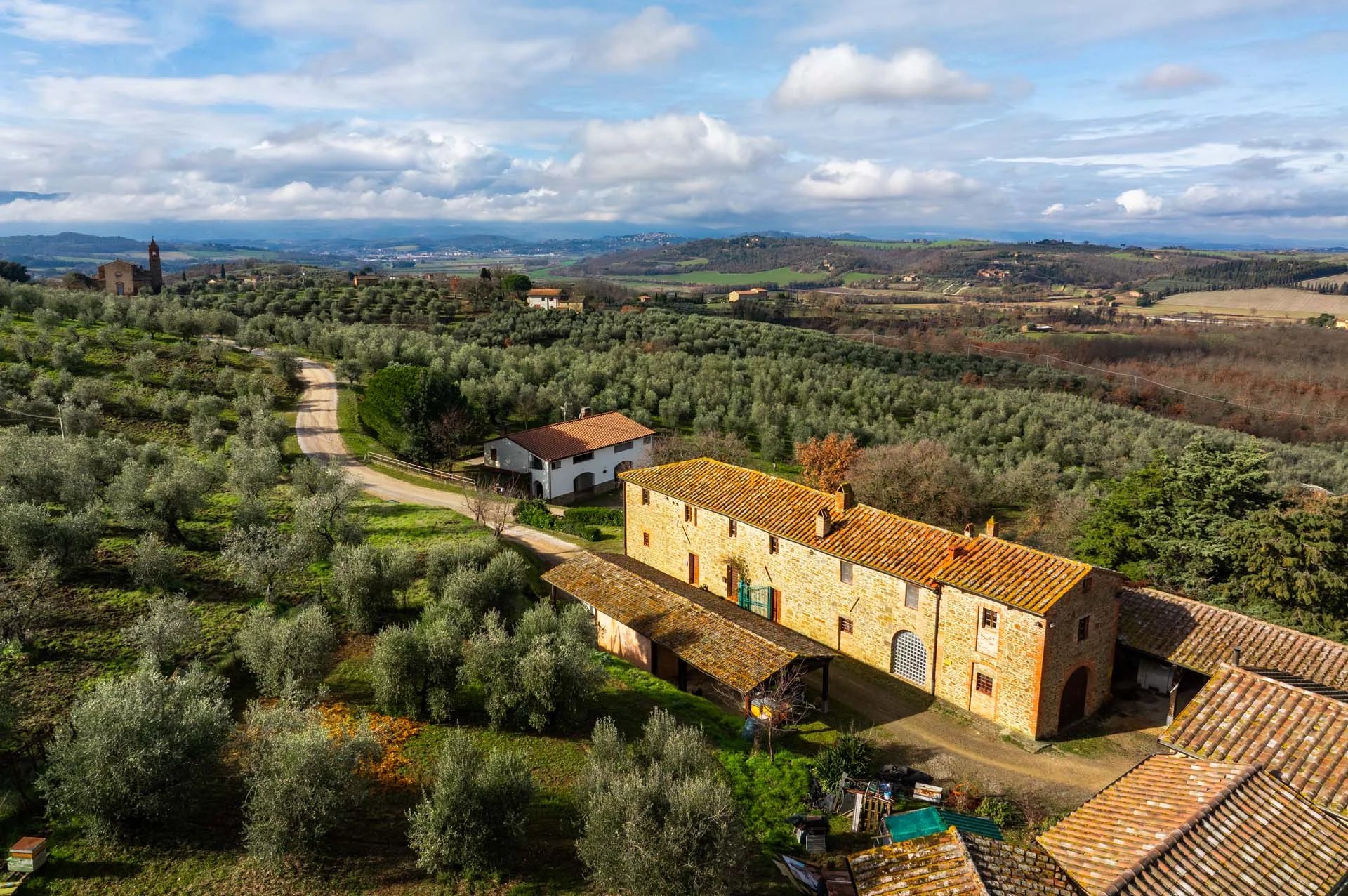
Another element to evaluate concerns the possibility of expansions or new outbuildings. Local regulations may allow the construction of swimming pools, outbuildings, agricultural facilities or spaces dedicated to hospitality.
In rural settings, the purchase of a property with land can open up interesting opportunities for:
- development of agritourism activities
- planting of new vineyards or olive groves
- creation of event spaces
- charming hospitality projects
Of course, each intervention must be analyzed in light of existing urban planning and landscape constraints.
Sustainability and long-term vision
The high-end real estate market is showing an increasing focus on sustainability and self-sufficiency. Properties with extensive land allow the installation of renewable energy systems, rainwater harvesting systems and organic crops.
Investing in properties with land also means taking a long-term view: the value lies not only in the dwelling, but in the ability of the complex to maintain attractiveness over time, thanks to a balance between nature and architecture.
Buying a property with land requires an assessment that goes beyond just square footage. Intended use, agronomic quality, infrastructure, management, privacy, and development potential are determining factors in understanding the real value of the investment.
In the fine property segment, the land is not an accessory, but an integral part of the identity of the dwelling. It is what defines space, silence, perspective and future possibilities.
Choosing carefully means investing not only in a home, but in an ecosystem capable of offering beauty, autonomy, and solidity over time.


Copyright © Romolini

