


 Our Family


 Italiano
 Deutsch



 Back to list

Lunigiana Winery: when a castle becomes a wine project

Published 02-09-2026
Zwischen der Toskana und der Emilia-Romagna, in einer noch authentischen und abgeschiedenen Landschaft, steht die Lunigiana Winery für eine seltene Form der Interpretation von Weinbau-Immobilien: eine mittelalterliche Burg, die in eine produktive, gastgewerbliche und tief mit der Region verbundene Immobilie verwandelt wurde. Nicht einfach nur ein historischer Herrensitz und auch nicht ausschließlich ein landwirtschaftlicher Betrieb, sondern ein Projekt, in dem Architektur, Wein und Gastfreundschaft zu einer einzigartigen Identität verschmelzen.
Die besondere Stärke der Immobilie liegt gerade in diesem Zusammenspiel. Auf der einen Seite steht der historische Charme der Burg, das einst der Familie Malaspina gehörte; auf der anderen Seite eine moderne Kellerei, bewirtschaftete Weinberge und ein persönliches, intimes Hospitality-Konzept, das darauf ausgerichtet ist, den Charakter des Ortes hervorzuheben, ohne ihn zu verändern. In einem Markt, der sich zunehmend für authentische und multifunktionale Immobilien interessiert, ist die Lunigiana Winery ein besonders interessantes Beispiel dafür, wie ein historischer Herrensitz zugleich zu einem landwirtschaftlichen und gastgewerblichen Projekt werden kann.
A medieval castle with a new vocation
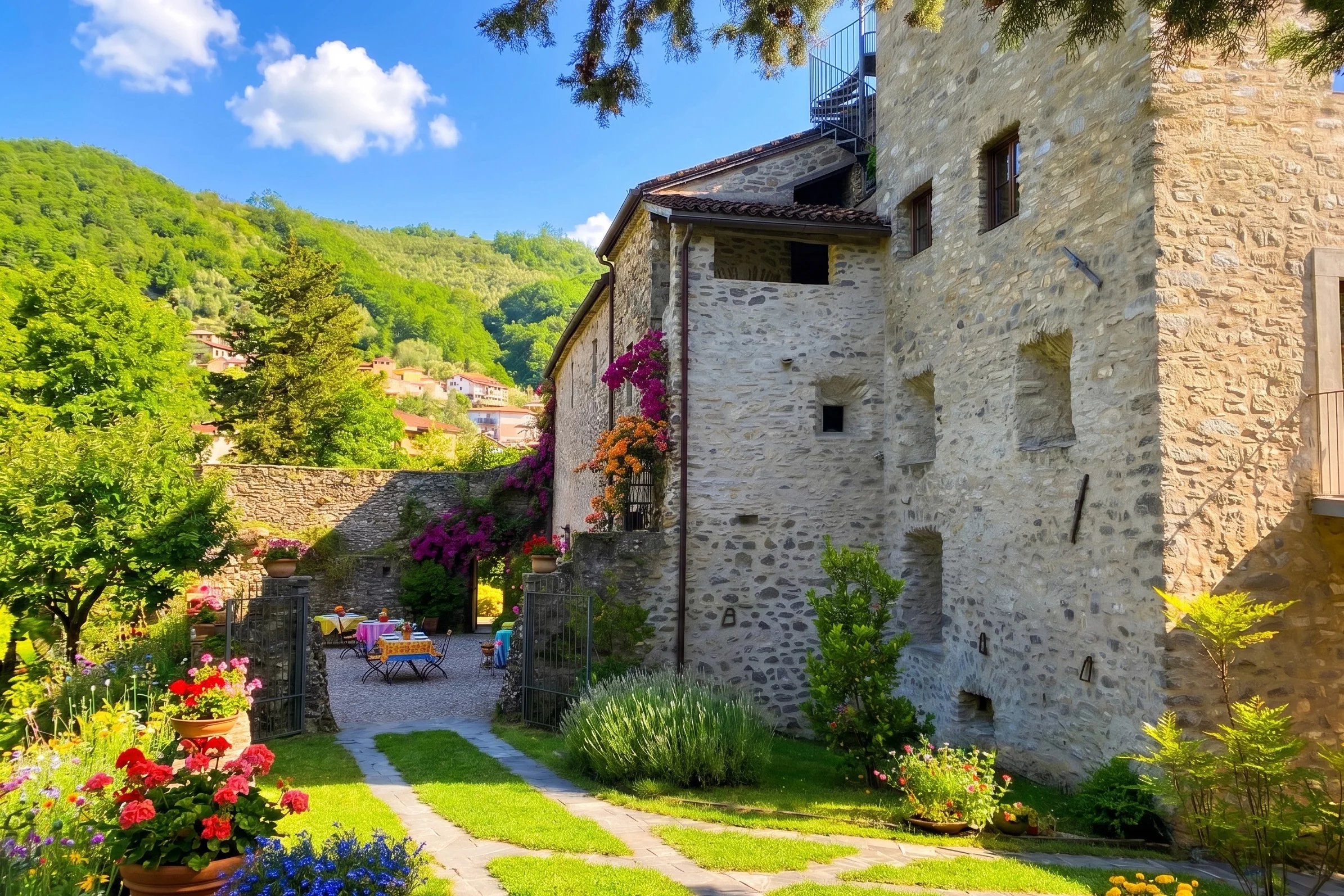
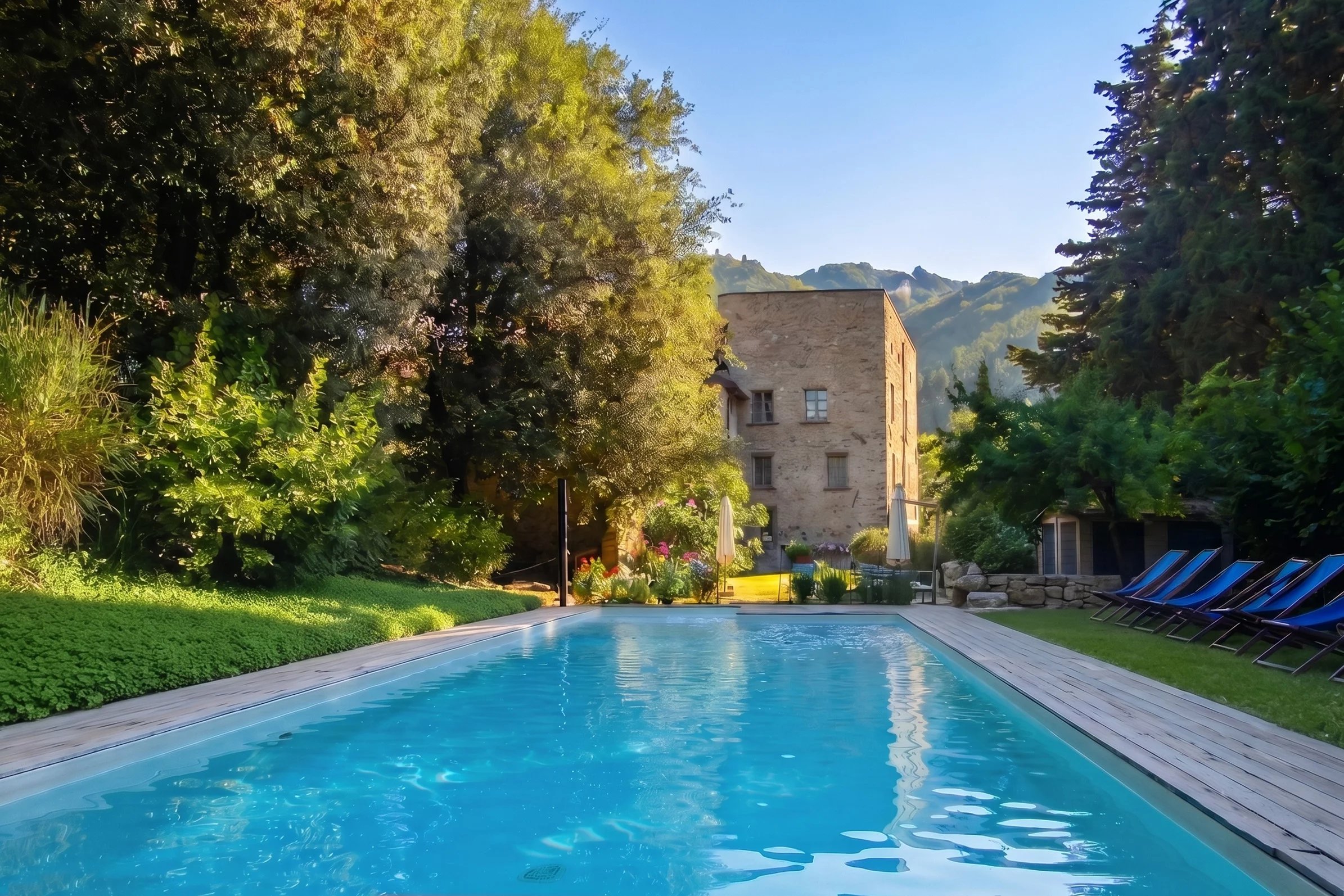
The castle is the architectural heart of the property. With its historic walls, tower, reception rooms, and restored spaces, it preserves the atmosphere of the great medieval homes of Lunigiana. Its transformation into a hospitality structure does not erase the memory of the place but makes it usable, allowing guests to live an immersive experience inside a building loaded with history.
Properties belonging to the category of castles for sale often have a value that goes beyond the habitable surface. They tell stories of power, defense, territory, and historical continuity. In this case, the castle also becomes part of a productive story: not just a place to live or admire, but the hub of an experience related to wine, nature, and hospitality.
Vineyard and agricultural identity
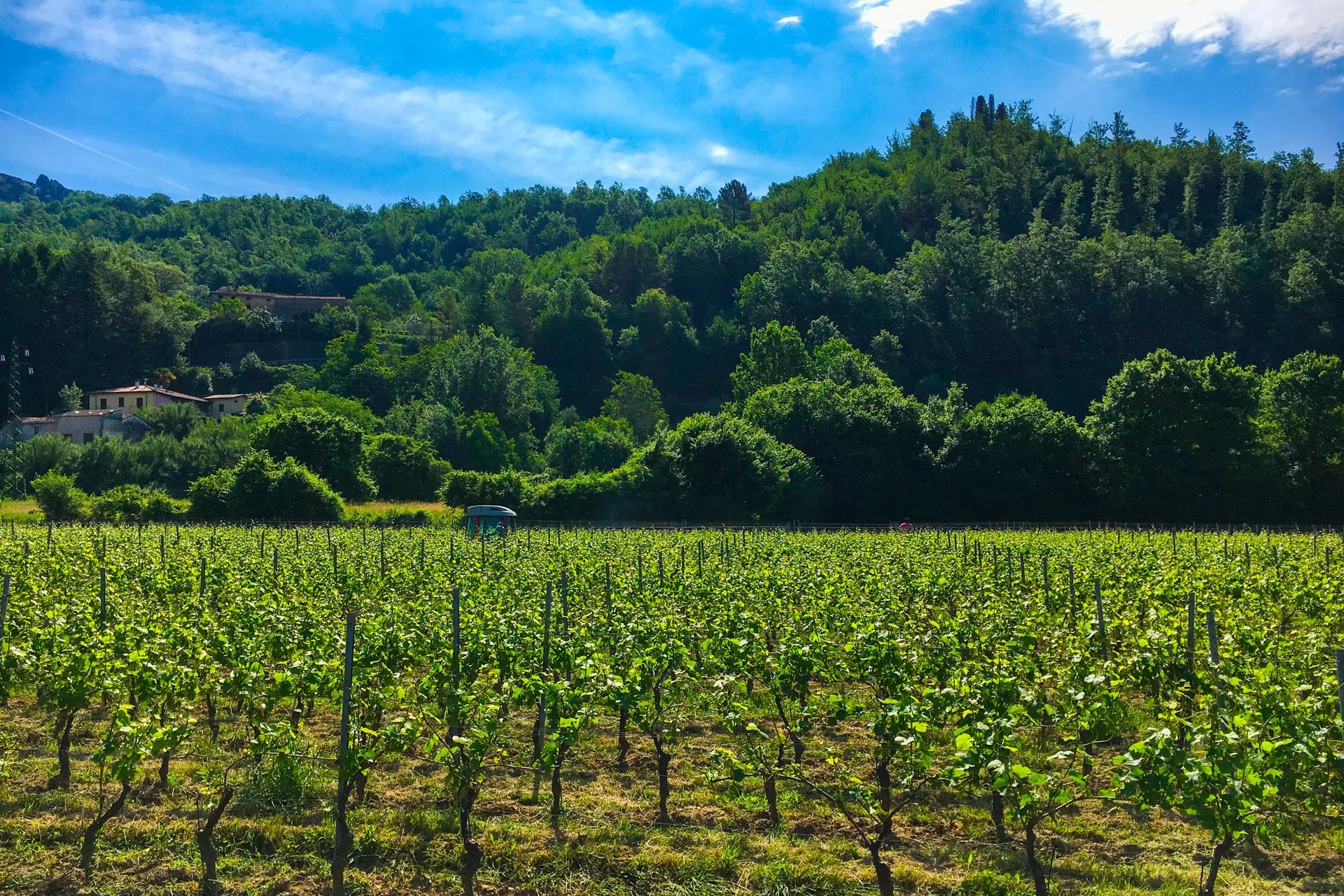
The wine dimension is what makes Lunigiana Winery particularly distinctive. The estate covers about 2.2 hectares of vineyard, where native and international varieties coexist: Pollera Nera, Durella Gentile, Vermentino Nero, Canaiolo, Pinot Nero, Pinot Grigio, Chardonnay, and Merlot. This varietal choice tells a double soul: on one side, the connection to local tradition, on the other, a broader and more contemporary vision of production.
In the segment of farms and wine companies for sale, the value depends not only on the vineyard area but also on the coherence between vineyard, cellar, territory, and positioning. Lunigiana Winery moves in this direction: handcrafted, identity-driven production built more on quality and recognizability than on large volumes.
The cellar as a bridge between history and production
Next to the castle, there is a modern cellar of about 304 m², built to manage winemaking, transformation, and aging phases. The presence of a well-organized production facility is essential because it allows the property to function as a real wine company, not just as a residence with ornamental vineyard.
The cellar introduces a precise operational dimension. Here, wine becomes a concrete part of the project: harvest, grape processing, aging, tasting, and storytelling of the product. It is precisely this relationship between castle and cellar that makes the property interesting: the historic heritage is not separate from agricultural activity but reinforces it, giving the wine a deeper narrative context.
Distributed hospitality within history
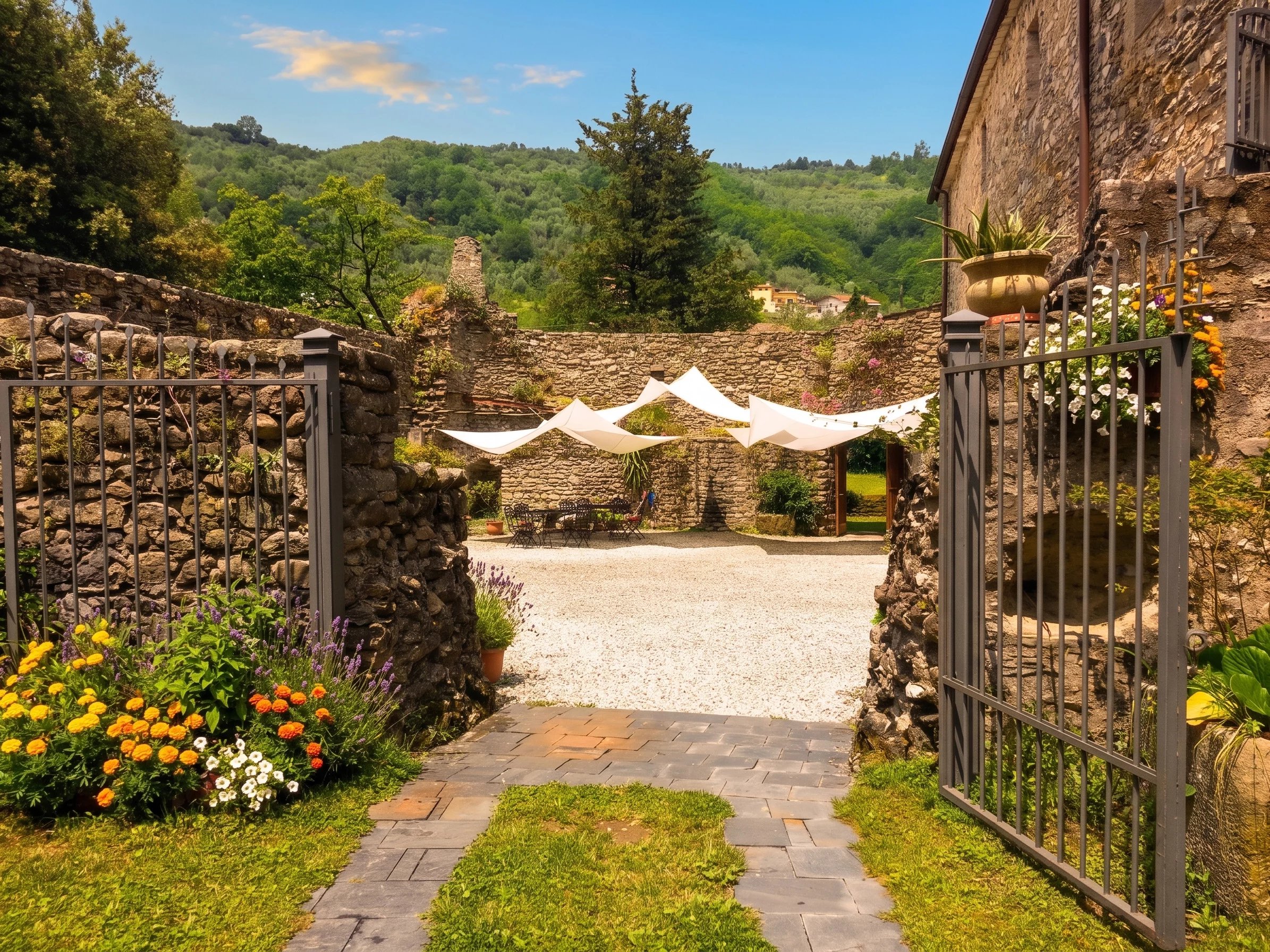
The castle hosts environments designed for reception, with rooms, independent suites, common areas, and a private apartment in the tower. This distribution makes the property suitable for a model of curated and selective hospitality, far from the impersonal logic of a traditional hotel.
For a guest, staying in a wine castle means experiencing a complete experience: sleeping in a historic building, tasting wines produced on the estate, strolling among vineyards and woods, enjoying the pool, and discovering a territory less predictable than the more famous Tuscan destinations. Lunigiana thus becomes part of the charm of the property: silent, authentic, rich in villages, nature, and memory.
The value of a compact wine estate
Lunigiana Winery extends over about 4 hectares, a contained but very balanced size. The vineyard, olive grove, woods, the castle’s garden, and service areas create a cohesive, manageable system. Not all viticultural properties necessarily need to develop over dozens of hectares: in some cases, a more intimate scale allows for greater control, more care, and a more precise identity.
This compactness can be an advantage for those seeking a high-quality wine project without facing the complexity of a large agricultural company. The property allows for combining residence, production, and hospitality in an elegant format, suitable for direct management or a boutique model.
Lunigiana: a different Tuscany
Lunigiana offers an image of Tuscany that is more discreet and less exposed compared to the more renowned areas. It is a land of castles, pieves, stone villages, woods, and hills, where the landscape retains a strong and still little built character. This authenticity is an increasing value in the luxury real estate market, especially for buyers seeking places with genuine identity.
In this context, a property like Lunigiana Winery does not compete on the level of obviousness but on that of rarity. Its charm does not derive from a territory already widely codified in the international imagination but from the possibility of discovering a more secret, cultivated, and secluded Tuscany.
Castle, wine, and entrepreneurial project
Purchasing a property like Lunigiana Winery means entering into an articulated project. The castle offers prestige, history, and receptivity; the vineyard provides agricultural substance; the cellar enables a structured production; the natural setting guarantees privacy and atmosphere. Each element works together to create a stronger property than the sum of its parts.
The potential involves different usage profiles: a private residence of great charm, a boutique wine estate, a charming hospitality structure, a place for tastings, selected events, or experiential stays. The key is maintaining a balance between authenticity and management, between safeguarding heritage and contemporary vision.
When history becomes a productive value
Lunigiana Winery demonstrates that a historic residence can evolve without losing its identity. The castle is not reduced to a simple backdrop but becomes an active part of the wine project. Its history enhances the story of the wine, while the agricultural production gives the place a lively, concrete, and current function.
It is this combination that makes the property particularly interesting in high-end real estate: medieval architecture, vineyards, cellar, hospitality, and landscape integrate into a single experience. A castle that not only looks to the past but becomes a platform for a contemporary project capable of combining wine, territory, and real estate value.


Copyright © Romolini

