




 Our Family


 Italiano
 Deutsch


 Back to list

High-quality rural architecture: turning a farmstead into an exclusive residence

Published 13-09-2026
A rural farmstead possesses a quality that many contemporary residences attempt to recreate without fully succeeding: authenticity. Stone walls, old barns, barns lofts, courtyards, agricultural outbuildings, central yard, and cultivated lands tell a way of living rooted in a direct relationship with the land. Transforming a farmstead into an exclusive residence means starting from this identity and giving it a new function, capable of blending rural memory, contemporary comfort, and real estate value.
In the countryside house market, the most interesting properties are often those that retain a recognizable agricultural layout. It is not just about restoring ancient buildings but reinterpreting a system: main house, outbuildings, garden, lands, pathways, views, and outdoor spaces must dialogue coherently again. The result can be a private dwelling of great charm, a prestigious country house, or a property intended for hospitality.
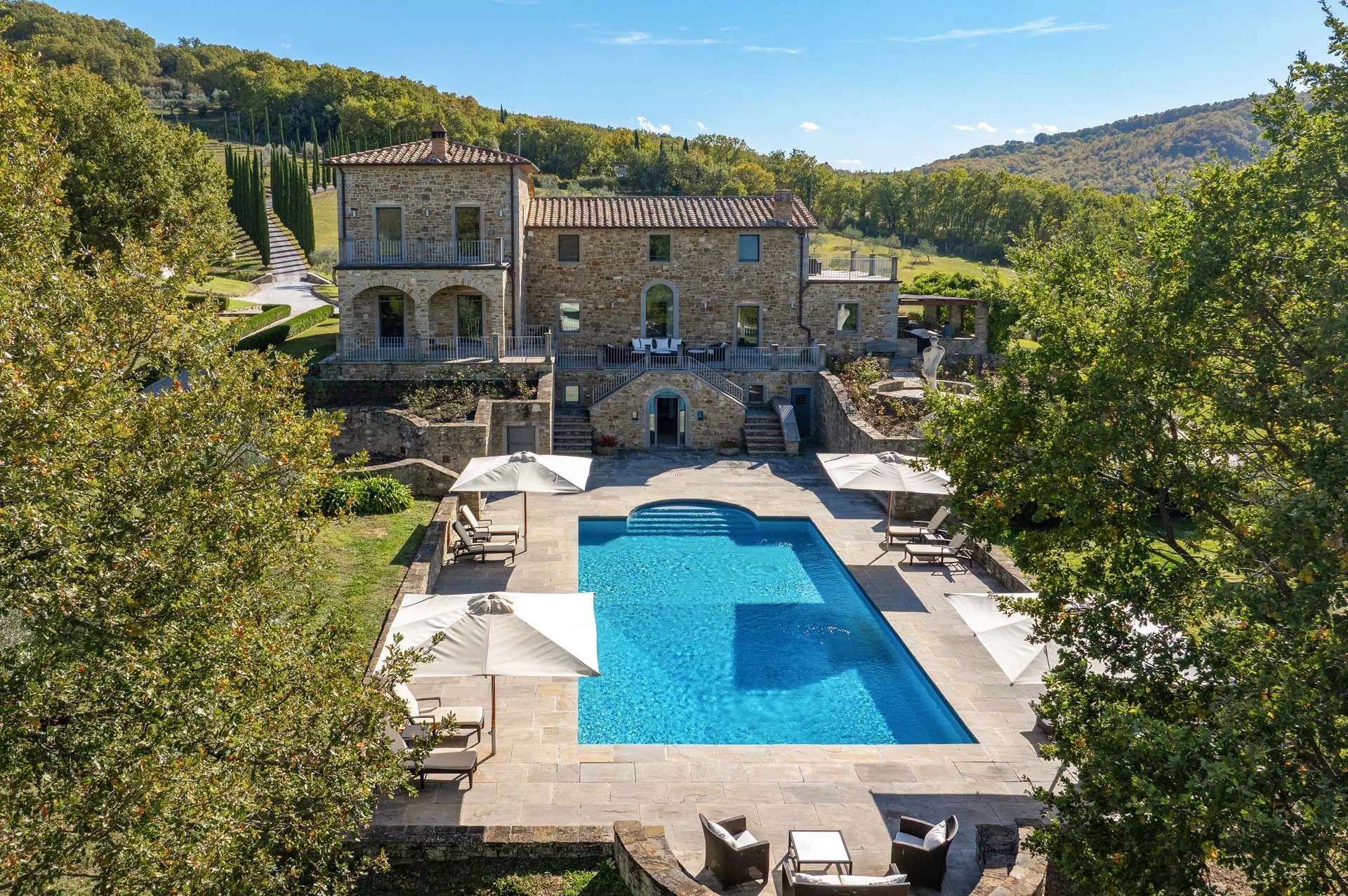
The value of rural authenticity
High-quality rural architecture is born from simple materials and concrete functions. Local stone, terracotta, wood, exposed beams, porticos, and irregular windows were not designed to impress but to meet the needs of agricultural life. This construction sincerity is now one of the most appreciated elements by buyers.
A well-restored farmstead preserves the charm of its origin without sacrificing living quality. The challenge is to avoid overly aggressive interventions that could erase the soul of the place. The most successful properties are those where restoration enhances the original proportions, maintains authentic materials, and introduces systems, comforts, and layouts suitable for contemporary living.
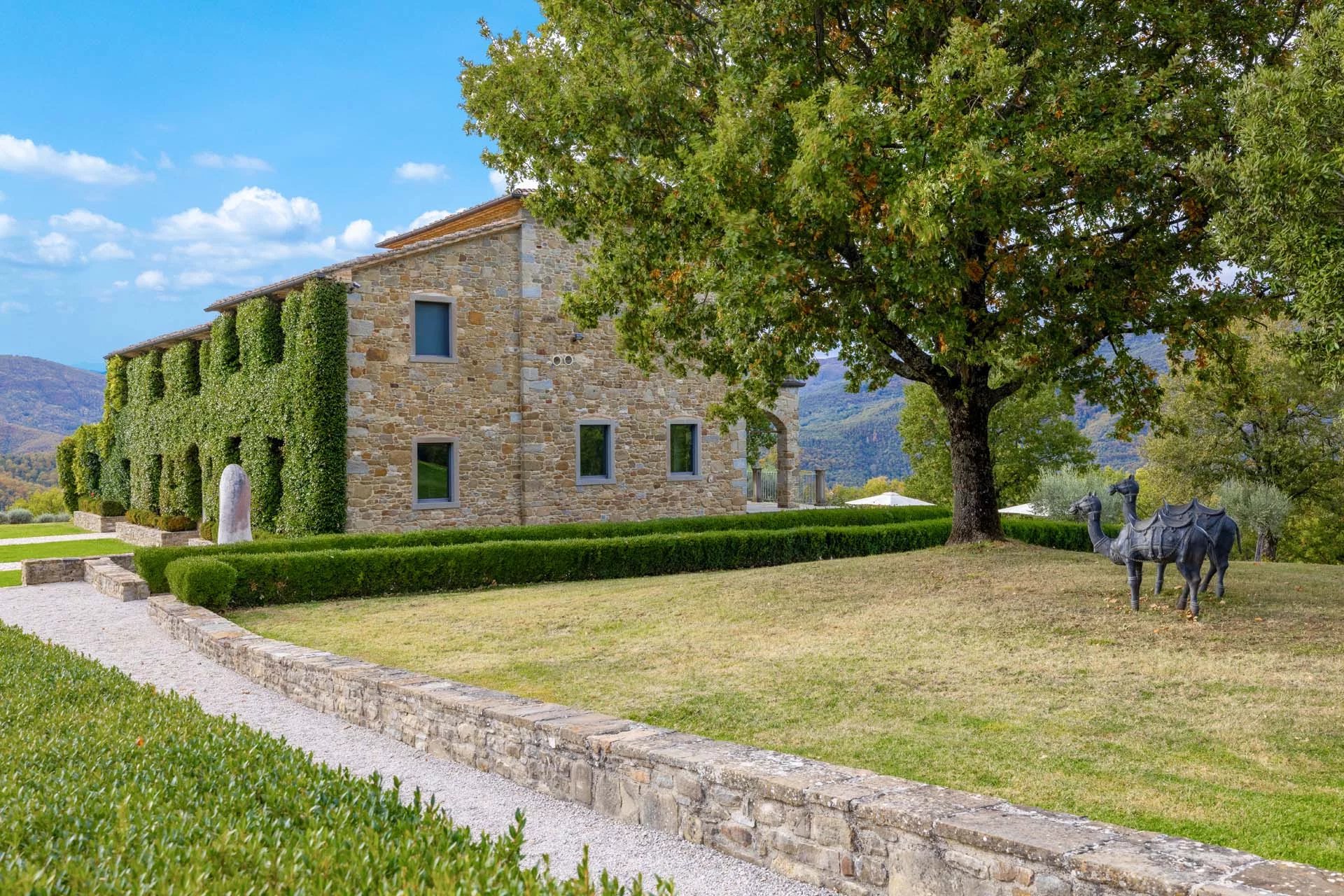
From farmstead to exclusive residence
Turning a farmstead into an exclusive residence requires a comprehensive vision. The main house becomes the living core, but secondary buildings can assume new functions: guesthouse, private studio, wellness area, tasting room, gym, staff accommodations, event spaces, or independent hospitality units.
In the segment of farmhouses for sale, this flexibility represents great value. An old barn can become a guest house, a stable can be transformed into panoramic living space, a warehouse can host a convivial area or a hospitality space. Each volume, if carefully considered, can contribute to building a more articulated and interesting property.
Outdoor spaces as part of the project
A farmstead is never just buildings. The yard, garden, paths, walls, olive groves, fields, and views are an integral part of its value. For this reason, landscape design is as important as architectural design in the transformation of a rural property.
Outdoor spaces should complement daily life: outdoor dining areas, pergolas, internal courtyards, pools integrated into the landscape, walkways, shaded areas, and Mediterranean gardens can make the property more livable without altering its identity. True luxury lies in the continuity between house and nature, in the possibility of living the farmstead as an open, private, and harmonious place.
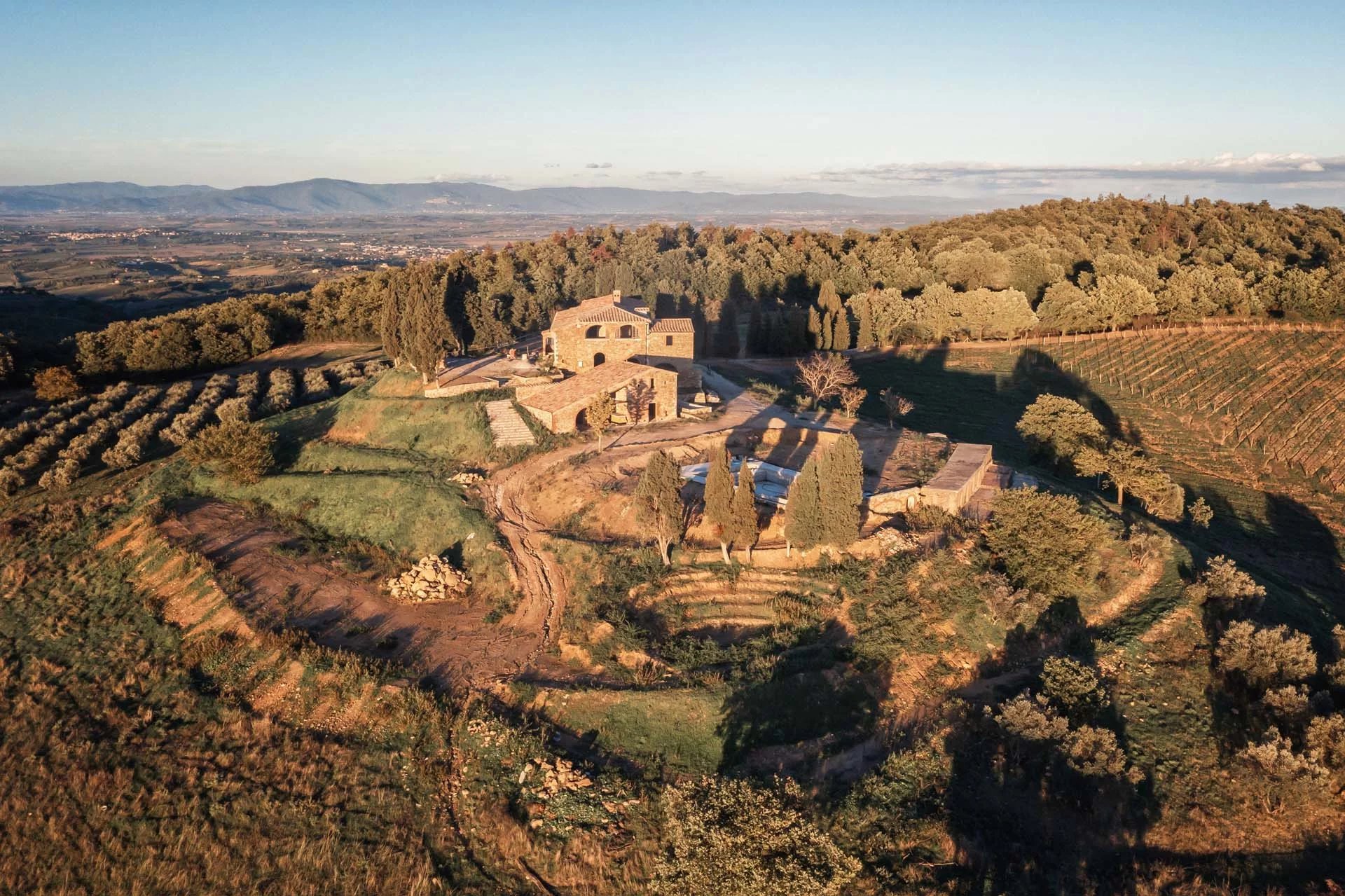
Private residence or hospitality project
Many farmsteads lend themselves to a dual purpose. They can become private residences for representation or charming hospitality facilities, upgraded Agriturismo, or country houses. The presence of multiple buildings, independent apartments, productive lands, and large outdoor spaces allows for the construction of highly flexible hospitality models.
A consistent example is Borgo Raffaello, a restored rural hamlet in the hills of Chianti Rufina, about an hour from Florence. In cases like this, rural architecture is not only preserved but reinterpreted through multiple buildings, independent apartments, and spaces dedicated to reception. The result is a property capable of combining agricultural heritage, hospitality, and landscape value, transforming the ancient farmstead into a prestigious residential and hospitality project.
Lands, production, and agricultural identity
The presence of agricultural lands adds depth to the transformation of a farmstead. Vineyards, olive groves, arable lands, orchards, or woods are not just accessories but elements that strengthen the property's identity. Even when production is limited, wine and oil can contribute to the storytelling of the residence, making it more authentic and recognizable.
In the case of luxury estates for sale, the value often stems from the balance among the residential part, agricultural part, and landscape. An intelligently transformed rural property can maintain its original vocation while becoming an elegant, efficient residence suitable for new lifestyles.
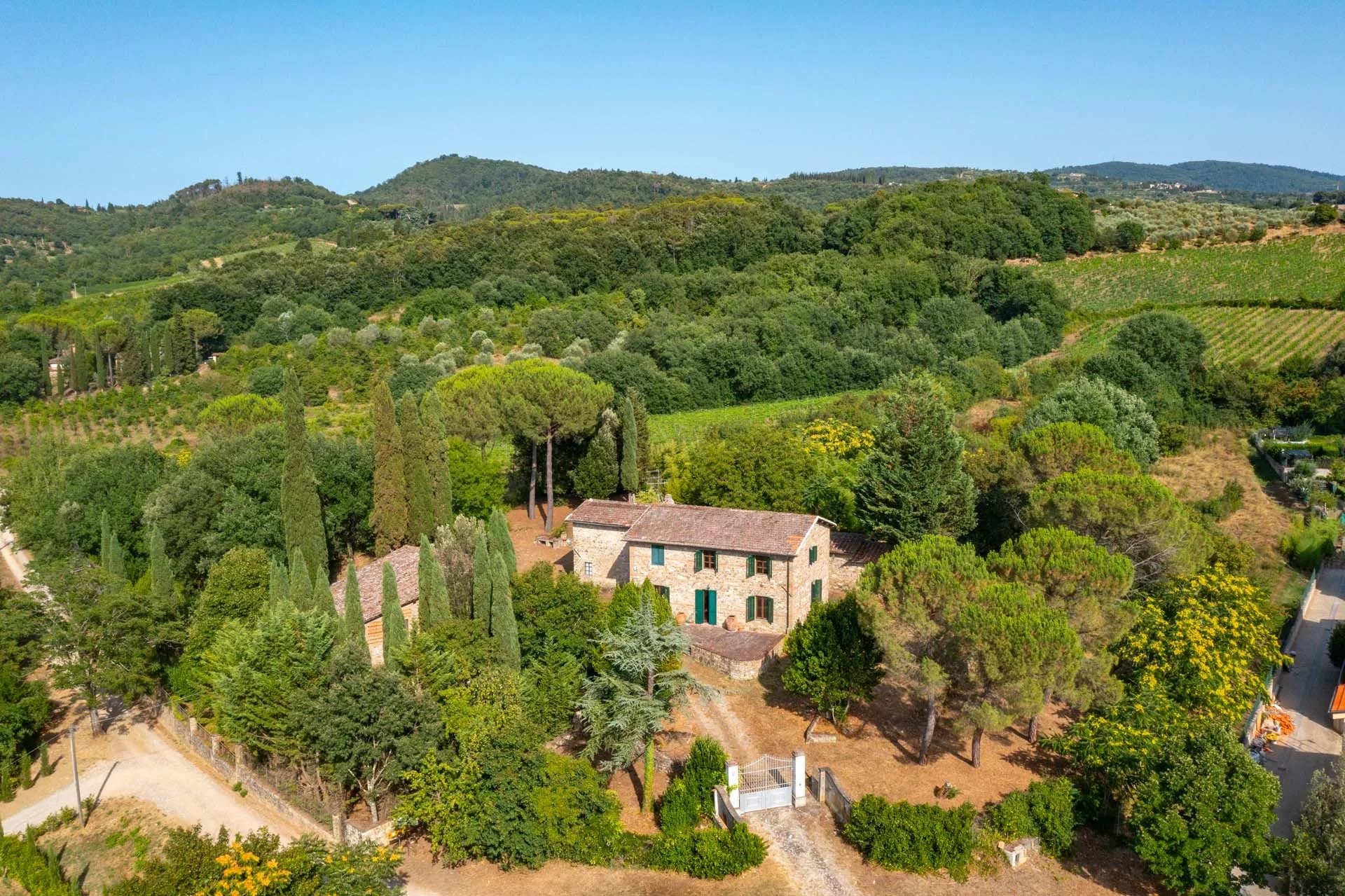
Contemporary comfort without losing character
Transforming a farmstead into an exclusive residence requires significant technical upgrades. Efficient systems, insulation, heating, air conditioning, modern bathrooms, functional kitchens, lighting, and security systems must be discreetly integrated to avoid solutions that disrupt the property's aesthetic balance.
Contemporary comfort should enhance livability without overpowering the place’s identity. A modern kitchen can coexist with stone walls; a pool can be inserted among olive trees and walls; a wellness area can be located in a converted outbuilding. The most refined results occur when technology serves the living experience without becoming the focus.
The charm of evolved countryside
Properties demonstrating how rural architecture can evolve into a highly contemporary form of living. The farmstead preserves its connection to stone, landscape, and Maremma, but introduces modern solutions, privacy, glass loggias, a curated garden, and high-level comfort.
This is one of the most interesting directions in high-end real estate: not transforming countryside into something urban but making it more livable, more efficient, and better suited to current needs. The farmstead thus becomes an exclusive residence because it maintains its bond with the territory.
The charm of evolved countryside
Properties demonstrating how rural architecture can evolve into a highly contemporary form of living. The farmstead preserves its connection to stone, landscape, and Maremma, but introduces modern solutions, privacy, glass loggias, a curated garden, and high-level comfort.
This is one of the most interesting directions in high-end real estate: not transforming countryside into something urban but making it more livable, more efficient, and better suited to current needs. The farmstead thus becomes an exclusive residence because it maintains its bond with the territory.
An investment in the value of the place
Restoring a farmstead means investing in an architectural and landscape heritage. The value depends not only on the recovered square meters but also on the quality of the project: space distribution, materials, relationship with the land, privacy, accessibility, potential for hospitality, and overall coherence.
A well-transformed rural property has a special strength in the market because it offers something rare: authenticity and comfort, history and functionality, space and identity. In a context where many buyers seek homes capable of telling a lifestyle, the recovered farmstead becomes an extremely relevant answer.
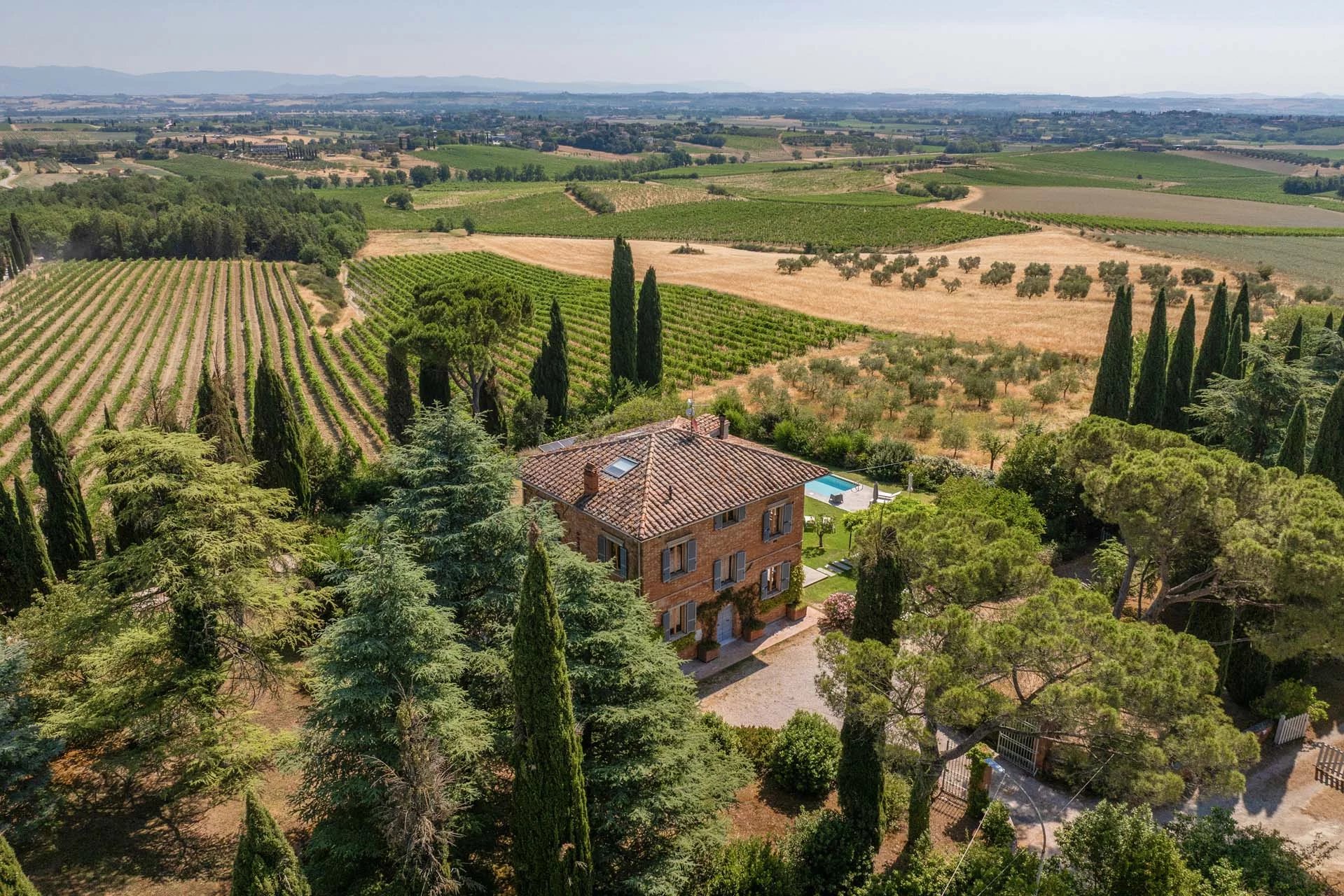
The new life of rural architecture
High-end rural architecture does not demand to be erased but interpreted. Every barn, hayloft, loggia, yard, or stone wall can become part of a new idea of living, provided the project respects the property's history and enhances its potential.
Transforming a farmstead into an exclusive residence means giving new life to a place without interrupting its story. It is a delicate balance between conservation and innovation, landscape and comfort, agricultural memory and contemporary lifestyle. When this balance is achieved, the farmstead does not simply become a luxury house: it becomes a dwelling with an identity, capable of preserving the past and welcoming the future.


Copyright © Romolini

