




 Our Family


 Italiano
 Deutsch


 Back to list

Estates with olive groves: the harvest ritual and the value of private production

Published 15-10-2026
Olive grove estates occupy a special place in Italian luxury real estate. They combine landscape, agricultural tradition, lifestyle, and private production in a profoundly land-linked balance. The olive grove is not just a component of the land: it is an element of identity, capable of narrating the property's history, the rhythm of the seasons, and an authentic luxury, made of ancient gestures and everyday quality.
In the market for luxury estates for sale, the presence of an olive grove adds value because it broadens the property's significance. The residence is perceived not only as a private dwelling but as a productive, lively place, capable of offering a direct relationship with the land. The oil produced on the estate becomes a symbol of belonging, a product to share, gift, serve to guests, or incorporate into a high-level hospitality project.
The olive grove as part of the estate's identity
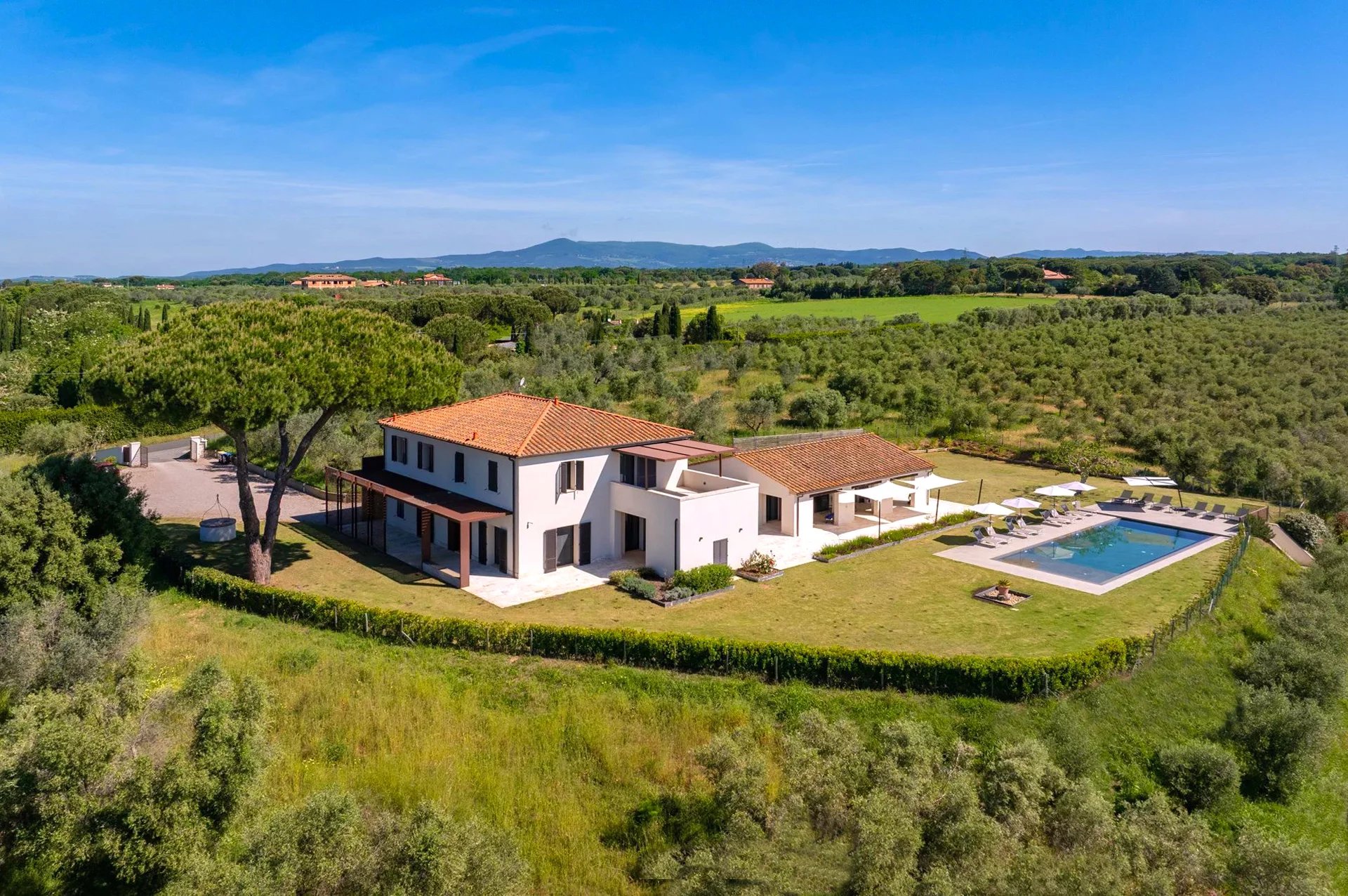
A mature olive grove gives the property an immediate landscape quality. The silvery crowns, the trunks carved by time, the rows following the terrain's slope, and the changing light during the day create an atmosphere difficult to replicate. In Tuscany, Umbria, and regions most native to oil production, the olive tree is an integral part of rural imagery and the landscape's aesthetic value.
For this reason, among the olive groves for sale, the most interesting properties are those where production and residential quality coexist. A villa with an olive grove, a wineries estate with olives, or a luxury farmhouse immersed in vineyards and ancient plants offer a complete experience: living, producing, receiving, and enjoying the countryside with elegance.
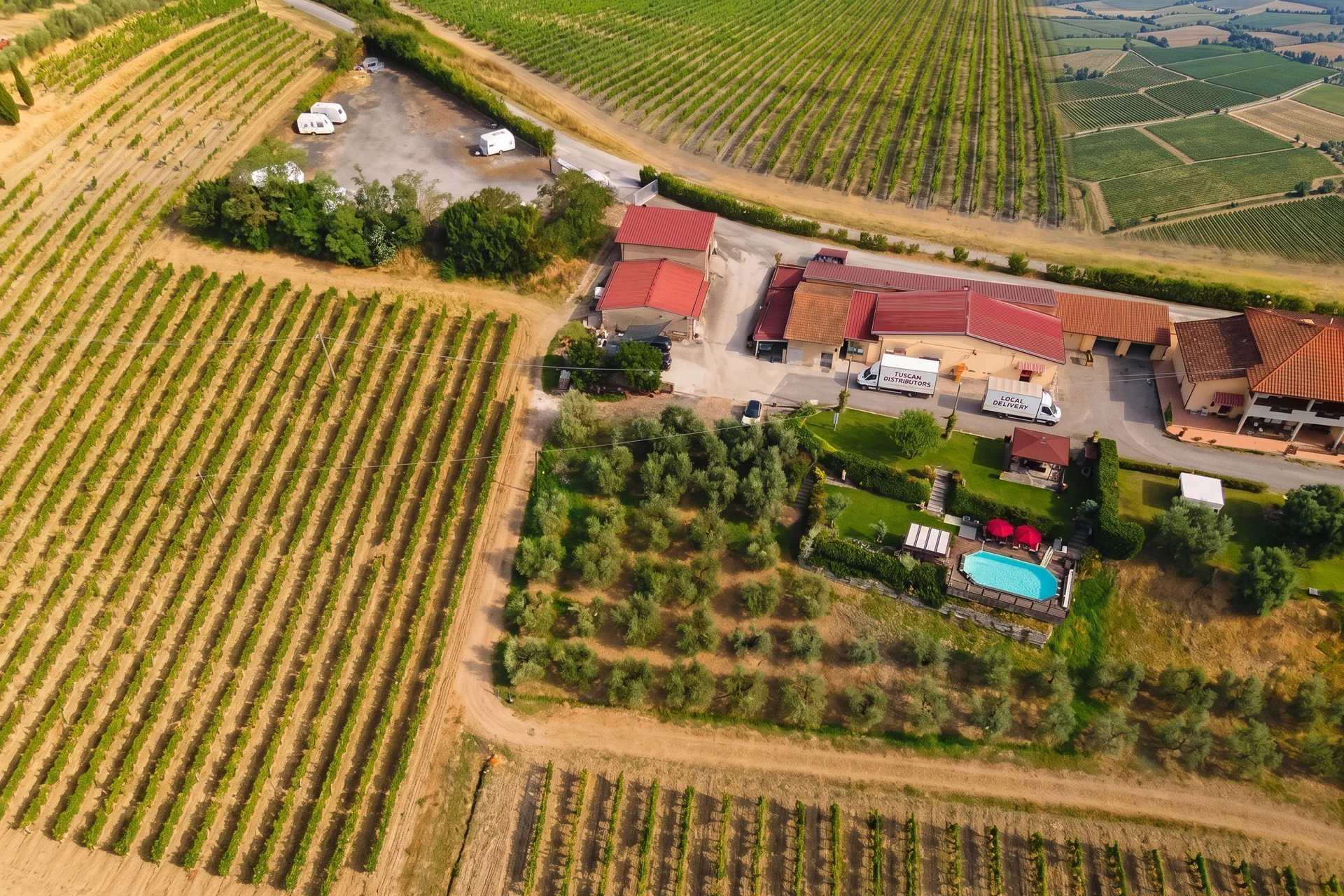
The harvest ritual
The harvesting of olives is one of the most evocative moments in the life of an estate. It marks the transition from summer to autumn, involves family, guests, agricultural staff, and often becomes a collective ritual. It is not only a productive activity but an experience: walking among the trees, observing the fruits, participating in the harvest, and following the process until pressing transforms the oil into something personal.
In a high-profile estate, this ritual acquires an even stronger value. The oil produced on the estate can become part of daily meals, guest hospitality, private tastings, or a hospitality project. It is a discreet luxury, born from the land and time, but communicating authenticity and care.
Luxury villas with olive groves: landscape and private production
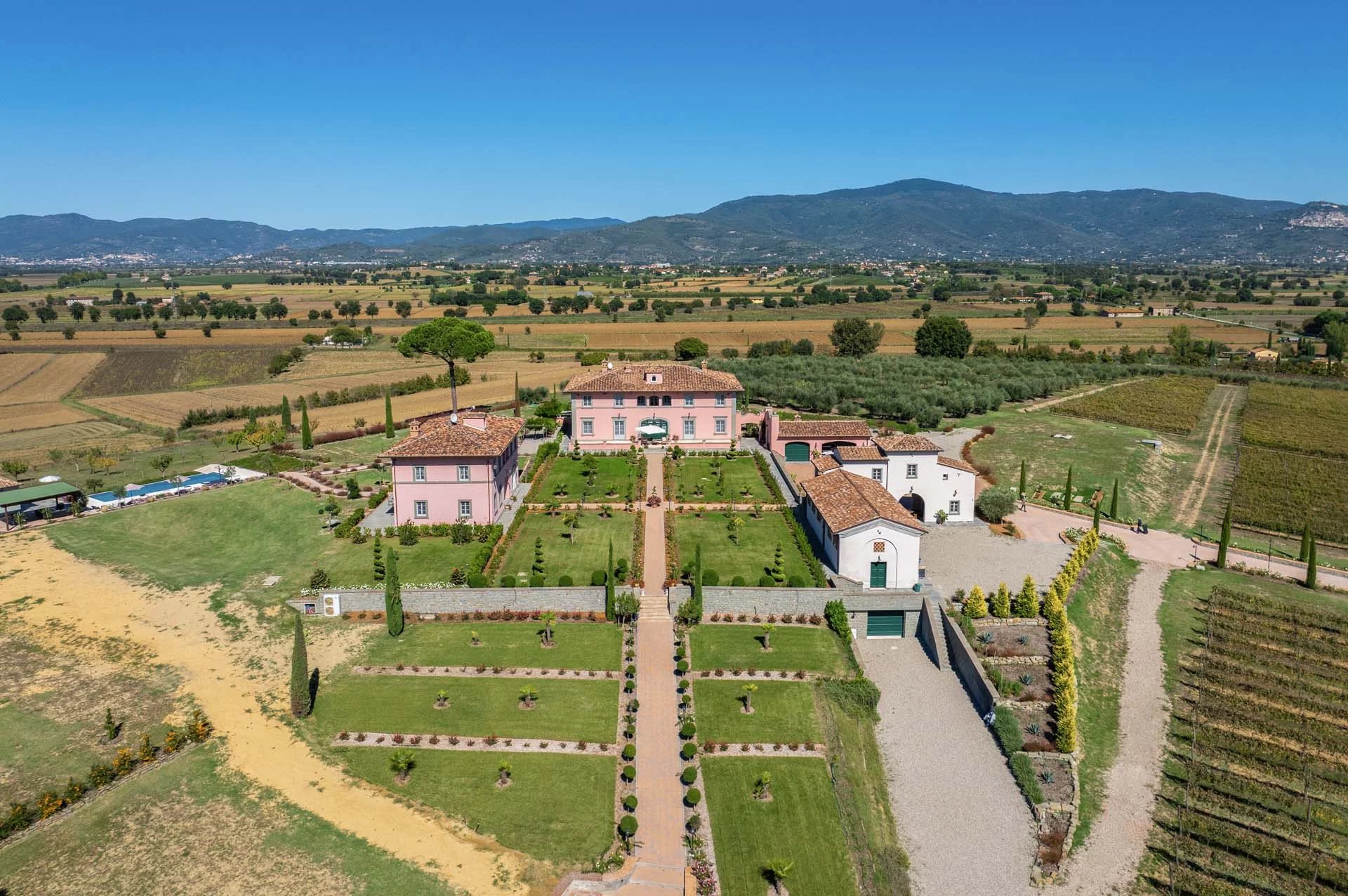
A coherent example is Villa Luxury Cortona, a high-profile estate on the hills of Cortona with a vineyard and olive grove, panoramic position over Val di Chiana. In a residence of this type, the olive grove helps to build the image of a contemporary residence immersed in a high-value agricultural landscape, where comfort, privacy, and private production coexist naturally.
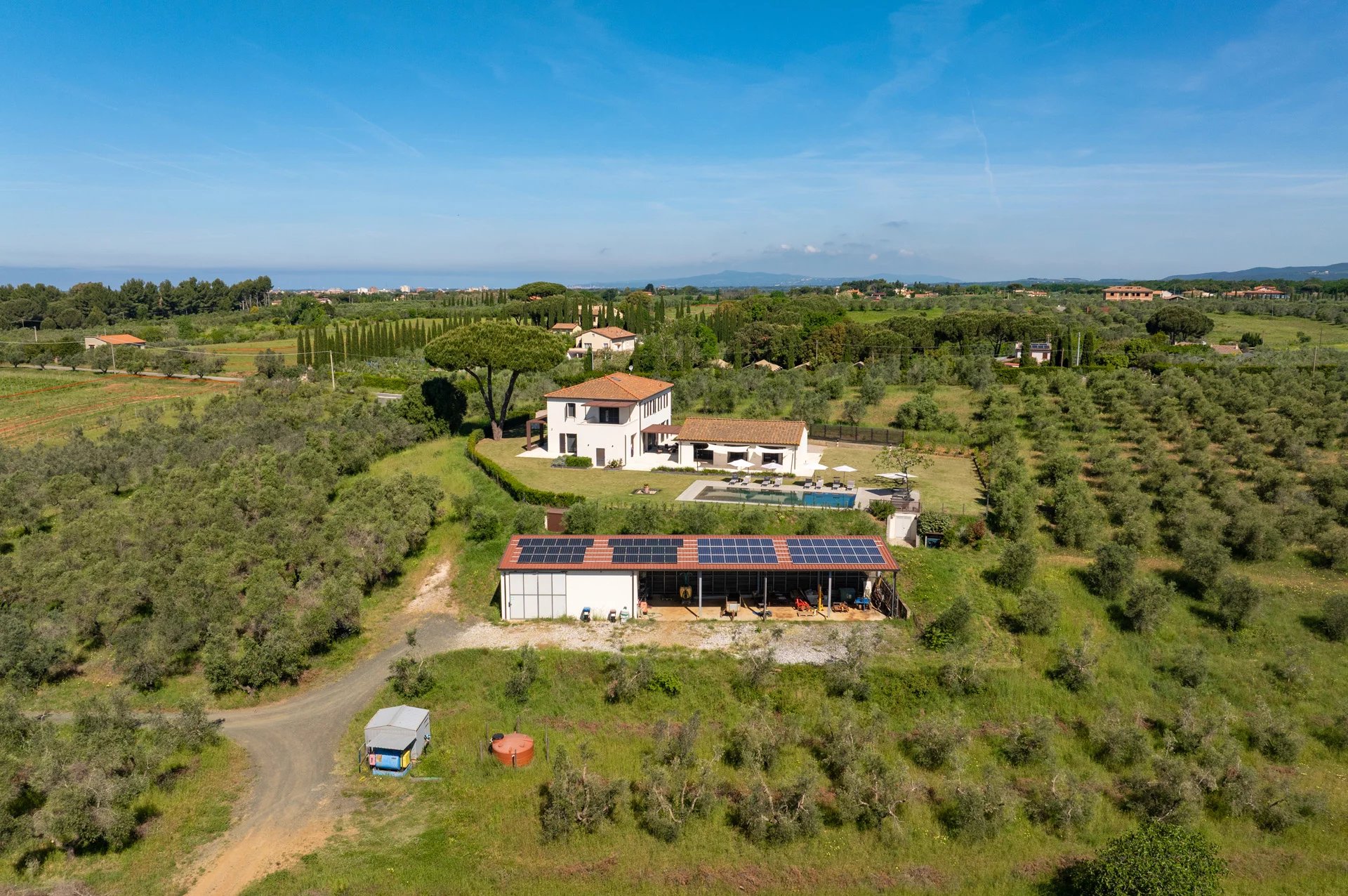
Also Cecina Luxury Villa, on the Tuscan coast, interprets the olive grove as part of a high-level Mediterranean lifestyle. The villa combines vineyard, olive grove, and proximity to the sea, creating a property where agricultural production and residential dimension dialogue with the coastal landscape.
The value of oil produced on the property
Producing oil in an estate means having a direct link to quality. From choosing harvest times to processing, from storage to tasting, each step contributes to the final result. For a property owner, this value is not only economic: it is cultural, experiential, and symbolic.
The extra virgin oil produced privately can become a distinctive element of the estate. It can be served during lunches and dinners, used in cooking, included in tasting routes, or packaged as a representative product of the estate. In a market where experience counts more and more, having one's own production adds depth to the real estate story.
Agricultural estates and production vocation
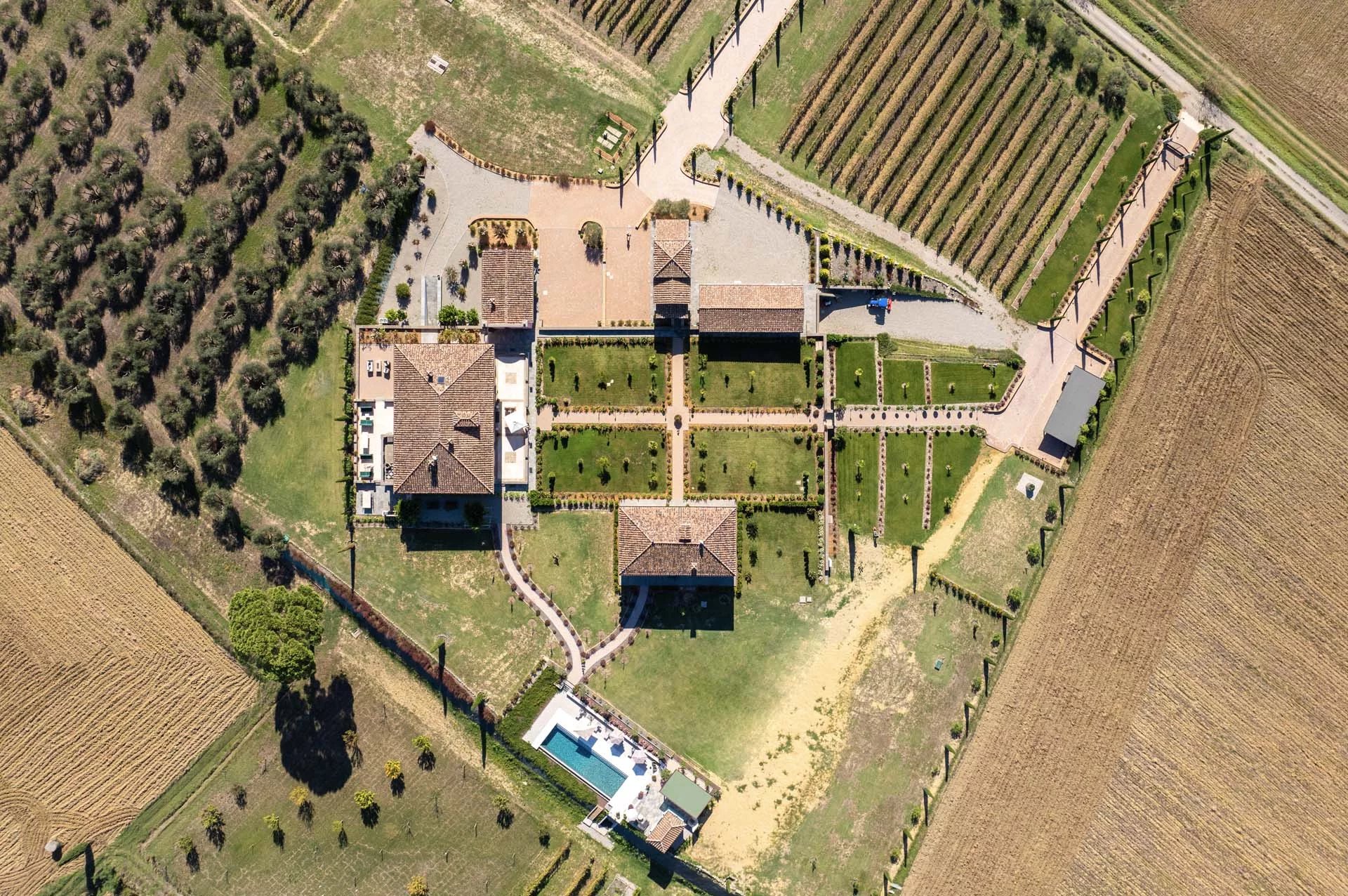
Estate with olive groves are often integrated into larger agricultural systems, where olives, vineyards, arable lands, and forests build a productive and landscape balance. In these cases, the olive grove is not just an ornamental element but a real part of the agricultural identity of the property.
San Casciano Estate, on the Chianti Classico hills, includes a manor villa, vineyard, and over 6 hectares of olive grove. It is an example of an estate where wine and oil can coexist within a prestigious agricultural project, with interesting potential also for tourist and hospitality purposes.
In the area of the Fiorentini Hills, Macchiaioli Estate offers another interpretation of the theme: a noble villa inserted in an estate with vineyard and olive grove, panoramic position over the hills of Florence. Here, agricultural production enhances the property's value, connecting it to a recognizable landscape and a prestigious production tradition.
From harvest to hospitality experience
For an estate also intended for hosting, the olive grove can become a central part of the guest experience. Olive harvesting, visiting the mill, tasting the new oil, a dinner with estate products, or a cooking class build authentic and memorable moments.
The farms and wine estates for sale with olive grove offer just this opportunity: transforming production into storytelling. The oil becomes a simple and immediate language to communicate territory, seasonality, and quality. In a charming hospitality setting, it can contribute to the property's positioning just as much as a panoramic pool, a winery, or a spa.
Luxury farmhouses among olive trees, vineyards, and pools
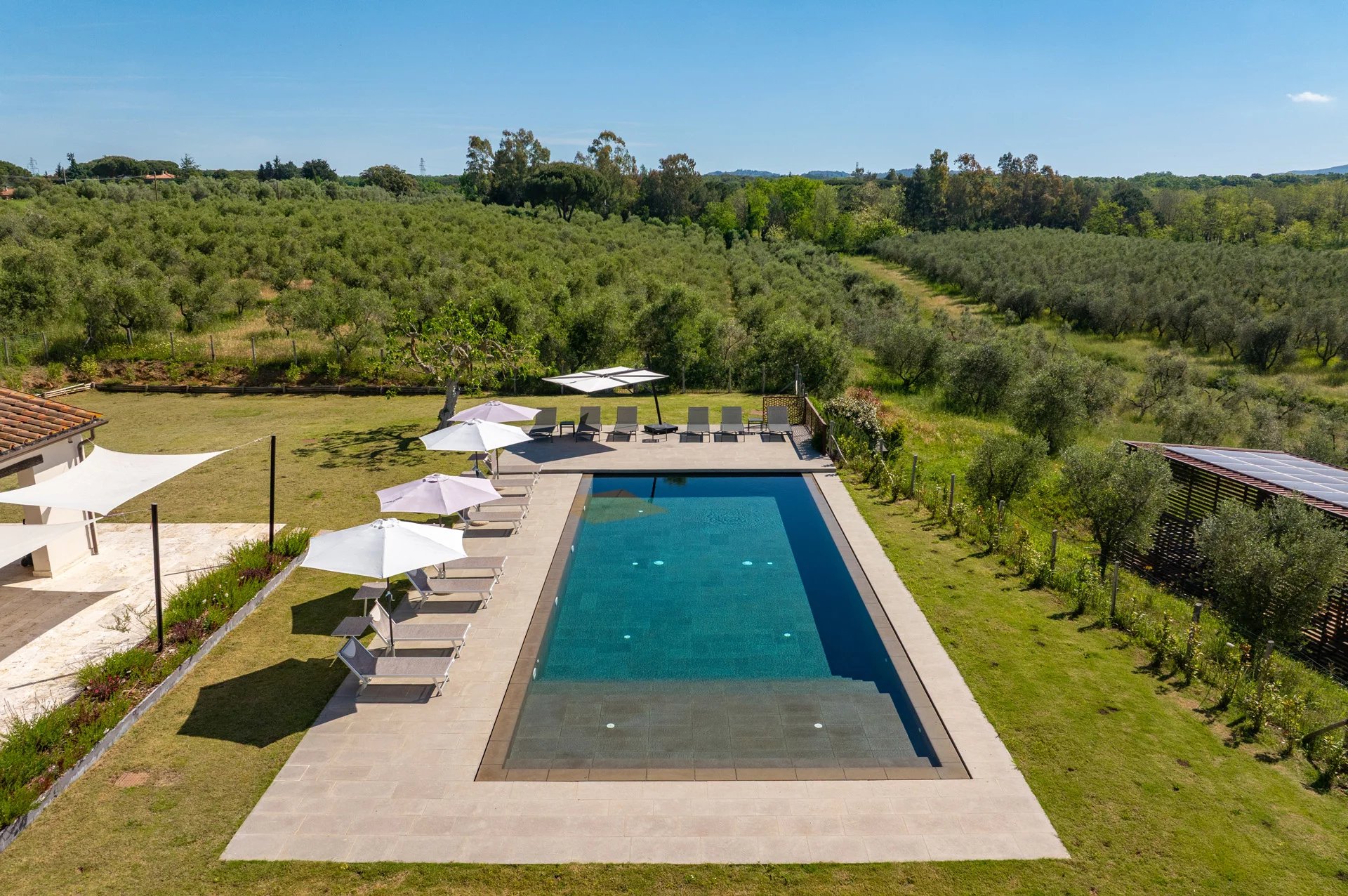
The charm of the olive grove is expressed even in the most intimate properties, where private production accompanies an elegant and reserved lifestyle. Casale Montemerano, in Maremma, is a luxury farmhouse with a pool, vineyard, and olive grove near Saturnia. In this case, the olive grove helps create an intimate and authentic dimension, perfect for those looking for a private residence immersed in the Tuscan countryside.
In properties of this type, value comes from measure. The olive grove does not necessarily have to be large: even a more contained production can be precious if coherent with the house project. The important thing is that it is well-kept, legible, and integrated into the landscape.
Landscape, biodiversity, and privacy
The olive grove also contributes to the environmental quality of the estate. Alternated with gardens, forests, vineyards, and meadows, it creates visual variety and biodiversity. Olive trees define the space, accompany paths, protect views, and make the landscape more harmonious.
In a high-end residence, this landscape value is fundamental. Olive trees build privacy without enclosing, filter views without isolating, create shade and atmosphere. For those living on the property daily, they become familiar presences; for visitors, they are an immediate sign of Mediterranean authenticity.
Large estates and diversified production
On large agricultural properties, the olive grove can be part of a broader production strategy. Val di Cecina Estate, on the Tuscan coast, is a large wine estate with vineyards, woods, arable lands, and olive grove. At this scale, oil is a component of the overall farming patrimony, contributing to diversification and the identity of the estate.
The variety of terrains increases the strategic value of the property. Wine, oil, forest, arable land, and hospitality can interact within a single project, making the estate more flexible and more interesting for an entrepreneurial buyer.
Maintenance and management of the olive grove
Owning an olive grove requires attention. Pruning, fertilization, control of plant health, harvest, pressing, and oil preservation are fundamental steps to maintain quality. A well-managed olive grove increases the perceived value of the estate; a neglected one can weaken the story of the estate.
Therefore, before buying, it is important to assess not only the surface area but also the age of the plants, the varieties present, access to the land, productivity, water availability, and the presence of structures or partners for processing. The beauty of the olive grove must always be in dialogue with concrete, sustainable management.
A private production that becomes value
The value of an estate with an olive grove does not end with oil production. The real strength lies in the possibility of transforming that production into an identity. Each bottle tells the place, the season, the care of the property, and the link between home and land.
For a family, private oil can become part of everyday life. For a hospitality project, it can become an experience, a story, and a distinctive product. For an investor, it represents an element capable of strengthening the estate's positioning, especially when combined with wine, hospitality, events, or high-end dining.
The luxury of cultivated land
Estates with olive groves demonstrate that the most authentic luxury does not arise solely from interiors or the size of the villa, but from the quality of the relationship with the land. A well-maintained olive grove speaks of time, patience, memory, and continuity. It offers beauty all year round and reaches its most intense moment during the harvest when the estate once again becomes a place of work, celebration, and sharing.
In a market increasingly attentive to authenticity, landscape, and well-being, an estate with an olive grove is a choice of great charm. It is a property to inhabit, live, and tell through what it produces. The oil becomes much more than a product: it is a tangible sign of a residence rooted in the land, capable of combining elegance, nature, and value over time.


Copyright © Romolini

