




 Our Family


 Italiano
 Deutsch



 Back to list
© Romolini Immobiliare

Aristocratic Palaces and Private Residences: Two Ways to Experience History

Published 28-10-2026
Living history can take many different forms. On the one hand, there are noble palaces, woven into the living fabric of cities of art, with frescoed halls, courtyards, monumental staircases, and views of squares, churches, and historic streets. On the other hand, there are private residences—villas, country homes, and historic estates—where architectural heritage intertwines with gardens, parks, the landscape, and privacy.
Both types belong to the world of historic homes for sale, yet they offer different ways of experiencing this heritage. The noble palace tells an urban story, one of prestige, art, and centrality. The private residence, on the other hand, tells a more intimate story, tied to family, the landscape, and the continuity of daily life.
The Urban Charm of the Noble Palace
The noble palace was originally designed as a structure of prestige. Its appeal lies not only in its interiors but also in its location: a historic street, a prominent square, or proximity to museums, churches, theaters, and the city’s iconic landmarks. Living in a palace means residing within an established cultural context.
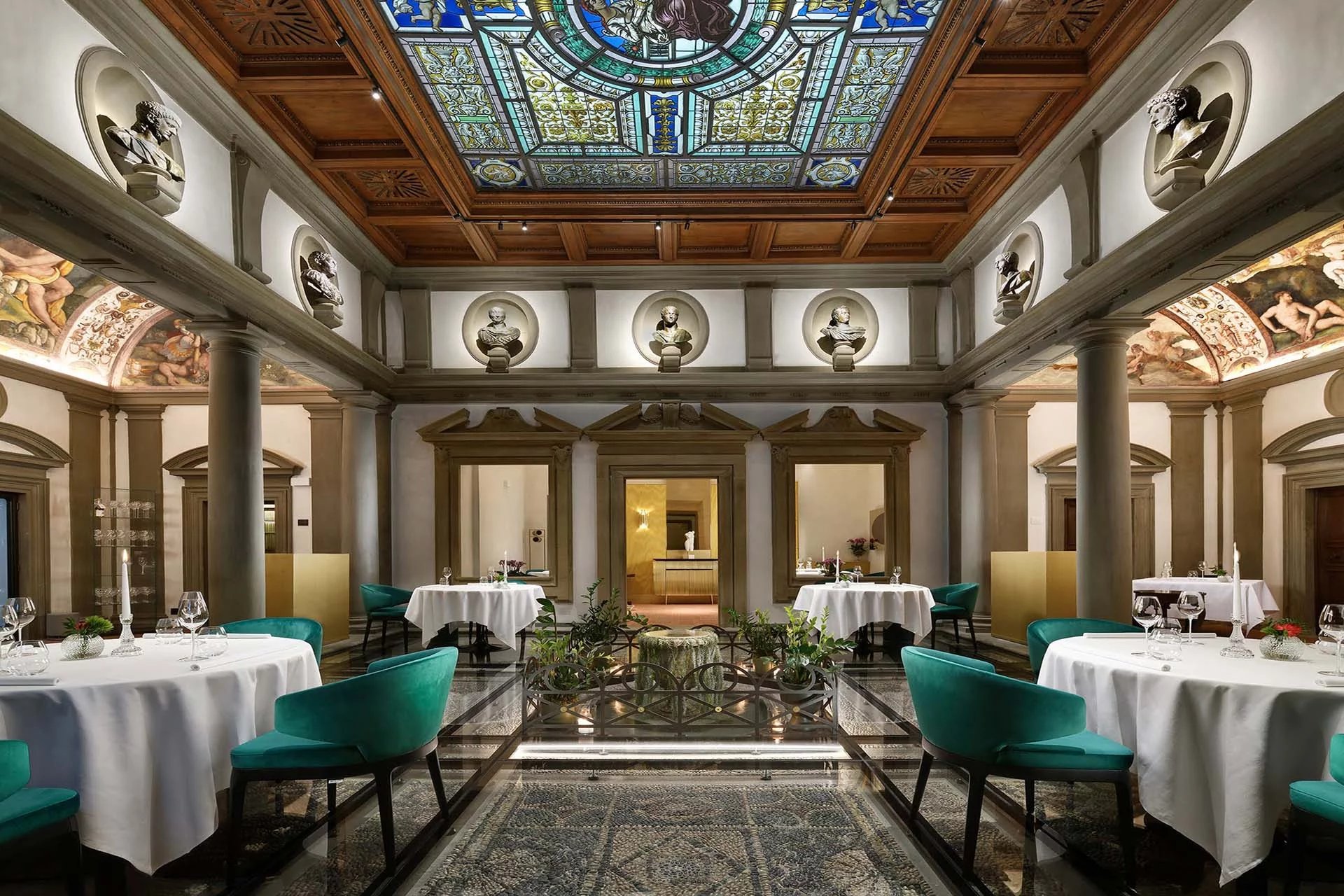
A notable example in this category is Palazzo Portinari Salviati in Florence, where private apartments, a boutique hotel, a restaurant, a lounge bar, a bistro, and a spa coexist within a historic building spanning over 5,200 m². The property combines the charm of a Renaissance palace with contemporary amenities such as a concierge service, a gym, an indoor pool, a sauna, a Turkish bath, and massage areas.
Here, history is experienced through an urban and international lens. The private residence is set within a well-serviced, elegant, and central setting, where value stems from the interplay between historic architecture, high-end amenities, and a one-of-a-kind location.
© Romolini Immobiliare
The Private Residence as a Place of Continuity
The historic private residence has a distinct character. While the palace faces the city, the villa faces the landscape. Gardens, avenues, chapels, lemon houses, parks, and farmland all contribute to creating a self-contained world that is more intimate and familial.
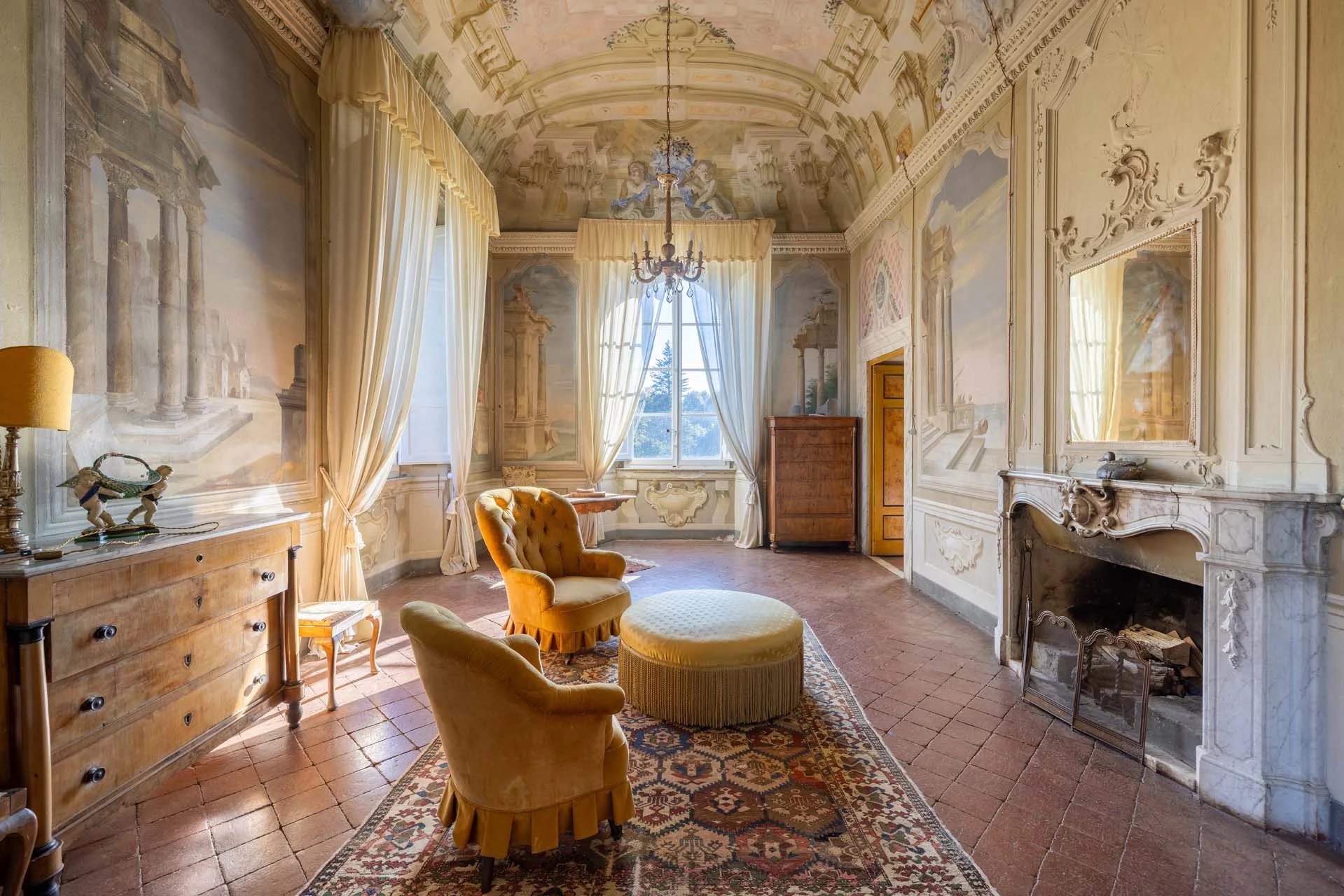
An emblematic example is Villa Nicolao, a frescoed Renaissance villa near Lucca, with 2,275 m² of interior space, 14 bedrooms, and 11 bathrooms. An imposing Renaissance building with a square floor plan, dating from the 15th to the 16th century, spread over five levels.
In a residence of this kind, history is not experienced as part of the city’s rhythm, but as a complete domestic experience. Reception rooms, a library, loggias, frescoed rooms, and service areas make up a home designed to welcome, represent, and preserve.
Two Forms of Prestige
The prestige of a noble palace stems from its location and its relationship with the city. An apartment or a noble floor in a historic palace allows one to live just a few steps away from major cultural sites, while retaining the charm of frescoed ceilings, antique floors, historic staircases, and grand proportions.
The prestige of a private residence, on the other hand, stems from the possibility of owning an entire property. A historic villa offers not only exquisite interiors but also privacy, a garden, views, a park, a private chapel, an annex, or land. The value lies not only in the building itself but in the property as a whole.
This is why luxury villas for sale and palaces in historic city centers cater to different desires. The palace offers central location, urban culture, and prestige. The villa offers space, privacy, and a more personal way of living.
© Romolini Immobiliare
Historic Palaces: Art, Amenities, and Urban Life
Noble palaces are particularly suited for those who wish to experience history without giving up city life. Florence, Rome, Venice, Siena, or Lucca offer settings where living becomes a daily cultural experience: stepping out of your home means entering a historic square, visiting a museum, strolling through an ancient neighborhood, or experiencing the city with rare intensity.
A refined example is Palazzo Bargello near Piazza della Signoria, where the master apartment features large reception halls with frescoed ceilings and a library set within a wood-paneled mezzanine niche. Here, the building’s history meets an elegant, urban, and deeply Florentine living experience.
These properties are often chosen by those seeking a top-tier pied-à-terre, a primary residence in a city of art, or a property capable of combining private use with heritage value.
Historic Villas: Privacy, Landscape, and Family Life
Historic private residences offer a deeper connection to their surroundings. A villa is not limited to its interior spaces: it comes to life through its garden, views, pathways, outbuildings, and relationship with the countryside. Life in such a home moves at a slower, more sheltered pace, more closely tied to family life and the quality of the spaces.
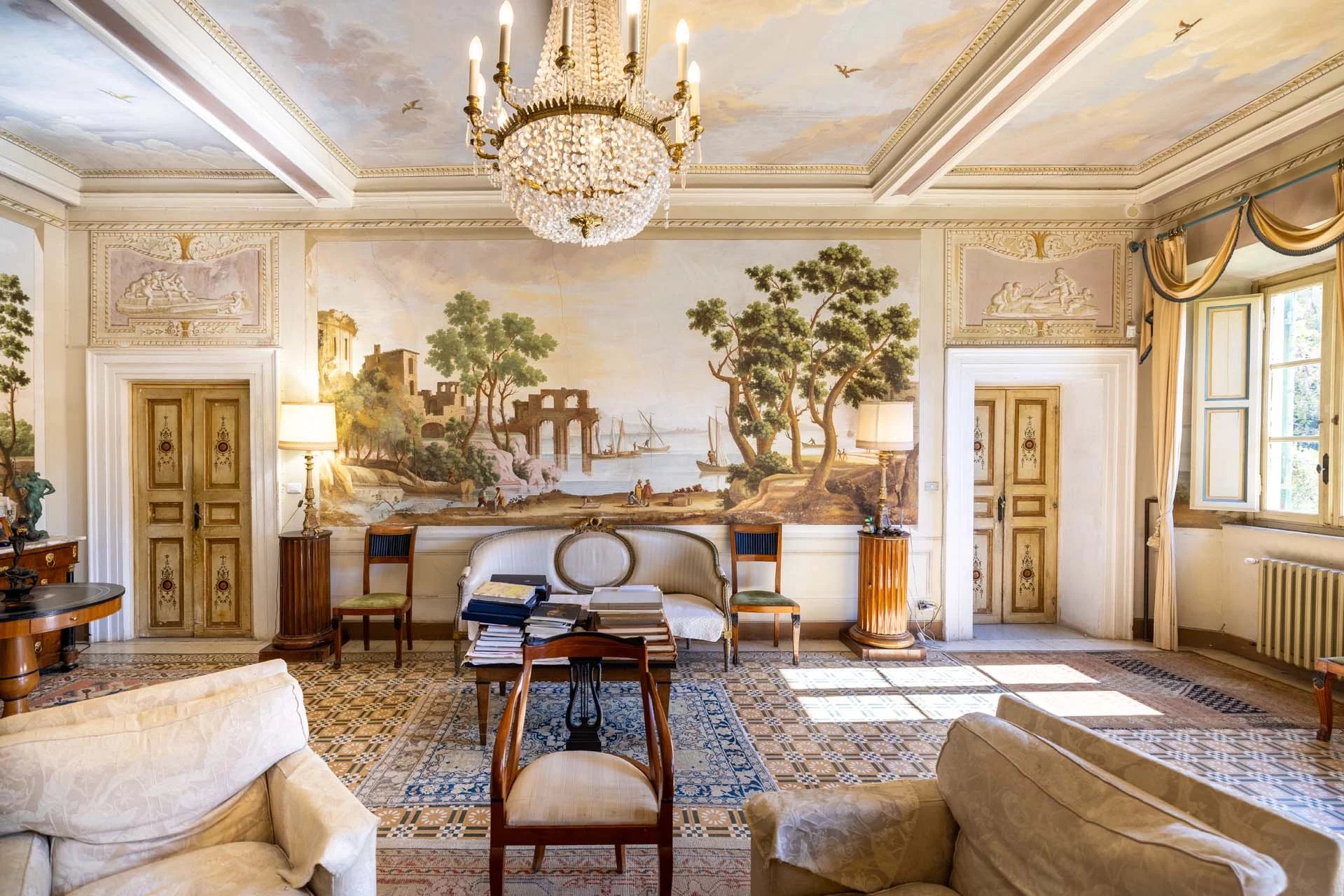
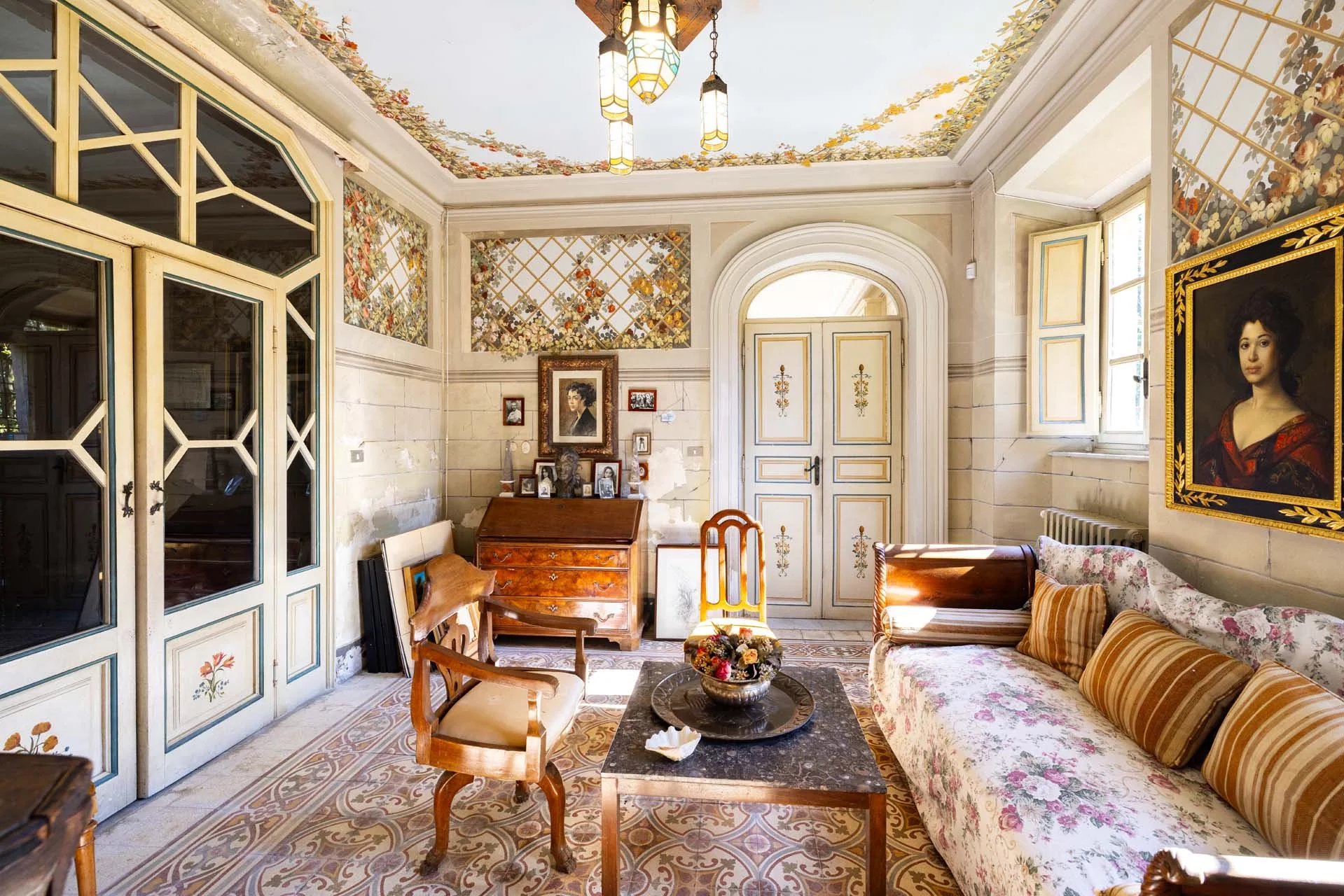
The historic villa with grounds for sale in Camaiore exemplifies this aspect well. The property features decorated and frescoed rooms, a central drawing room, a study, and a fully frescoed library, all set within a context where art, history, and landscape come together to form an elegant and private ensemble.
In properties of this kind, history is experienced daily through architectural details, materials, gardens, and atmosphere. The private residence becomes a place to live, not just for entertaining.
© Romolini Immobiliare
Private Use, Hospitality, and Real Estate Value
Both noble mansions and private residences can have great real estate potential, but for different reasons. A historic mansion emphasizes location, urban rarity, architectural quality, and the potential to integrate high-end amenities. A historic villa, on the other hand, emphasizes space, privacy, outdoor areas, flexibility of use, and hospitality potential.
A private residence can become a boutique retreat, a family home, a venue for select events, or a charming hospitality property. A noble palace, conversely, can house luxury apartments, urban hospitality venues, reception spaces, or exclusive services. In both cases, value depends on the balance between historical preservation and contemporary functionality.
Restoration and Authenticity
Restoration is the decisive factor for both types of properties. In a noble palace, it is essential to highlight frescoes, staircases, salons, and common areas without compromising the quality of living expected in a modern residence. In a historic villa, the home’s identity must be preserved while discreetly incorporating modern systems, amenities, security, and services.
The risk, in both cases, is turning history into mere decoration. The most authentic value arises when the original elements remain visible: antique floors, decorated ceilings, fireplaces, portals, loggias, libraries, chapels, gardens, and views. It is these details that make the property unique and difficult to replicate.
© Romolini Immobiliare
Two Ways of Experiencing Heritage
The choice between a noble palace and a private residence depends on how one wishes to experience history. The palace is ideal for those seeking a central location, urban art, amenities, and a daily connection with the city. The private residence is perfect for those who desire space, privacy, scenic views, and a more intimate lifestyle.
Both options represent the pinnacle of luxury living. The noble palace allows you to live within the city’s history; the private residence lets you cherish a more personal history, centered on home, garden, family, and the local area.
The Value of a Story to Be Lived
Noble palaces and private residences reveal two facets of the same desire: to live in authentic places that reflect the passage of time and preserve their value. In these properties, luxury stems not only from the property’s size or amenities, but from its cultural depth.
Whether it’s a Florentine palace overlooking the city or a historic villa nestled in the countryside, what matters is the opportunity to experience history as part of everyday life—not as a static museum, but as a livable, elegant space still capable of generating new life.


Copyright © Romolini

