




 Our Family


 Italiano
 Deutsch


 Back to list

How to restore a listed farmhouse without losing its historical value

Published 29-12-2025
Restoring a listed farmhouse is one of the most fascinating and, at the same time, most delicate operations on the Italian real estate scene. We are talking about buildings that encapsulate centuries of history, original architecture, ancient materials and a territorial identity that cannot be treated as a simple "property to be restored." A listed farmhouse is a cultural heritage: an asset that belongs to those who buy it, but which continues to dialogue with the community, with the memory of the place and with the traditions of those who have inhabited it over time.
Therefore, restoring it means embarking on a path made up of technical expertise, aesthetic sensitivity and deep respect for what makes the structure unique. In this article we will see how to properly approach such a restoration, what the essential steps are, and how to preserve – or rather, enhance – the historic value of the property.

Start with context: understand what you are restoring
Every listed farmhouse tells a different story. Before even talking about design, materials or budget, it is essential to know:
- era of construction
- evolution of the building over time
- original functions (rural dwelling, barn, tower house, convent...)
- ancient construction techniques
- typical materials of the area
- valuable elements to be preserved absolutely
This phase of analysis makes it possible to identify what needs to be protected, what can be modified, and what interventions are allowed by regulations.
The most successful restoration is the one that understands the soul of the place: whoever intervenes on a historic building must become an interpreter, not a protagonist.
The regulations of listed properties: constraints, permits and procedures
Bound farmhouses are protected by the Cultural Heritage Code, a regulation that protects properties of historical, architectural or landscape value. Before starting any work, it is mandatory to obtain permission from the Soprintendenza, which assesses:
- consistency of the project with the original features
- reversibility of the interventions
- materials used
- respect for proportions and architectural layout
- visual and landscape impact
It is a procedure that requires time and expertise, but it is also a guarantee that the farmhouse will not be distorted. This is why it is essential to work with architects and technicians who are experts in conservative restoration.

Ancient materials and modern techniques: finding the balance
Restoring a listed farmhouse does not mean replicating the past to the letter, but maintaining its identity while integrating modern technologies. The goal is a virtuous balance between:
Traditional materials
- local stone
- solid wood beams
- handmade terracotta tiles
- natural lime for plasters and mortars
- ancient or reclaimed roof tiles
Contemporary solutions
- constraint-compatible thermal insulation
- integrated, non-impact photovoltaic systems
- discreet home automation
- wooden window frames with performance glazing
- underfloor heating powered by heat pumps
When history and innovation coexist without conflict, a restored farmhouse can achieve levels of comfort equal to a modern residence while keeping its authenticity intact.
Preserving what makes the farmhouse unique
Every historic building has elements that represent its identity and determine its value. They can be:
- ceilings with original beams
- stone arches
- 18th-century fireplaces
- ancient masonry troughs
- time-worn terracotta floors
- local stone jambs
- interior courtyards or rural loggias
Restoration should focus on preserving these elements, which should not be replaced but consolidated and protected. A restored farmhouse loses value when it loses authenticity.
A well restored farmhouse, on the contrary, can triple it.

New spaces, same volumes: how to reinterpret without distorting
The regulations for listed properties allow interior changes as long as the original volumes, heights and proportions are respected. This is why many owners choose contemporary reinterpretations of spaces:
- open space kitchens integrated into the old rooms
- designer bathrooms inserted into pre-existing niches
- suites with panoramic loggias
- wellness areas carved out of old cellars
- studio or library in a former barn
- light windows that do not alter the wall structure
The important thing is that each choice is consistent with the soul of the farmhouse, transforming it without erasing its memory.
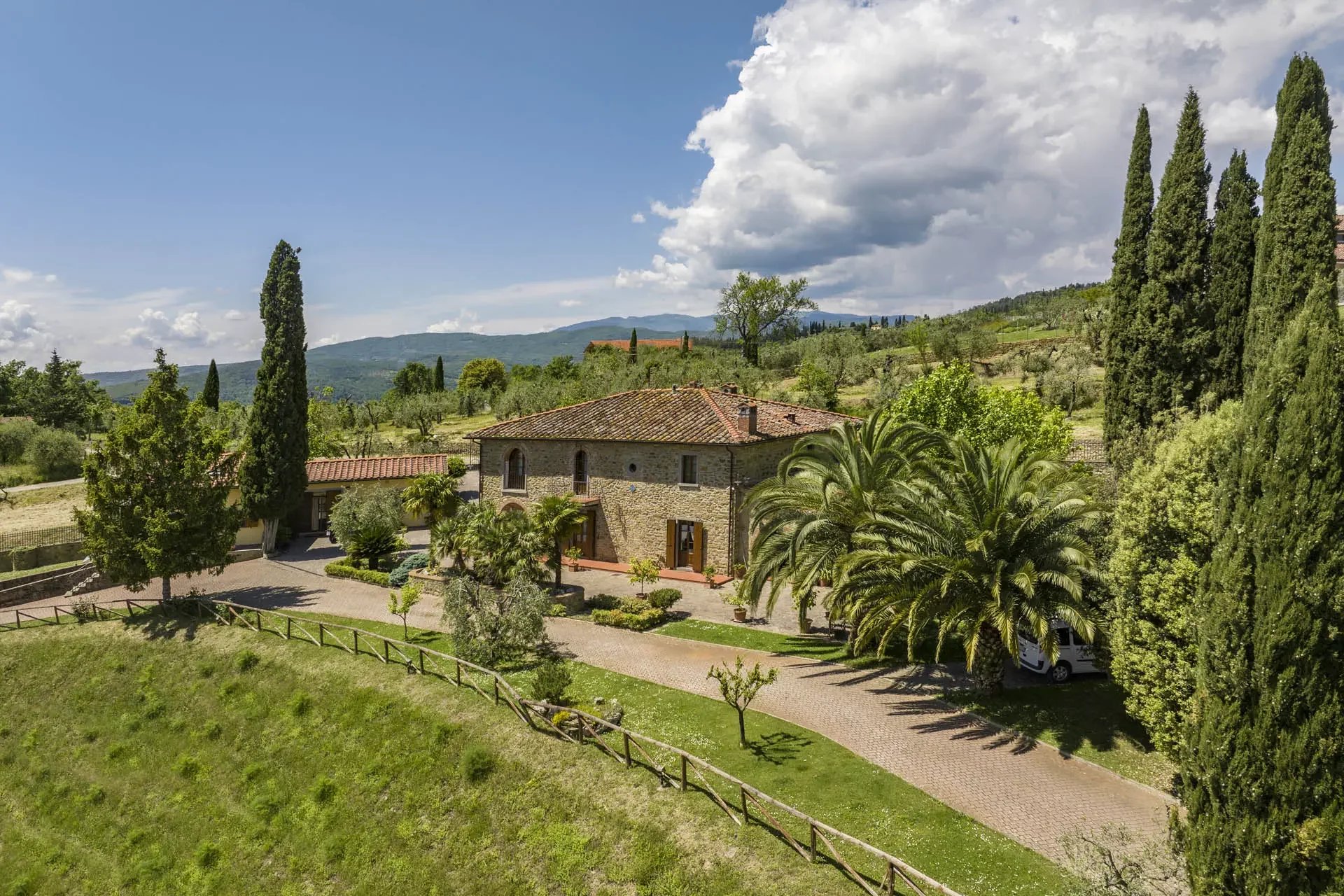
Landscape as a value: gardens, olive trees and vineyards
A listed farmhouse is not only its building: the surrounding landscape is an integral part of the historical value. During restoration, special attention should be paid to:
- maintenance of dry-stone walls
- recovery of historic olive groves and vineyards
- use of native plants
- integration of outdoor paths with traditional materials
- non-invasive lighting
- respect for panoramic views
The Italian landscape is a heritage to be preserved as much as the architecture: its authenticity is one of the reasons why these properties attract buyers from all over the world.

Relying on the right professionals: the key to success
Restoring a listed farmhouse requires a highly specialized team:
- architects experienced in conservation restoration
- structural engineers
- craftsmen capable of dealing with ancient materials
- technicians specializing in constraint-compatible energy efficiency
- consultants experienced in handling paperwork with the Soprintendenza
Those who choose to purchase or restore a listed property must be able to count on expert guidance, capable of combining vision, sustainability and respect for the rules.
It is precisely in this area that realities such as Romolini Immobiliare offer added value: thanks to a consolidated network of professionals, restorers and specialized companies, they accompany clients at every stage, from the finding of the property to the final valorization.
Restoring a listed farmhouse is not just a building intervention, but a cultural gesture.
It means saving a fragment of Italian history, bringing it back to life and transforming it into a contemporary residence that respects the past and looks to the future.
Whoever faces this path with sensitivity and competence obtains an extraordinary result: a unique house, capable of conveying emotions, beauty and authenticity.
A heritage to be experienced every day and passed on to future generations.


Copyright © Romolini

