




 Our Family


 Italiano
 Deutsch


 Back to list
 Chianti: among vineyards, art and historic residences to experience" title="
Chianti: among vineyards, art and historic residences to experience
">Chianti: among vineyards, art and historic residences to experience

Published 02-01-2026
Chianti is one of Italy's most iconic territories, a land where the landscape is not just a backdrop but an essential component of the living experience. Between Florence and Siena, the hills draw a natural balance of orderly vineyards, centuries-old olive groves, woods and medieval villages that seem suspended in time. It is here that an authentic, refined lifestyle that is deeply connected to history takes shape.
Living in Chianti means living in an area that has been able to preserve its identity while opening up to an international dimension. A place where time still follows the rhythm of the seasons and where architecture, nature and culture coexist in harmony.
A territory shaped by history
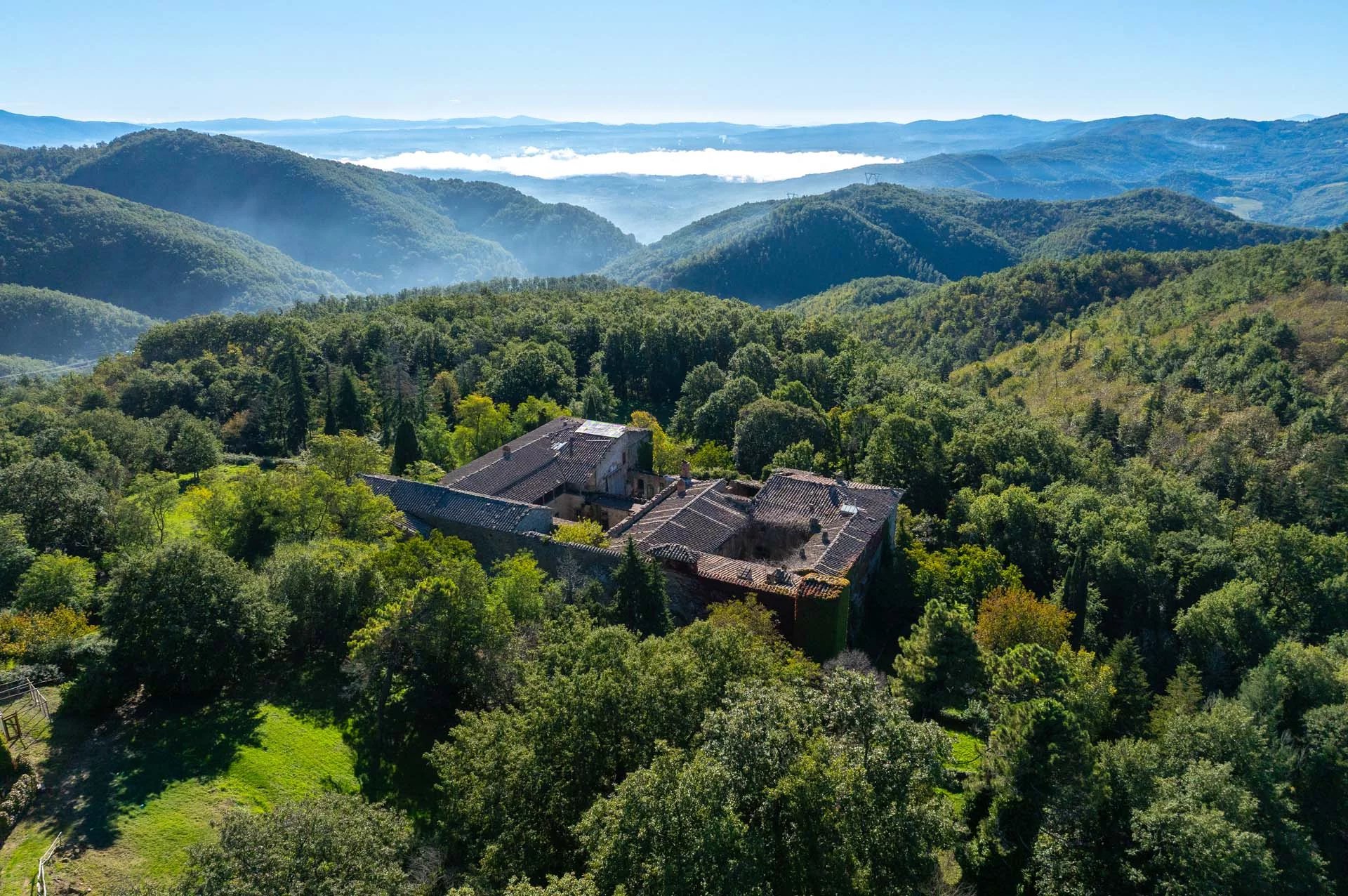
Chianti has been a land of borders and encounters for centuries. Castles, abbeys, Romanesque churches and fortified farms tell a story of agriculture, spirituality and rural nobility. This legacy is still legible today in the landscape and historic buildings that dot the hills.
An emblematic example is the Abbazia Chiantigiana, a medieval complex nestled in the woods near Greve in Chianti, which retains a fascinating architectural layout and lends itself to a major restoration project. Structures like this one testify that Chianti is not only a place to live, but also a heritage to be enhanced with respectful and far-sighted interventions.
Vineyards as cultural identity
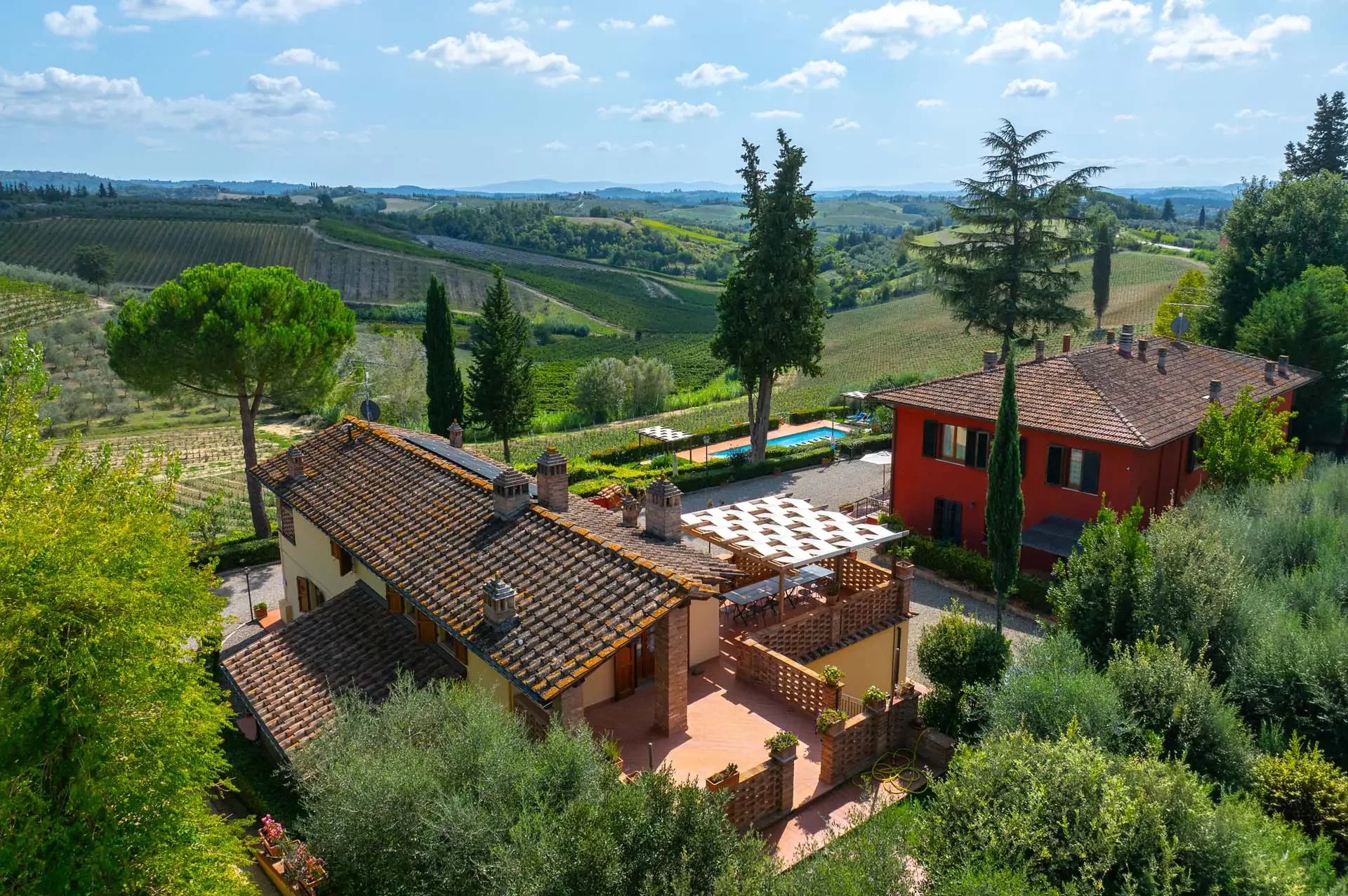
In Chianti, wine is an integral part of the landscape and everyday life. The rows of vines follow the curves of the hills, creating the natural geometry that has made this area famous throughout the world. The presence of vineyards is not only aesthetic, but cultural: it punctuates the rhythms of rural life and strengthens the bond with the land.
Some properties combine residence and agricultural vocation in an exemplary way, such as Villa Boccaccio, a villa with swimming pool and Chianti vineyard in the hills between Certaldo and Montespertoli. Here contemporary living is integrated with a historic agricultural dimension, offering the possibility of experiencing wine as a passion, an investment and an integral part of lifestyle.
Historic homes to live in every day
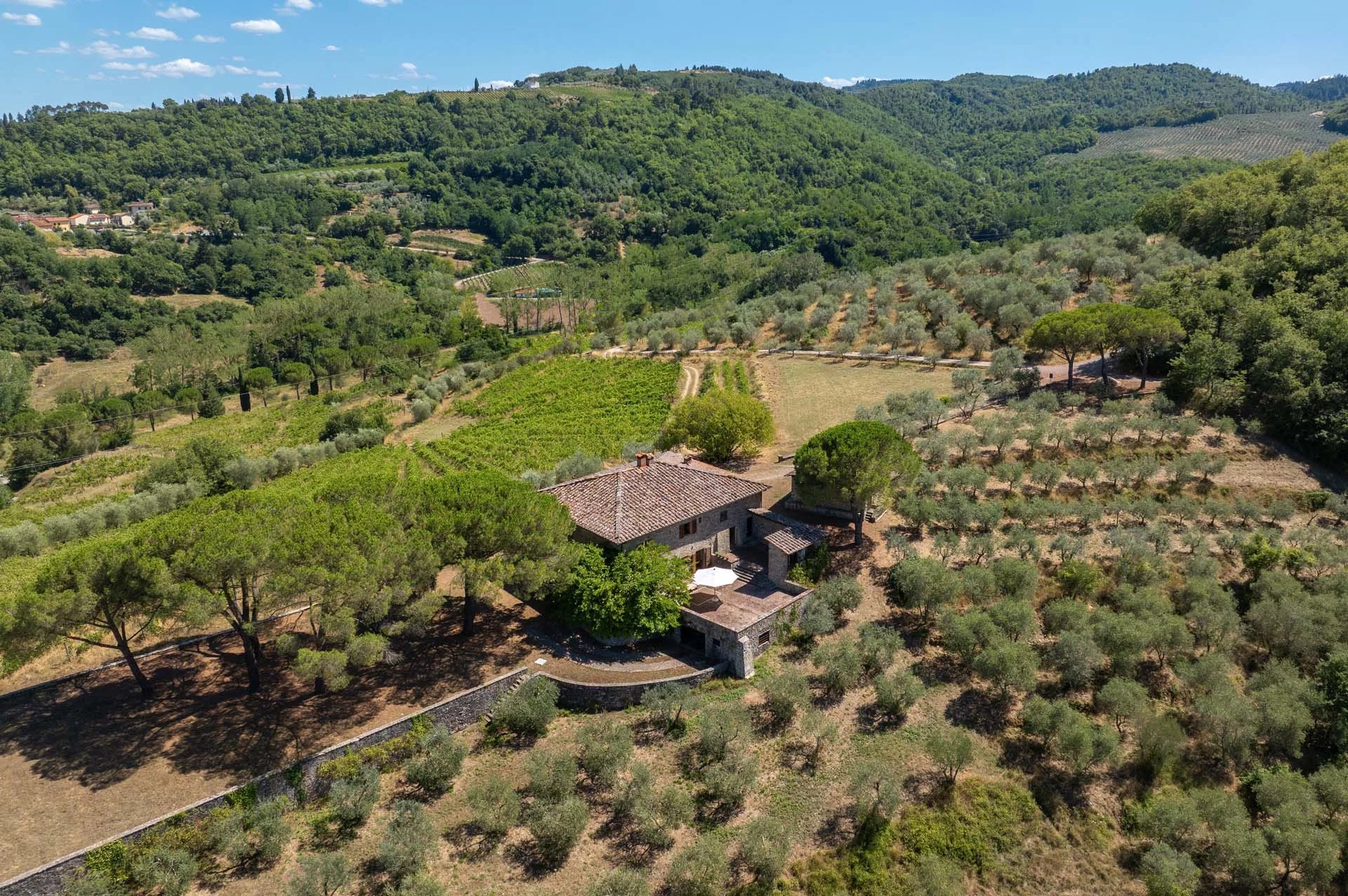
One of the most fascinating aspects of Chianti is the variety of historic dwellings: stone farmhouses, period villas, ancient estates and rural complexes that preserve original materials and proportions. Wooden beams, terracotta floors, panoramic loggias and interior courtyards define spaces designed to last.
Casale Cavriglia, located in the foothills of Chianti Aretino, perfectly represents this housing model: a restored rustic home that maintains its original character while offering comfort and brightness. It is the ideal type of residence for those seeking a direct relationship with the landscape without sacrificing daily livability.
Historic estates and large properties
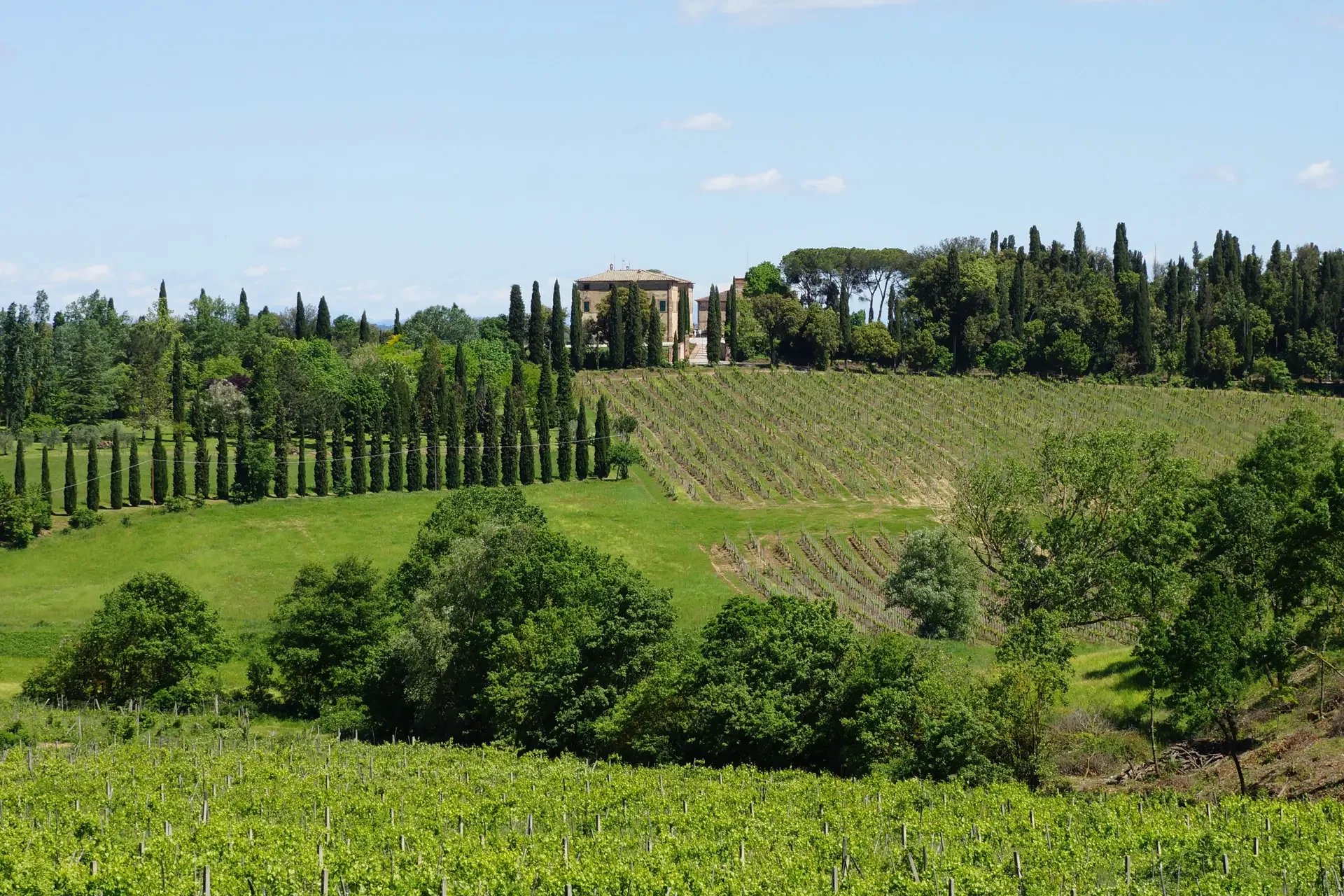
Alongside private residences, Chianti is also home to large estates of historical and territorial value. Some of these properties retain a strong agricultural vocation, while others lend themselves to high-level hospitality projects.
The wine estate near Torrita di Siena, for example, combines a period villa with productive vineyards, embodying the idea of a multifunctional property where residence, production and representation coexist in balance. Similarly, Tenuta Belsogno, with a historic villa and organic vineyards in Florentine Chianti, recounts a contemporary approach to the enhancement of the territory, attentive to sustainability and quality.
Chianti is not an isolated territory. Villages such as Greve, Castellina, Radda and Gaiole offer a vibrant local life of markets, stores, restaurants and cultural events. This size makes the area particularly suitable for permanent residence or long periods of the year.
Its proximity to Florence and Siena provides easy access to museums, theaters and international infrastructure, while maintaining an everyday life immersed in the countryside. It is this balance that makes Chianti so sought after by families, professionals and international buyers.
The Chianti real estate market
From a real estate perspective, Chianti remains one of the most robust and selective markets in Tuscany. Demand remains high for scenic properties with vineyards, swimming pools or large extensions of land. Historic mansions, especially if well restored or with a clear enhancement project, maintain a high value over time.
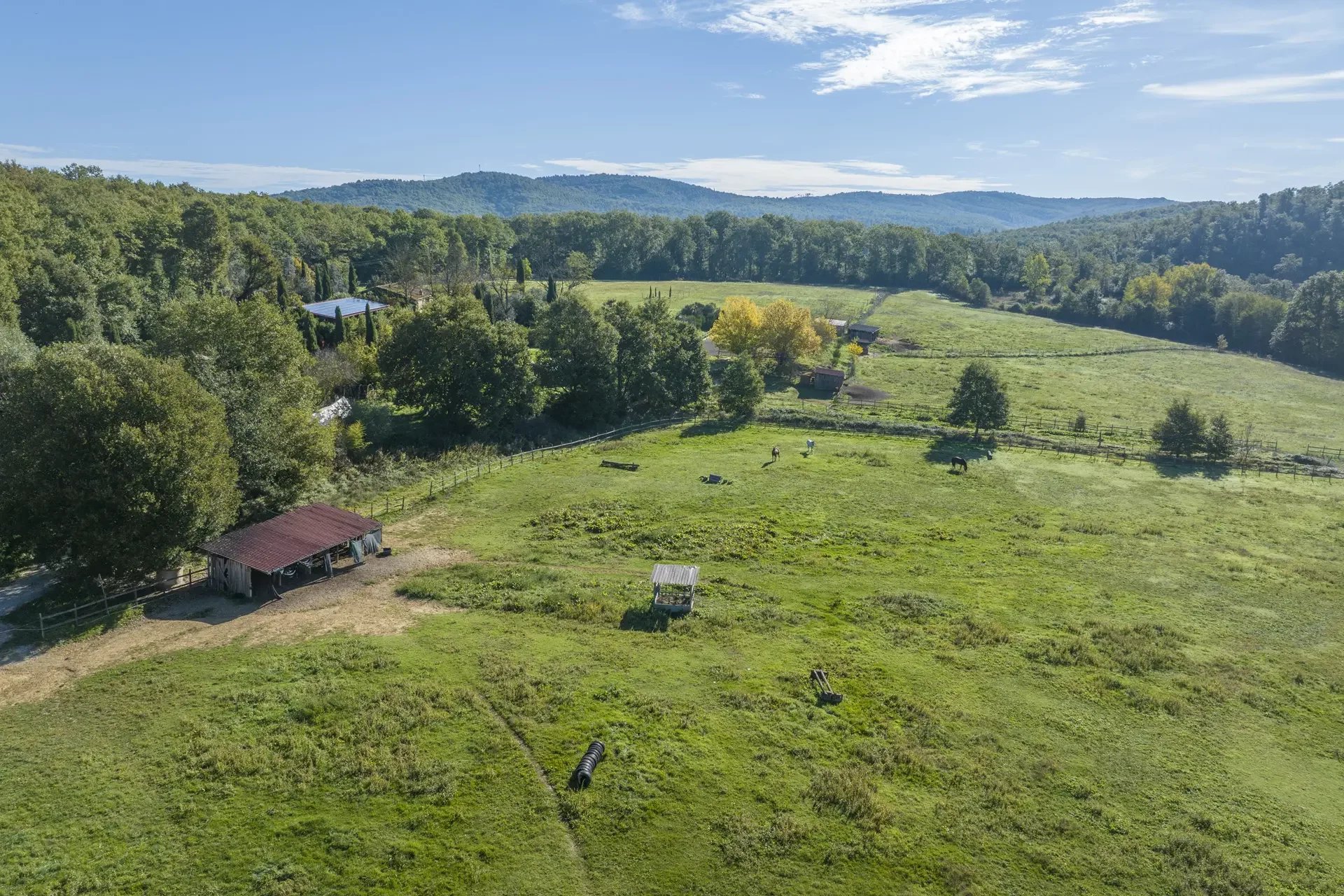
Properties such as the estate with equestrian center in the Siena area also respond to a growing demand for properties capable of hosting specific activities, related to sports, experiential tourism or a lifestyle in close contact with nature.
Contemporary Chianti is an area that looks to the future without denying the past. Many historic homes have been adapted to modern standards with interventions that respect the original architecture, integrating energy efficiency, comfort and discreet technological solutions.
This allows ancient buildings to be experienced in a contemporary way, without distorting their identity. It is a silent but profound transformation that makes Chianti one of the most desired places for those seeking authentic luxury, far from passing fads.
Among tidy vineyards, art villages and historic residences to experience every day, Chianti continues to represent one of the highest expressions of the Tuscan lifestyle. An area capable of offering beauty, quality of life and value over time.
Whether it is a villa with a vineyard, a panoramic farmhouse or a large historic estate, living in Chianti means choosing a place that never stops telling its story.


Copyright © Romolini

