 Über Uns


 Italiano
 English



















































 FOTOGALERIE


 Kontakt
Gionatan Guidi
 +39 0575 788948

200 HEKTAR WEINGUT ZUM VERKAUF ZWISCHEN PISA UND FLORENZ, CHIANTI






 Zurück zur Liste


Ref. 2353 Tenuta Castelletto
Toskana - Pisa - San Miniato
Preisvorstellung:
€ 5,500,000
Currency:

 TEILEN
 Benachrichtigen Sie mich
 INNENFLäCHE: 4.701 m²
 Schlafzimmer: 15
 Bäder: 9
 Zustand: Renovierungsbedürftig
 Internet: Ja
 Heizung:
Heizkörper
Heizung:
Heizkörper
 GRUNDSTüCK: 201,21 ha
 Weinberg: 19,94 ha
 Jahresproduktion: 1477 hl
 Olivenhain: 10,03 ha
Anzahl der Pflanzen: 3000
 Jahresproduktion: 3200 kg
Schlafzimmer: 15
Bäder: 9
Zustand: Renovierungsbedürftig
Internet: Ja
Heizung:
Heizkörper
Weinberg: 19,94 ha
Jahresproduktion: 1477 hl
Olivenhain: 10,03 ha
Anzahl der Pflanzen: 3000
Jahresproduktion: 3200 kg
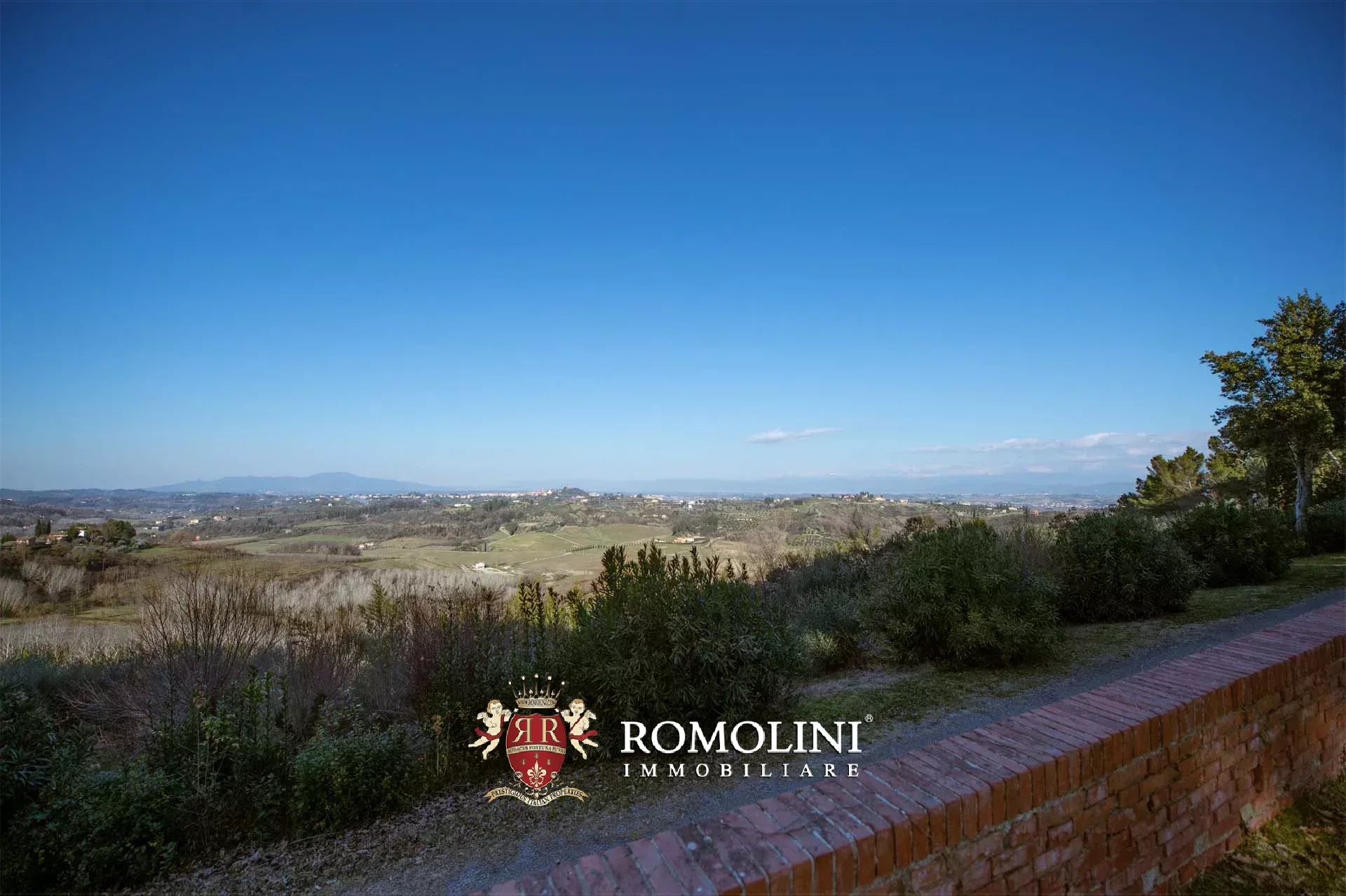
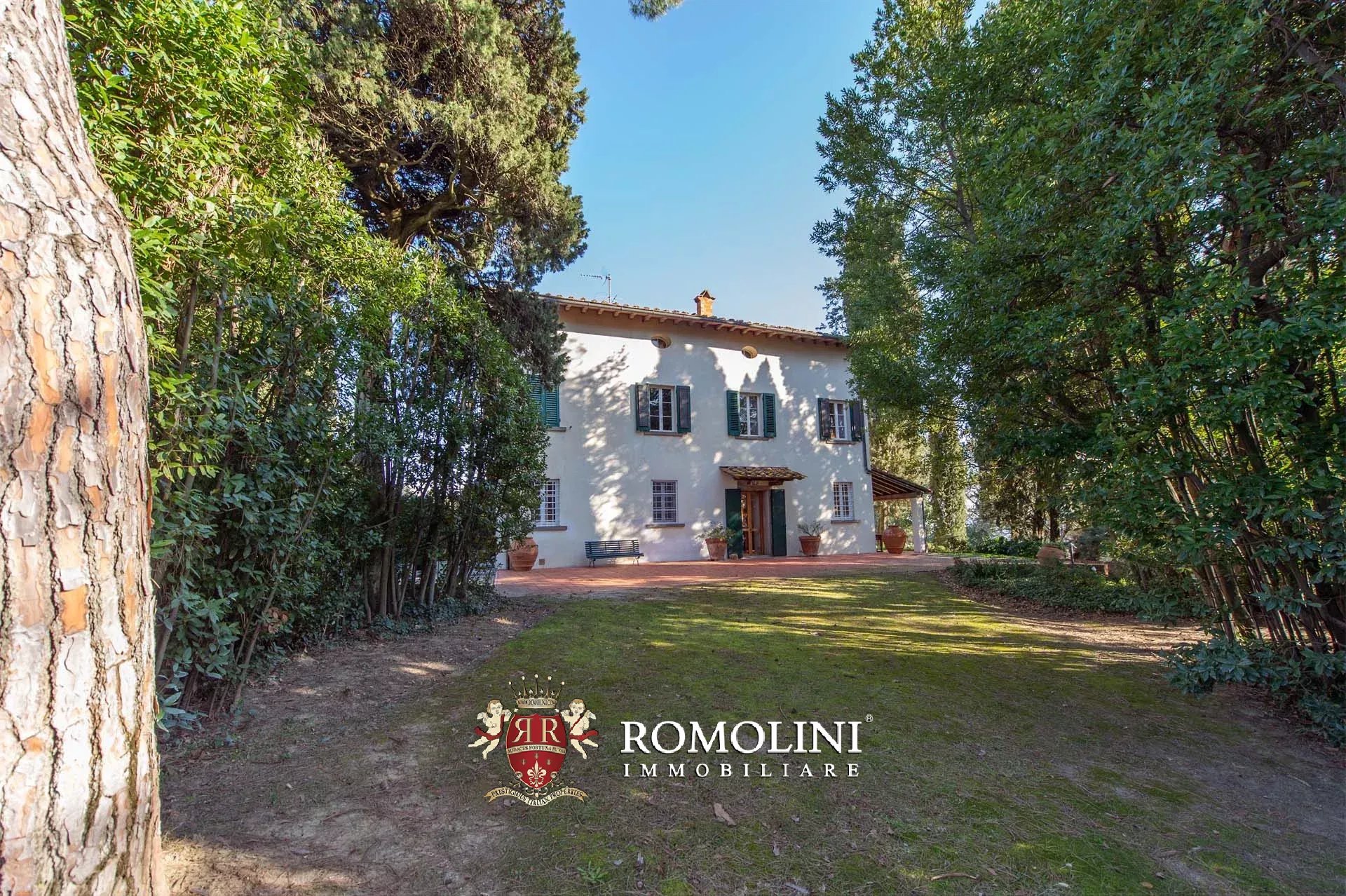
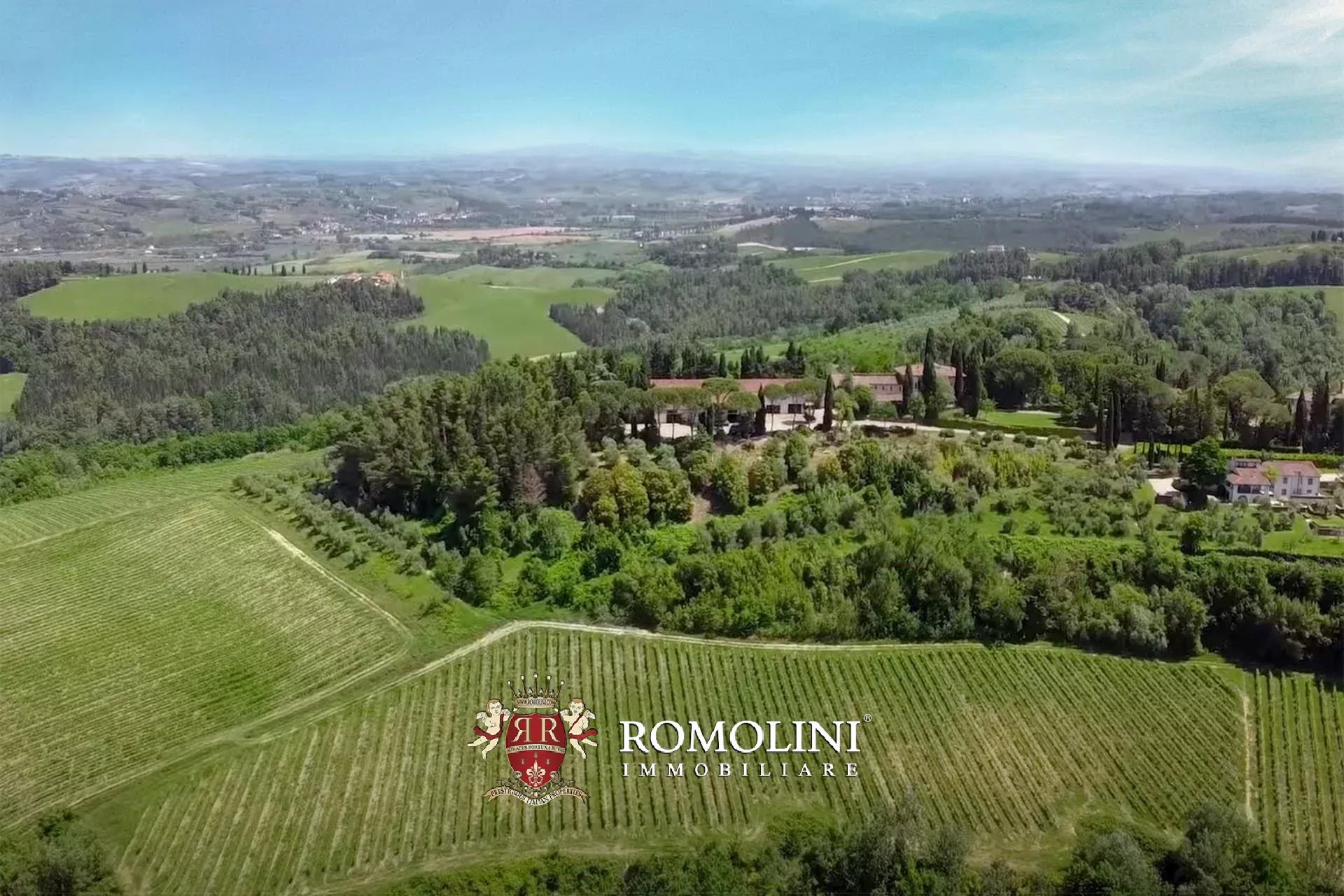
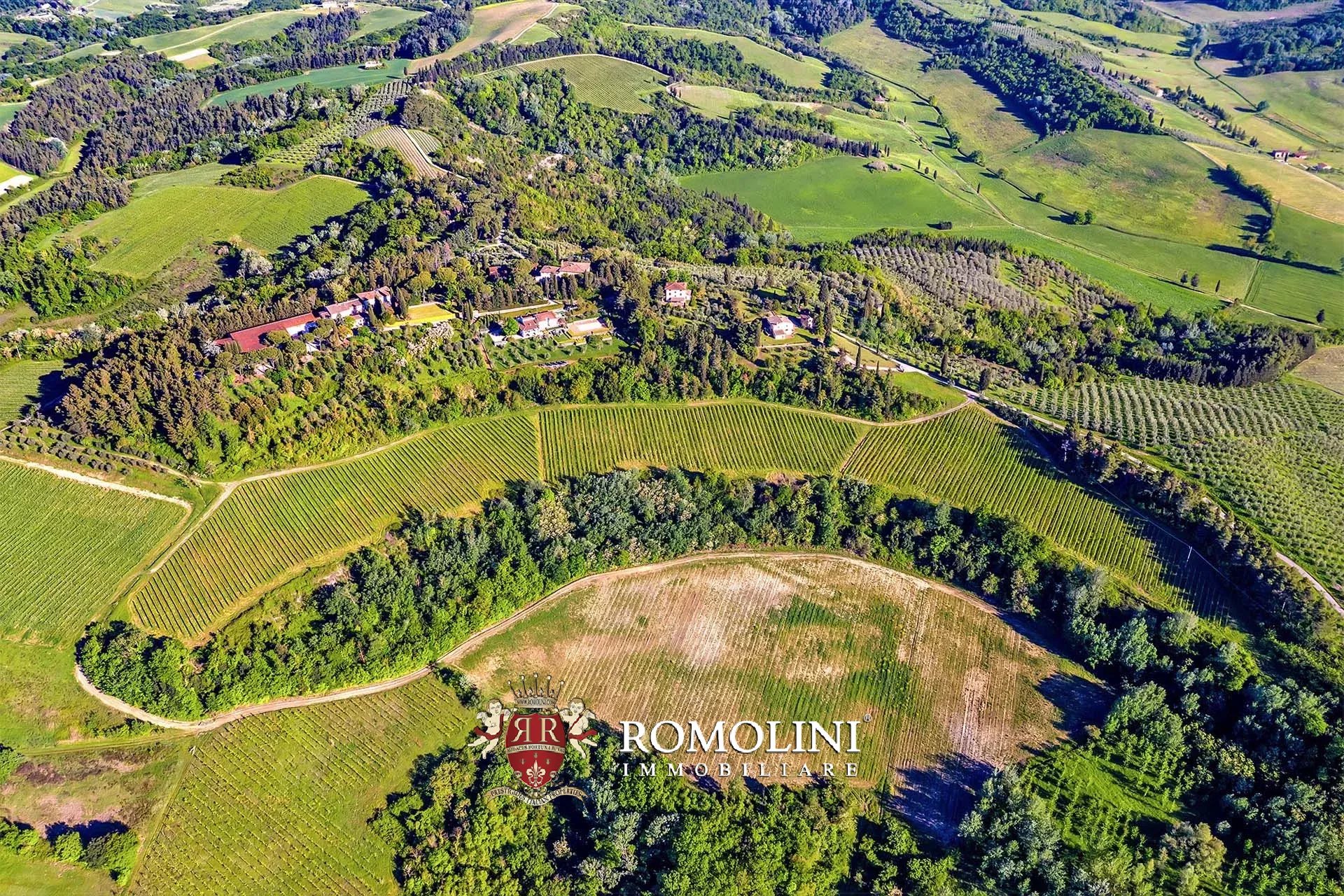
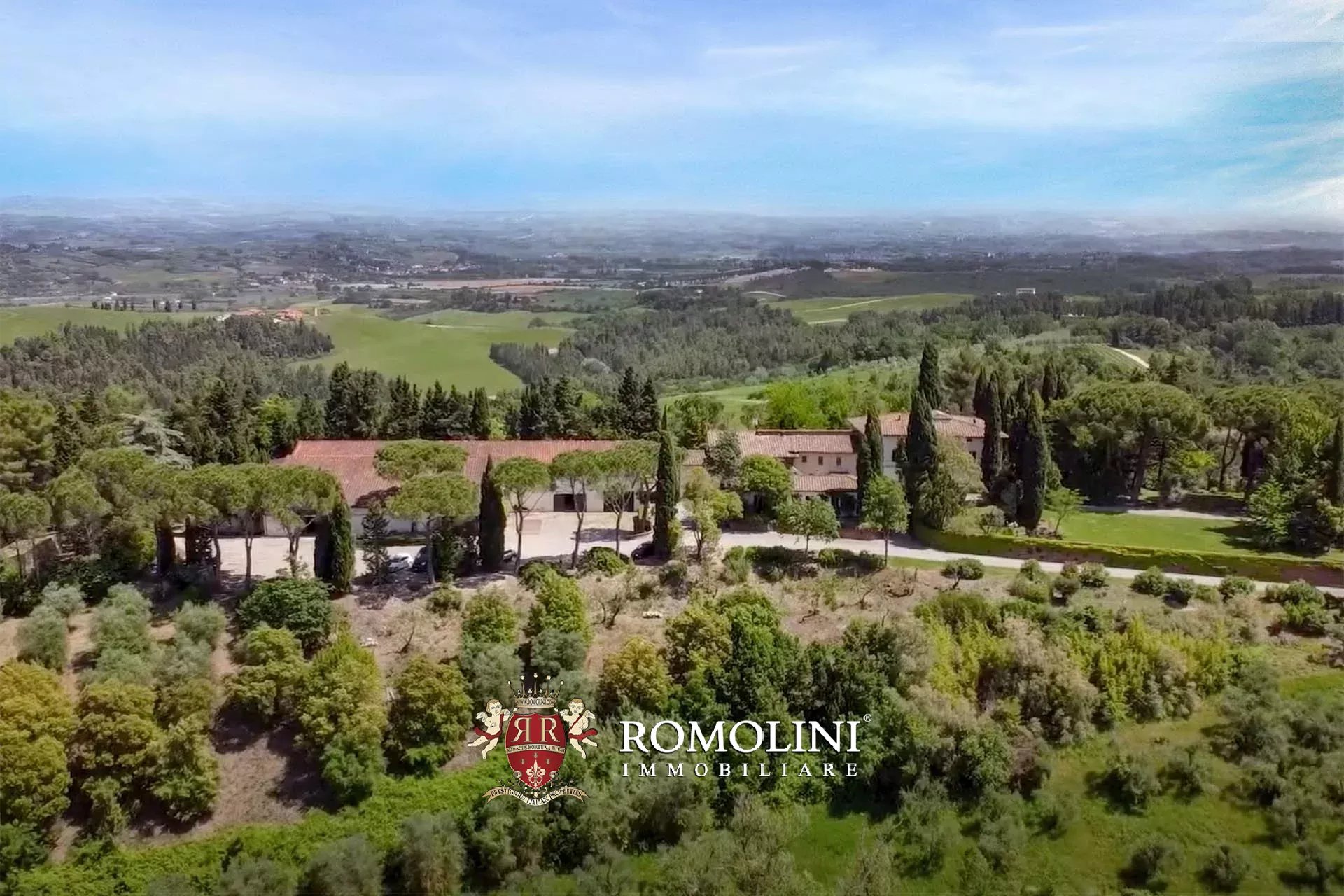
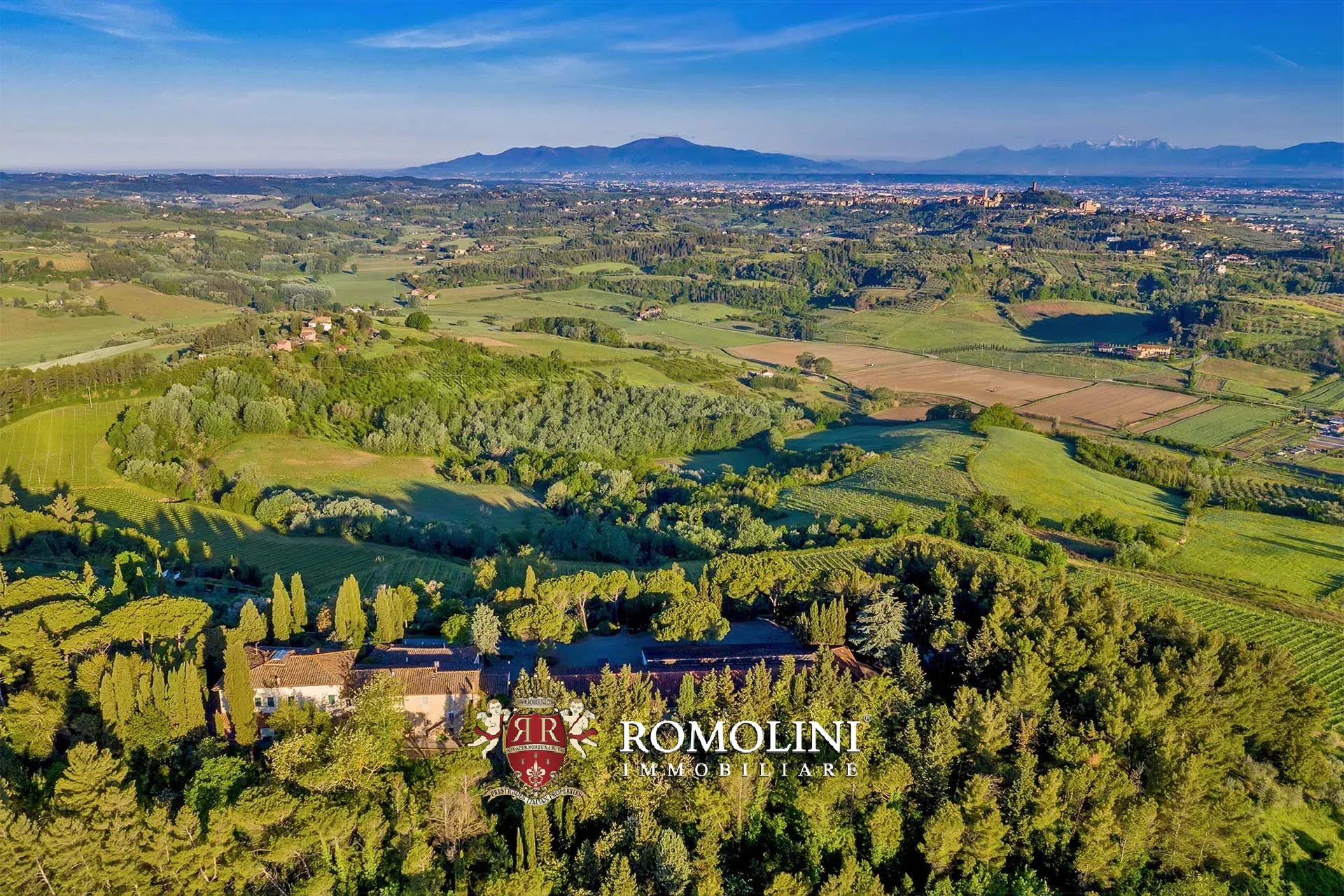
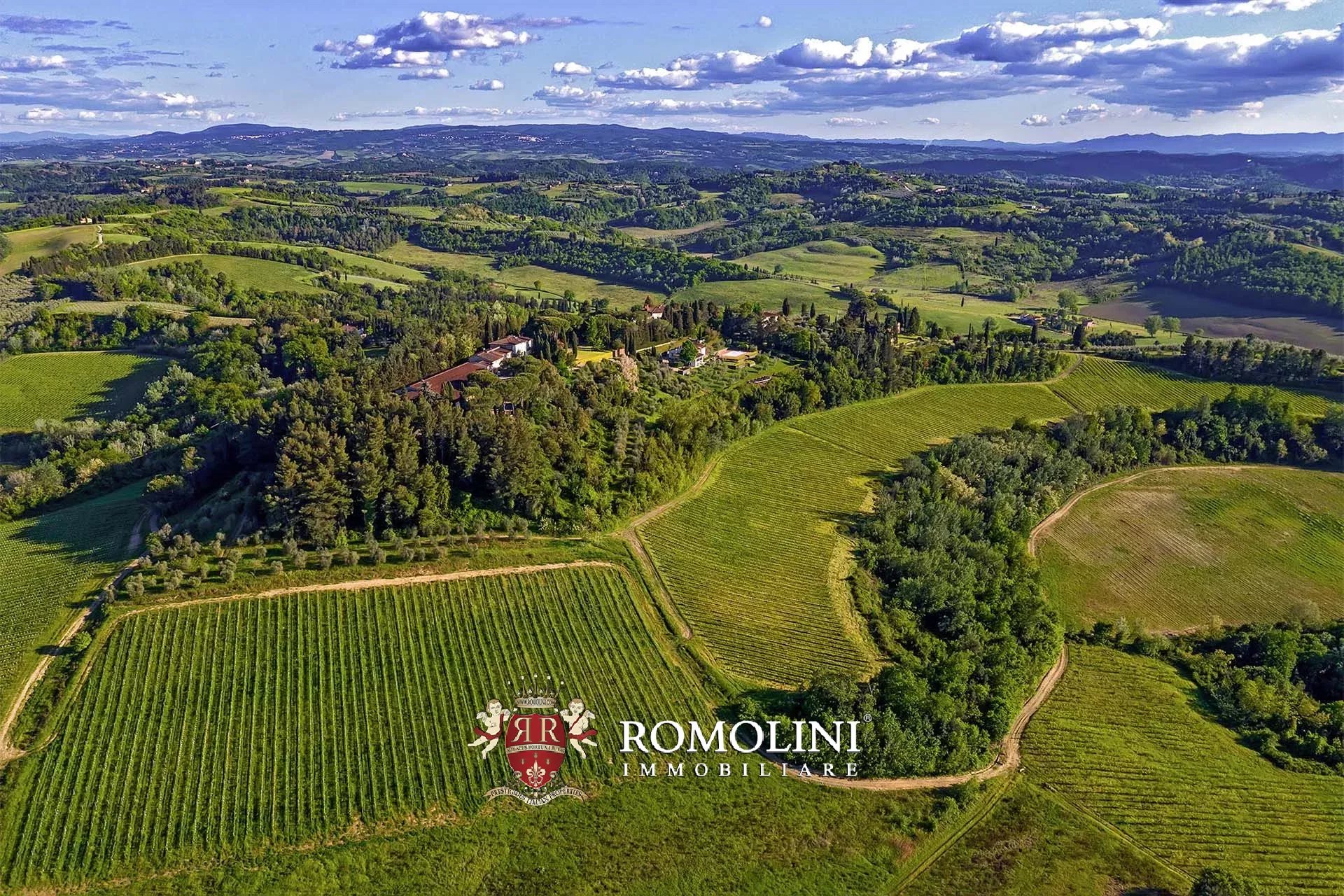
On the hills between Pisa and Florence, not far from the town of San Miniato, 201-hectare wine estate. The property is developed around an elegant 16th-century manor house with various service houses and a large wine cellar (over 1,200 m²). Scattered around the estate are also four rustic farmhouses in need of renovation. The agricultural activity includes Chianti DOCG and IGT vineyards (19.9 ha) and a large olive grove (3,000 trees) that could produce 197,000 bottles of wine and 3,200 kg of oil per year, respectively.
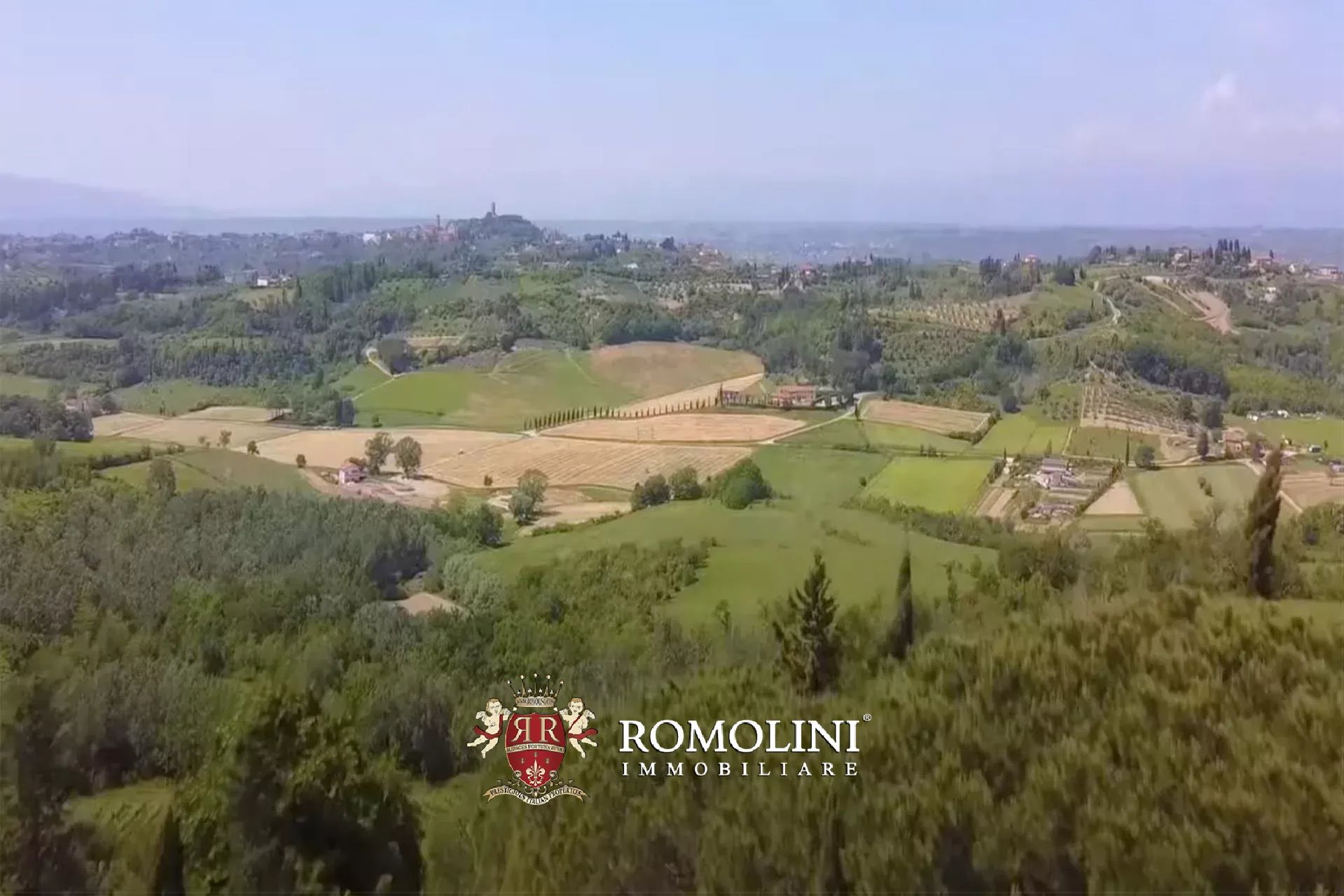
Services are available in the nearby town of San Miniato (7km; 10') but historic and renowned cities such as Pisa, Lucca and Florence are all reachable in less than an hour’s drive. The property is also well served by the airports of Florence and Pisa, each approximately 50 km away.
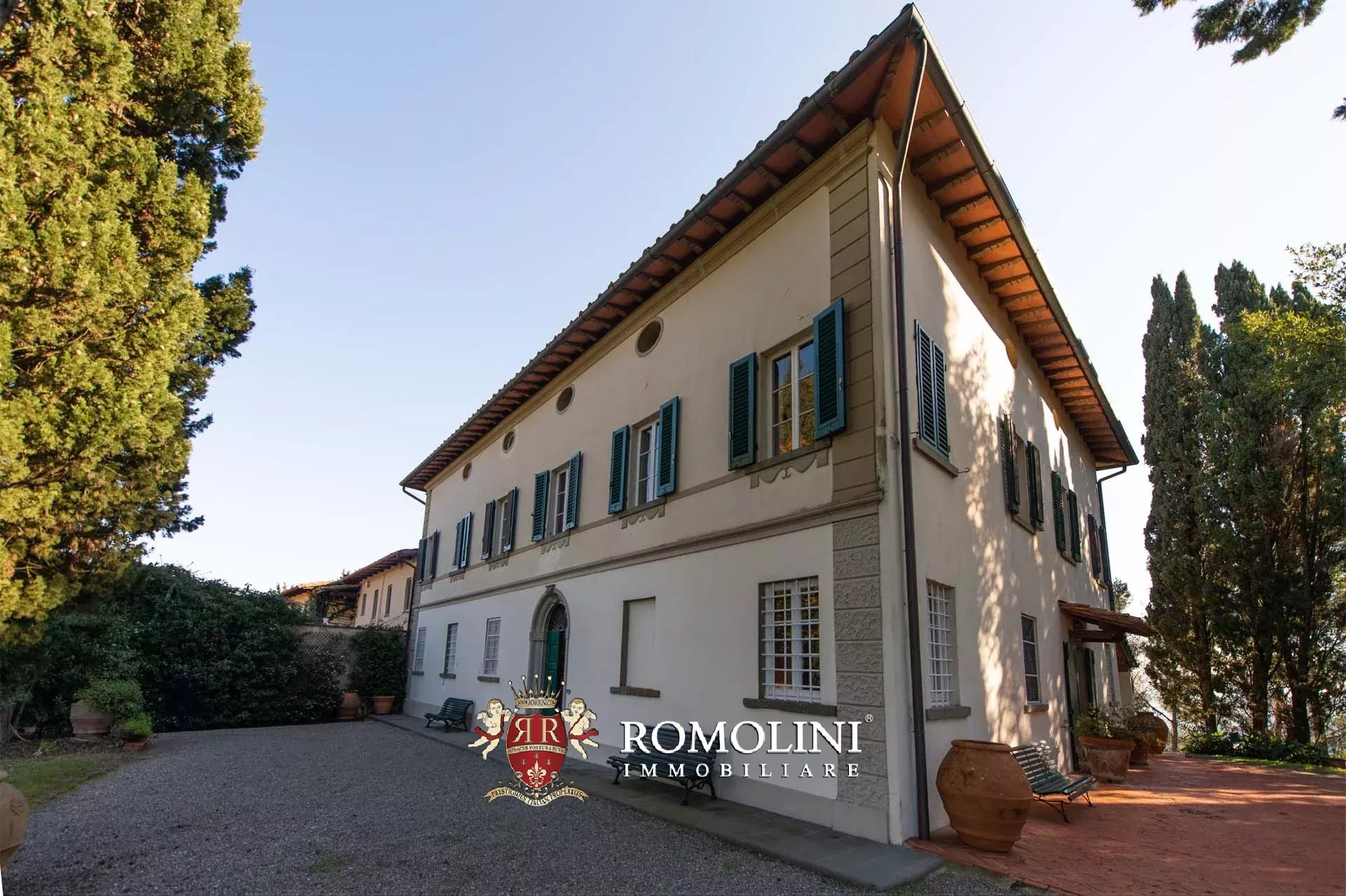
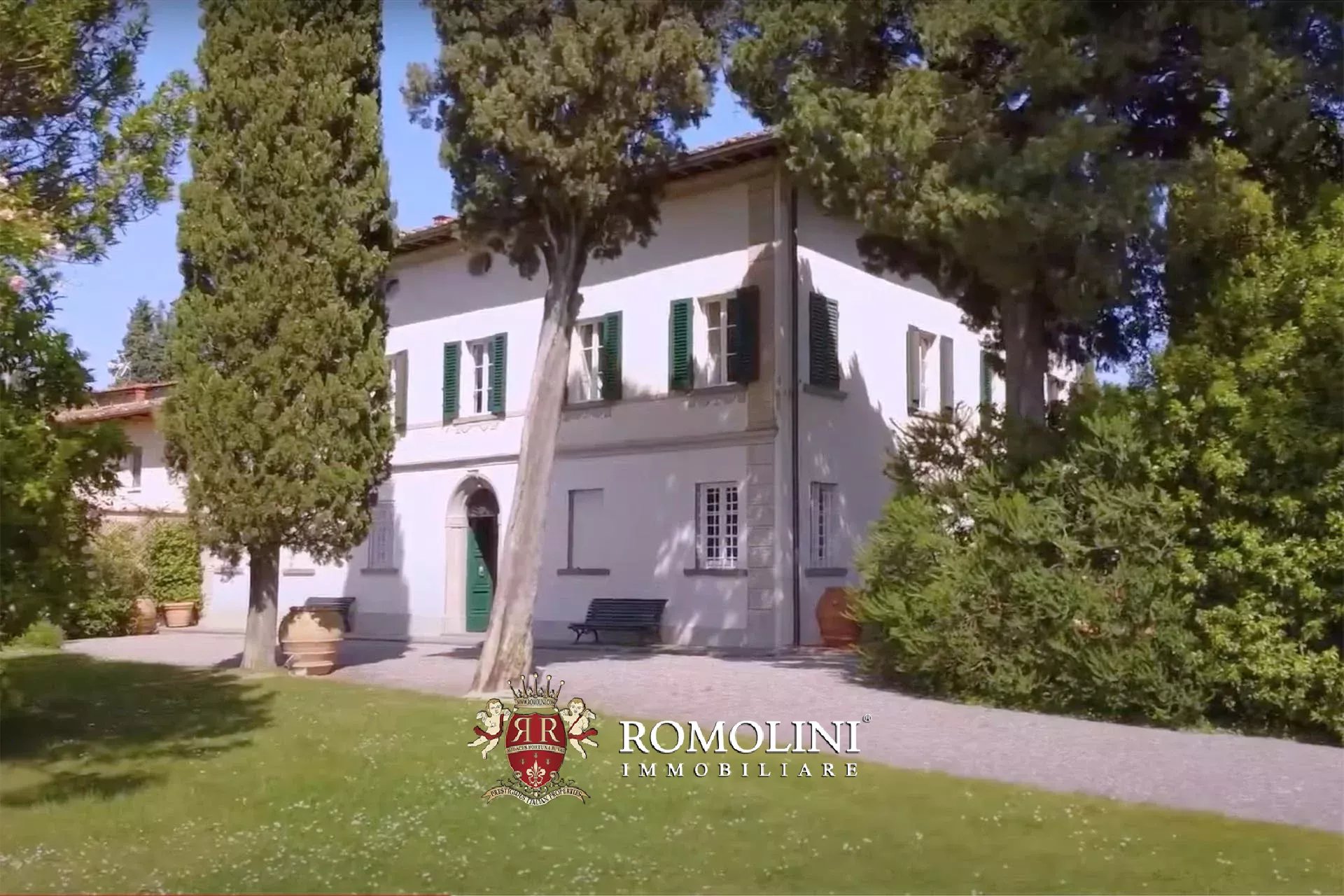
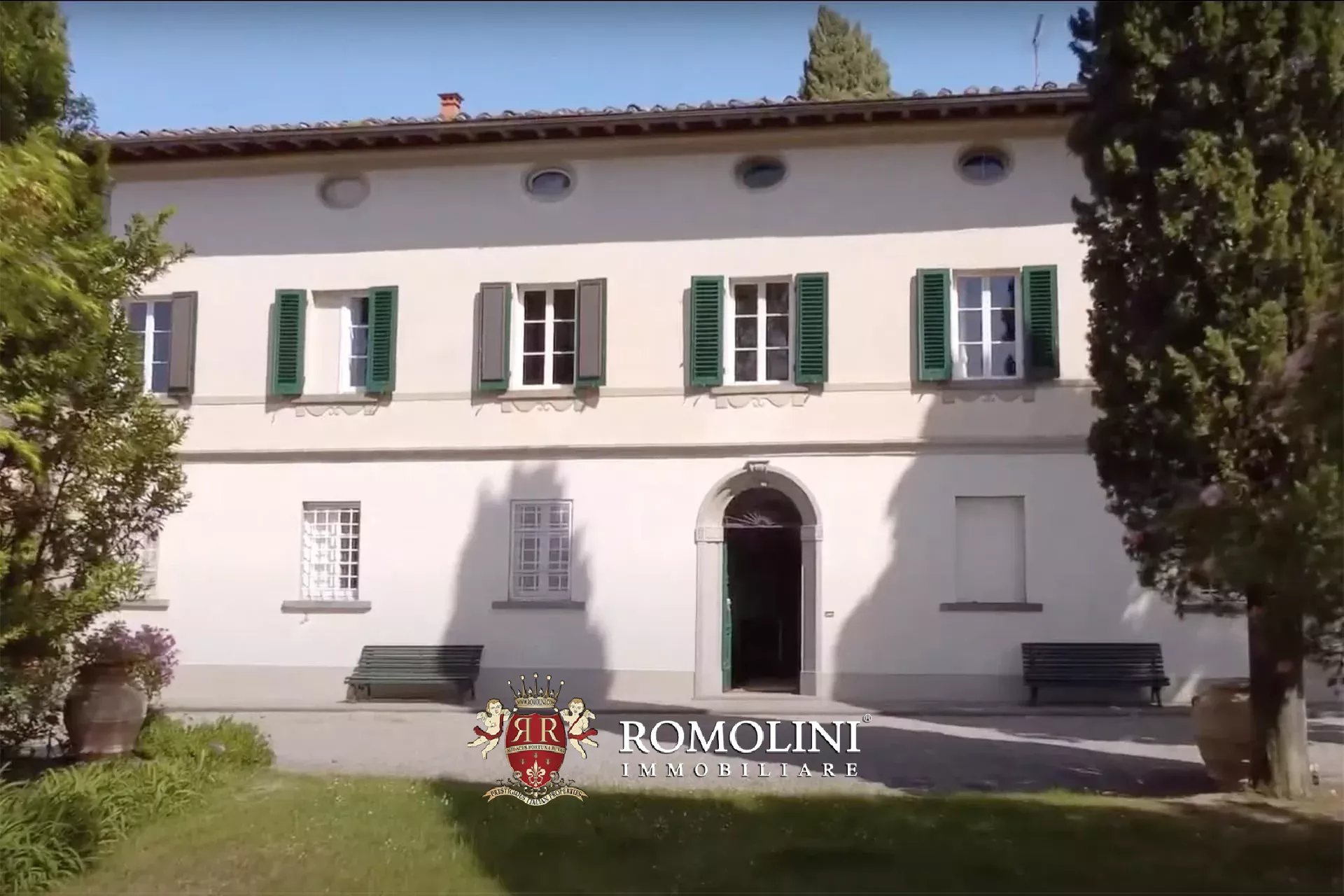
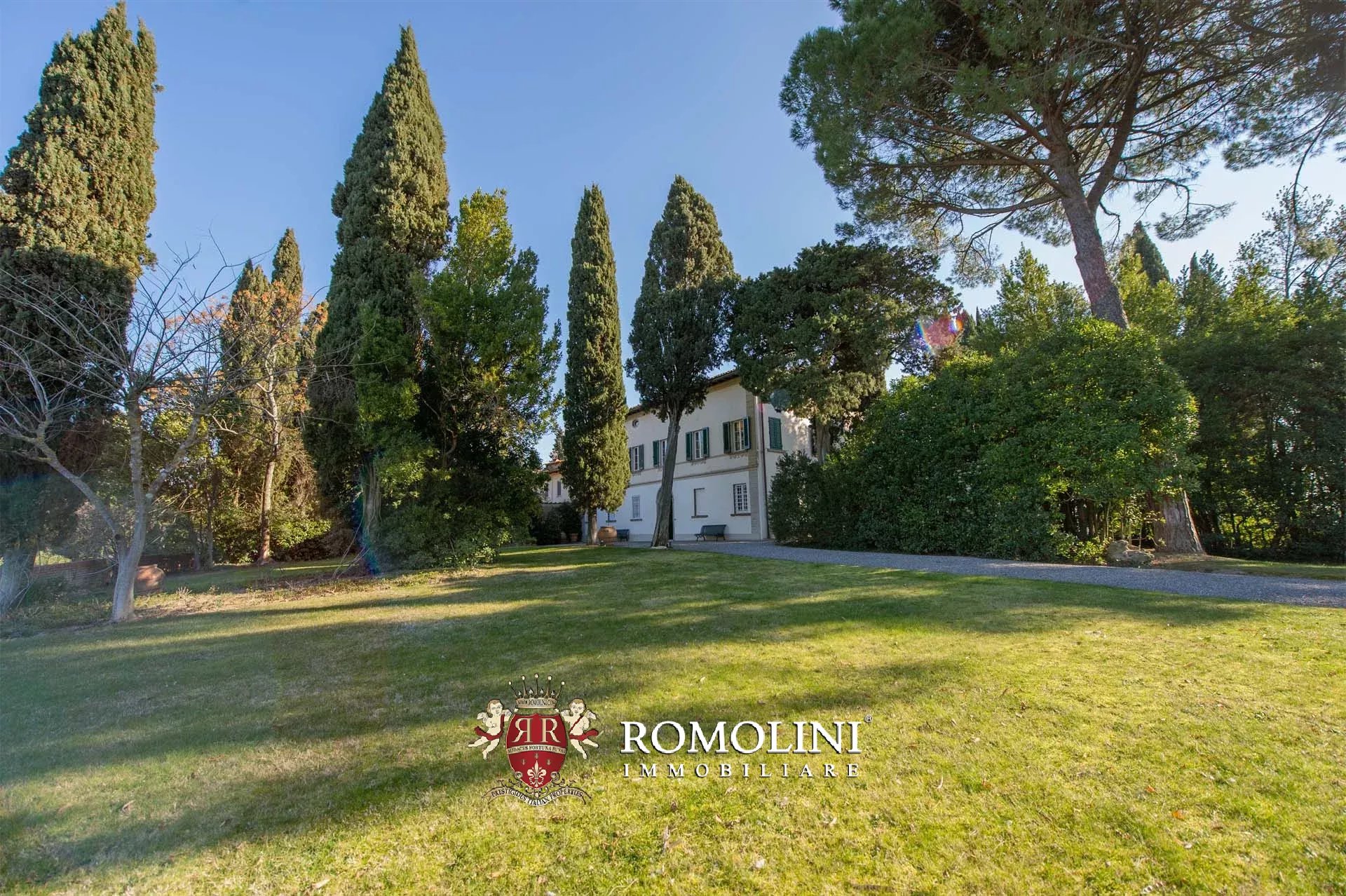
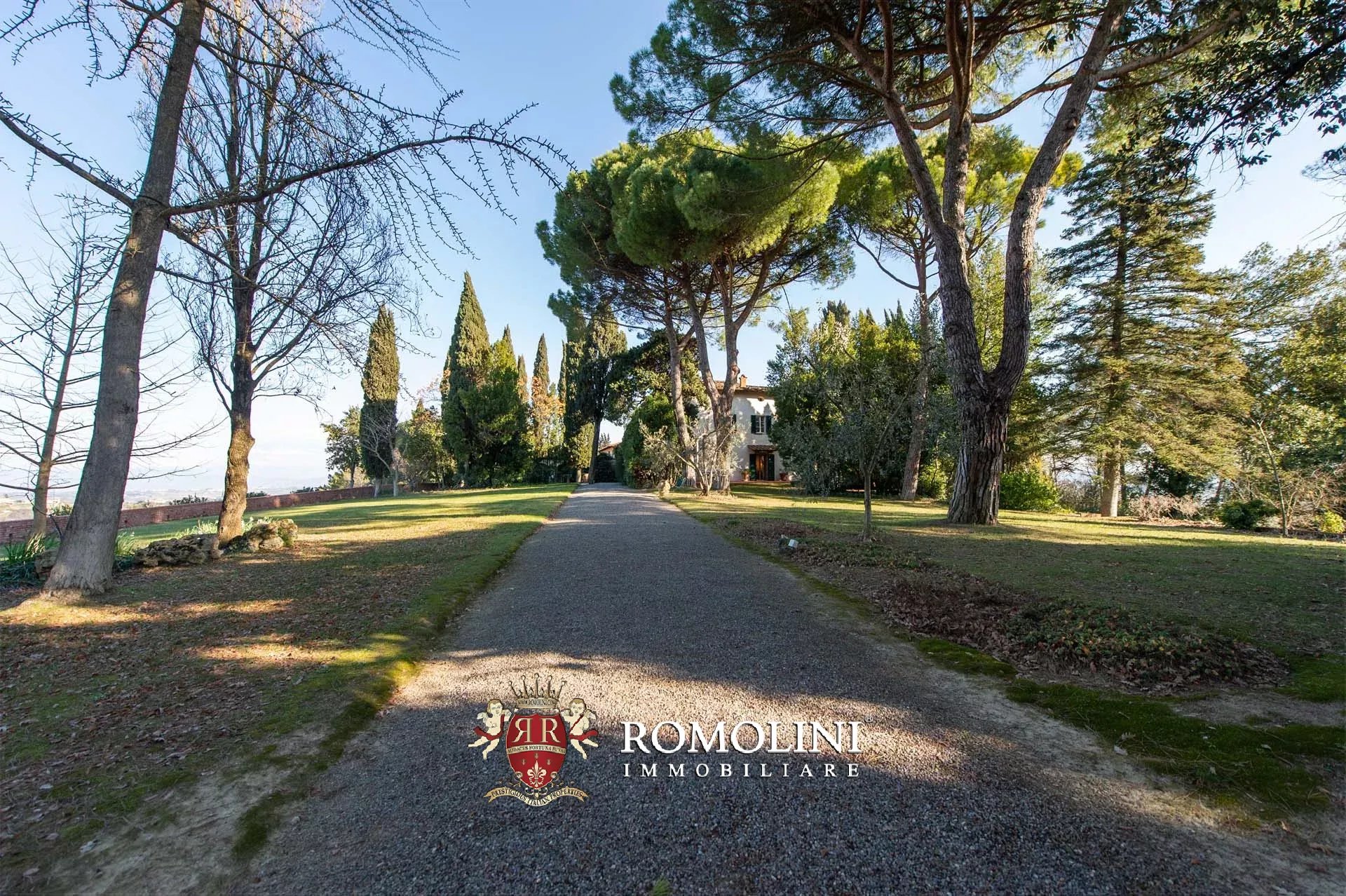
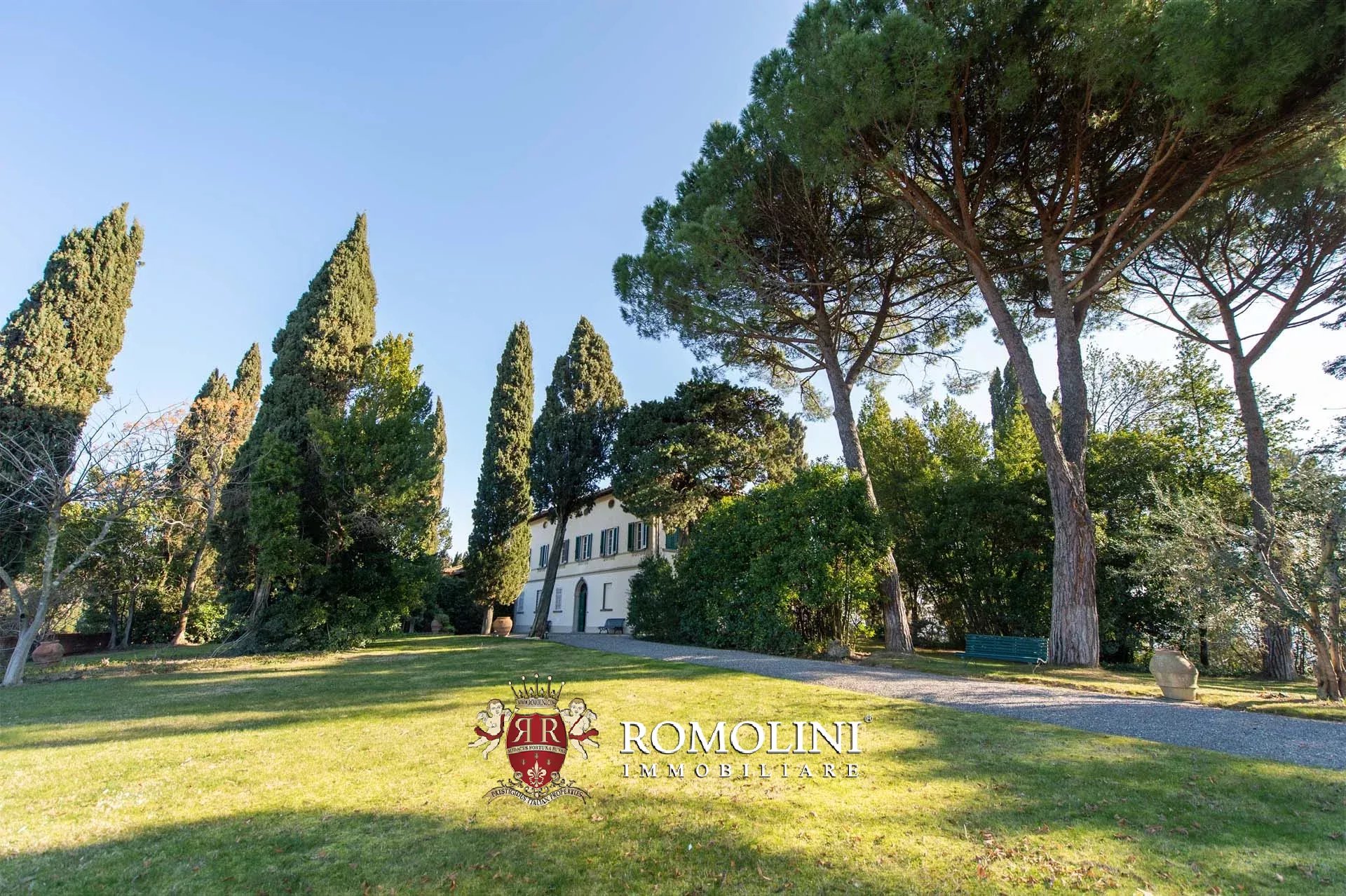
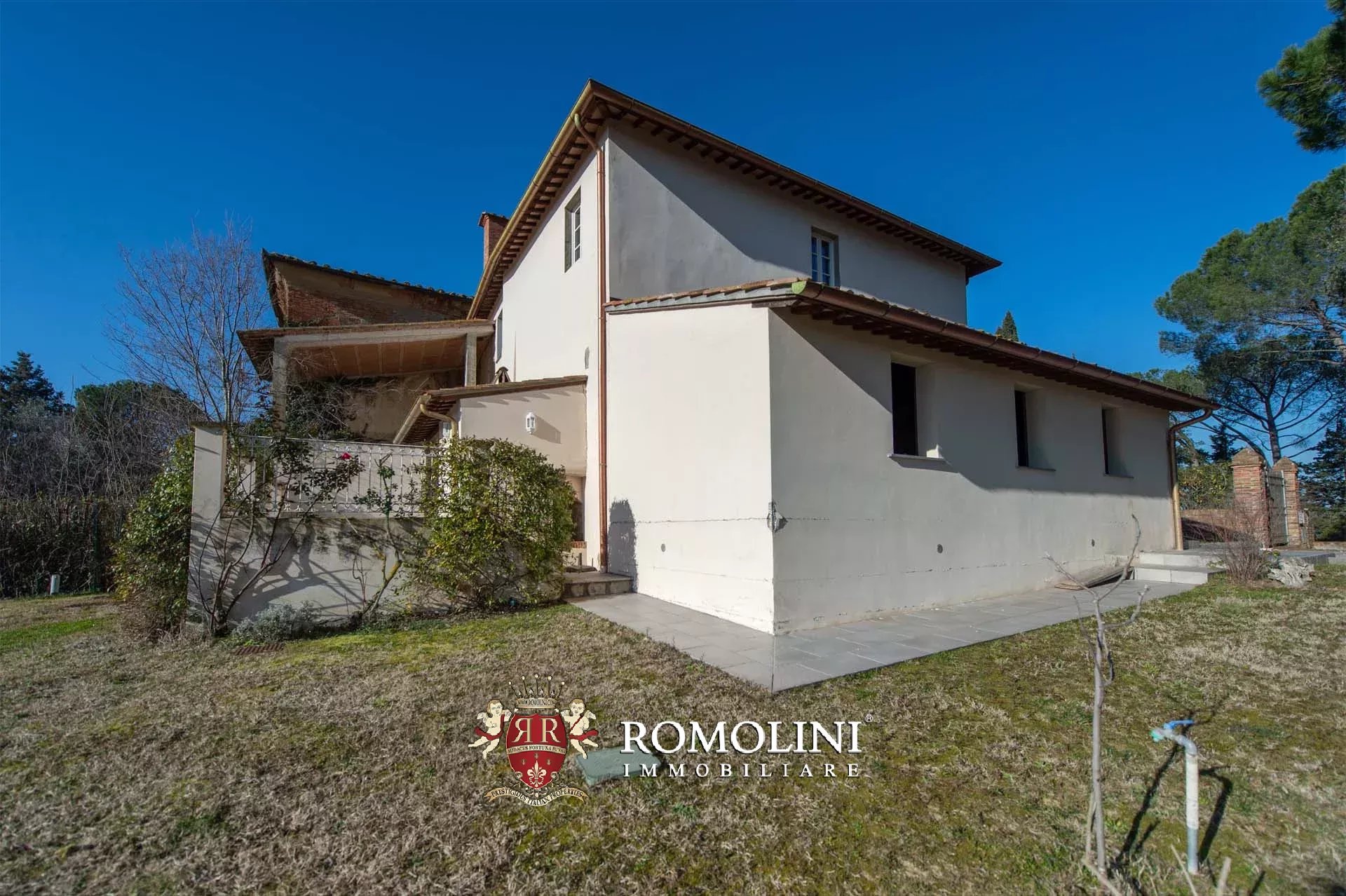
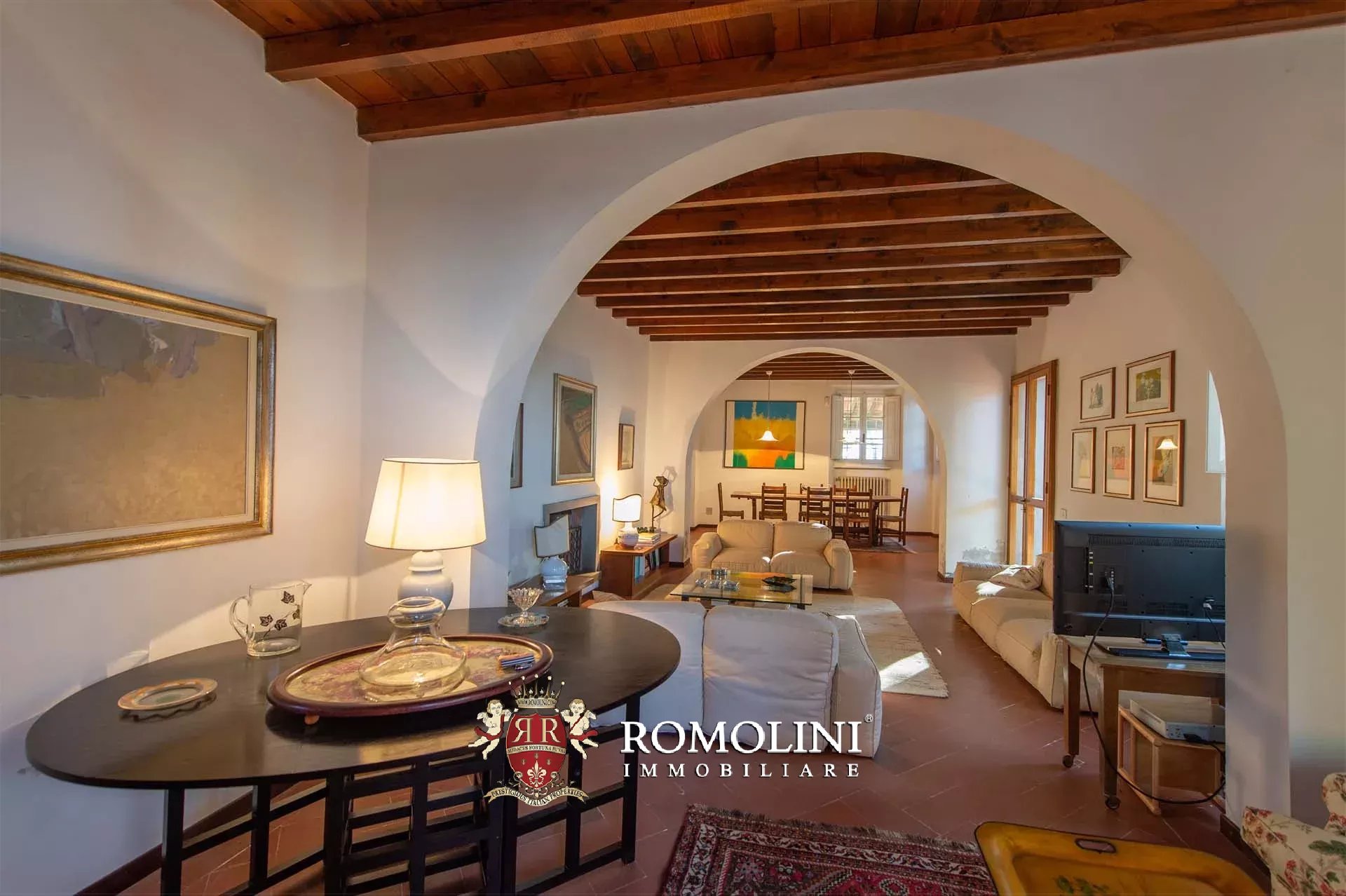
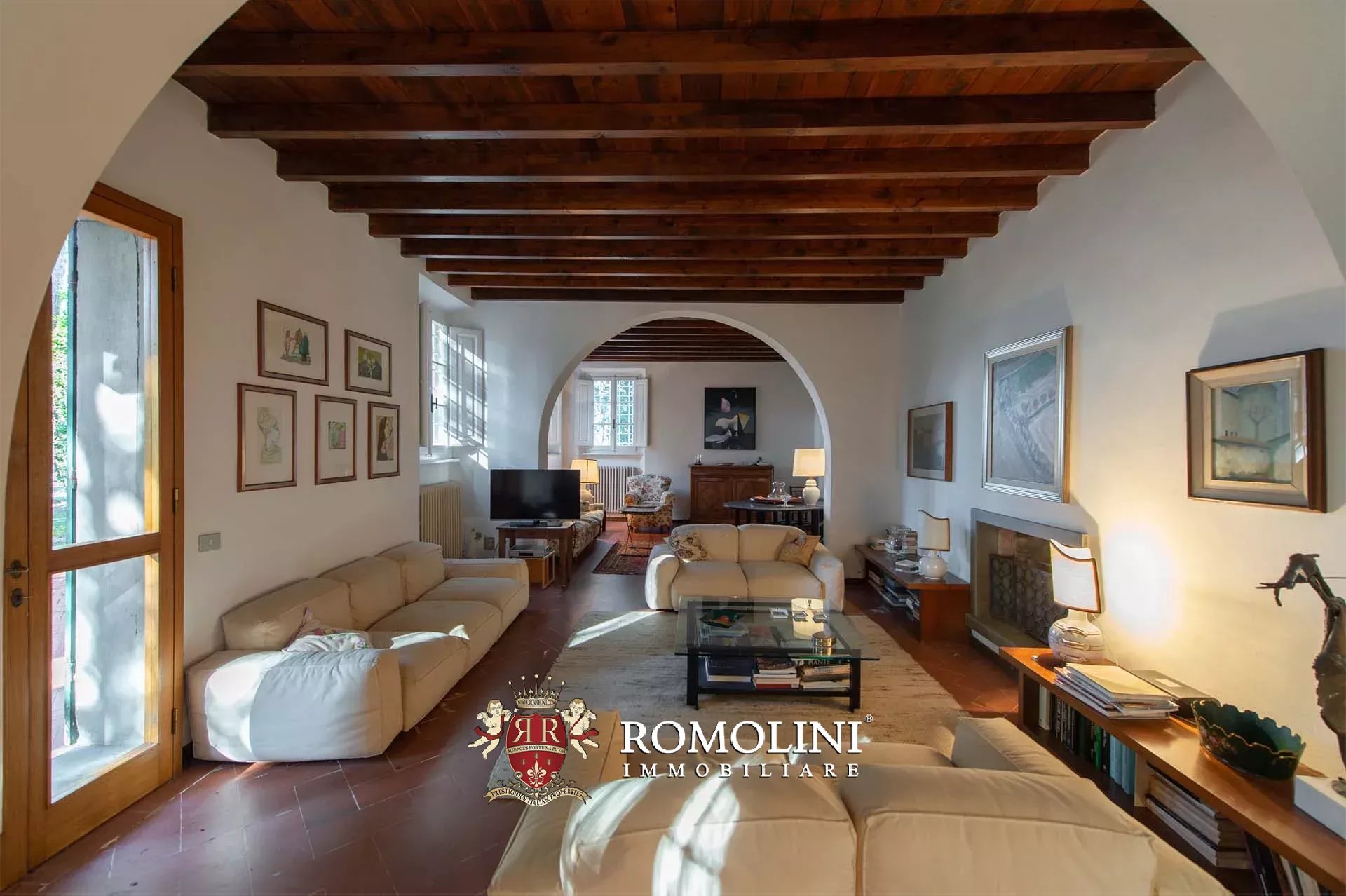
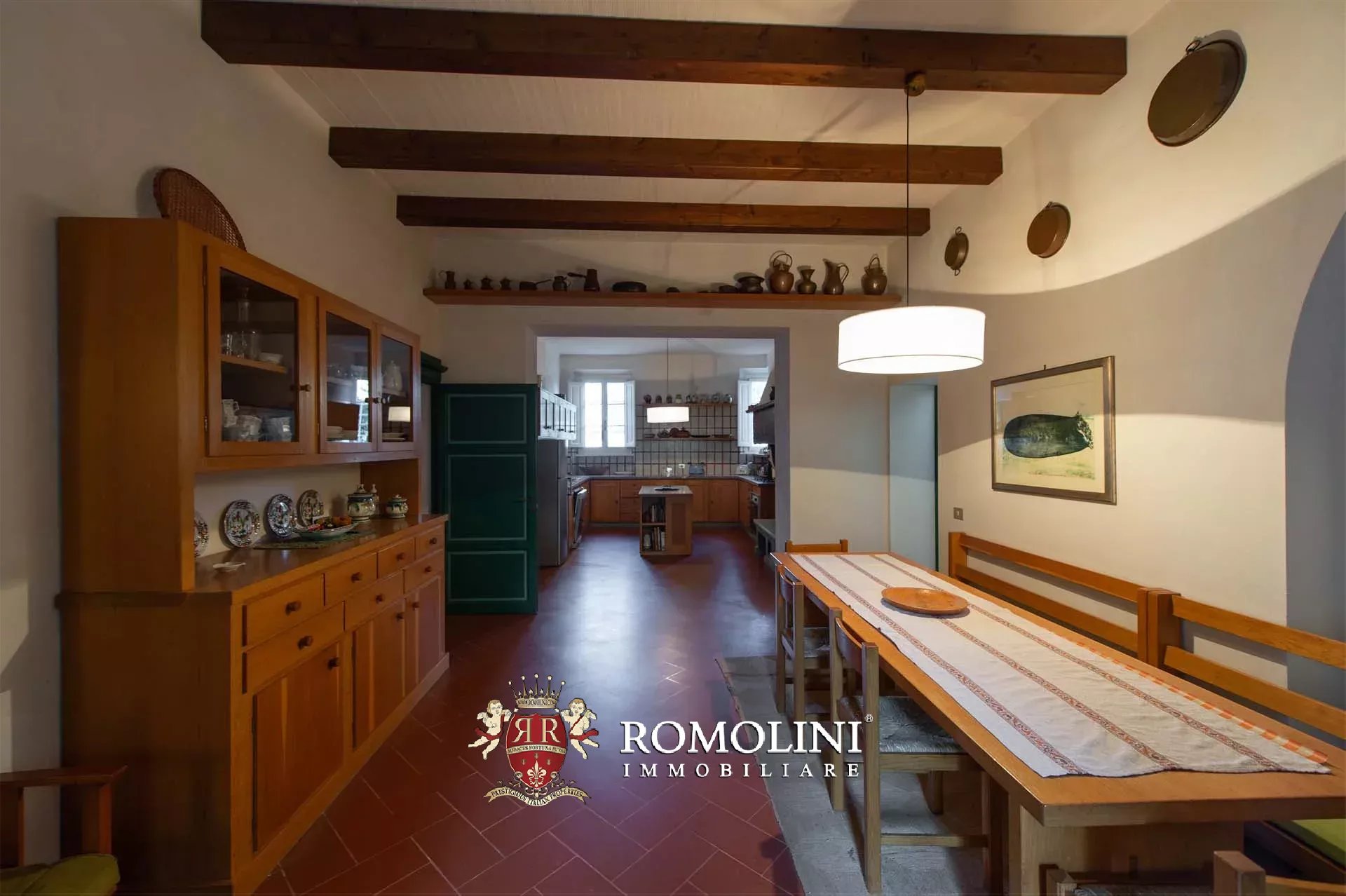
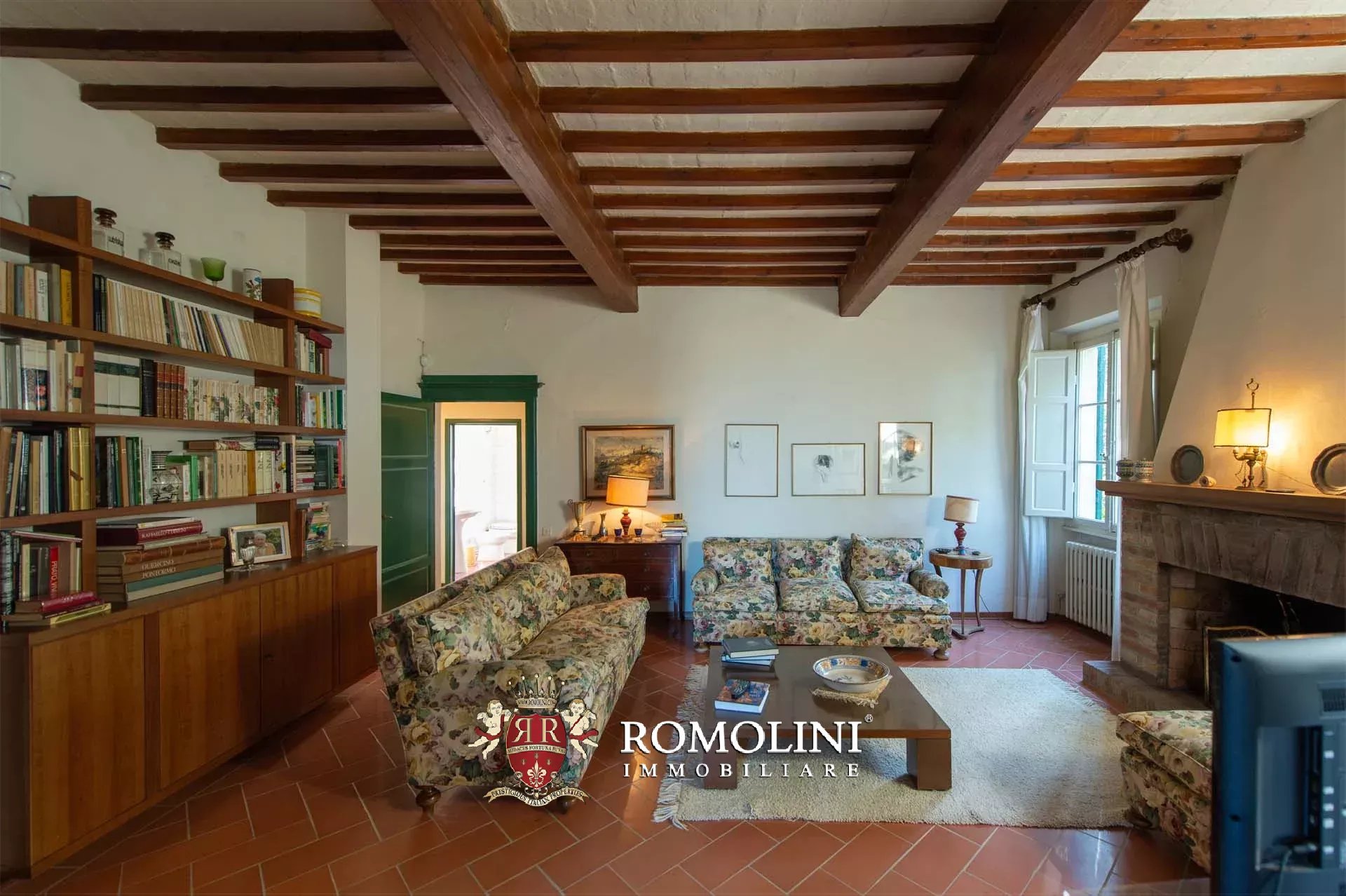
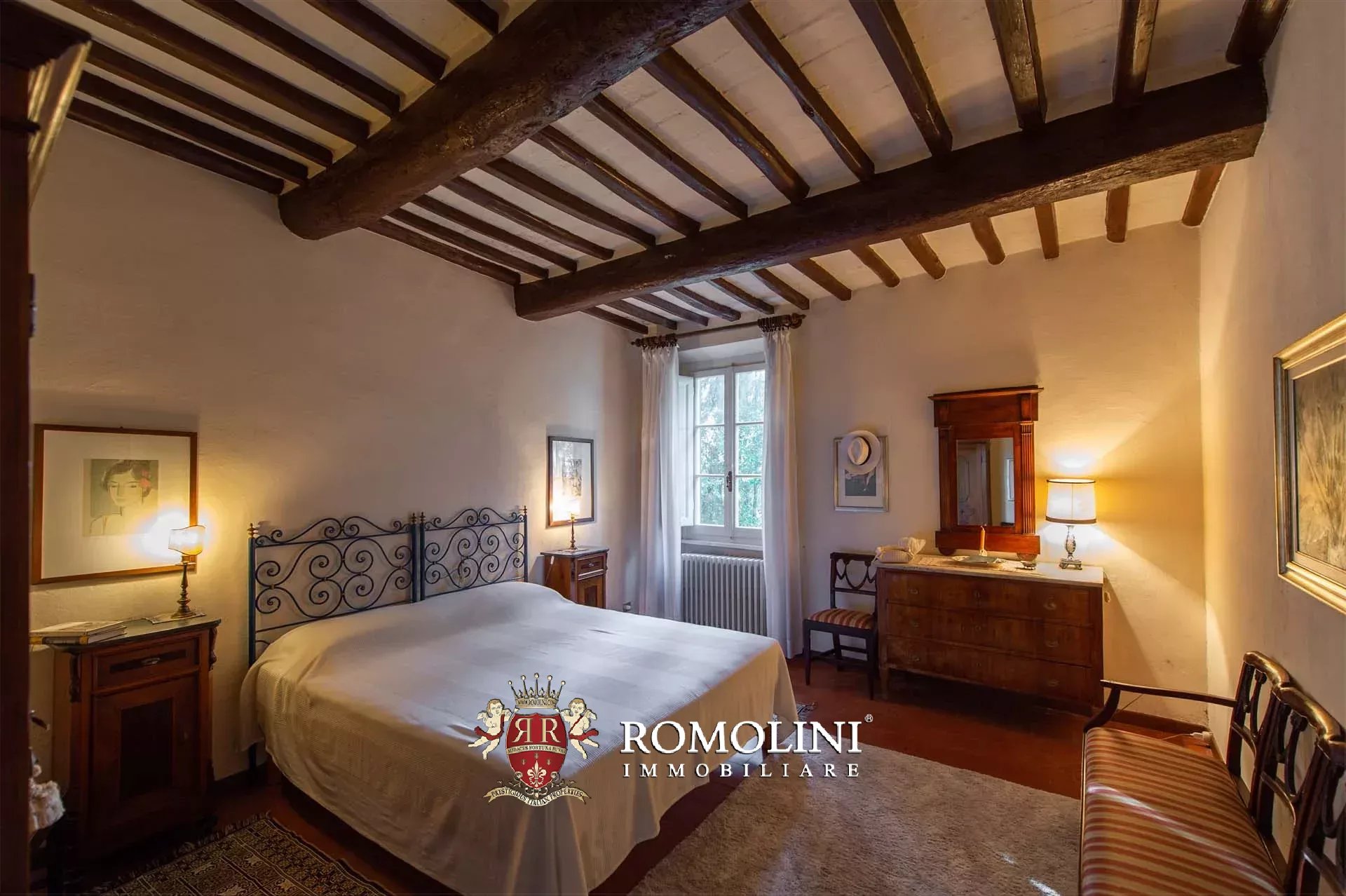
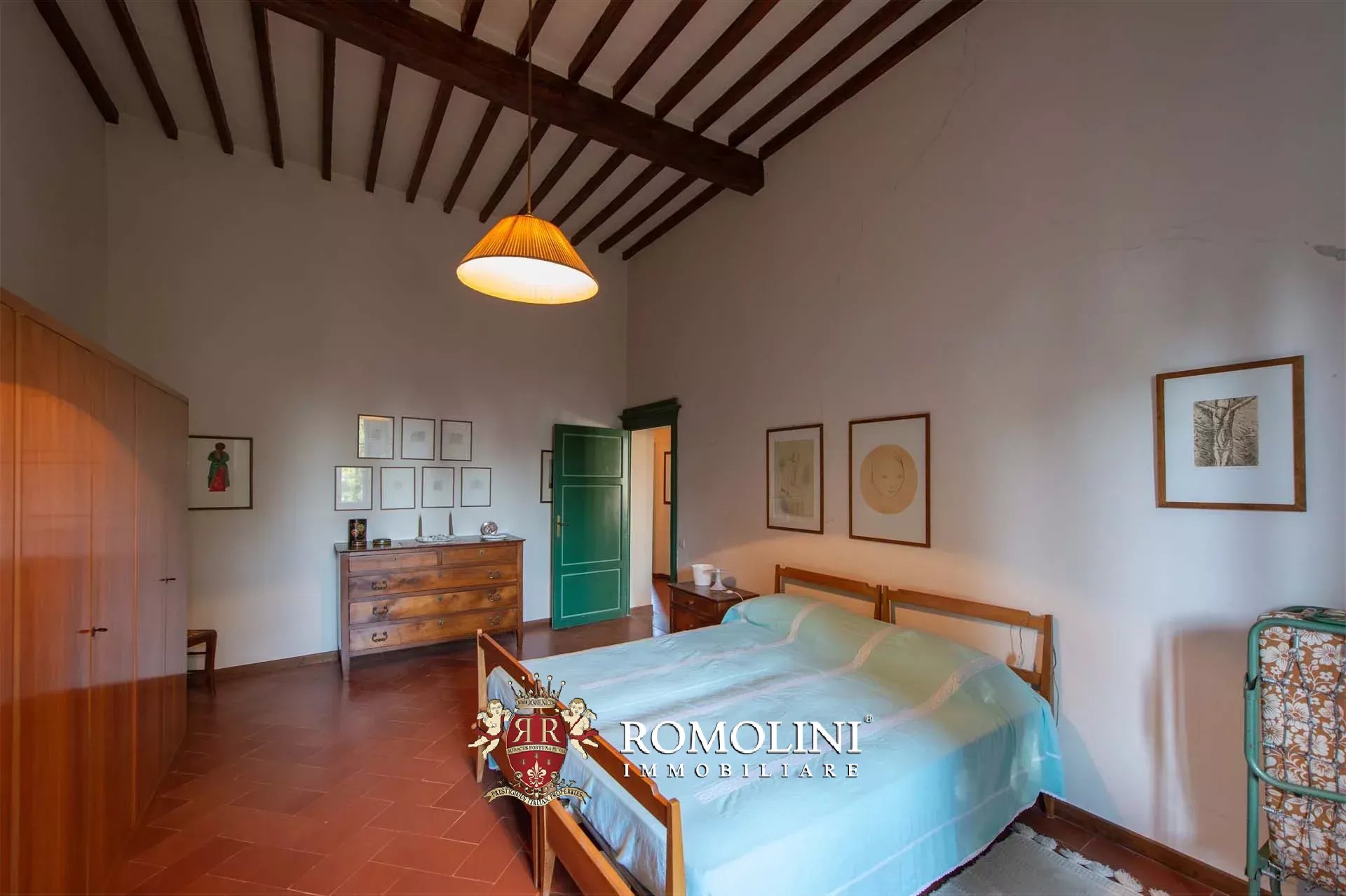
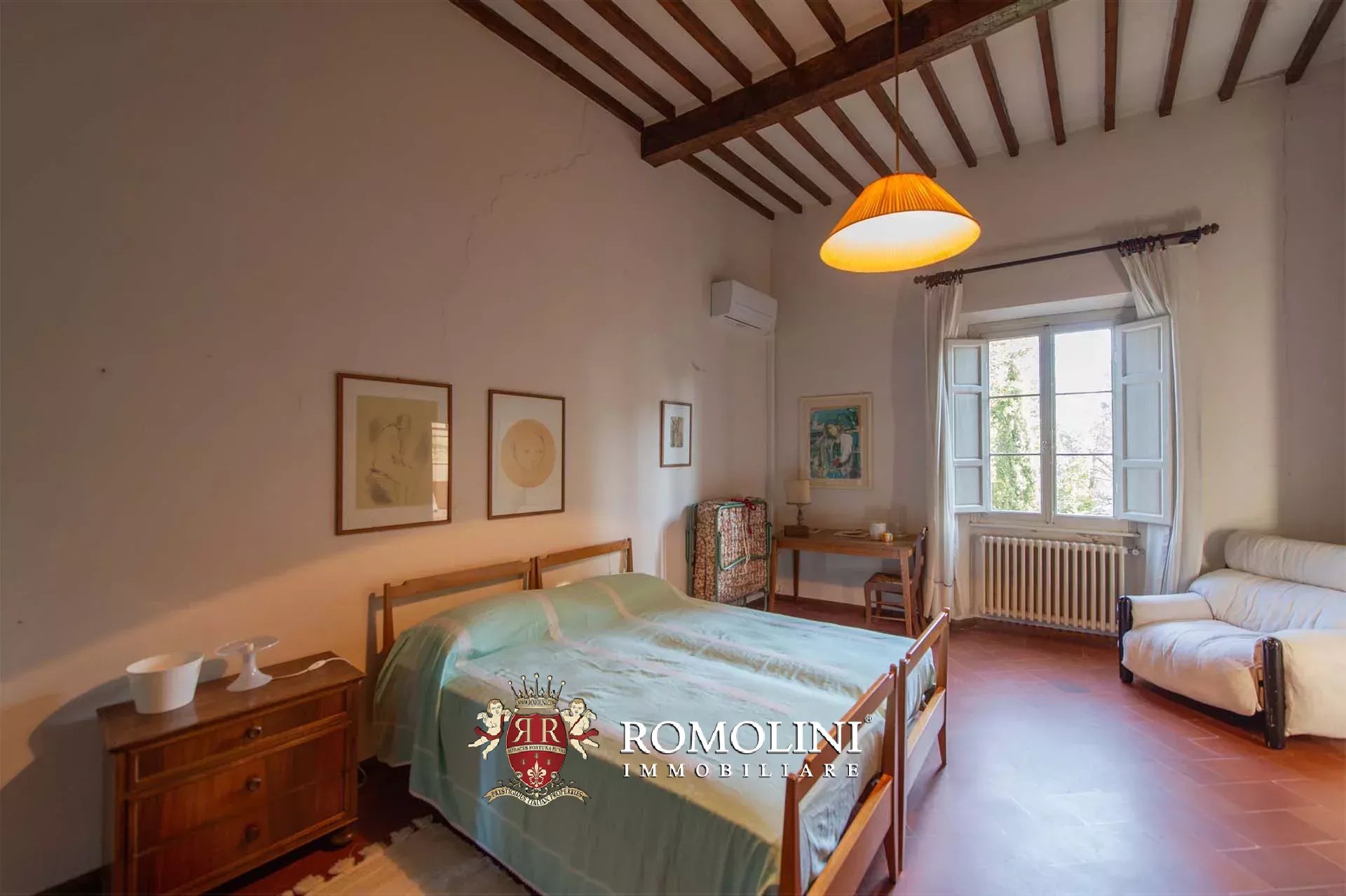
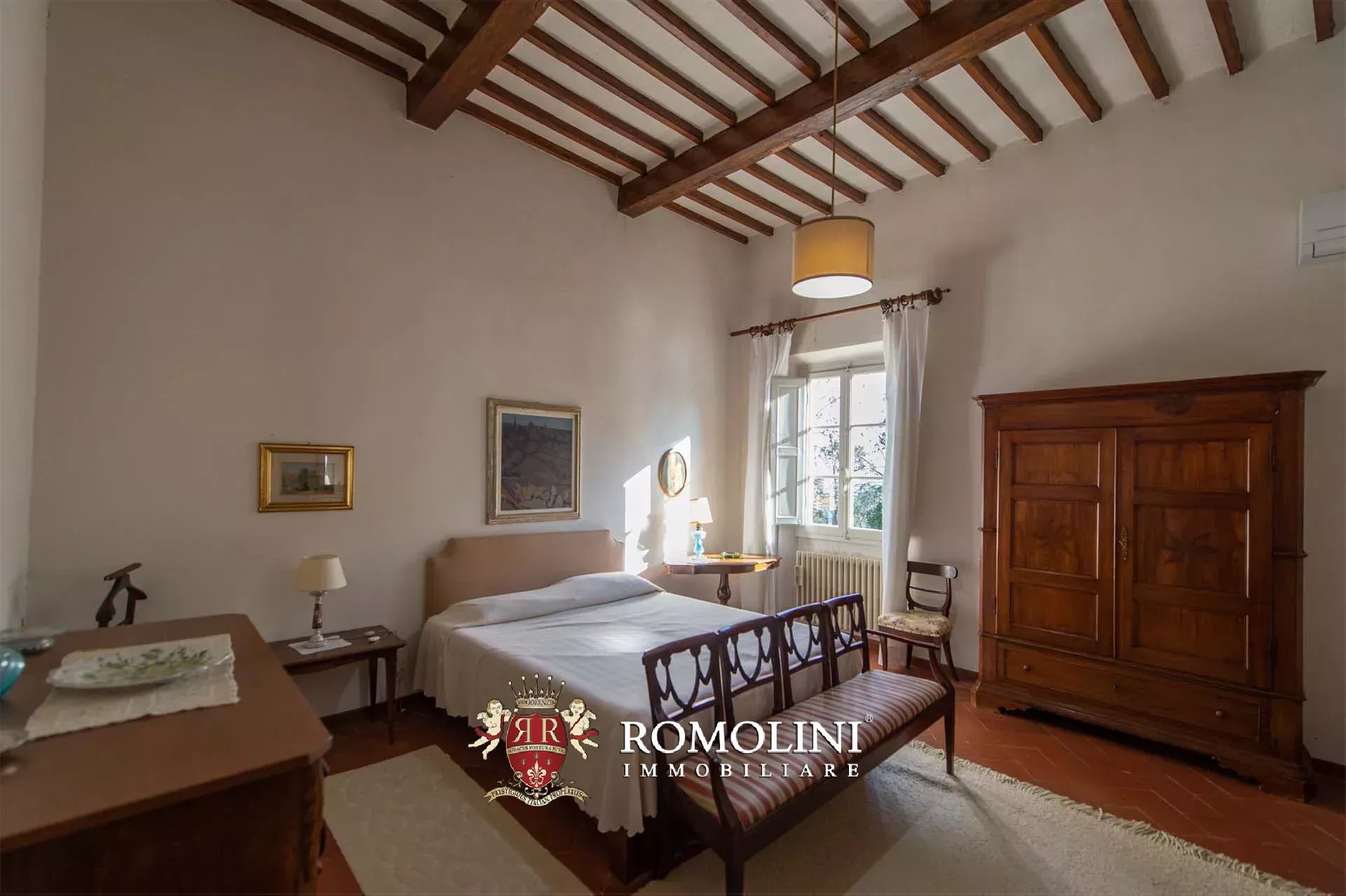
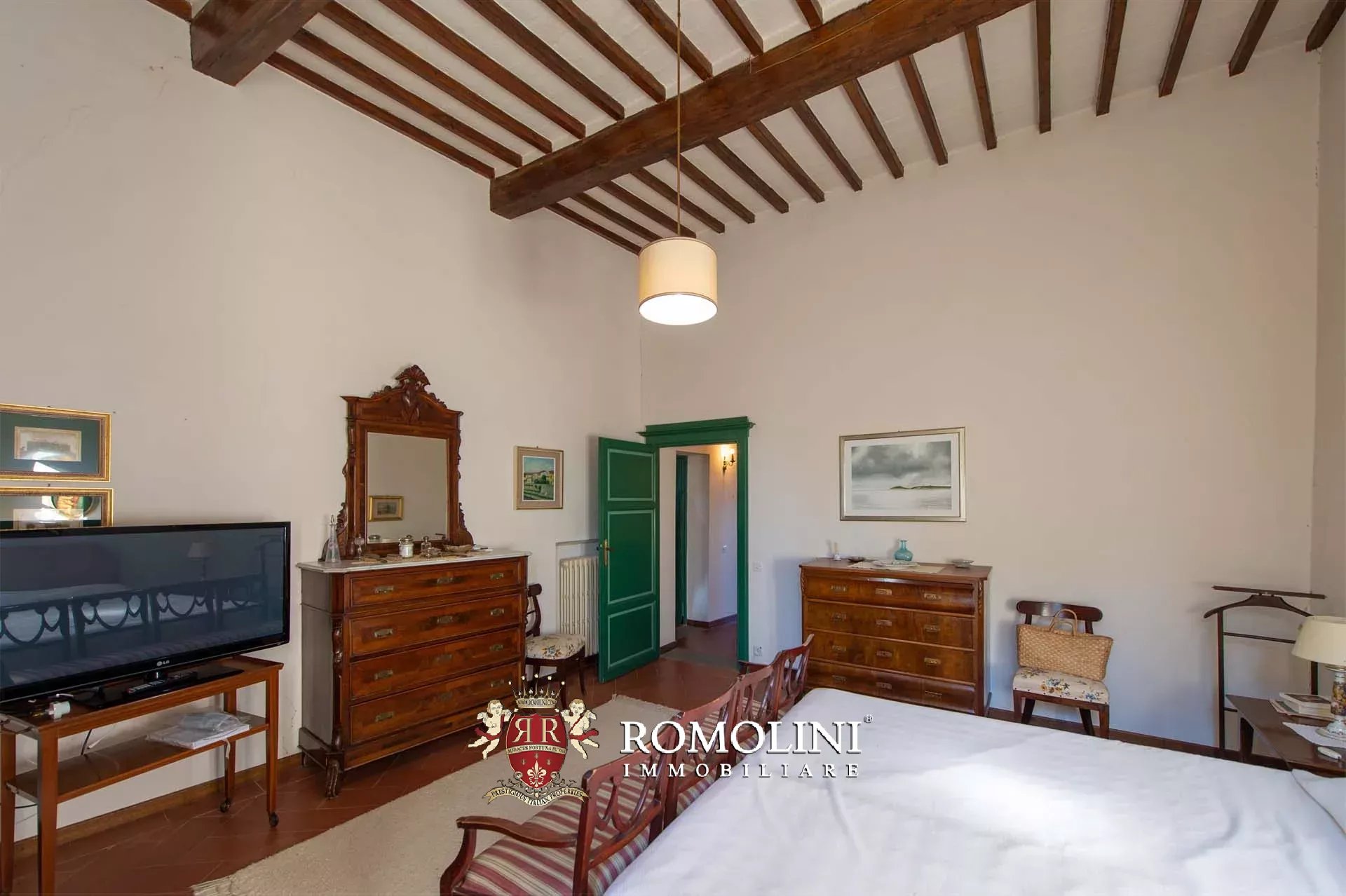
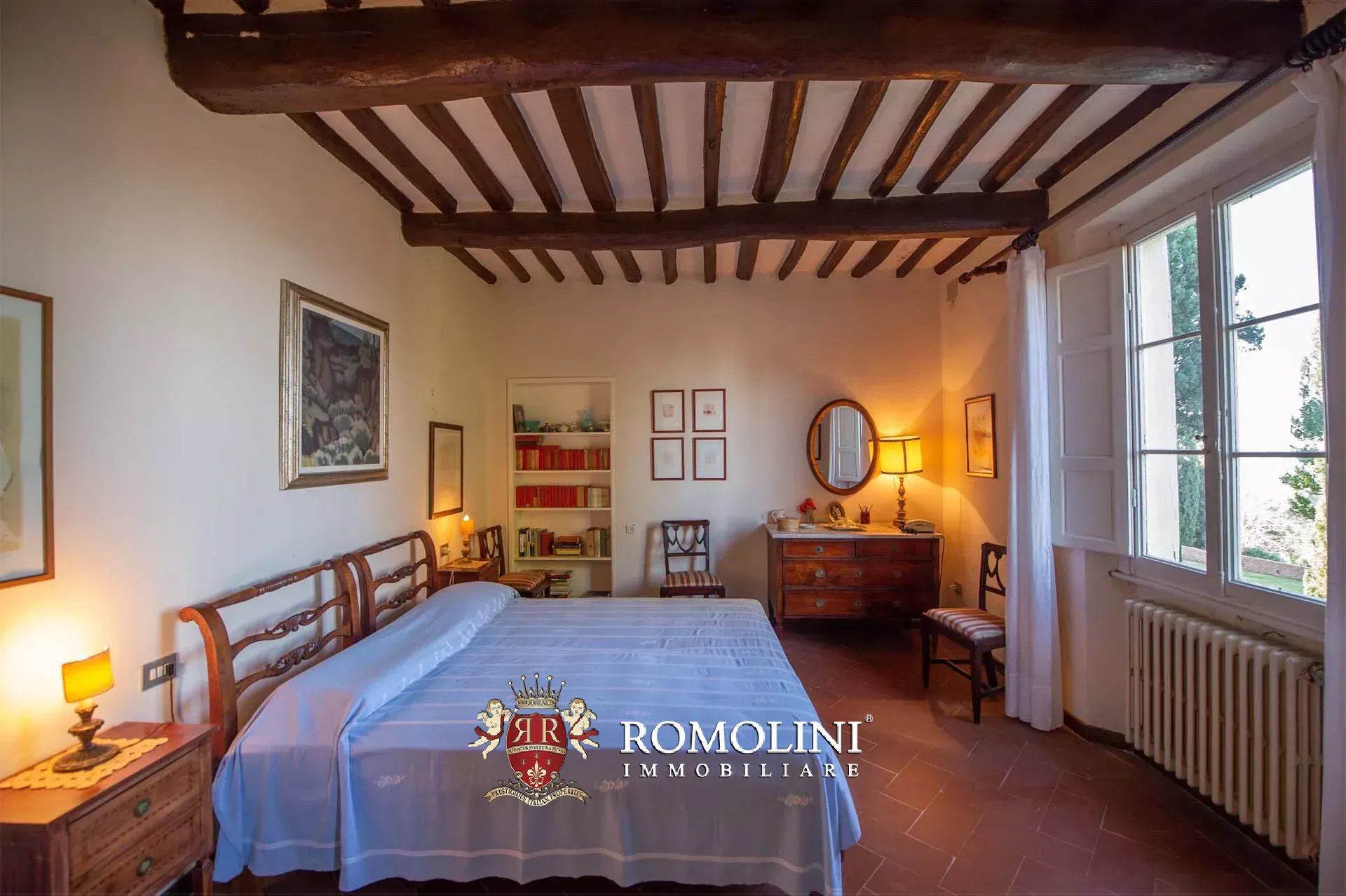
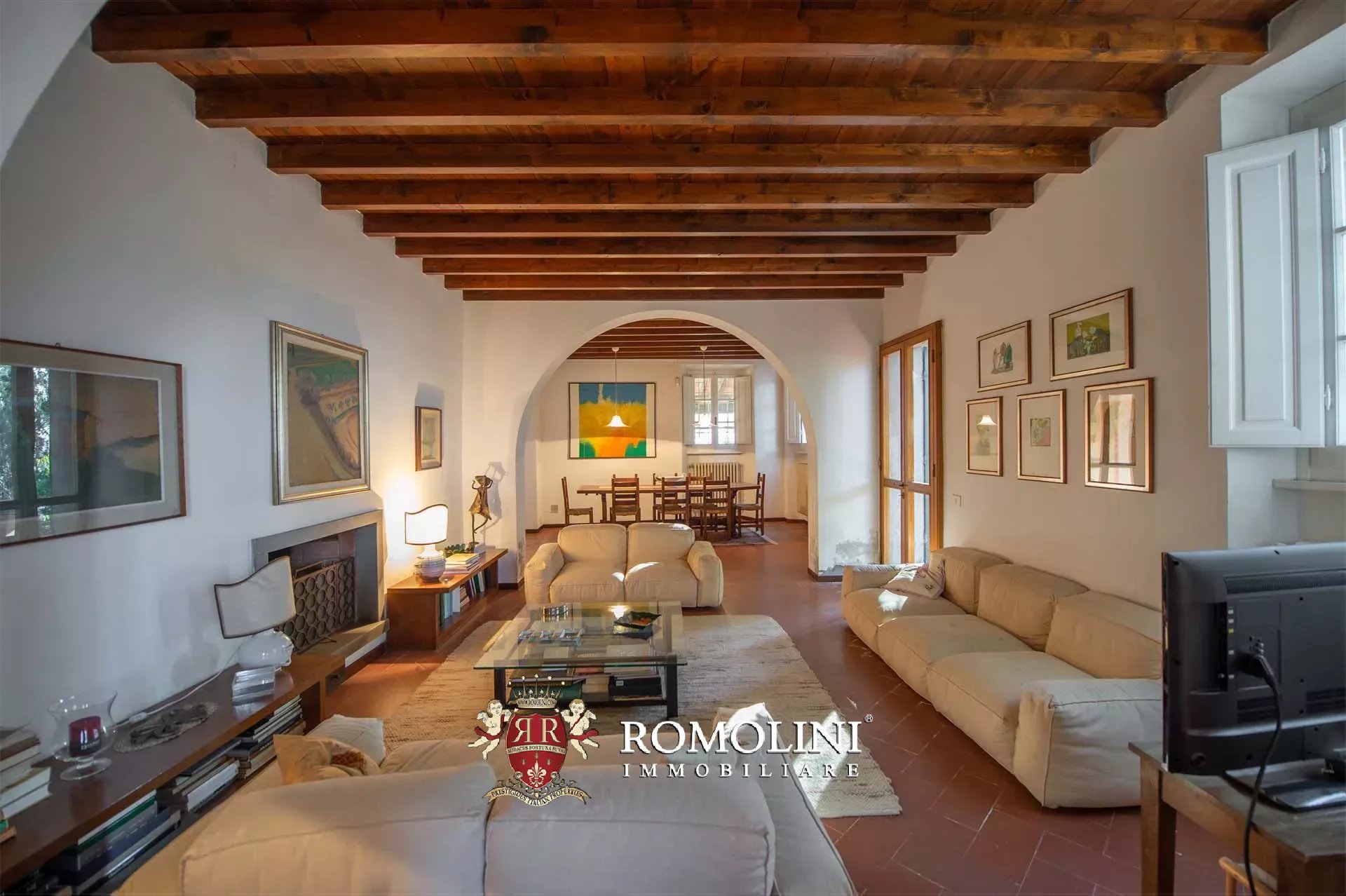
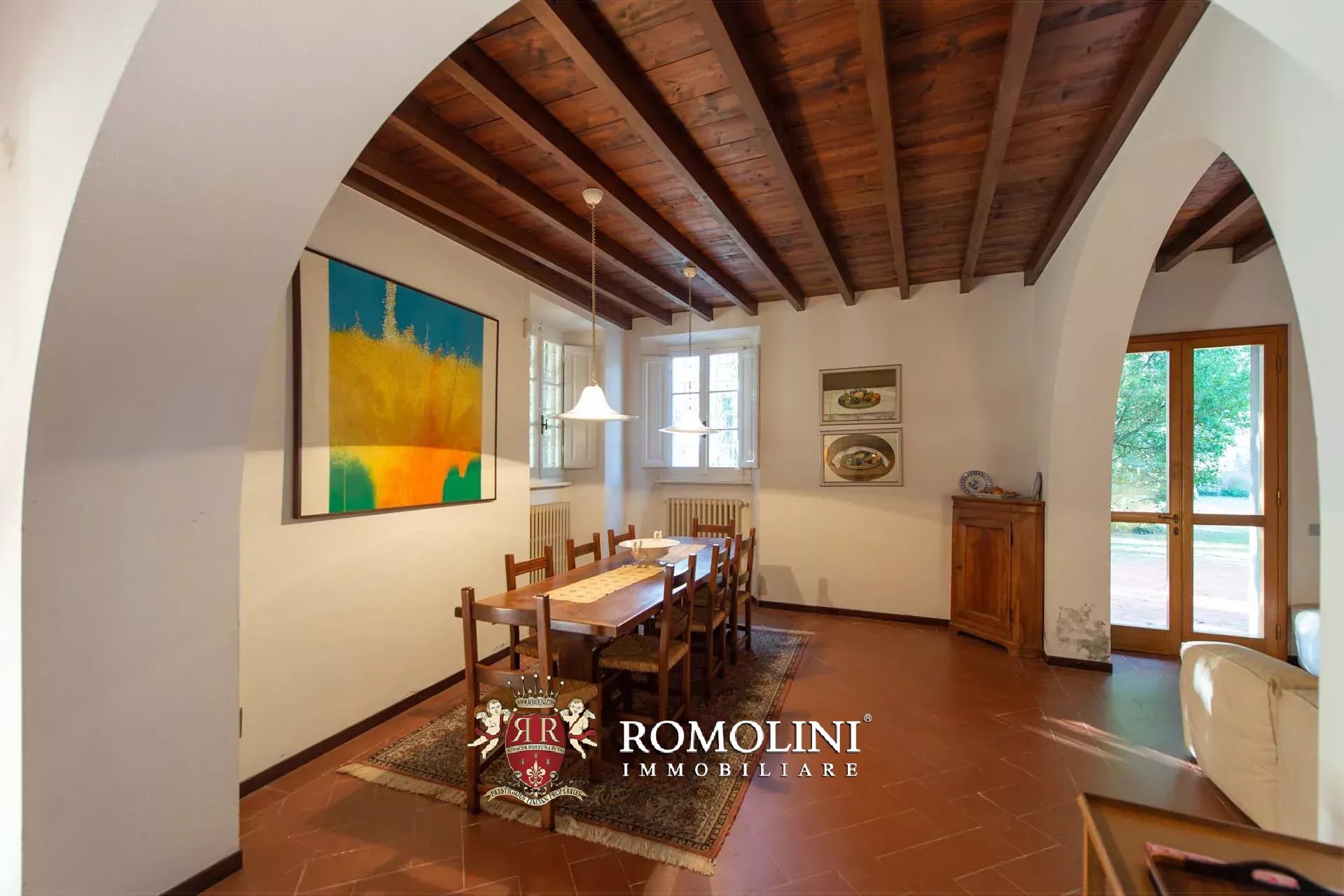
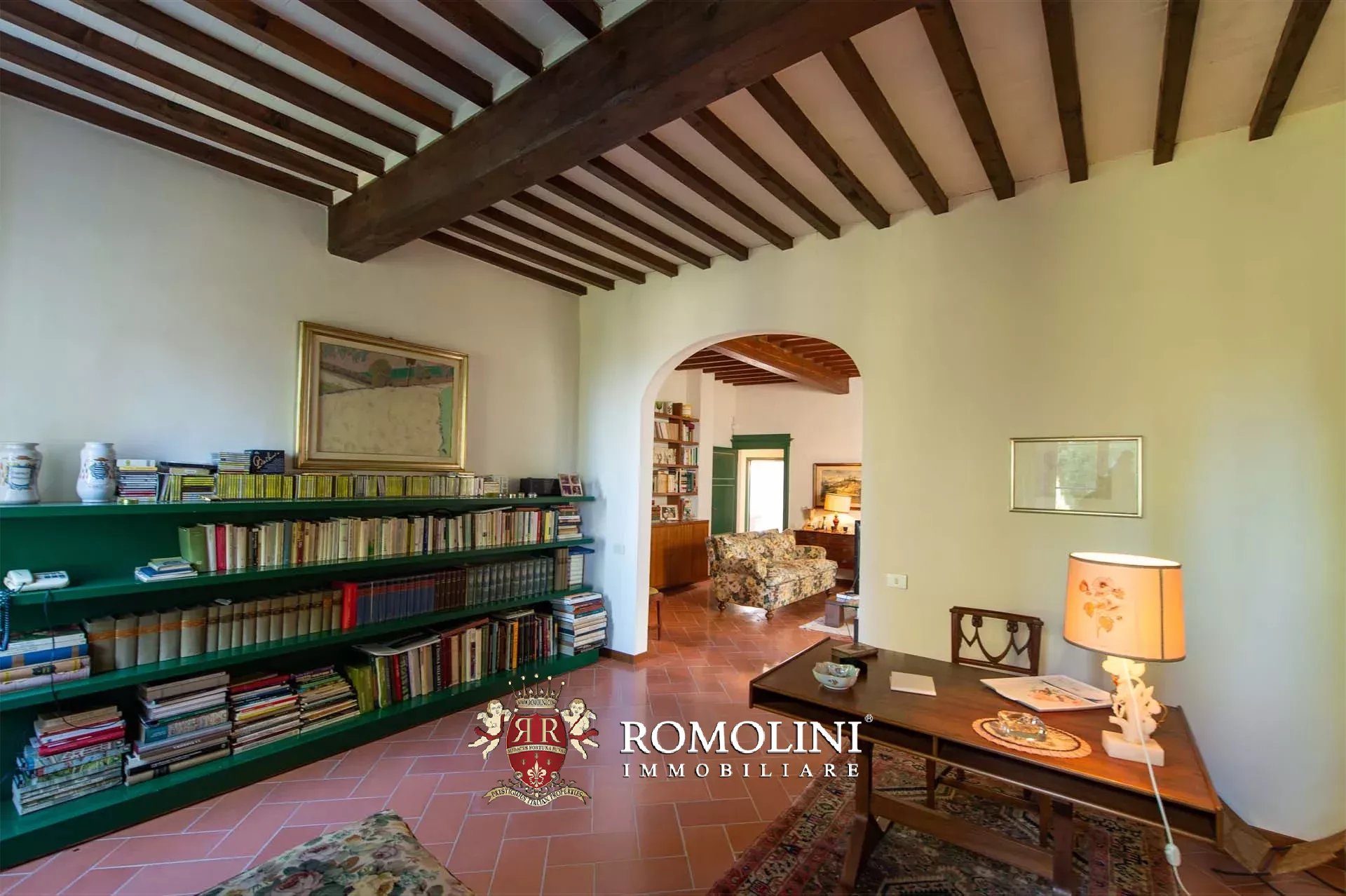
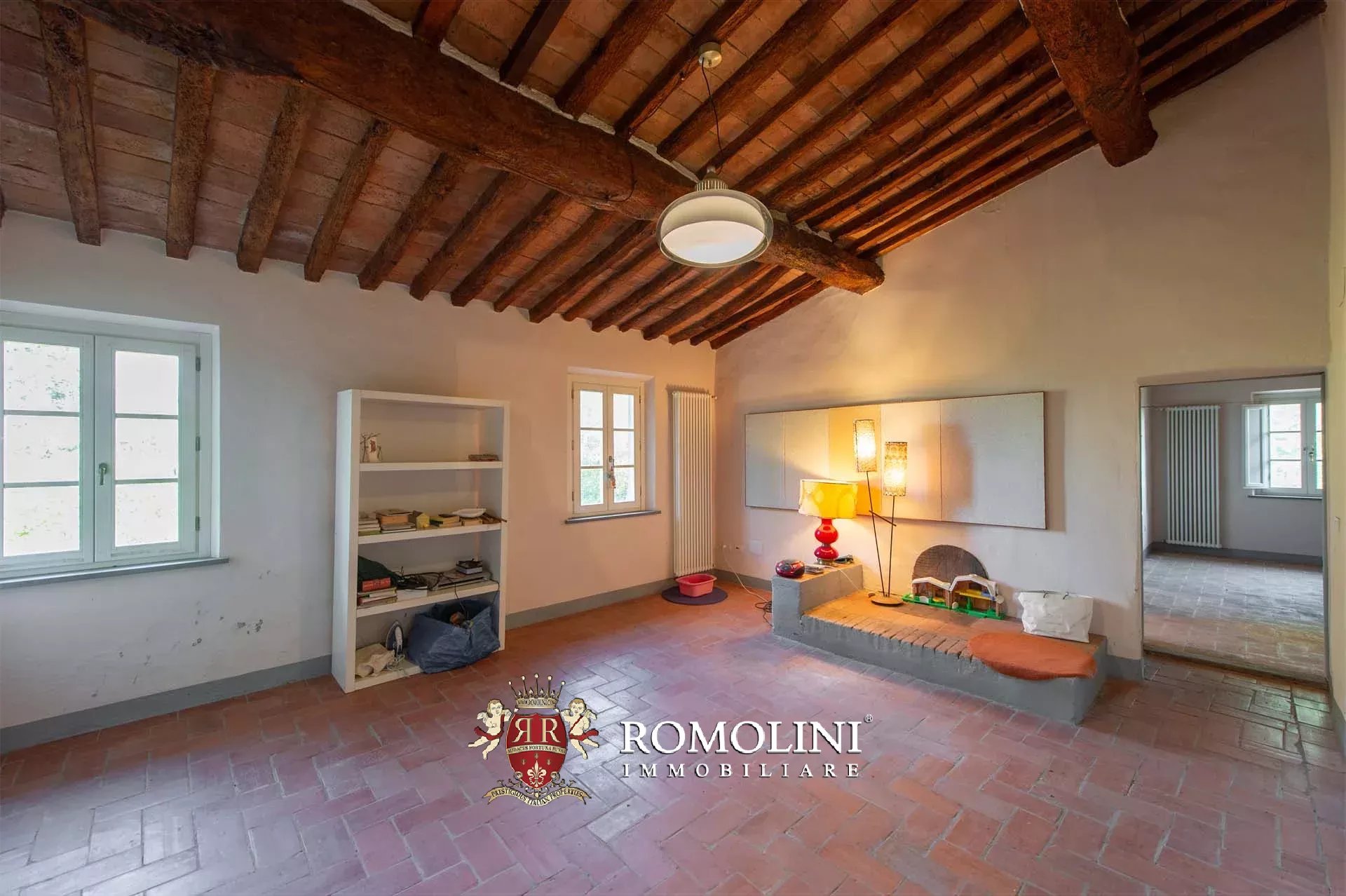
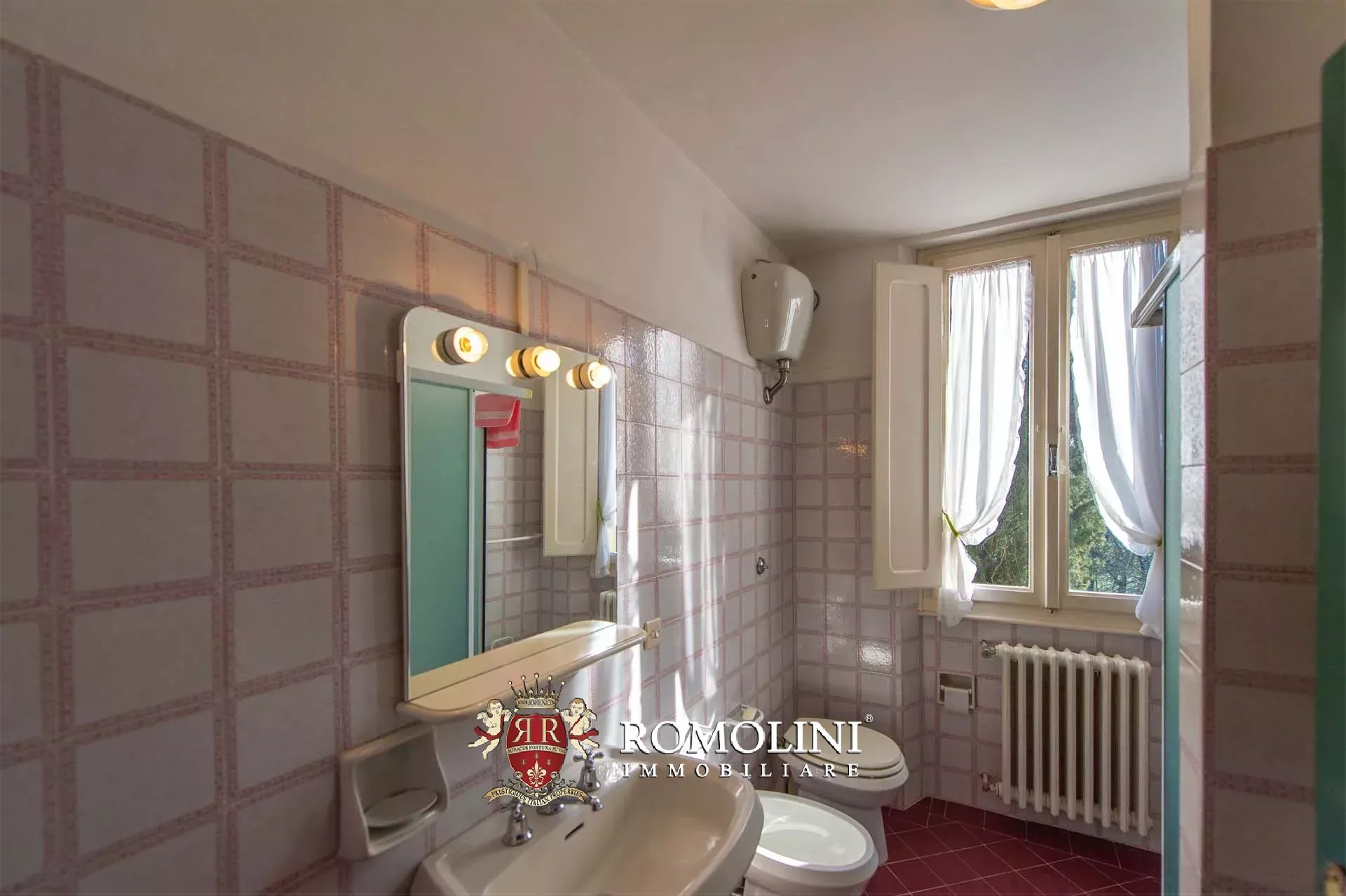
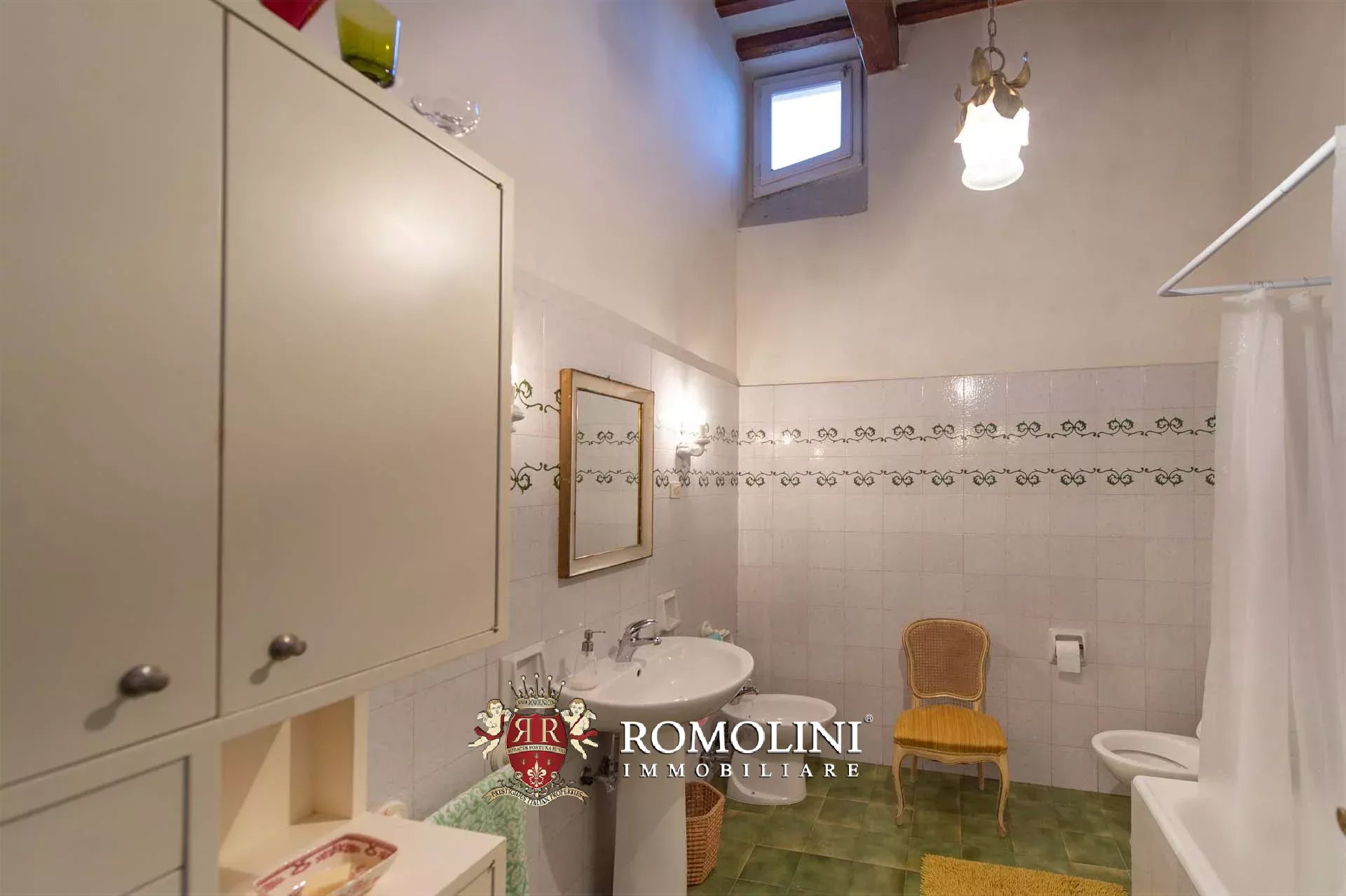
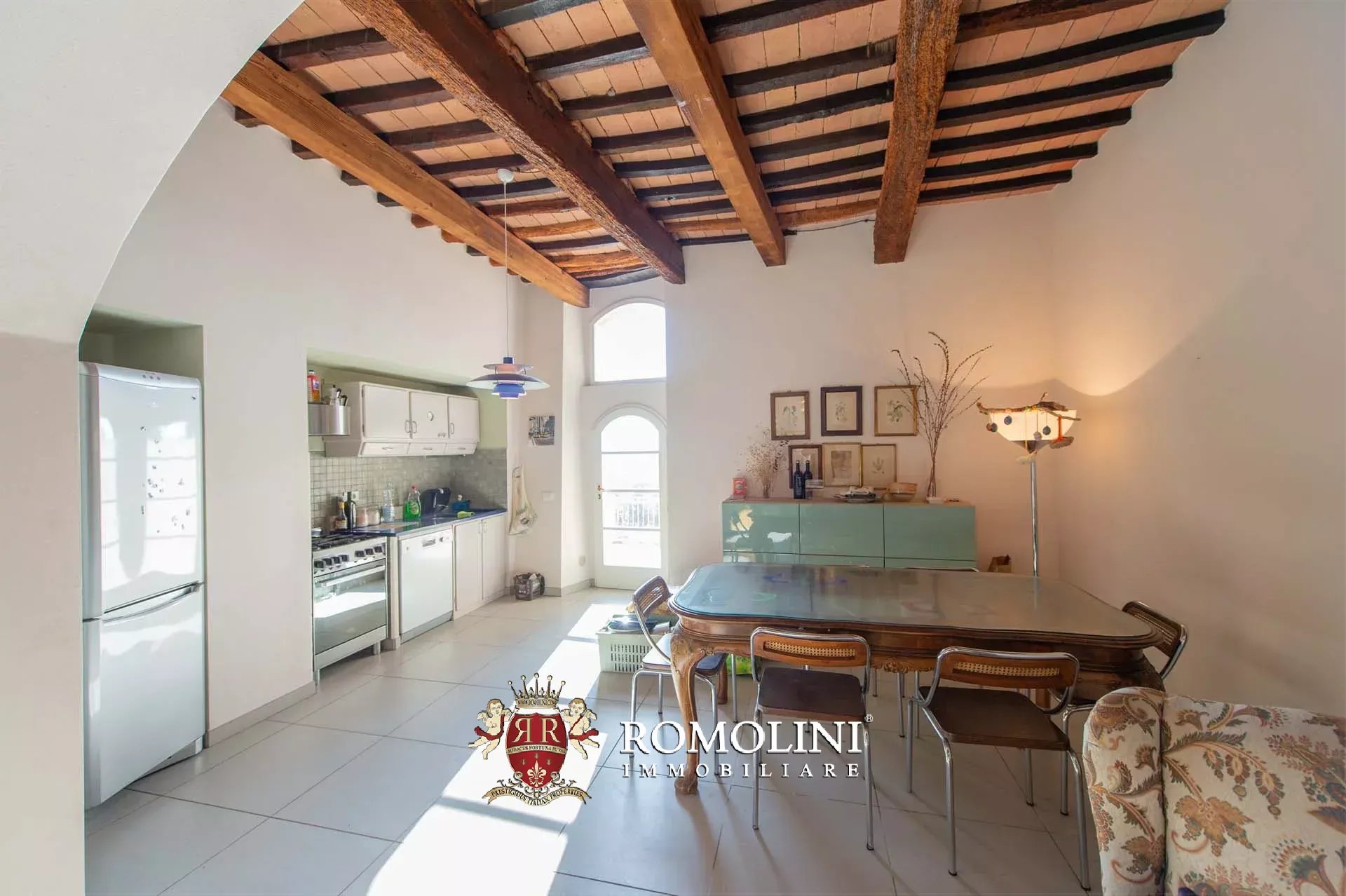
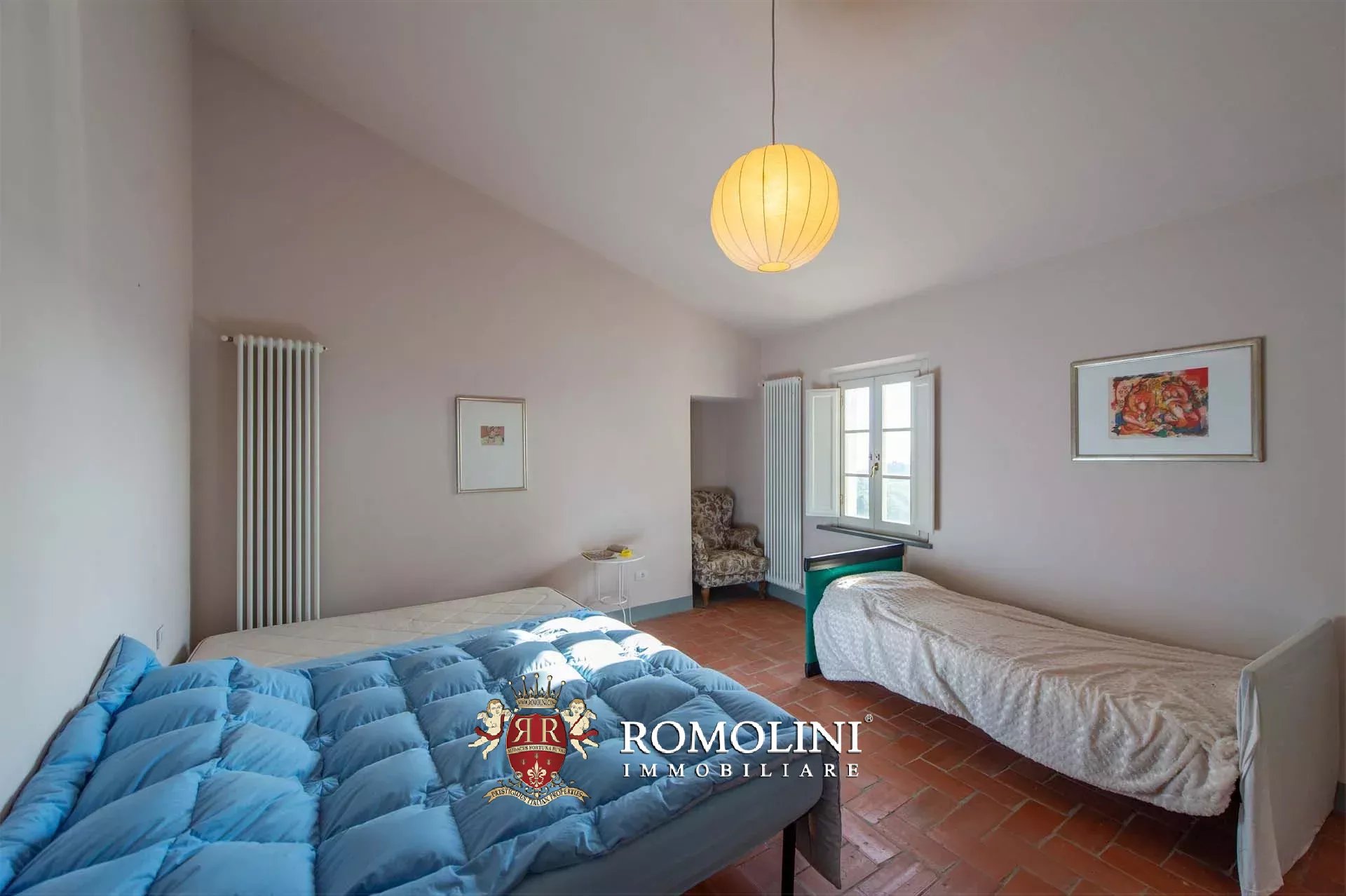
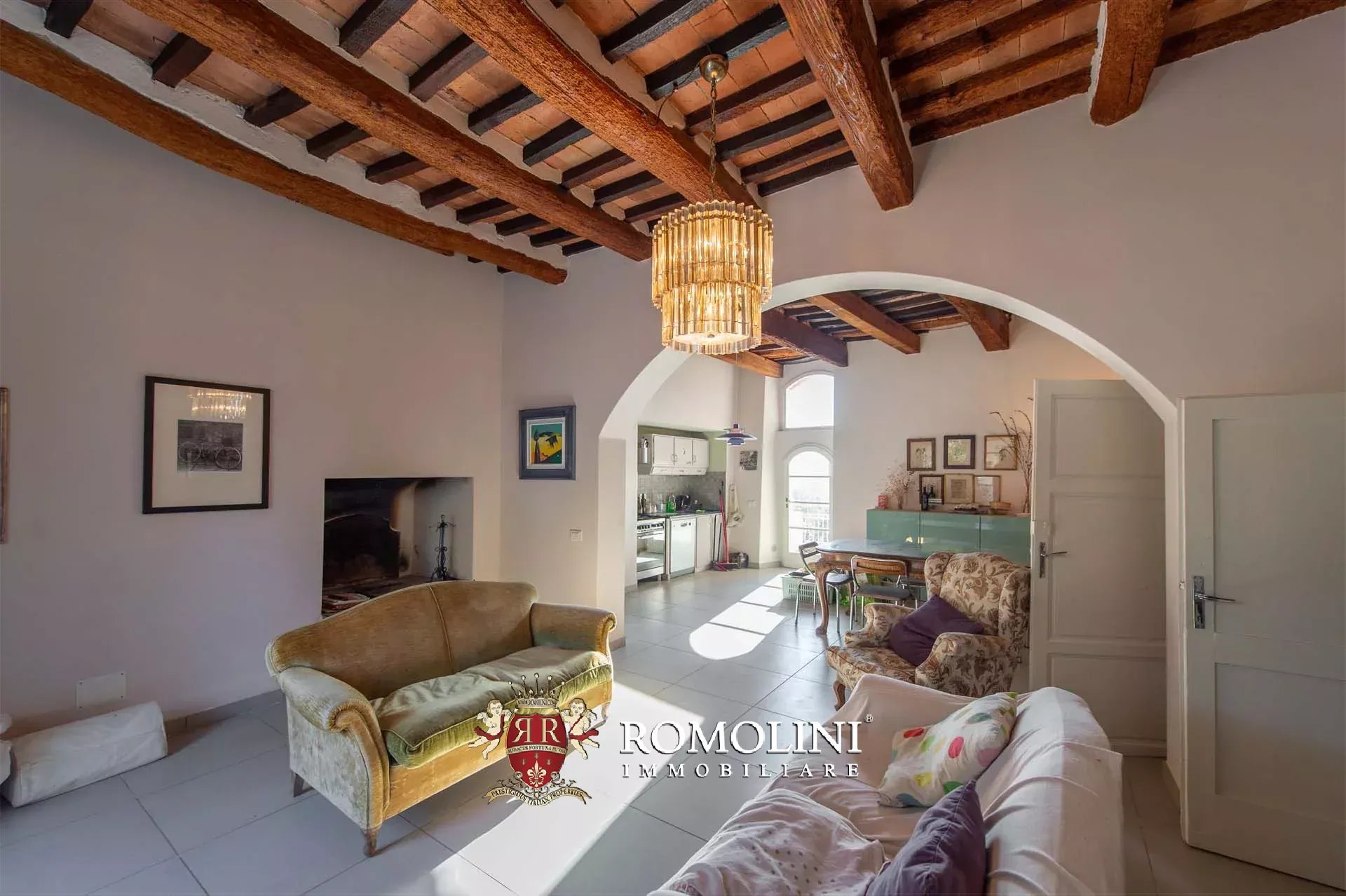
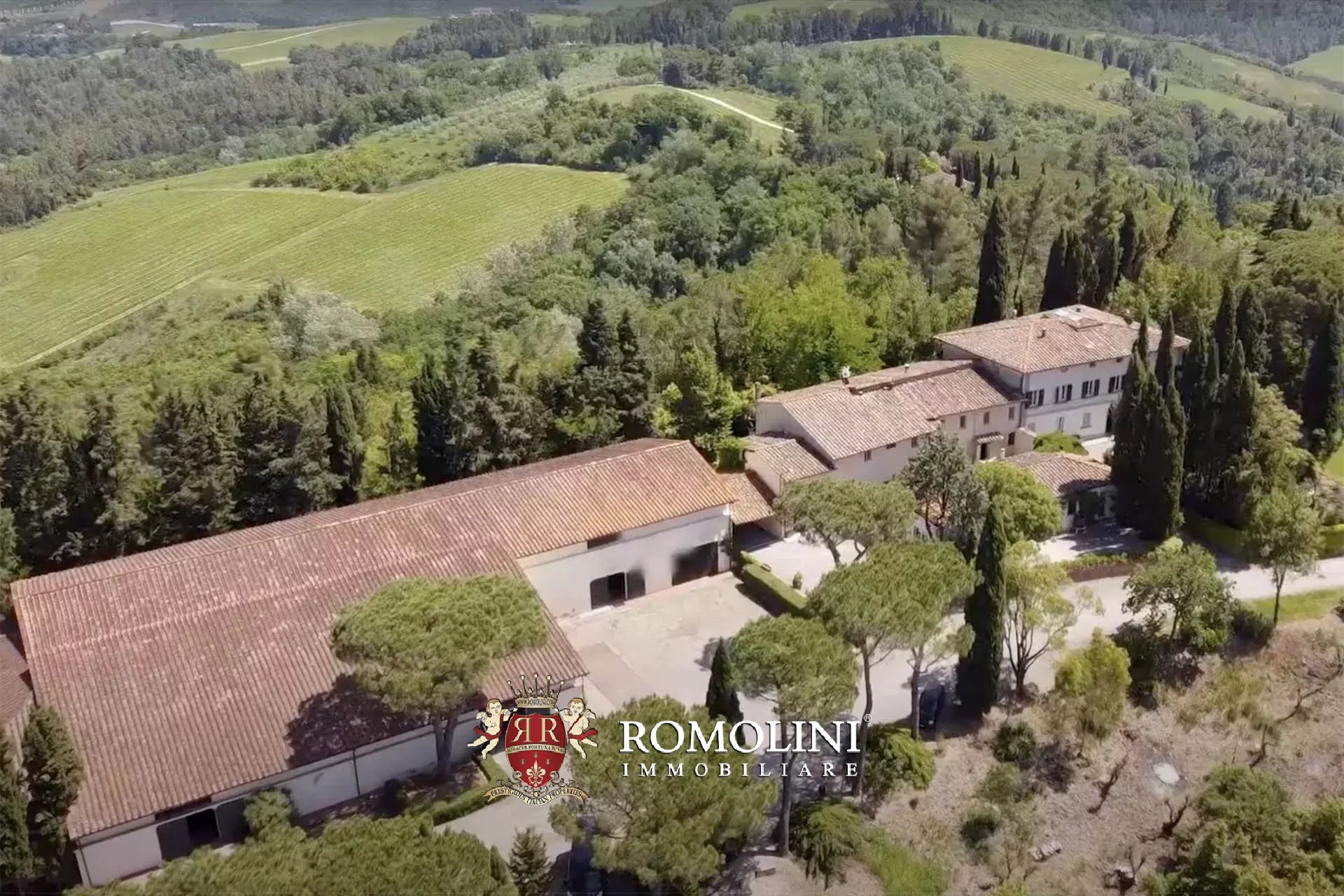
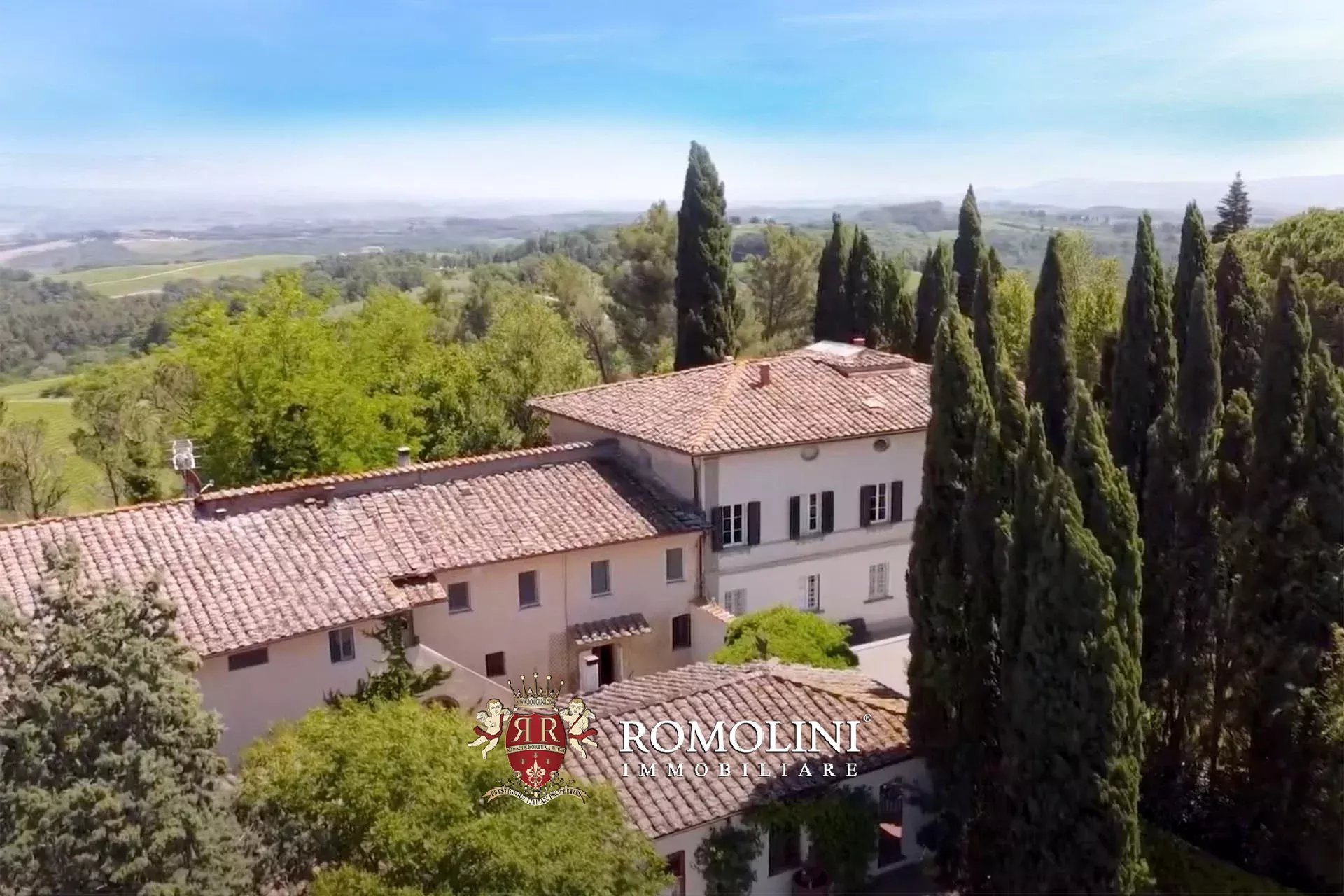
The manorial villa (480 m² – 5,165 ft², 6 bedrooms and 4 bathrooms) is on three levels and is the typical Tuscan stately building, with large bright rooms characterized by high ceilings, original terracotta floors, stone fireplaces and wooden beams. On the ground floor are the entrance hall, various sitting and dining areas, the kitchen and a bedroom with private bathroom. Going up to the first floor, one reaches a large living room and a hallway. From here one has then access to five bedrooms, located at the corners of the building, and three bathrooms. The top floor is occupied entirely by attics, large rooms that are partially habitable and practicable, also suitable for creating recreational and/or relaxation spaces. The building is then surrounded by a private park of 5,000 sqm with centuries-old pines and cypresses, all completed by an automatic irrigation system fed by the artesian well (restored around 2010).
Also on the hill are two guesthouses (renovated in 2009 and 2015 respectively), habitable and in excellent condition:
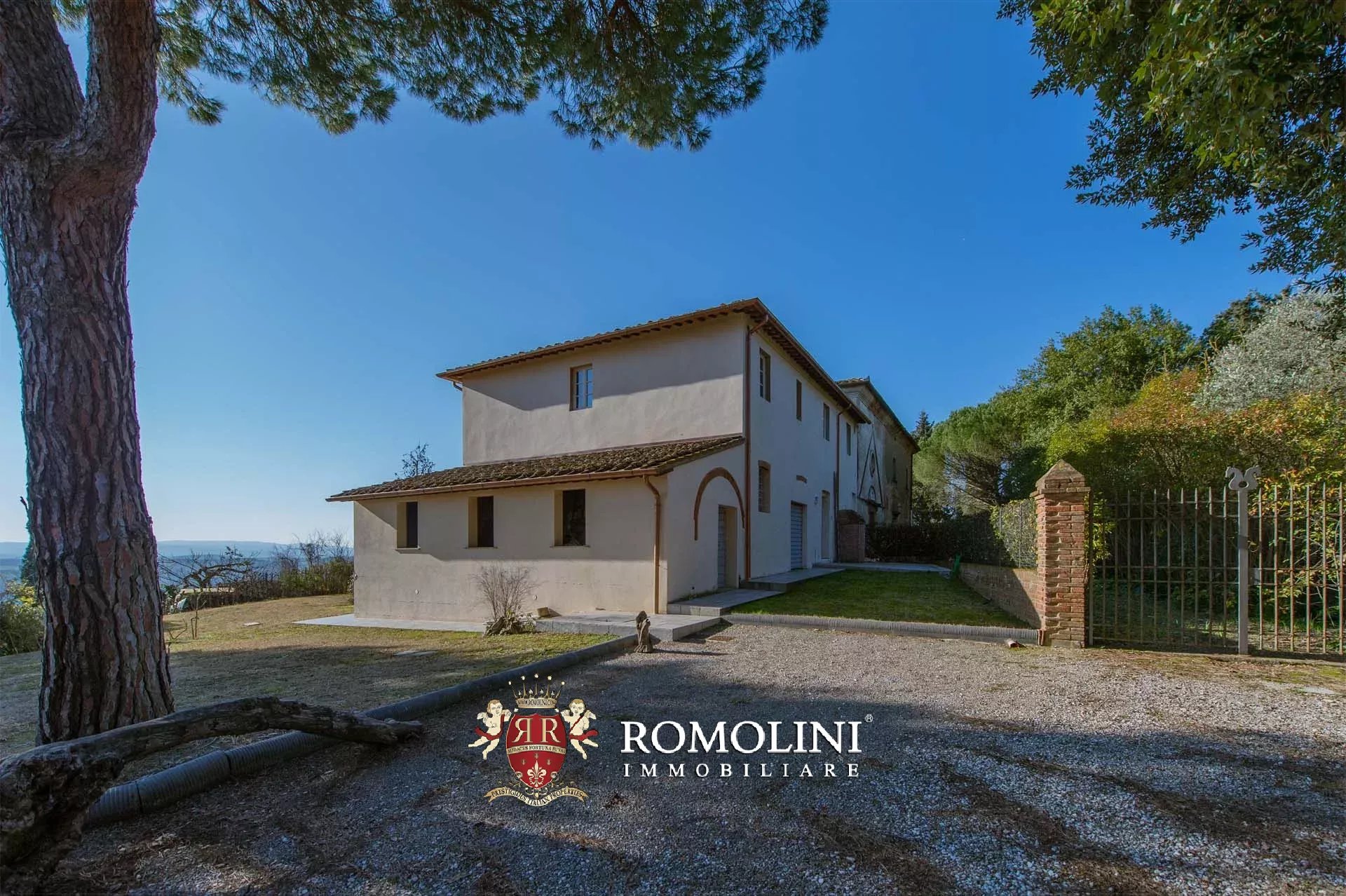
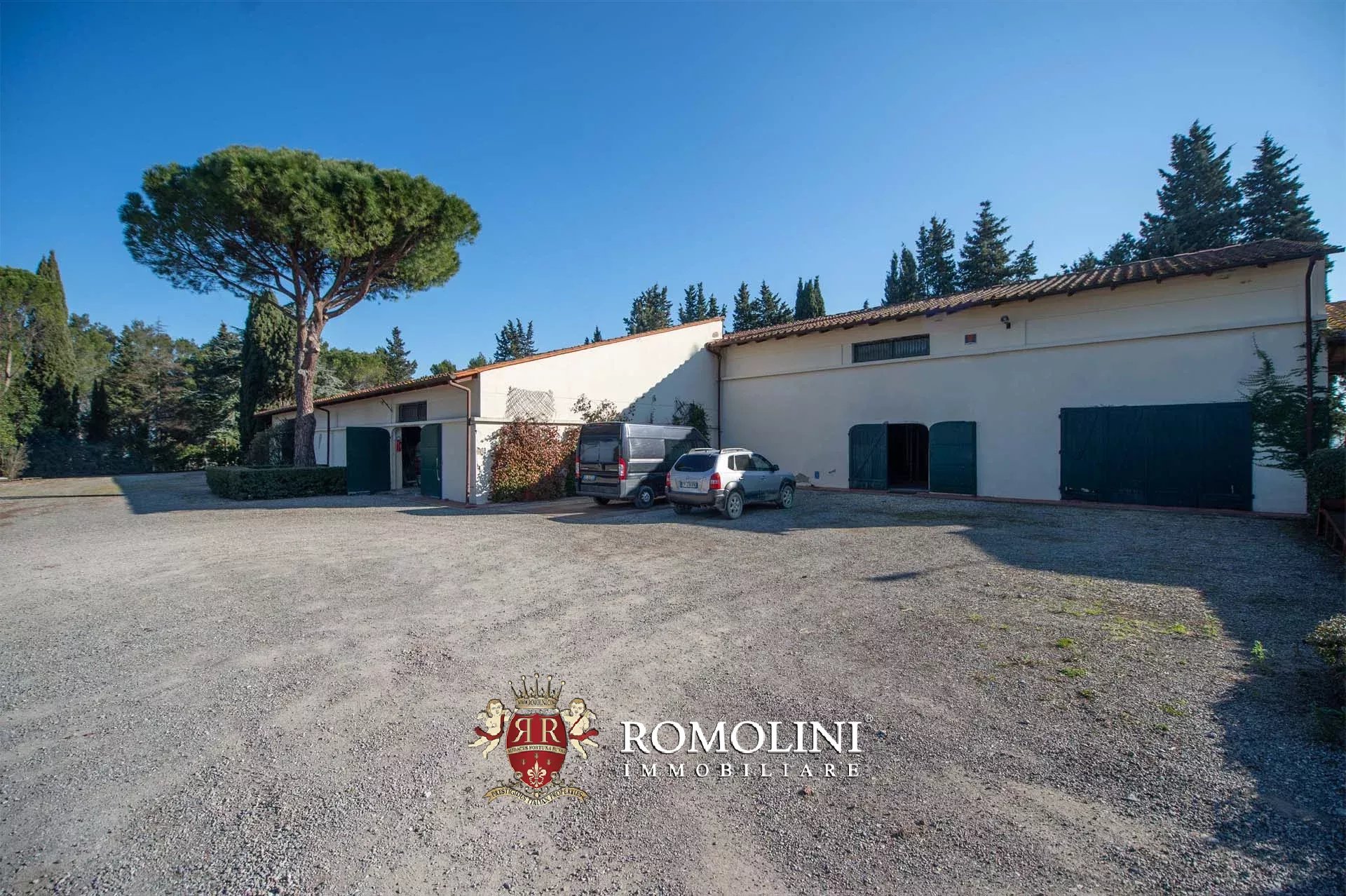
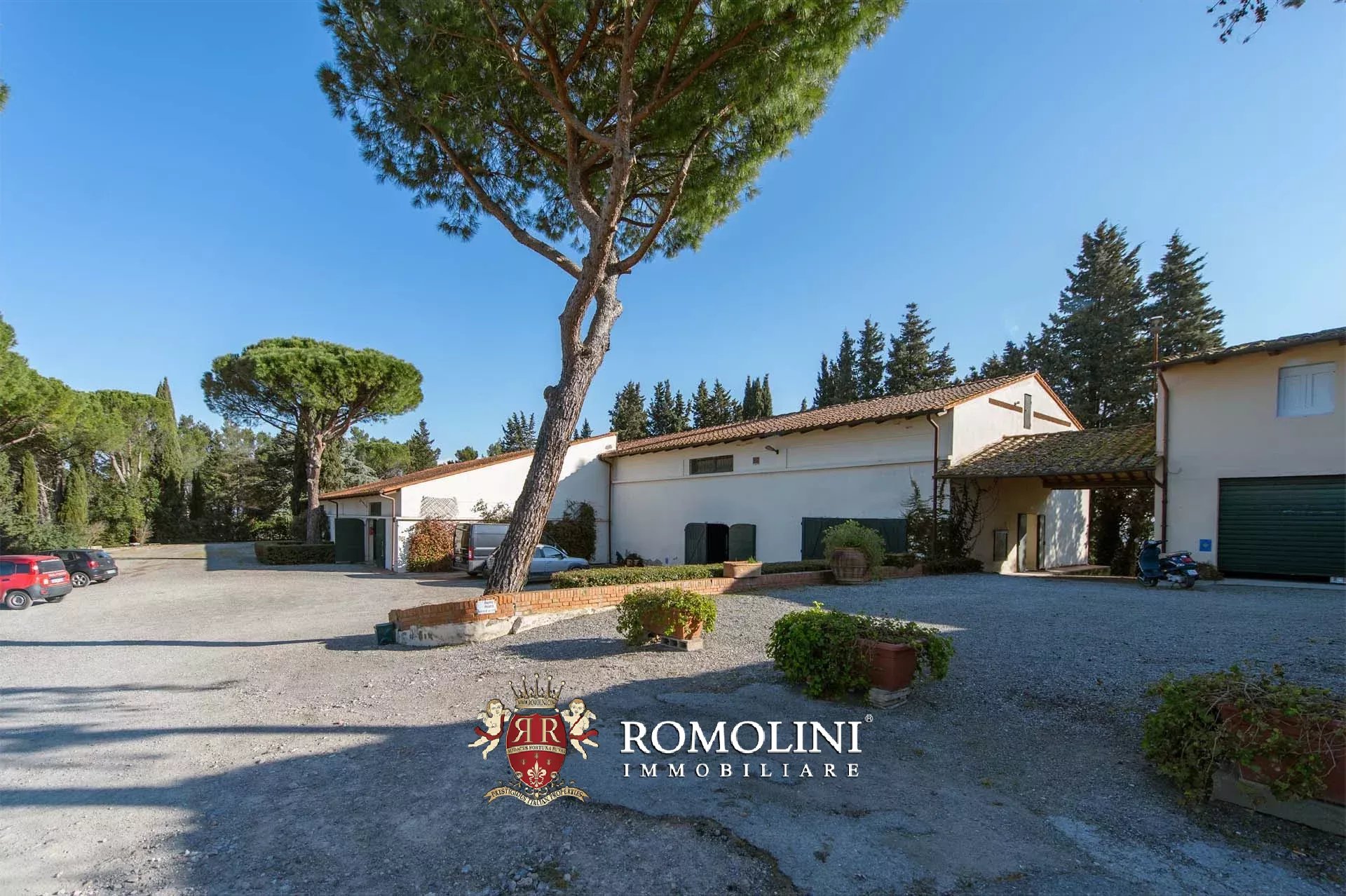
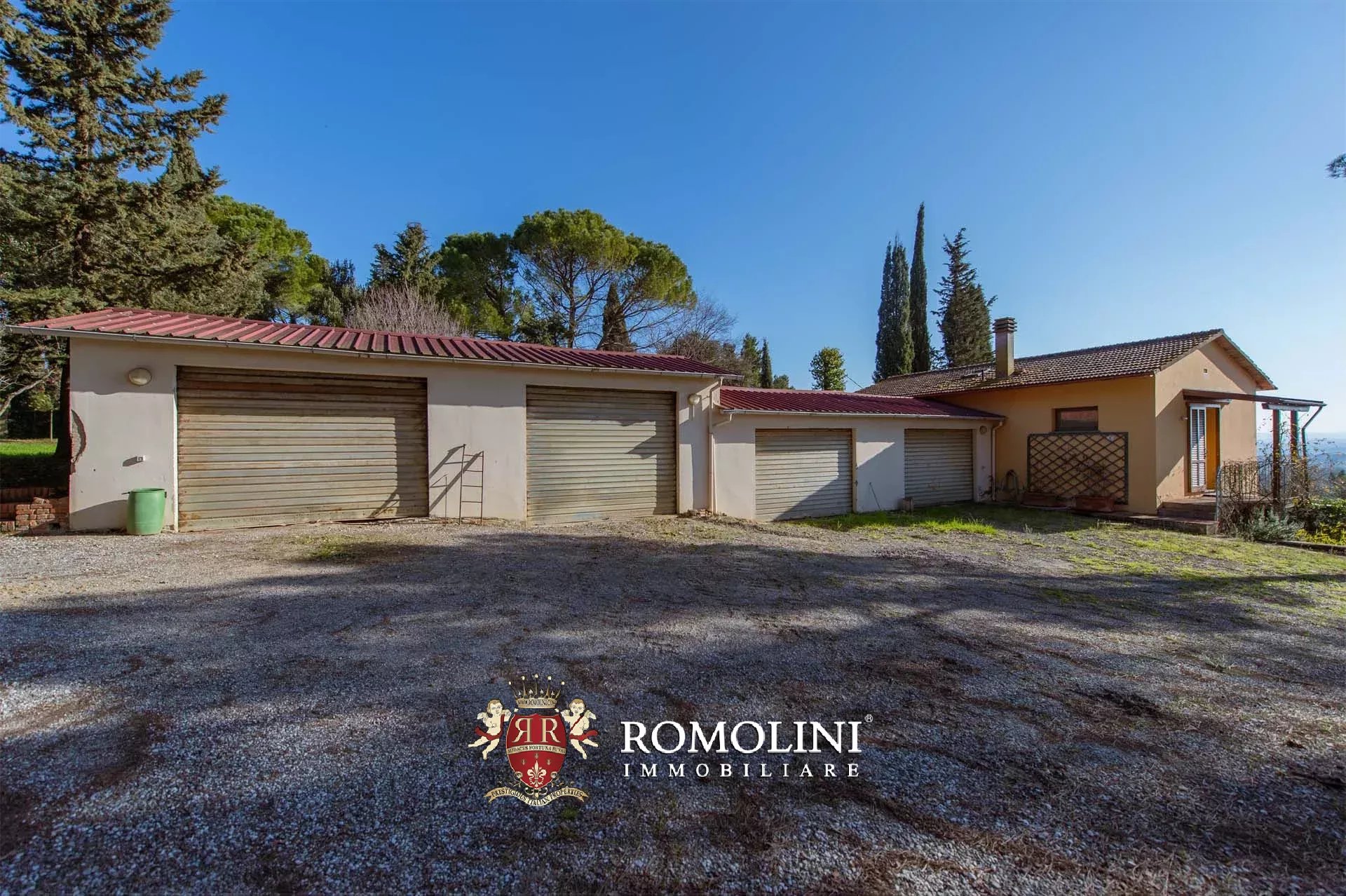
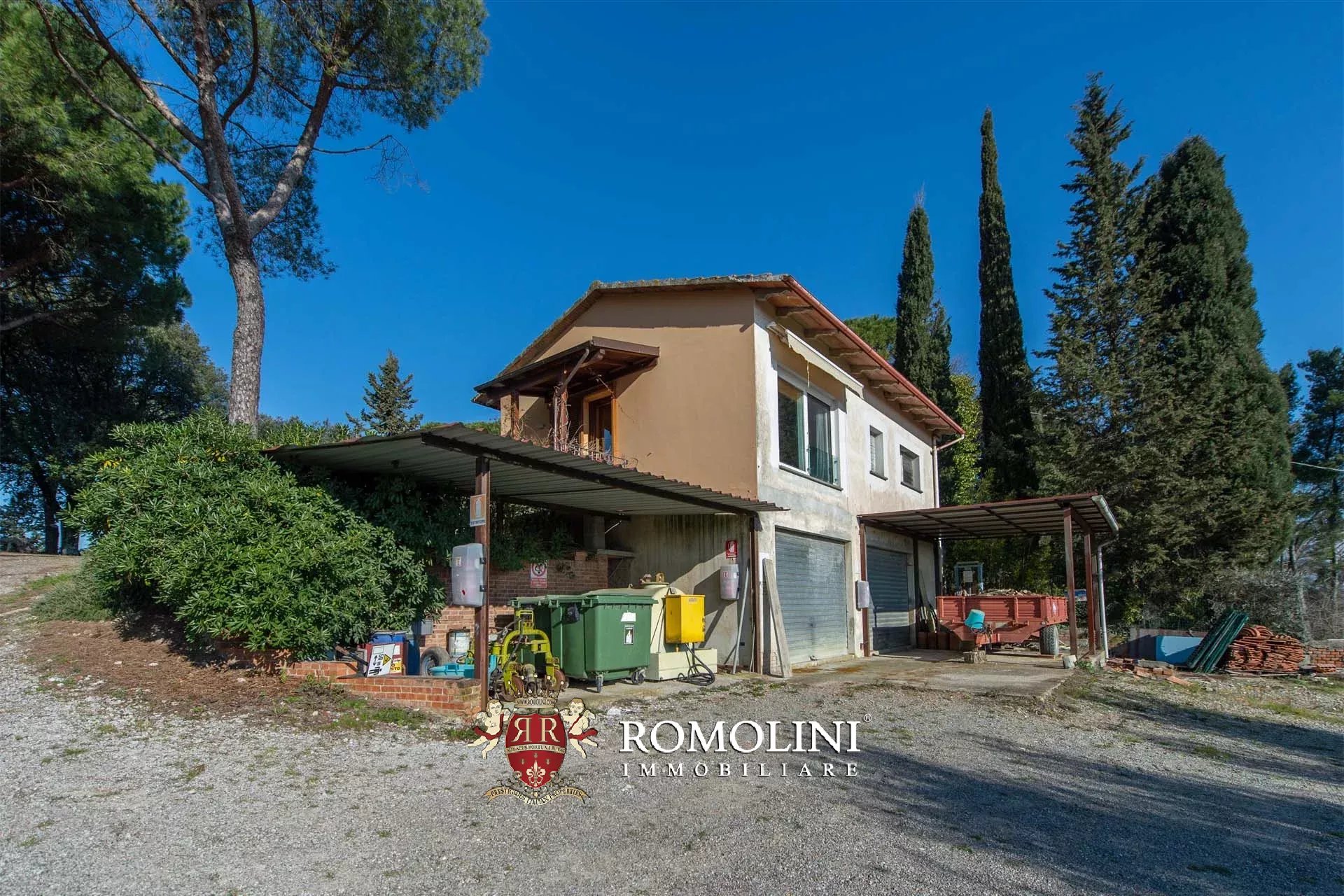
Adjacent to the villa is a two-storey building (500 m² – 5,380 ft², 4 bedrooms and 3 bathrooms), partly to be restored, which houses various garages/workshops on the ground floor and two apartments (habitable, but with modernization work required).
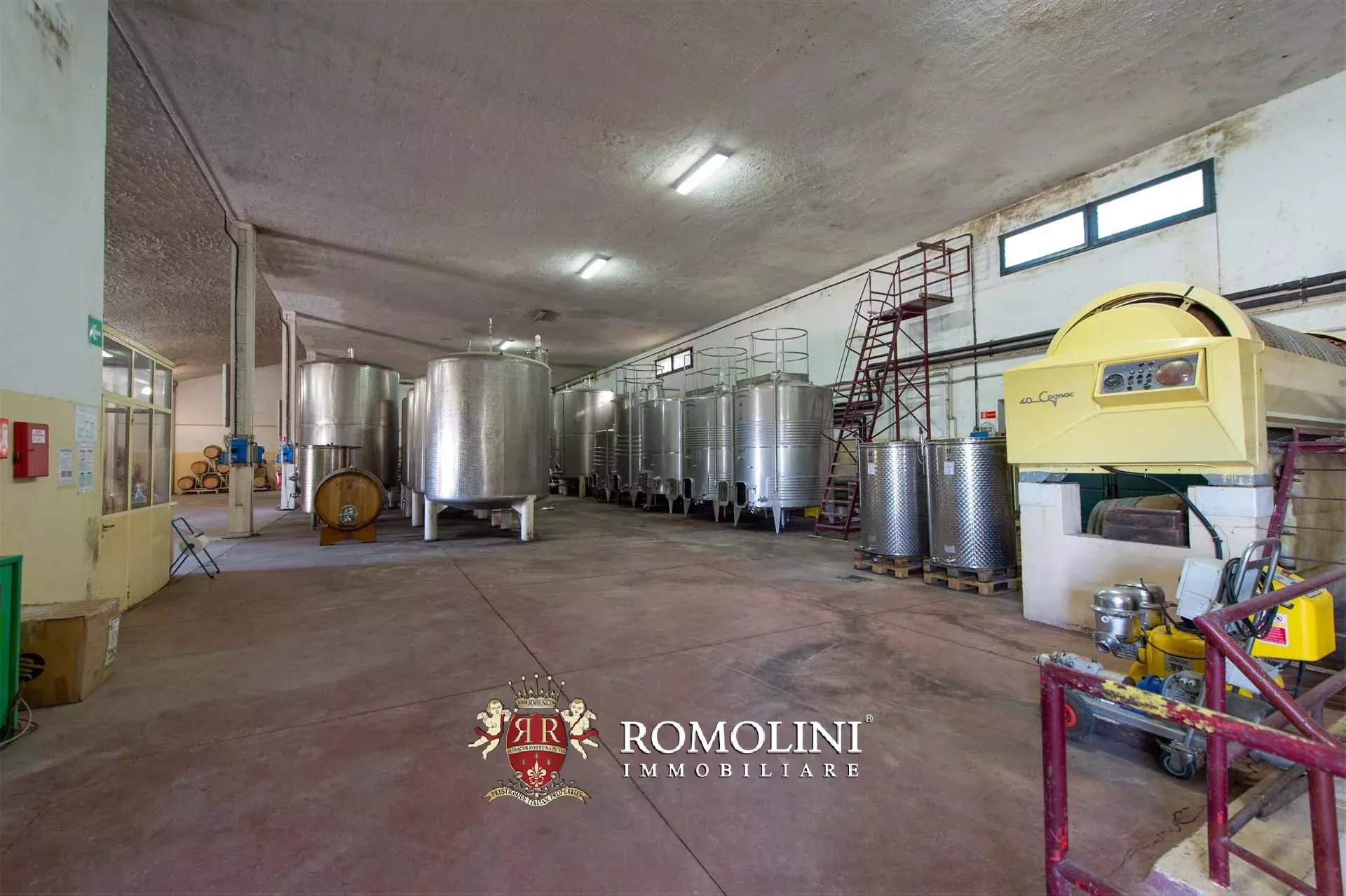
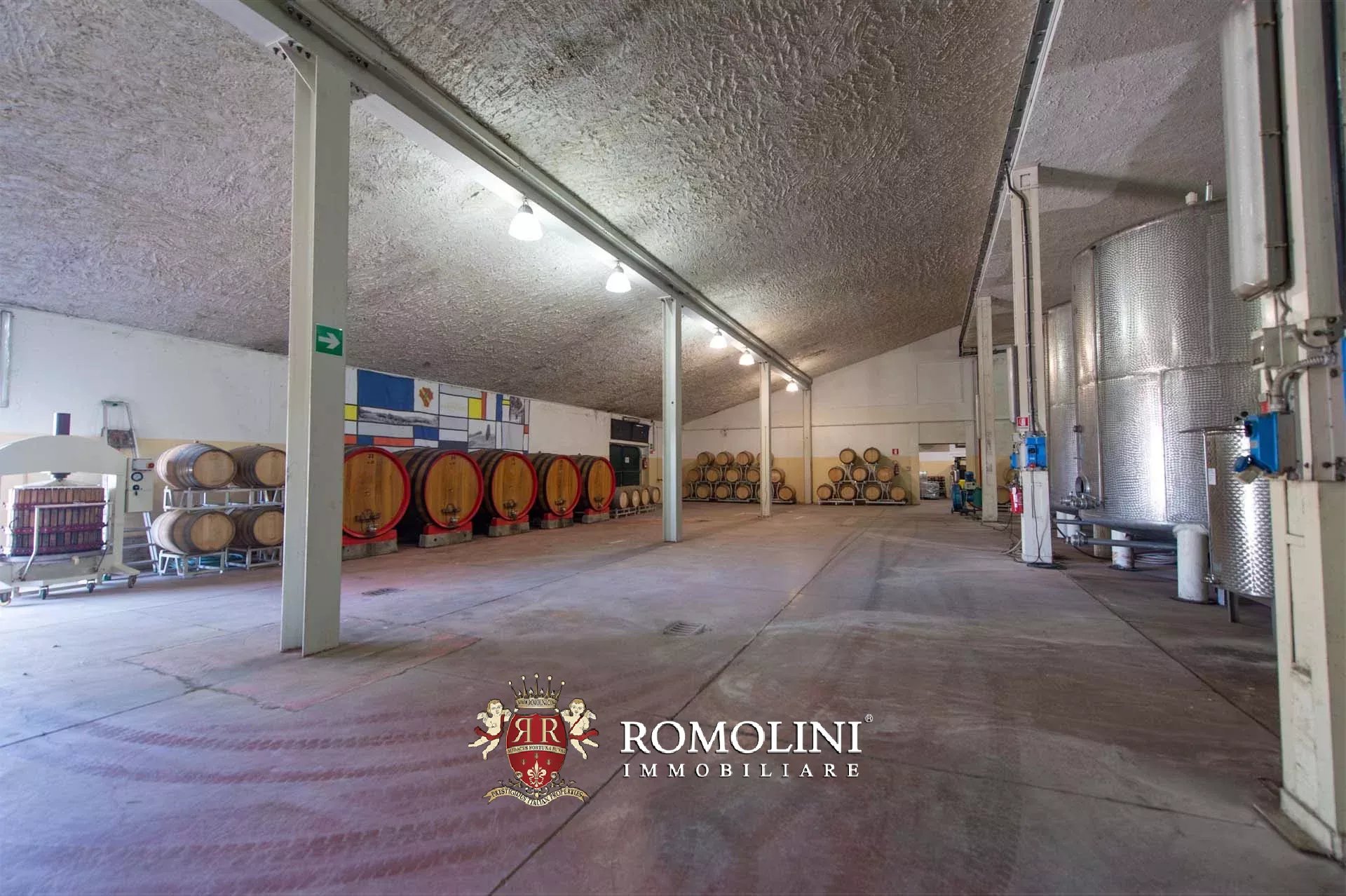
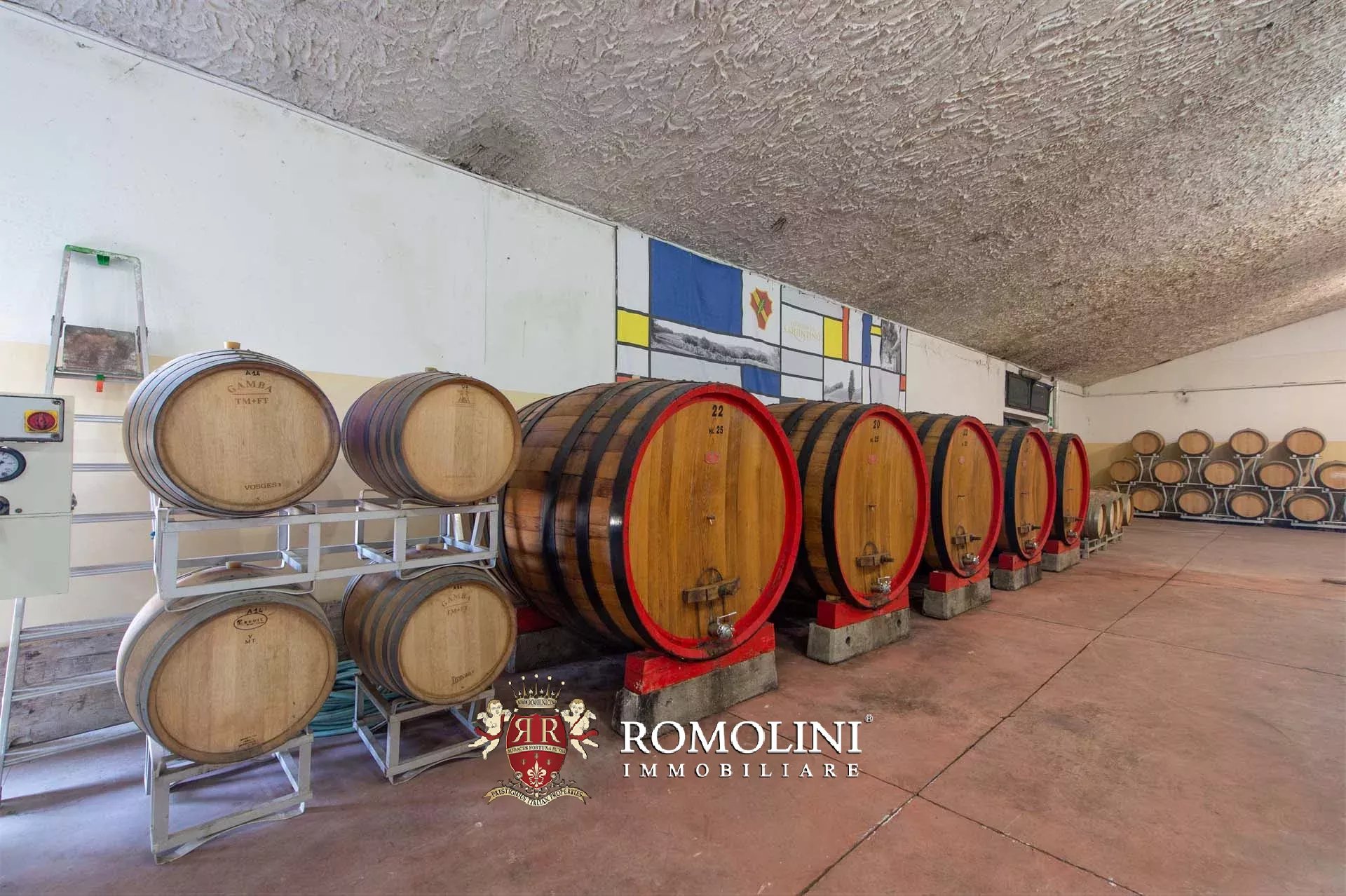
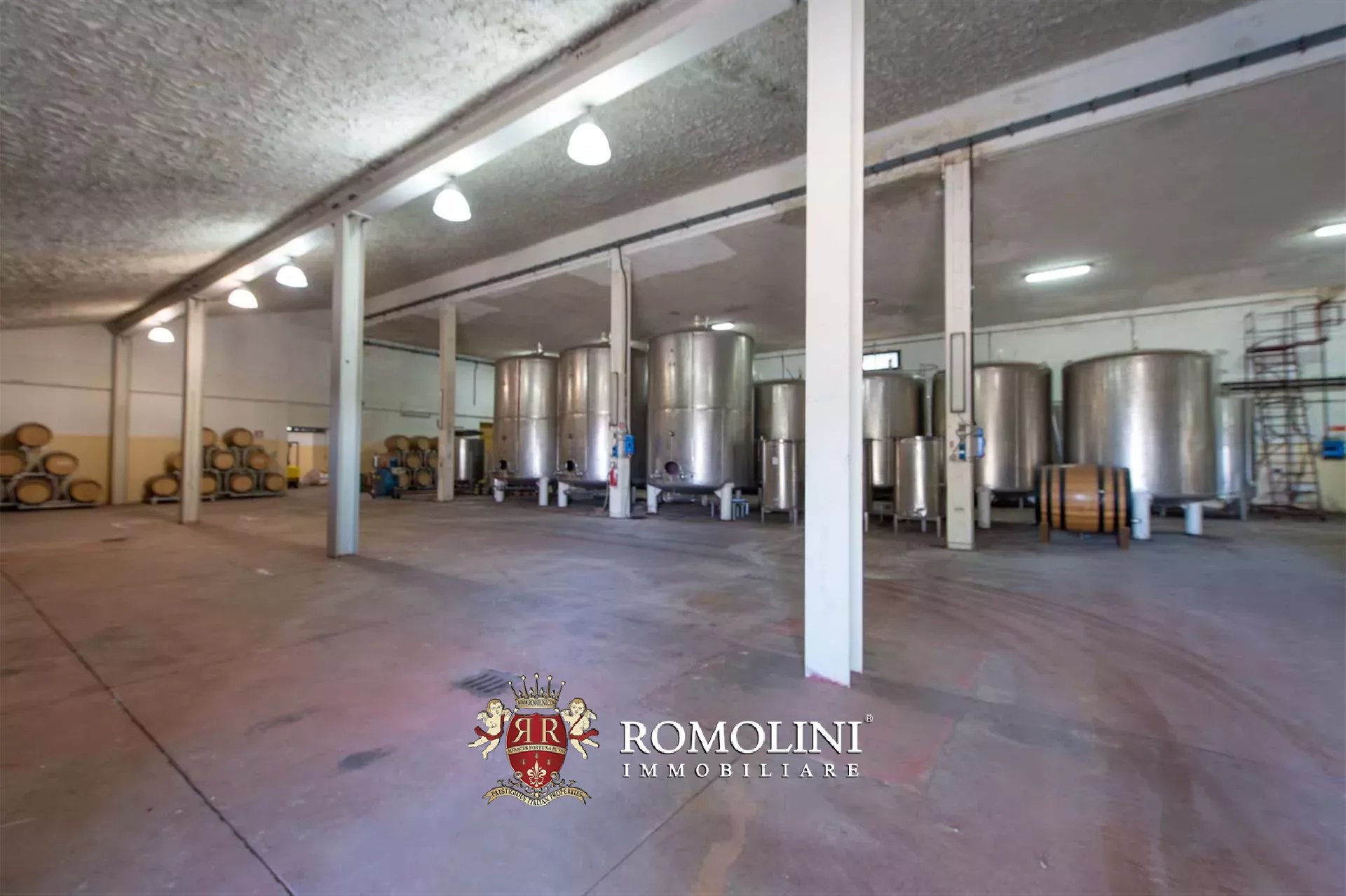
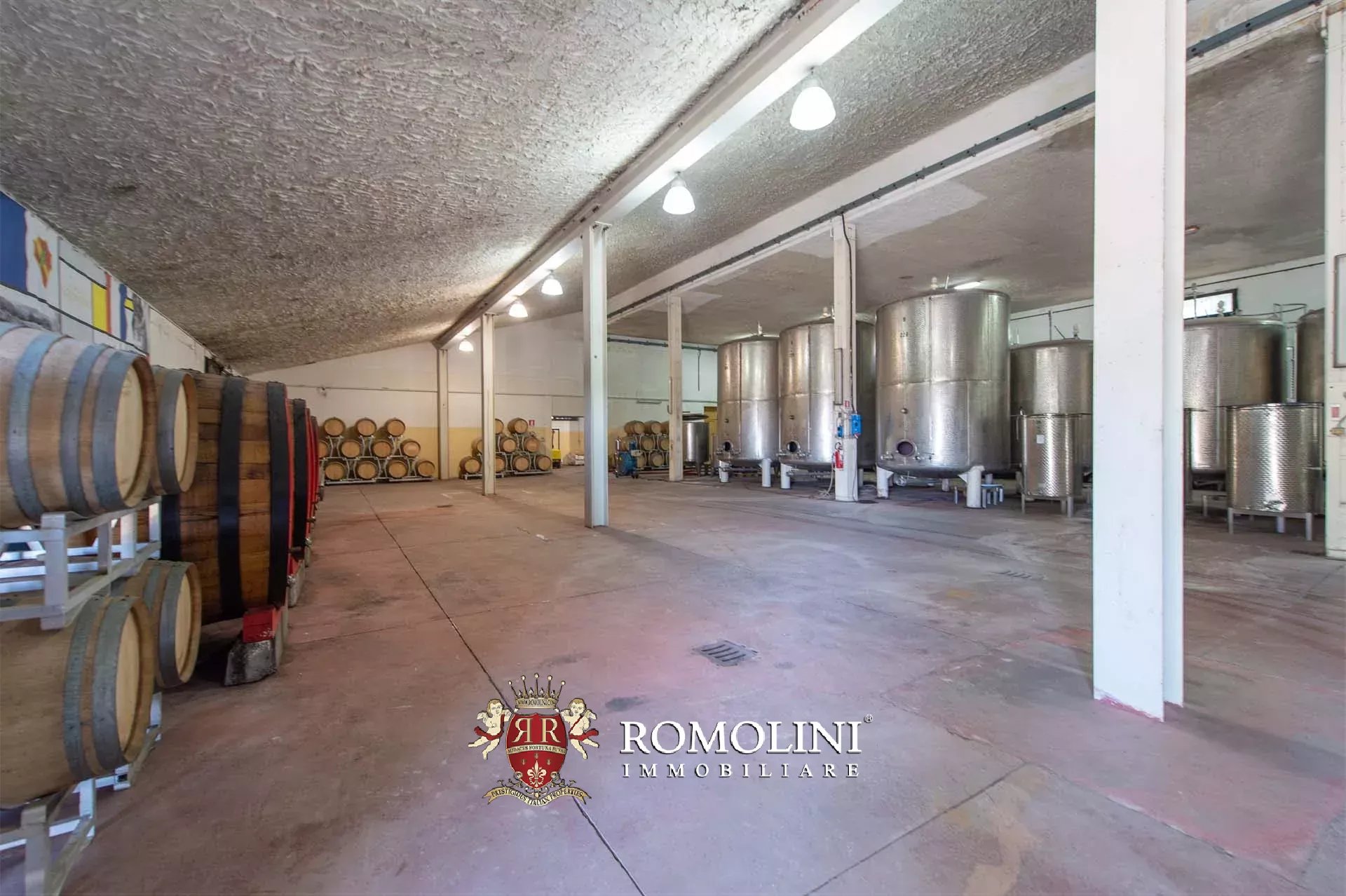
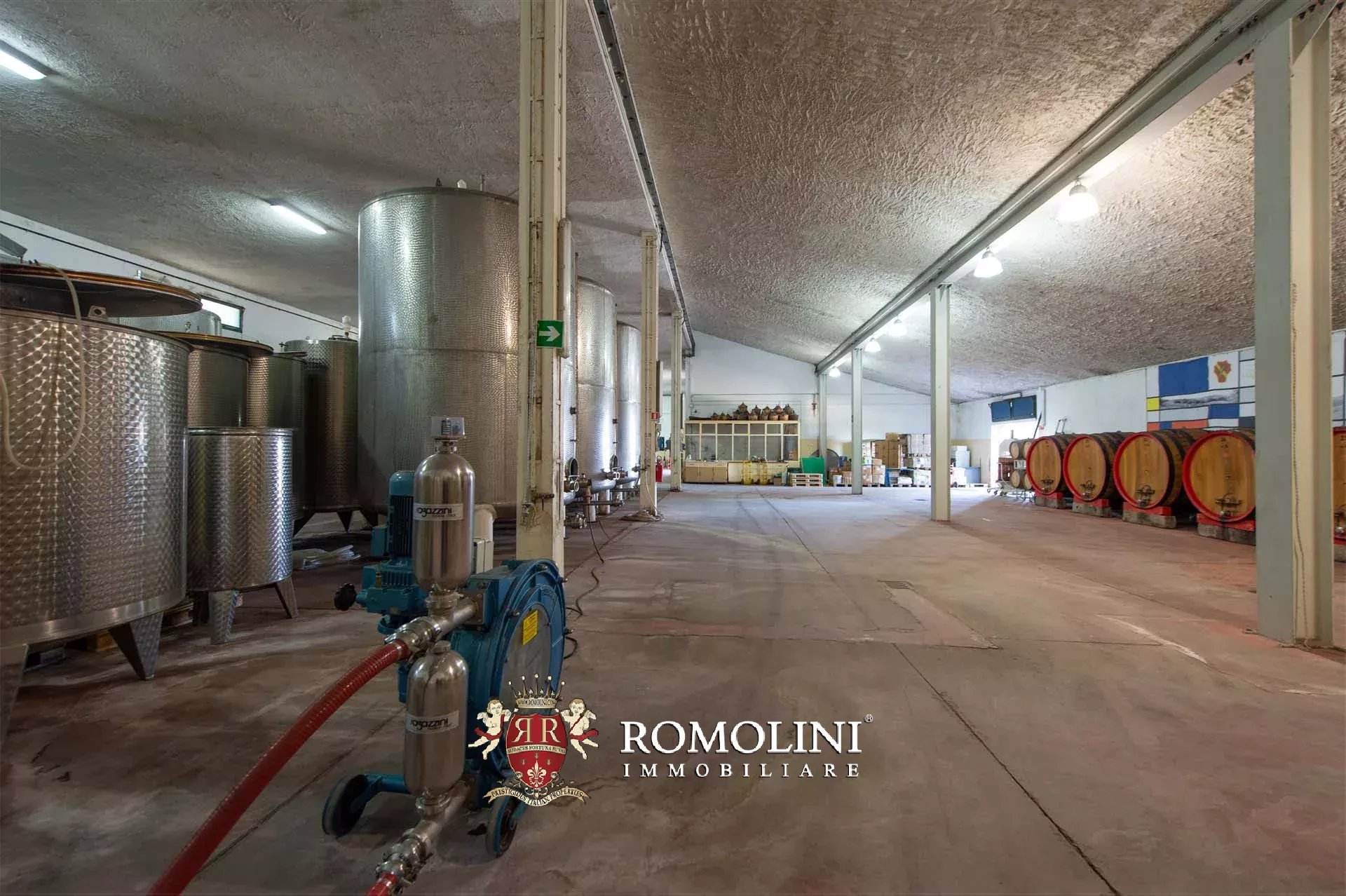
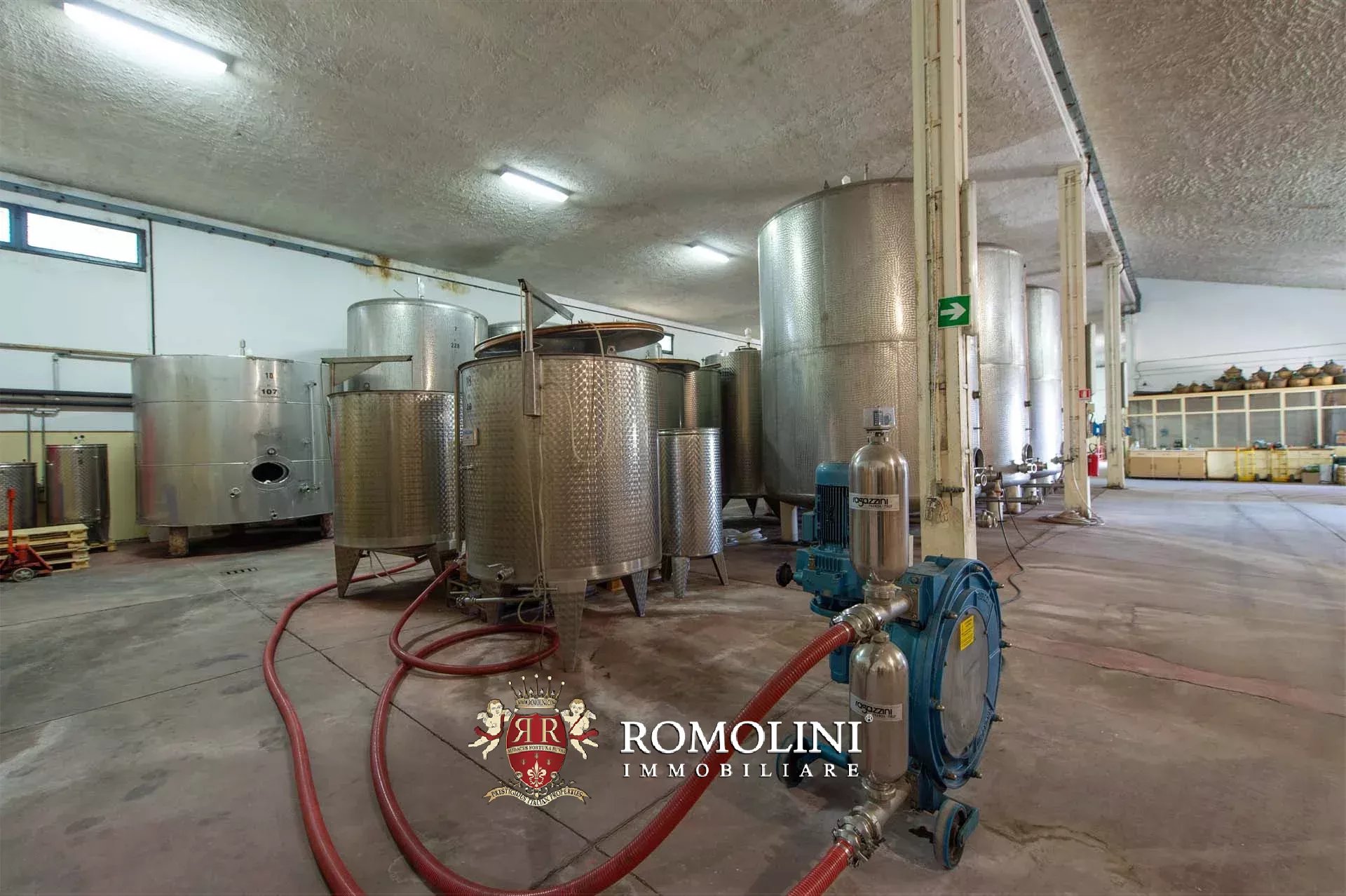
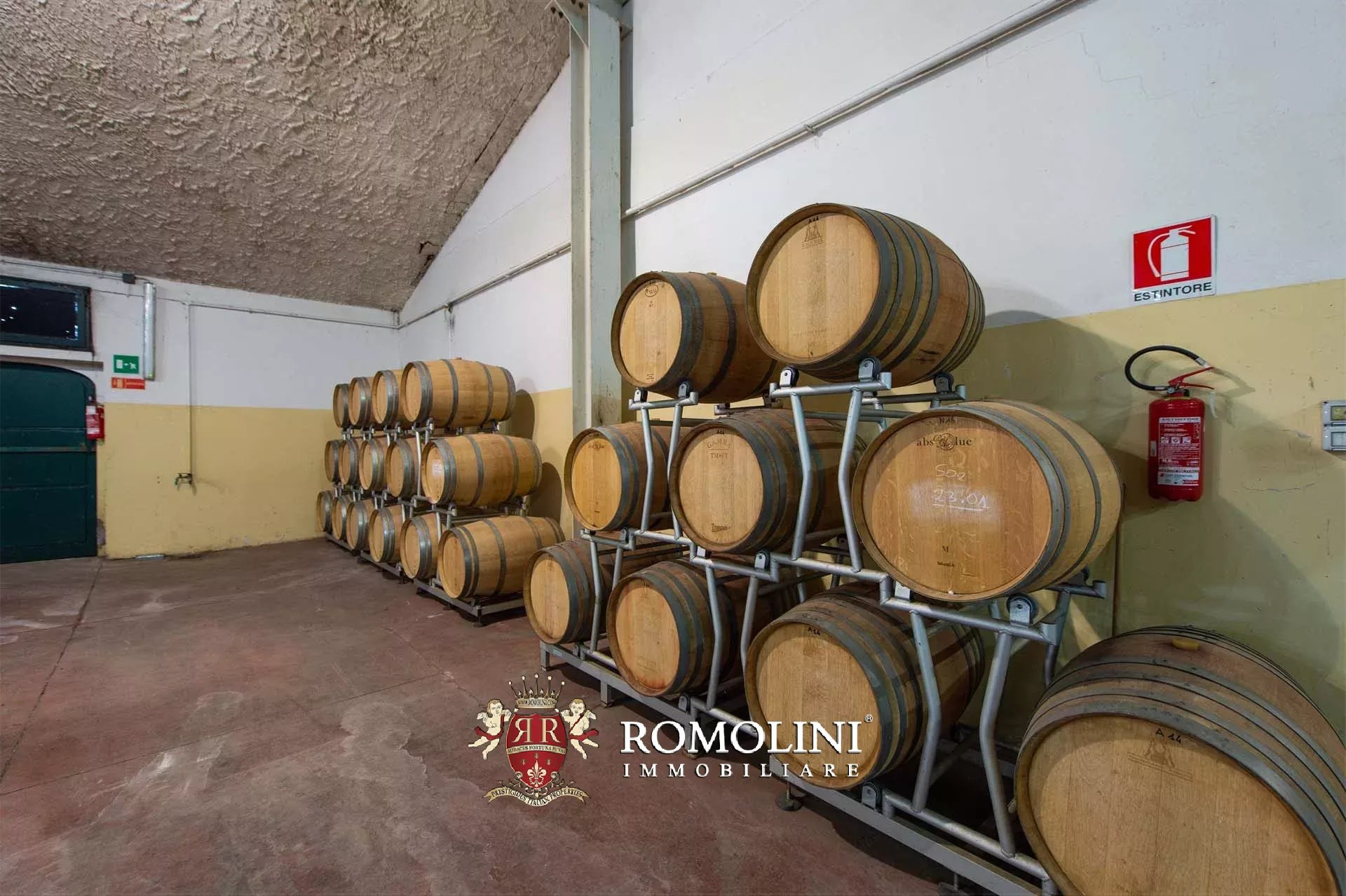
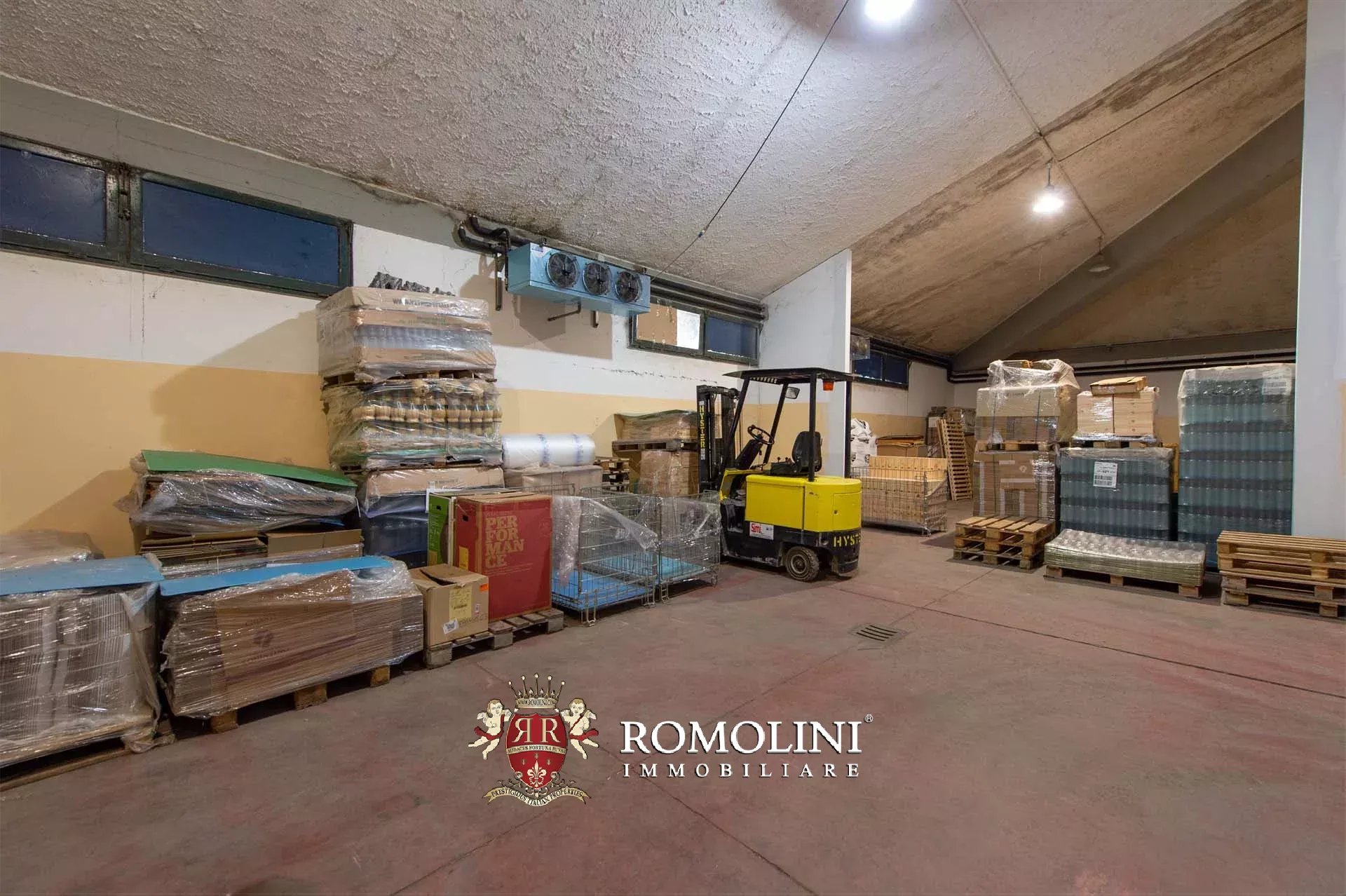
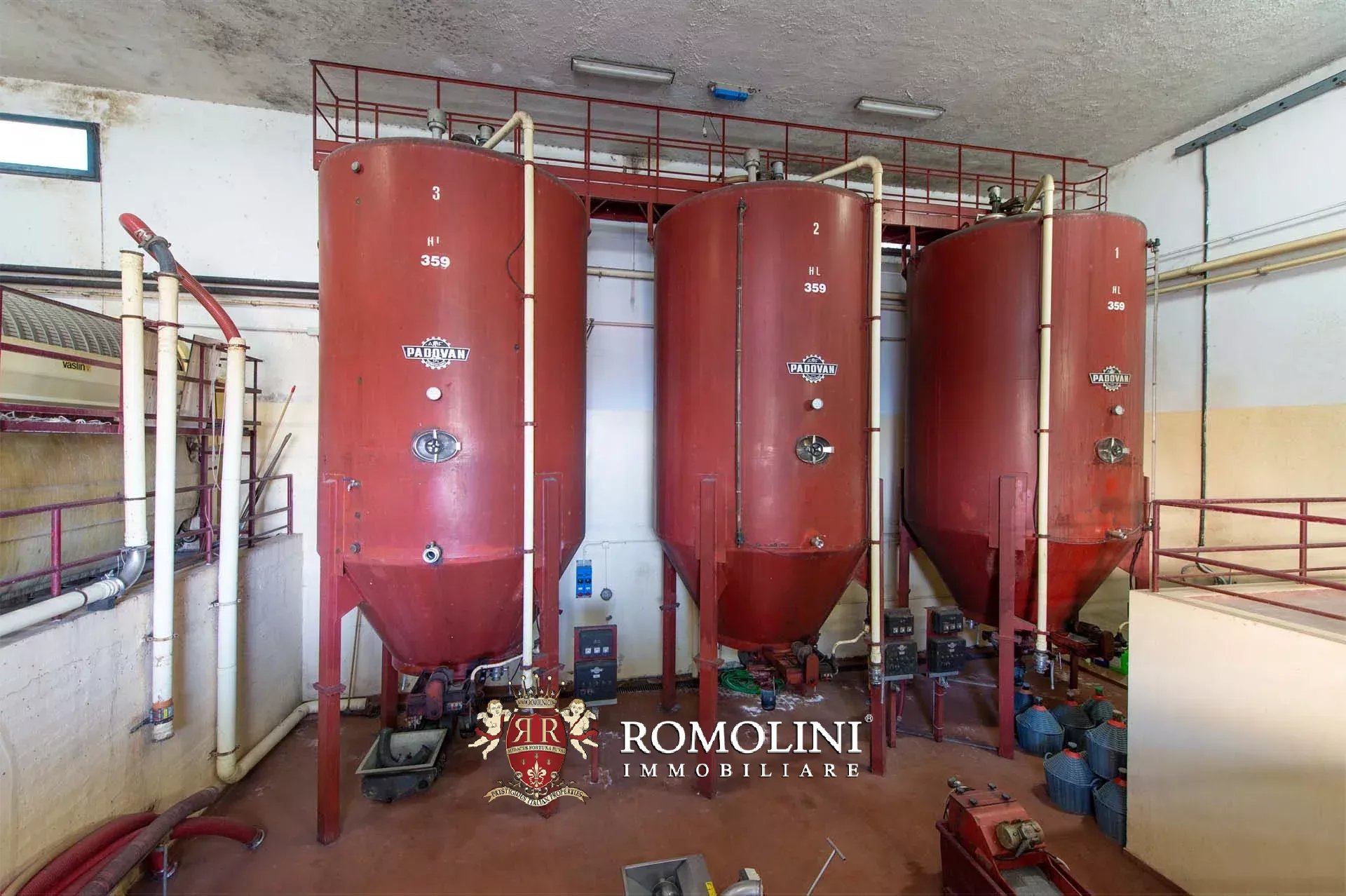
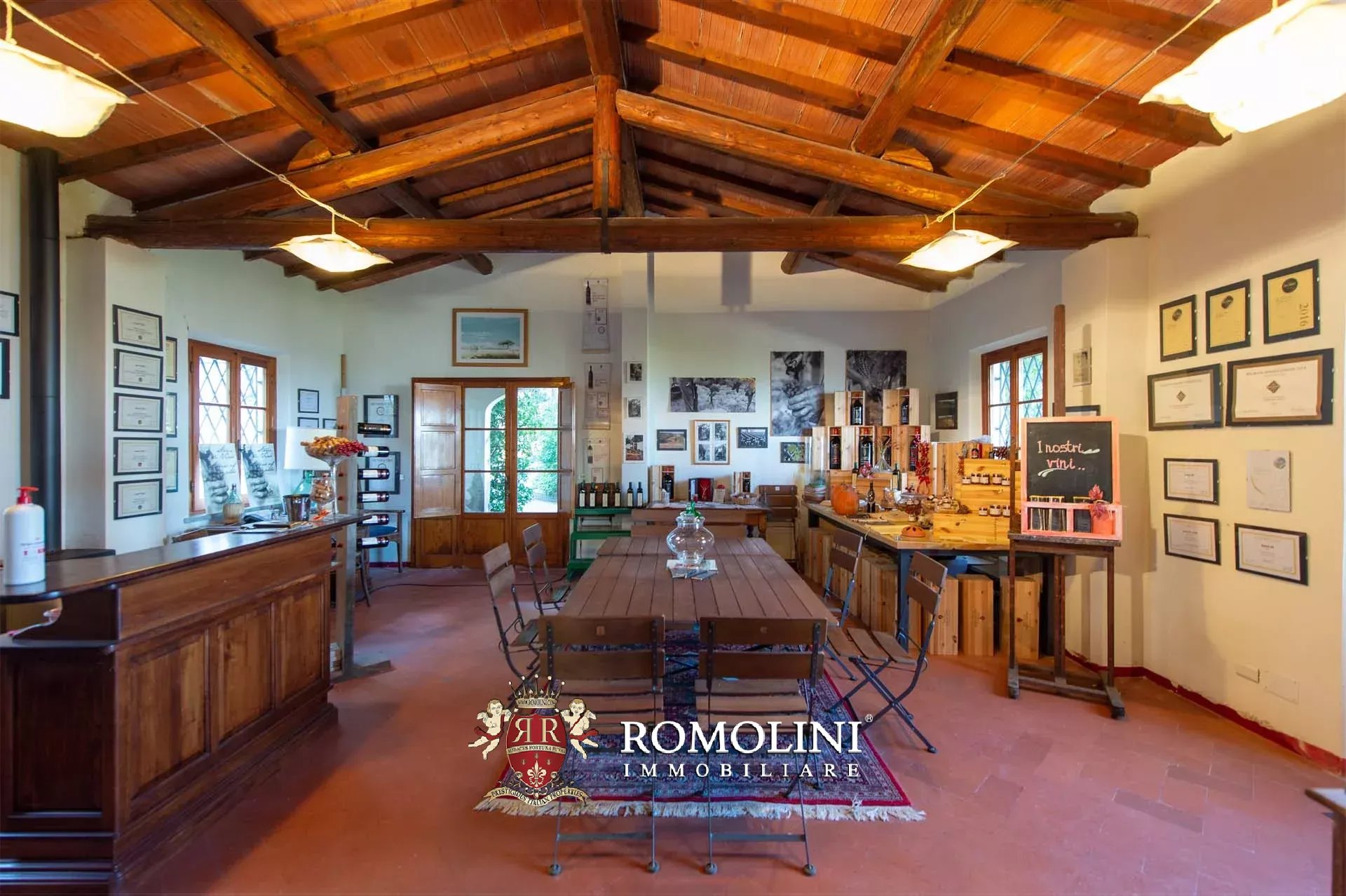
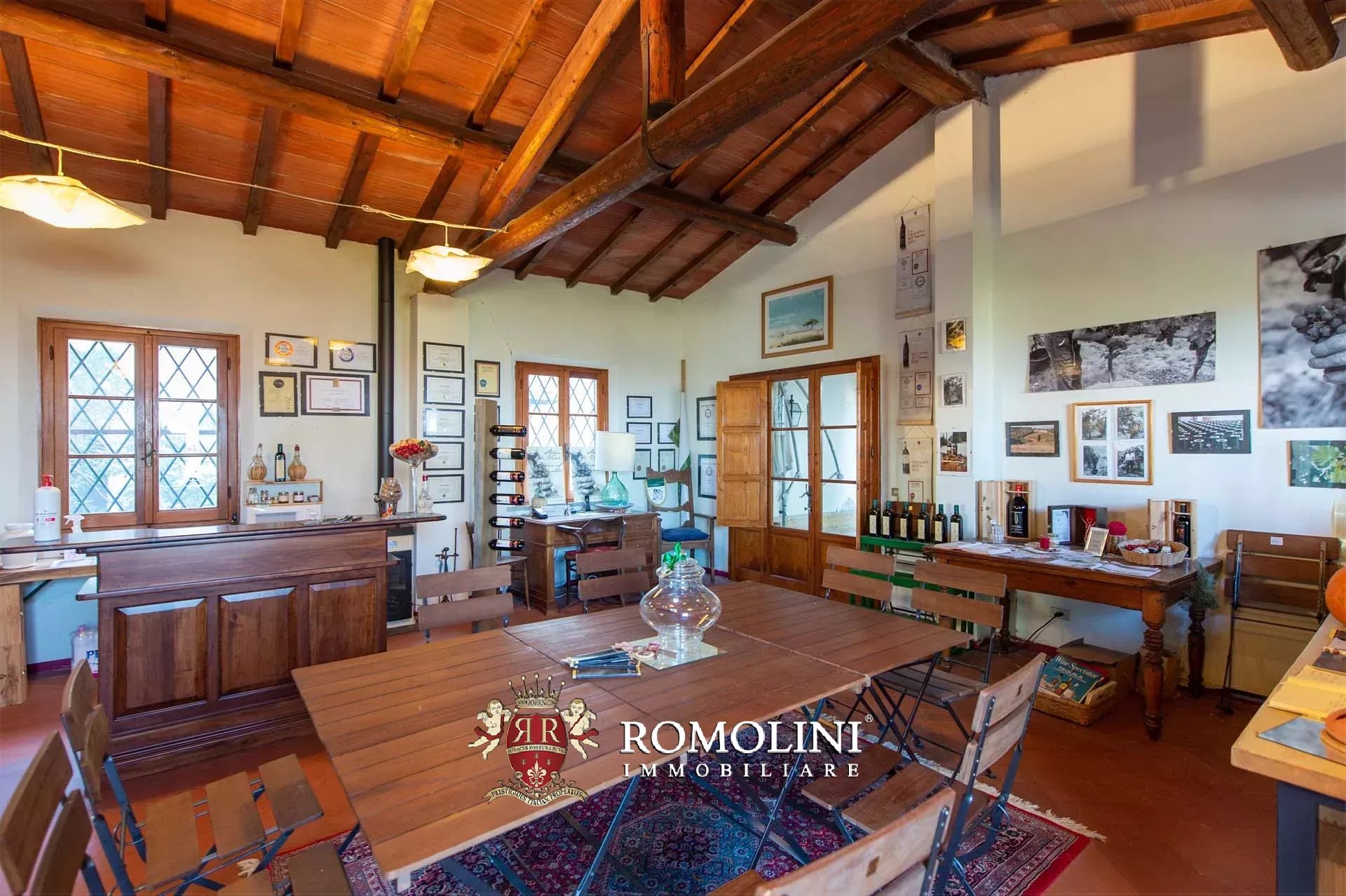
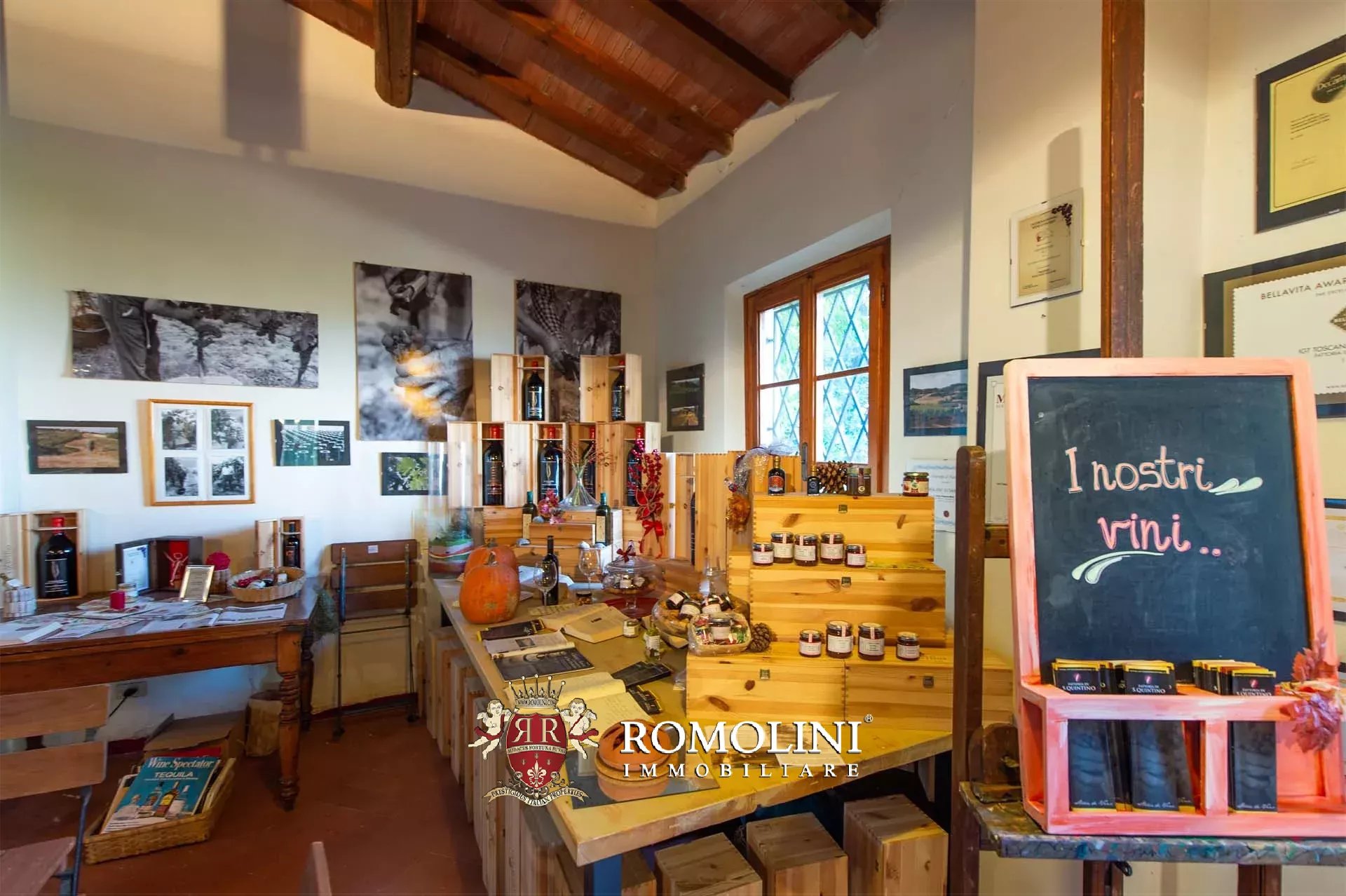
The wine cellar (1,260 m² – 13,558 ft²) is located in a building adjacent to the villa, of which it is the natural continuation. The building is equipped with stainless steel vats, oak barrels, barriques for ageing, a wine-making plant with refrigeration and warehouses with controlled temperature and humidity. Complementing the cellar are offices and a large Tuscan-style tasting room with a panoramic terrace.
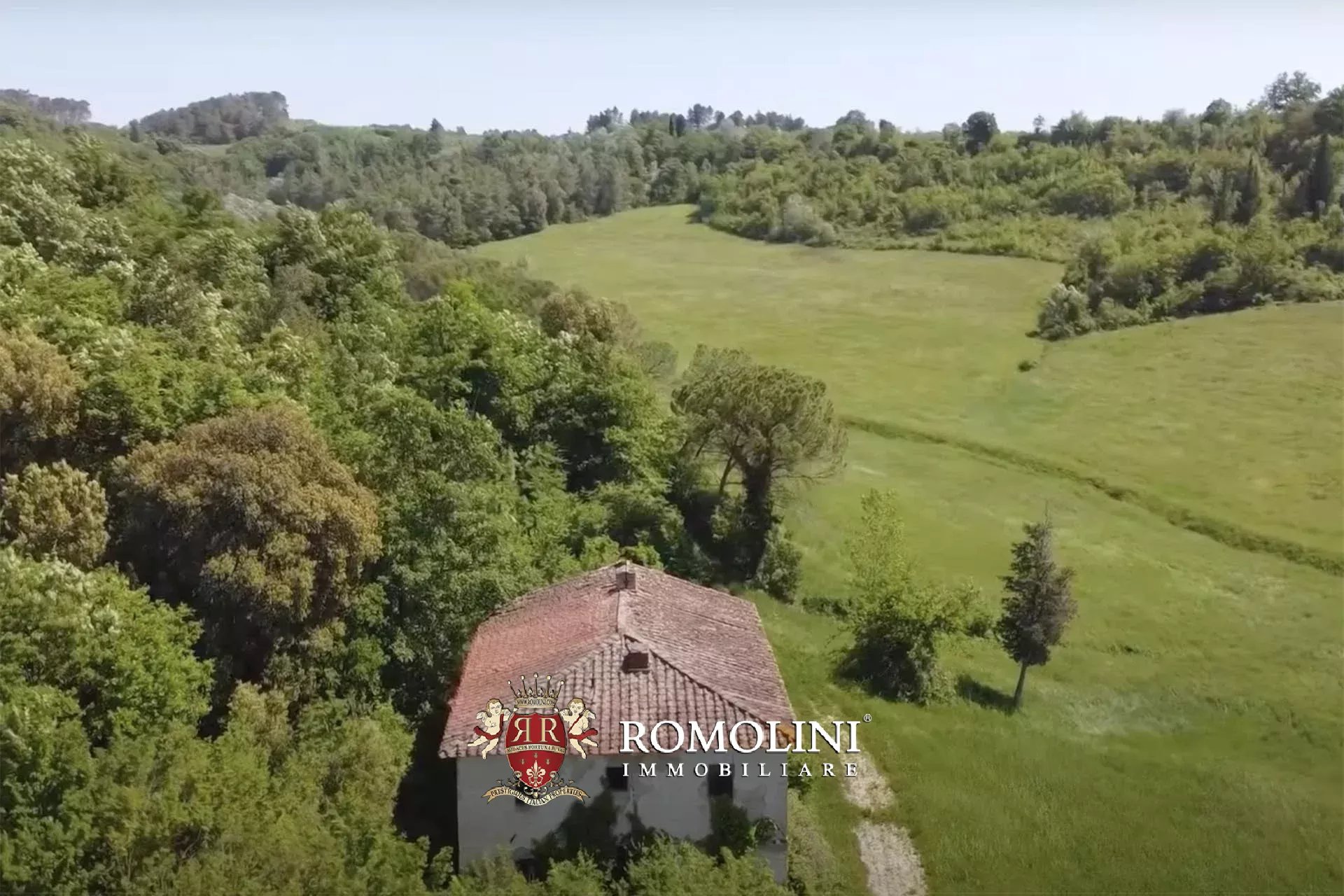
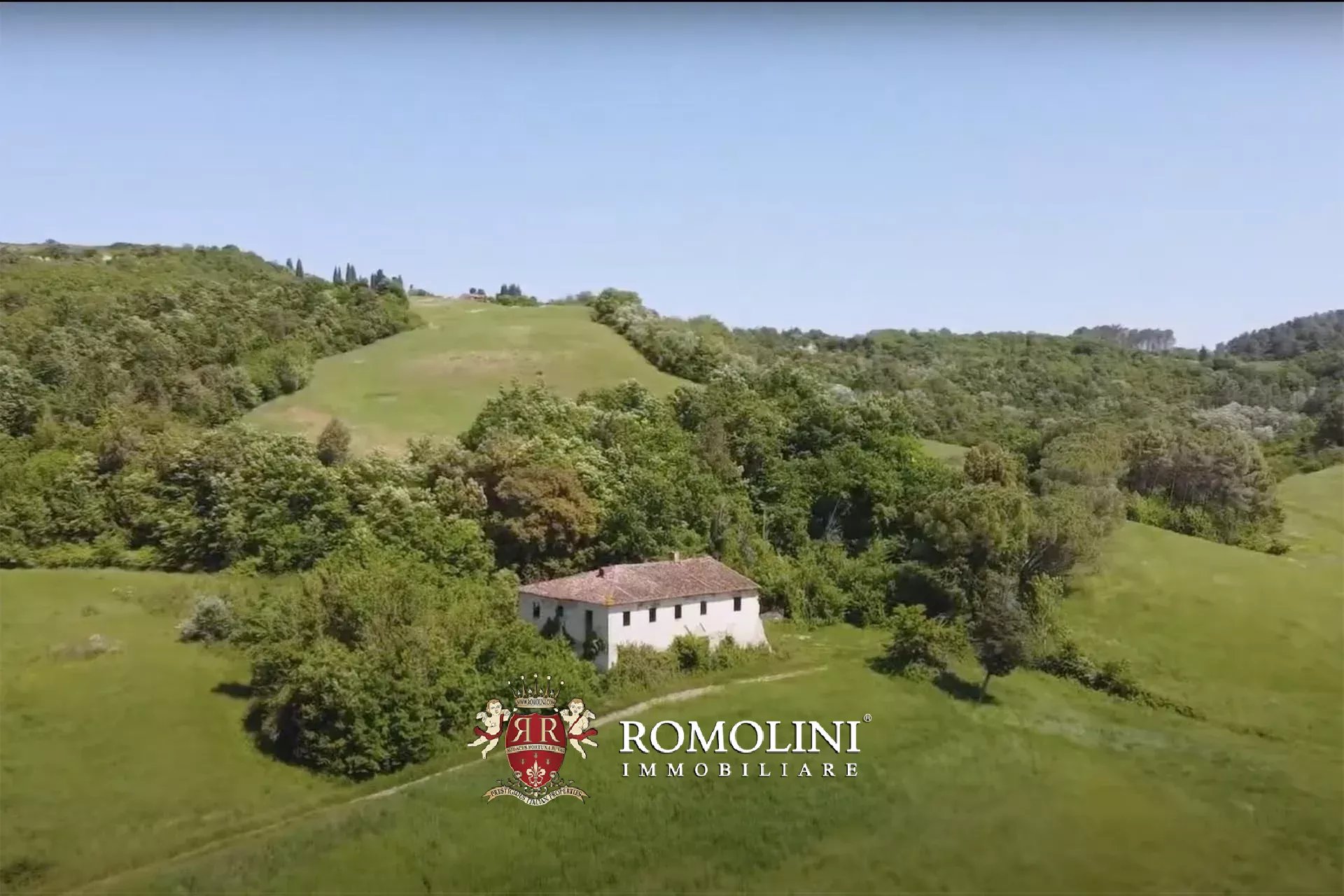
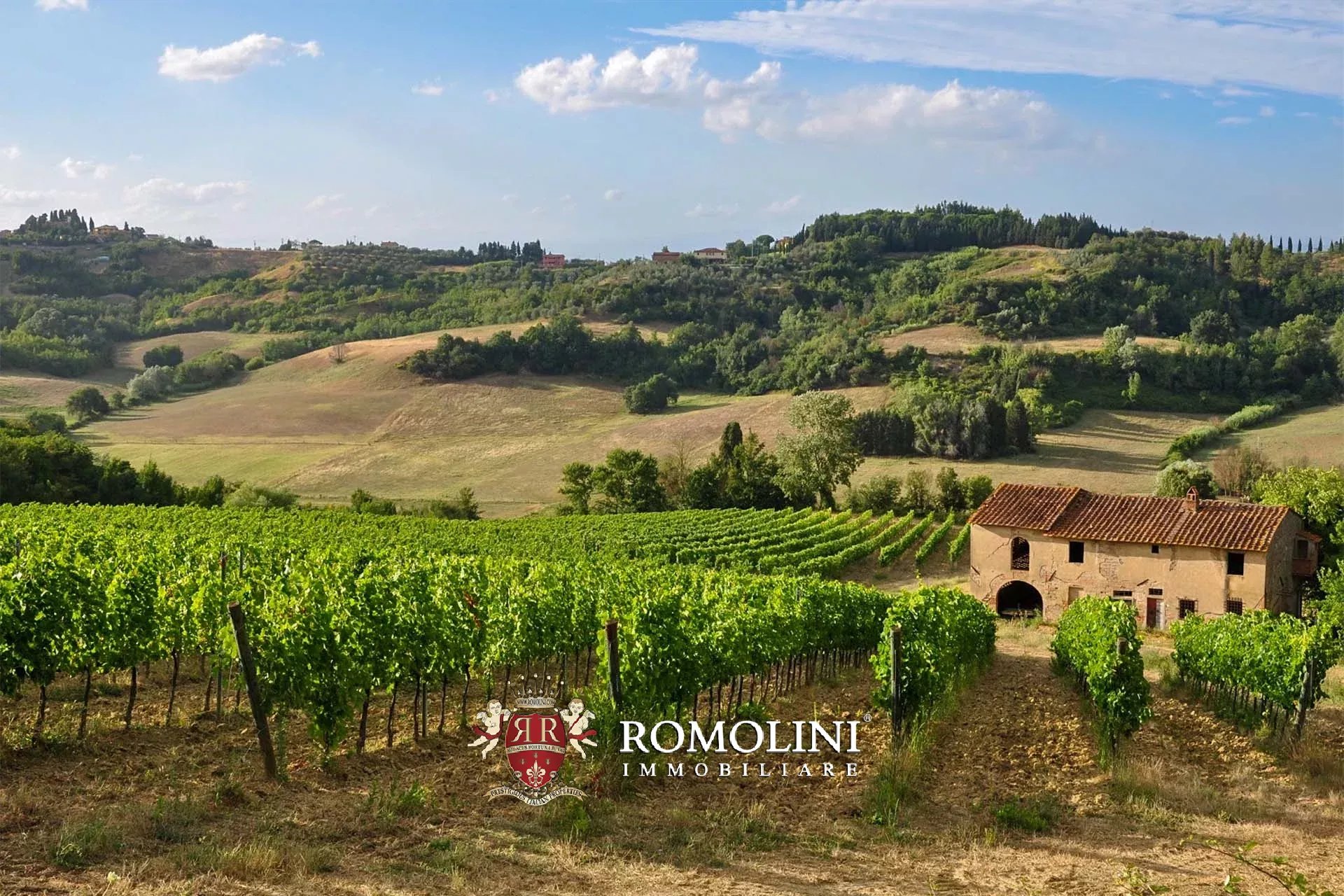
Completing the property are four ruined farmhouses (2,099 m² – 22,585 ft² in total) that can be restored/rebuilt to set up a true accommodation business on the estate.
Permits have also been applied for and obtained for the construction of a new, large shed for agricultural equipment (for an additional 375 m² – 4,035 ft²) that would facilitate the storage of tractors and the working of the vineyards.
The villa stands on the site of a fortified castle in the Middle Ages. The building still existed (at least in part) at the end of the 16th century, when it was depicted by the Capitani di Parte Guelfa on their map of Tuscany together with the adjacent buildings (a manorial villa and some houses owned by a noble family from Volterra). From the same period (1583) is an official request addressed to the Grand Duke of Tuscany by the owner of the building for the partial demolition of the tower, which was in a precarious condition and dangerously close to collapse. The remains of the tower can still be seen today in the western corner of the villa (which probably incorporated the old castle): during renovation work, the considerable thickness of the walls (as much as 80 cm) and the doubled and sack-filled disposition typical of medieval fortifications became evident.
The owners who built the present villa in the 17th century also erected the nearby aristocratic chapel (which replaced the ruins of a medieval church destroyed by fire), of which they remained owners until the mid-18th century.
The property is, in general, in good condition and the latest renovation works were completed in 2015. The villa and two of the outbuildings are in excellent condition and already habitable, while the farmhouses scattered around the estate require complete renovation and restoration of the structures. In this regard, an Agricultural Environmental Improvement Plan (PMAA) has already been approved for the recovery and conversion of these buildings into an Agriturismo.
The farm, located in the hills between Florence and Pisa, covers a total surface area of 201.2 hectares (497.2 acres). Large portions of the farm are covered with arable land (90.7 ha partially uncultivated), in the past planted with durum wheat, soft wheat and rape (with excellent results): these areas could easily be repurposed into new vineyards. Alongside the arable land, pasture land (20.5 ha) is currently cultivated with alfalfa (there is a free loan contract that can be terminated with 4 months' notice). A private lake provides water for irrigation.
Next, in order of size, we find woodland (60.1 ha) with tall trees of valuable species, including holm oaks and downy oaks: these trees are typical of the area and favor the presence of both white and black truffles.
The upper part of the estate, where the villa is located, is subject to a hunting ban, which ensures peace and quiet even during the hunting season.
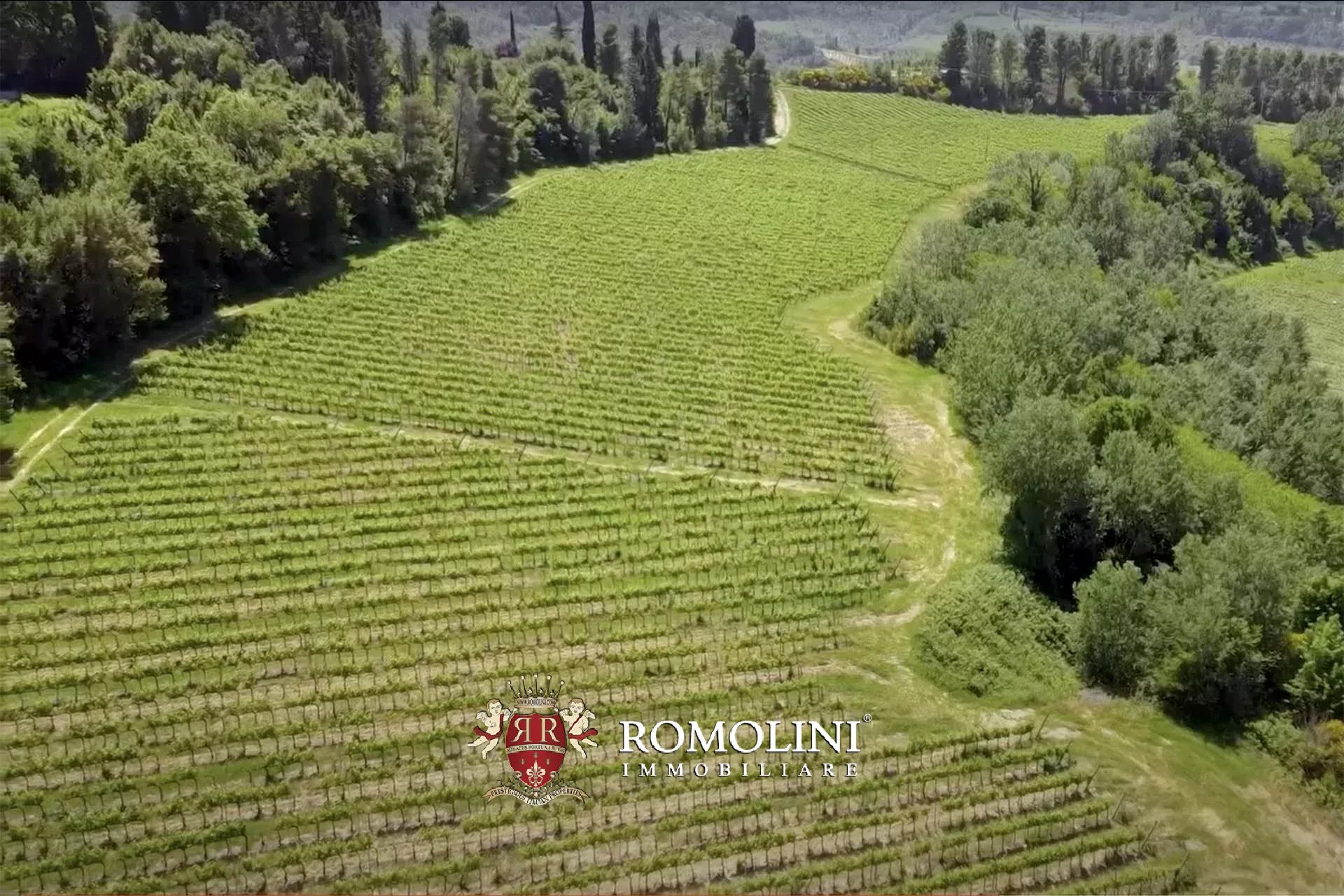
The backbone of the estate is undoubtedly the vineyards (19.9 ha), registered as Chianti DOCG and Toscana IGT, which allows the production of up to 197,000 bottles of wine per year. Currently, the company sells grapes to third parties who then take care of winemaking.
Last but not least, the estate also features an ample olive grove (10.0 ha) that allows producing excellent extra-virgin olive oil (which is then filtered directly at the property).
San Miniato (7km; 15’), Empoli (14km; 25’), Certaldo (26km; 35’), San Casciano in Val di Pesa (40km; 50’), San Gimignano (41km; 50’), Volterra (50km; 1h), Florence (50km; 1h), Pisa (53km; 50’), Lucca (54km; 1h), Greve in Chianti (56km; 1h 5’), Monteriggioni (56km; 1h), Siena (72km; 1h 10’), Forte dei Marmi (92km; 1h 15’), Arezzo (120km; 1h 30’)
Firenze A. Vespucci (45km; 45’), Pisa G. Galilei (50km; 45’), Bologna G. Marconi (132km; 1h 35’), Grosseto C. Baccarini (179km; 2h), Perugia San Francesco (204km; 2h 30’), Roma Ciampino (331km; 3h 30’), Roma Fiumicino (344km; 3h 35’)








Kontaktieren sie uns für weitere informationen und/oder um eine besichtigung zu vereinbaren
Ref. 2353 Tenuta Castelletto
€ 5,500,000

Gionatan Guidi
Immobilienmakler REA PG/257823
seit 20 Jahren bei Romolini
Hinterlassen Sie uns Ihre Anfrage und Sie werden innerhalb der nächsten 24 Stunden kontaktiert.


Copyright © Romolini

 UNS KONTAKTIEREN
 Kontakt


