 Our Family


 Italiano
 Deutsch








 GALLERY


 Contact
Danilo Romolini
 +39 0575 788948

MEDIEVAL CASTLE FOR SALE IN VALDAMBRA, TUSCANY






 Back to list


Ref. 1721 Castello della Valdambra
Asking price:
€ 1,750,000
Currency:

 Share
Share
 PROPERTY ALERT
 INTERIORS: 1,038 sqm (11,173 sqft)
 Bedrooms: 12
 Bathrooms: 12
 Condition : Requires renovation
 Internet: Yes
 Heating:
Without
Heating:
Without
Bedrooms: 12
Bathrooms: 12
Condition : Requires renovation
Internet: Yes
Heating:
Without
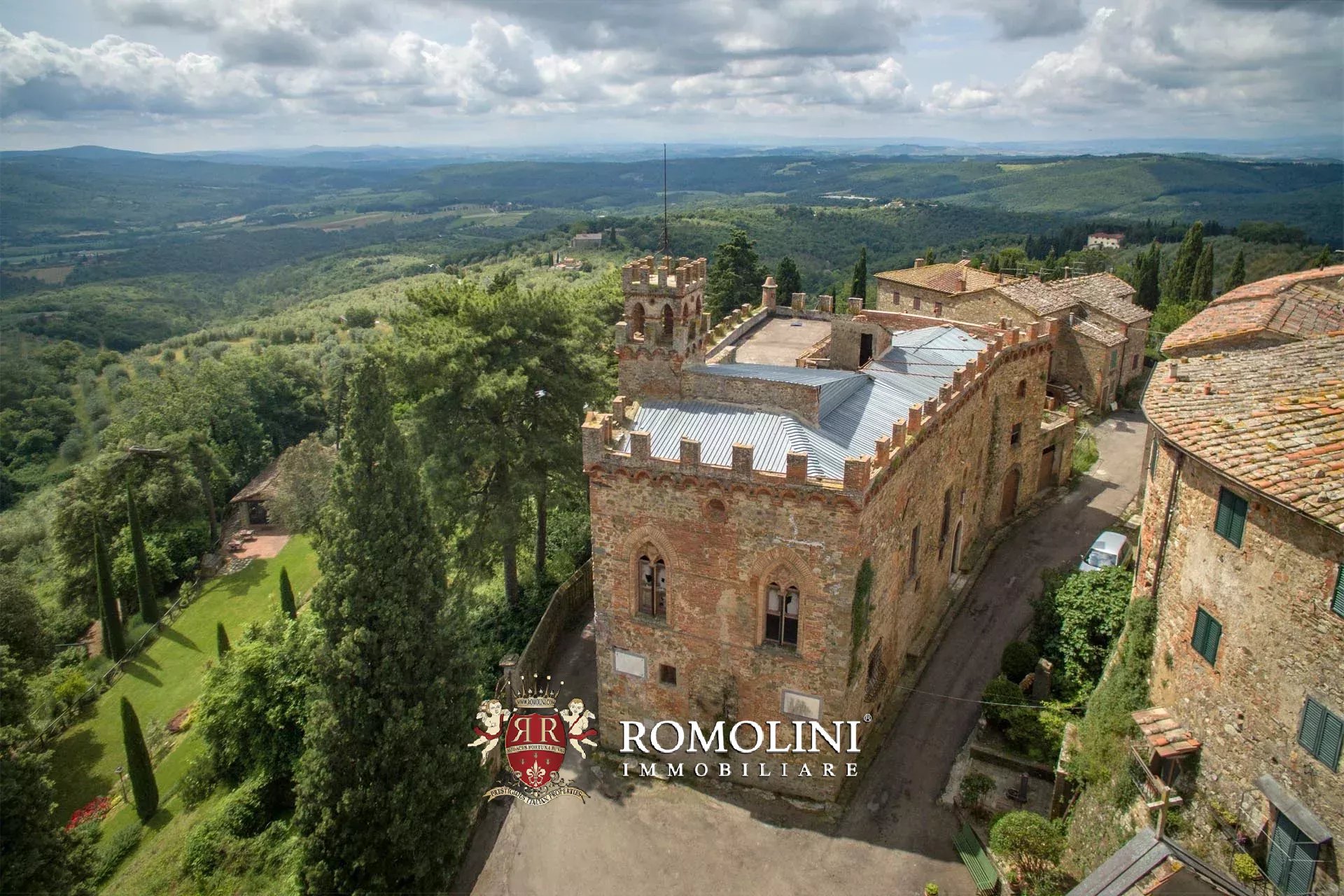
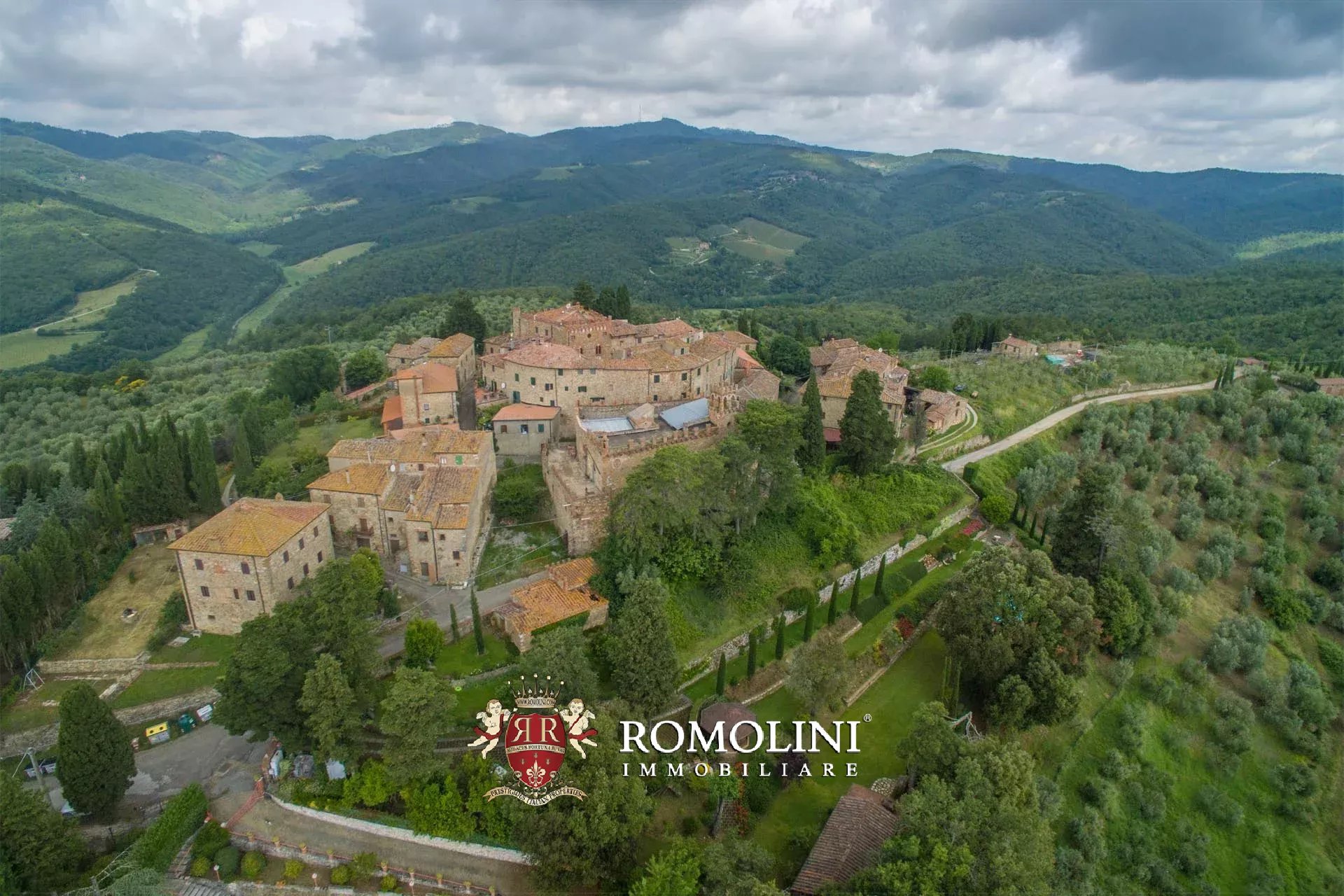
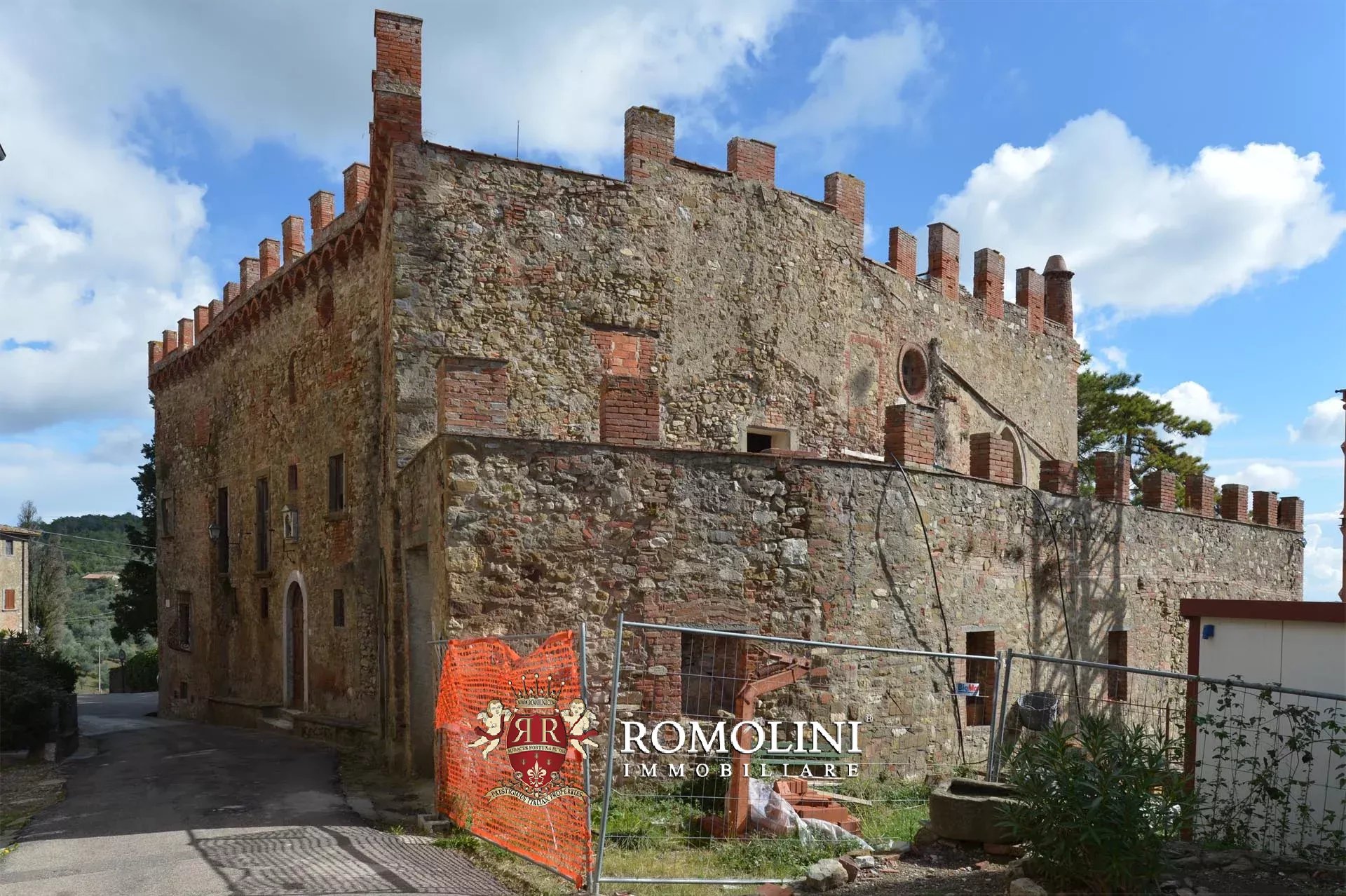
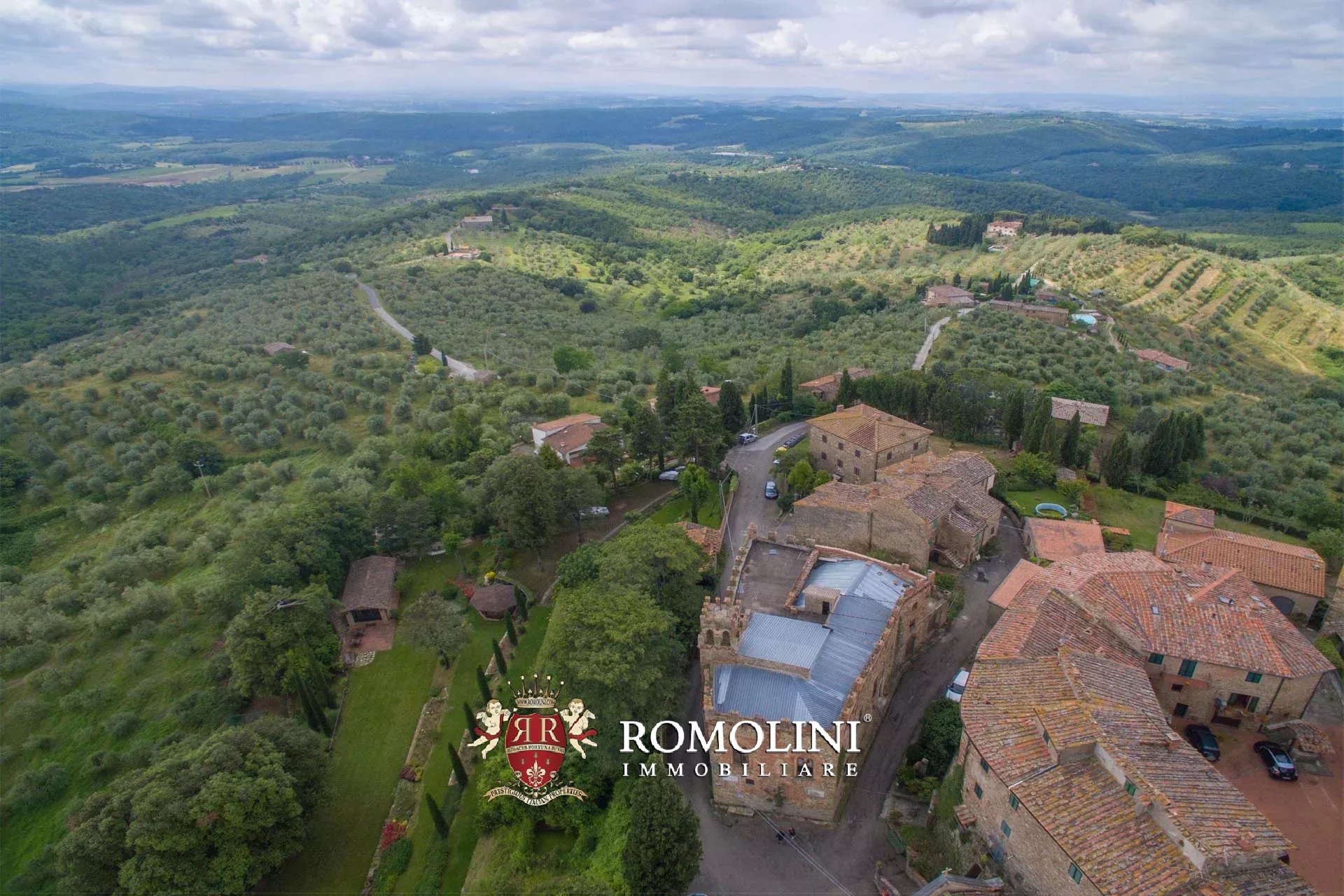
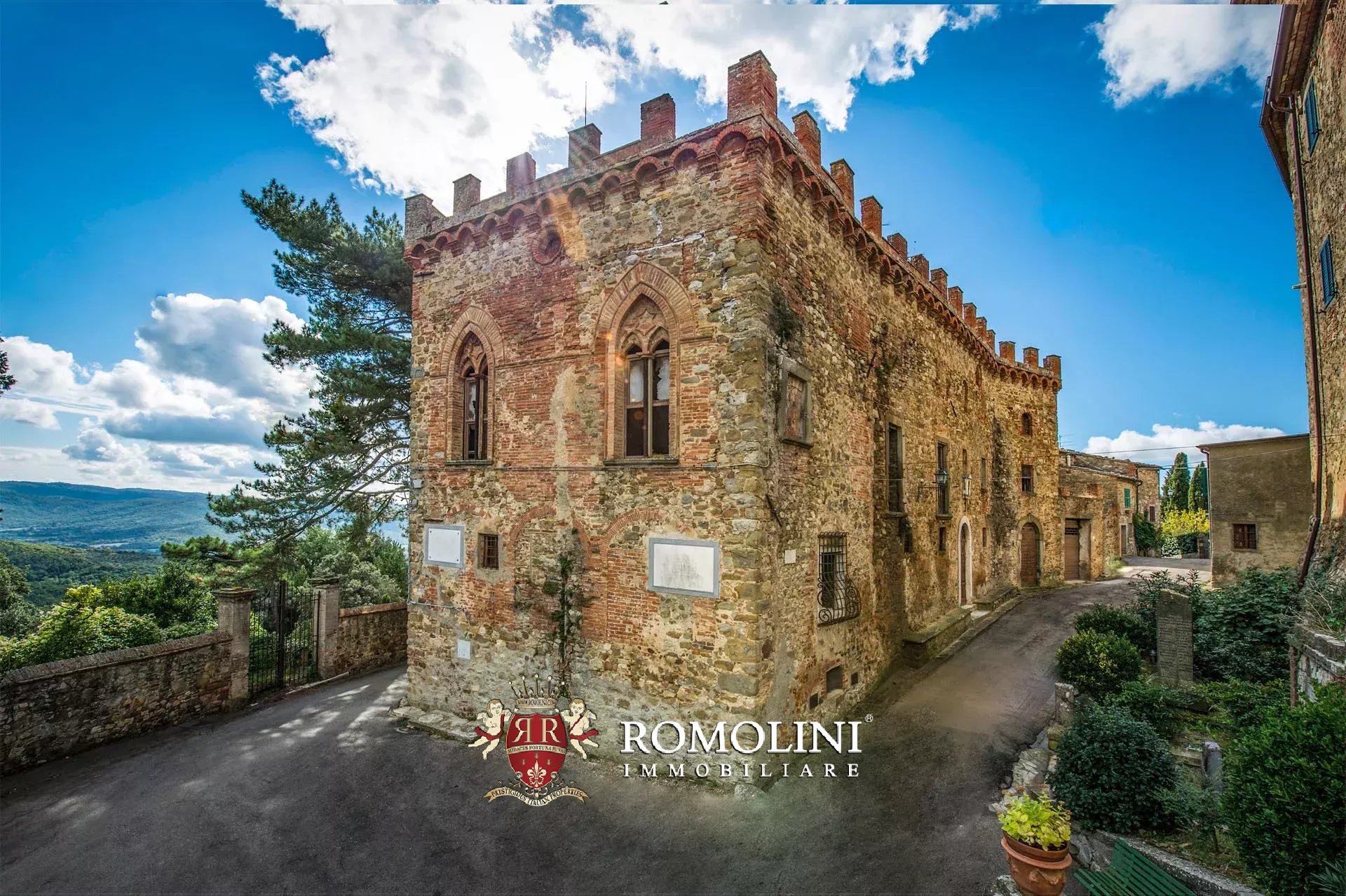
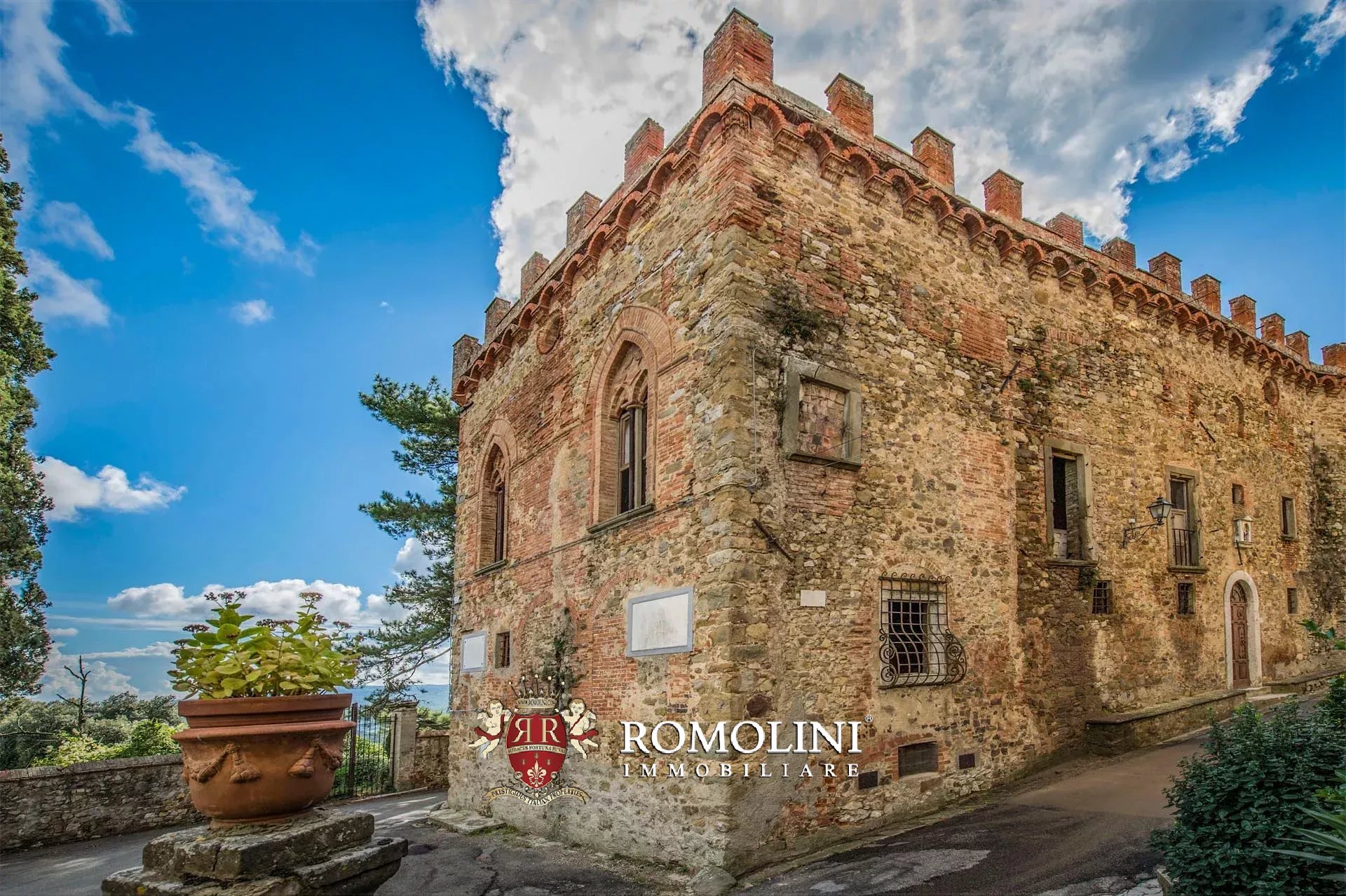
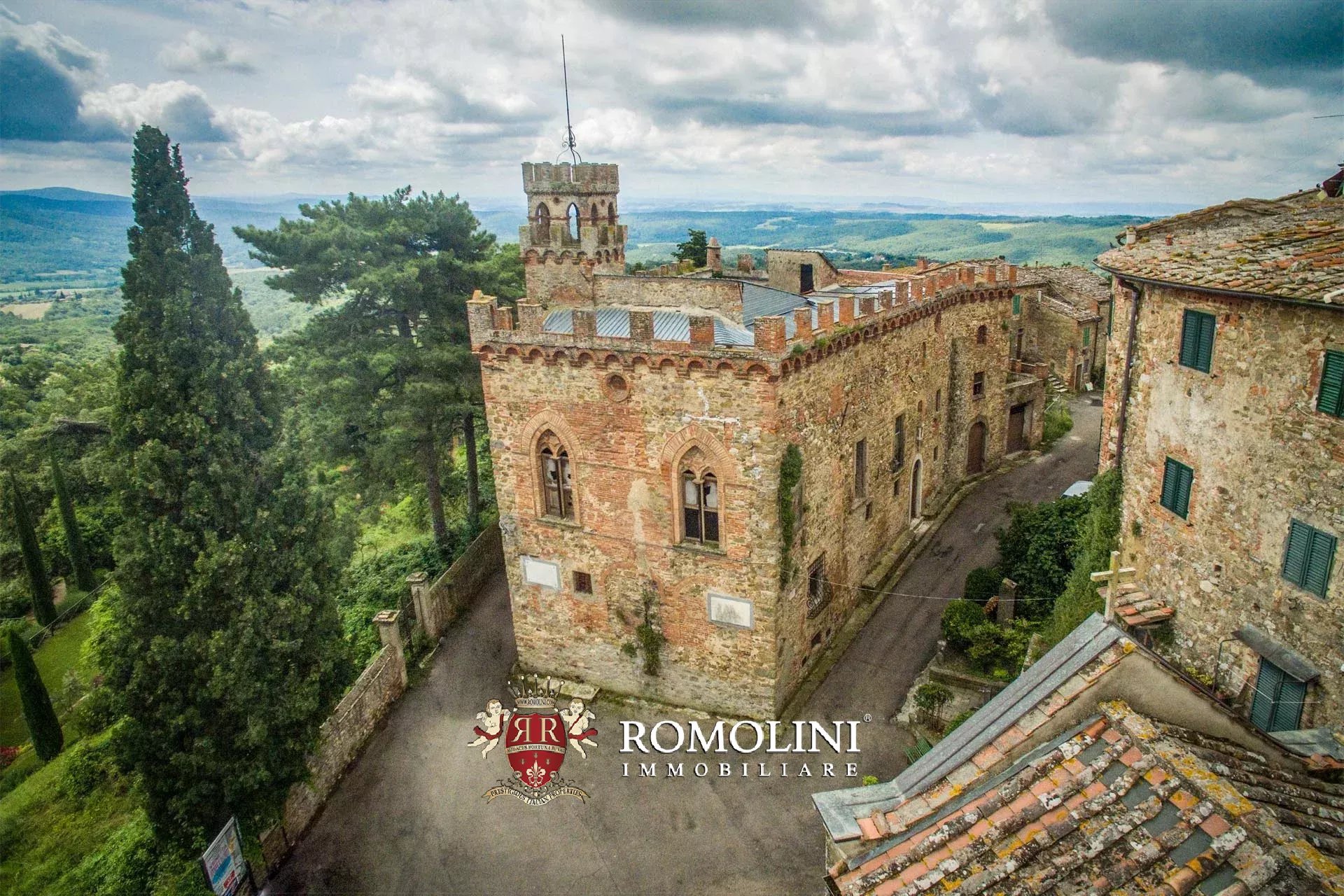
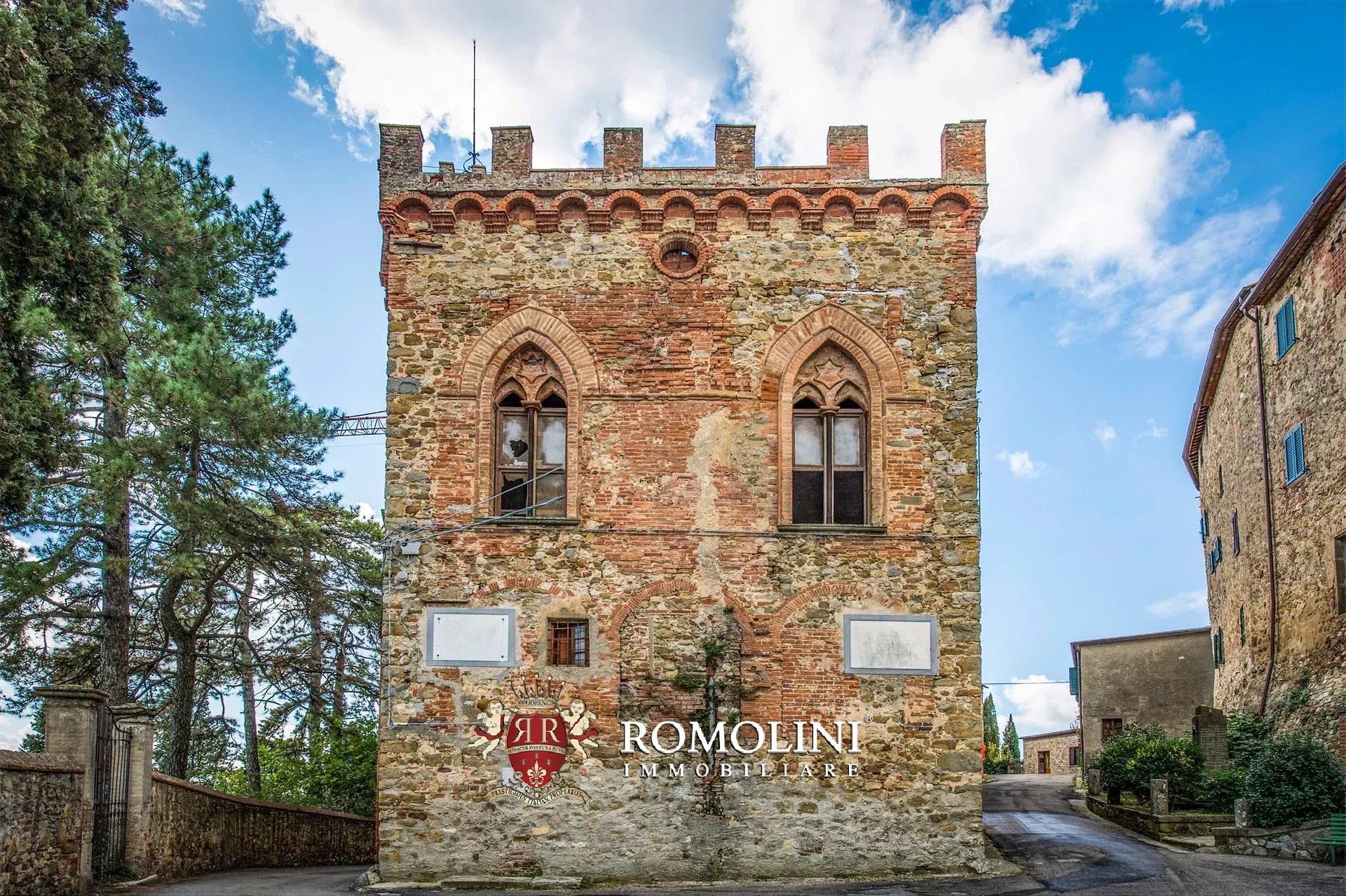
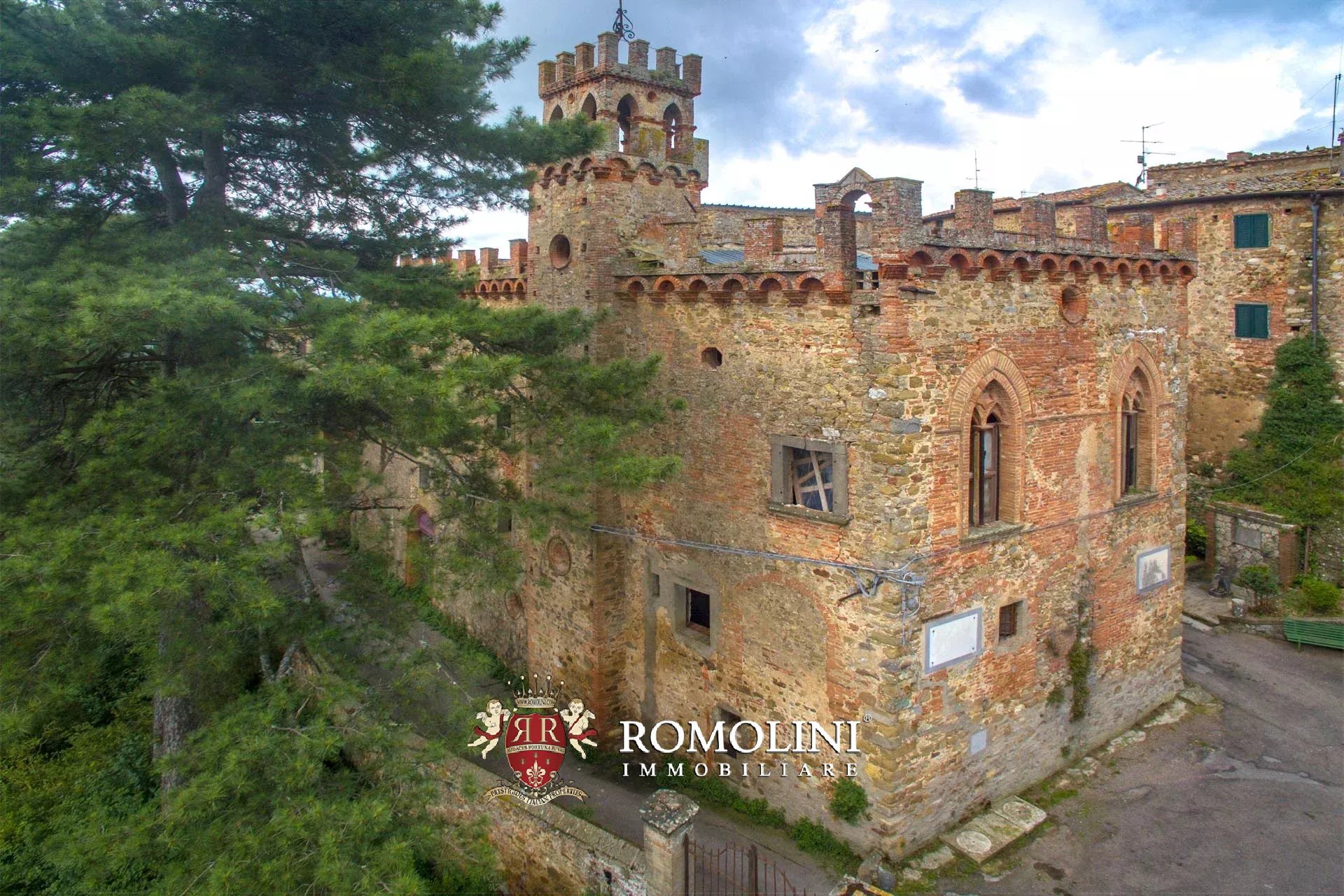
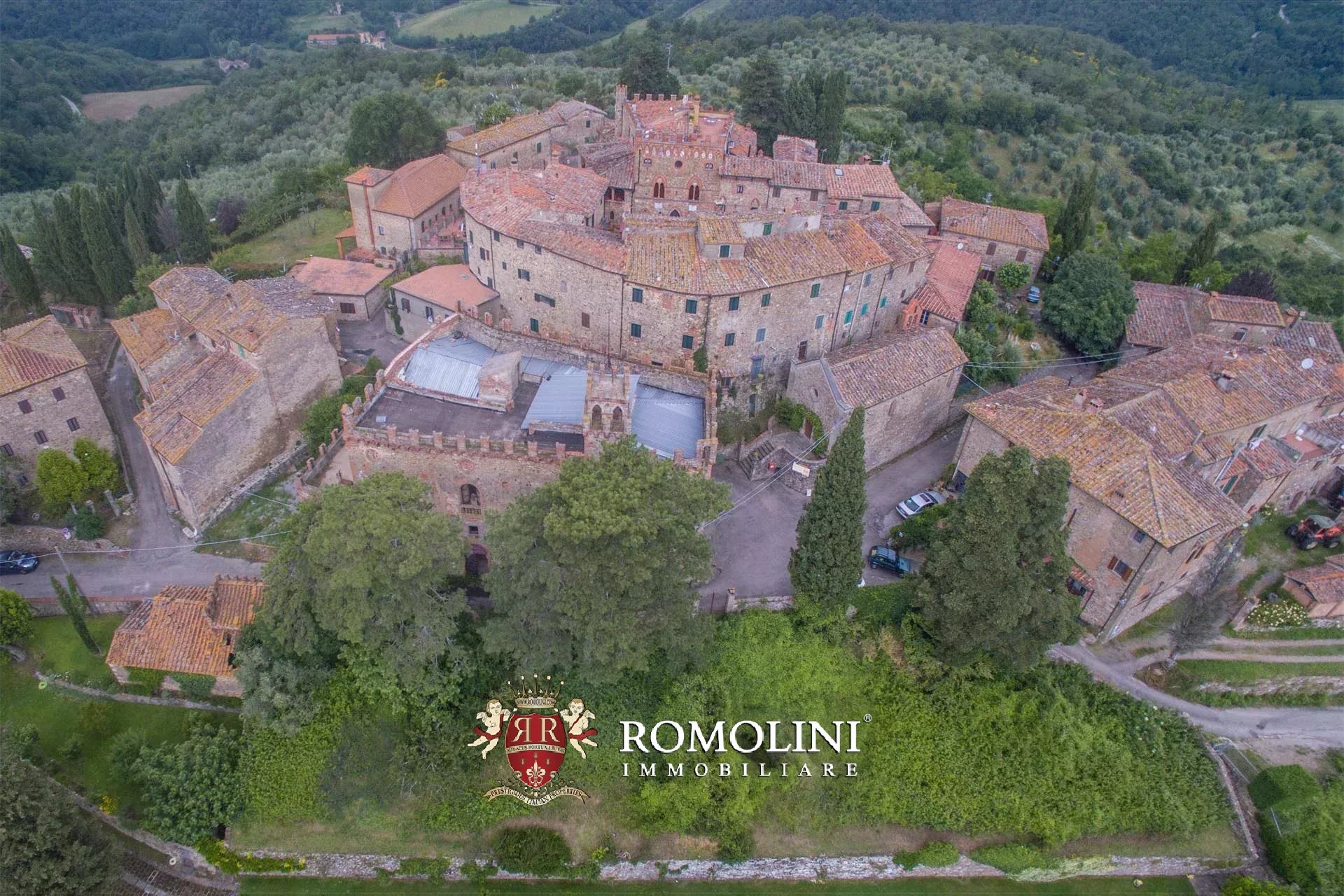
In a beautiful medieval hamlet at the border between Chianti and Valdambra, this medieval castle offers 1,038 m² of surface to be used for a boutique hotel, a museum or simply as a private residence. The building, architectonically and historically very interesting, hasn’t been used for a long time thus needing several renovations to be carried out. As of today, ceilings and screeb have been remade.
The castle, given its incredible historic and architectural value, can be used in multiple ways. The location in a beautiful medieval hamlet in a central area of Tuscany allows quickly and easily moving throughout the whole region to visit its most renowned and appreciated towns and cities.
A proposal for the recovery of the building has been forwarded and aims to connect the building with the surrounding territory: the environmental and cultural interests of the many hamlets of the area are a valuable attraction. The idea is to make the castle a reference point for cultural, economic and environmental initiatives.
Given the past use of the building as a farm, the sale of products from local entities would allow restoring a connection with the economy of the area.
The basement (where two more rooms will be opened up, they are visible through holes in the walls) will host an info-point with a small shop. In one of the recovered rooms (equipped with an independent access) one could set up a bike-renting business to be used in conjunction with the numerous tracks and paths present in the outskirts of the town.
The ground floor could accommodate a sort of hostel, with a kitchen and a dining room in the 16th century lodge. Bedrooms will be located along the south-eastern wall, taking down several walls built throughout the centuries after the original building (thus not historically relevant). Once completed, these rooms could host up to 30 persons. Right at the center of the floor, there will be a corridor and the reception area of the hostel. The remaining space, architectonically less relevant, will be used for an infirmary and a fire-preventing service.
The first floor, with its decorated and nicely-embellished rooms, will host a library with a multimedia center, while the adjacent room will be a didactical entity with temporary and permanent exhibits. The hall with access to the terrace will become a food- court (or even a bar) which could be used by the guests and visitors of the building. A bathroom will be built next to the staircase.
Finally, the terrace on the rooftop will be recovered to be used as a panoramic point of view over the beautiful surrounding landscape. The tower, currently unused and with a solely decorative purpose (there is not even an access), will be made usable with the demolition of a wall at the base of the turret.
Tuscany - Arezzo - Bucine
Tuscany, one of Italy's most iconic and breathtaking regions, embodies the essence of Italian beauty, culture, and tradition. Nestled between the Apennine Mountains and the Tyrrhenian Sea, its landscape is a mesmerizing blend of rolling hills, cypress-lined roads, sprawling vineyards, olive groves, and medieval villages perched on hilltops. The region’s natural beauty is matched by its rich history, artistic heritage, and world-renowned culinary and wine traditions.
Wine enthusiasts from around the globe flock to Tuscany for its legendary wine production. The region is the birthplace of some of the most revered wines in the world, such as Chianti, Brunello di Montalcino, and Vino Nobile di Montepulciano. Chianti, produced in the heart of Tuscany, is arguably the most famous, with its distinctive ruby-red color and bold flavors, while Brunello, made exclusively from Sangiovese grapes, is one of Italy’s most prestigious wines, aging gracefully for decades. Wine routes, like the Strada del Vino in the Chianti region, allow visitors to tour centuries-old wineries, sample wines, and explore charming villages along the way.
Tuscany is also a haven for lovers of art and history. Florence, the region’s capital, is a cultural mecca, often referred to as the cradle of the Renaissance. Its galleries and museums, such as the Uffizi and Accademia, house masterpieces from artists like Michelangelo, Botticelli, and Leonardo da Vinci. The iconic Florence Cathedral, with its massive dome designed by Brunelleschi, dominates the skyline, while the Ponte Vecchio, a medieval bridge lined with jewelry shops, is one of the city’s most beloved landmarks.
Siena, another jewel of Tuscany, offers a different charm with its medieval architecture and rich traditions. The Piazza del Campo, known for the Palio, a centuries-old horse race held twice a year, is considered one of the most beautiful squares in Italy. Siena’s Gothic cathedral, with its intricate black and white striped marble, is a stunning testament to medieval craftsmanship.
Further west, Pisa is home to the iconic Leaning Tower, but it also offers much more with its rich maritime history and the grandeur of the Piazza dei Miracoli. Lucca, known for its preserved Renaissance-era city walls, invites visitors to explore its quiet streets, where churches and piazzas surprise at every turn. San Gimignano, a medieval town famous for its many towers, gives visitors a glimpse of Tuscany’s feudal past and offers sweeping views over the surrounding countryside.
Tuscany’s landscapes are also dotted with thermal springs, such as the natural hot springs of Saturnia, providing a relaxing retreat after days of exploring. The coastline, too, with the Maremma region and the island of Elba, offers picturesque beaches and pristine waters, a contrast to the inland hills and vineyards.
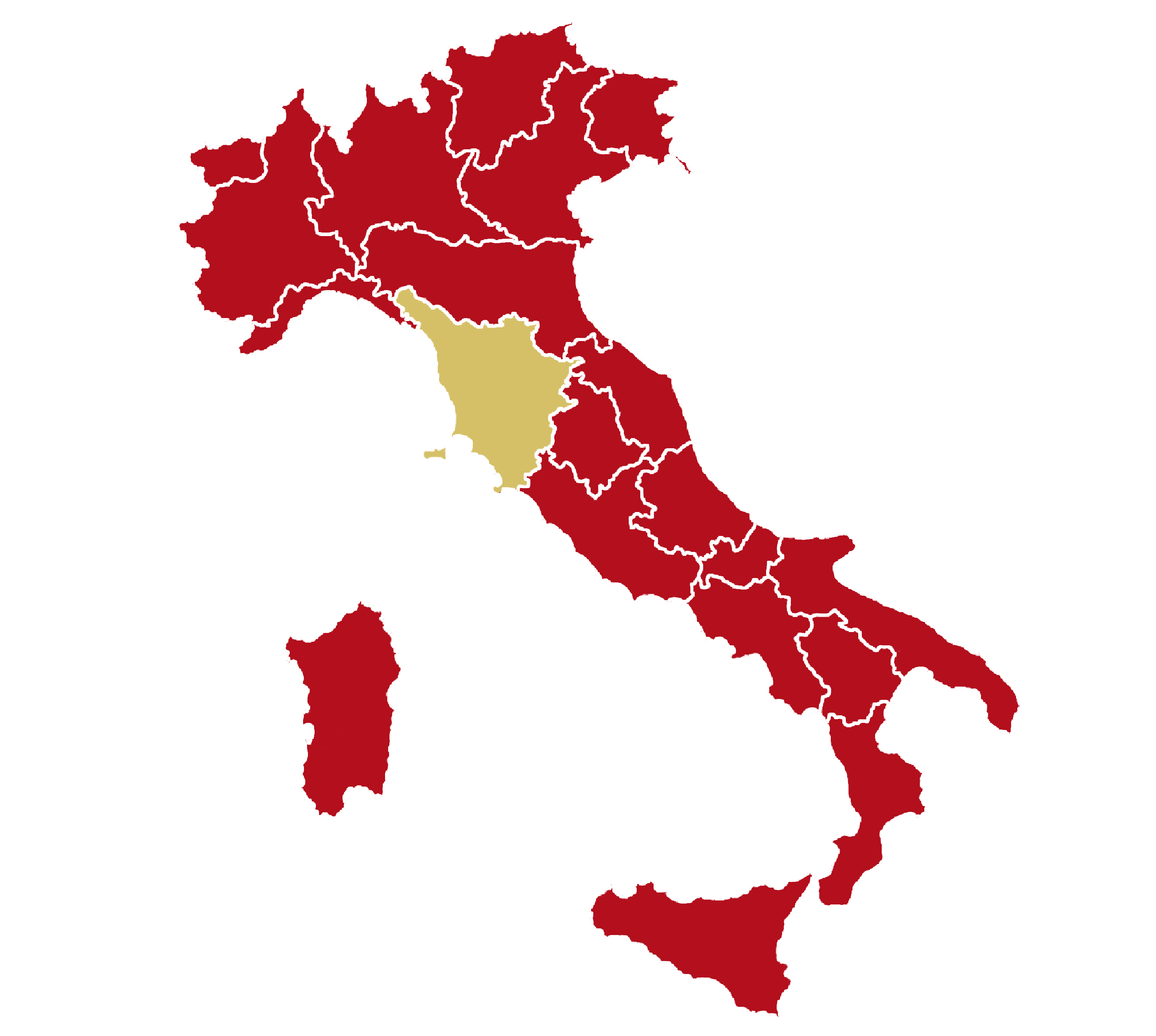
Already exploited by the Romans and crossed by a dense road network, Valdambra filled up with villages and farms at the feet of the hills. With the end of the Western Roman Empire, given the climate of fear and insecurity, the inhabitants of the valley moved towards the hilltops for better defensibility. The ultimate depopulation of lower areas took place under the Langobardic rule and this period saw the rise of the fortified hamlets we can still see nowadays. The encastellation was the only thing keeping the Valdambra alive, offering shelter to its otherwise endangered population.
The strategic position of the valley attracted in the Middle Ages the interest of Tuscan powers among which Florence, Siena, Arezzo and even the Conti Guidi allied with the German emperor Henry III. The passing of armies ravaged the region multiple times until the 13th century. The 1307 siege by Florentine and Sienese armies (against the Aretine Ghibellines) was particularly devastating and the whole campaign brought the devastation in Valdambra.
The viscounty of Valdambra ended up in the hands of the Tarlati d’Arezzo in 1323, but in 1335 the inhabitants of several towns, feeling the need of more protection, allied with Florence, splitting de facto Valdambra into two sections. The reunification of the two “marks” took place at the end of the century with the affirmation of Florence and the beginning of twenty years of peace. Fights started again in 1425 with varying results for Florence and the following ruin of several towns of Valdambra. 1480 marked the end of this series of fights, but Valdambra got out of it severely damaged and a plague epidemic finished the job.
The marching Landsknechts (towards and back from Rome) brought further devastation in the region between 1526 and 1530 until the restoration of the Medici family in Florence.
Last act of the wars in Valdambra was the conflict between Florence and Siena between 1554 and 1557 which saw the ultimate defeat of Siena and its union with Florence under the Grand Duchy of Tuscany led by Cosimo I. Valdambra became a stable Florentine possession and fights finally stopped in the region.
Right at the mid-16th century, one of the most appreciated and renowned soldiers of fortune in the Florentine army decided to build his own castle at the border of the town. The first document testifying the existence of the building is the one by the Capitani di Parte Guelfa, written down in 1584. The building is however not represented to scale and so it is difficult to determine its effective original size.
The original core of the castle (613 m² – 6,596 ft²) dates back to the 16th century, but the building we can see today is the result of many enlargements and modifications which took place over the centuries.
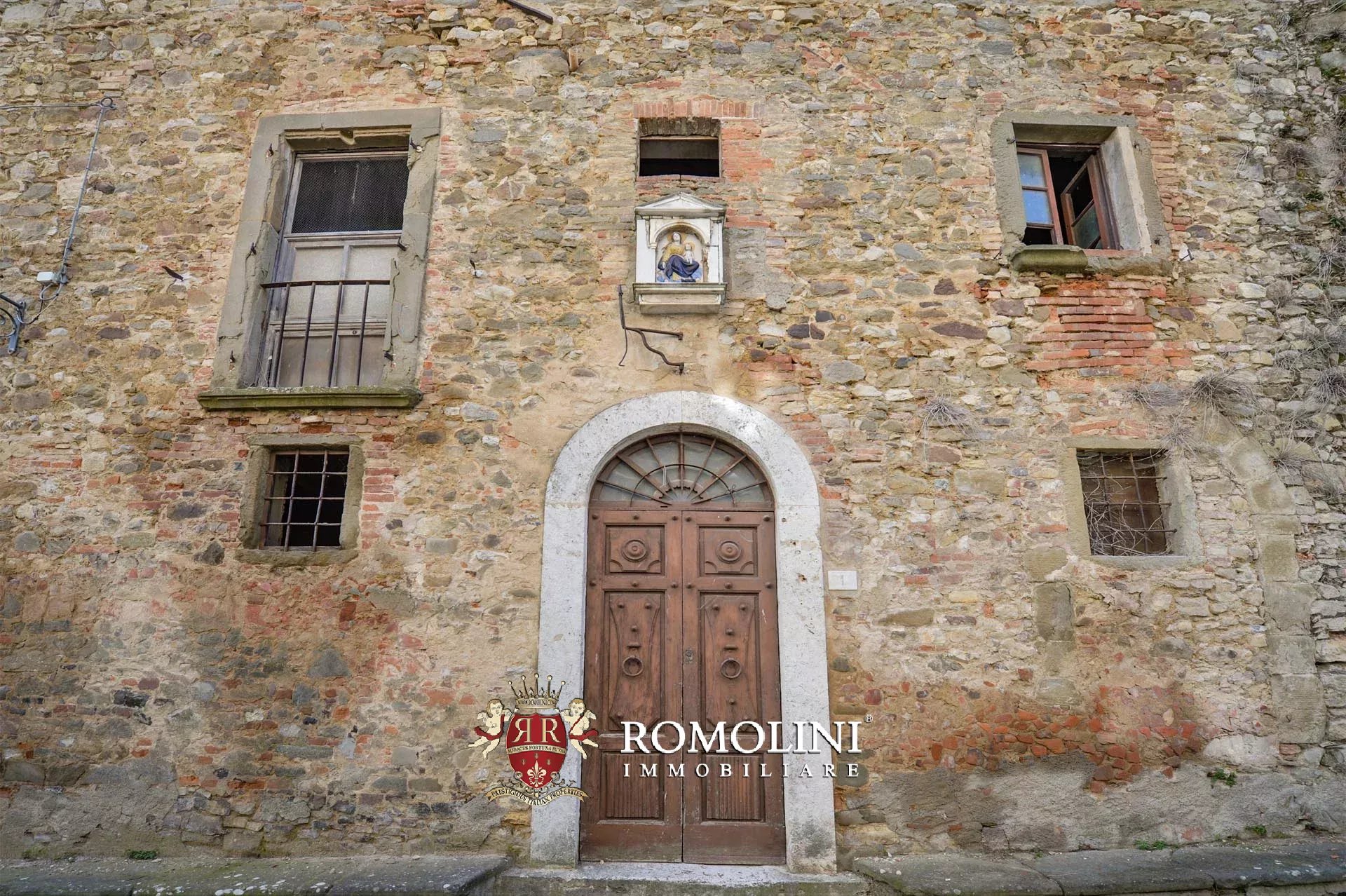
The ground floor is made up of small service rooms (modified at the beginning of the 20th century to accommodate a farm). Right at the center of this floor there are the two staircases leading to the first floor: the first one linear (with vaulted ceiling) and a secondary well. From the entrance hall, one can go both right and left, into two sections (not linked between them). Here there are the kitchen (with fireplace) and a small bathroom.
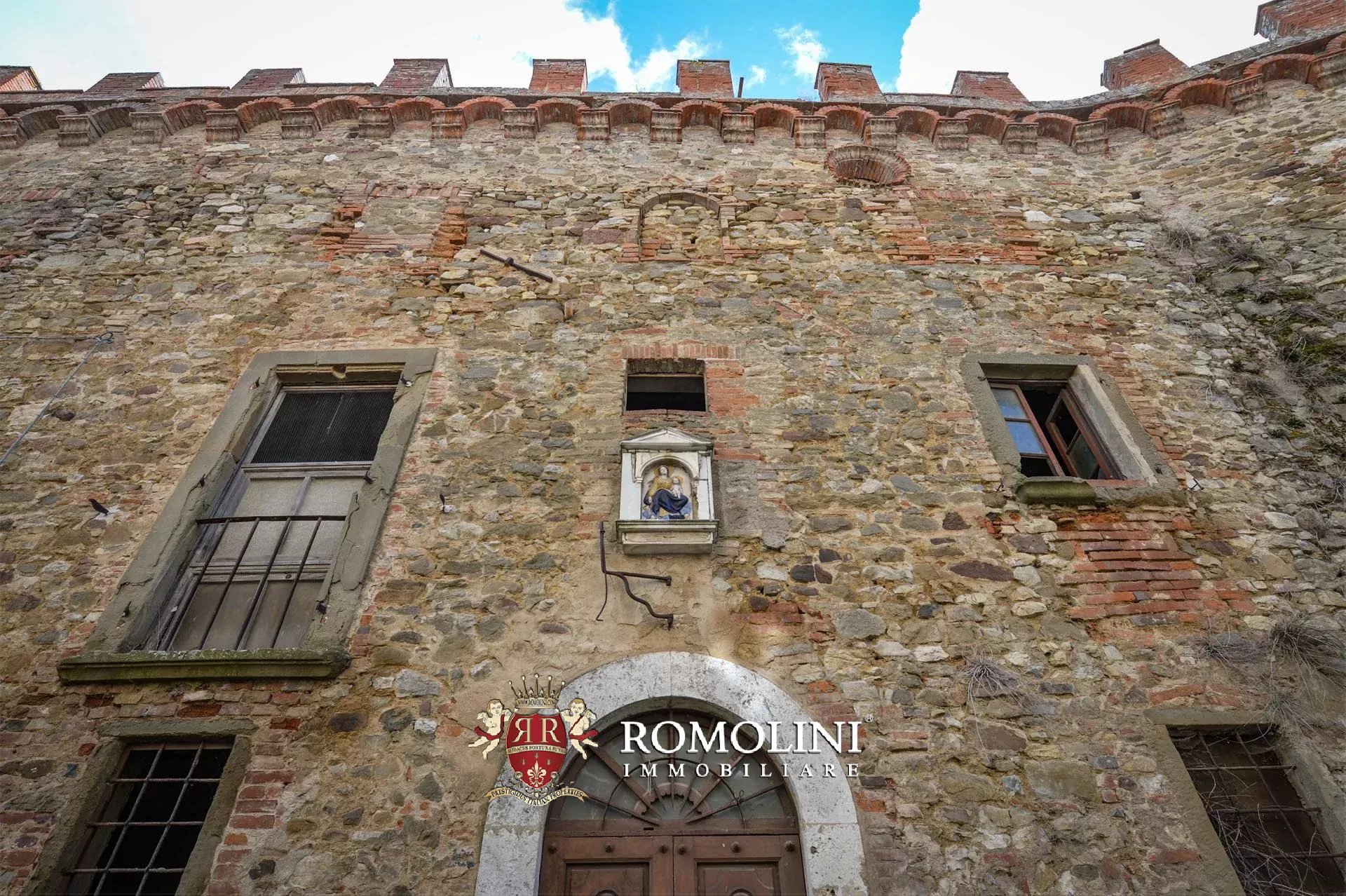
The first floor (piano nobile) has a better-planned layout, revolving around a central corridor. The north-eastern section hosts the reception hall (as large as the building) decorated with luxury finishes (ceiling coffers and molded bracket). Another room opens from the south-eastern side with a balcony. Here we could find in the past a decorated fireplace with pietra serena elements and a multicolored hexagonal-tile floor. On the south-western side, the first floor opens on a crenelated terrace. Finally, another staircase well reaches the terrace on the rooftop.
A careful analysis of the castle, together with the apparently chaotic distribution of the rooms, shows how the building is the result of multiple enlargements and modifications which took place over the centuries. There is no way to understand which alterations took place between the 16th century (Capitani di Parte Guelfa, Popoli e Strade from 1584) and the Catasto Leopoldino since the maps from the Capitani are pretty simple and doesn’t give accurate data about the building itself. Modifications in the last two centuries surely contributed to the enlargement of the building, which was much smaller in the Catasto Leopoldino (1834) than it is nowadays. Interventions in Neogothic style took place after this year and not before 1877. The tower, a cliché of medieval buildings, is a later addition (before 1902 based on a photo of that year already showing the tower in its place) and is not connected with the interior, thus having a merely decorative purpose.
Between the 19th and 20th century in Italy a new mentality rose with the idea of a continuation of styles which wanted to break with the Classicism in favor of a medieval style. This medieval revival interested both single monuments (like the Mackenzie Castle in Genova and the Rocca di Crespi d’Adda built between 1893 and 1905) and entire hamlets (like the Borgo Medievale del Valentino in Torino). These buildings are the result of a rediscovery of popular values against the sketchiness of Neoclassicism, with structures recreating an idealized Middle Age which never really existed. Often (but not always), this works didn’t involve artists and schools and that’s why structures are not touched at a deep level and work involved only the realization of a cover (like a shell) around the building.
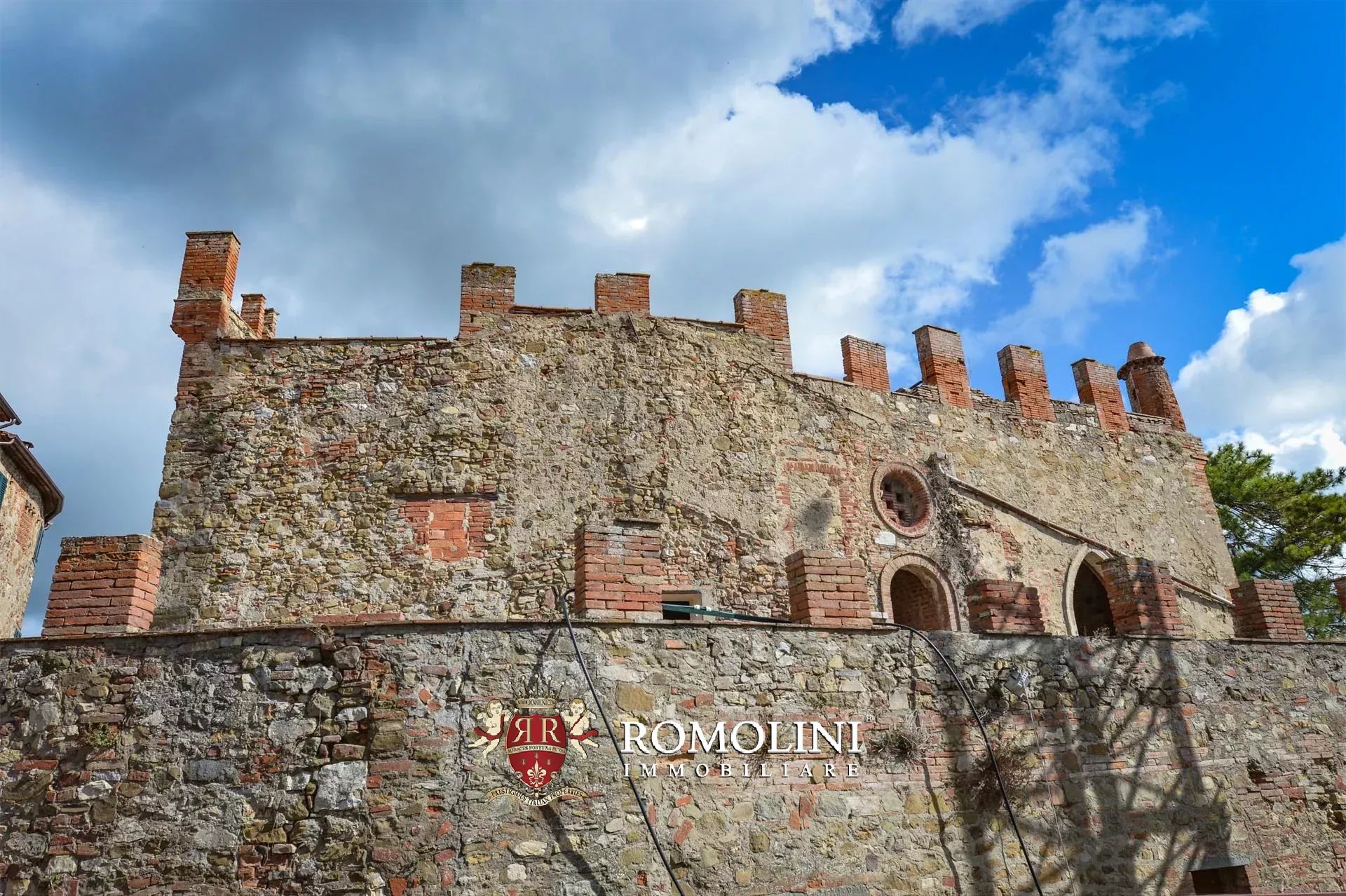
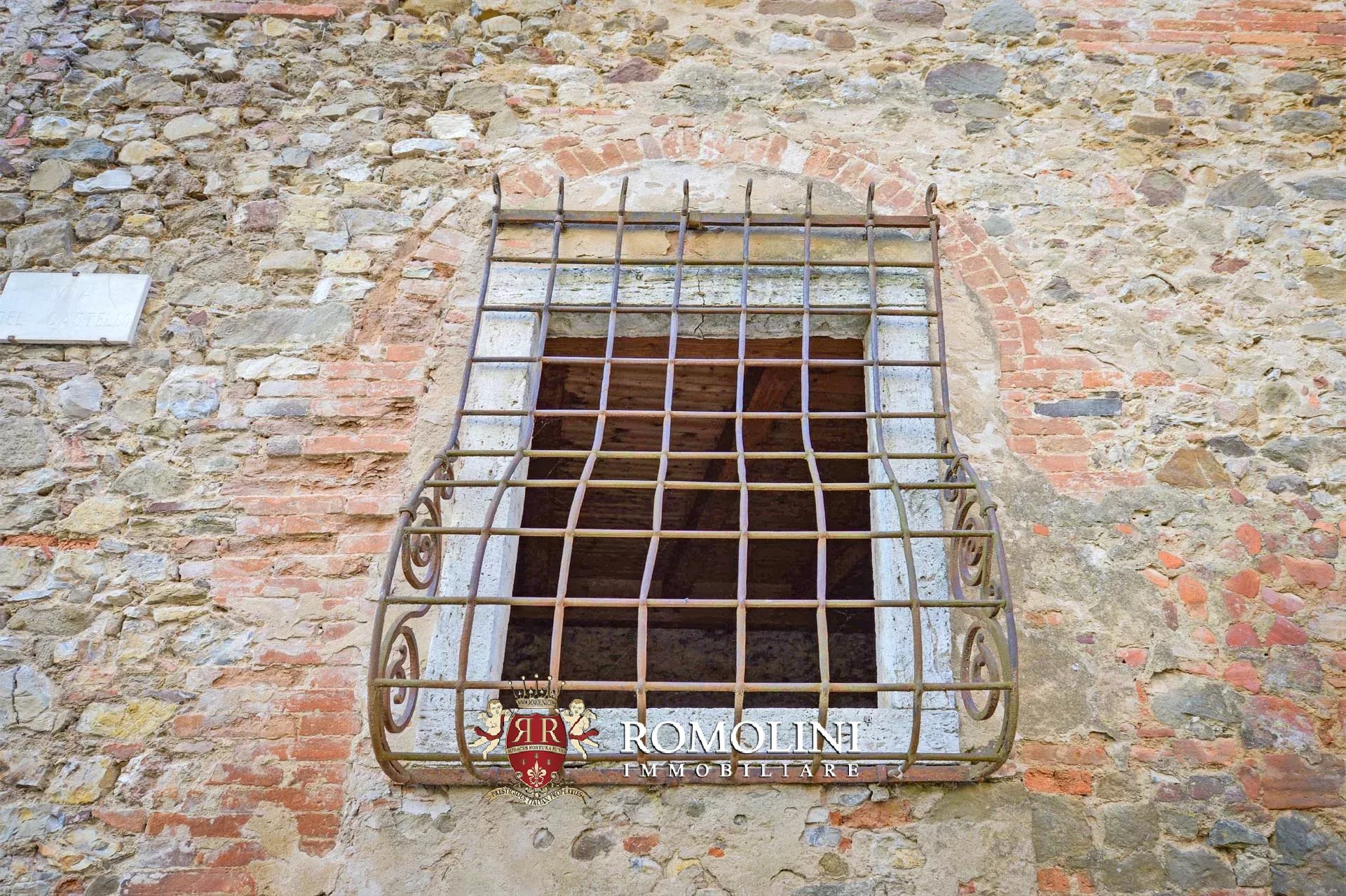
Façades are made out of sandstone and masonry without an apparent logical distribution. It is clear how different materials have been used through the years to cover subsequent enlargements of the buildings following the criteria of what materials were easier to find in the area. Pinewood fixtures, where still present, are in good conditions.
The terrace on the rooftop is covered in a tar coat protecting the building from water infiltrations and preventing mold formations.
The lack of care during the use as a farm caused heavy degradation on the inside, where water infiltration (now resolved) caused the detachment of plastering and the loss of wall decorations (where present). As of today, the building is in builder’s finish: ceilings have been recovered with a system of wooden beams and the screeb for the floorings is completed. Walls and systems (electricity, water, gas…) need to be installed.
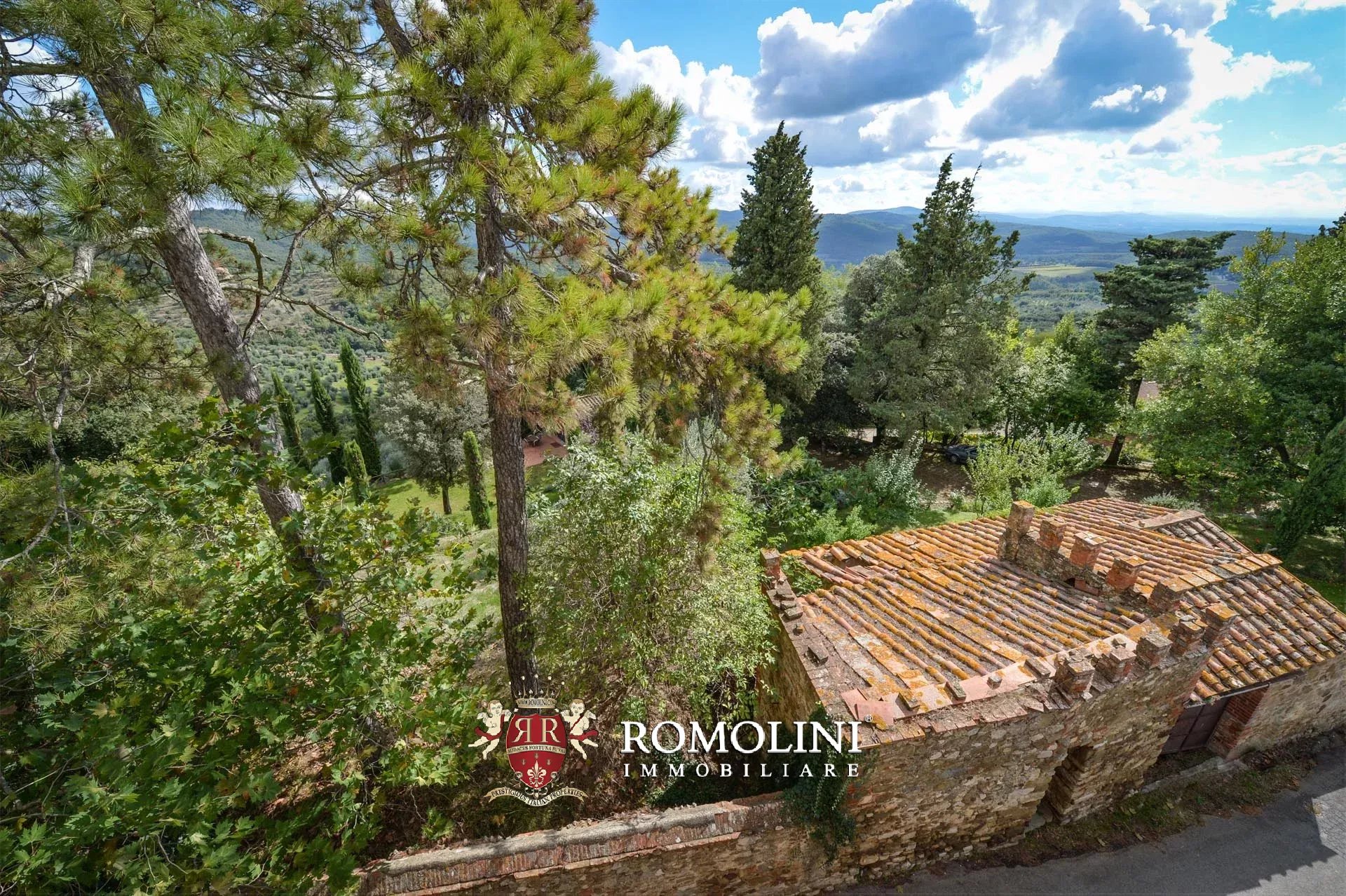
Not far from the castle is located a building (75 m² – 807 ft²) for which a project has been approved to enlarge (up to 140 m² in total) and convert it into a nice villa.
Right in front of the entrance one can find a 20 m² apron which could easily host two vehicles.
Next to the castle was located a three-story wing, demolished in the 1970s. The structure was exploited during World War II by German snipers (Scharfschützen), thanks to the small openings allowing the shooter to stay hidden and out of reach of Allied return fire. The project involves the rebuilding of an independent townhouse (350 m² – 3,766 ft²), still on three floors but split into eight independent apartments:
Easily reached via the municipal road network and in a dominating location on the slope of a hill, the castle offers a unique and unrivaled view over the surrounding countryside and allows visiting the most renowned towns of Tuscany in a short time frame:
Bucine (18km; 25’), Arezzo (43km; 50’), Siena (33km; 40’), Montepulciano (53km; 50’), Pienza (59km; 55’), Cortona (62km; 50’), Montalcino (64km; 1h 5’), Florence (75km; 1h 15’), San Gimignano (79km; 1h 15’), Volterra (84km; 1h 25’), Follonica (140km; 1h 40’)
Firenze A. Vespucci (92km; 1h 15’), Perugia San Francesco (106km; 1h 15’), Pisa G. Galilei (153km; 1h 55’), Bologna G. Marconi (174km; 2h 20’), Roma Ciampino (234km; 2h 35’), Roma Fiumicino (249km; 2h 30’)








Contact us to receive more information and/or schedule a visit
Ref. 1721 Castello della Valdambra
€ 1,750,000
Danilo Romolini
Sales Manager
6 years with Romolini
Leave us your request and you will be contacted within the next 24 hours.


Copyright © Romolini

 Contact us
 Contact


