




 Our Family


 Italiano
 Deutsch


 Back to list

Stone houses: why rural architecture remains so desirable

Published 10-10-2026
Stone houses continue to hold a special place in the luxury real estate market. They are homes that speak of land, material, time, and authenticity. Unlike many contemporary constructions, they do not try to impose on the landscape: they seem to have belonged there forever, with thick walls, irregular facades, arches, beams, ancient floors, and proportions born from a slower, more rooted way of living.
The charm of rural architecture comes precisely from this naturalness. A stone farmhouse, a countryside villa, an old mill, or a restored village tell of a deep relationship with their place of origin. For this reason, among the properties for sale, stone properties are among the most sought after: they combine architectural identity, atmosphere, and potential for enhancement.
The value of authentic material
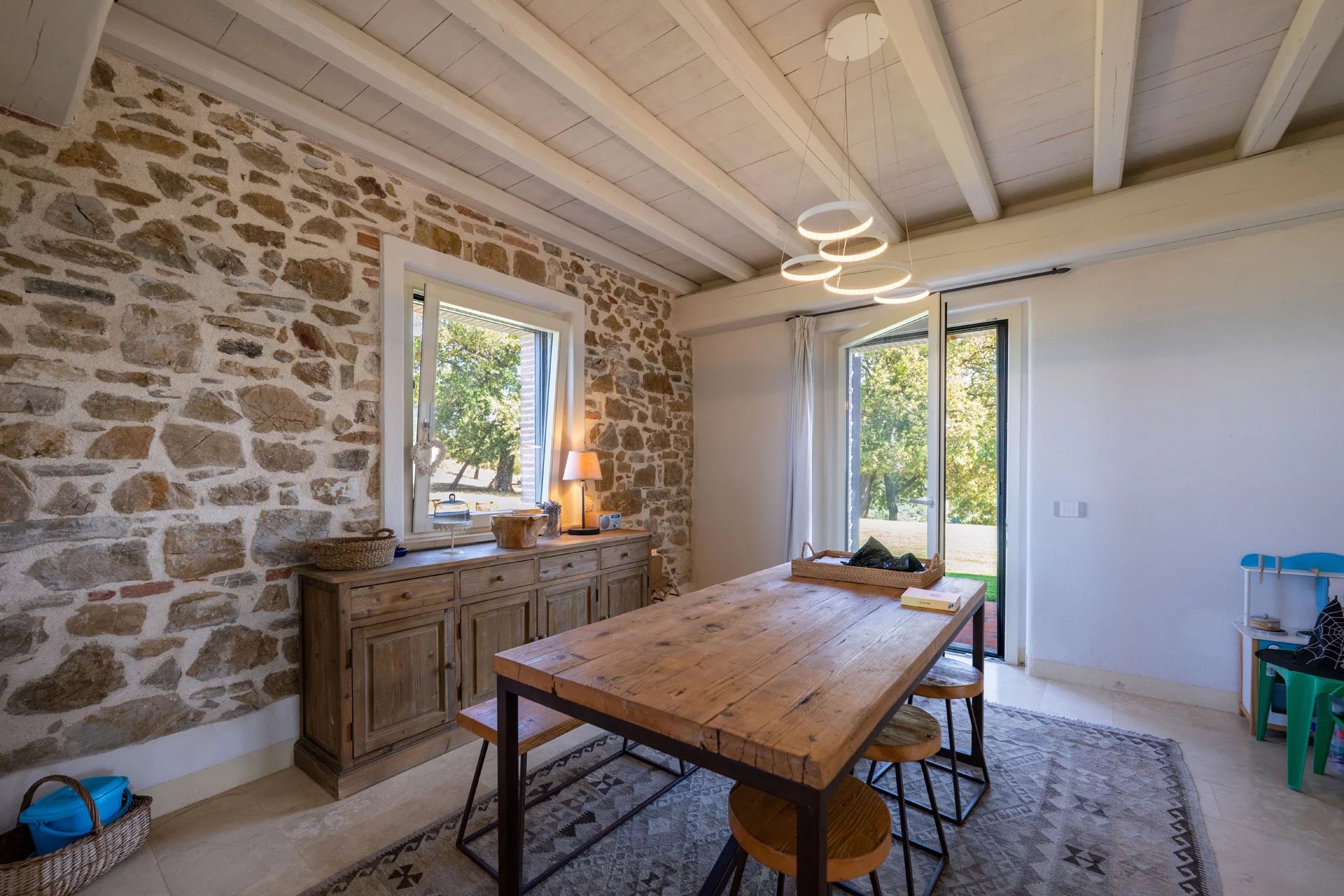
Stone has an immediate visual strength. Each wall retains shades, imperfections, stratifications, and signs of weathering. It is a living material, capable of changing with light, seasons, and surrounding landscape. In a luxury property, this material value becomes a distinctive element: it makes the house recognizable, solid, and deeply tied to its history.
Stone houses do not need excessive decoration. Their charm is born from the quality of the structure, the proportion of spaces, the choice of materials, and the coherence between interior and exterior. A stone facade, if well restored, immediately communicates authenticity and prestige.
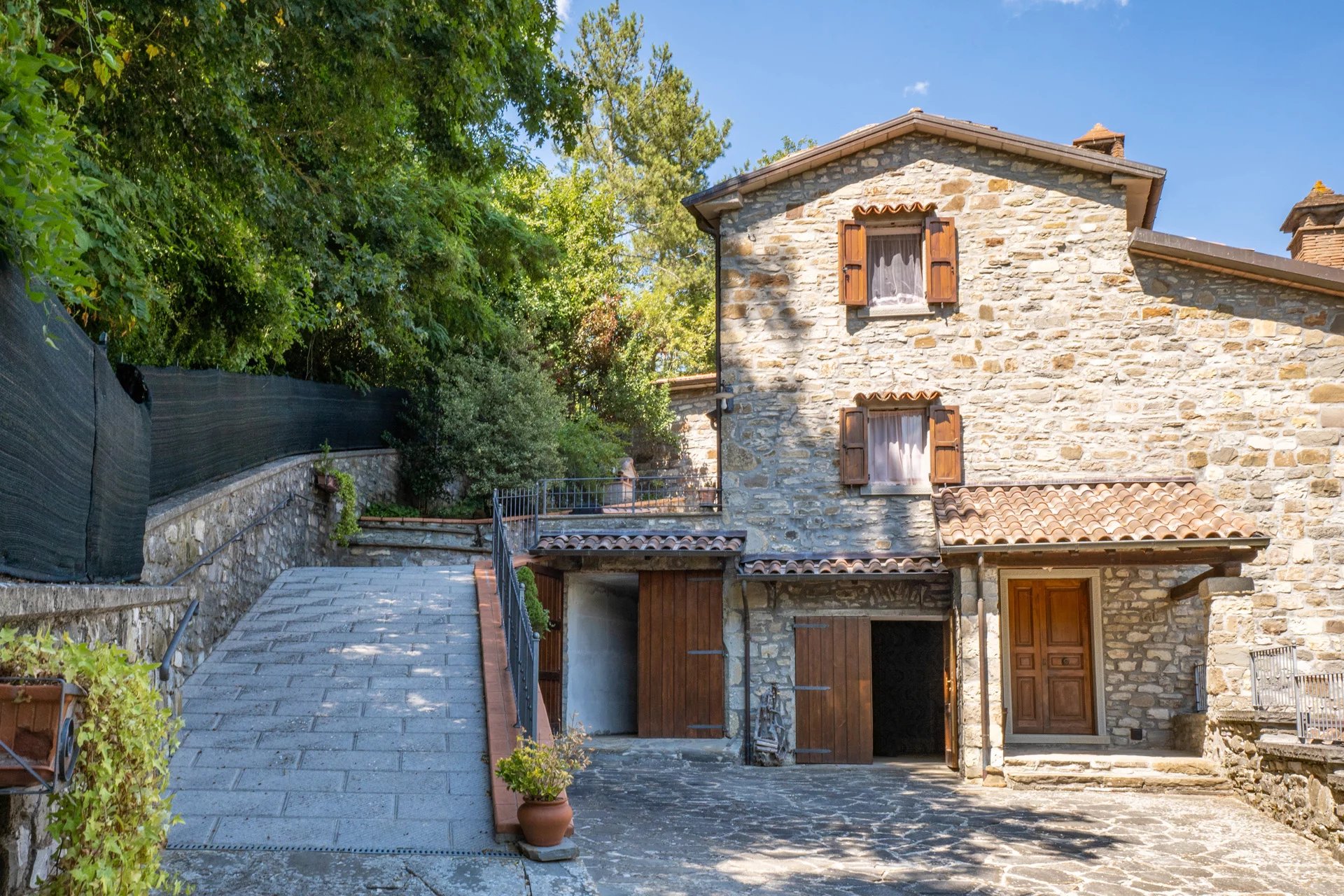
Rural architecture and contemporary luxury
The desire for stone houses is not only part of a nostalgic imagination. Today, these homes are appreciated because they allow the combination of historical character and contemporary comfort. A rural house can preserve original walls, wooden beams, terracotta floors, and ancient fireplaces, yet incorporate modern systems, pools, spas, professional kitchens, security systems, and energy-efficient solutions.
A perfect example is the luxury farmhouse with pool, spa, and vineyard for sale in Montalcino, an ancient mill from the 13th century transformed into a high-end residence. The property preserves exposed stone walls, wooden beams, and vaulted ceilings but also features marble and travertine finishes, modern comforts, vineyards, and a cellar.In cases like this, stone is not just an aesthetic detail. It is the starting point to build an elegant, warm, and recognizable home where the history of the building dialogues with contemporary lifestyle.
Why stone houses remain so in demand
The success of stone houses comes from a rare combination. On one hand, they offer authenticity; on the other, they allow great flexibility. They can become private residences, holiday villas, representative homes, boutique retreats, charming agritourisms, or income-generating properties.Buyers of stone houses are looking for more than just square footage. They seek atmosphere: the silence of the countryside, the light entering through deep windows, the smell of natural materials, the contrast between ancient walls and contemporary furnishings. It is a less ostentatious form of luxury but much more enduring.
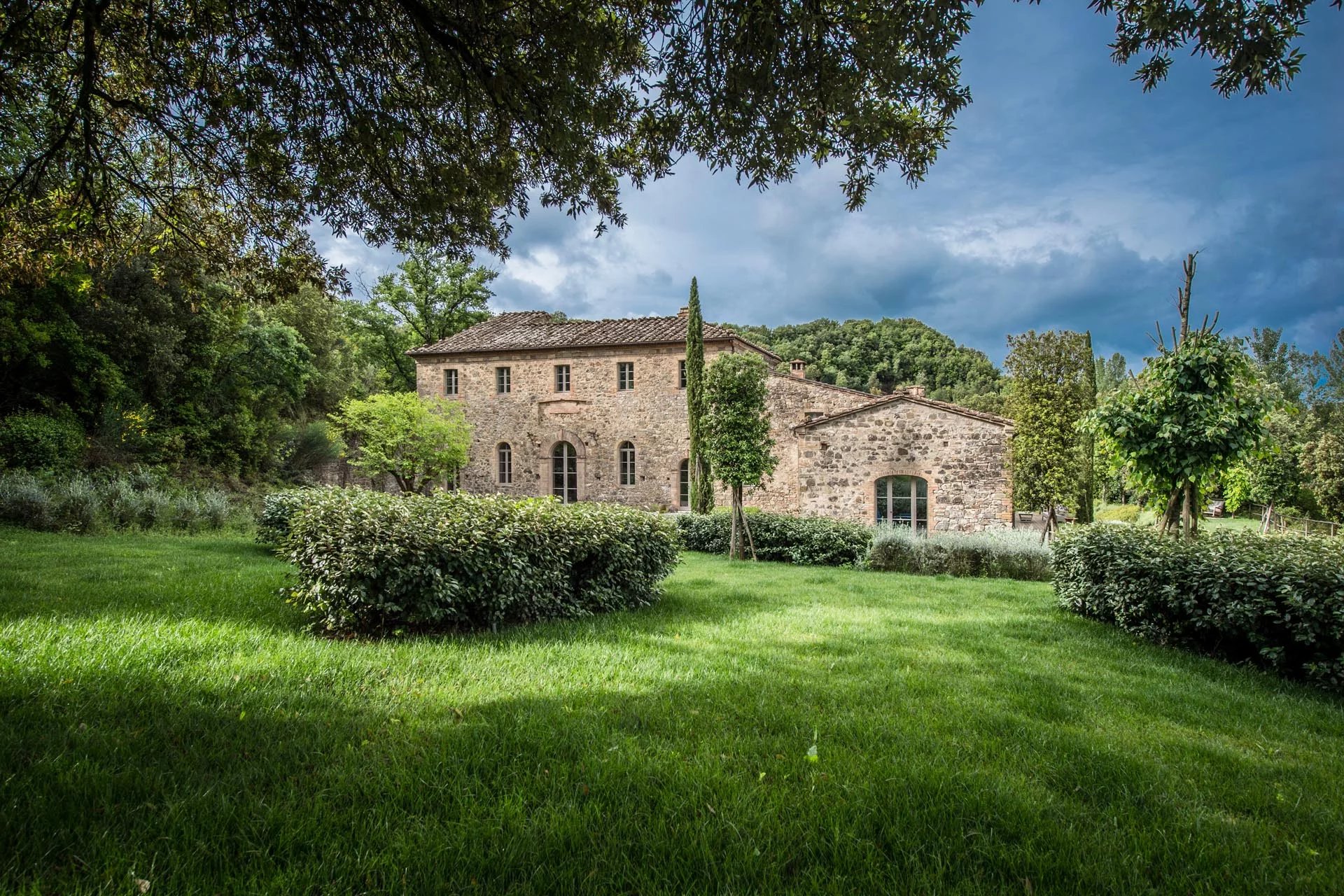
The relationship with the landscape
A stone house works because it belongs to the landscape. The colors of the masonry echo those of the earth, hills, dry stone walls, and nearby villages. This visual continuity makes the property more harmonious and desirable, especially in iconic areas such as Tuscany, Umbria, Marche, or the most authentic Italian countryside.
The luxury villa with pool in Val d’Orcia exemplifies this balance well: the listing describes a finely renovated farmhouse with enhanced stone walls, original materials, and interiors where stone, wooden beams, and rustic details coexist with a noble dimension.
In properties of this kind, the landscape is not just a background. It becomes part of the house. Terraces, gardens, pools, outdoor paths, and views are designed to amplify the bond between architecture and nature.
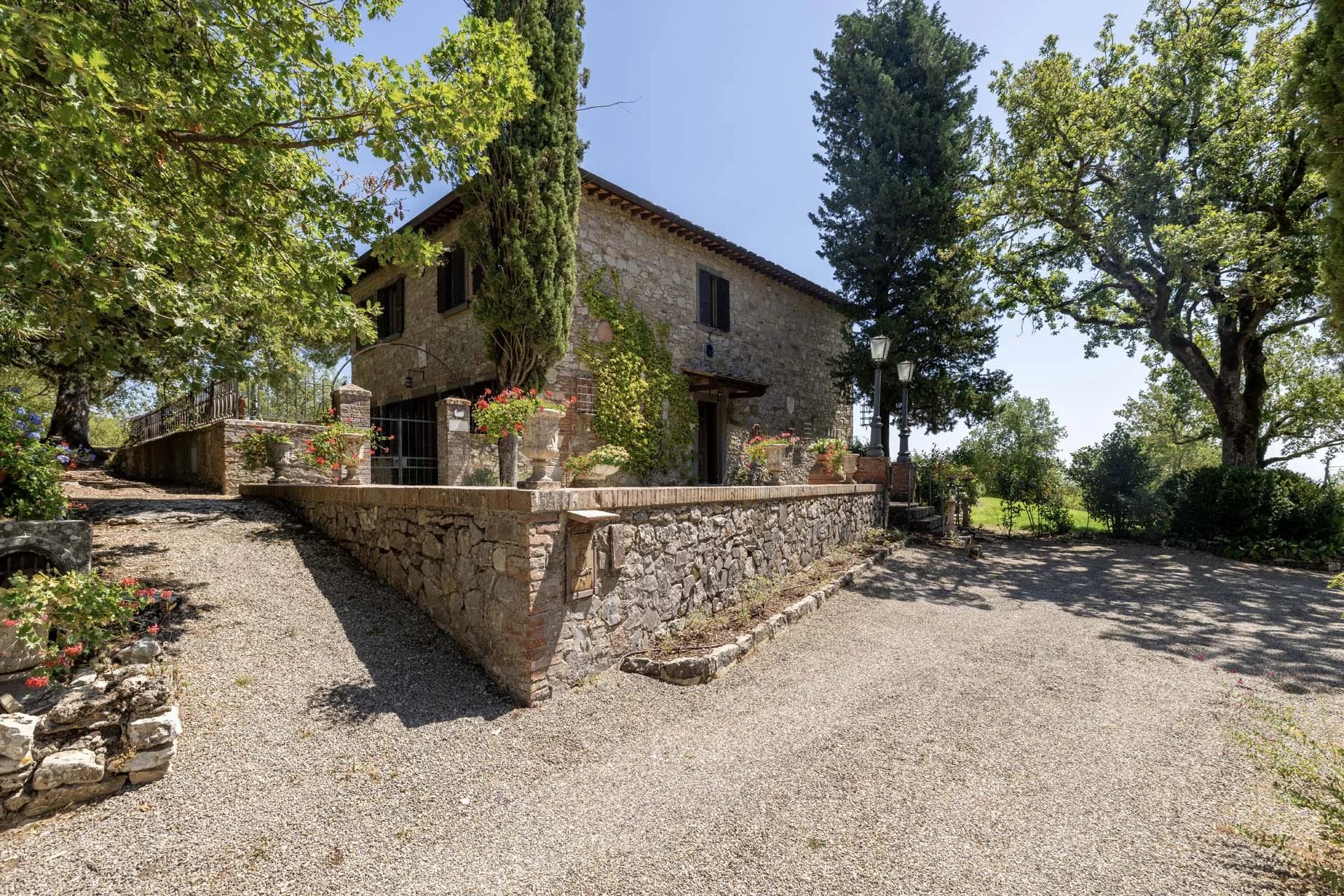
External spaces and outdoor living
Stone houses are often accompanied by gardens, farms, olive groves, vineyards, woods, courtyard interiors, or panoramic pools. This makes them particularly suited to an outdoor lifestyle, where the home extends into the landscape.
In country homes, stone contributes to creating continuity between indoors and outdoors. A porch, a paved terrace, an old barn transformed into a guesthouse, or a protected courtyard become essential spaces for everyday life. These are environments to enjoy in warm seasons, but also elements that increase the perceived value of the property.
Stone houses and hospitality potential
Many stone houses are well suited for luxury hospitality projects. Their architectural identity is already a strong narrative element: guests seek authentic places, not anonymous structures. A restored farmhouse, a rural village, or a stone residence can become boutique hotels, country houses, retreats, or private event venues.
The luxury farmhouse with pool for sale in Lucca is an example of a property suitable even for a hospitality-oriented use: two residential buildings, 12 rooms, 12 bathrooms, a pool, a tennis court, and a structure in stone and brick still visible on the outside.
In a market where experience counts as much as space quality, rural architecture offers a significant advantage. There is no need to invent a story: the house already has it.
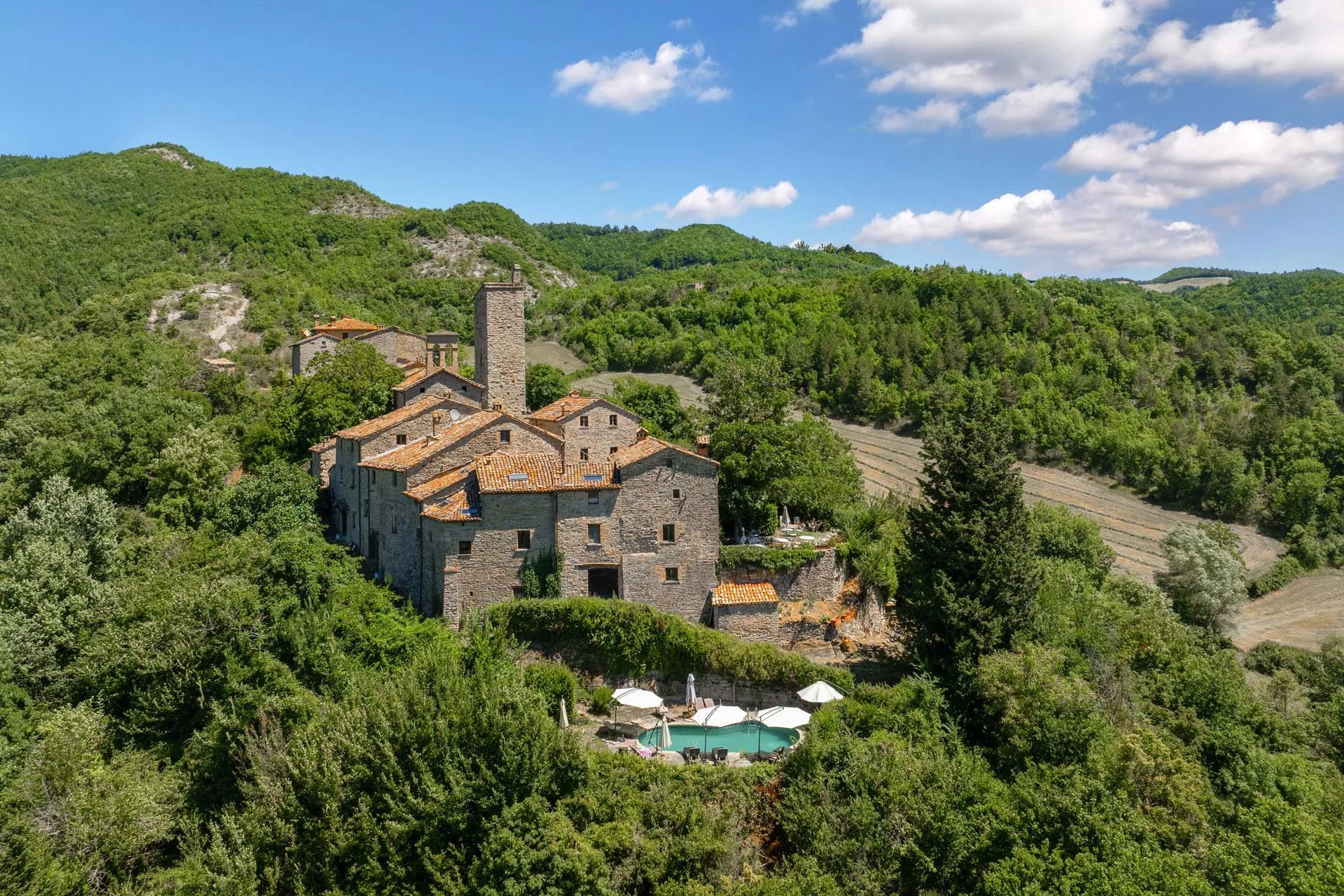
The charm of historic stone residences
Stone is also the natural language of castles, villages, and historic homes. In these properties, the material has not only aesthetic value but also cultural significance. It tells of defensive, agricultural, religious, or residential functions. It narrates eras, families, transformations, and new ways of dwelling.
The boutique hotel castle in Marche preserves impressive stone walls, an internal paved alley, fireplaces, stone floors, beamed ceilings with oak timber, and original sinks; the property also includes a restaurant, guest rooms, private apartment, gardens, and a pool.At this level, stone becomes part of the cultural experience of the property. It is not only what is seen but also what makes the depth of the place perceptible.
Restoration: preserving without “stiffening”
Restoring a stone house requires balance. The temptation can be to make everything perfect, but the authentic value of these homes often arises from irregularities: a slightly wavy wall, an ancient beam, a deep window, an uneven floor. Removing these elements would mean impoverishing the house’s character.
The most effective restoration is one that preserves the building’s memory and discreetly introduces comfort. Systems, insulation, bathrooms, kitchens, lighting, and technology should improve livability without erasing the original material. The ideal result is a house that appears both old and current at the same time.
A tasteful and valuable choice
Buying a stone house means choosing a property with a strong identity. It is a matter of taste, but also of value. These properties are sought after because they are difficult to replicate: building new stone walls alone does not achieve the same effect. The context, the time, the patina, the relationship with the landscape, and the quality of restoration matter.
For this reason, stone houses continue to be central in the luxury estate market. They offer a rare combination of authenticity, comfort, and potential: they can be lived in as private residences, transformed into hospitality projects, or enhanced as long-term real estate assets.
The desire for authenticity
Stone houses remain so desirable because they respond to a deep need: living in true places. In a world that is increasingly fast and standardized, these homes offer continuity, materiality, and roots. They speak of the countryside, landscape, agricultural work, families, seasons, and slow-crafted beauty.
Their charm does not depend on fashion. It arises from the ability to combine memory and future, simplicity and luxury, architecture and nature. A stone house is not only a property: it is a way of living the land, safeguarding its identity, and turning it into value.


Copyright © Romolini

