




 Our Family


 Italiano
 Deutsch



 Back to list
© Romolini Immobiliare

Residences with vaulted ceilings: aesthetic value and historical identity

Published 26-10-2026
Vaulted ceilings are among the most fascinating architectural elements in historic residences. They do not simply decorate a space: they change perception, amplify depth, and immediately convey a sense of history. A vaulted room, a loggia with exposed bricks, an ancient cellar, or an entrance with cross vaults tell a story of construction based on proportion, solidity, and beauty.
In the market for historic homes for sale, the presence of vaulted ceilings represents an important value. Vaults make spaces more recognizable, more scenic, and more difficult to replicate. They are elements that belong to the structure of the house itself and, if well preserved, help strengthen identity, prestige, and property value.
© Romolini Immobiliare
The architectural strength of vaults
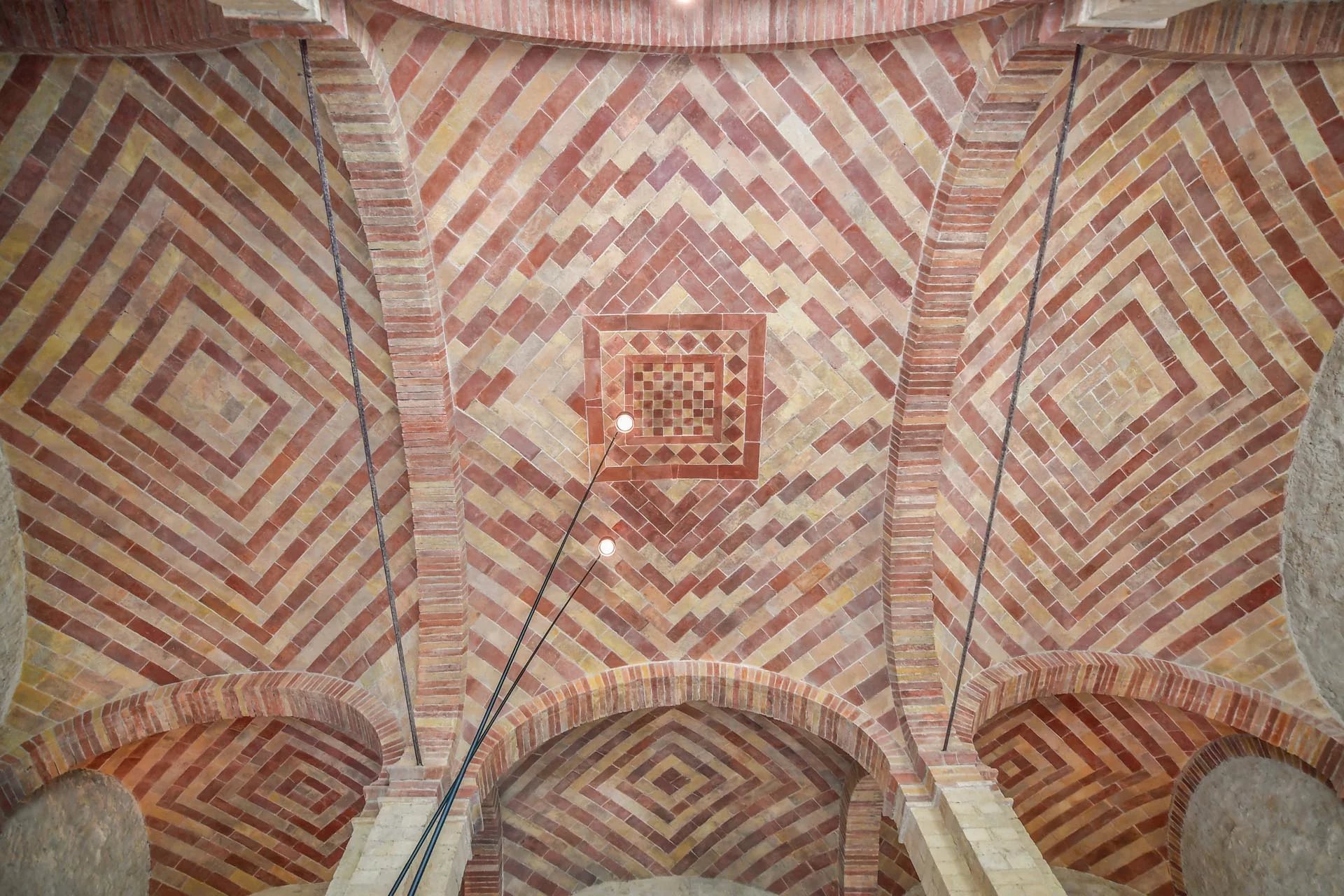
A flat ceiling defines a space; a vault interprets it. The curvature guides the eye upward, creates movement, softens proportions, and introduces a nearly monumental quality even in the coziest environments. Cross vaults, barrel vaults, masonry, or exposed brick vaults create different atmospheres, but all share a common characteristic: they make the room memorable.
In a high-end residence, this detail can make a difference. A vaulted dining room, a living room with decorated vaults, or a loggia covered with arches are perceived not just as functional spaces but as places full of character. It is precisely this ability to imprint itself on memory that makes vaulted ceilings so desirable.
Villa Nicolao: vaults, frescoes, and grand representation
A particularly elegant example is the Renaissance villa frescoed and for sale in Lucca, a stately home from the 1500s with over 2,200 m² of interior space, representative halls, a large library, frescoed loggia, and decorated rooms. On the lower floors, the villa retains vaulted ceilings along with original marble and terracotta floors, frescoes, and relief decorations.
In a property of this level, vaults are not isolated details. They are part of a complex architectural language where art, proportions, ancient materials, and representative spaces dialogue with each other. The result is a home that communicates not only luxury but also historical depth and cultural continuity.
© Romolini Immobiliare
Cross vaults in representative environments
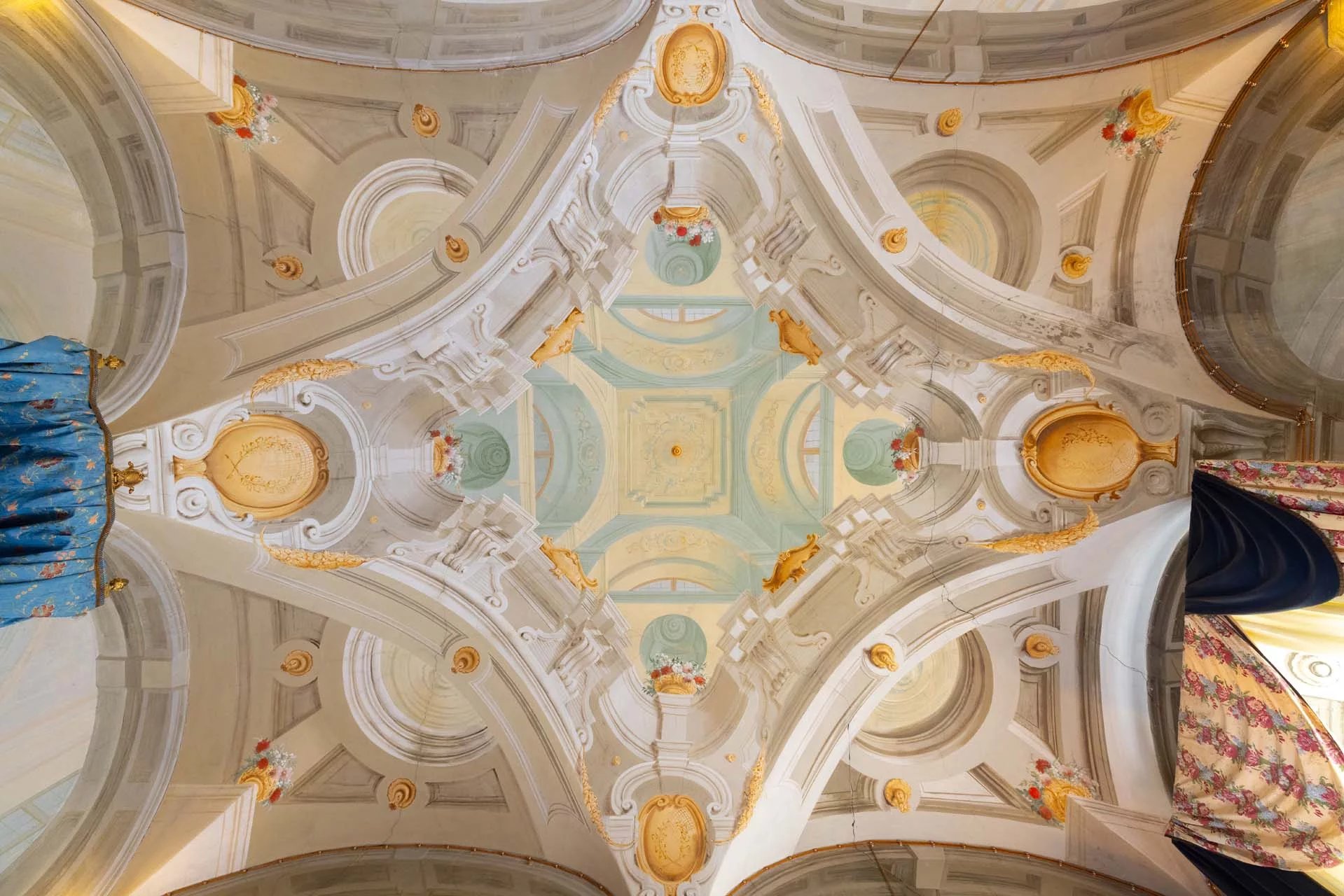
Cross vaults are among the most scenic. Their geometry creates rhythm, order, and movement, making the space more important without heaviness. When present in salons, loggias, or dining rooms, they give the property a noble and timeless tone.
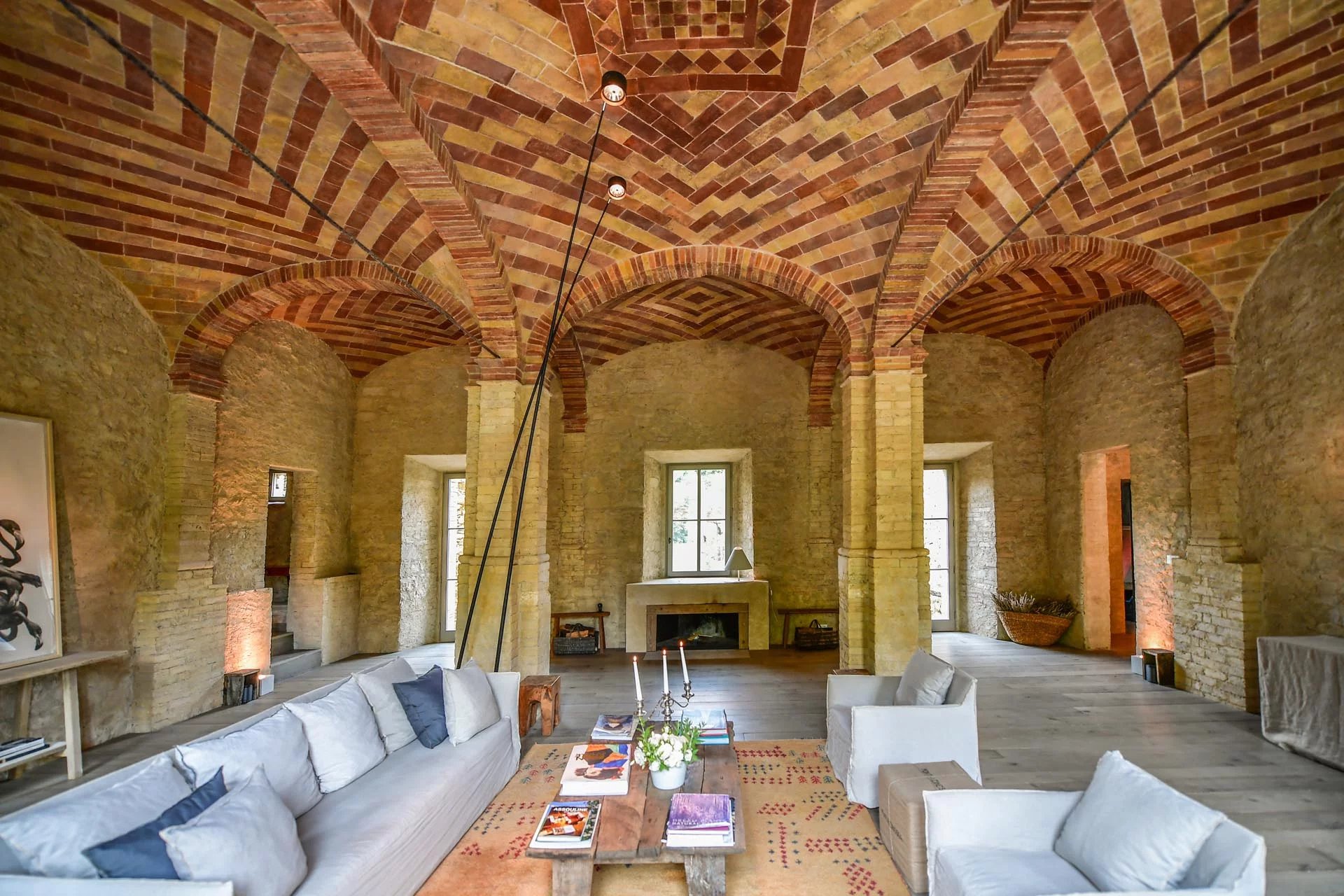
The historic villa with swimming pool in Chianti exemplifies this value well. On the ground floor, the salons are covered with cross vaults: in exposed brick in the loggia and dining room, and plastered in other environments. The loggia also retains a stone floor, a memory of its original open function.
Here, the vault becomes an element of authenticity. It does not aim to create an artificial scenic effect but restores the house’s history and the way spaces were conceived. The residence thus retains a warm, tactile, and profoundly Tuscan charm.
Montalcino Mill: the charm of decorated vaults
Vaulted ceilings are particularly evocative when they dialogue with stone, wood, and historical materials of rural architecture. In these cases, their value emerges from the contrast between the building’s agricultural or productive origin and the contemporary comfort introduced by restoration.
The luxury farmhouse with pool, spa, and vineyard in Montalcino originates from an ancient 13th-century mill and features an entrance covered with splendid decorative masonry cross vaults supported by columns and pilasters. The property also includes a spa, indoor pool, vineyard, high-quality materials, and modern comforts.
In such a residence, vaults become the meeting point between past and present. The original structure remains legible, but is enhanced by a new, more sophisticated and contemporary living function. This balance is precisely what makes historic residences with vaulted ceilings so sought after.
© Romolini Immobiliare
Poggio Imperiale: vaults and monastic memory
Vaults also have a special charm in buildings that had a religious or monastic function. In these cases, their presence speaks not only of aesthetics but also of silence, contemplation, and ancient architecture.
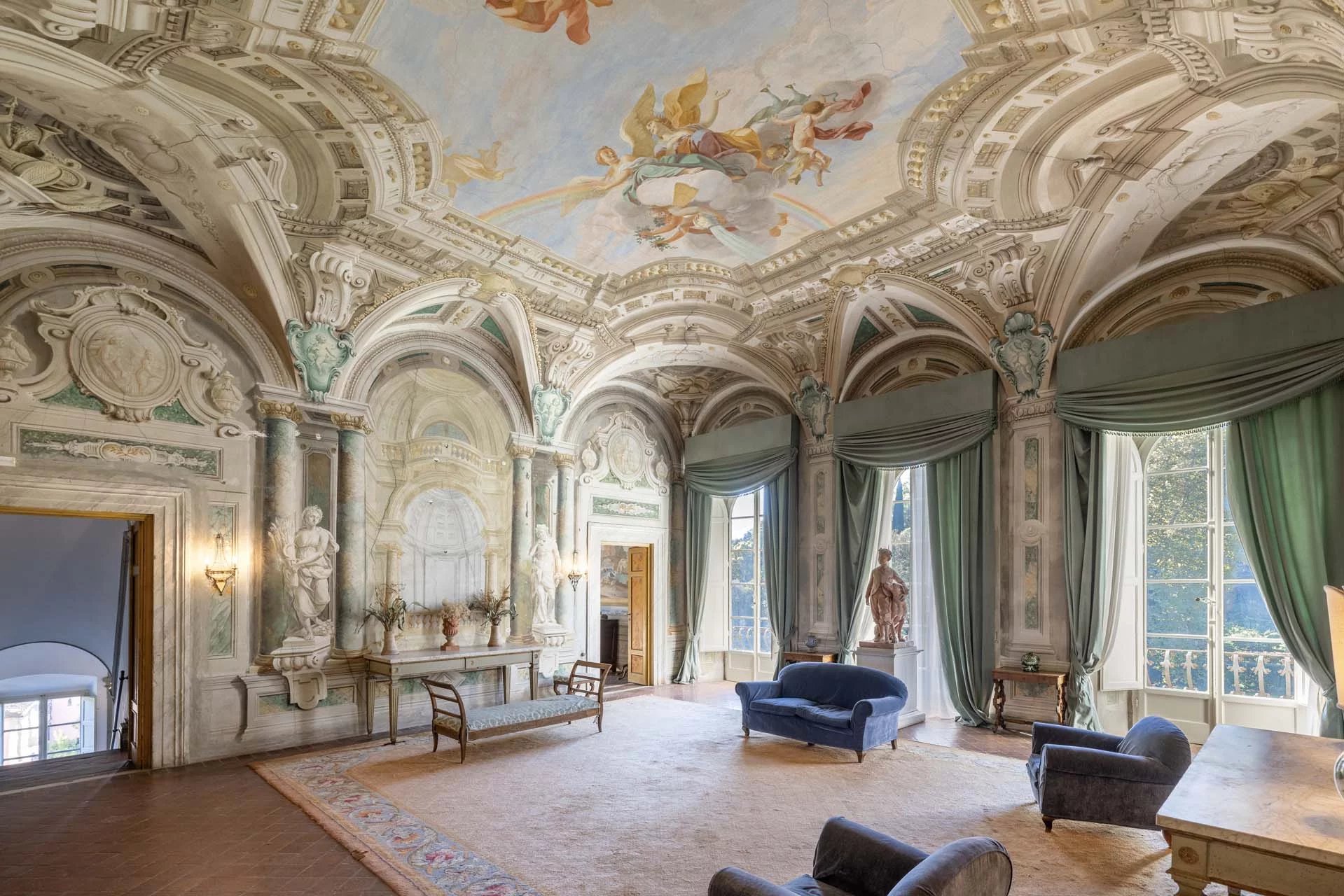
The villa with pool in Poggio Imperiale, Florence, was originally a 15th-century convent and retains original features such as vaulted ceilings, stone fireplaces, and frescoes. In the lower rooms, once used as cellars and storage, distinctive masonry vaults are still visible, now integrated into a private residence with a garden and pool.
This example shows how vaulted ceilings can accompany the transformation of a historic building without losing its identity. Even when spaces change function, the vault continues to tell the story of the dwelling’s origin.
Castles and masonry vaults
In castles for sale, vaults often have an even stronger impact. Thick masonry, low ceilings, service rooms, cellars, and historic halls find in vaults a natural structure capable of combining solidity and monumental charm.
Vincigliata Castle in Fiesole preserves representative rooms with classic finishes, including cross vaults, marble floors, and wooden fixtures. In a castle setting, these elements reinforce the perception of prestige and give the property a scenic and profoundly historic character.
In a fortified residence, the vault is never just decoration. It is part of the building’s soul: conveying protection, durability, memory, and continuity.
© Romolini Immobiliare
Vaults and conservation restoration
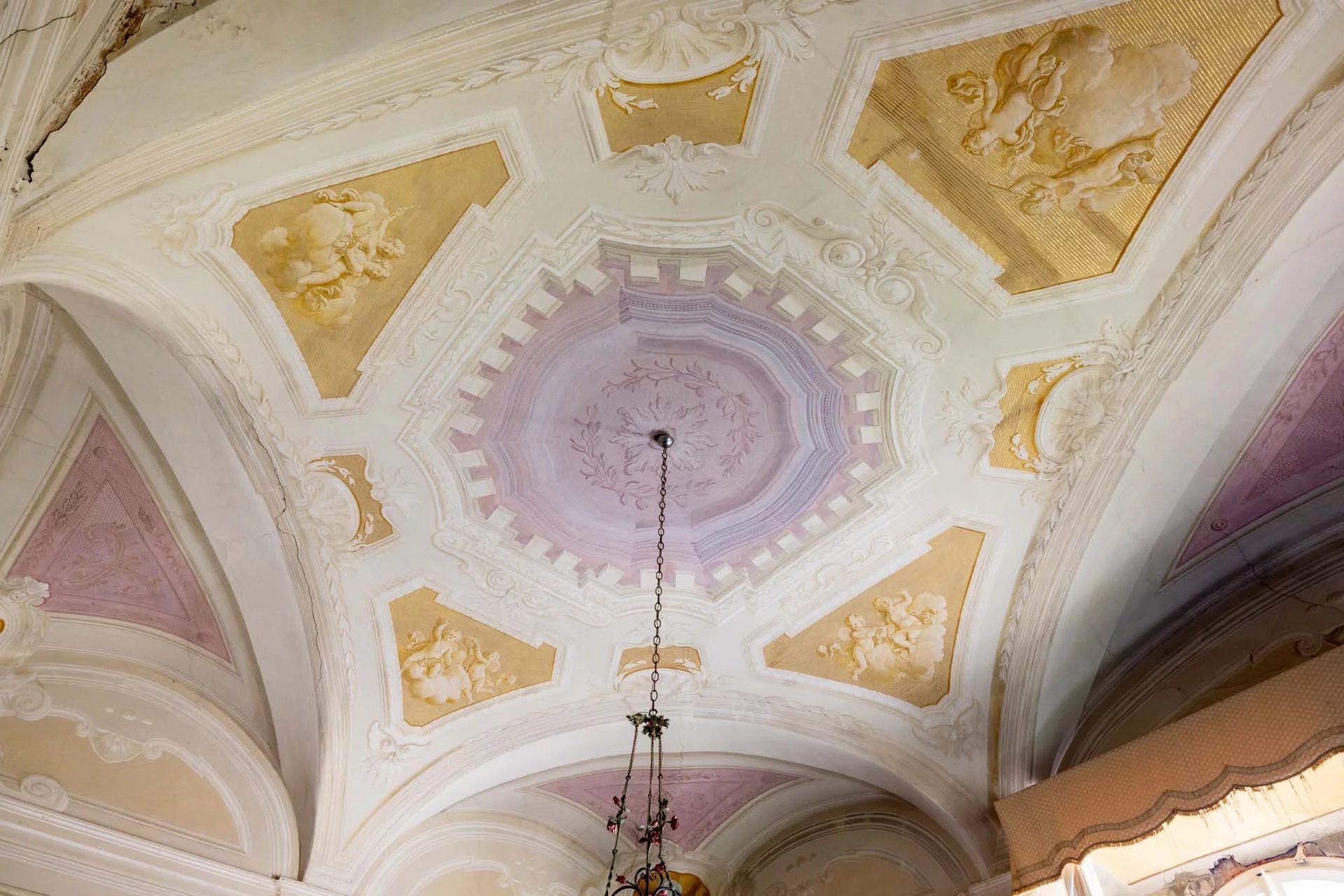
Restoring a residence with vaulted ceilings requires sensitivity. Vaults are structural and visual elements at the same time: they must be consolidated, illuminated, and enhanced without losing authenticity. The choice of materials, humidity management, plaster recovery, brick cleaning, and system integration are essential steps.
The most successful restoration is one that lets the material speak. An exposed brick vault, a plastered cross vault, an ancient decoration, or irregular masonry should not be erased by perfection. It is precisely the traces of time that make the environment more genuine and precious.
Aesthetic value and real estate value
In high-end real estate, authentic architectural elements influence the perception of value. A vaulted ceiling is not easily reproducible because its charm derives from the relationship between construction technique, original function, and the building’s history. A new building can imitate a vault, but it rarely can replicate the same depth.
For this reason, a residence that preserves original vaults has a significant advantage. Spaces become more recognizable, more photogenic, more emotional. A vaulted room remains memorable because it offers a different spatial experience: warmer, more solemn, more tied to the place’s memory.
© Romolini Immobiliare
Intimate spaces, monumental spaces
One of the most interesting aspects of vaulted ceilings is their versatility. They can make a representative hall majestic, or make a cellar, reading room, entrance, or dining area more intimate. The curve of the vault creates protection and harmony, transforming the space into a place to be lived with greater intensity.
In country houses, vaults add warmth and authenticity. In historic villas, they strengthen the sense of representation. In castles, they amplify the monumental character. In restored farmhouses, they restore the charm of the most authentic rural architecture.
A timeless architectural sign
Residences with vaulted ceilings continue to be desirable because they offer something beyond comfort. They tell a building method linked to durability, material, and proportion. They are spaces that speak of history without seeming immobile, because they can host contemporary functions while maintaining their own identity.
A well-preserved vault makes a house more elegant, more recognizable, and more profound. It transforms the environment into an experience, adds aesthetic value, and strengthens the bond with the property’s history. For this reason, in high-end homes, vaulted ceilings remain one of the most fascinating and desirable elements: an architectural detail capable of safeguarding the past and making present life more intense.


Copyright © Romolini

