



 Our Family


 Italiano
 Deutsch



 Back to list
© Romolini Immobiliare

Farmhouse, farmstead or estate: what are the differences?

Published 12-11-2026
In rural property listings, three words often appear: farmhouse, farmstead, and estate. At first glance, they might seem synonymous because they all refer to rural buildings, lands, and nature-immersed landscapes. In reality, they describe different aspects of the property.
The farmhouse primarily identifies the building. The farmstead includes the house and the lands arranged as a single agricultural unit. The estate indicates a larger and more complex possession, often composed of several buildings, crops, and natural areas. The terms can overlap, especially in real estate listings. A farmhouse can be located within a farmstead, and several farmsteads can be part of a large estate. To understand what you are really buying, you need to look beyond the name.
Farmhouse, farmstead, and estate compared
| Type | What is it | Main elements | Ideal for |
| Farmhouse | Rural building | Brick and stone house, garden, potential dependance and pool | Private house or vacation home |
| Farmstead | House and land | Country house, agricultural outbuildings, arable land, olive grove or small vineyard | Countryside life and agricultural business |
| Estate | A whole demesne | More buildings, ample surfaces, woodlands, crops and productive buildings | Agricultural estate, hospitality or huge residence |
However, there is no universal land size that automatically turns a farmstead into an estate. Size, land organization, and number of buildings must be considered together.
© Romolini Immobiliare
What is a farmhouse?
In real estate terminology, a casale is a detached country house, typically built as a rural dwelling. The term derives from casa, meaning “house”, and can also refer to a small group of farm buildings, although today it is mainly used to describe the main house.
A traditional Tuscan or Umbrian casale often features stone walls, wooden beams, terracotta floors, large fireplaces and covered porches. It may come with a guesthouse, a barn, a garden or a swimming pool, without the land necessarily being used for farming.
A casale does not have to be small or in need of renovation. Historic farmhouses have been transformed into luxury residences, with contemporary interiors, efficient systems and dedicated wellness areas.
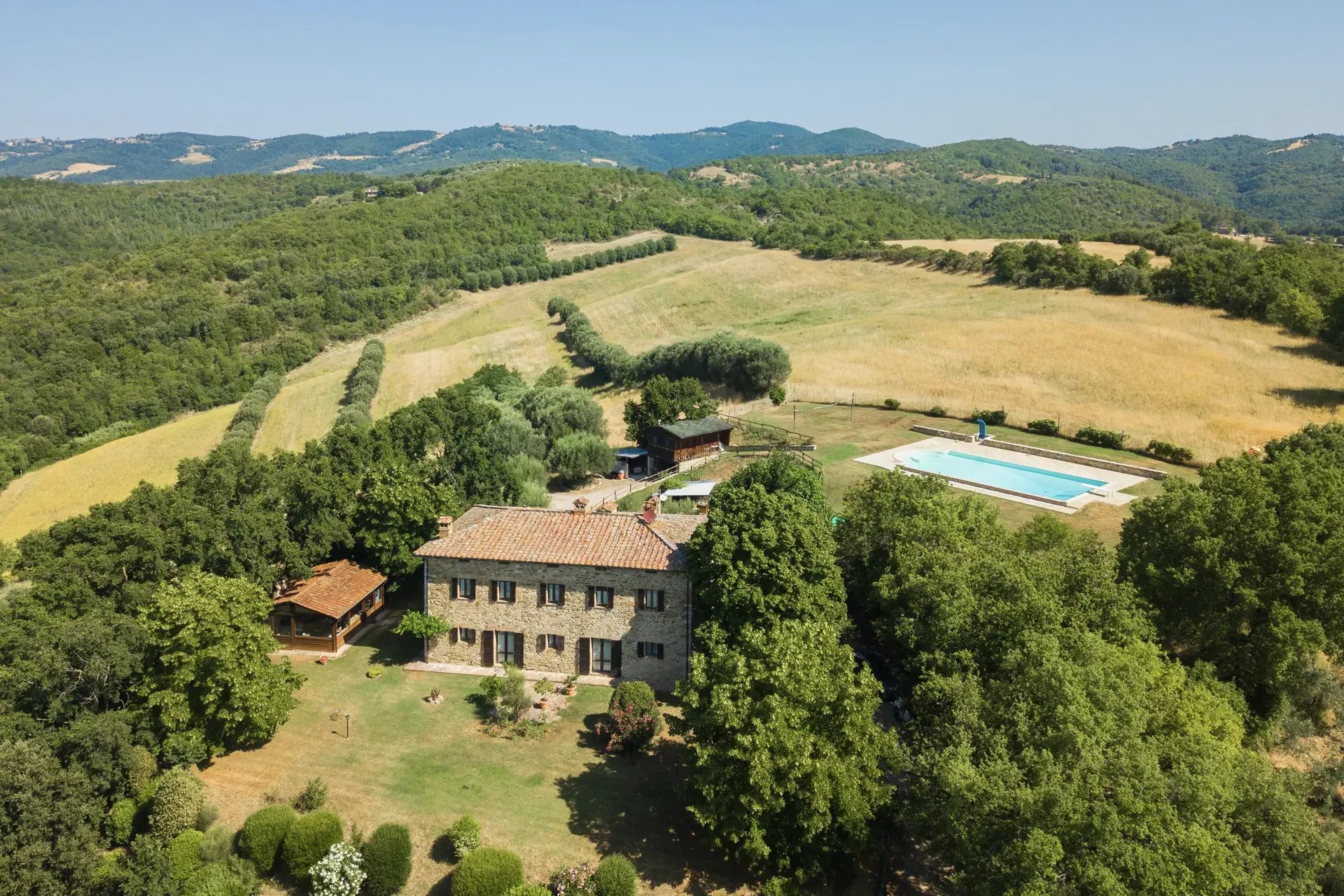
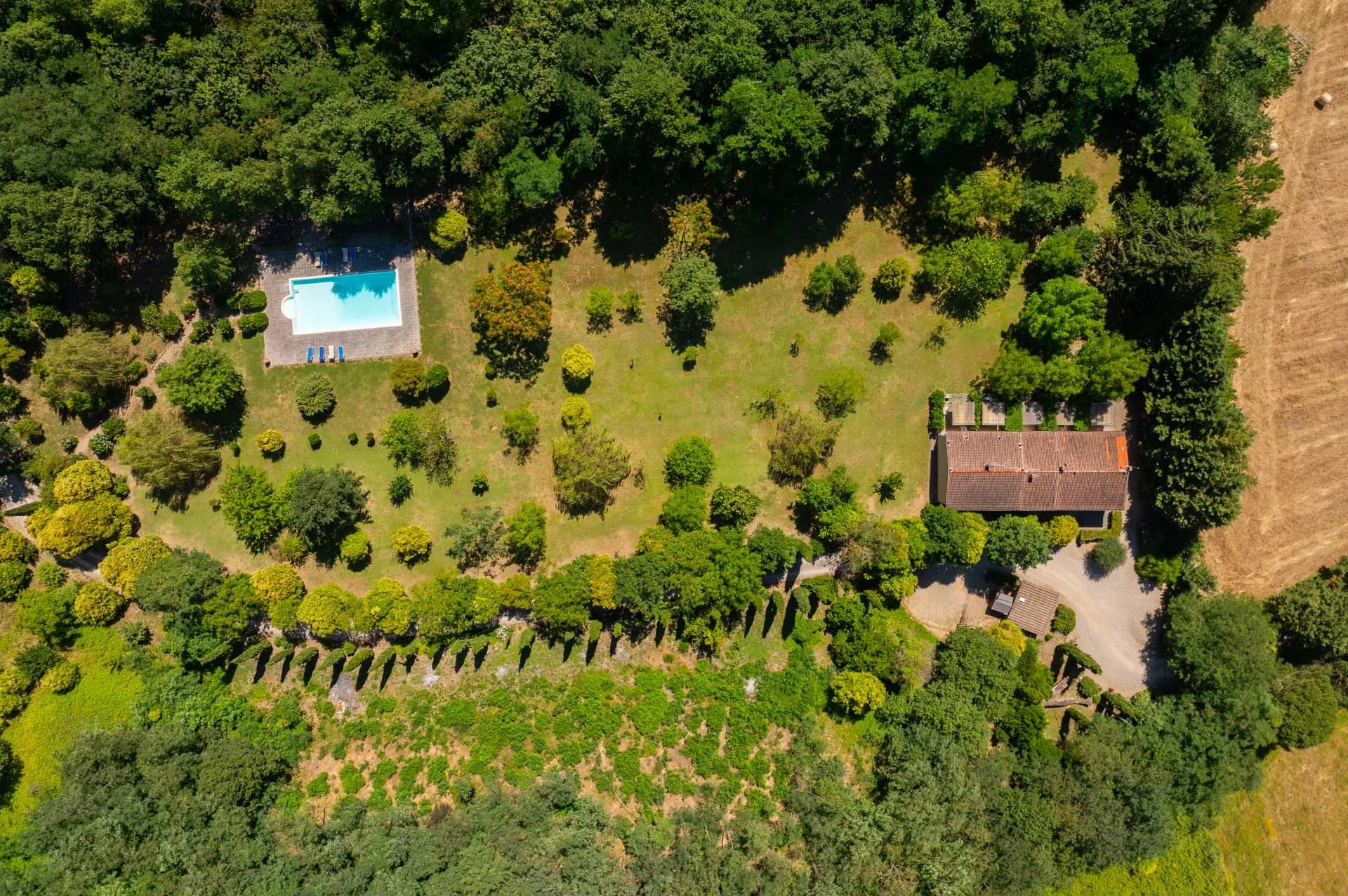
Casale Corciano, a renovated country house with a swimming pool in Umbria, is a good example of this property type. The property comprises a rustic stone house measuring 380 square metres, surrounded by 4,640 square metres of enclosed gardens. Outside, there is a swimming pool with panoramic views, a veranda with a summer kitchen and a small wellness centre. The grounds are mainly used for private leisure and recreation: the house remains the heart of the property.
Those looking for an easy-to-manage country residence with privacy and outdoor space, without a working farm, can therefore explore the selection of rustic country houses for sale in Tuscany and Umbria.
What is a farmstead?
A farmstead is a rural unit made up of agricultural lands and the buildings necessary to live on and cultivate them. Historically, it was worked by one or more peasant families, directly, rented, or via sharecropping.
Unlike the farmhouse, the word farmstead does not only describe the house. The land is an essential part of the property’s identity and can include:
- arable land;
- olive groves;
- small vineyards;
- pastures;
- vegetable gardens and orchards;
- woods;
- stables, barns, and agricultural sheds.
The areas do not need to be very large. What distinguishes the farmstead is mostly the functional relationship between the buildings and the land.
The Podere Tullio, a property with a farmhouse and olive grove in Casentino, includes 731 square meters of buildings and about 2.87 hectares of land. A significant part of the area is occupied by an olive grove of about 1.46 hectares with 320 trees. The presence of the farmhouse, outbuildings, and cultivation defines a small, organized rural reality suitable for both private living and oil production for family or commercial use.
A farmstead for sale is therefore suitable for those who desire a country house along with land to cultivate, maintain, or enhance through small agricultural production.
© Romolini Immobiliare
What is an estate?
An estate represents the largest scale. The term traditionally indicates a large rural property that can include multiple farmsteads, meadows, fields, and woods.
An estate can include a manor house, one or more farmhouses, staff residences, cellars, stables, warehouses, and agricultural buildings. The lands can be used for vineyards, olive groves, arable farming, livestock, truffle grounds, or forestry activities.
Some estates function as real agricultural or winemaking businesses; others have been converted into resorts, Agriturismo, or large private residences. The name does not automatically imply the presence of a commercial activity but mainly describes the property's size and complexity.
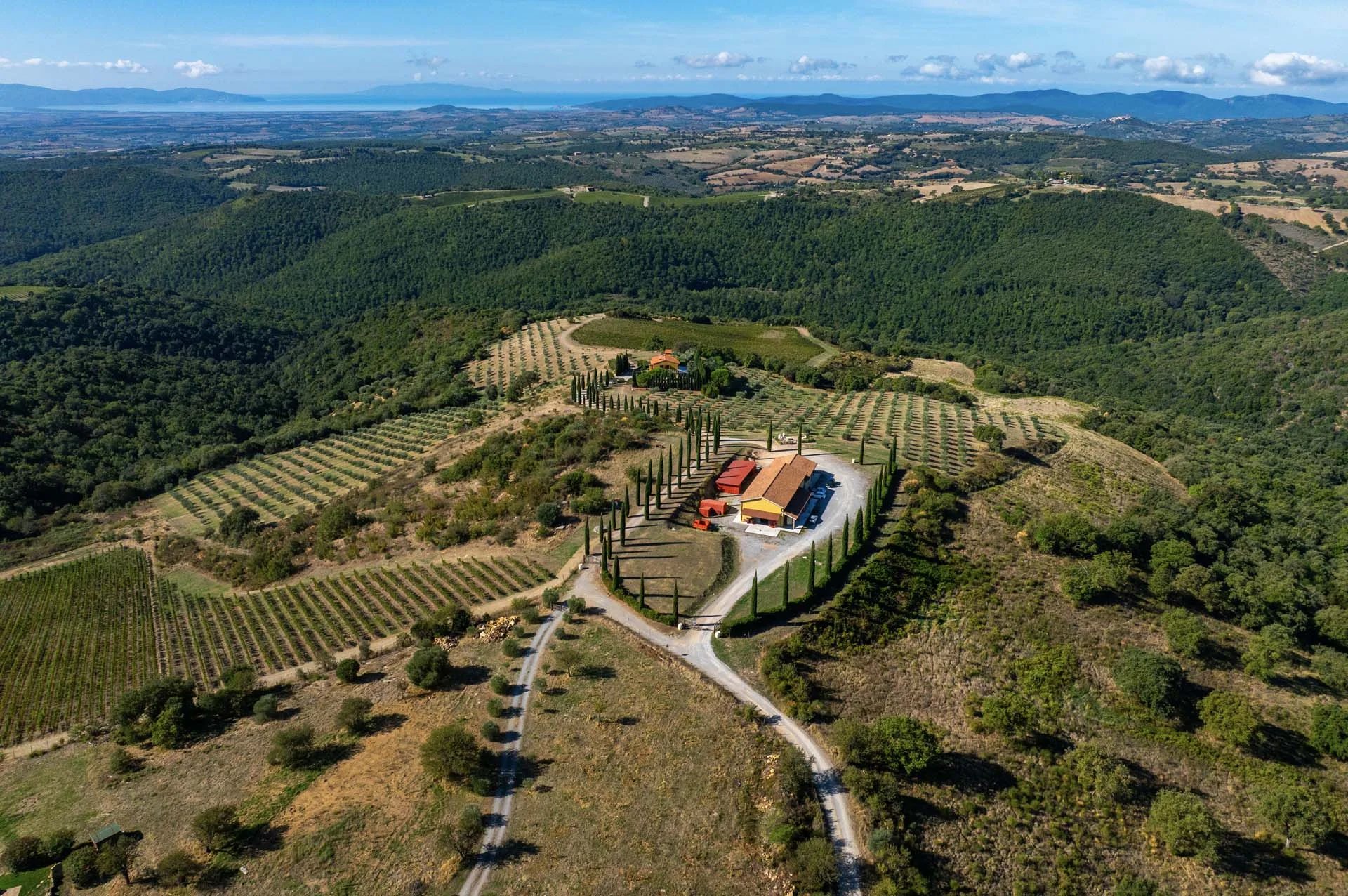
The Tenuta San Giovanni, a winery for sale in Maremma, extends over more than 120 hectares and includes the main house, winery, and barrel aging room. The lands include about 11.48 hectares of vineyard and 7.77 hectares of olive groves. In this case, buildings, crops, and production facilities form a unified system on a scale far larger than a single farmstead.
The selection of estates for sale with vineyards, olive groves, and agricultural lands includes both productive properties and complexes intended for hospitality and private life.
Is it the number of hectares that establishes the difference?
Area is an important indicator but alone is not enough.
A farmhouse can be sold with many hectares of land without losing its identity as a rural building. Similarly, a relatively compact property can be defined as a farmstead when house, outbuildings, and crops form a coherent agricultural reality.
The word estate is generally used for larger properties, but even in this case the number of buildings, the variety of lands, and the presence of productive or hospitality infrastructures must be considered.
In summary:
- in the farmhouse, the building prevails;
- in the farmstead, the relationship between house and land prevails;
- in the estate, the overall scale of the property prevails.
© Romolini Immobiliare
Which property to choose?
The choice depends on how you want to live the countryside.
Choosing a farmhouse
The farmhouse is suitable for those seeking a private residence, a second home, or a property to rent for tourists. It generally offers more privacy than an urban villa and enough outdoor space for a pool, garden, and guests, with relatively simple management.
Choosing a farmstead
The farmstead suits those who want to participate in the property’s life: cultivate an olive grove, produce a small amount of wine, keep horses, or restore old agricultural outbuildings. It requires more land care but allows a closer relationship with the landscape.
Choosing an estate
An estate meets the needs of those seeking a large family property, an agricultural business, a winemaking project, or a hospitality facility. Management is more complex and may require specialized staff, agricultural machinery, and business planning.
© Romolini Immobiliare
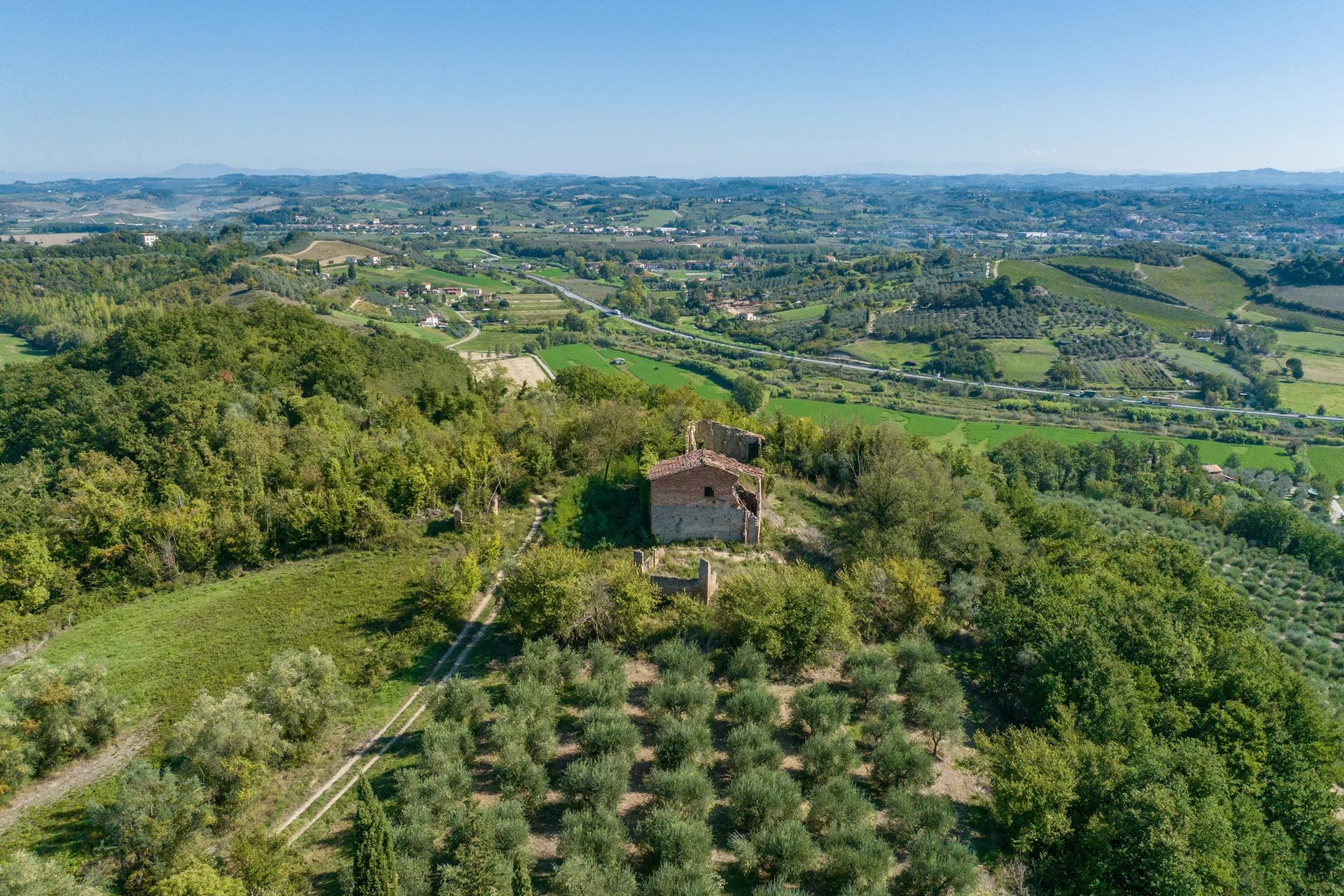
What to check beyond the listing name
Before buying a rural property, it is important to examine the real composition:
- land size and continuity;
- use designation of different parcels;
- condition of vineyards and olive groves;
- availability of water;
- condition and use of outbuildings;
- accessibility of buildings;
- agricultural systems and infrastructures;
- any land lease agreements;
- possibility to develop agricultural or hospitality activities.
The commercial denomination helps orient but does not replace the analysis of cadastral, urban planning, and business documentation.
Three different ways to live the Italian countryside
Farmhouse, farmstead, and estate tell three different scales of the rural landscape. The farmhouse centers on the dwelling; the farmstead creates a link between house and crops; while the estate combines buildings, lands, and activities in one large complex.
Knowing these differences allows you to seek a property consistent with your project: a house immersed in nature, a small agricultural world to personally care for, or a productive and hospitality reality on a larger scale.


Copyright © Romolini

