




 Our Family


 Italiano
 Deutsch


 Back to list

Historic palaces and noble residences: how the concept of living is changing today

Published 10-02-2026
Living in a historic palace or noble residence no longer means merely preserving a legacy of the past. Today these monumental buildings are experiencing a new season, in which history, architecture and contemporary functions dialogue in an increasingly conscious way. The very concept of living has evolved: from pure representation to a complete experience, capable of integrating comfort, flexibility of use and, in many cases, an entrepreneurial vision.
In fine real estate, historic palaces, castles and grand mansions are no longer considered static assets, but living structures, reinterpreted according to modern living and accommodation needs, without giving up their identity.
From fortress to residence: architectures that change function
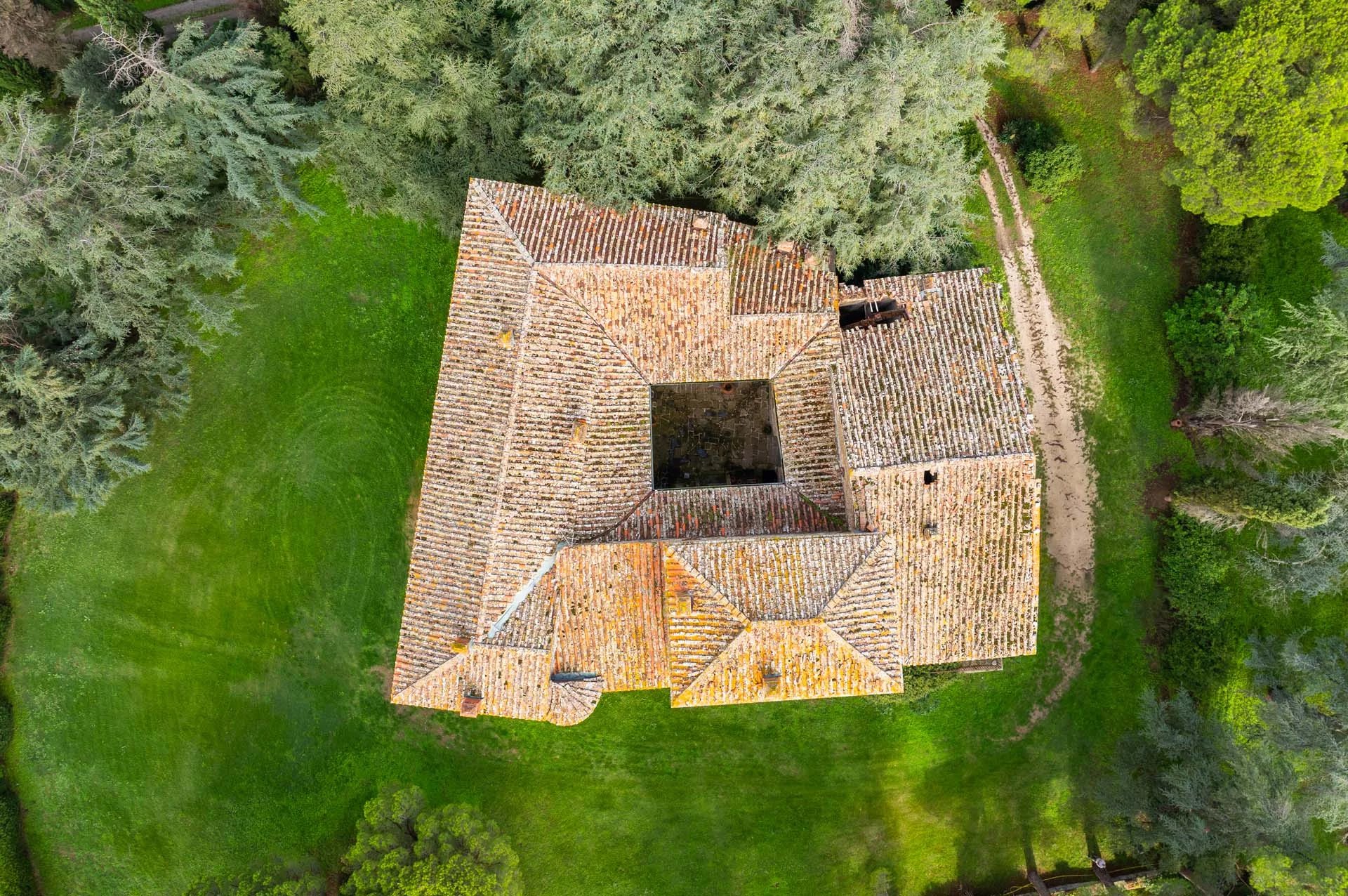
An emblematic example of this transformation is the medieval castle for sale in a panoramic position in Valdichiana, perched on a hill near Arezzo, with an open view of the entire valley and Lake Trasimeno. Founded as a defensive structure in the 11th century, the castle has gone through centuries of military, religious and agricultural history, gradually adapting to different functions.
Today the building, with its large halls, monumental ceilings, wooden beams and masonry vaults, preserves intact the charm of the stately home, although it needs a restoration project capable of giving it back a new centrality. The presence of an English-style park overlooking the valley, ancillary buildings to be reconverted, and large green areas suggests a dual vocation: private representative residence or facility for high-level events and hospitality.
This type of property tells well how value no longer lies only in history, but in the ability to imagine a future consistent with the present.
The return of authentic living, even off the beaten track
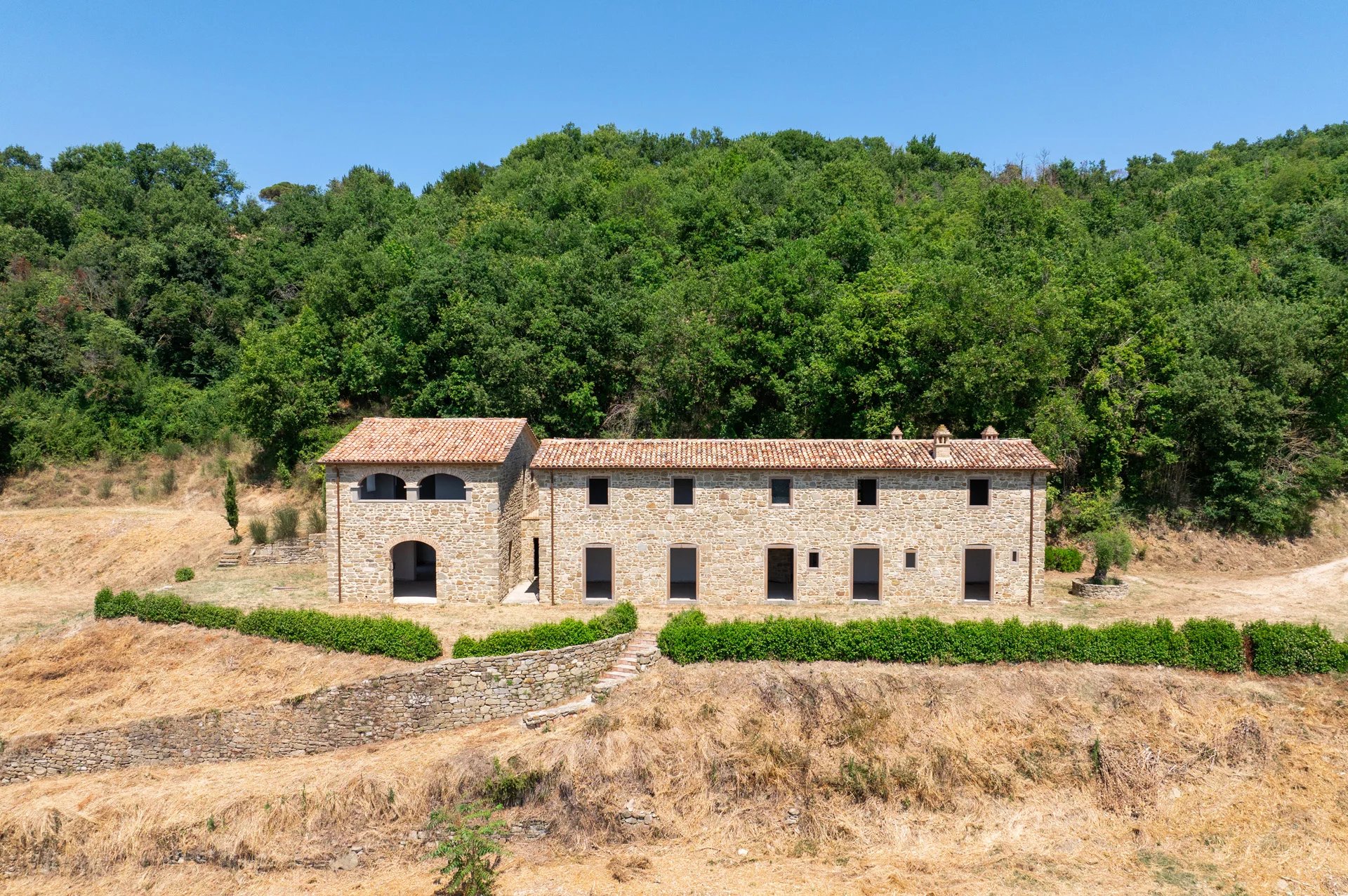
Alongside monumental architecture, noble residences that are more connected to the rural world are also experiencing a new interpretation. The farmhouse in a panoramic position in Umbria, near Città di Castello, is a significant example. Originally an agricultural settlement, today it presents itself as a residence already renovated to high standards, ready to become a contemporary charming home.
Here the concept of living is translated into open, bright spaces designed for everyday life, with a functional distribution that dialogues with the landscape. This is not nostalgia, but a new form of comfort: authentic materials, modern insulation, technological arrangements, and a direct relationship with the surrounding land, which can be transformed into a garden or landscaped area.
In this context, noble living becomes more intimate, less celebratory, but no less prestigious.
Castles and historic residences as hospitality projects
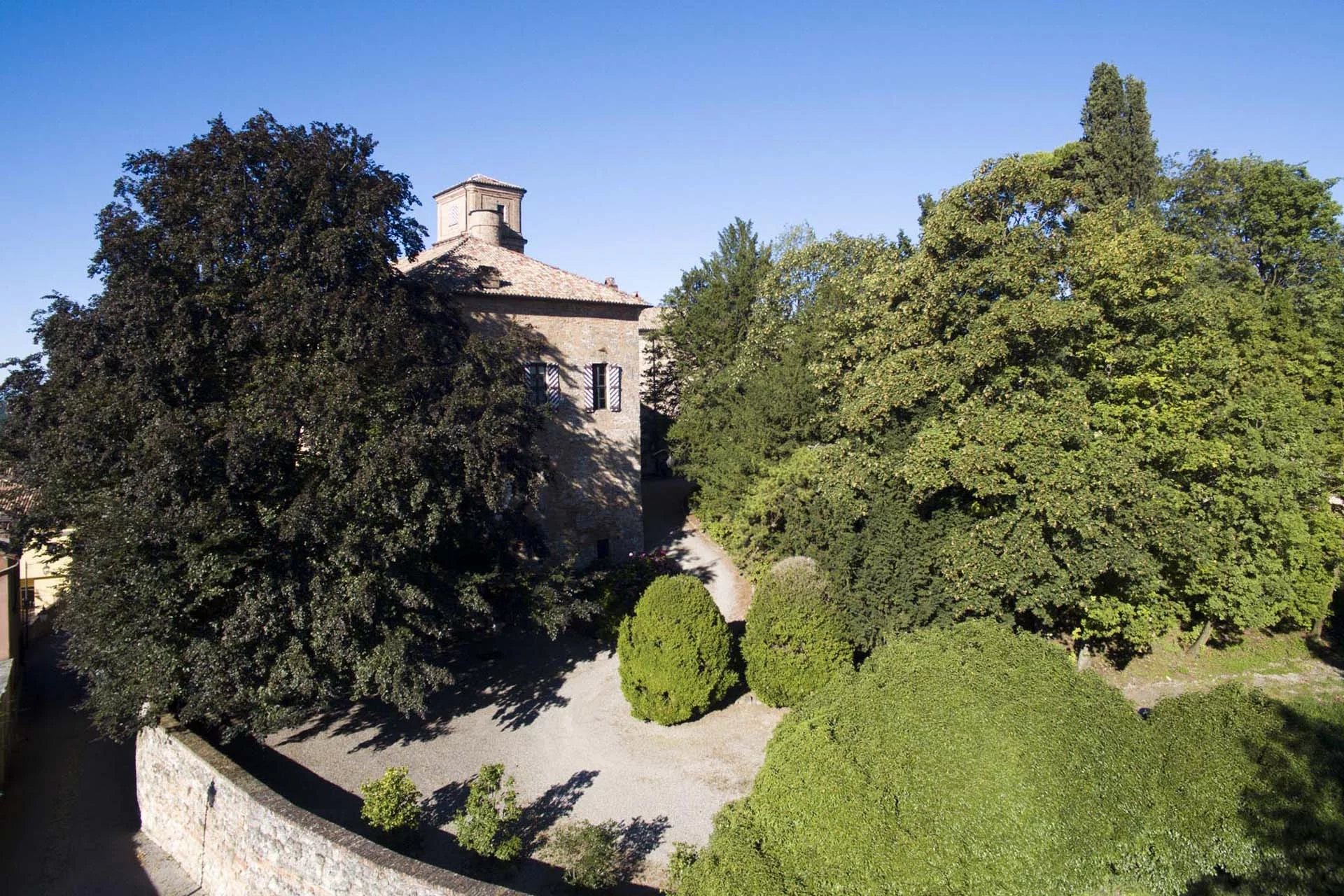
Another clear sign of the change taking place is the increasing transformation of historic palaces and castles into high-profile hospitality facilities. The medieval castle for sale in Monferrato, which already has an approved project for the creation of a boutique hotel, represents an evolved vision of living: no longer exclusively private, but shared, experiential, open to an international audience.
The same applies to the luxury boutique hotel castle in the Marche region, which has already been renovated and successfully launched as a fine B&B. Here the noble residence becomes a place of hospitality, keeping intact fireplaces, stone floors, wooden ceilings and frescoes, but integrating services and common spaces designed for contemporary hospitality.
In these cases, living also means managing, enhancing and telling a place, transforming history into a central element of the experience.
Inhabiting history without sacrificing comfort
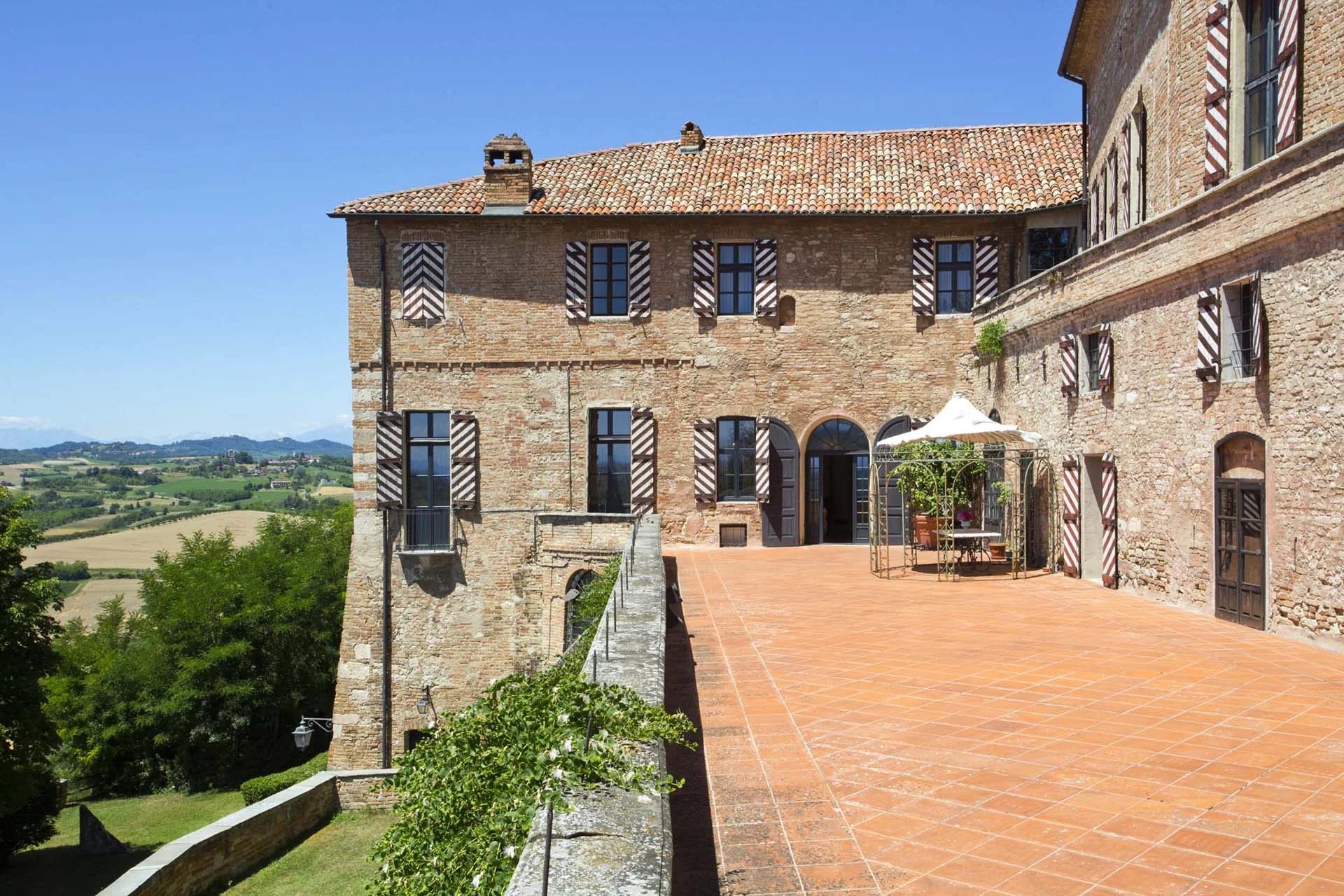
The renovated castle in Piedmont, near Turin, demonstrates how it is possible to combine monumentality and livability. Set in an extraordinary landscape context, the structure is built around a large central courtyard and is equipped with elevators, functional spaces and residential rooms distributed on several levels.
Here the concept of living takes on an almost urban dimension: rooms, lounges, libraries, chapel, janitor's apartment and accessory buildings coexist in a complex but perfectly organized system. Restoration has preserved historic floors, monumental fireplaces and ornate ceilings, proving that innovation can be invisible but decisive.
A new balance between past and present
These examples show how the concept of inhabiting historic palaces and noble residences is changing profoundly. Today, people are no longer just looking for architectural magnificence, but for the possibility of experiencing these spaces in an authentic, functional and sustainable way over time.
Whether it is a private mansion, a multifunctional residence or an accommodation facility, the common thread remains the same: respect for history, design vision and adaptability.
Living in a historic palace or noble residence today means interpreting time, not suffering it. It means transforming structures born to defend, represent or govern into places capable of welcoming new forms of living, working and hospitality.
In luxury real estate, these properties are no longer simple testimonies of the past, but protagonists of a new idea of living: cultured, aware and deeply linked to the territory. A way of living that does not give up history, but makes it an integral part of the present.


Copyright © Romolini

